

Why Pedro Pascal Matters to Chanel Now
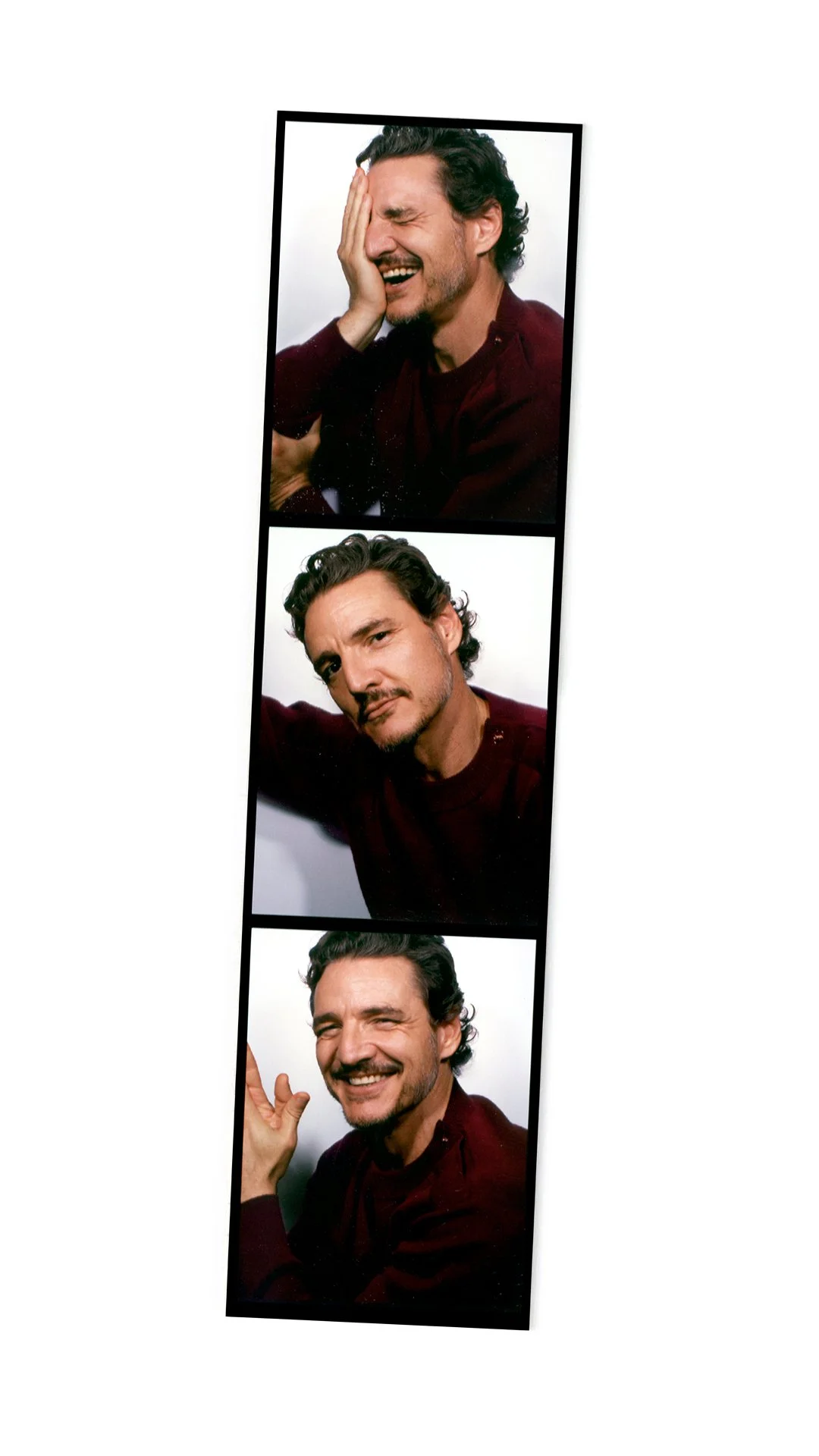
PEDRO PASCAL, NEW CHANEL AMBASSADOR
The house’s newest ambassador is less a celebrity announcement than a clue to how Matthieu Blazy may be recalibrating Chanel’s image, business and future.
At Chanel, faces are never just faces. They are signals — of mood, of market, of who the house believes it is speaking to next.
So Pedro Pascal’s appointment as a house ambassador should be read less as a celebrity endorsement and more as an insider clue to the direction of Chanel under Matthieu Blazy. The real interest lies not in the headline itself, but in what it reveals about where the house may be moving aesthetically and commercially.
Chanel has always understood the power of a singular face. In the modern era, the house has built entire chapters of its mythology through women who did more than wear the brand — they defined its emotional era. Think of Nicole Kidman in Baz Luhrmann’s No. 5: The Film, still one of luxury’s most culturally resonant campaigns, where Chanel sold not perfume but cinematic desire. Then came Keira Knightley for Coco Mademoiselle, the Parisian heroine in motion, followed by faces like Vanessa Paradis, Lily-Rose Depp, Margot Robbie and Penélope Cruz, each representing a different calibration of femininity, age and cultural relevance.
The point was never simply recognition. It was narrative. Each face told the market what Chanel wanted to feel like. Pedro Pascal is different because he extends that narrative into territory Chanel has historically touched only selectively: male image-building without a formal men’s fashion line.
That alone makes the appointment noteworthy.
Chanel has, of course, worked with men before. Men have fronted watches, fragrance and eyewear campaigns — Gaspard Ulliel for Bleu de Chanel remains perhaps the most iconic example, followed by Timothée Chalamet for the same fragrance in a more contemporary register. But those were product-specific roles. A house ambassador title carries a broader symbolic weight. It places Pascal not inside a single campaign, but within the architecture of the brand itself.
That is a more strategic move.
And it comes at an important moment for Blazy.
What Blazy achieved at Bottega Veneta was not simply product success. It was the re-scripting of desirability through precision, restraint and highly intelligent casting. During his time there, faces and bodies were never incidental. The casting language was part of the design language. Quiet power, tactility, real-world sensuality, and a cultivated seriousness became part of the brand’s image economy. There was always an intelligence to who embodied the clothes.
Pascal fits that logic.
He brings not only visibility but a very specific kind of cultural capital: intellectual warmth, emotional credibility and a masculinity that feels contemporary without being trend-dependent.
This matters because Chanel, unlike many houses, does not need relevance in the obvious sense. What it needs under a new creative era is recalibration.
Blazy inherited one of the most fortified visual identities in fashion. At Chanel, the challenge is not reinvention. It is adjusting the emotional temperature of the house without destabilizing the codes. Pascal does precisely that. He softens the image architecture without diluting authority. This is where the insider read becomes more interesting.
The appointment may not necessarily signal an imminent full menswear line — that would be a much larger strategic decision for a house whose business remains heavily driven by womenswear, handbags, fine jewelry, watches and beauty — but it does open the conversation around male luxury adjacency in a more expansive way.
A men’s capsule is not impossible. In fact, it would be commercially logical.
Luxury houses are increasingly using capsules and limited category drops to test appetite before building out full divisions. Chanel has the infrastructure, the atelier discipline and the cultural leverage to do it successfully if it chooses. A Pascal-led capsule — tailoring, knitwear, outerwear, accessories — would be an immediate global conversation. But financially, the more likely implication is not runway menswear. It is beauty, fragrance and accessories expansion aimed at a broader male luxury customer. That is where the money is. Fragrance remains one of Chanel’s most globally scalable businesses, and a broader male ambassador strategy strengthens that universe considerably. Pascal broadens the emotional territory of the house’s male-facing categories without requiring the cost structure of a full men’s collection.
That is intelligent luxury business.
The appointment also suggests something more subtle about Chanel’s customer strategy. Pascal’s audience is multigenerational and unusually cross-market. He speaks simultaneously to prestige cinema, mass culture, digital audiences and mature luxury consumers. Few figures today can move across those layers with such ease. For Chanel, that translates into reach, but more importantly into trust transfer. Consumers increasingly buy not only product but the emotional credibility of who represents it. Nicole Kidman once gave Chanel cinematic grandeur. Pedro Pascal gives it human warmth.
Under Blazy, that shift may be exactly the point. This is less about celebrity and more about emotional repositioning. A house that has historically been defined by immaculate control now seems interested in making that control feel more lived-in, more human, more emotionally resonant. That is not a minor branding decision. It is often how a new era announces itself before the clothes fully do. And in fashion, the face is usually the first clue.
By Oona Chanel
