

Inside Dolce & Gabbana’s Transfer of Power
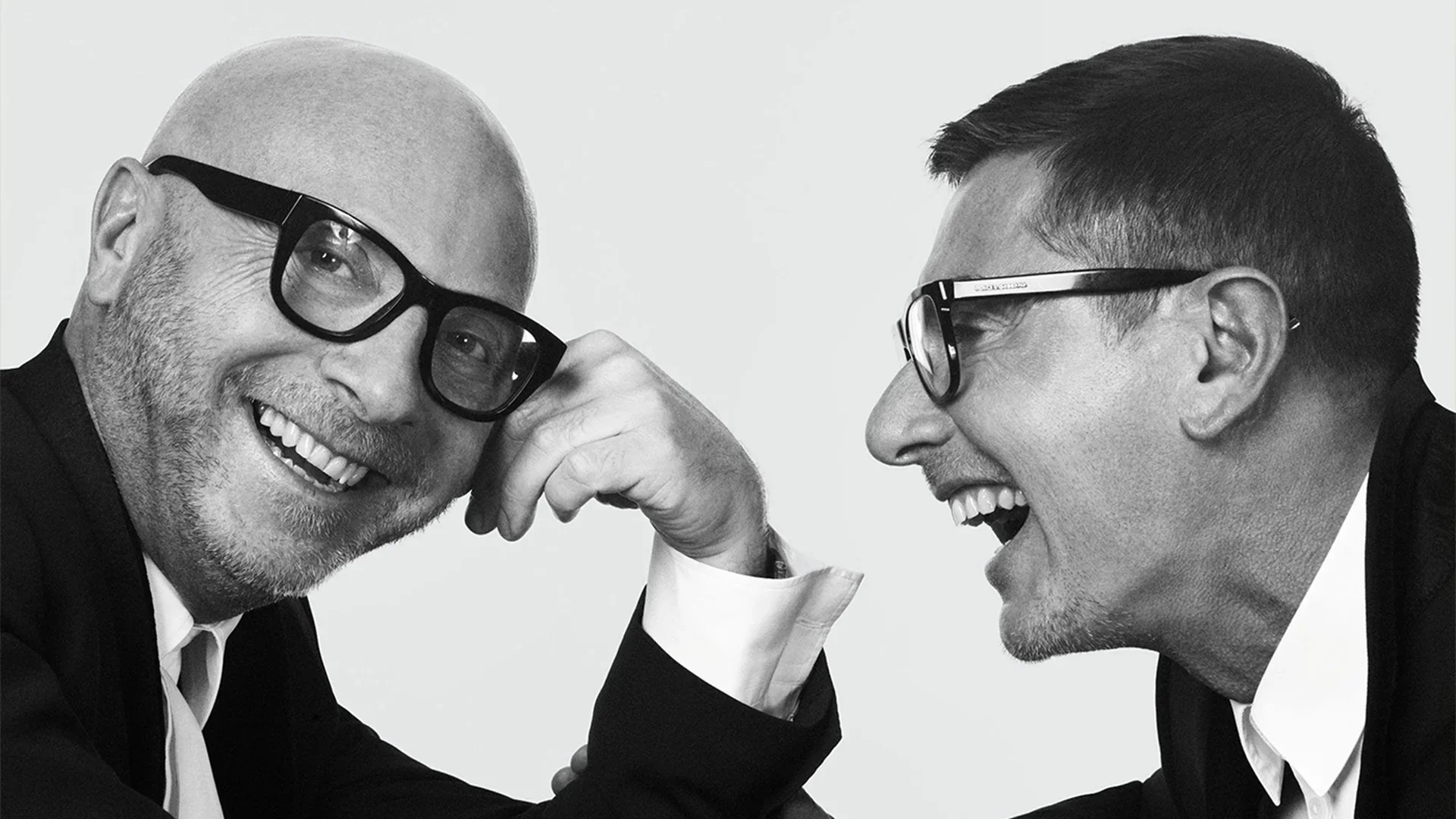
Domenico Dolce and Stefano Gabbana.
As Stefano Cantino steps in and the house confronts a harsher luxury market, the question is no longer whether it can command attention, but whether it can convert that attention into endurance.
There are moments in fashion when a change in title is merely administrative, the sort of corporate rearrangement that briefly animates the trade press before dissolving into the daily churn of collections, campaigns and quarterly reports. And then there are moments that reveal something more structural: a shift in how power itself is held inside a house.
Dolce & Gabbana appears to be entering the latter.
Stefano Cantino’s appointment as co-chief executive alongside Alfonso Dolce, following Stefano Gabbana’s step back from the chairmanship, is not, at least on the surface, a creative break. The visual language of the house — black lace, Sicilian romanticism, devotional excess, familial mythology, sensuality sharpened by sentiment — is unlikely to disappear. Stefano Gabbana remains creatively involved. The runway, one imagines, will continue to speak in the house’s unmistakable grammar.
What is changing is something quieter and in many ways more consequential: the structure around the brand.
For decades, Dolce & Gabbana has existed as one of the last truly founder-sovereign houses in luxury, a company whose commercial and symbolic authority were deeply intertwined with the force of its creators. In stronger years, that model could read as purity. The brand remained singular, emotionally authored, and resistant to the flattening effects of corporate luxury.
But markets change faster than mythology.
Today, the house finds itself operating in a markedly different environment — one in which cultural visibility no longer guarantees retail momentum, and where even the most iconic brands are being asked to justify themselves not only in editorial terms, but in financial ones.
That is what makes this leadership shift important.
The real challenge facing Dolce & Gabbana is not relevance. Few houses remain so immediately legible. It is one of the rare brands that still carries a fully formed world, instantly recognizable across runway imagery, celebrity dressing and social media. The problem is not attention.
The problem is conversion.
Luxury, in this cycle, is experiencing a deeper separation between symbolic power and commercial performance. Consumers continue to engage with brands as cultural events, but purchasing behavior has become far more selective. Admiration travels quickly. Sales do not necessarily follow at the same velocity.
This is where Dolce & Gabbana becomes a particularly revealing case study.
The house remains culturally loud, but the broader market has cooled. Global discretionary spending has softened, and even within resilient luxury segments, customers are buying with more restraint and sharper intent. Aspiration remains intact. Impulse has weakened.
For a house built on emotional heat, that distinction matters enormously.
Cantino’s arrival should therefore be read less as a stylistic intervention than as an institutional one.
His background — spanning Prada, Louis Vuitton and Gucci — places him squarely in the disciplines that matter most in a market like this: communications, brand architecture, commercial structure and operational clarity. He is not being brought in to give Dolce & Gabbana a new face. He is being brought in to give it a more durable framework and durability is the operative word.
The company is navigating a more demanding financial climate, with debt refinancing and profitability pressures making it increasingly important to reassure lenders, partners and markets that the business can function with greater discipline.
That does not mean softening the brand.
If anything, the greater challenge is the opposite: how to professionalize without neutralizing.
Dolce & Gabbana’s value has never resided in moderation. It has always drawn power from excess — visual, emotional, symbolic. Its authority comes from certainty, from a world so fully authored that it resists dilution.
That is precisely what makes institutional restructuring so delicate.
The risk for founder-led houses is rarely irrelevance. It is overdependence on founder force as an operating system.
What works brilliantly as vision can become fragile as structure. This is the broader question now facing the company: can founder energy continue to function as a sustainable commercial model in a harsher luxury cycle?
Beauty is likely to be central to the answer.
As fashion becomes a less predictable volume business, adjacent categories such as beauty, fragrance, accessories and home increasingly carry the burden of scale. These are the categories through which aspiration becomes repeatable revenue.
Fashion creates the halo. Beauty monetizes it.
That logic becomes especially important in an economic downturn, when the customer may hesitate on high-ticket purchases but still wants access to the symbolic world of the house.
This is where the next phase of Dolce & Gabbana will likely be decided.
Not in whether the runway changes dramatically, but in whether the business around the runway becomes more coherent, more diversified and more financially legible. The coming year will therefore be less about aesthetic reinvention and more about proof. Proof that the house can remain emotionally powerful while becoming operationally disciplined.
Proof that founder mythology can coexist with institutional maturity. Proof that visibility can once again become velocity. That is the more serious story unfolding here. Not simply who sits in which chair, but what kind of company Dolce & Gabbana now needs to become.
For all the industry’s obsession with spectacle, this may be the more telling transition: a house long defined by the force of its creators arriving at the point where image must answer to structure.
In fashion, that is rarely just a leadership story.
It is the beginning of a different era.
By Oona Chanel
