

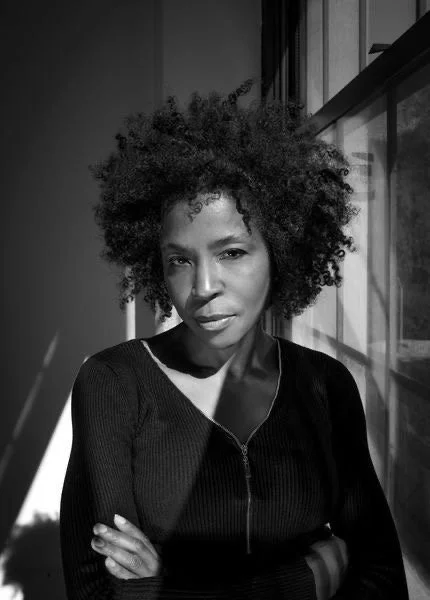
Lorna Simpson: The Artist Who Dismantled the Portrait Before Anyone Had Named What She Was Dismantling
She began making work in the mid-1980s in which text and image sat in deliberate, unsettled relationship to one another, refusing the assumptions of both documentary photography and conceptual art. Forty years on, she is one of the most important artists working in any medium. Author on the practice.
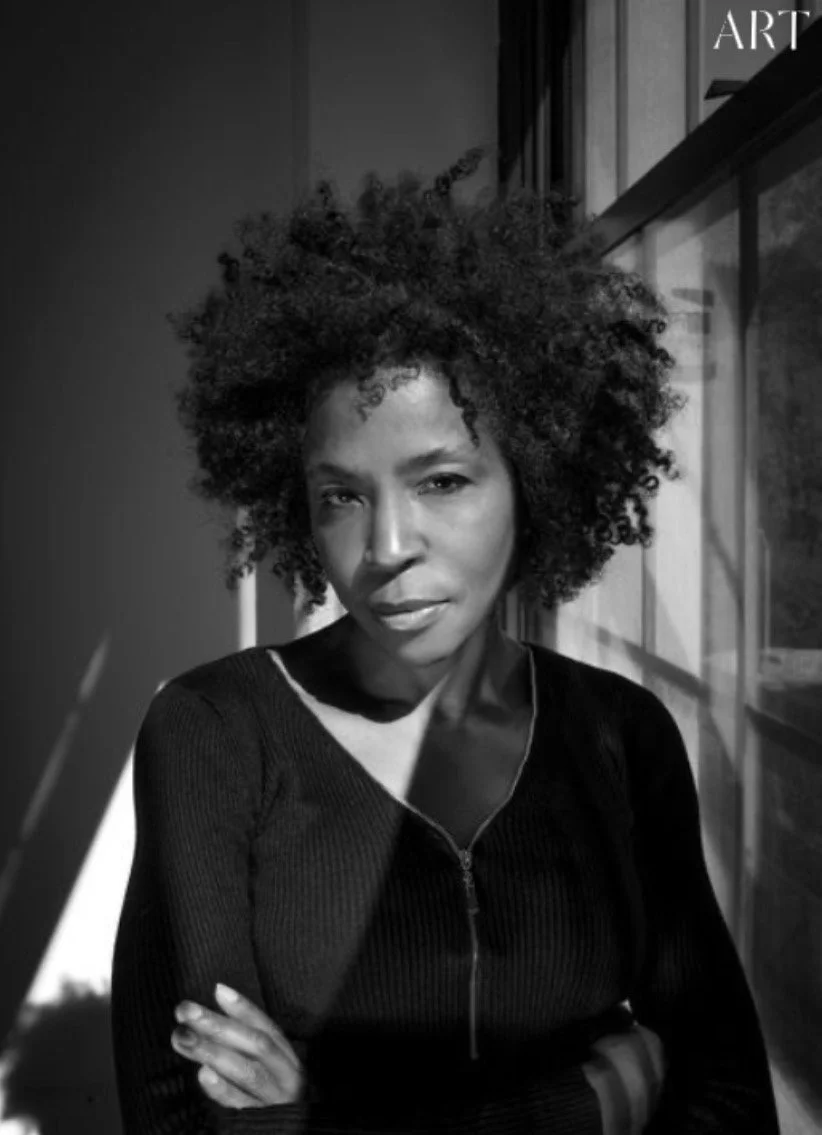
“The viewer is denied the conventional pleasure of the photographic portrait — the legible face, the readable expression, the psychological access that portraiture promises. What they are given instead is the awareness of that denial. Simpson was making that argument in 1985 before anyone had the critical vocabulary to name what it was.”
Lorna Simpson began making the work she is known for in 1985, at a moment when the art world had recently decided that photography was a legitimate fine art medium and had not yet decided what to do with Black women who were using it. Her early work — the large-scale pieces that pair photographic images with text panels in configurations that refuse the viewer the comfort of a stable reading — arrived in a space that had no adequate critical category for what they were doing, and proceeded to make that inadequacy the subject.
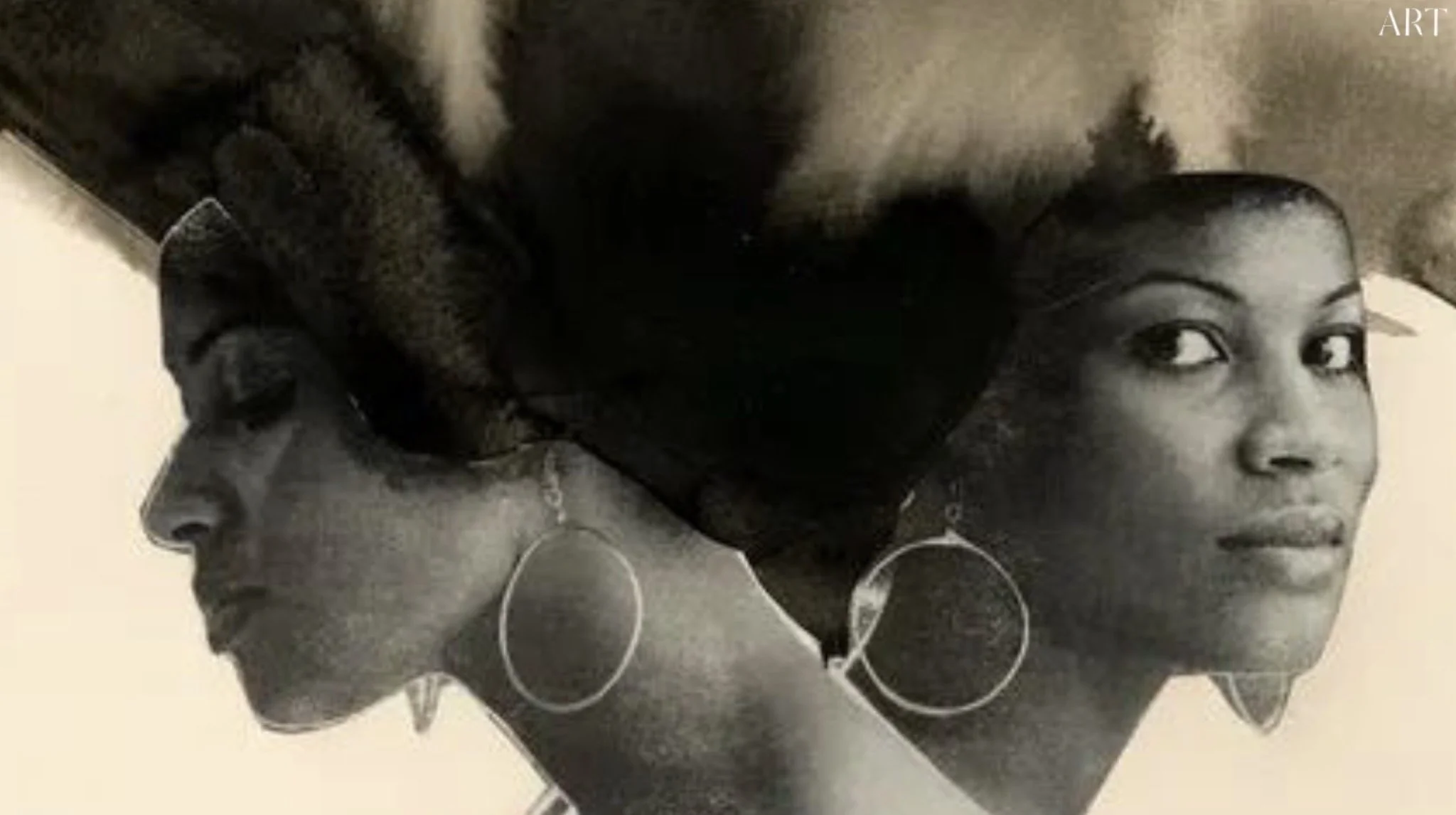
The formal approach is immediately legible and permanently resistant to simple description. A Simpson work from the late 1980s or early 1990s typically presents a photograph of a Black woman — often from behind, often cropped to remove the face, often the same figure repeated — alongside text that neither describes nor captions the image but enters into a relationship with it that is productive precisely because it is not resolving. The viewer is denied the conventional pleasure of the photographic portrait: the legible face, the readable expression, the psychological access that portraiture promises. What they are given instead is the awareness of that denial — the recognition that the conventions of portraiture serve certain kinds of bodies and not others.
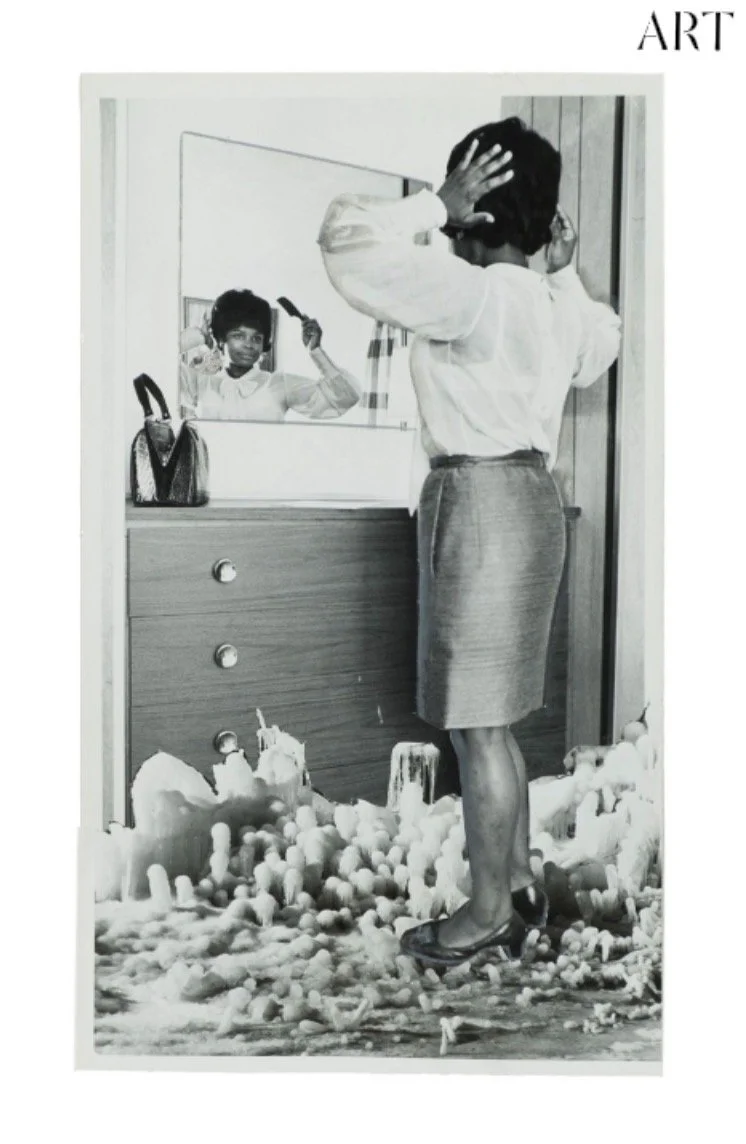
She was born in Brooklyn in 1960 and studied photography at the School of Visual Arts and then at the University of California San Diego, where she was part of a generation of artists — including Fred Wilson and Glenn Ligon — who were developing what would become the dominant critical vocabulary of American art in the 1990s: the examination of how institutions, conventions, and visual languages construct racial identity and determine whose experience is considered universal. Simpson was doing this before the vocabulary existed for it.
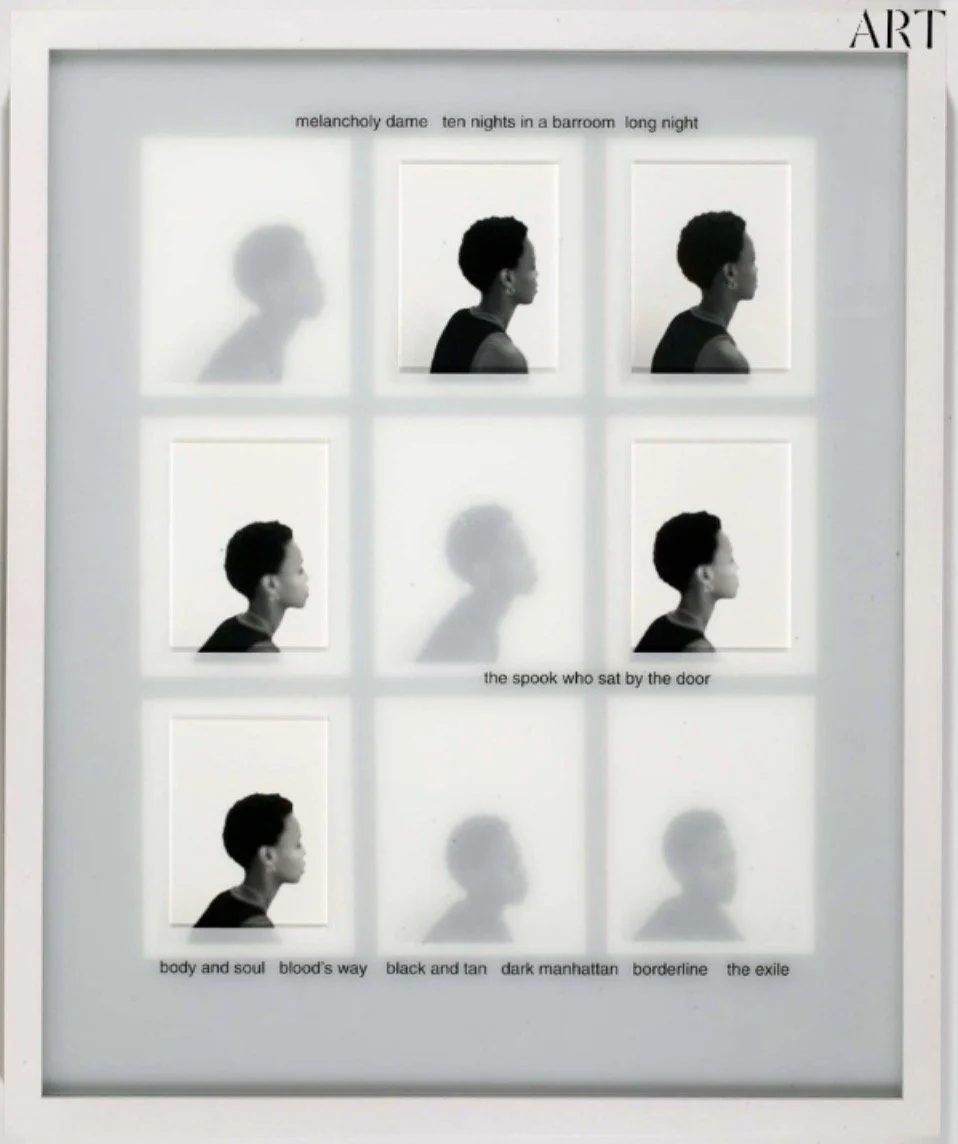
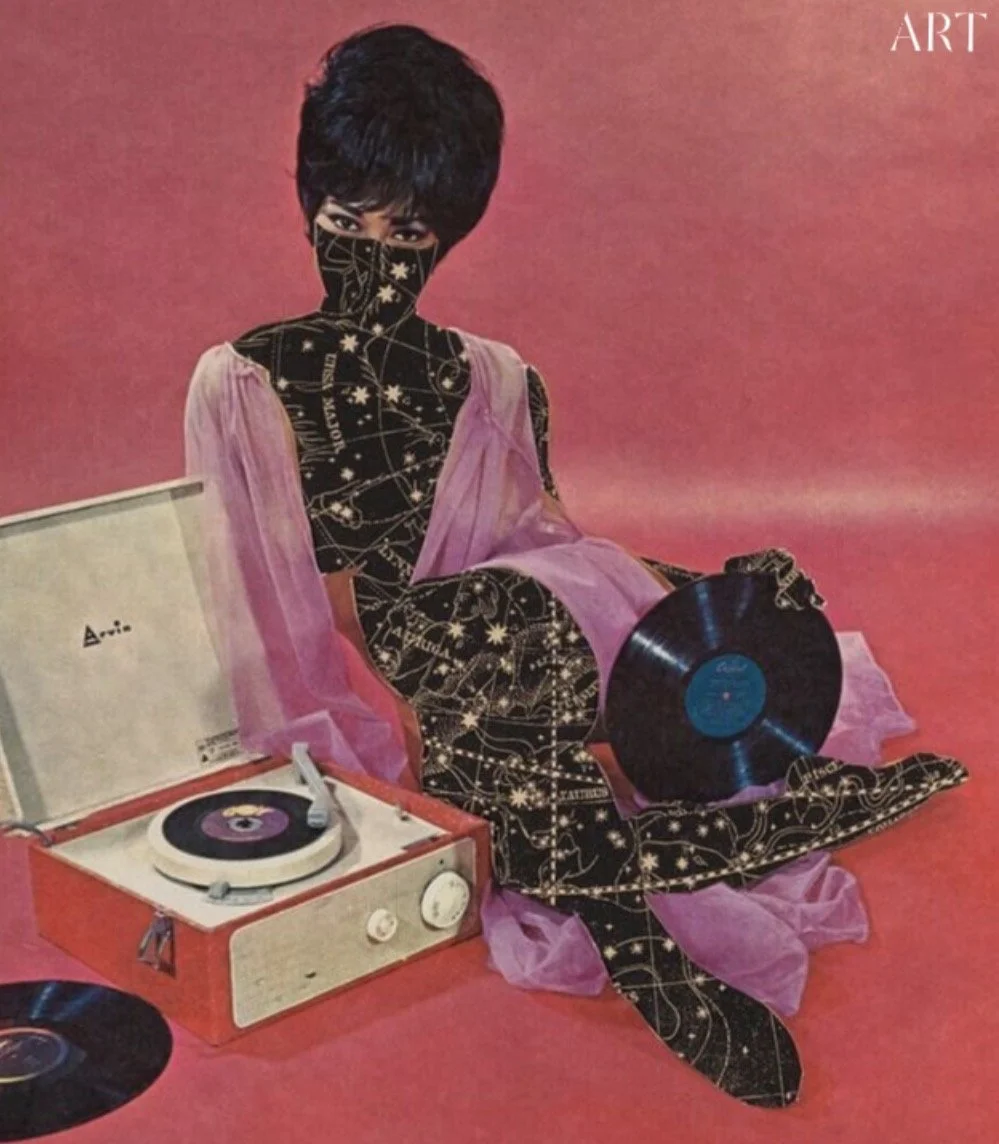
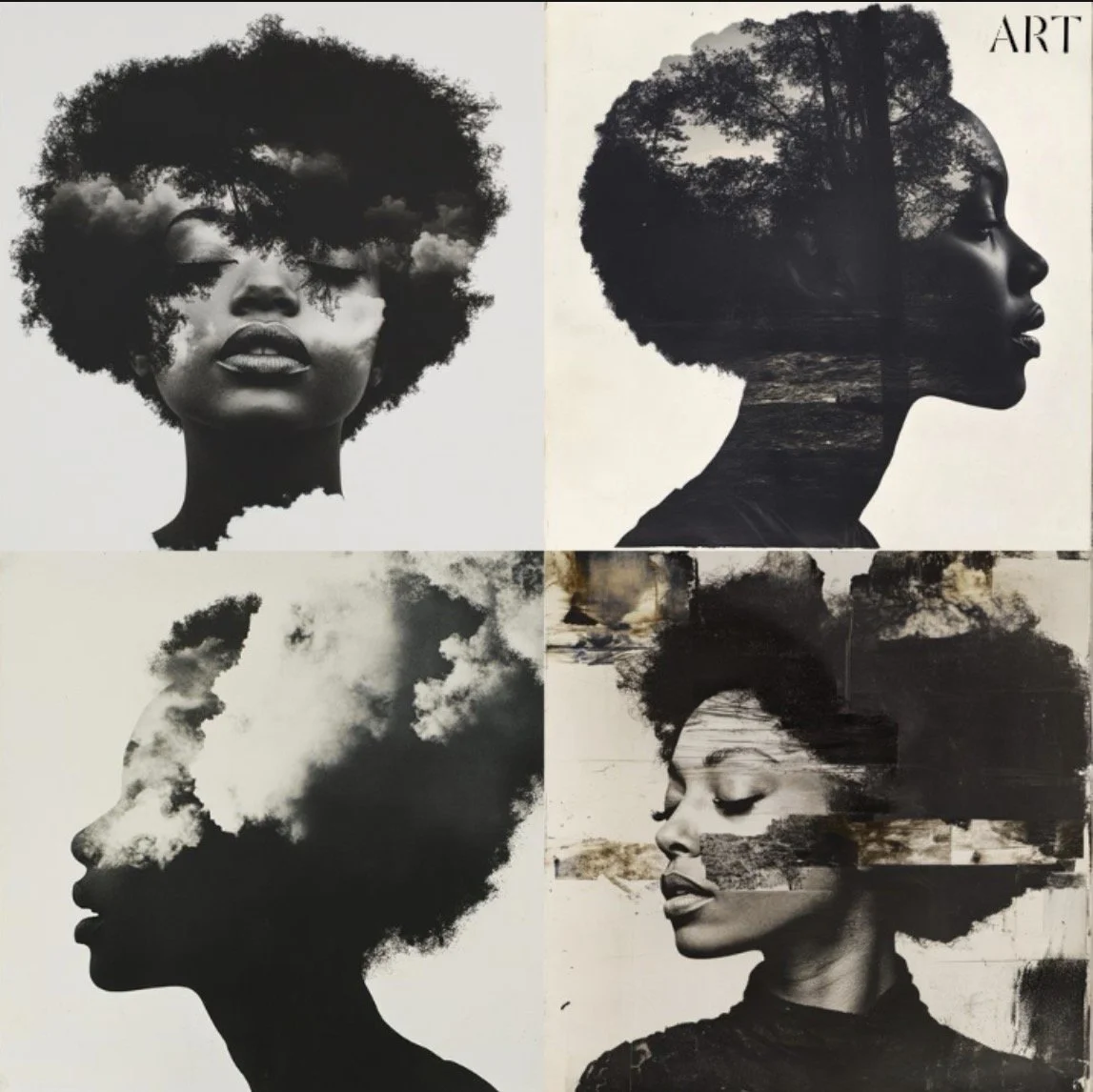
The work has evolved significantly across four decades without losing its formal consistency. The early photographs and text panels have given way to large-scale paintings, film installations, collage works, and multimedia pieces that incorporate archival imagery from Ebony and Jet magazines — a visual record of Black American life that she has used, with Theaster Gates and a small number of other artists, to build an alternative archive to the mainstream cultural record. Her Ebony and Jet collages — cutting, repainting, and recombining images from the magazines’ decades of publication — are among the most formally complex things she has made and among the most politically specific.
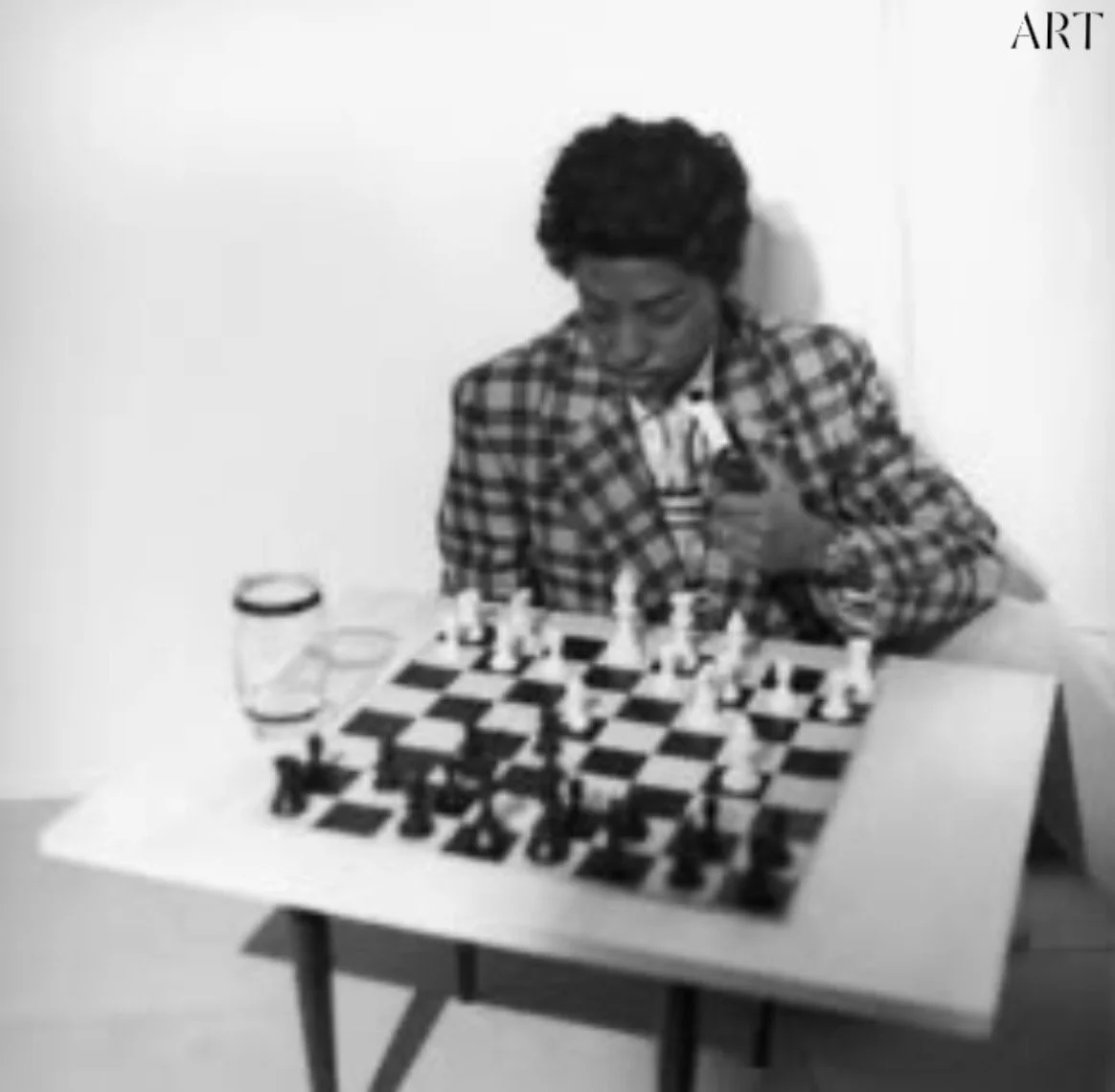
Her film work — which she has been developing since the 1990s and which has become central to her practice — operates in the same register as the photographs: the image is there, it is technically accomplished, and it withholds something. The specific quality of withholding is not withholding as refusal. It is withholding as an argument about what the image has always already withheld when the subject is Black and female, and what the conventions of looking have trained the viewer not to notice.
She is represented by Hauser & Wirth in New York, Los Angeles, London, and Zurich, and by Salon 94 in New York for specific works. She was the first Black woman to represent the United States at the Venice Biennale, in 1990, and the subsequent critical consensus around her work has been one of the most sustained in American art.
The secondary market for her work has been one of the most consistently active in American contemporary art across the past decade. Christie’s, Sotheby’s, and Phillips have all placed major works in their flagship sales.
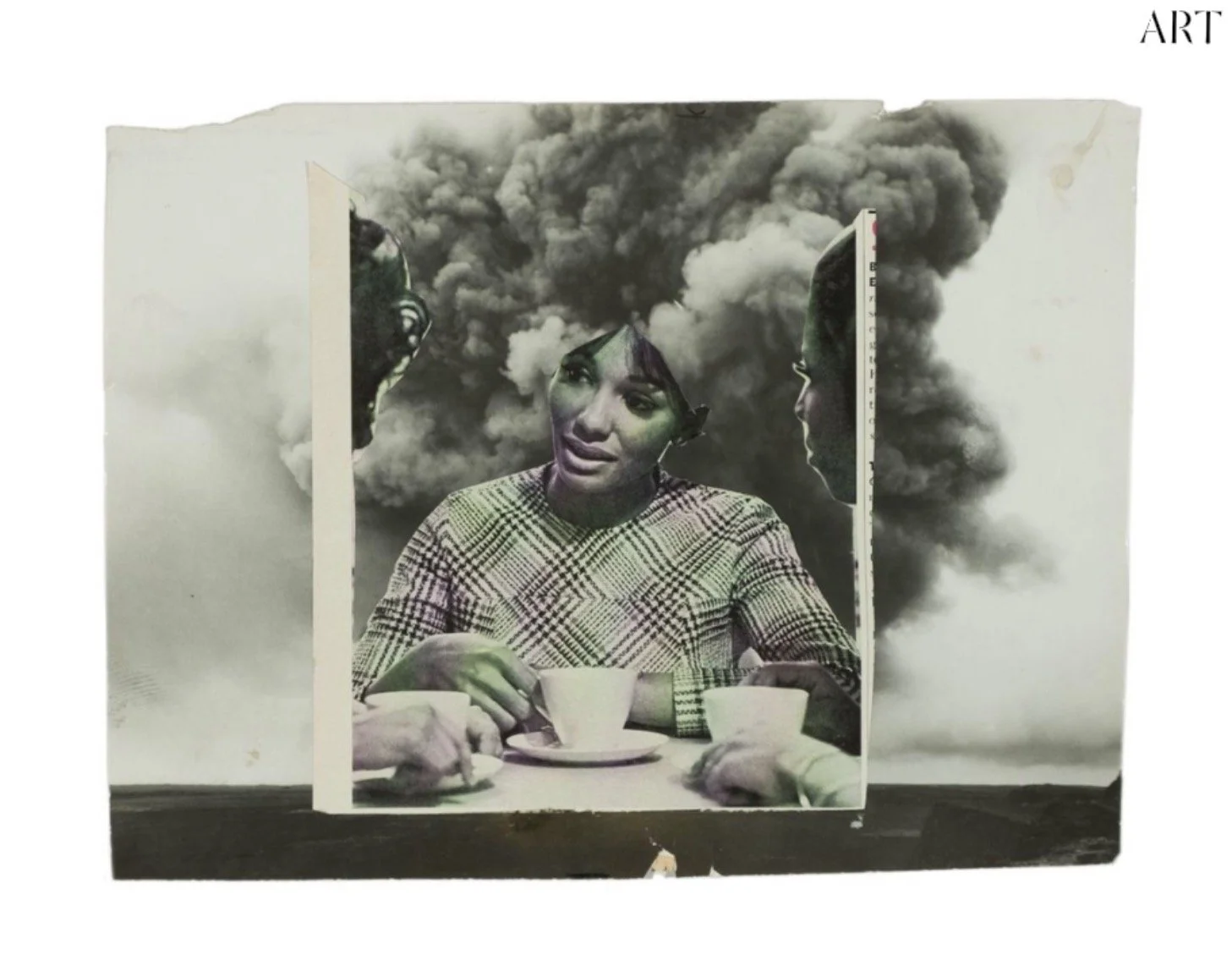
For the reader approaching the work for the first time: find the 1989 piece Guarded Conditions in reproduction or in person at the San Diego Museum of Contemporary Art, where it is in the permanent collection. Stand in front of it long enough to notice what it is not giving you. That noticing is the beginning of the work.
BY OONA CHANEL
Zanele Muholi: Visual Activist, Not Photographer. The Distinction Is the Practice.

They document Black queer lives in South Africa and internationally with a sustained, collaborative, decades-long commitment that the art world calls fine art photography and that Muholi calls visual activism. The distinction is not semantic. It is the basis of the entire practice.
“The news report produces a statistic. The portrait produces a person. The distinction between photography and visual activism is not semantic. It is the difference between an image that serves the culture that looks at it and an image that serves the life it depicts. Muholi has spent twenty years on the second side of that distinction.”

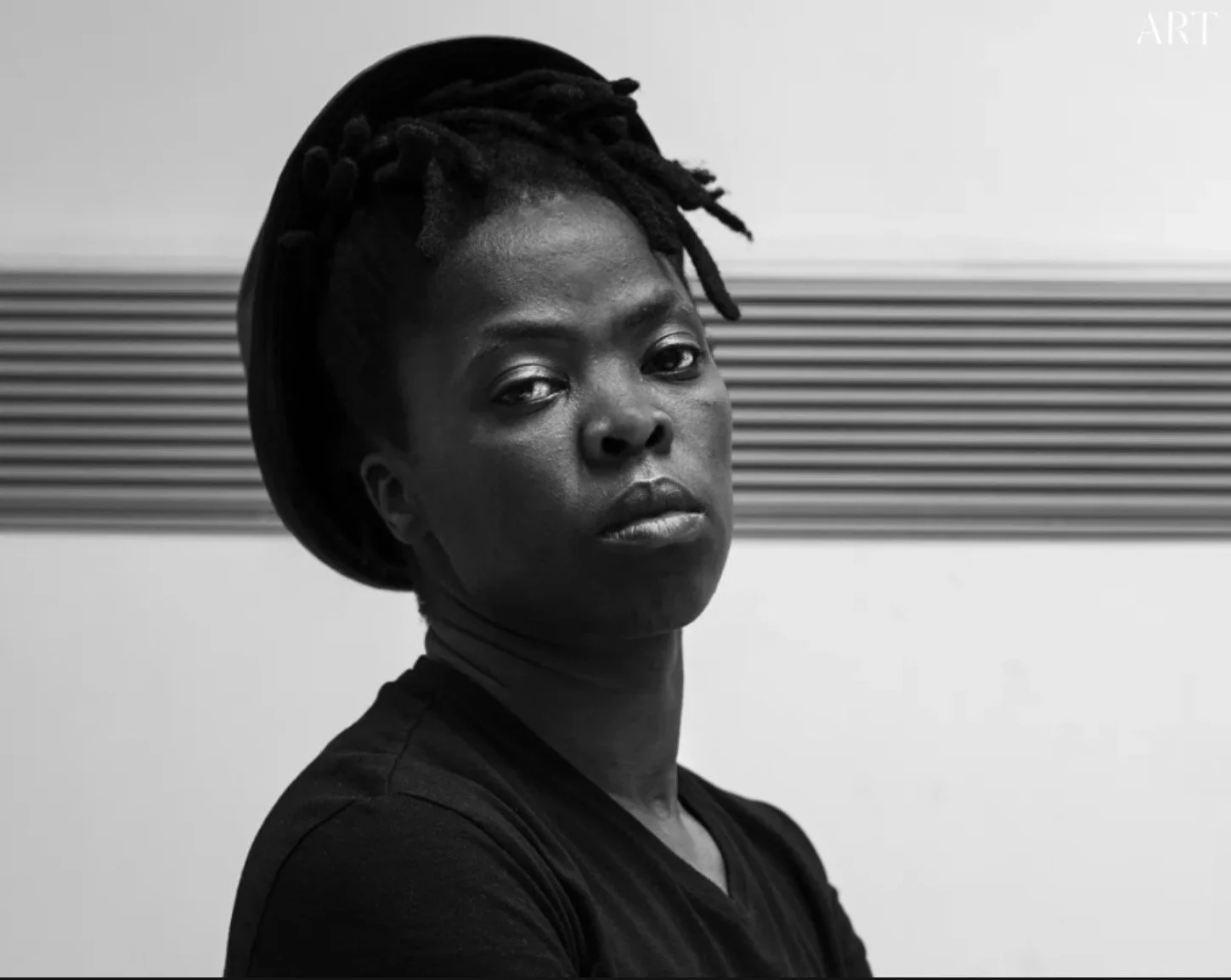
Zanele Muholi insists on a specific title: visual activist, not photographer. This is not false modesty about technical skill — the photographs are formally extraordinary, the prints large, the compositional intelligence evident and sustained across twenty years of work. It is a political statement about the purpose of the practice. Photography produces images. Visual activism produces a record — a sustained, deliberate, collaborative account of lives that the dominant visual culture has either rendered invisible or represented in ways that serve the dominant culture’s interests rather than the lives themselves.

Muholi was born in Umlazi, Durban, South Africa, in 1972, and began making photographs of Black lesbian and transgender communities in South Africa in the early 2000s, at a moment when the specific combination of homophobia, transphobia, racism, and poverty that characterised the lives they were documenting was producing specific and systematic violence. The corrective rape of Black lesbian women — a form of hate crime specific to the South African context — was documented in news reports; Muholi made portraits. The distinction is everything: the news report produces a statistic, the portrait produces a person.

The Faces and Phases series — which Muholi has been developing since 2006 and which now comprises several hundred portraits of Black lesbian and transgender individuals across South Africa and internationally — is the most sustained body of work in their practice. Each portrait is made with the full participation and agency of the subject, who chooses their presentation. The resulting images are specific and irreducible: each person is themselves in this photograph, and the accumulation of specificity across several hundred images is what produces the political meaning of the series.

The Somnyama Ngonyama (Hail the Dark Lioness) series, begun in 2012, turns the camera on Muholi themselves. The self-portraits use extremely high contrast in the darkroom printing process to emphasise the deep black of the skin, using visual extremity as a formal response to a history of visual representation that has consistently sought to lighten the representation of dark skin. The portraits are confrontational, beautiful, and historically knowing.

Muholi is a co-founder of the Forum for the Empowerment of Women (FEW), a non-profit support and advocacy organisation for Black lesbian women in South Africa. The visual activism and the organisational activism are continuous rather than parallel: the photographs serve the advocacy, the advocacy generates the permission and the trust that makes the photographs possible.
They have exhibited at the Museum of Modern Art and the Tate Modern, and are in the permanent collections of major institutions globally. The monographs — Faces and Phases published by Steidl and Somnyama Ngonyama by Aperture — are the essential documents.

For the collector: Muholi is represented by Stevenson Gallery in Cape Town and Johannesburg, and by Yancey Richardson Gallery in New York. The secondary market has been active and is accelerating ahead of the institutional recognition.
The news report produces a statistic. The portrait produces a person. Muholi has spent twenty years on the second side of that distinction.
BY OONA CHANEL
Nadav Kander: Light as the Subject, Not the Tool
He photographed the Yangtze River over five years and won the Prix Pictet. He photographed the Obama administration for the New York Times Magazine. His practice is about what light does to time. Author on a body of work the market has not yet caught up with.
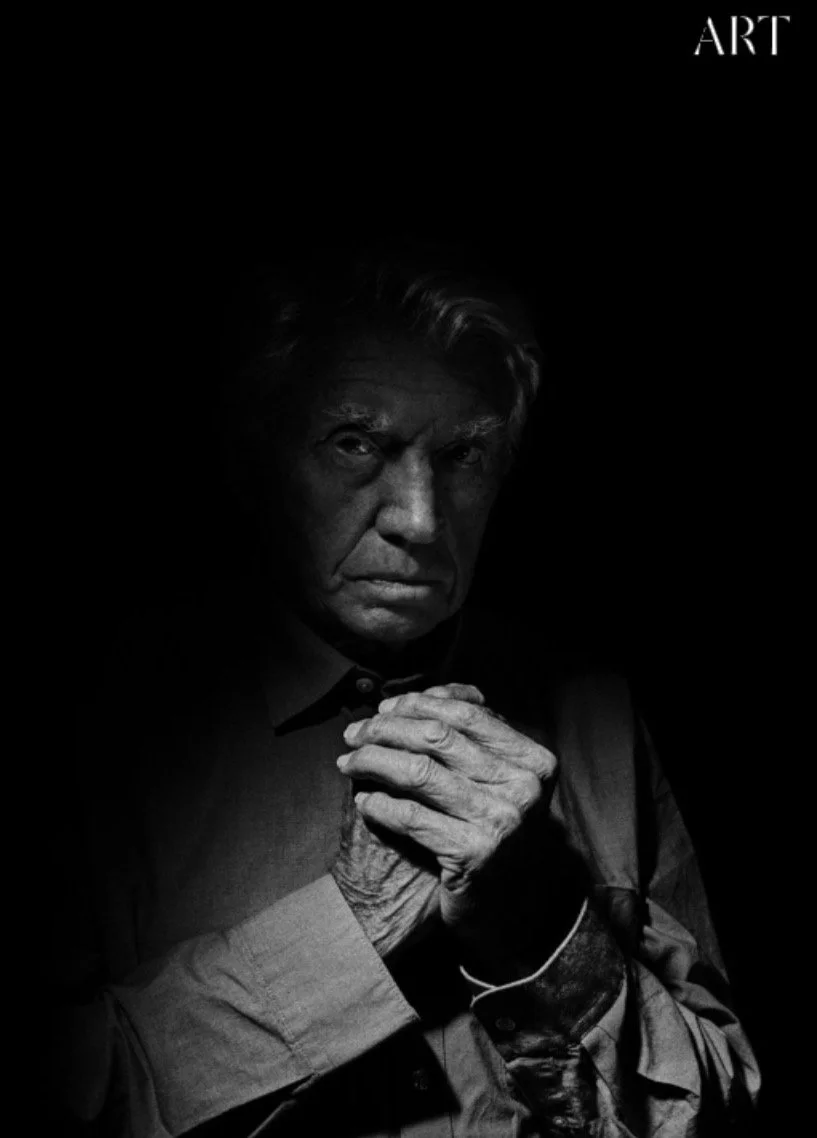
“The quality he brings to portraiture is the same quality he brings to landscape: the specific attention to the quality of light on a surface — whether a river at dusk or a human face in a grey London studio — as the primary carrier of meaning. The subject changes. The practice does not.”
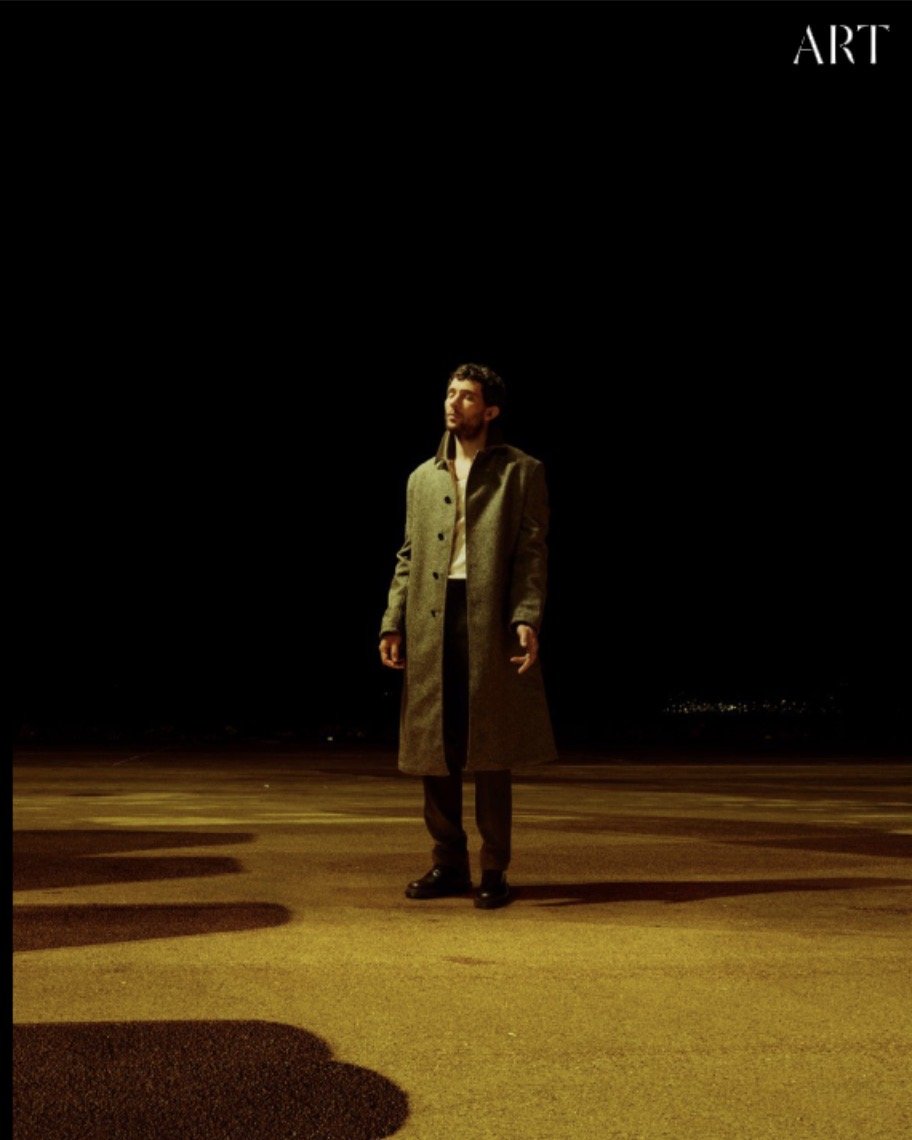
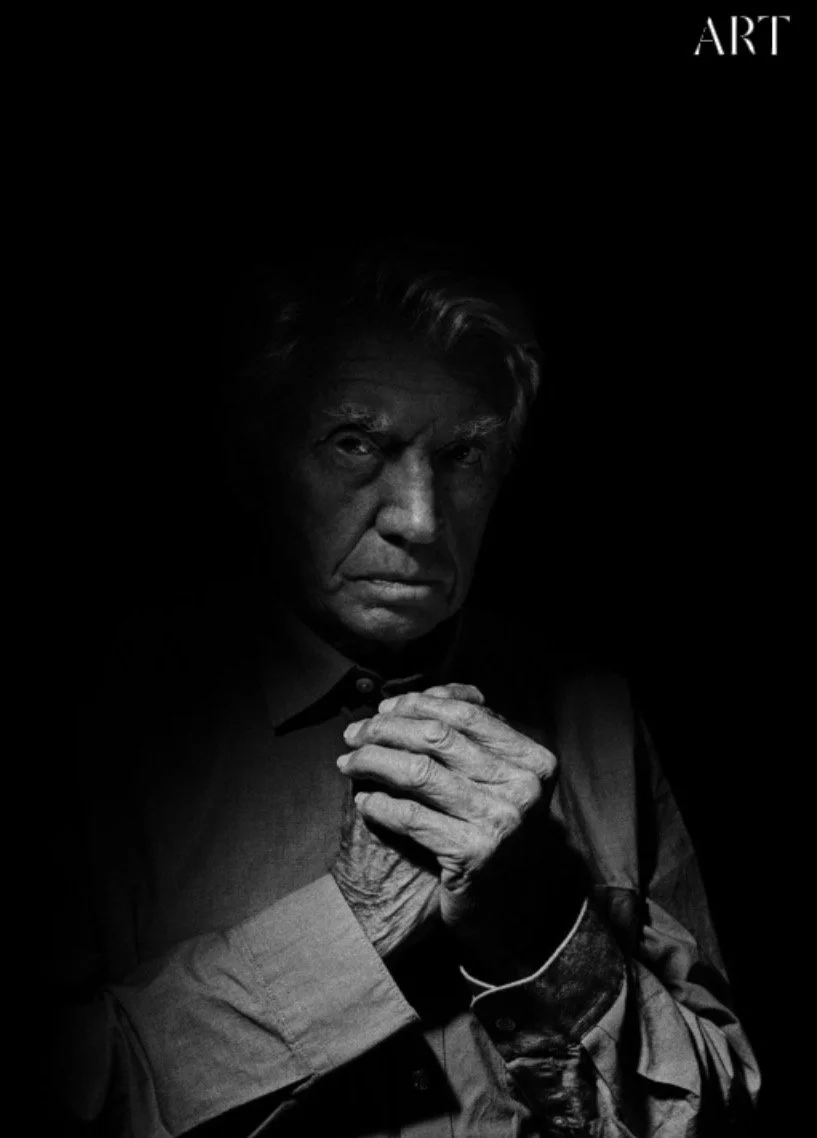
Nadav Kander makes photographs in which the light is not the technical condition that makes the photograph possible but the actual subject of the image. This distinction, which sounds formal and becomes experiential the moment you stand in front of a large-scale print, separates his work from the very large category of technically accomplished photography in which light serves composition but does not itself carry meaning.
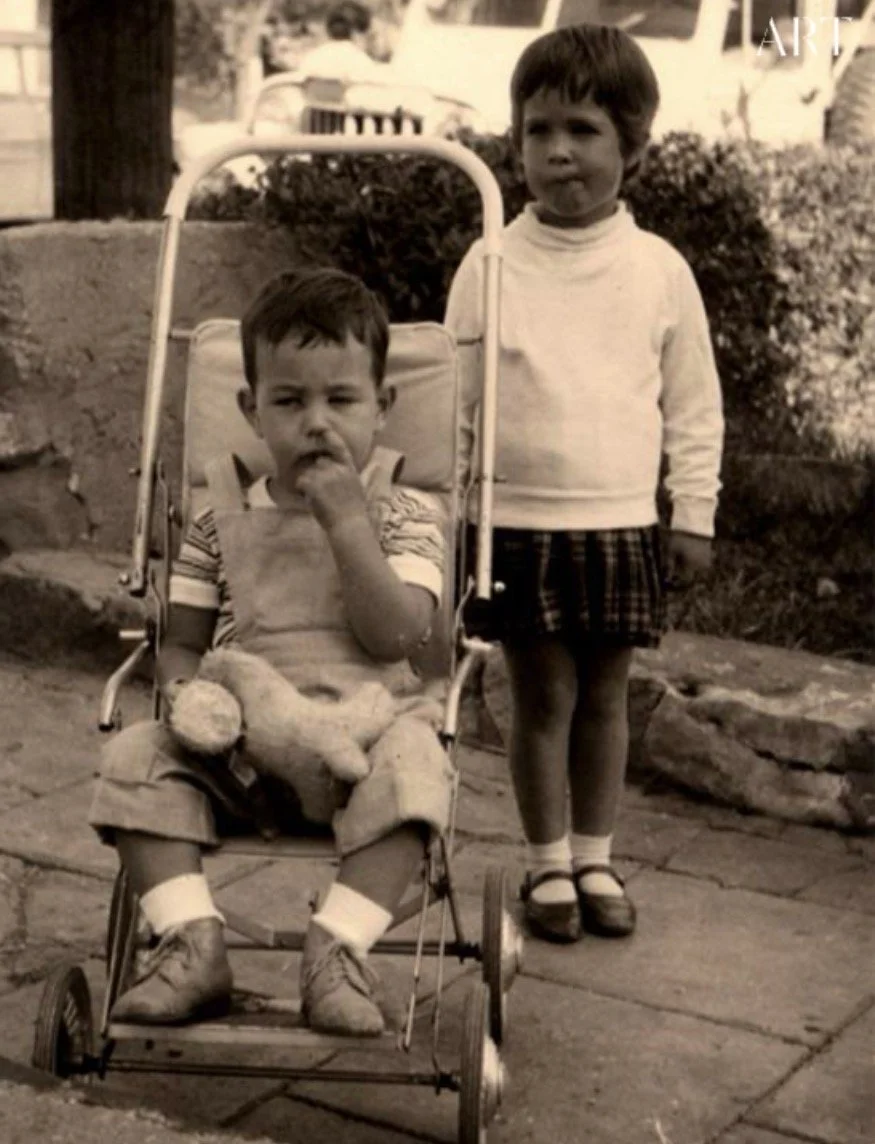
He was born in Tel Aviv in 1961 and grew up in South Africa before settling in London in the late 1980s. The biographical geography matters: the specific quality of South African light, which is harsher and more directional than European light, and its relationship to the landscape’s scale, is present in his eye even when he is photographing in China or the American South. The light he finds in any landscape has a relationship to the light he grew up in — not quotation but calibration.
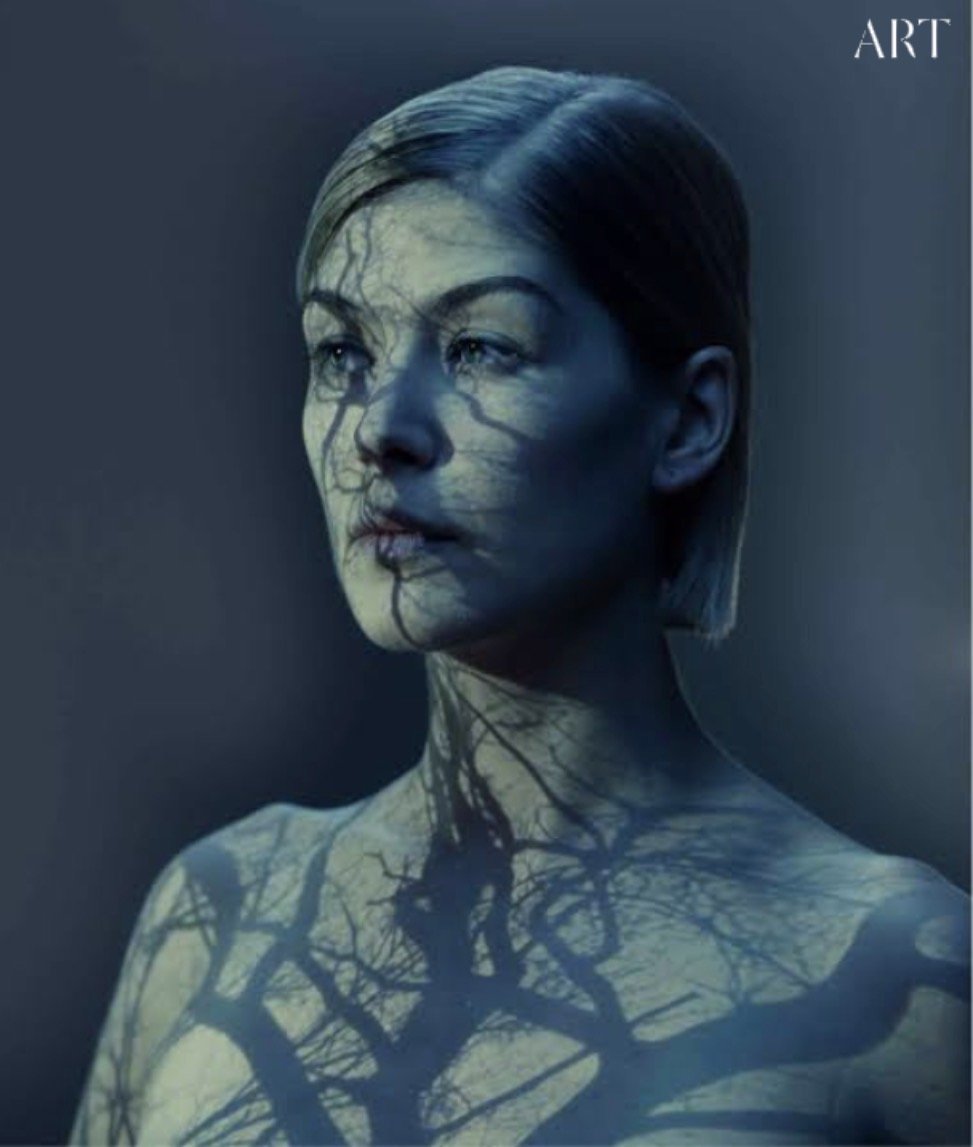
The Yangtze — The Long River project, which produced his most internationally recognised body of work, involved five years of travel along the full length of the Yangtze River, photographing the landscape and the people living along it during China’s rapid industrialisation. The images — large-format, desaturated, shot at dusk and dawn when the river creates its own atmosphere — are simultaneously documentary and abstract. The people in them appear as figures in a landscape undergoing a transformation too large for individual human figures to register. They are witnesses rather than subjects.
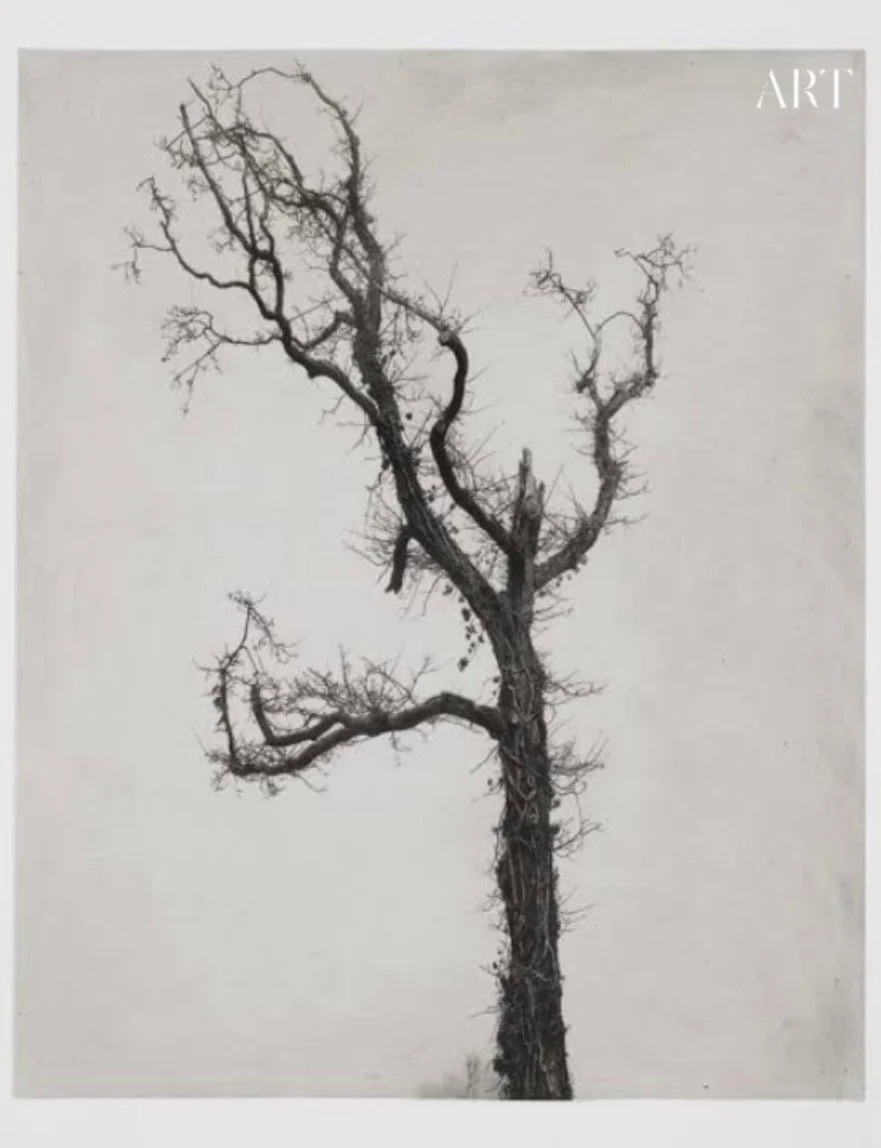
The Prix Pictet — the most significant photography prize for the intersection of photography and environmental concern — was awarded to the Yangtze series in 2009. The prize confirmed an international critical consensus that had been building across the previous decade of his landscape practice.
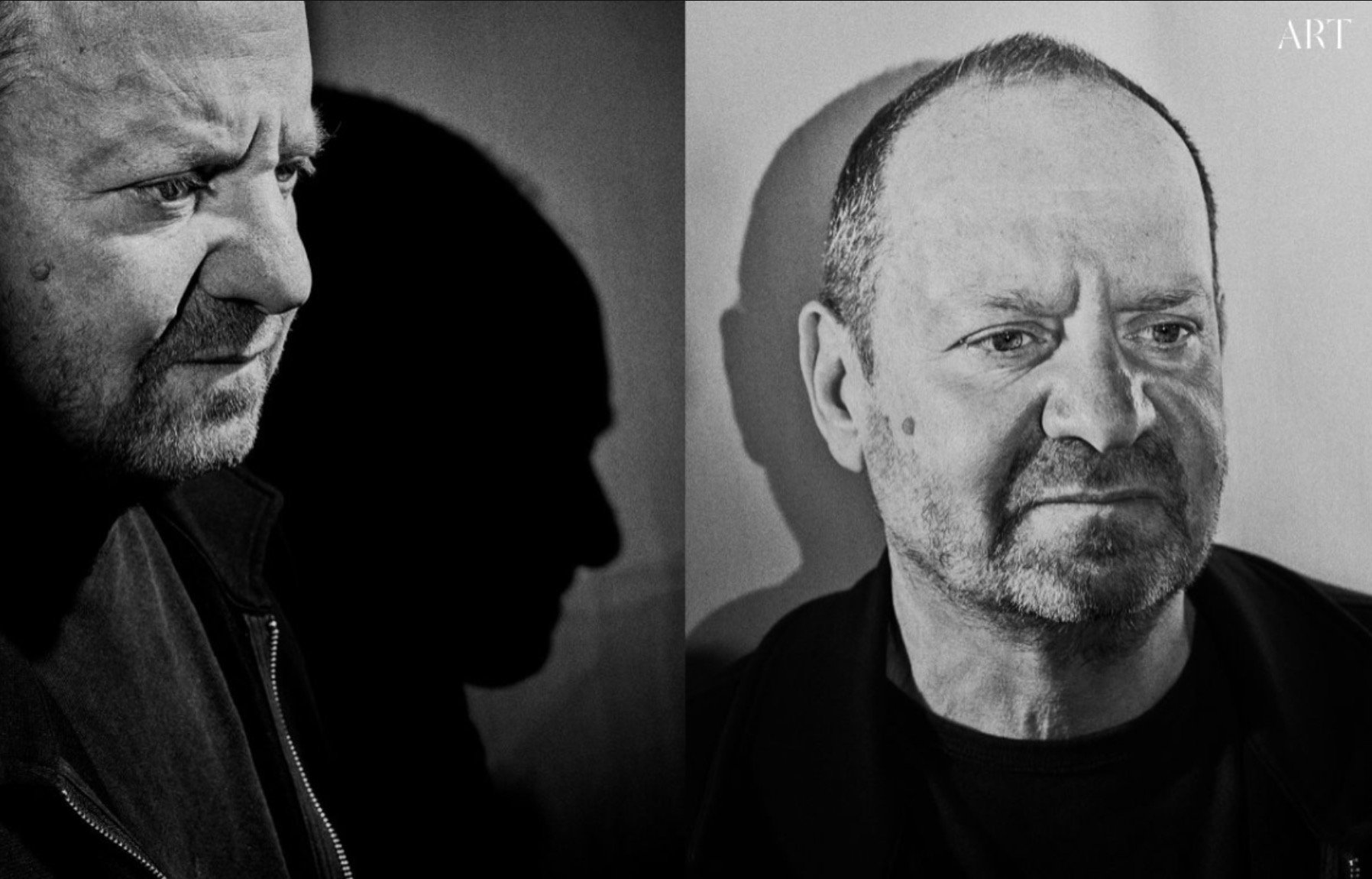
His portrait work — including the commission to photograph the Obama administration for the New York Times Magazine and the National Portrait Gallery commission for a series of portraits of British cultural figures — is formally continuous with the landscape work. The quality he brings to portraiture is the same quality he brings to landscape: the specific attention to the quality of light on a surface — whether a river at dusk or a human face in a grey London studio — as the primary carrier of meaning.
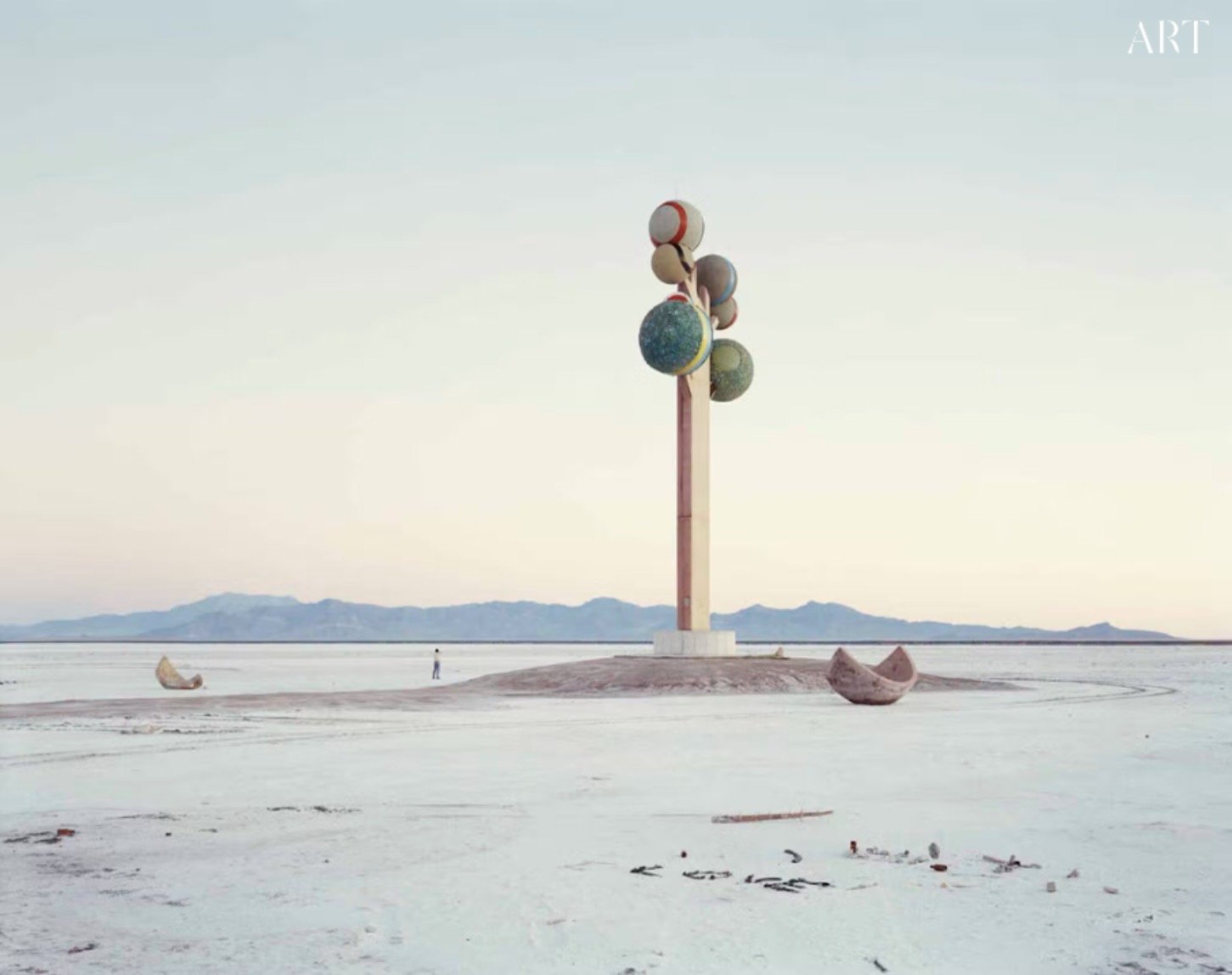
He is available for interview and editorial collaboration through his studio and Flowers Gallery. A pitch demonstrating familiarity with the Yangtze work and the relationship between his landscape and portrait practices will be received differently from a pitch demonstrating familiarity with his public reputation.
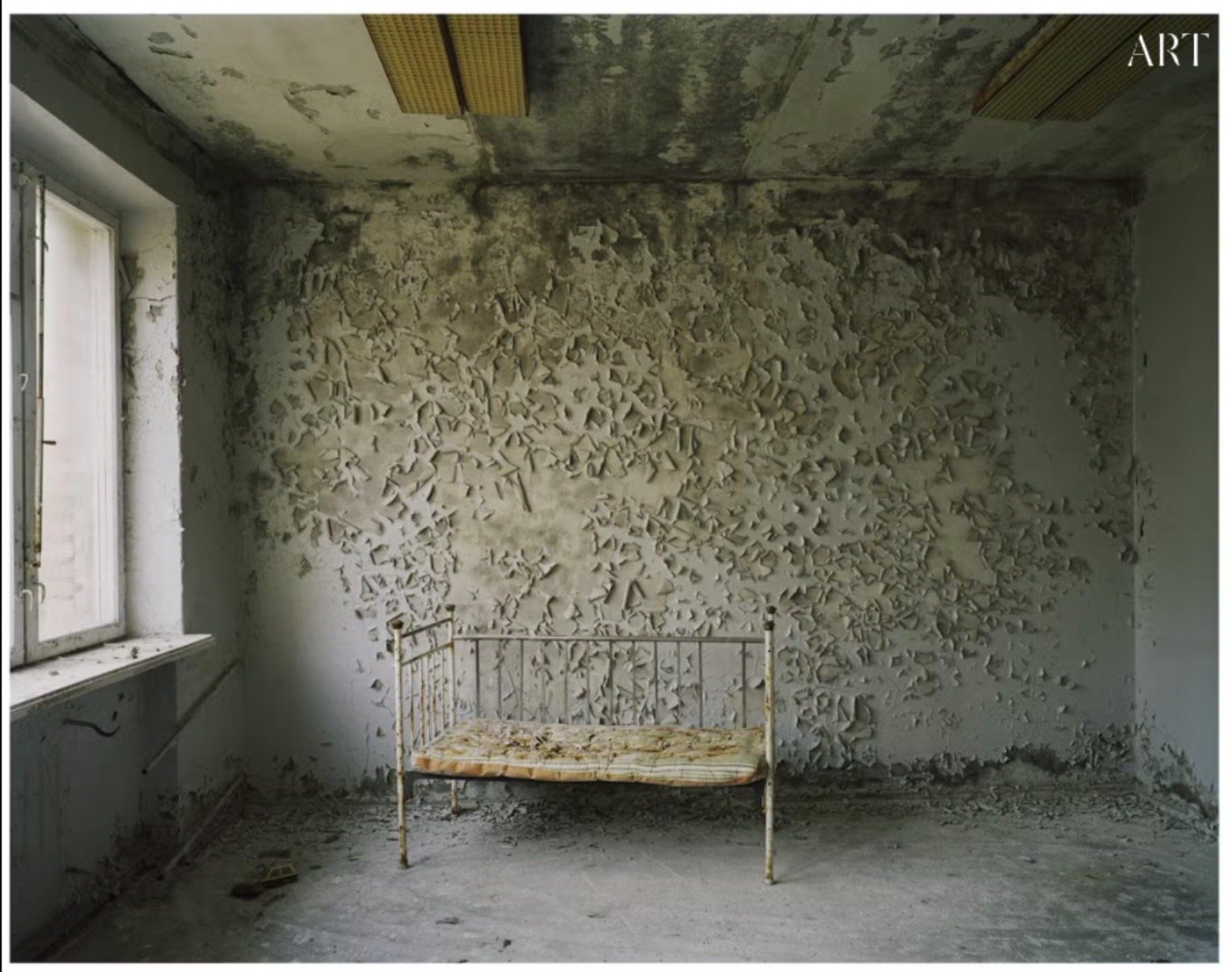
The secondary market for his work is at an early stage relative to the institutional recognition. The institutional collection presence — the National Portrait Gallery, the Victoria and Albert Museum, the Museum of Fine Arts Houston — suggests the market correction is approaching.
His most recent work — a series of photographs of the American South engaging with the landscape’s relationship to the history of slavery — has not yet had a major institutional presentation. When it does, the critical response will confirm what the practice has been demonstrating across three decades.
BY OONA CHANEL
Adjaye Associates and the Question of Who Gets to Design Cultural Monuments
David Adjaye was the first Black architect named on the Time 100 list. He designed the Smithsonian National Museum of African American History and Culture. His career has been interrupted by serious personal allegations. What his practice is, what the allegations mean for architecture, and what happens to the buildings.
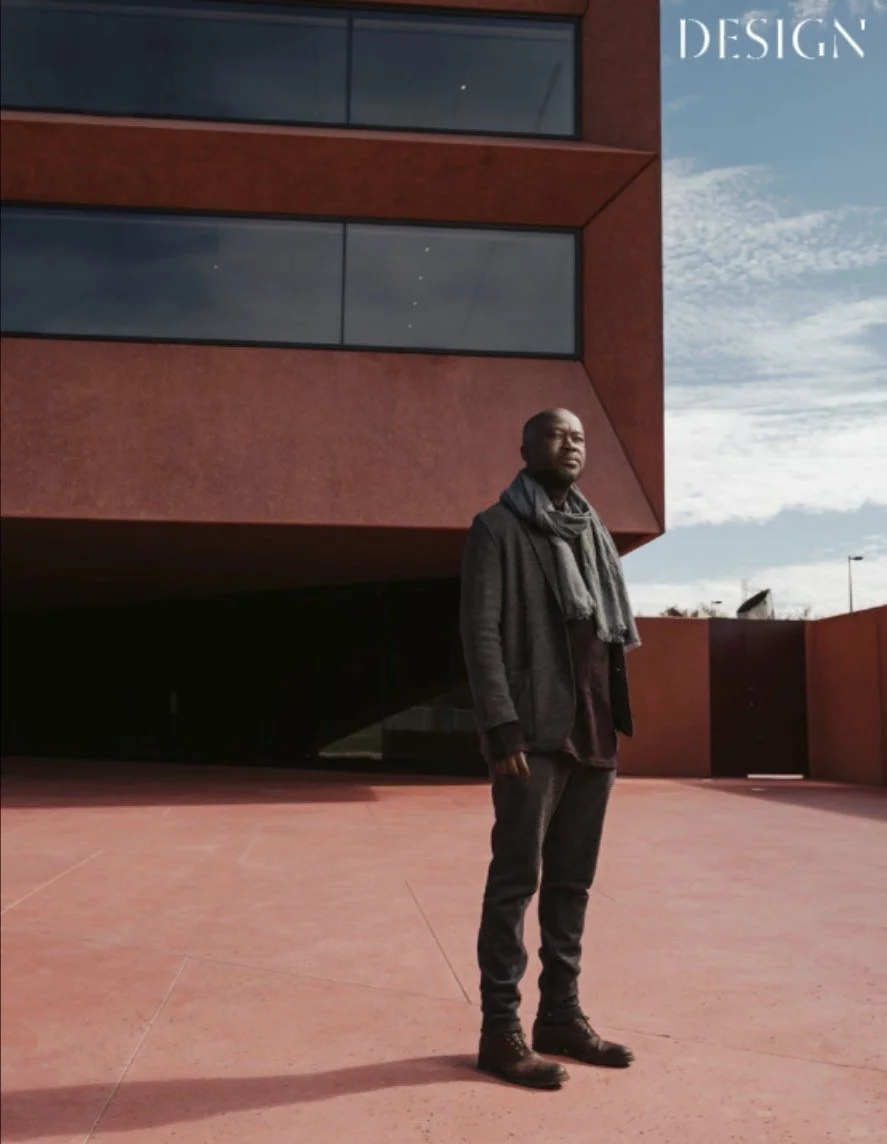
“The buildings are extraordinary. The circumstances are serious. Both things are true — and the architecture conversation needs to be able to hold both without collapsing either into the other. The attempt to resolve the tension by denying one side of it is the only thing that would actually dishonour both the work and the allegations.”
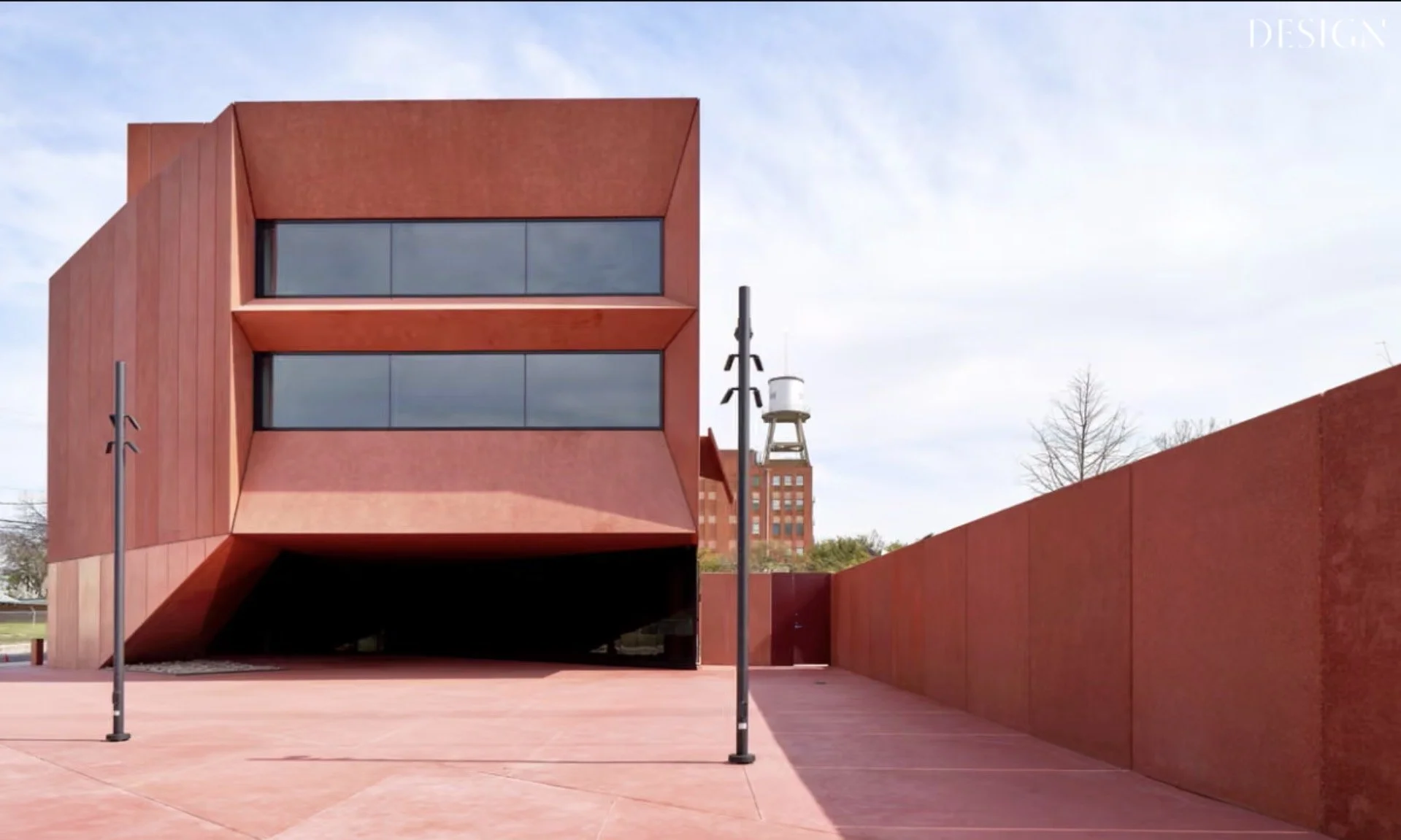
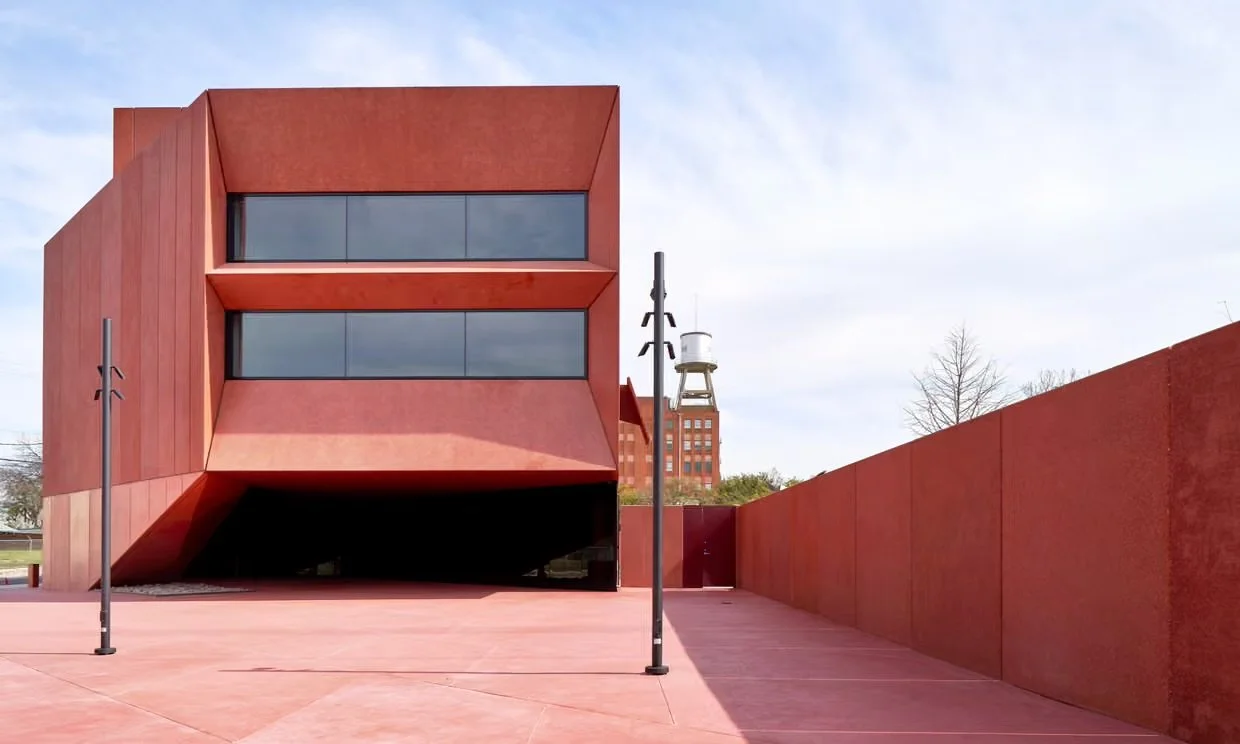
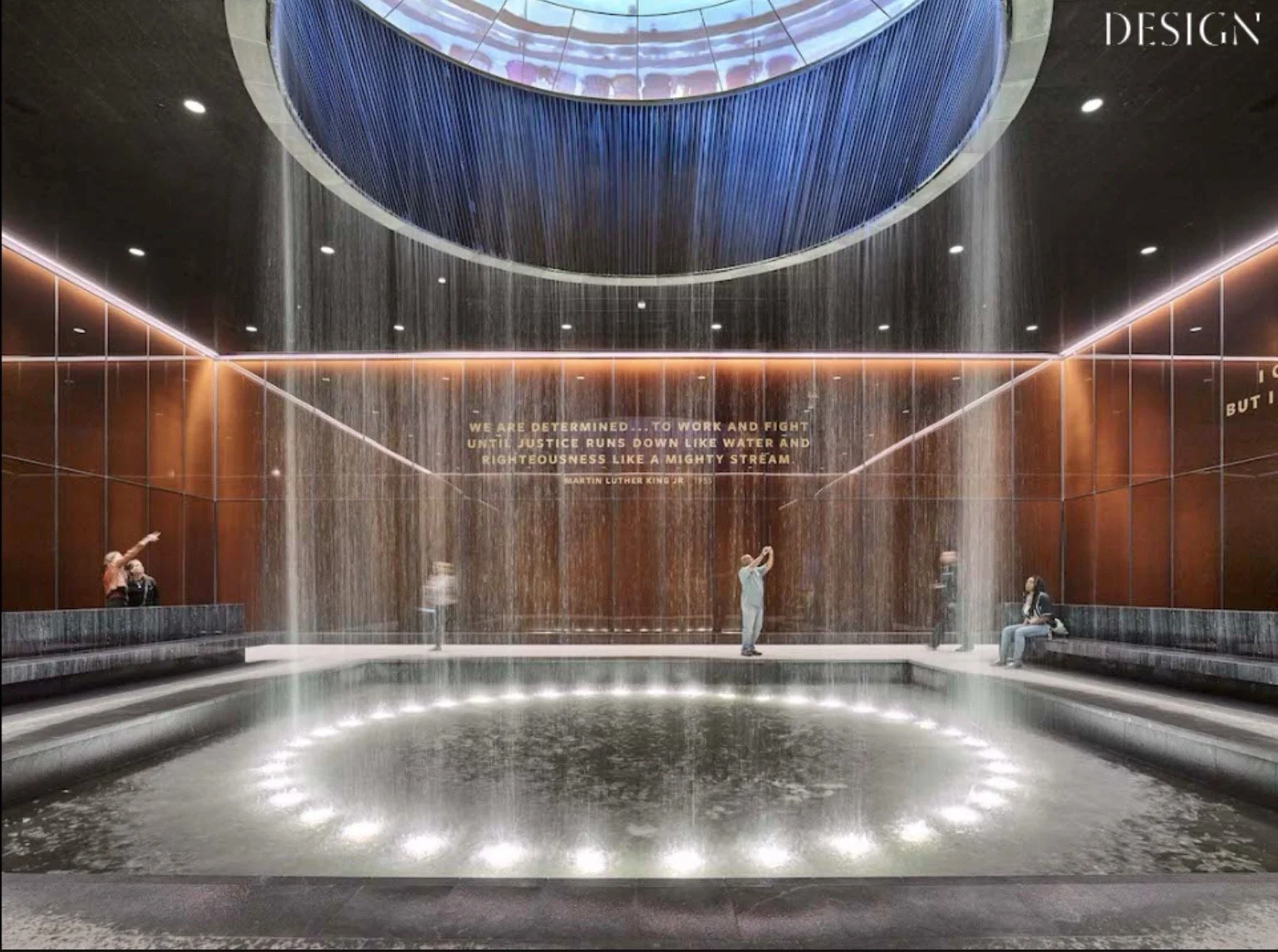
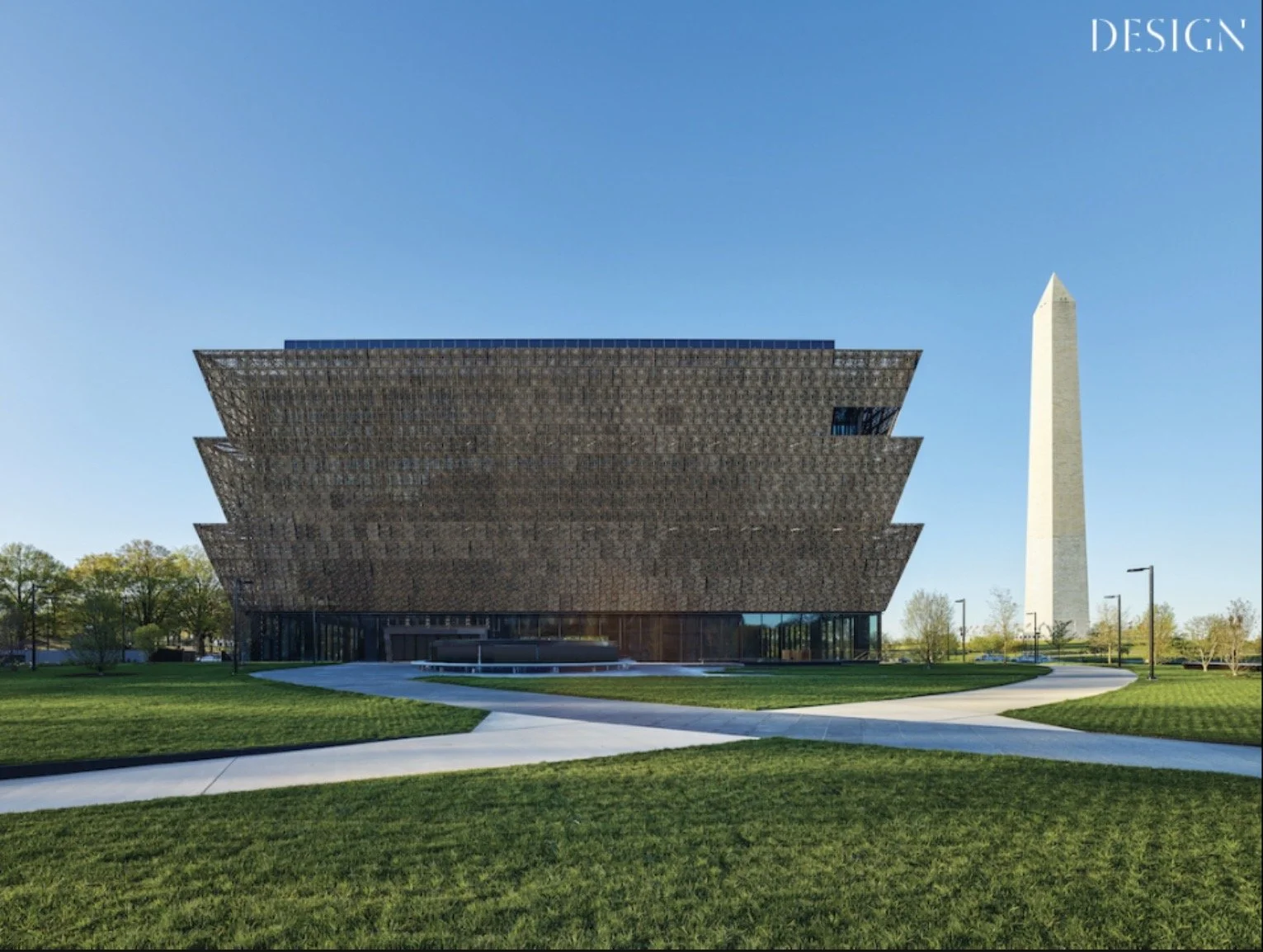
The National Museum of African American History and Culture, which opened on the Mall in Washington DC in September 2016, is the most visited museum in America in the years since its opening. It is also, by a considerable formal margin, the most architecturally significant building constructed in Washington in the twenty-first century. The three-tiered Corona structure — its exterior bronze-coloured aluminium panels referencing the ironwork of the antebellum South made by enslaved craftspeople, its orientation toward the Washington Monument and the Capitol deliberate and loaded, its interior spatial sequence beginning underground with the history of slavery and ascending toward contemporary Black cultural life — is a building making an argument with every design decision.
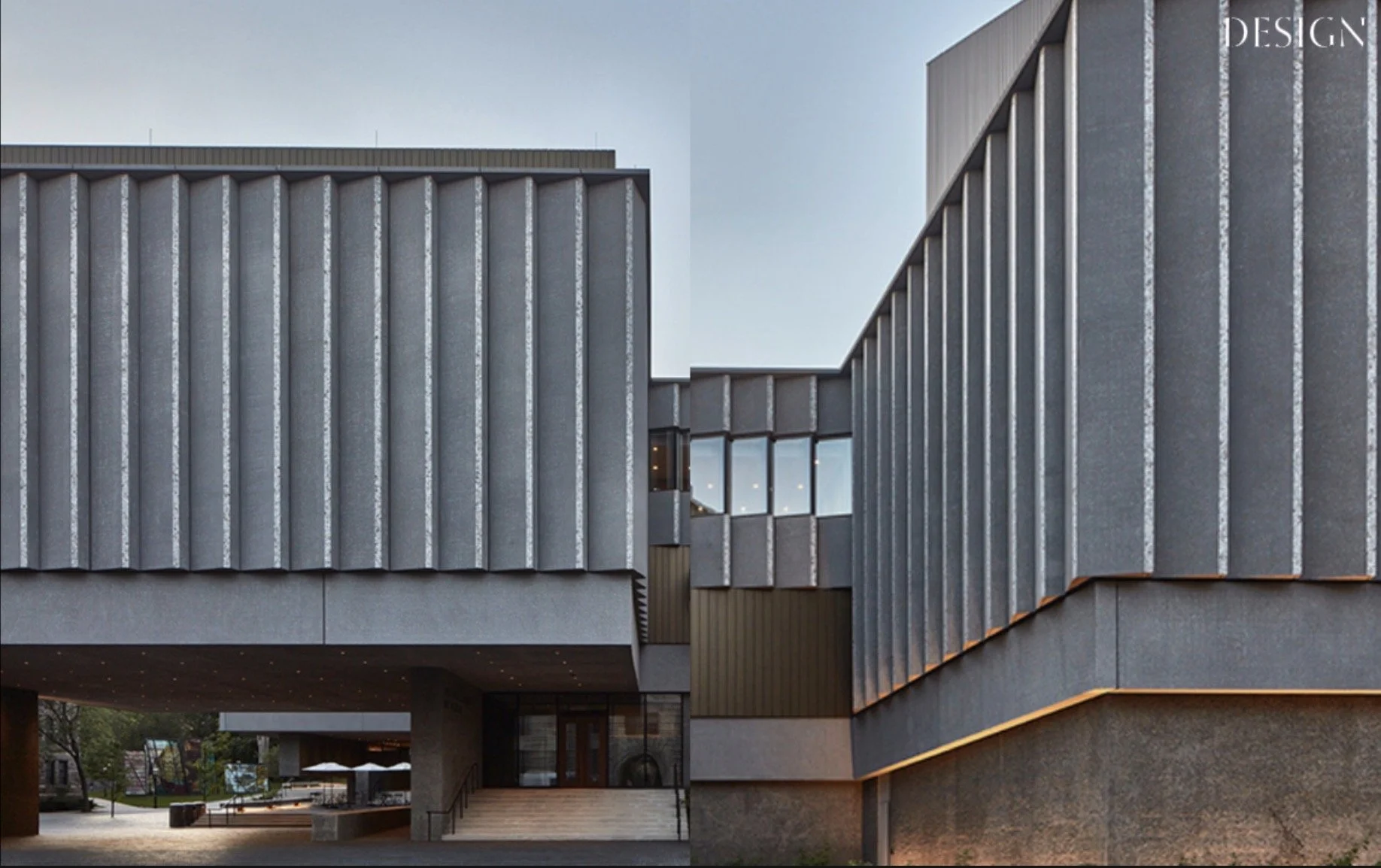
Adjaye was born in Tanzania in 1966 to Ghanaian diplomat parents, grew up across Africa and the Middle East, and trained at the Royal College of Art in London. He founded Adjaye Associates in 2000 and built a practice around commissions that other architecture offices were not receiving: cultural buildings and civic structures for clients and communities that the profession’s standard commercial relationships had historically underserved. The Sugar Hill Development in Harlem — affordable housing with a children’s museum, a Head Start programme, and a permanent art collection — is the most specific available statement of his design values at the residential and community scale.
In 2023, a series of allegations of sexual misconduct were made against him by multiple women, including architects and employees, in investigative reporting published in The Guardian, the Financial Times, and The Architectural Review. He denied the allegations. Adjaye Associates’ board placed him on a temporary leave of absence. Several major commissions were put on review. The profession’s response was divided in the way that professional responses to allegations against major figures are always divided.
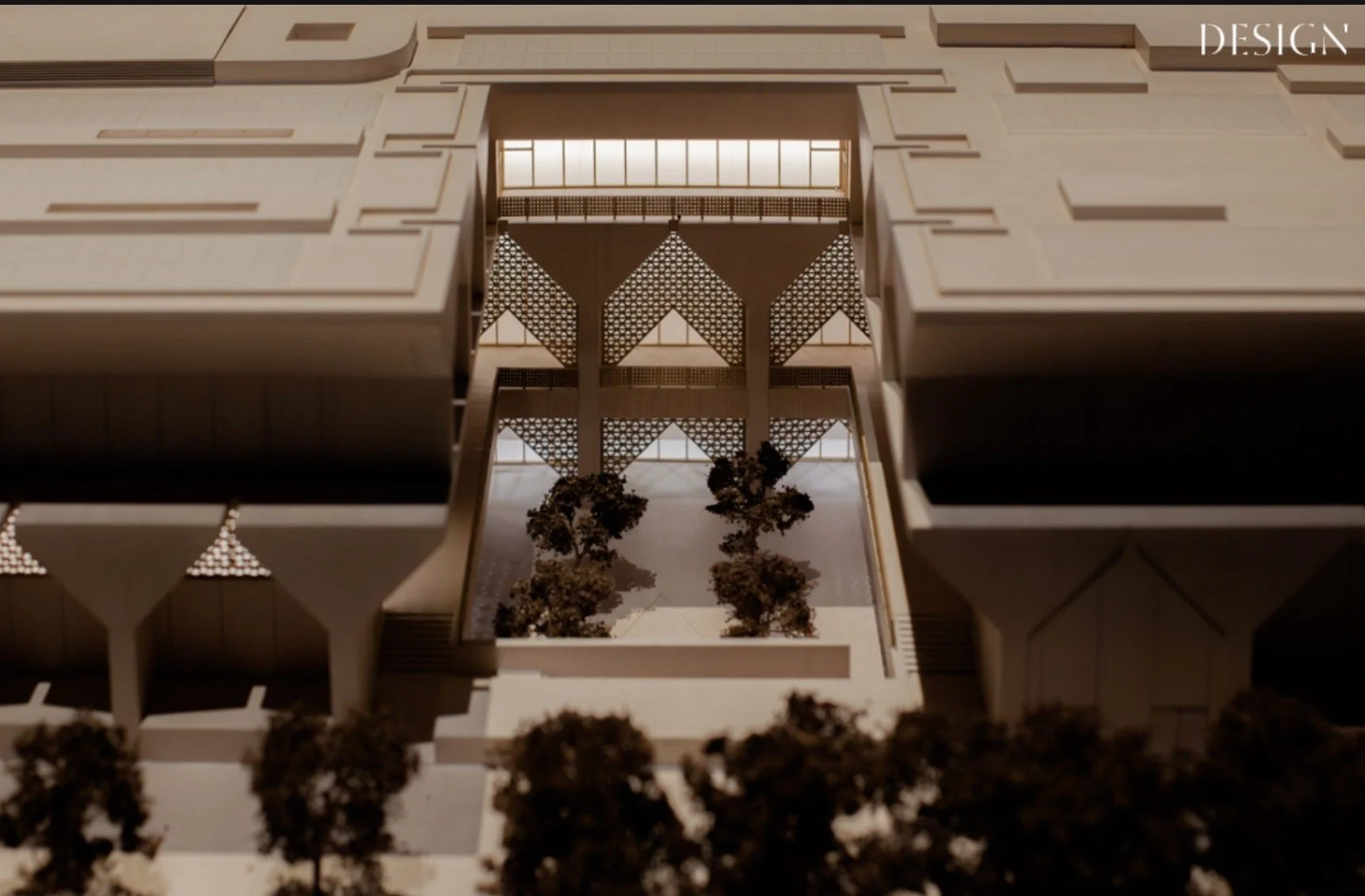
The architectural and cultural question this produces is one that the profession has not yet developed adequate frameworks for addressing. The buildings exist. The museum is there and will be there for centuries. The question of whether a building can be fully appreciated without reference to who designed it — and whether that question is different for a building whose entire programme is built around the history of a people whose exploitation by powerful figures is central to the story it tells — is not a question that has a comfortable answer.
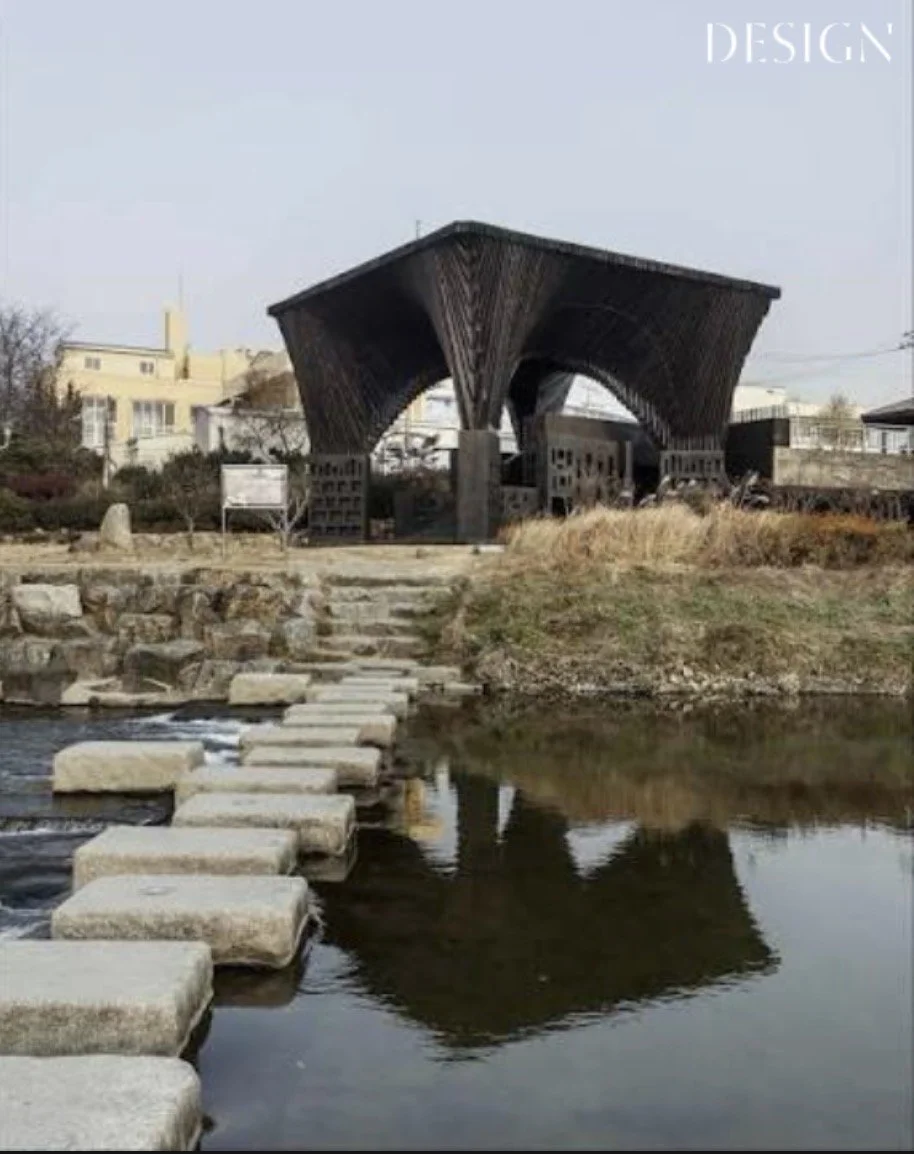
The practice has continued under the direction of its partners and principals, completing several projects initiated before the allegations and bidding for new work. The Adjaye Associates design for the Holocaust Memorial Museum extension in Washington — a commission received after the 2016 NMAAHC opening — is the most significant ongoing project. Its continuation raises the same questions the profession is not consistently answering.
What this article will not do is resolve those questions. They are not resolvable in the space of a magazine article, and the attempt to resolve them would be dishonest about the genuine complexity of the cultural and legal situation. What it will do is describe a practice whose contribution to the architecture of institutions — and specifically to the architecture of institutions built to house and honour the culture of people who have historically been excluded from cultural monuments — is singular in its formal intelligence.
The buildings are extraordinary. The circumstances are serious.
Both things are true, and the architecture conversation needs to be able to hold both without collapsing either into the other.
BY OONA CHANEL
The Missing Moments Captured MILES ALDRIDGE
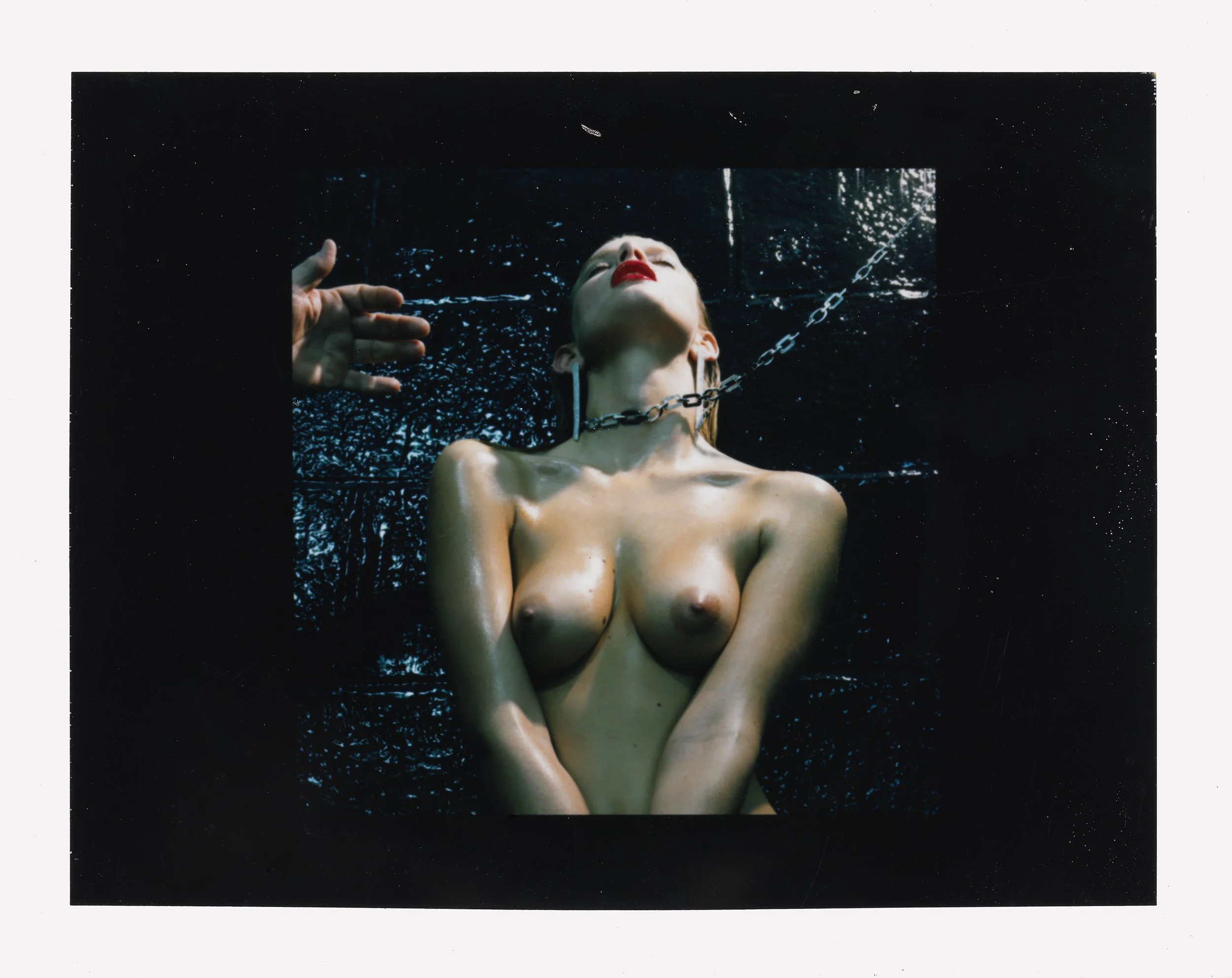
Discovering The Imperfect Beauty At The Heart of Everything
"The crack in the pavement, the tear in the canvas and the smear of the paint... these are all truthful marks that underpin this idea that we are not immaculate God like creatures, we are all flawed"
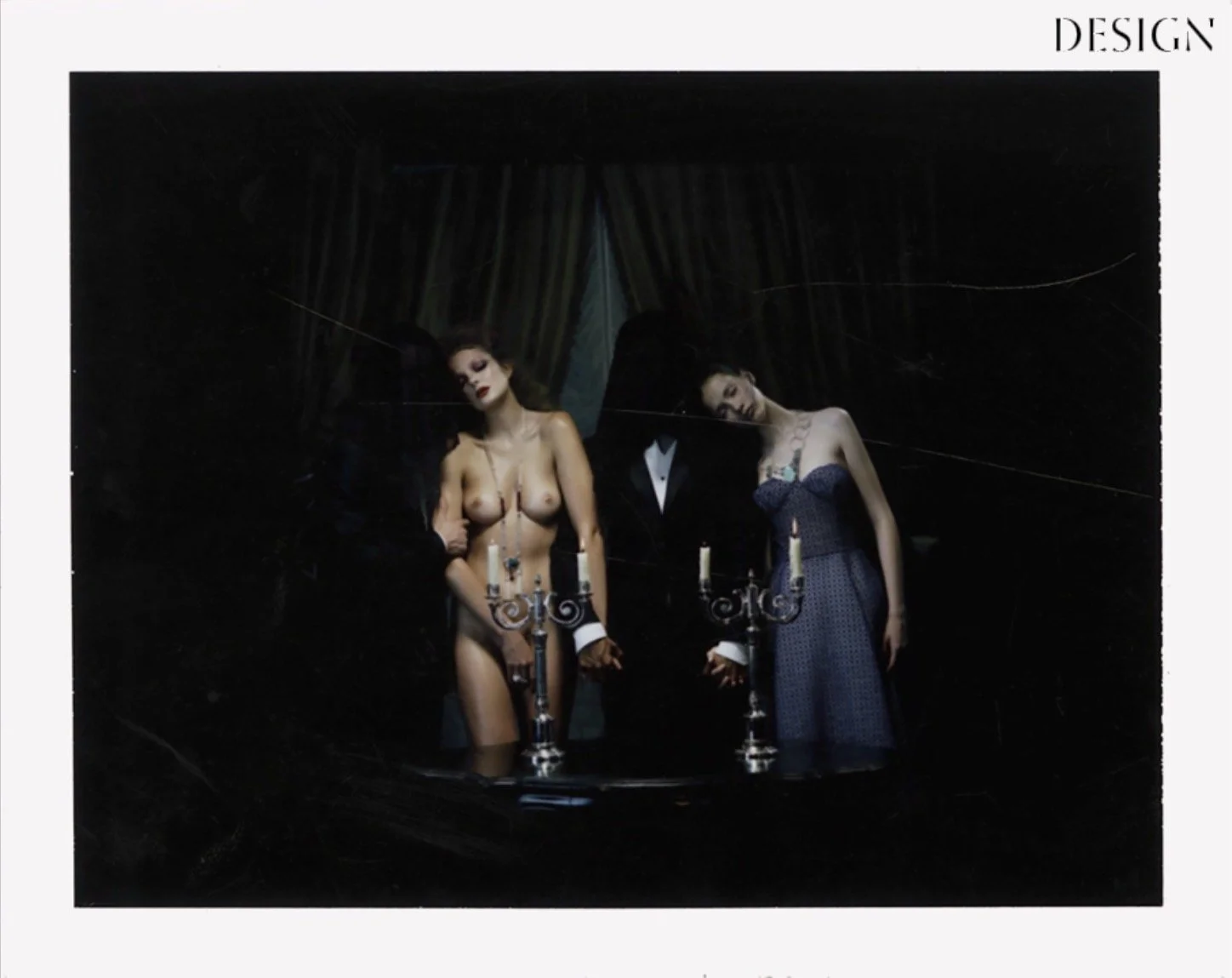
There are few photographers working today whose body of work is instantly recognisable, but Miles Aldridge has made memorability his signature. His subversive pop art scenes of hypnagogic colour-soakco cinematic perceaon contain an clusic acstete quant that runs through every image like an enigmatic signature, one that nas been busiy deconstructing noons of emaic Ocauty and the male gaze for the past 20 years. Aldridge had a major retrospective in 2013 at Somerset House in London, the hugely popular 'I Only Want You To Love Me', which showcased the heart of his talents.
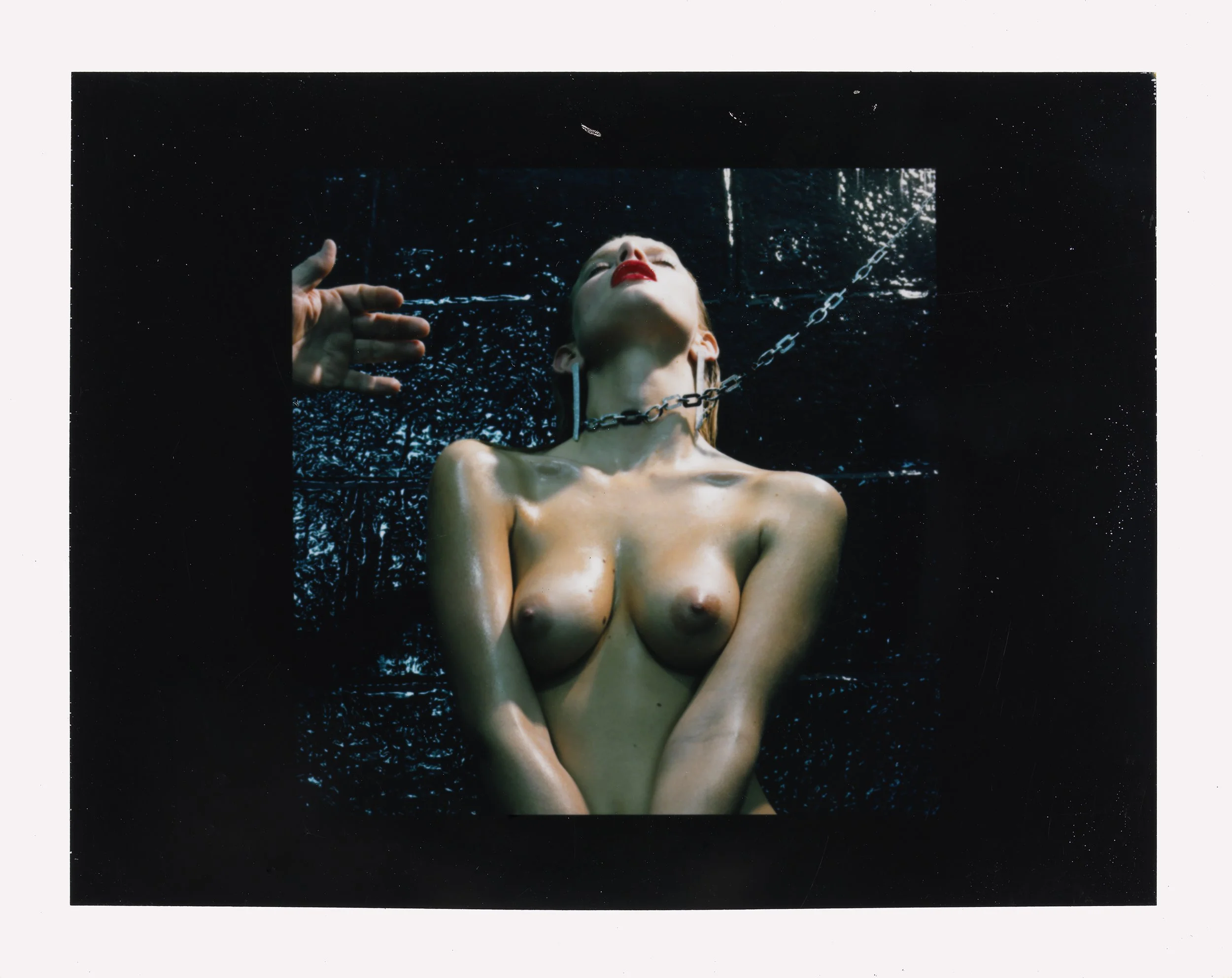
The exhibition brilliantly exemplified his penchant for creating visual narratives that explore a seemine untouchable artitca of female beauty, a thin veneer of glossy perfection under which lies a simmering, ever brooding and unfathomably tempestuous sea of emotional discourse. It's arguable that the delineation of particular issues surrounding the social construct of temining beauty is a mainstay of Aldridge's oeuvre, so it's interesting that his behind the scenes book, Please Return Polaroid (Steidl), marks a radical departure from carefully staged and executed image-making. A glimpse into an unintentional and instinctual realm of the subconscious, where the genesis of his images actually takes place and the ideas that underpin his final visual constructions are born. Here, AUTHOR exclusively presents previously unpublished Polaroid images from an archive that spans the entirety of a career, and he tells us why a nostalgic love affair with disruption, decay and destruction have revealed to him the beautiful imperfection of his inner life.
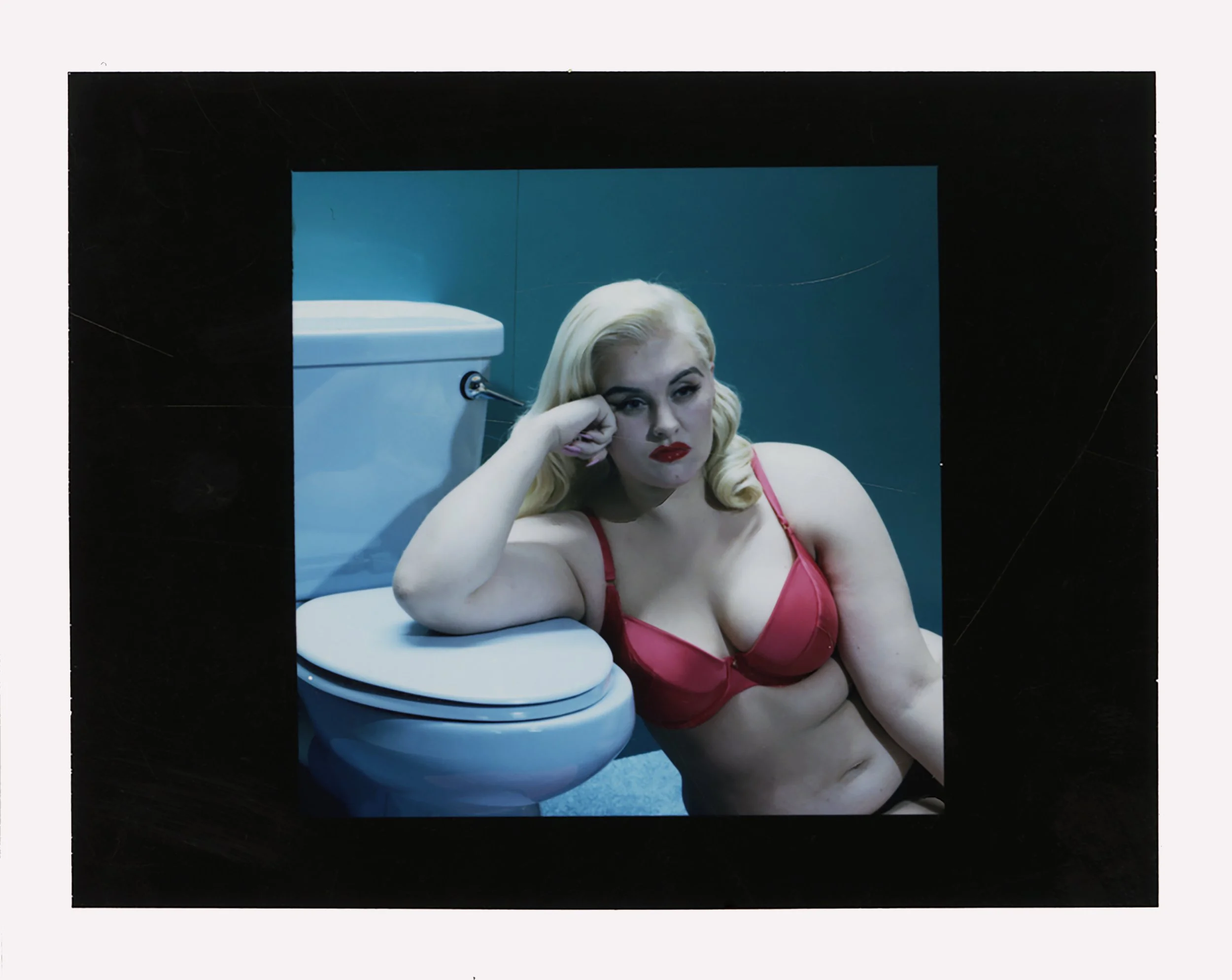
AUTHOR: Can you remember the moment in your childhood when you recognised photography and the image you first produced that turned you on to the medium?
MILES - I remember it vividly. I would have been about eight years old and I was with my father in a country house in England. He was working on some psychedelic drawings, and in order to get rid of me for a little, he handed me this beautiful Nikon camera. He gave me my first lesson in photography and told me you must always focus on the eyelashes of a subject. I put the camera to my eye and rotated the lens until his eyelashes became sharp.I still focus on people's eyelashes on every picture I've ever done. I can't remember all the pictures I took that day, but I remember one distinctly that I was very proud of where there was a barred skylight from which I had hung a Victorian doll I had found by its neck.
The light coming down through the skylight over the doll was very cinematic. I can still see it now and I wish I could find that little print because it was really the beginning of everything.
AUTHOR: So your ambition was always tied to constructing a scene and a narrative?
MILES - Yes, there is an attempt at a narrative, and I think 1 also had a fascination with film production and the artifice of film production. It goes back to the doll hanging in the basement and how the camera can frame something so it becomes a convincing moment. Without the camera framing the image, it's just a doll hanging there. When I was a little older, I started photographing my sister, who at the very young age of 10 was starting to feel like she should become a model, so 1 was in my bedroom trying to make my bedside light illuminate her in an attractive way, getting black overcoats to cover the door and make a black background, basically using everything to try and make a successful photograph.
AUTHOR: Talk to us about Polaroid as a medium. It always seems to me to be a medium that has as much control over the final image as the photographer...
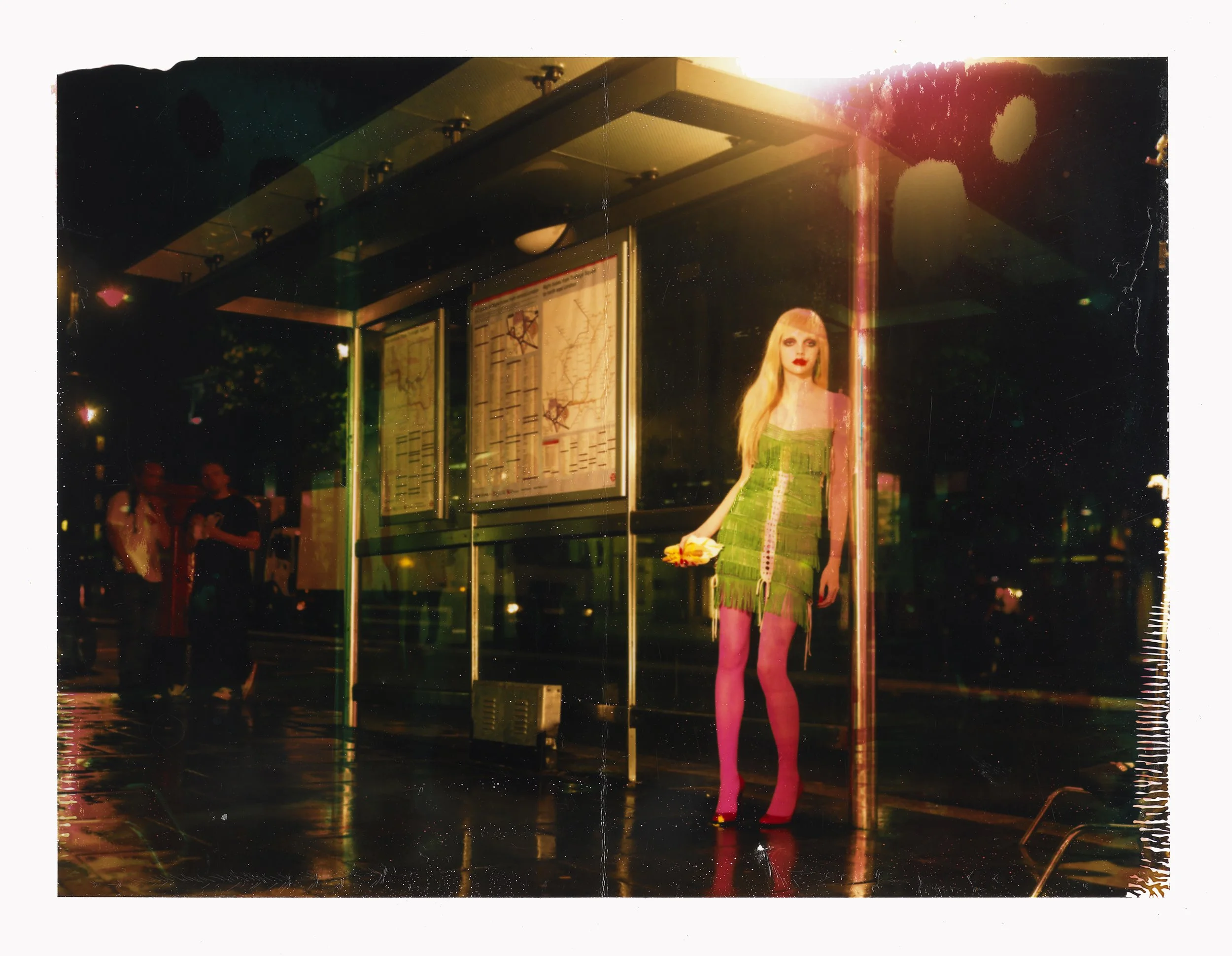
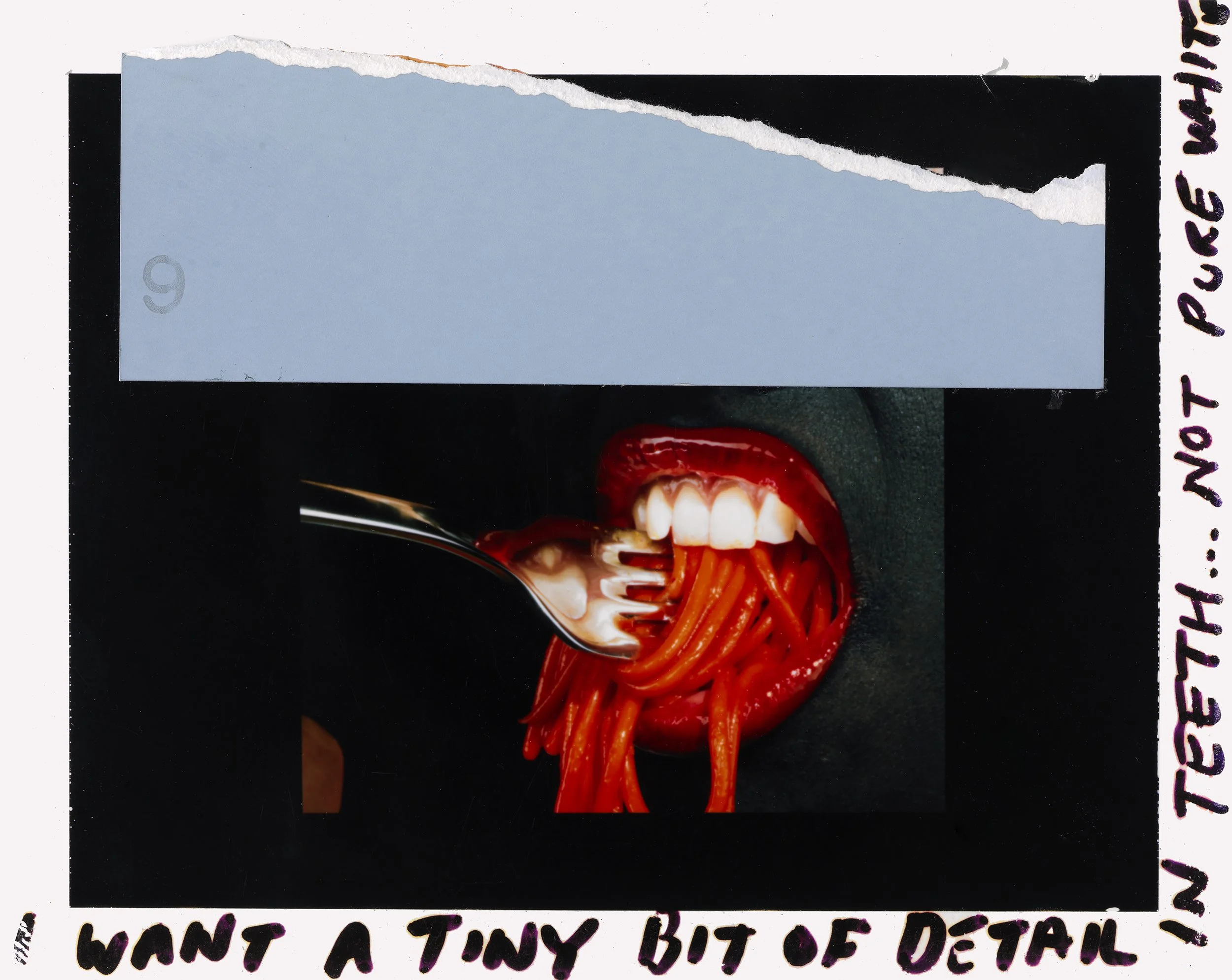
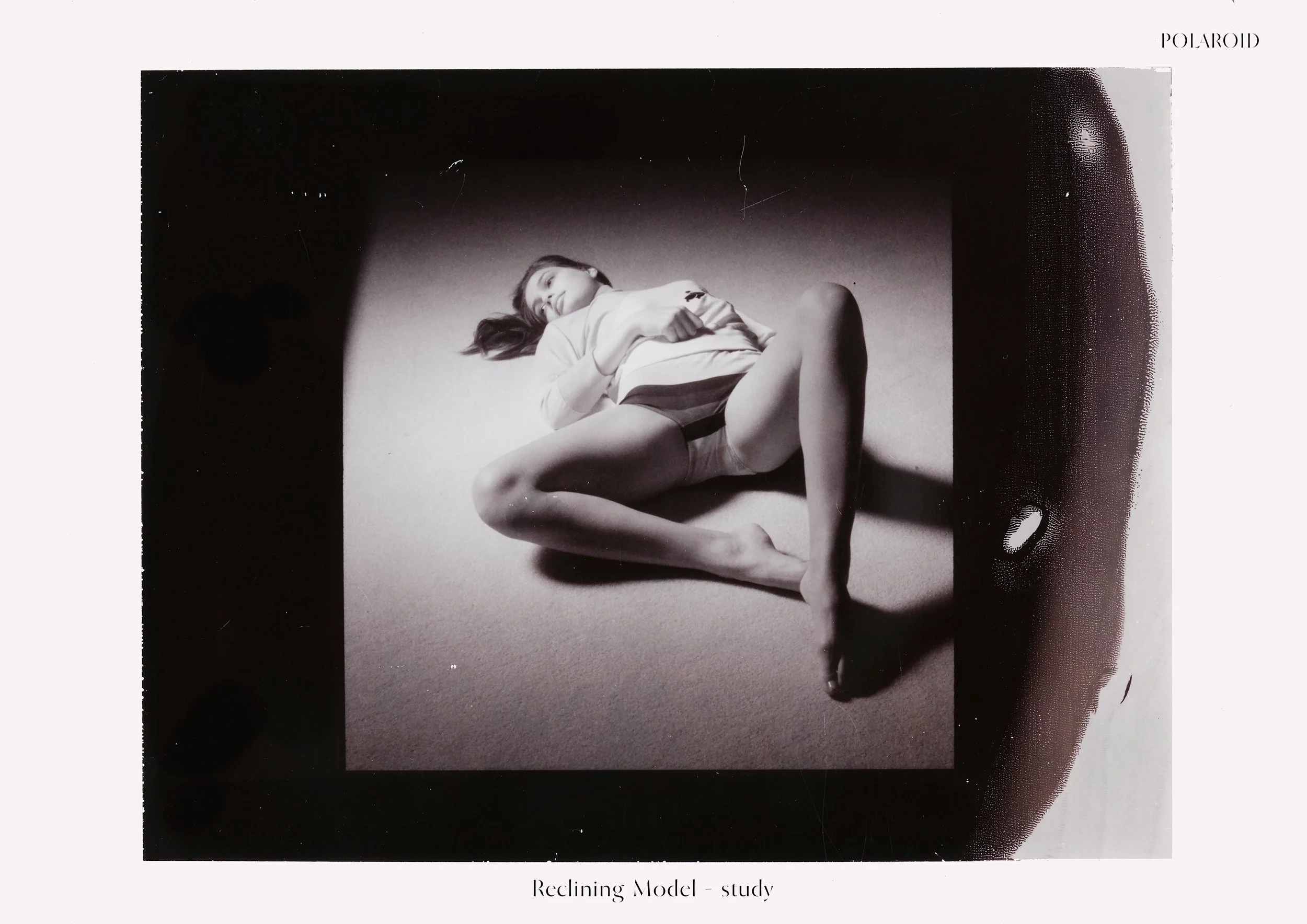
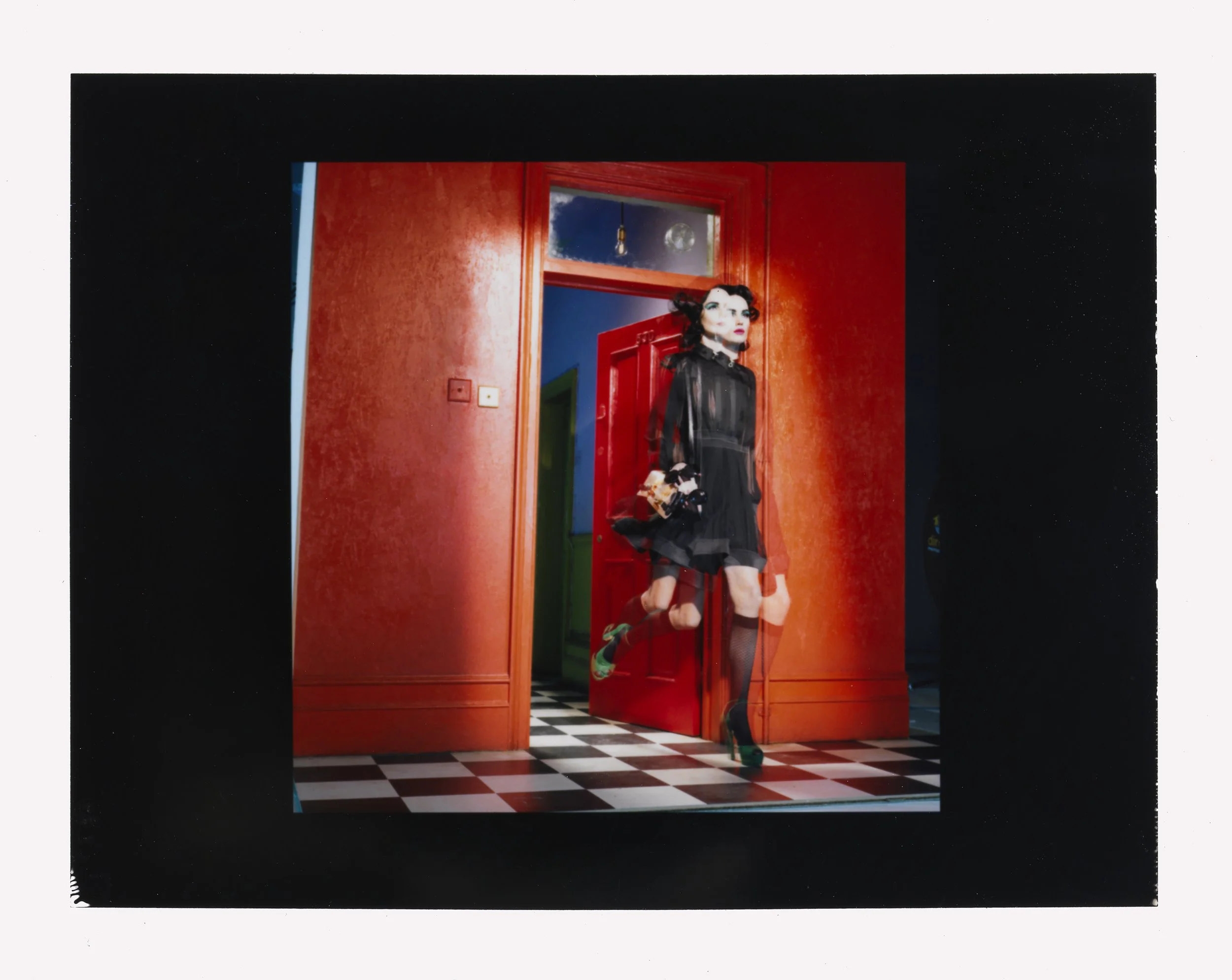
MILES - Well, the images in both my book and New York exhibition Please Return Polaroid seem almost like images I've appropriated, whereas, of course, 1 actually took the images. What I mean by that is that these Polariods were created from a working methodology that I have when 1 am working. I always work off a Polaroid first just to test the image and see what is going on with the light and the colour. I consistently do this and maybe make adjustments with a sharpie to change the lighting, or I might cut up the image to see if I like this bit of this one or that one; to get a little of both elements, so they become kind of like sketches for the final piece. I have religiously kept them all in archival boxes and after completing
I Only Want You To Love Me' with this mission of reporting my mother's unhappiness to the world, I wanted to look back at how I had got to this position in my career. I started going back through the Polaroids and, in a nostalgic way, to document how the images were created.
AUTHOR: You lost your mother as a young man - did that create a deeper psychological sense of reality as artifice?
MILES - I need to think about that. I mean, what I would say about my mother dying is that it obviously felt like the whole word had been torn apart, so undeniably. I would be surprised and disappointed if that hadn't had a profound psychological effect on me as a human being and as an artist, to be sensitised to that sort of premature decay and sudden absence of a very important person in your life. But what was my story was that because I had this kind of incredible father, who was like a magician and would conjure up this incredible colour and these incredible psychedelic images, as I became successful with my own pictures I tended to always give my father the credit of this heritage of where my creative impulse came from. At a certain point, though, I sort of thought, " I wonder if that is true..' I began to think that maybe my mother had played a role in the creation of my images, and, of course, when I start to look at my images closely they are filled with maternal images of women in kitchens, and women with babies, and women with prams.
AUTHOR: That must have been a watershed moment...
MILES - I suddenly realised most of my work had been a kind of working out of this missing character, and my memory of her was unfortunately filled with images that were very sad, a sadness that she had lived such an unfulfilled life. When my parents divorced, she didn't really ever get herself back on her feet. It really knocked her for six. I would say her death and her divorce were intertwined in the sense that the sadness, the melancholy and the depression that had settled on her post divorce were intertwined. She kind of became the archetype for the stories l've gone on to celebrate in my work a lot, which is a woman who is able to wear a mask of beauty, and yet behind that mask are all sorts of dark and troubling thoughts... I can feel the psychedelic colours of my father in my work, but also the melancholia of my mother, which makes sense.
AUTHOR: What did you discover looking at the Polaroids that you felt you had never seen, or realised before?
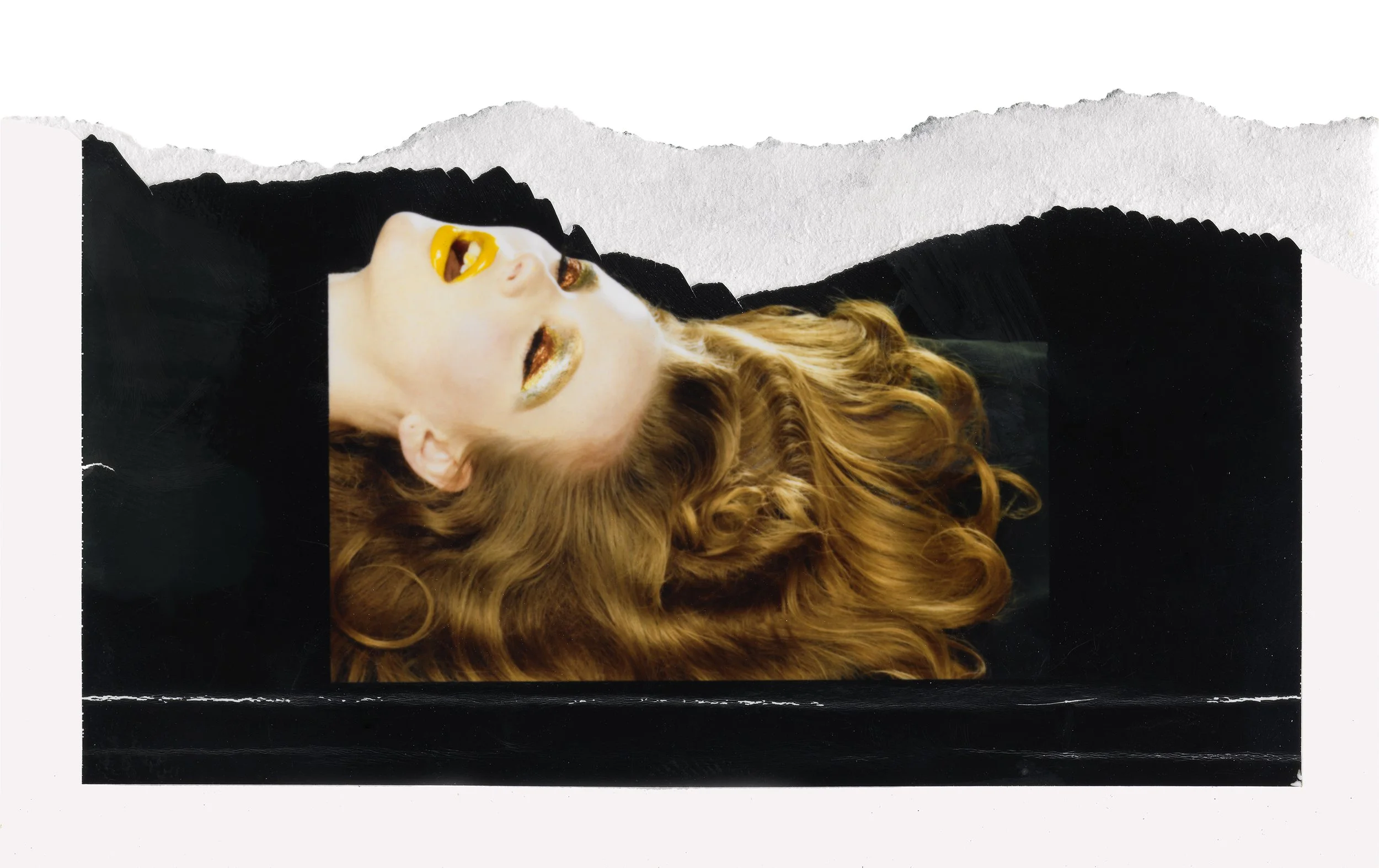
MILES - Well, I went though them, rather like one would go though photographs from the Edwardian period and find interesting and strange pictures that one doesn't quite understand. I started to find pictures that I didn't understand, even though I had taken them. I mean, there were pictures where I had taken a Polaroid of a space before the models were placed in it, just so I could see the light and the strangeness of this empty scene, and it feels almost like a crime scene because of the attention that my camera and my light has created. There are many shots like that, where they are empty of the model and the scene becomes very pregnant and poignant with meaning. That is why, in a way, they feel appropriated, because I took them but I don't remember taking them. I've found these images that are mesmerising and intriguing to me, not because of the image I was trying to take, but because of accidental things, such as the model not being there or some damage to the image, because the Polaroid has been left under studio lights and warped, or had the acid of another Polaroid damage it; some are scratched, some have notes indicated on them, some are very brutally cut with scissors... I became really interested in creating a series of these that come together in a kind of Lynchian dream narrative.
AUTHOR: There is a sense of intense beauty precisely because of their imperfections.
MILES - I think there is always an attraction to things that are cracked or ruined or broken. What that is, I don't know, but I think a concrete floor can be quite beautiful, but if it has a crack in it, then it can be even more beautiful. The crack draws us into thoughts about our own mortality and as much as we want to be fabulous, we are not. The crack in the pavement, the tear in the canvas and the smear of the pain, these are all truthful marks that underpin this idea that we are not immaculate God like creatures, we are all flawed like the deeply human characters Shakespeare depicted in his plays.
AUTHOR: It's the passing of time that is beautiful, the melancholia - to paraphrase Shakepeare's Richard II, let us make dust out paper and with rainy eyes write sorrow upon the bosom of the earth...
MILES - Beautiful. Yes, it's all about the beauty that has passed.
You know, I was so drawn to these flawed scratched and wrecked images because I think, coming after I Only Want You To Love Me, where I had presented a kind of Technicolor universe, this represented the other side of the coin. This was the director's script with all the continuity notes. It's interesting for me how much I've enjoyed seeing these images, and the question for me now is, do I continue with the kind of Technicolour perfectionism, or can some of this accidental damage, disruption and decay become instilled in the final images? I think the answer is yes, it can.
AUTHOR: Are they an antidote to the avalanche of digital imagery?
I mean, our era is like pop art on amphetamine...
MILES - I think we are clearly in a period of post-post-post-post modernism [laughs]. With Instagram, we are constantly being assaulted by images, and revised images, and images that are a pun on old images. The cycle has sped up so much that it's as though one can say, I've created a body of work, and now I've created a subbody of work that is antagonistic to my main body of work, or that 1 am already doing post Miles Aldridge, although I am Miles, if that makes sense? The clash of advertising and celebrity and messages from the media are so incredibly fast and are entwined with the fashion world and the art world, and yes, it's only speeding faster and faster. I mean, 15 years ago an artist like me probably would not be revisiting his work so soon.
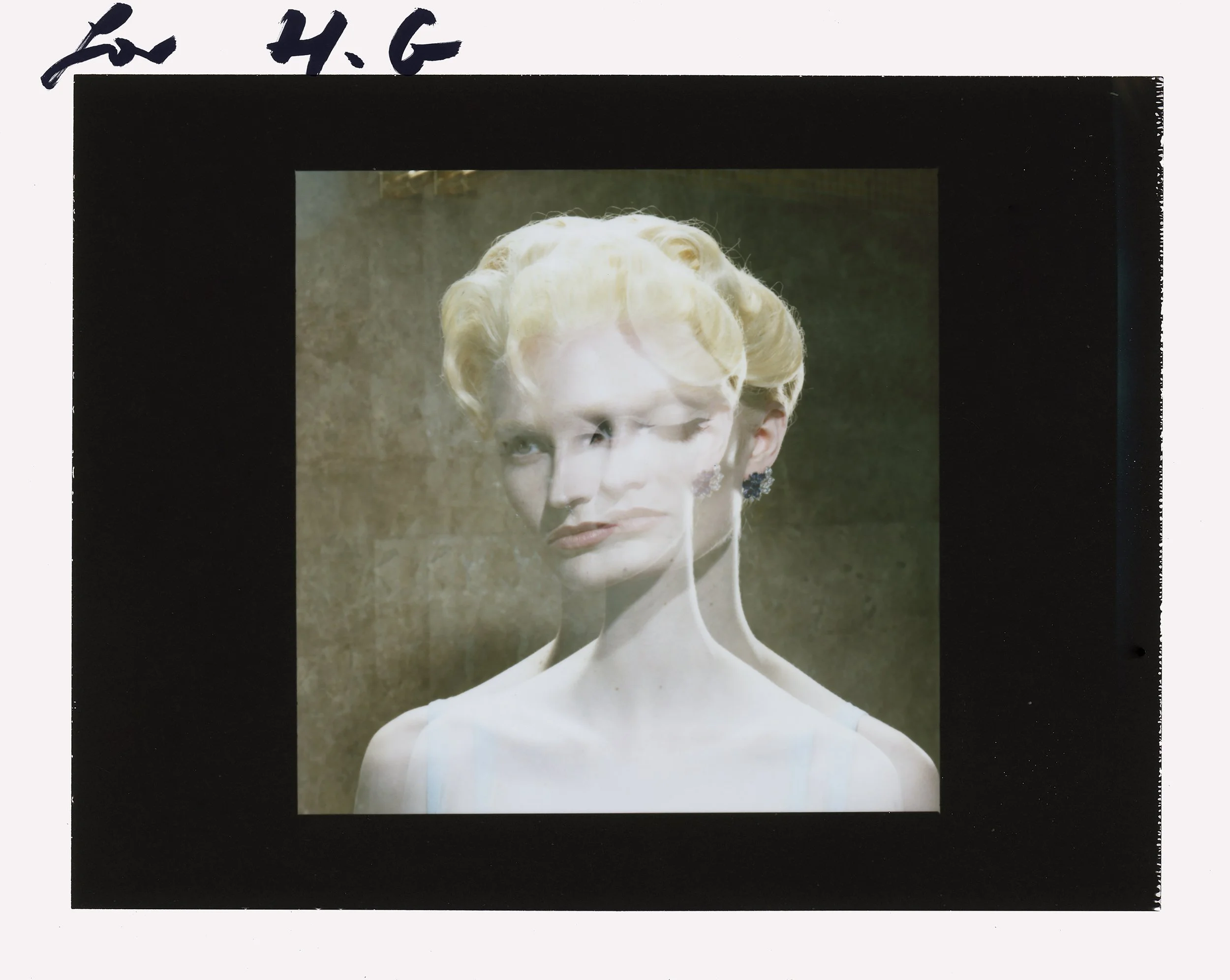
AUTHOR: I suppose there is a sense in the Polaroids that they exist outside of this speeding juggernaut...
MILES - One thing I do love about them is that they are completely analogue, because even though I shoot on film, my print goes through the portal of Photoshop so there is always an element of tinkering with the colours. What is wonderful and refreshing about these Polaroids is that they are completely analogue, they are just light sensitive material that has recorded an image with no intervention from digital media whatsoever, and they are very beautiful from being untouched, so that kind of slowing down is definitely part of what I find beautiful about them. The ones that really turned me on were the ones that seemed to make no sense even to myself, and as a photographer who likes for their images to make sense and be read, without being didactic, these Polaroids had a whole other level of mystery about them that was completely surprising and satisfying to me as an artist.
BY JOHN-PAUL PRYOR
PICTURES BY MILES ALDRIDGE
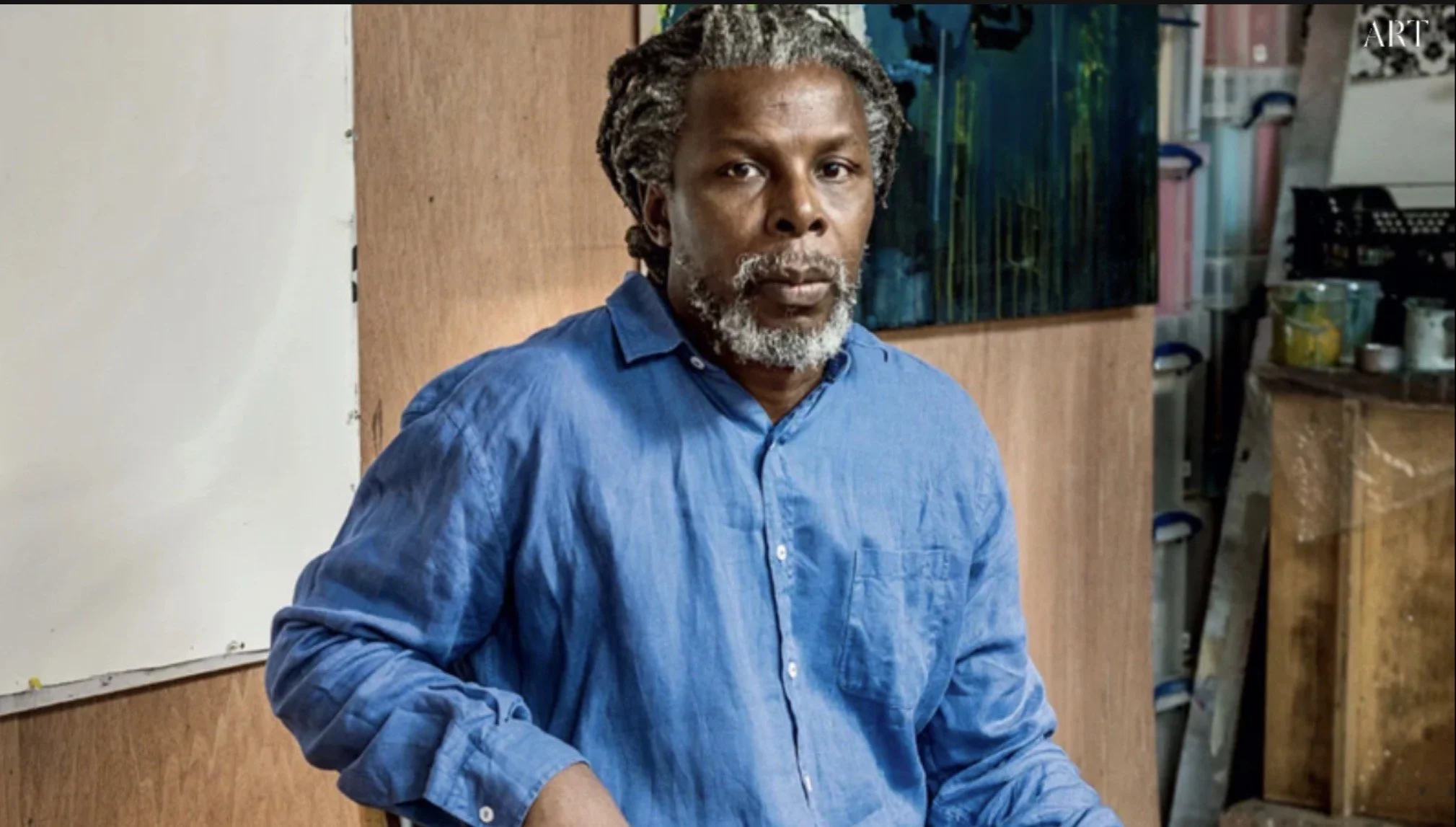
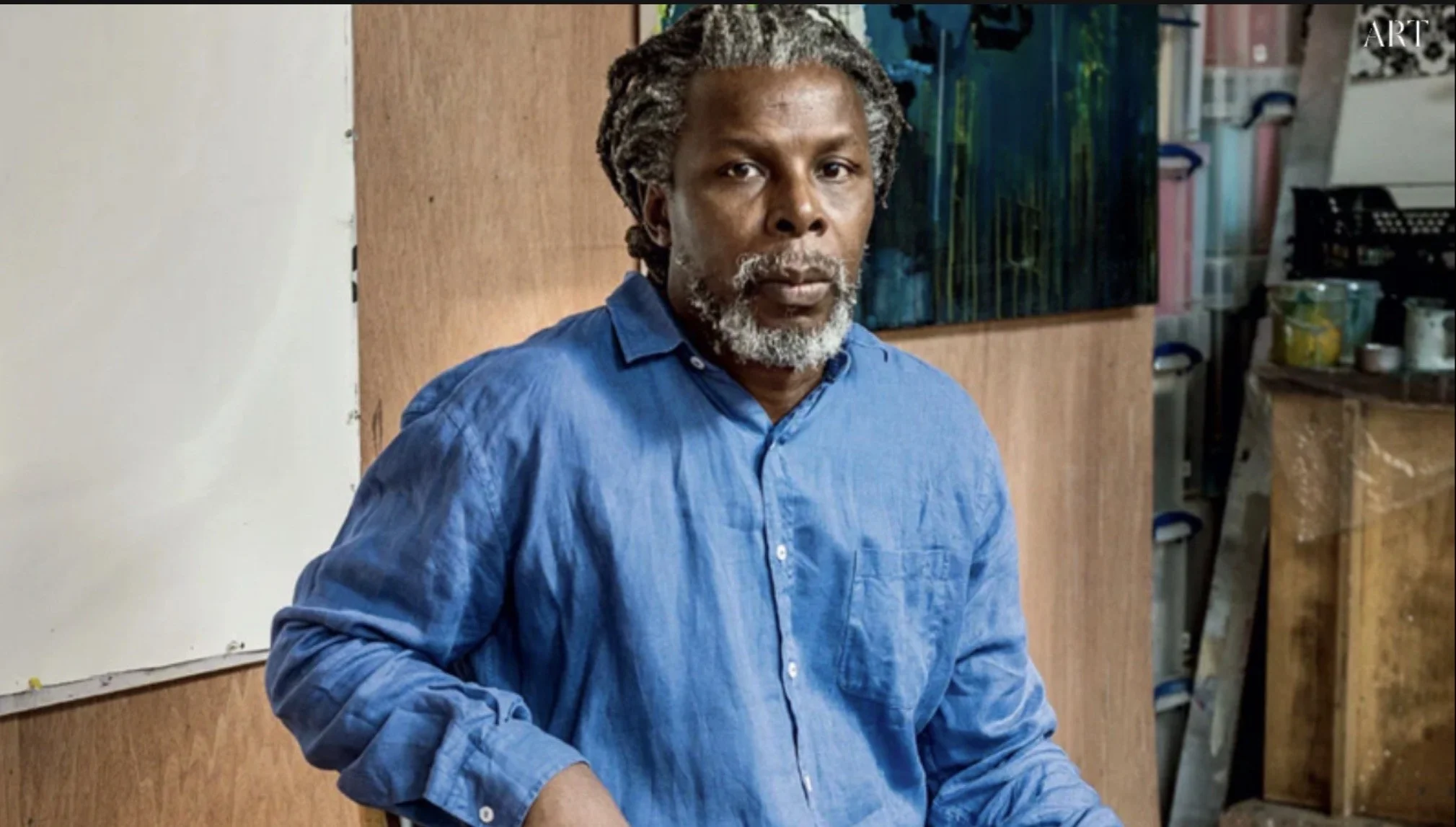
Hurvin Anderson: Swimming Pools and the Architecture of Belonging
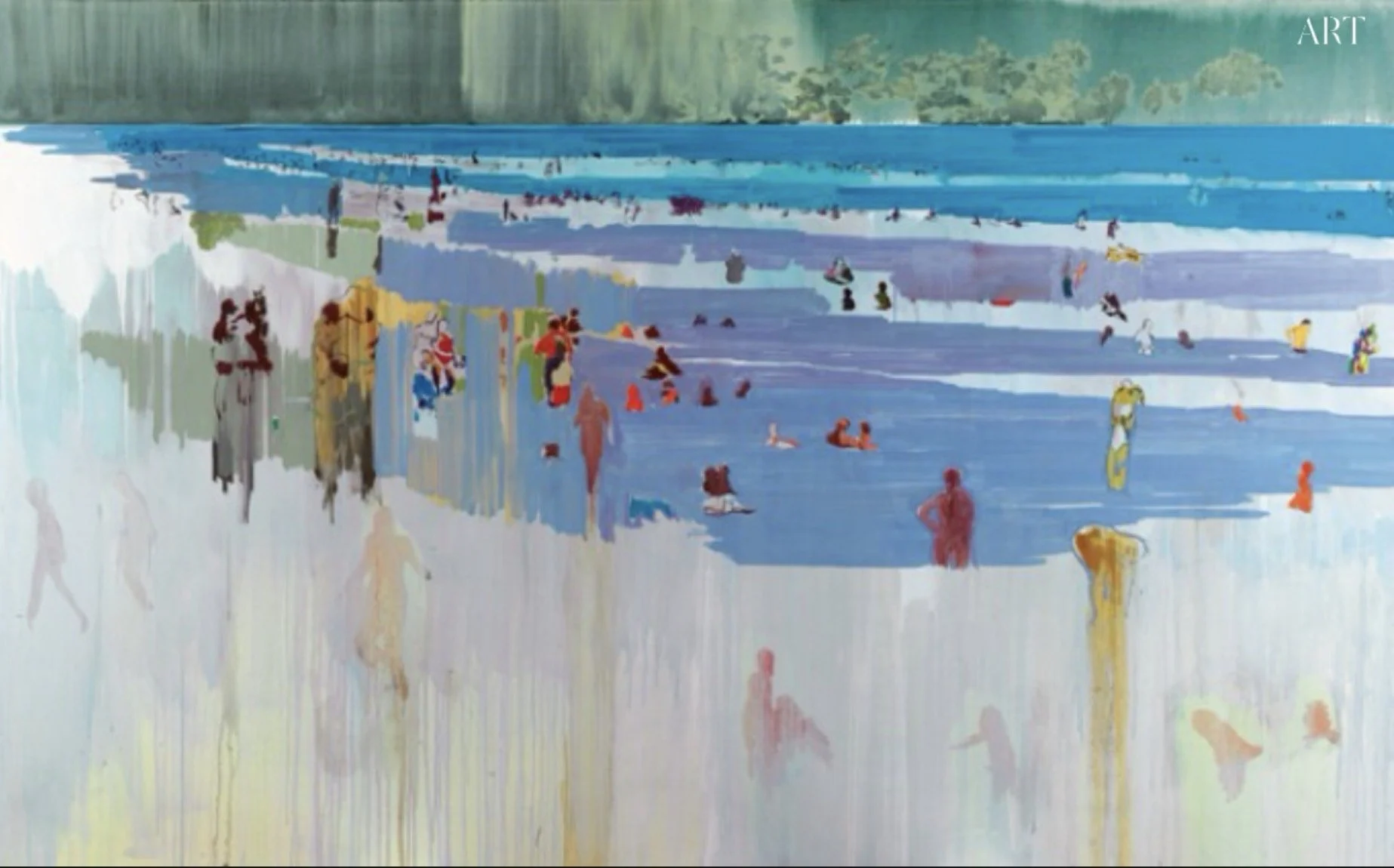
He paints swimming pools - specifically, the segregated pools of the American South, the private pools of the Caribbean diaspora, the public pools of Birmingham where he grew up. The paintings are among the most beautiful in contemporary art and among the most precise statements about who gets to feel at home. He is represented by Peter Kilchmann Gallery Zurich.
"Anderson paints the empty pool - the beautiful, clean, sunlit pool - with a specific quality of depopulated stillness that makes the absence of people the subject. Who is not here? Who decided that? What does a beautiful space mean when access to it is controlled by race?"
Hurvin Anderson was born in Birmingham in 1965 to Jamaican parents. He studied at the Wimbledon School of Art and the Royal College of Art. He began making the paintings that would establish his reputation - large, technically extraordinary oil paintings of swimming pools — in the mid-2oo0s, and has produced, in the twenty years since, a body of work that is simultaneously among the most formally beautiful in contemporary British painting and among the most precise statements about belonging, exclusion, and the architecture of privilege available in any medium.
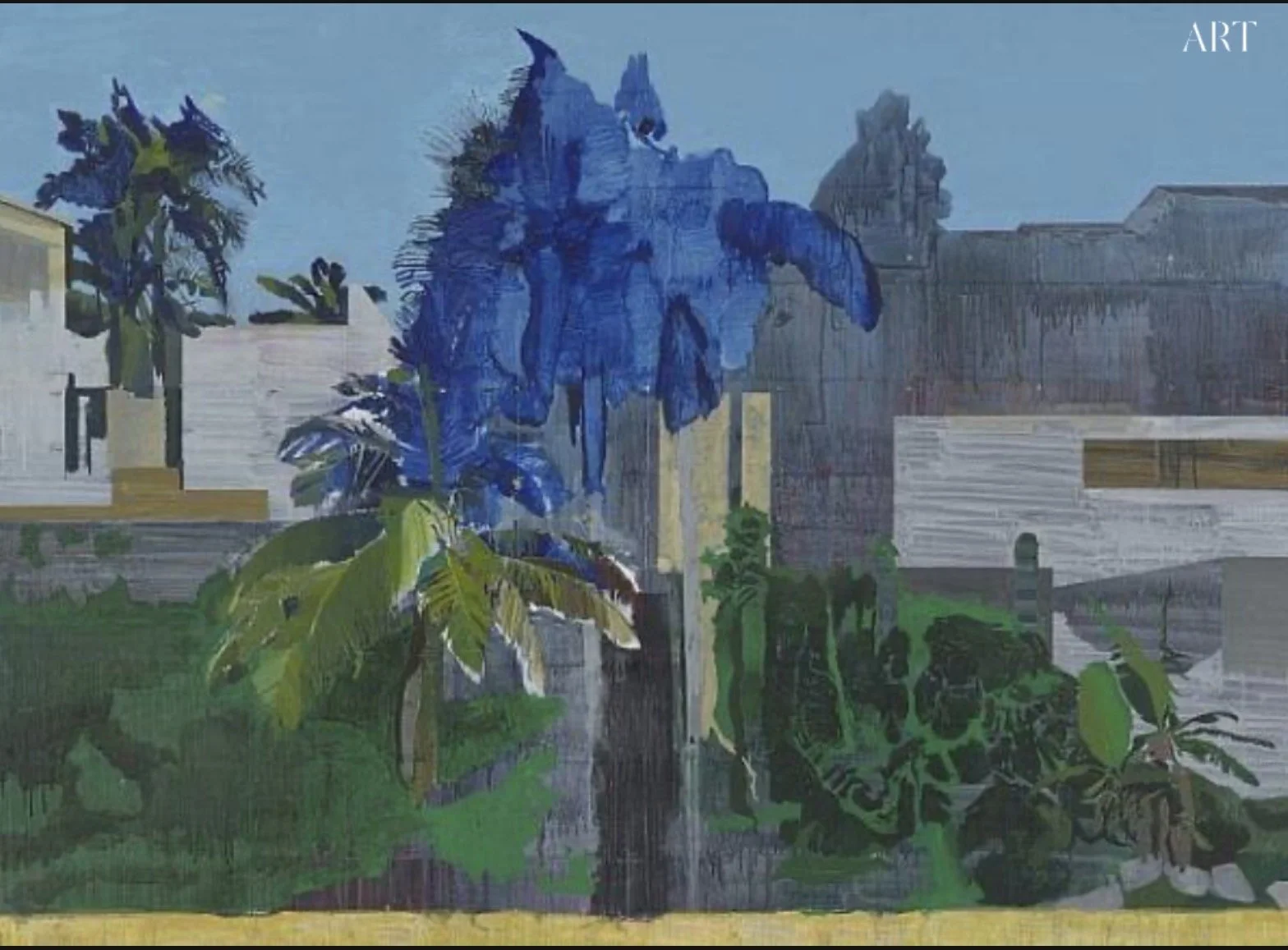
The pools are never neutral. The Thomas pool series, begun in 2007, depicts the segregated municipal pools of the American South - the Thomas Pool in Birmingham, Alabama, was one of the facilities that segregated Black swimmers to a single designated day per week until civil rights legislation ended the practice. Anderson's paintings of the pool do not depict the segregation directly. They paint the empty pool - the beautiful, clean, sunlit pool - with a specific quality of depopulated stillness that makes the absence of people the subject. Who is not here? Who decided that? What does a beautiful space mean when access to it is controlled by
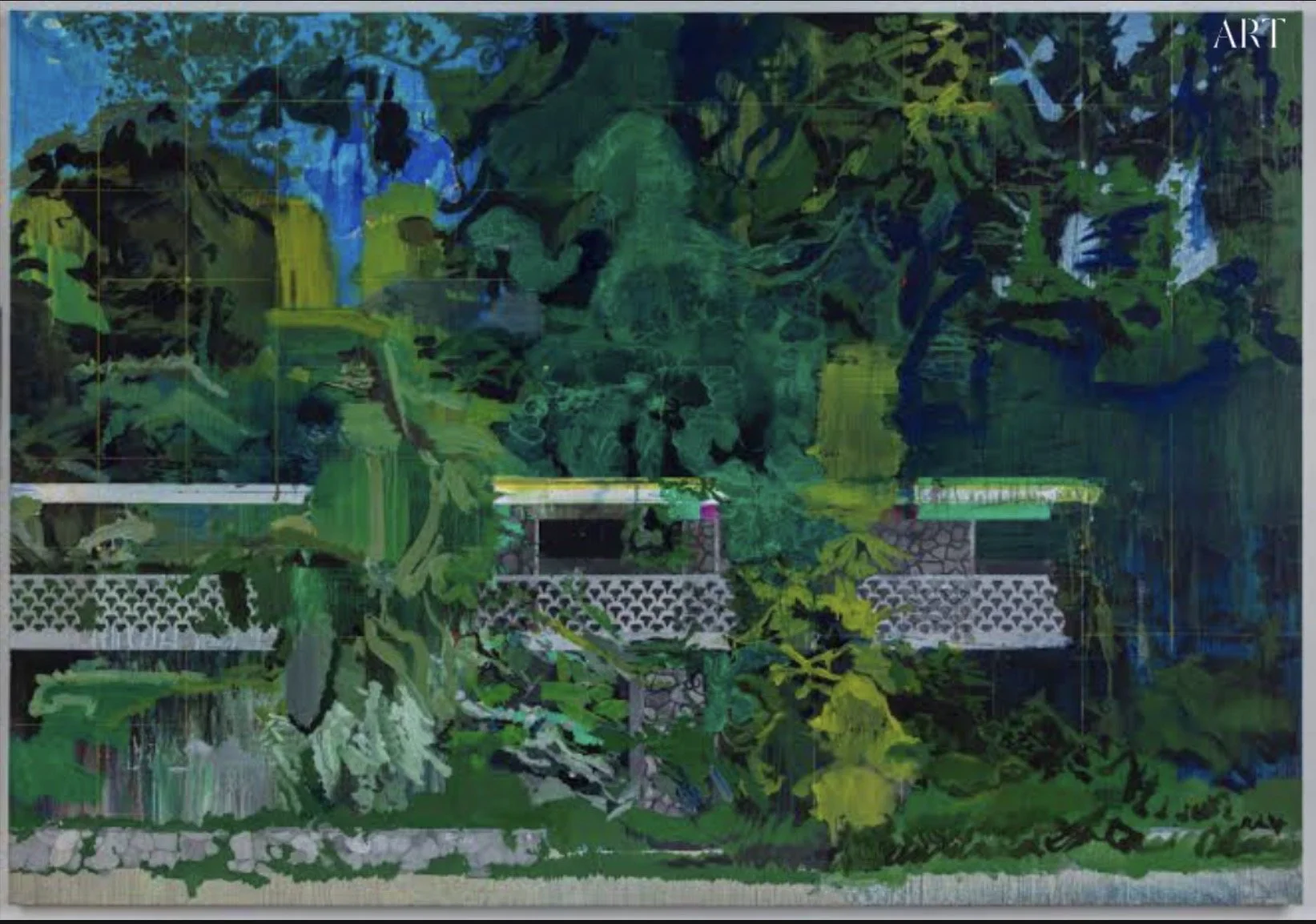
The Caribbean diaspora pool series is a different register. Here the pools are the private pools of the communities Anderson grew up around - the backyard pools of the Caribbean families who had achieved sufficient prosperity to have this specific marker of belonging. The pools are used, populated, warm in a specific way. They are evidence of arrival, of the domestic achievement of the space that was once denied.
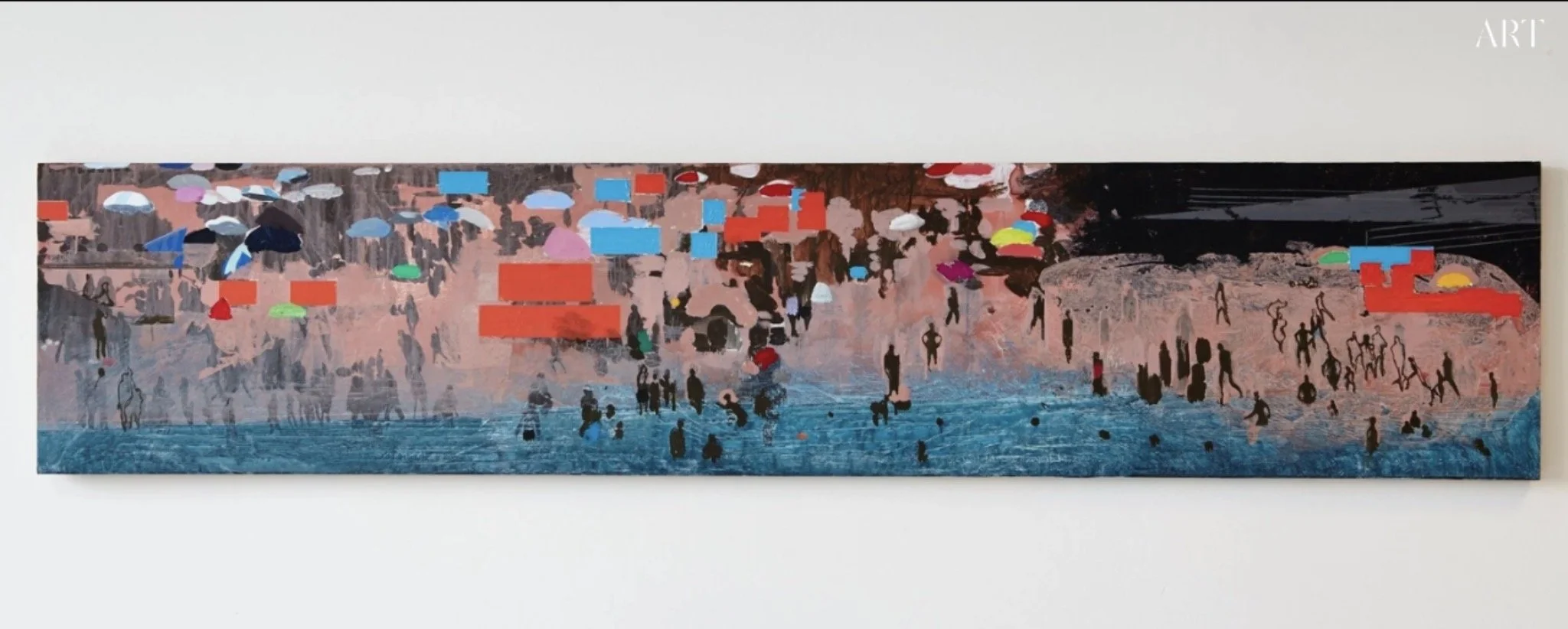
The formal intelligence of the paintings is inseparable from their thematic intelligence.
Anderson uses a specific quality of light - pool light, the specific reflective quality of sunlight bouncing off water onto the surrounding surfaces - that produces a flickering, immaterial quality in the painted space. The surfaces that should be solid become indeterminate. The water that should be transparent becomes reflective. The stable, bounded space of the pool becomes something shifting, unreliable, difficult to fully possess. The formal qualities enact the thematic argument.
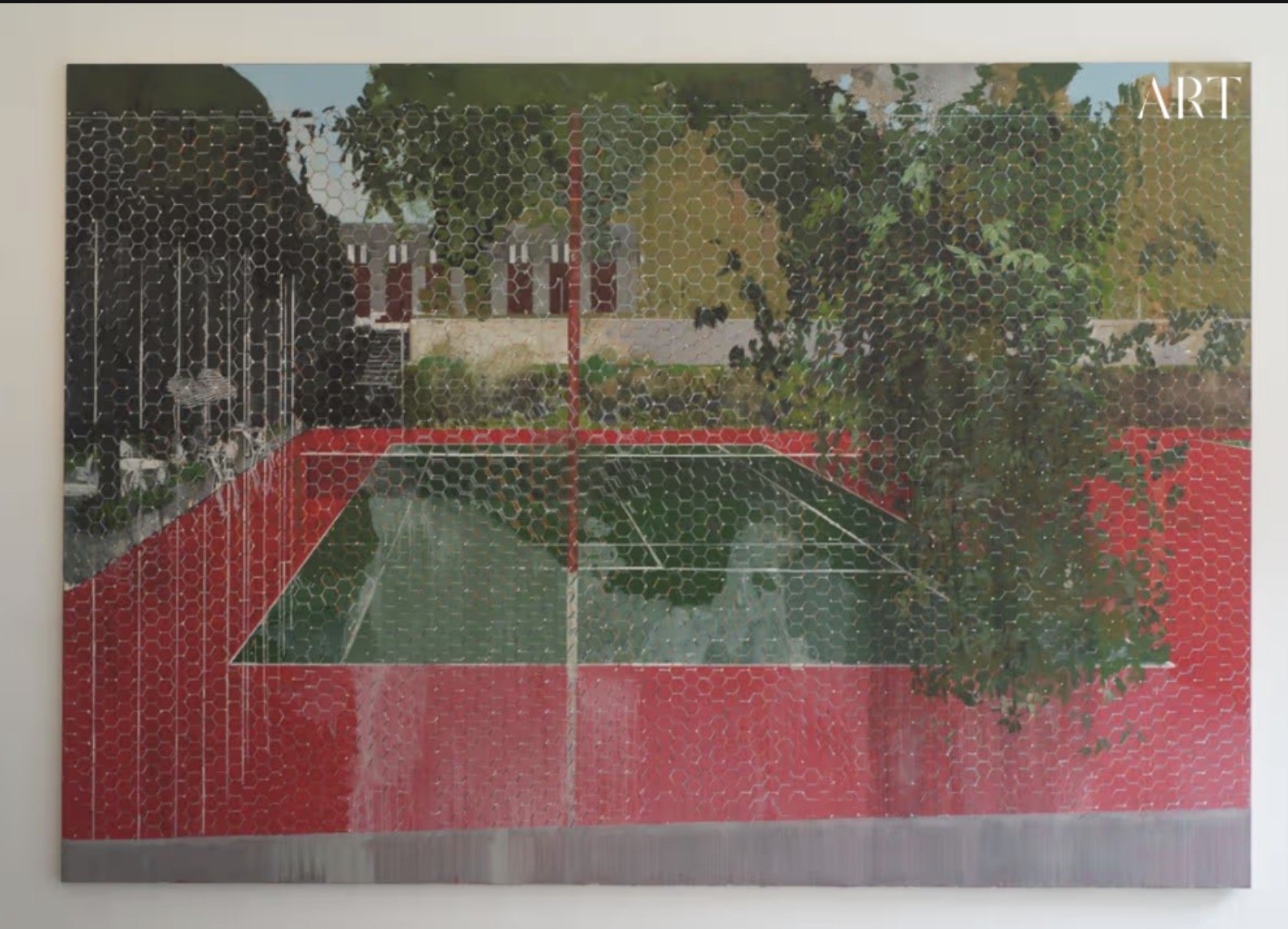
He is represented by Peter Kilchmann Gallery in Zurich and by Thomas Dane Gallery in London and Naples. His work is in the permanent collections of the Victoria and Albert Museum, the Tate, the Albright-Knox Gallery in Buffalo, and the Museum of Contemporary Art Chicago.
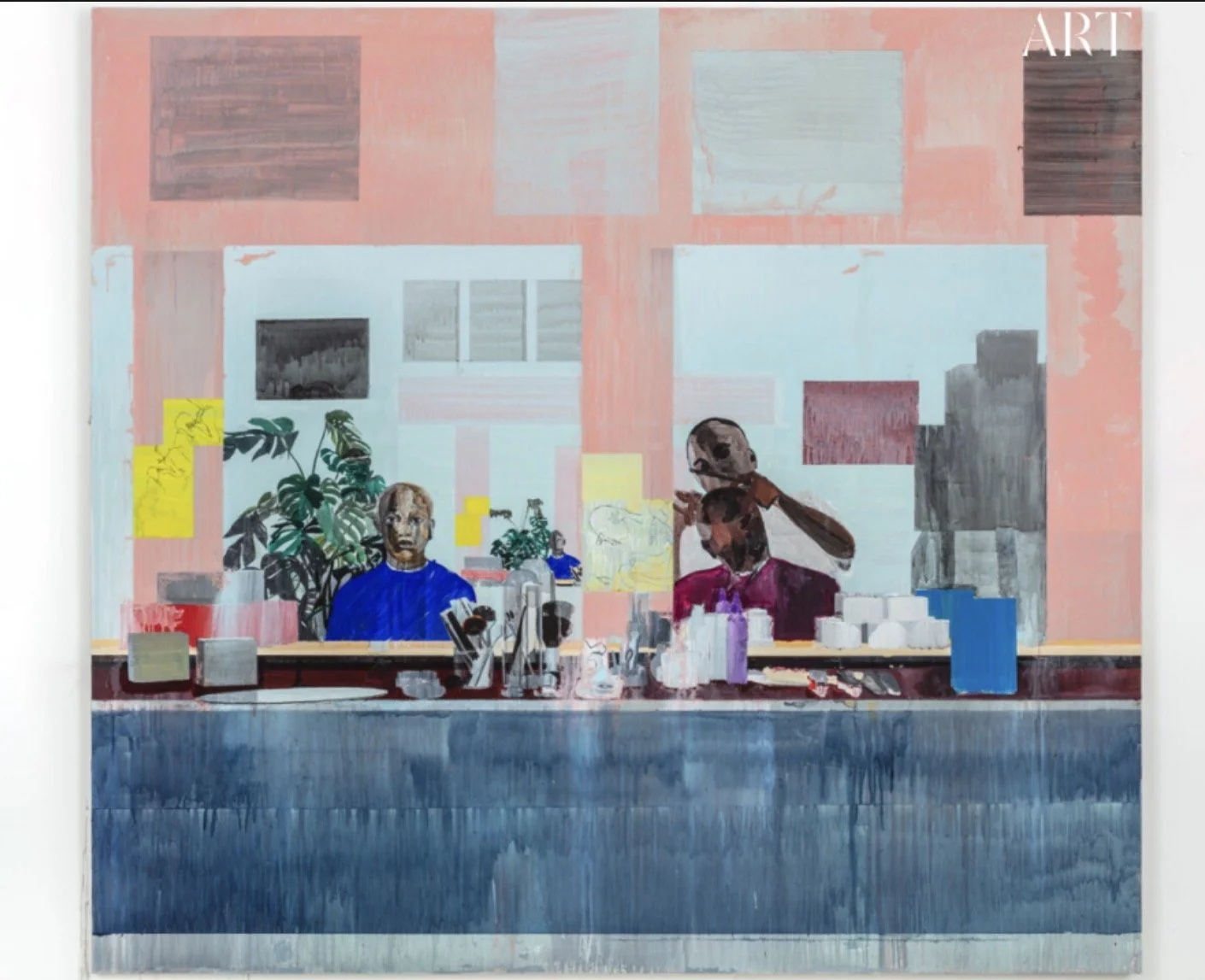
The secondary market for his work has been active in recent years, with Sotheby's and Christie's both placing significant works. The institutional collection presence suggests the market will follow the critical consensus rather than leading it.
BY OONA CHANEL
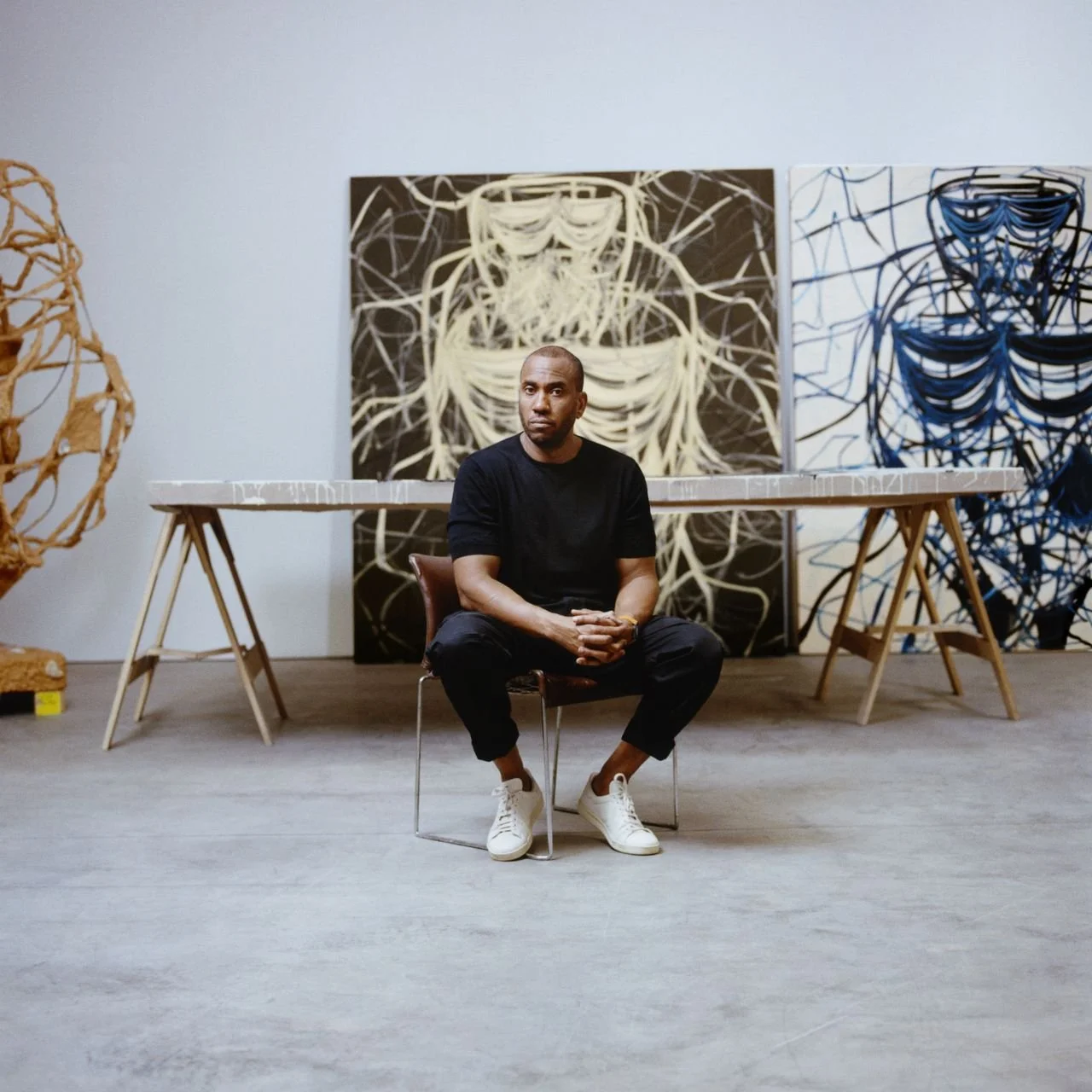
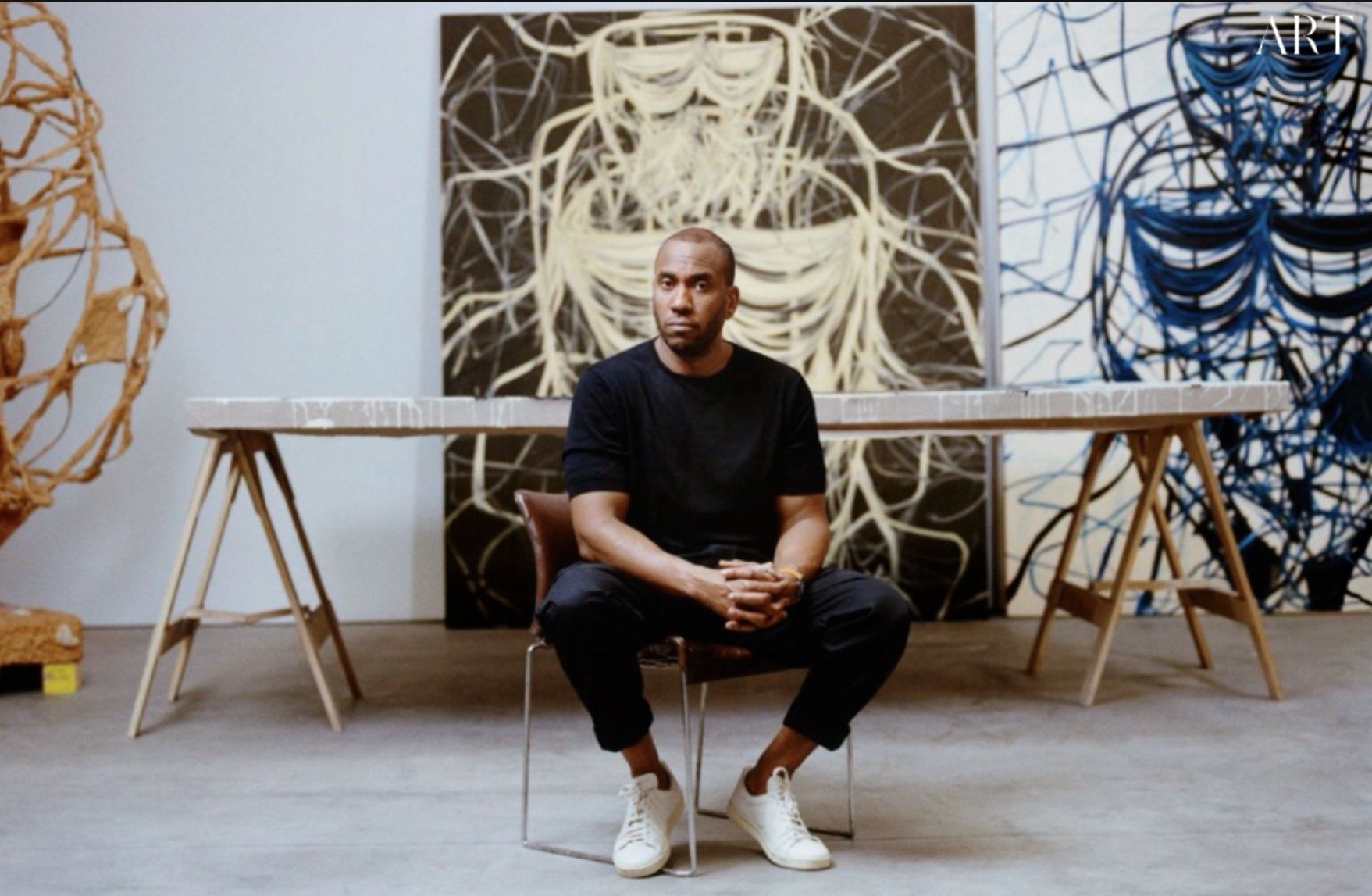
Rashid Johnson: The Artist Who Makes Shelves Into Arguments and Chaos IntoPhilosophy
He builds large-scale installations from steel shelves, plants, books, and the material culture of Black intellectual life. He is represented by Hauser and Wirth globally. His current work is the most emotionally complex thing in contemporary art right now. Here is what he is actually making.
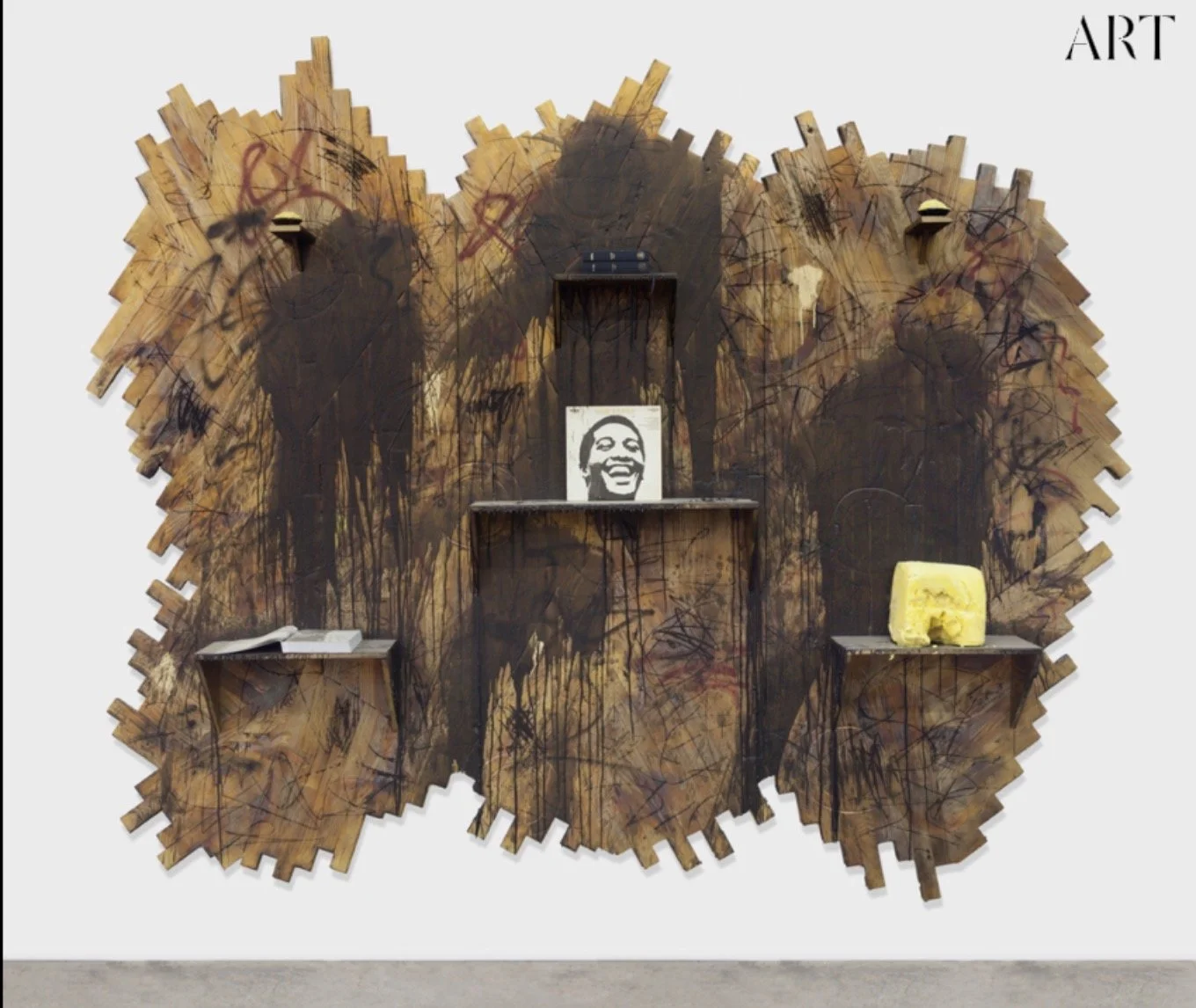
"The shelves are crammed. They overflow. They are the material embodiment of a specific kind of consciousness - the consciousness of a Black intellectual who is attempting to hold multiple traditions, multiple histories, and multiple aesthetic registers simultaneously."
Rashid Johnson was born in Chicago in 1977 and studied at Columbia College and the School of the Art Institute of Chicago. He began making significant work in his mid-twenties and has, across the subsequent two decades, built a practice that operates simultaneously in photography, painting, sculpture, installation, and film - without any of these categories quite containing what he is actually doing.
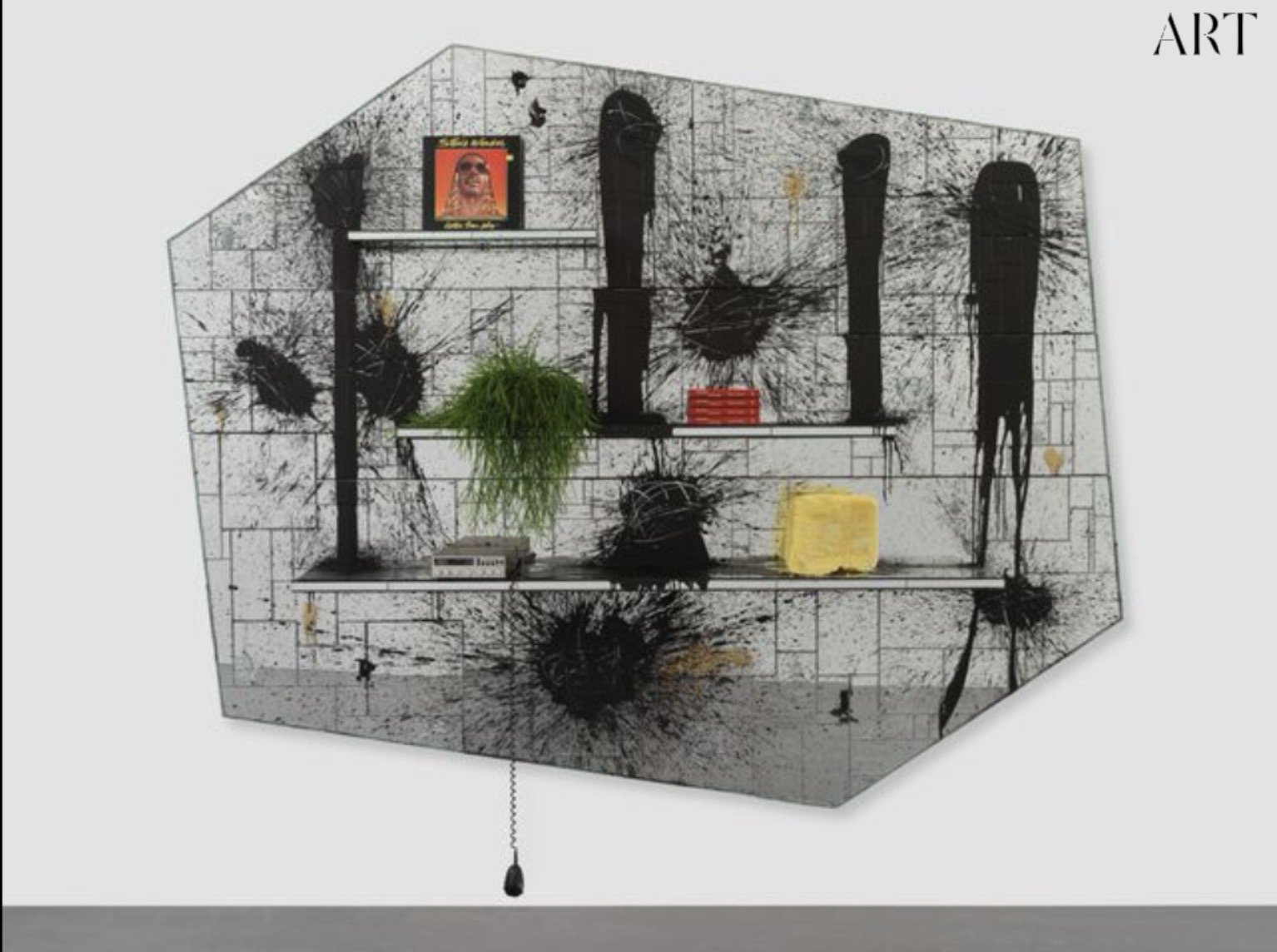
The installations are the work that has produced his largest critical response and his strongest institutional presence. They are built from steel shelving - typically the kind of heavy-gauge industrial shelving associated with warehouses or utility spaces - packed with live plants (usually tropical, usually shea butter plants), books (carefully selected from the African-American intellectual tradition: Du Bois, Fanon, Toni Morrison, bell hooks), abstract paintings in black soap and wax, personal objects, and sometimes monitors playing fragmented video. The shelves are crammed. They overflow. They are the material embodiment of a specific kind of consciousness - the consciousness of a Black intellectual who is attempting to hold multiple traditions, multiple histories, and multiple aesthetic registers simultaneously.
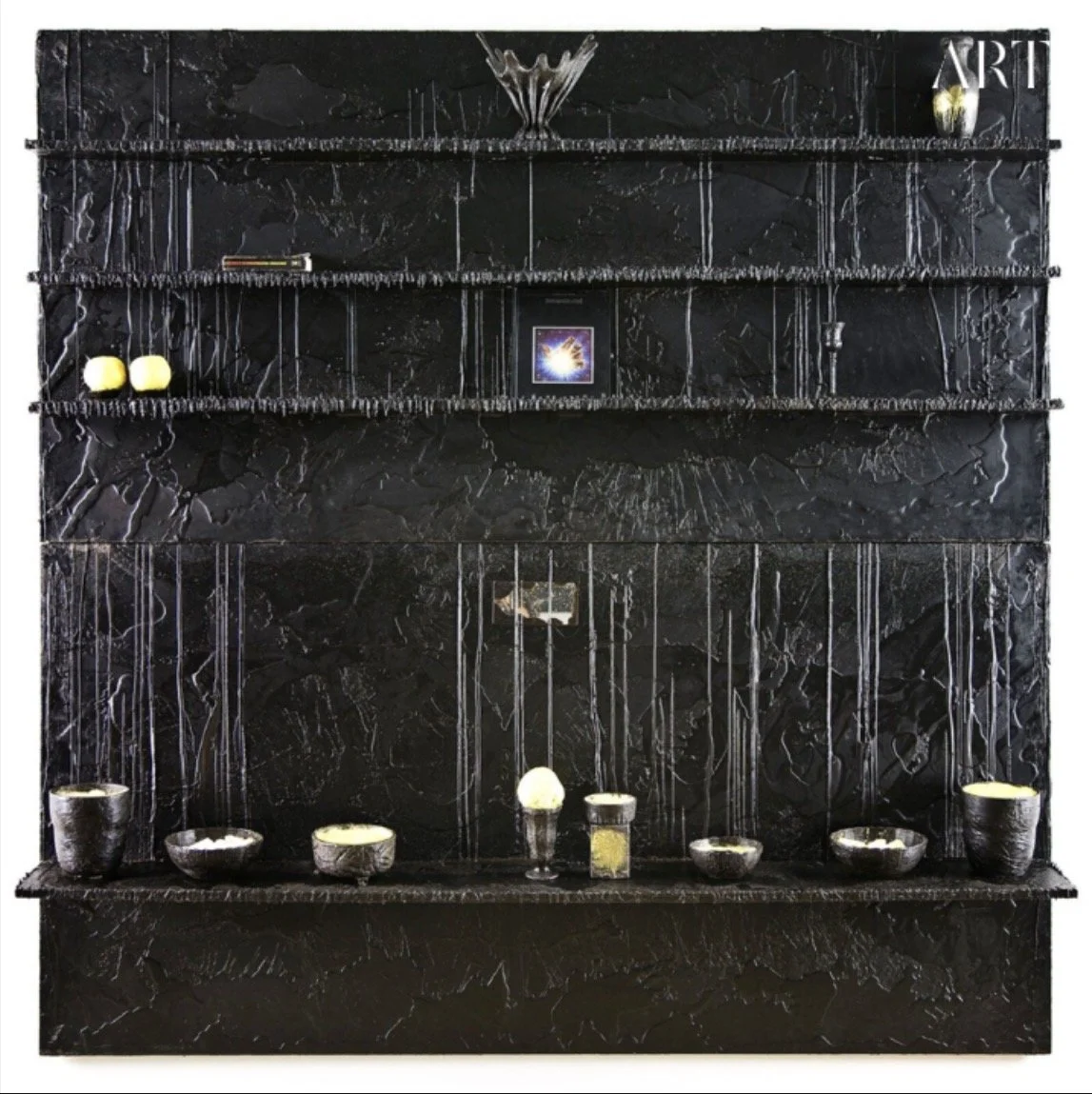
The paintings - executed in black soap, wax, and oil, often on mirrored surfaces - extend the installation logic into a more intimate register. The black soap is specific: a West African product with specific cultural associations and a specific smell that activates a sensory dimension of the work that the reproduction cannot transmit. The wax produces a surface that reads as both primitive and refined, both ancient and contemporary. The mirror introduces the viewer's reflection into the work, making the act of looking a self-implicating act.
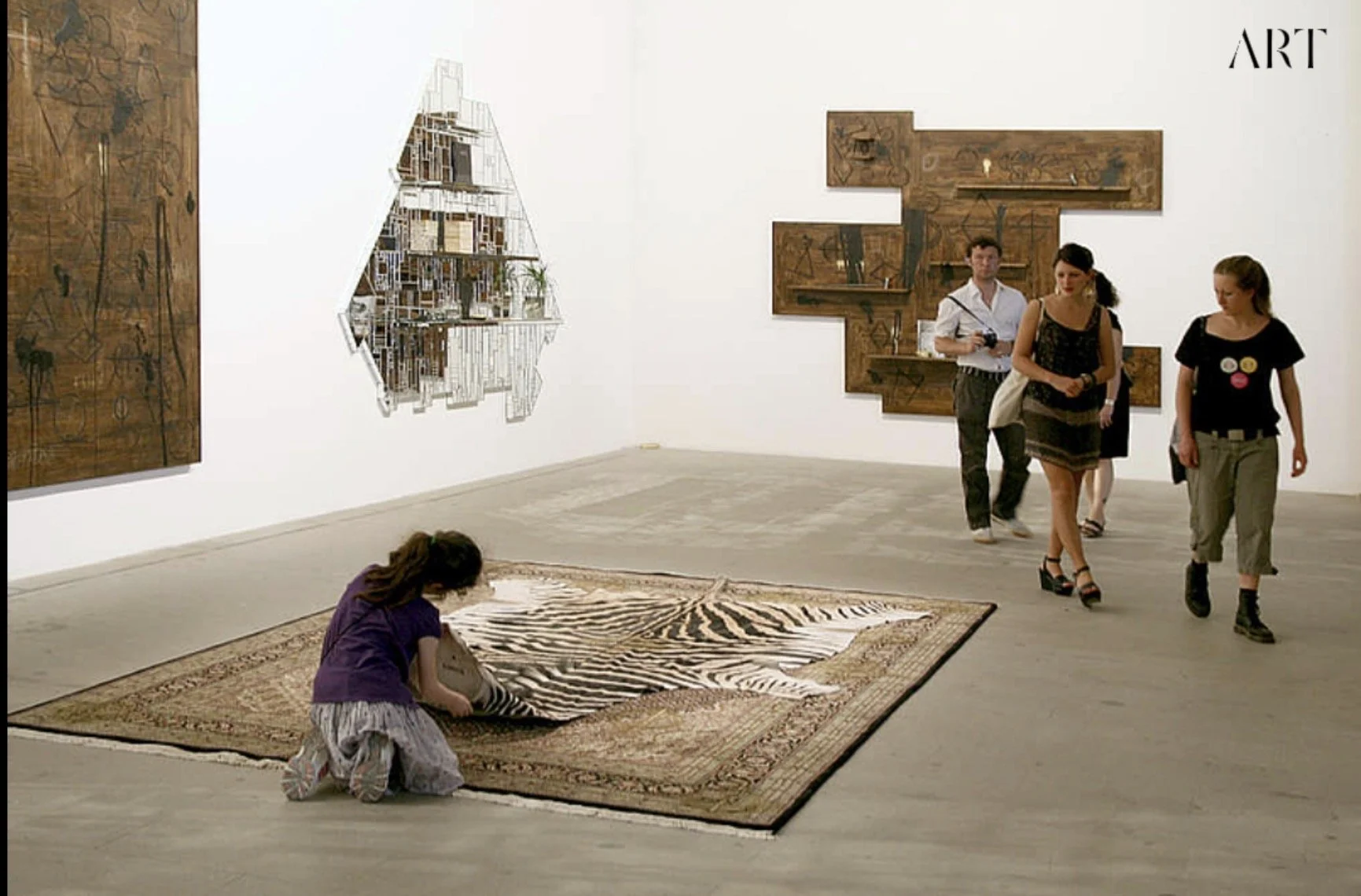
His film work has expanded significantly. Native Son (2019), which he directed as an adaptation of Richard Wright's novel for HBO, demonstrated that the formal intelligence of his visual art practice was not a narrow specialisation but a way of thinking about image-making that applied across moving and still media.
He is currently represented by Hauser and Wirth globally. The scale of that representation - galleries in Los Angeles, New York, London, Hong Kong, Somerset, and beyond - means that his work is accessible to the international collector audience in a way that was not possible before the H&W partnership.
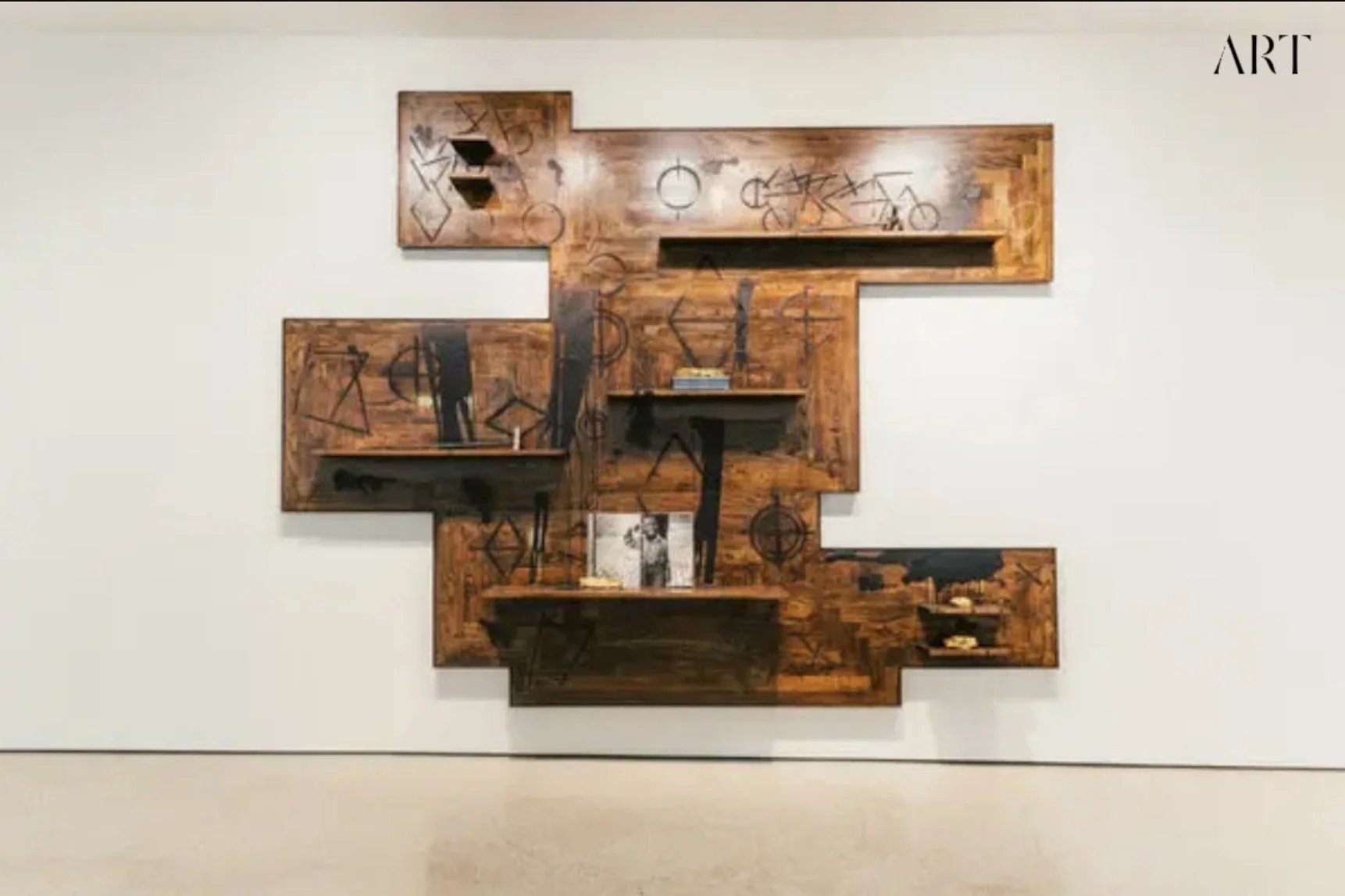
The work that is most consistently discussed in critical contexts is the 'Anxious Men' series - large-scale paintings of fragmented, energetic figures rendered in thick black and coloured soap and wax. The title, which refers to the anxiety of the figure depicted, also names the historical and social condition in which that figure exists. The work is not didactic about this. It is formally complex enough that the historical and social dimension arrives through the painting rather than as a label attached to it.
For the collector: the scale of his current institutional presence - MoMA, the Art Institute of Chicago, the Los Angeles County Museum of Art - is the evidence. The secondary market has been active but not yet at the level that his institutional profile would suggest is approaching.
BY OONA CHANEL
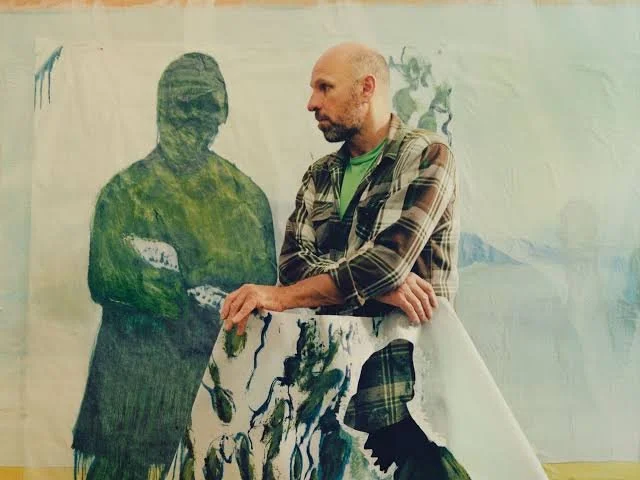
Peter Doig: The Painter Who Makes the Present Feel Like Memory
He is arguably the most significant figurative painter alive. His paintings of snow, water, canoes, and the specific quality of recollected experience produce the most consistent and most serious argument for the painting's continuing relevance. He is currently showing at Michael Werner Gallery London. Here is what the work is doing.
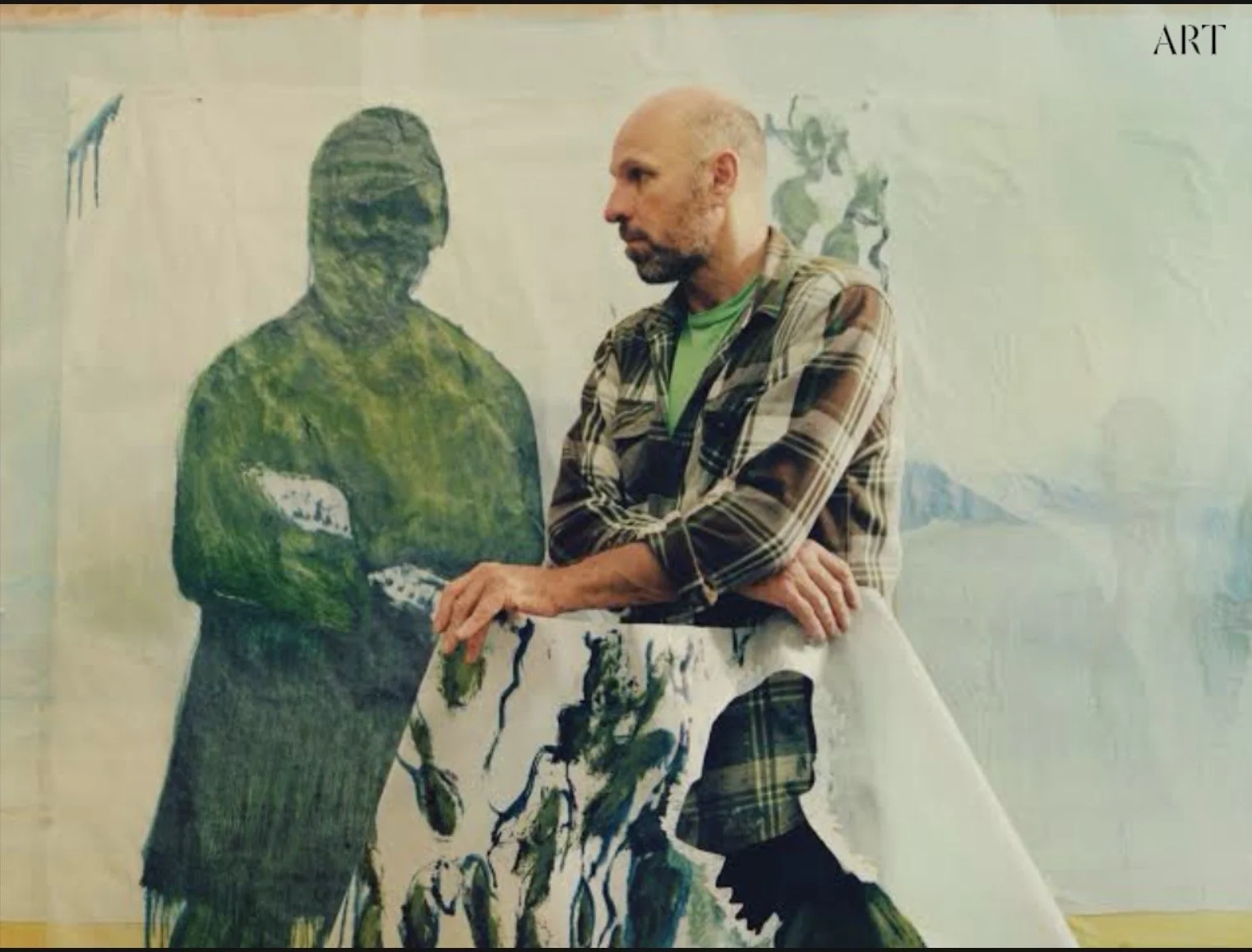
“The reproduction of Doig's paintings is universally inadequate. The specific quality of paint surface — the layered, scraped, built-up surface that produces the peculiar atmospheric depth of his best work — is not available in any digital image. This is a body of work that can only be understood in front of the actual paintings.”
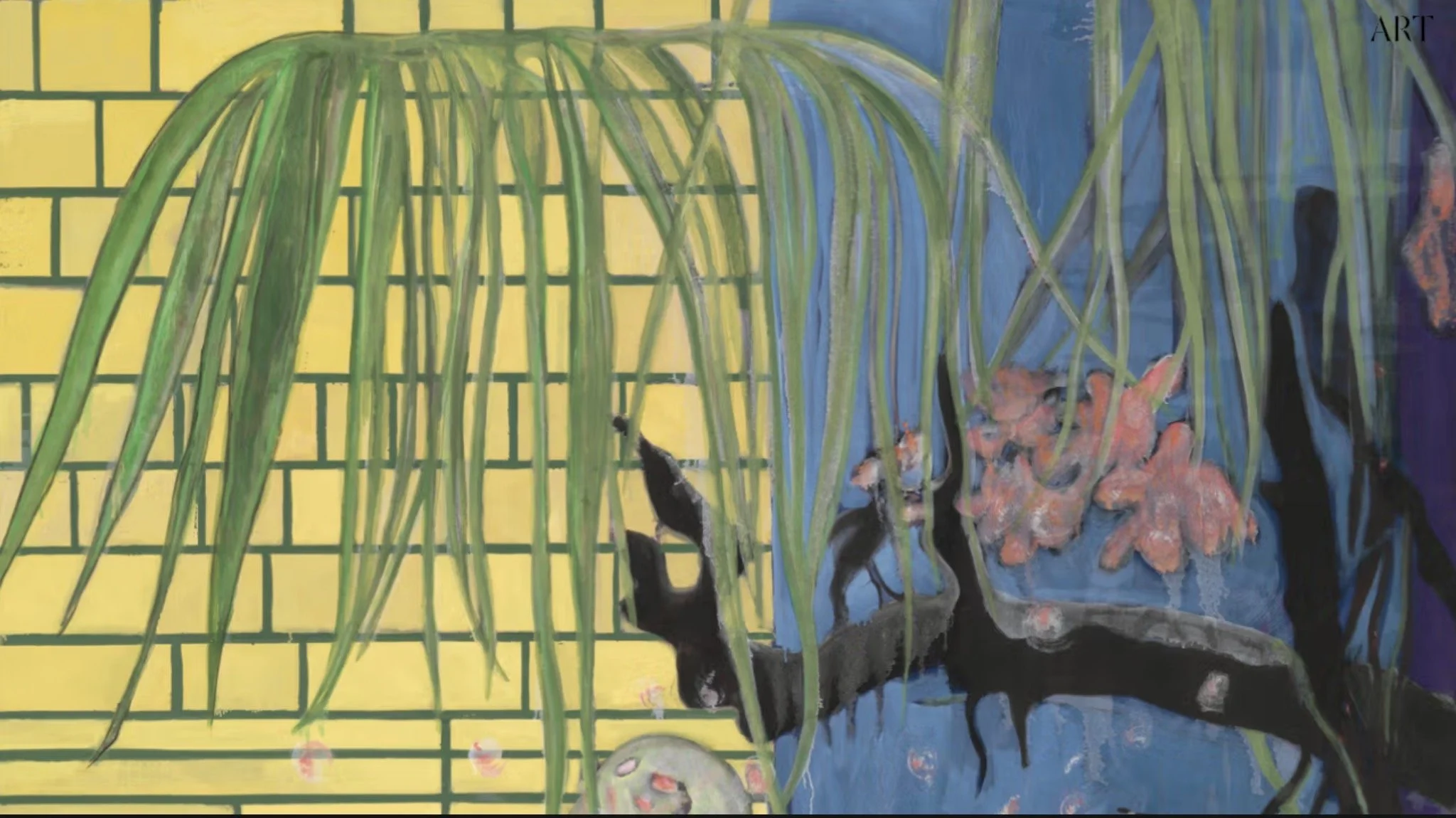
Peter Doig was born in Edinburgh in 1959, grew up partly in Trinidad and partly in Canada, trained at Wimbledon College of Art and the Chelsea College of Art, and produced, in the early 1990s, a series of paintings that decisively changed what it was possible to believe about the state of figurative painting. This is not a retrospective claim. It is the view of his contemporaries at the time, and of the critics and curators who were paying attention.
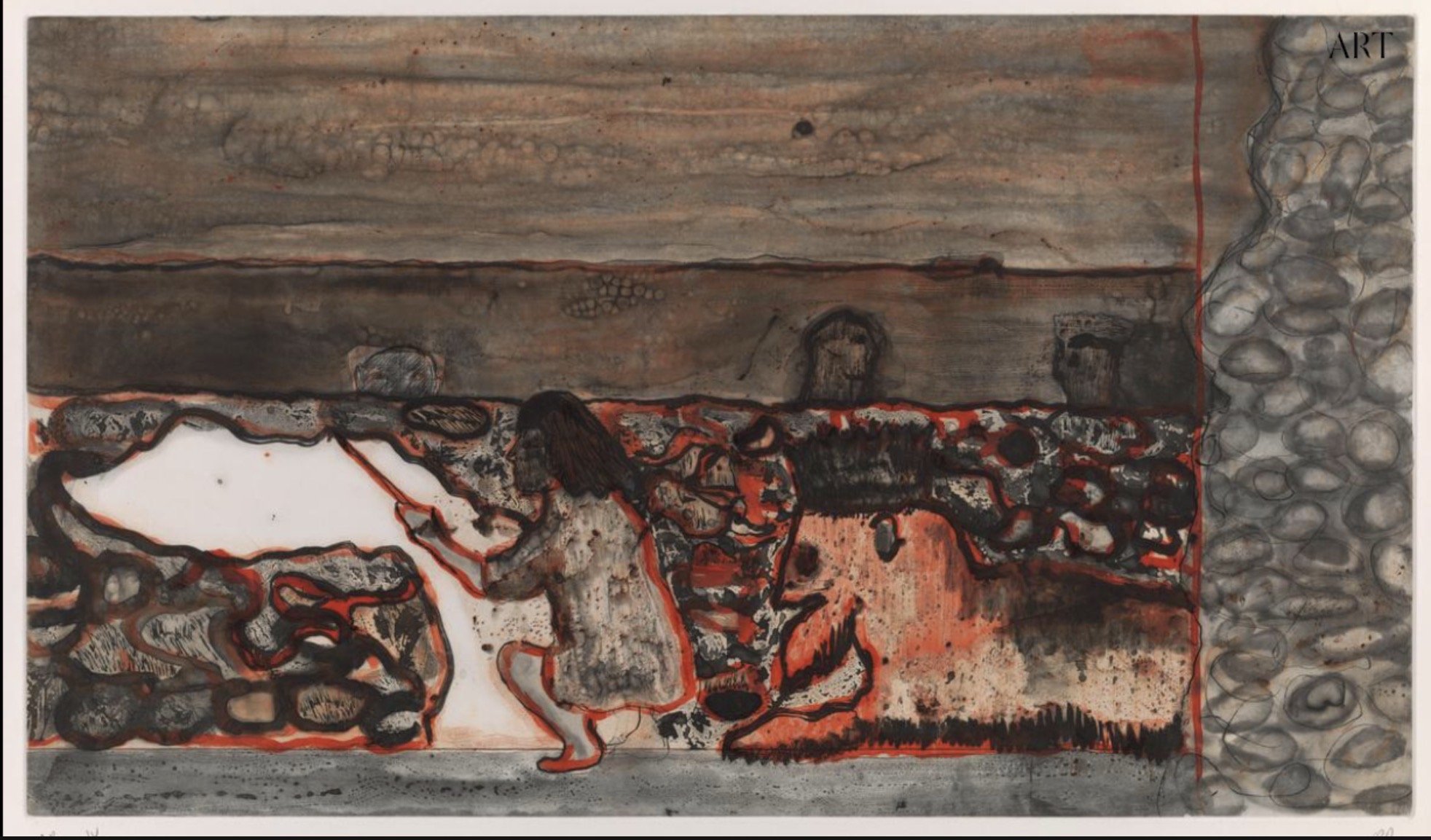
The snowscape paintings of the early career — Ski Jacket (1993-94), Snowstorm (Stag) (1995-96), Blotter (1993) — established a visual and emotional register that had not been available in painting before him. Not simply snow — the psychological experience of snow, of being in a landscape that absorbs sound and reduces scale and places the human figure in a relationship to the environment that is neither comfortable nor hostile but suspended. The figures in these paintings are not in their correct scale relationship to the landscape. They are remembered to be at a certain scale, and memory does not obey perspective.
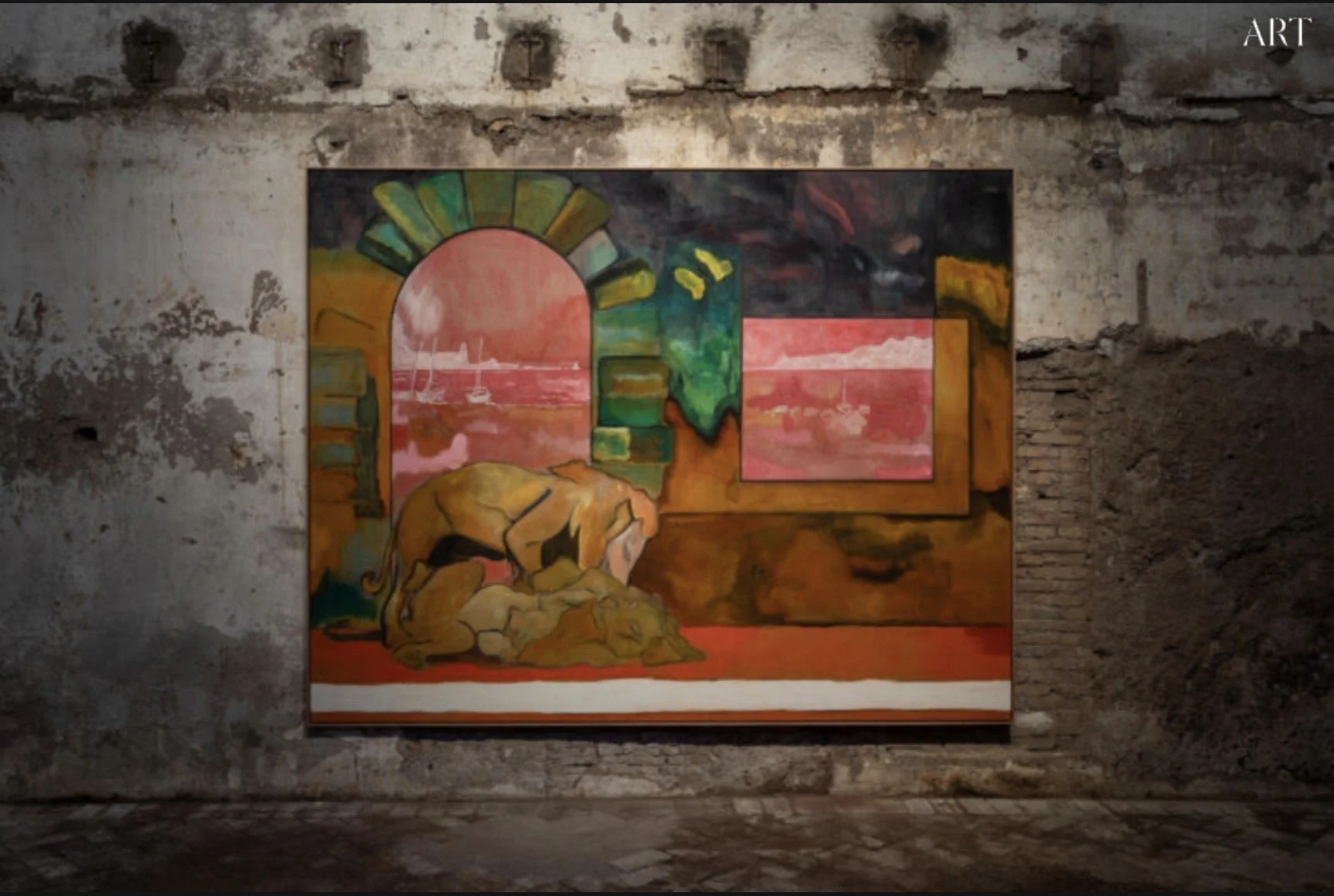
His auction record — 26 Million Pounds at Sotheby's London in 2015 for Canoe Lake (1997-98) — is one of the highest for any living European artist. The prices are significant not because prices indicate quality but because the secondary market consensus is a form of critical consensus, and the secondary market for Doig has been consistent across three decades. This is the mark of a practice that the market believes in because the critical apparatus that informs the market believes in it.
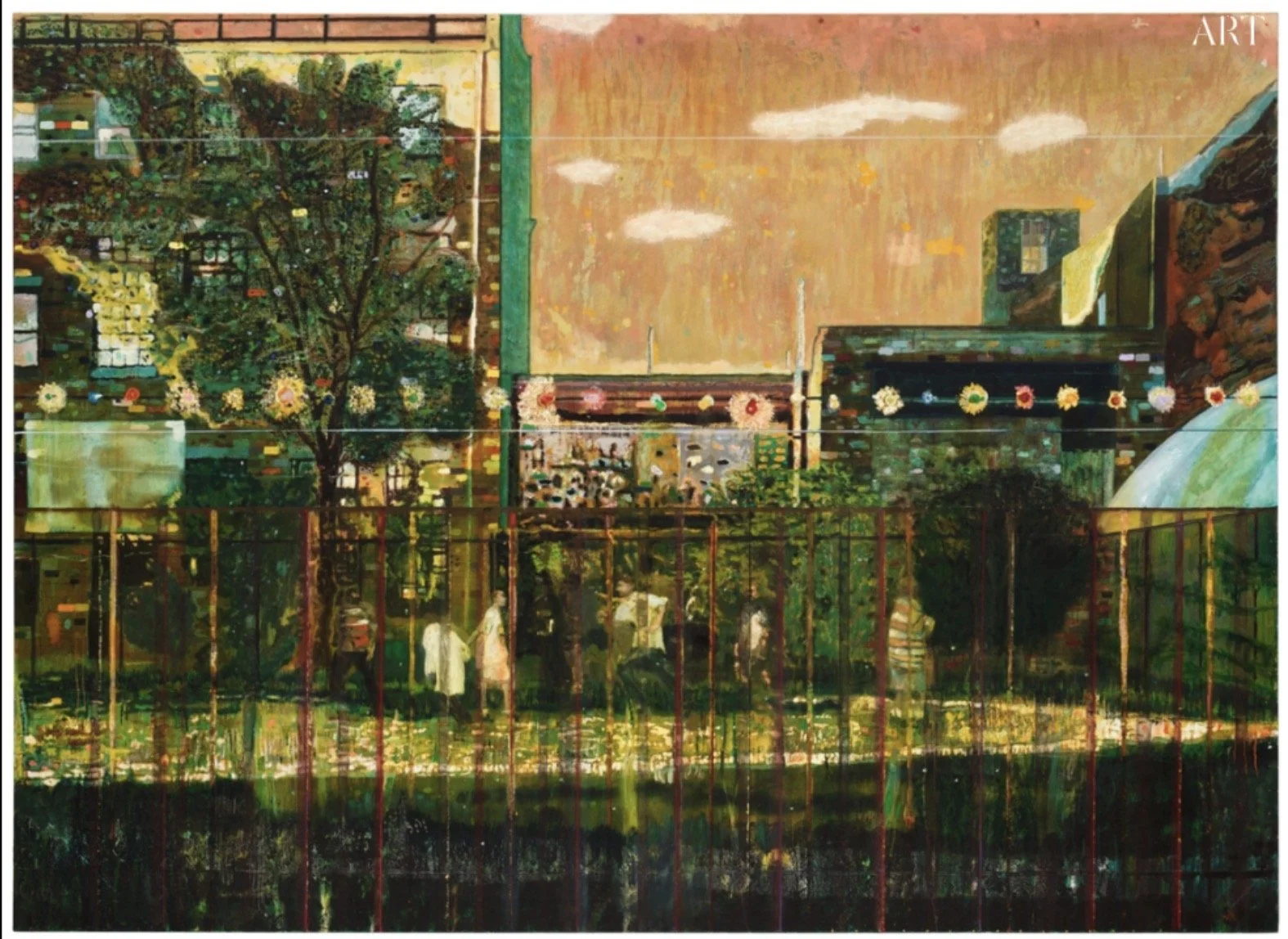
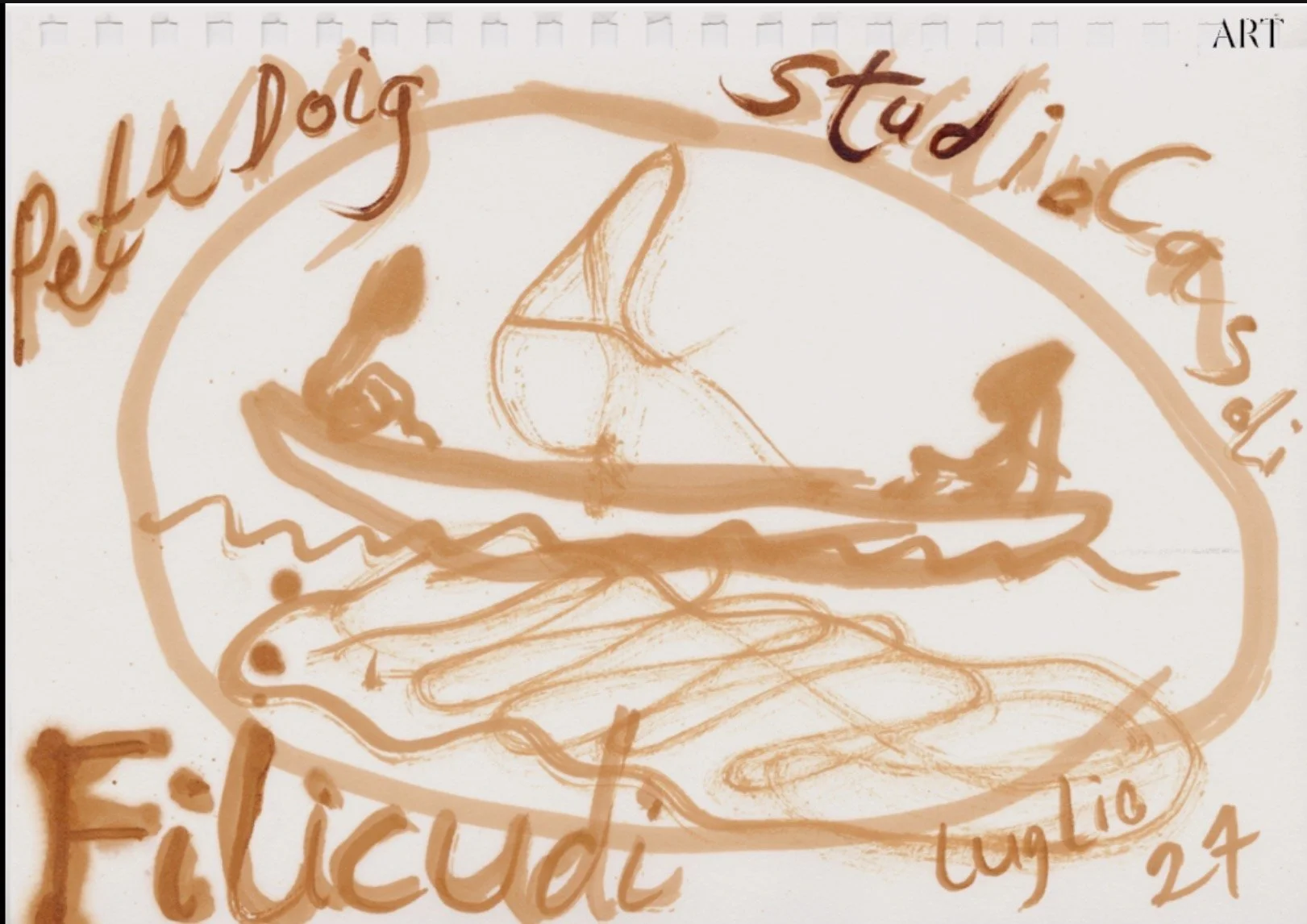
The current exhibition at Michael Werner Gallery London — continuing through August — presents new paintings that extend the Trinidad period work into new formal territory. Since moving to Trinidad permanently in 2002, Doig's palette has expanded and warmed; the specific light of the Caribbean, its relationship to colour and shadow, has produced a different relationship between the figures in his paintings and the landscapes they inhabit. The snow work was about suspension and cold and the specific quality of northern memory. The Trinidad work is about heat and presence and the specific quality of light that does not go dark at seven in the evening.
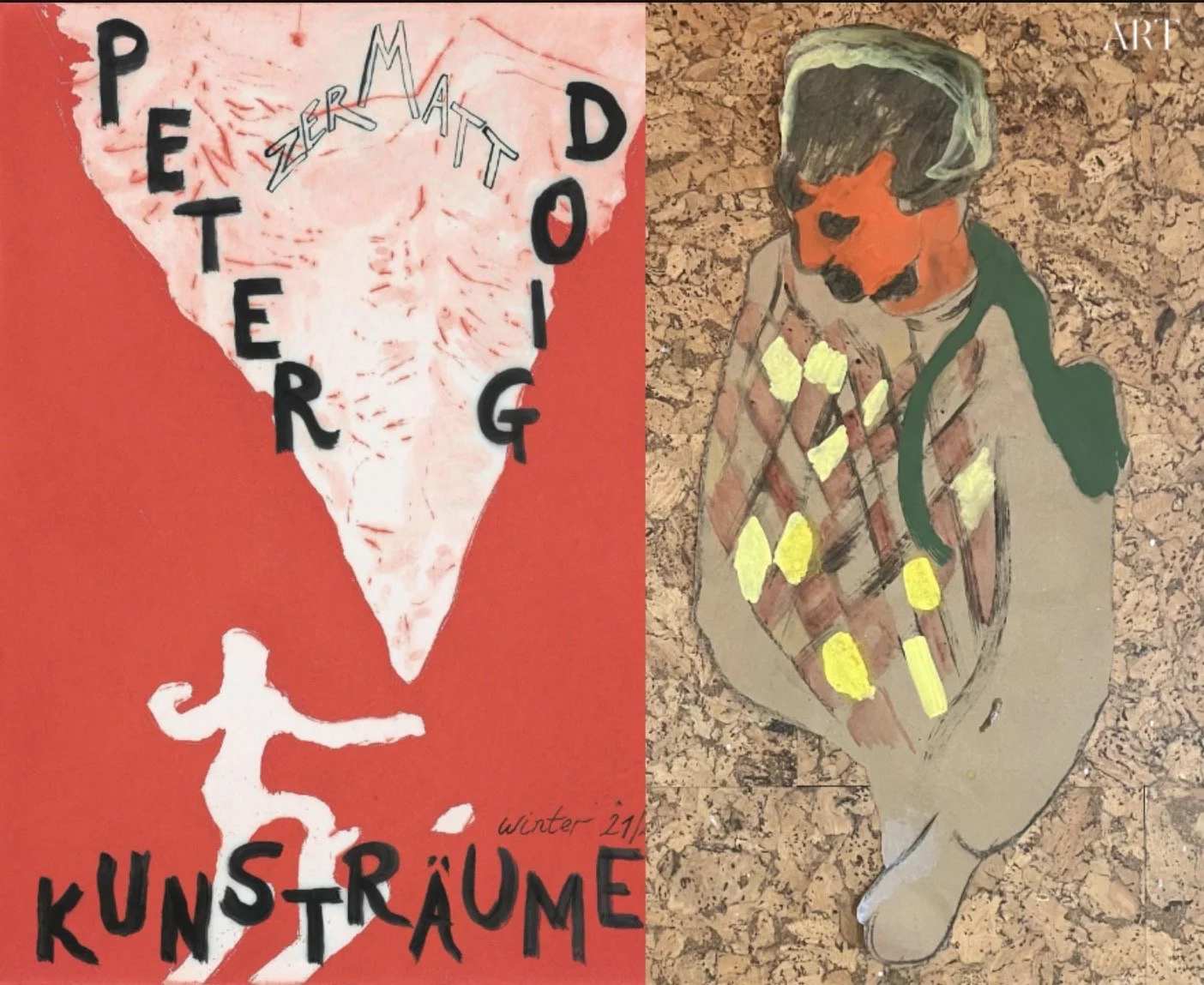
He is represented by Michael Werner Gallery in London, New York, and Berlin. He is also represented by Victoria Miro Gallery in London. The dual representation — unusual at his level — reflects the institutional relationships he has maintained over decades rather than a commercial strategy.
For the collector approaching his work: the primary market works are rarely available. He paints slowly — typically fewer than ten significant paintings per year — and the works are placed with collectors the galleries have relationships with. The secondary market at auction is the more accessible route, though at price points that reflect the demand. The most important current engagement is to see the work in person when it is available. The reproduction of Doig's paintings is universally inadequate. The specific quality of paint surface — the layered, scraped, built-up surface that produces the peculiar atmospheric depth of his best work — is not available in any digital image.
BY OONA CHANEL
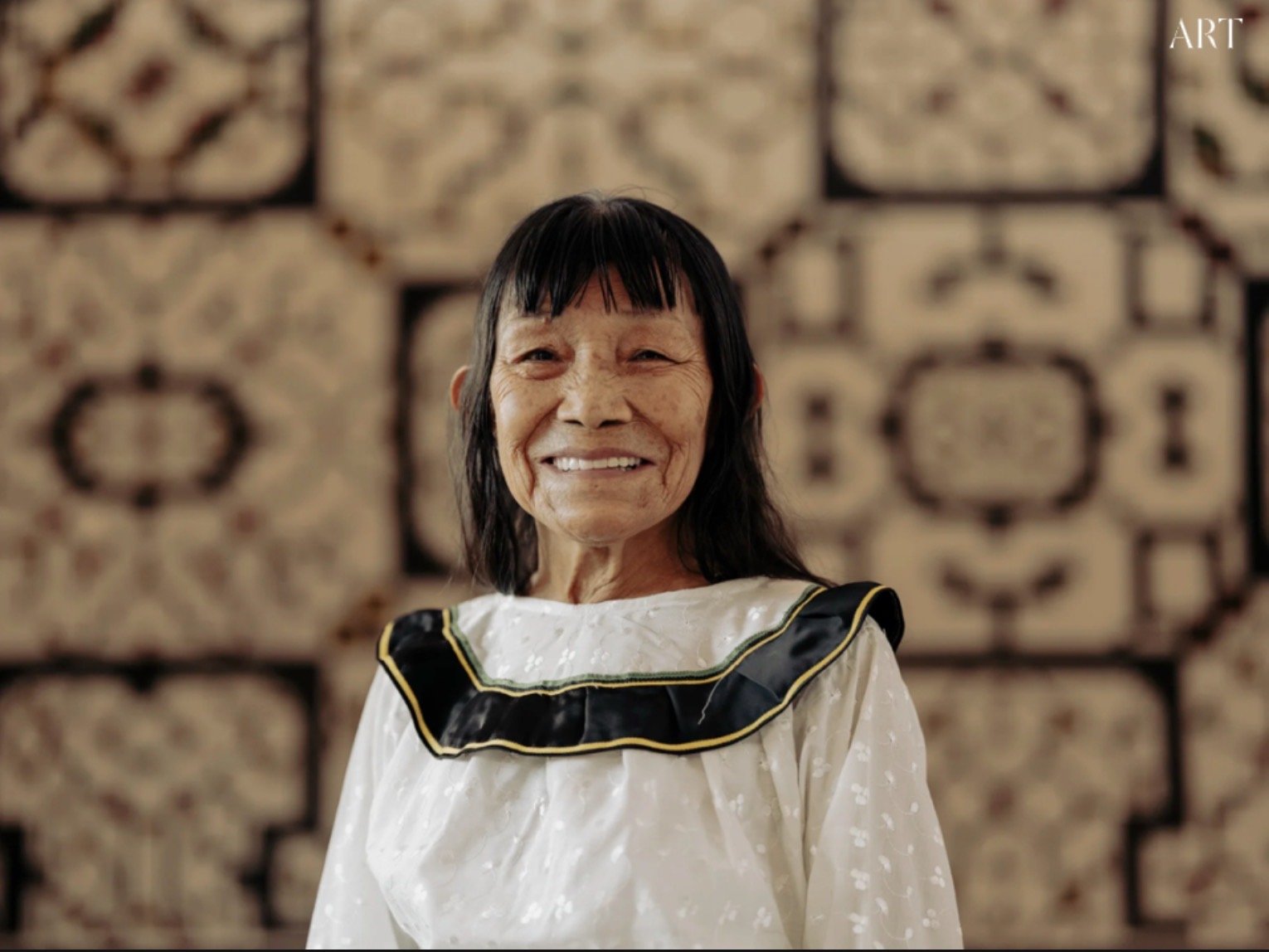
Sara Flores: The Amazonian Artist Whose Work Is Filling the White Cubes She Was Never Supposed to Enter
Born in the Shipibo-Conibo community in the Peruvian Amazon, she paints the cosmological patterns of her people on massive canvases that are now in the permanent collections of MoMA and the Tate. She is currently showing at White Cube New York through August 14. Here is what the work is doing.
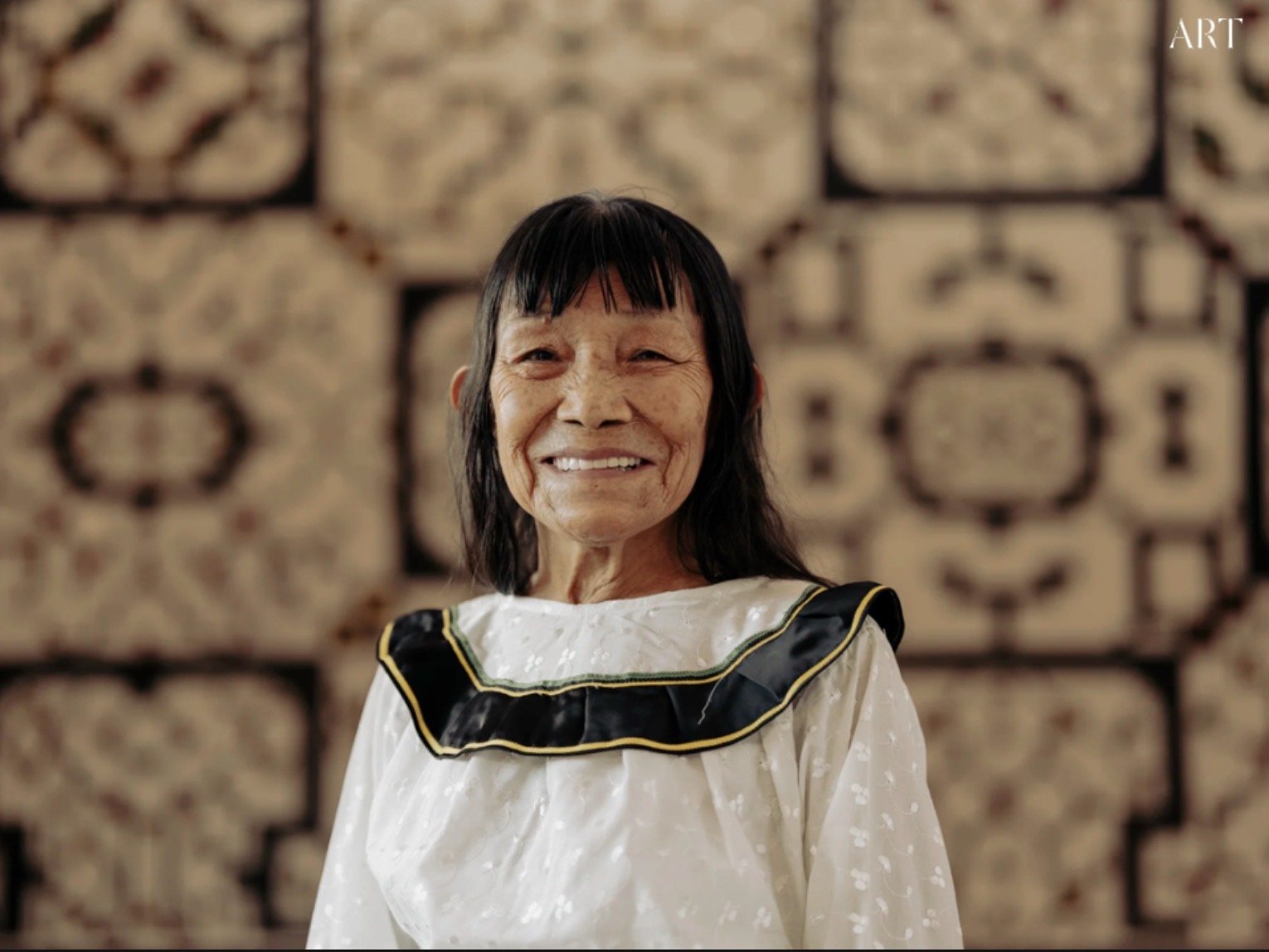
“The kene are not decorative. They are a visual language that encodes cosmological and medicinal information. The translation into Western fine art is not a domestication of the cosmological. It is an expansion of the fine art category to accommodate something it has not previously been able to hold.”
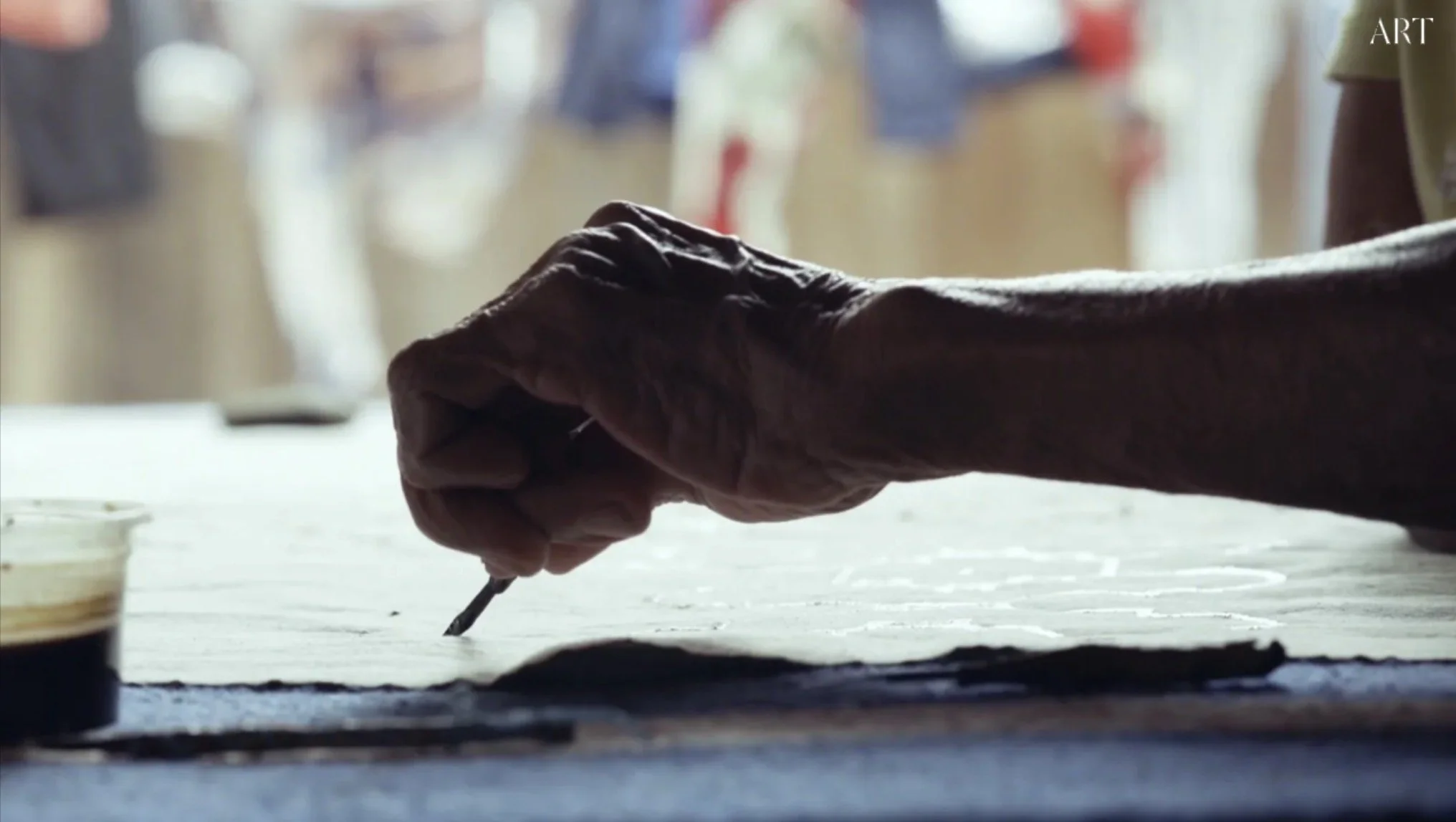
Sara Flores was born in 1948 in the Ucayali region of the Peruvian Amazon, in a Shipibo-Conibo community that is one of the indigenous peoples of the Amazon basin. She learned to paint the kene — the geometric, labyrinthine patterns that are central to Shipibo-Conibo material culture, appearing on ceramics, clothing, and the ceremonial objects that connect the visible and invisible worlds in the cosmological system of her community — as a child, in the way that this knowledge is transmitted: by watching, by practising, by the kind of accumulated bodily knowledge that formal instruction cannot produce.
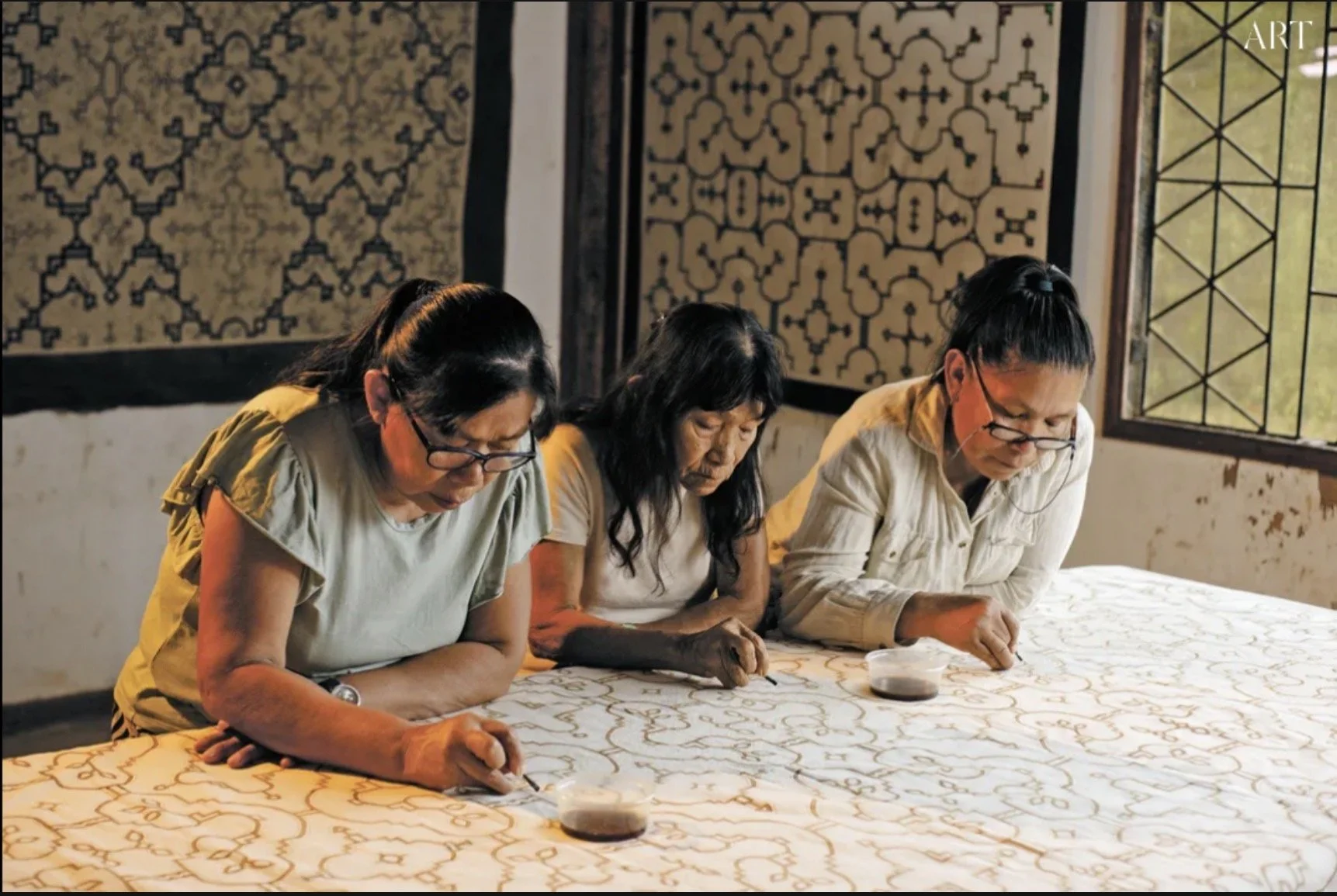
The kene are not decorative. This is the first and most important thing to understand about what Sara Flores makes. The patterns are a form of writing — a visual language that encodes cosmological and medicinal information in ways that only initiated practitioners can fully read. They are associated with the ayahuasca ceremony, in which the patterns are understood to be the visual manifestation of the songs sung by the healer — each song producing a specific pattern, each pattern encoding a specific healing intention. The translation of this into the idiom of Western fine art is, in Flores's hands, not a domestication of the cosmological. It is an expansion of the fine art category to accommodate something it has not previously been able to hold.
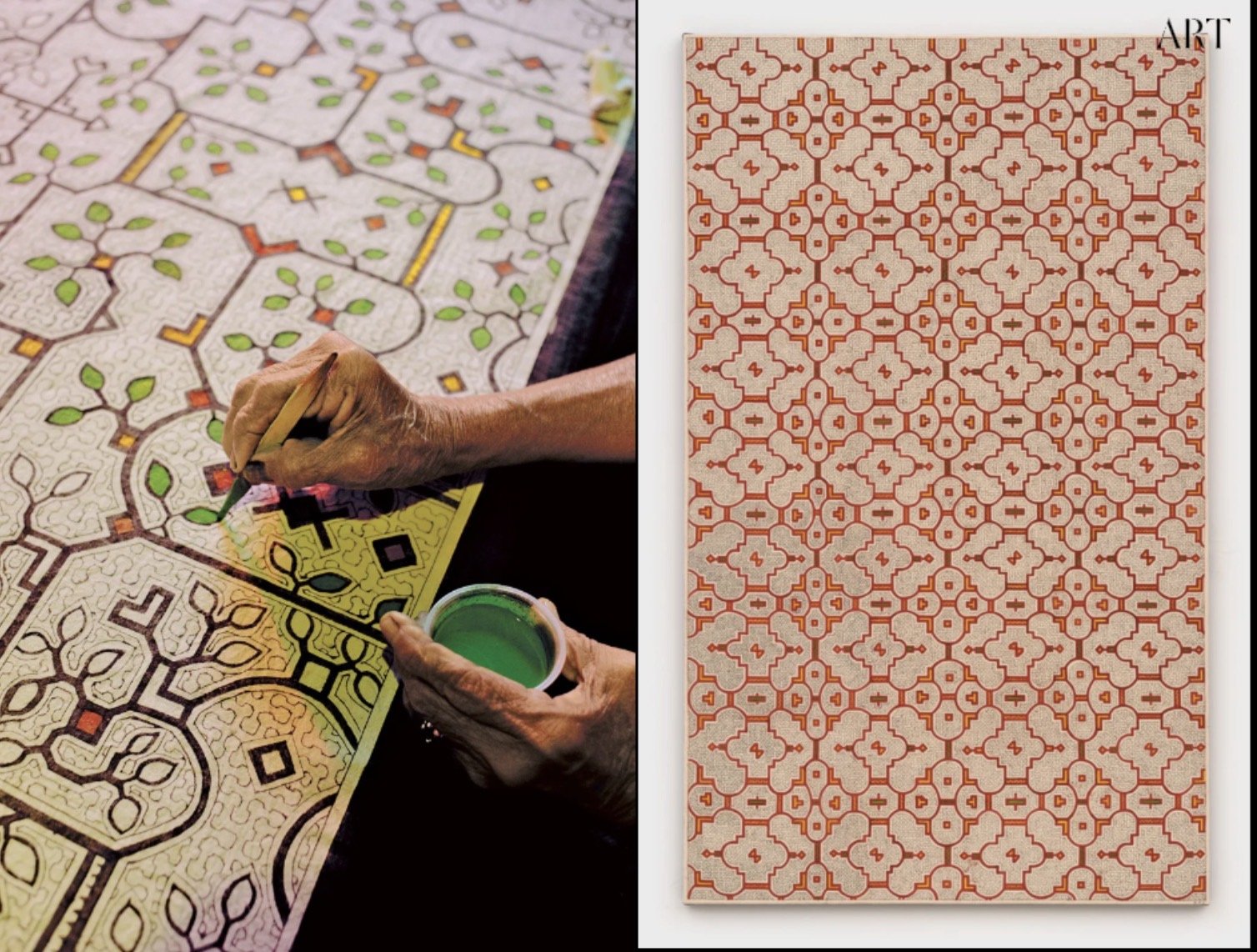
She was not discovered by the Western art world until she was in her sixties. The trajectory — community practice to international institutional collection — bypassed the standard gallery system because the standard gallery system was not designed to accommodate an artist who was not working in its idiom and was not producing for its market. The acquisitions by MoMA and Tate, which occurred in 2023 and 2024 respectively, represent the institutions catching up with a practice that was already decades deep and fully formed.
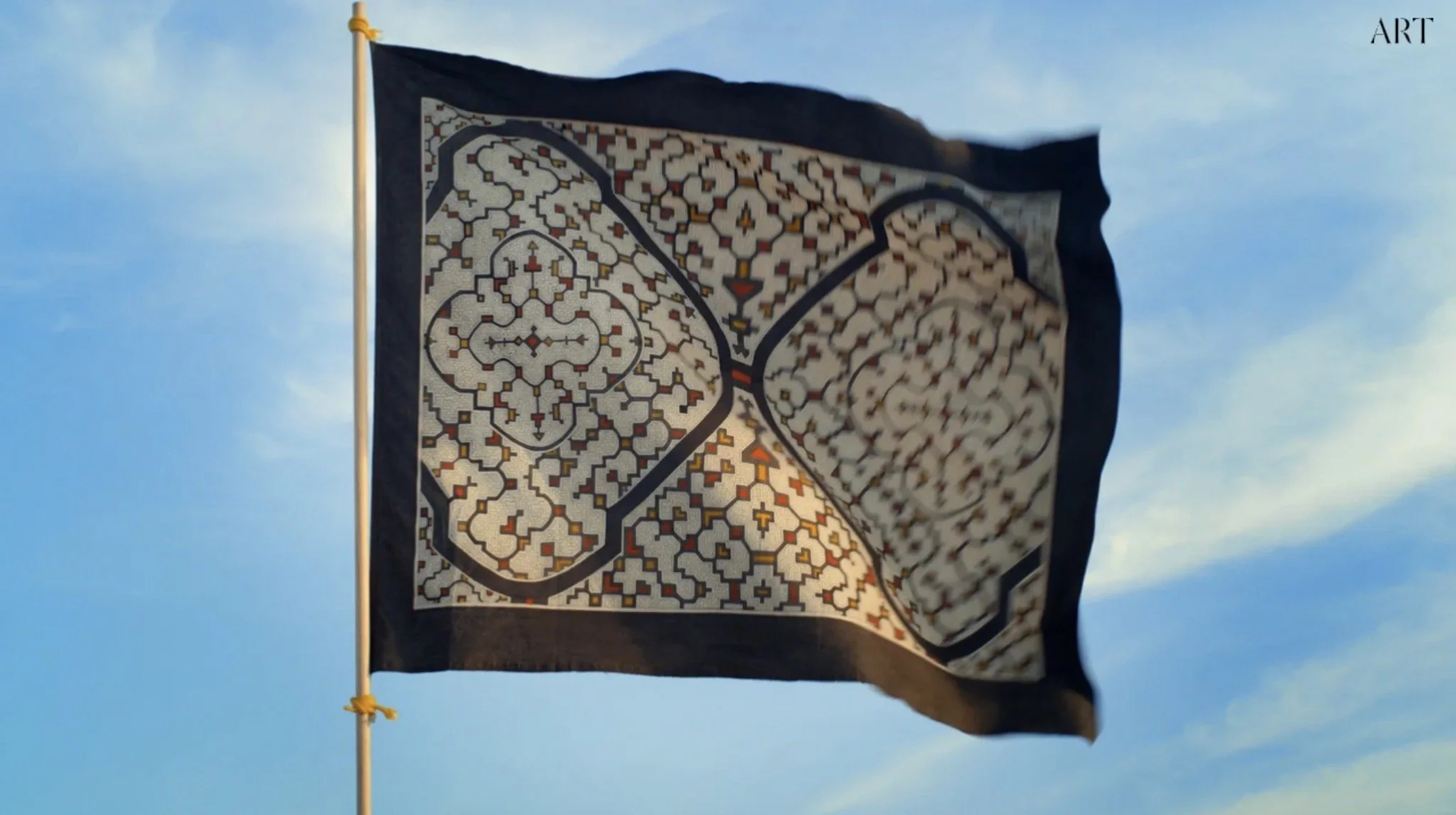
The Akinananti exhibition at White Cube New York — which runs through August 14, 2026 — is one of the most significant commercial gallery shows of the summer in New York. The title, which means 'everything that exists is alive,' is not a title in the Western art sense of a descriptor or a provocation. It is a statement of the ontological framework within which the work operates. Everything that exists is alive — the river, the plants, the patterns themselves — which means that the canvas is not a neutral substrate but a living surface that the patterns are in relationship with.
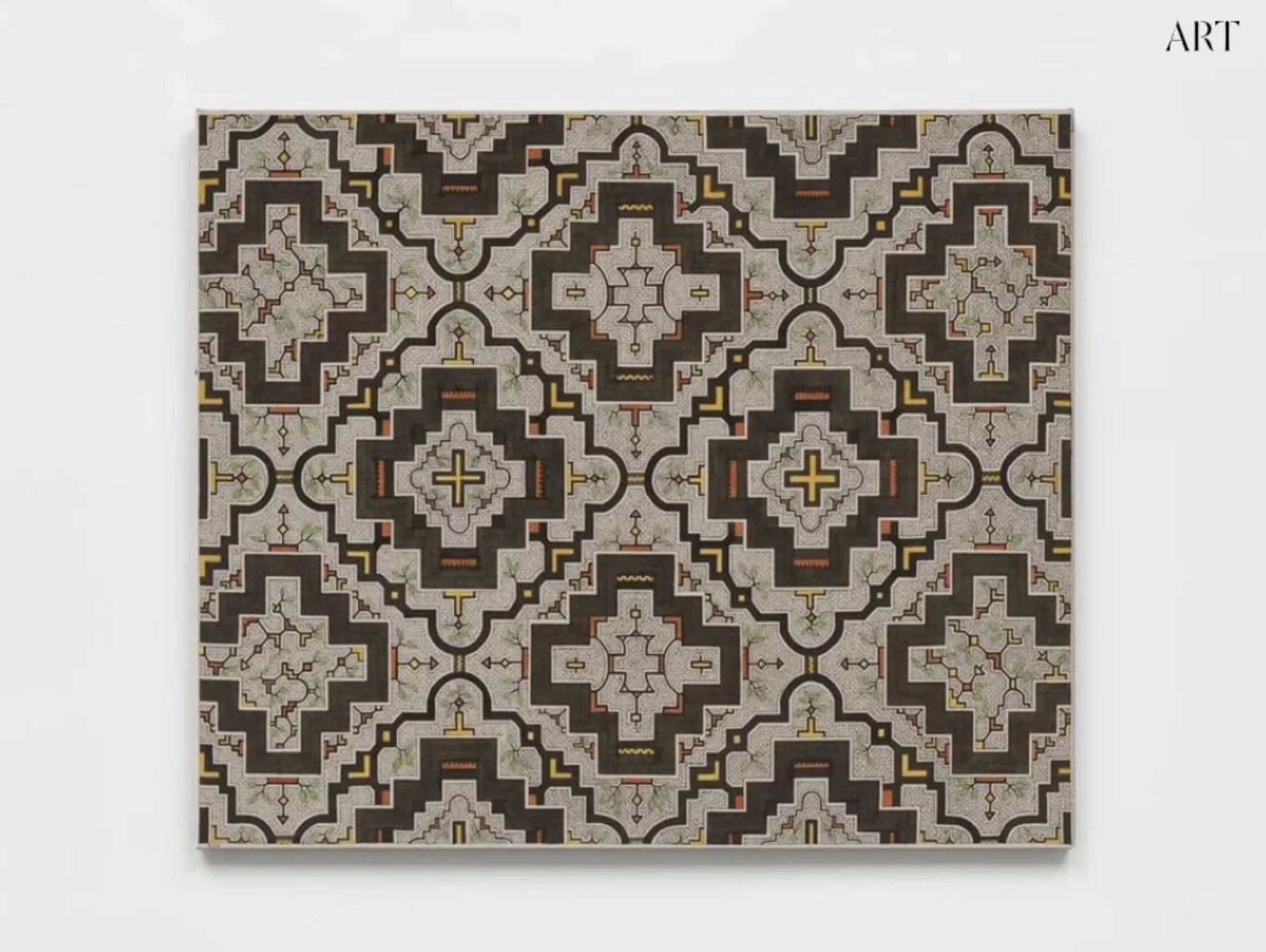
The white cube gallery, in this context, is both the most inappropriate and the most revealing venue for the work. Inappropriate because the gallery's white walls and controlled light produce an encounter with the kene that strips them of the sensory and ceremonial context in which they are made and understood. Revealing because the encounter with the patterns on their own terms — removed from the explanatory context, requiring the viewer to develop their own relationship with a visual language they cannot read — produces, in practice, the most honest available encounter with what the work demands: sustained, open, unknowing attention.
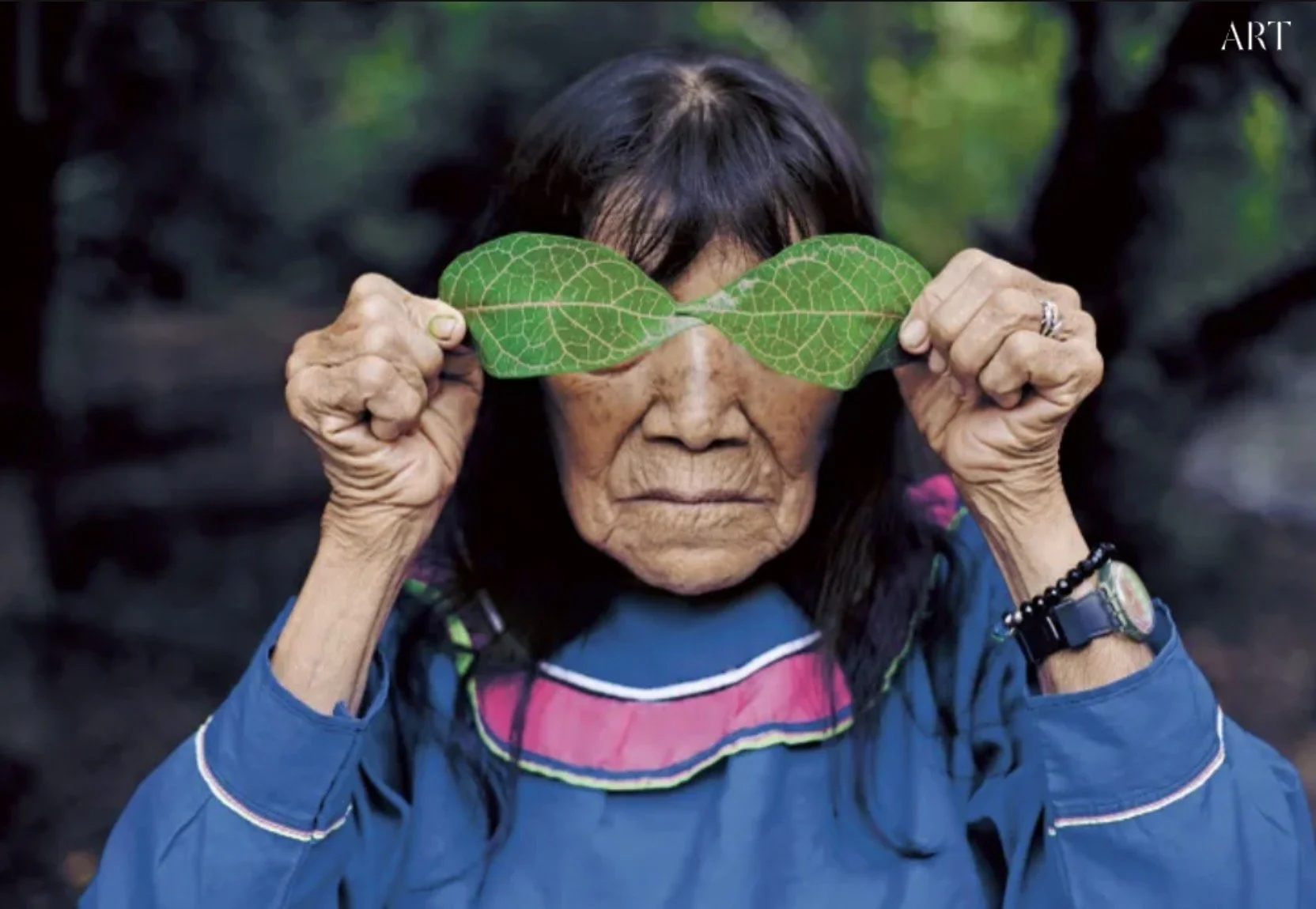
She is represented by the Lima-based gallery 80M2 Livia Benavides and by White Cube, which assumed global representation in 2024. The scale of the White Cube representation — its spaces in London, New York, Hong Kong, and Paris — means that the work is now accessible to the international collector audience that it was not accessible to when it was available only through a single Lima gallery. The price positioning is consistent with major institutional collection placement: these are not entry-level works.
For the collector approaching her work now: the institutional acquisitions are the most significant evidence available. When MoMA and the Tate acquire simultaneously, within the same year, the institutional consensus is not forming — it has formed.
BY OONA CHANEL
Angel Otero: The Paintings That Peel Themselves Off the Canvas
His process — pouring, layering, drying, and then lifting oil paint skins from the surface — produces works that look like fragments of something larger. He is currently exhibiting at Hauser and Wirth Somerset through October. Here is what the work is doing and why it matters.
“The paintings are records of a process you cannot see and that you can feel. The dried paint skins carry the memory of their previous resting place — the glass, the horizontal orientation during drying — into their new existence on the canvas.”
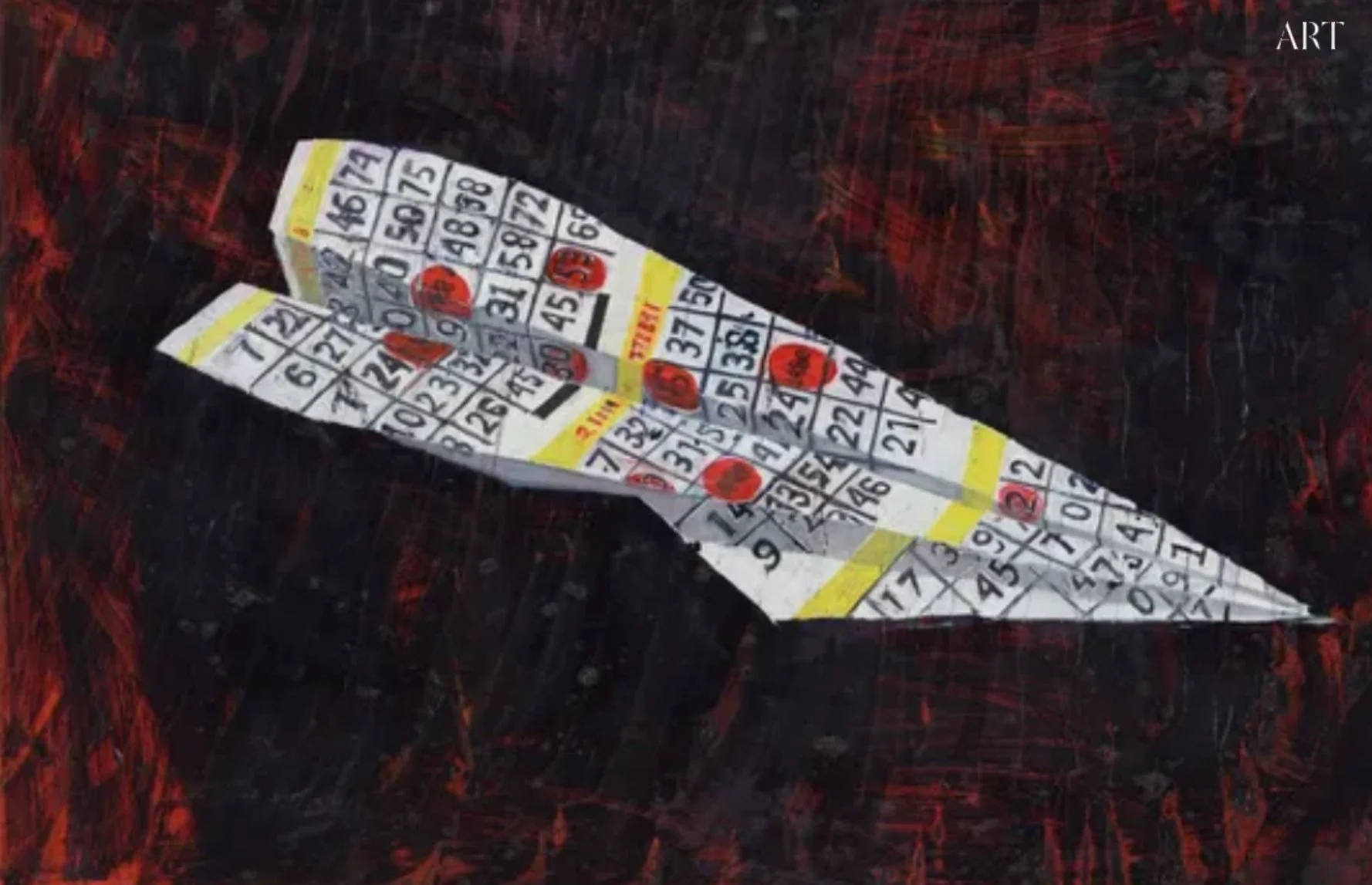
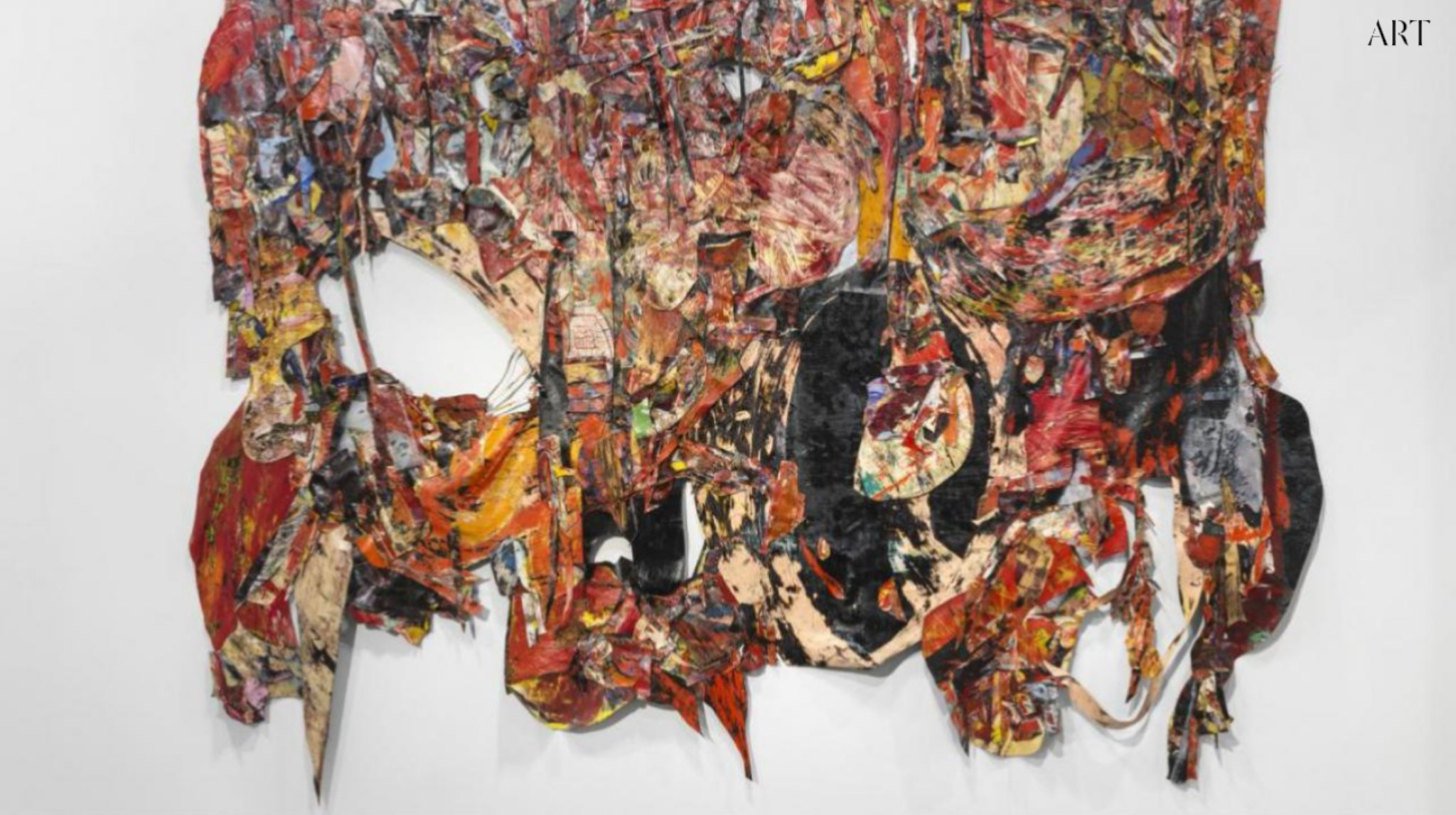
Angel Otero makes paintings by not making them in the conventional sense. The process begins with thick pours of oil paint applied to a glass surface and left to cure. Once the paint has formed a skin — which can take days or weeks depending on the thickness and the composition — Otero lifts the dried paint off the glass and applies it to the canvas, folding, layering, and pressing it into configurations that the initial pouring did not prescribe. The painting is partly planned and partly discovered at the moment of application.
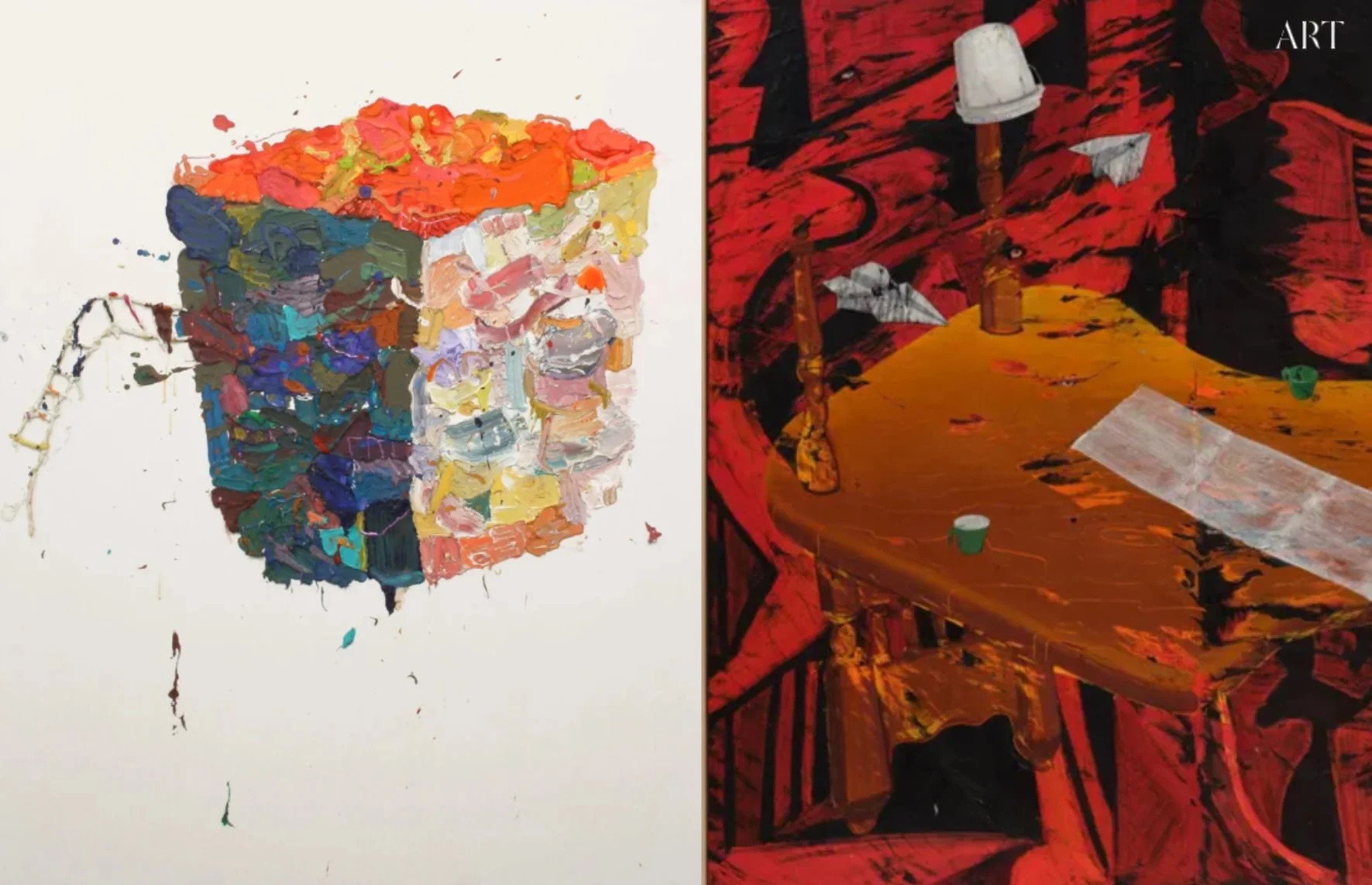
This is not abstract expressionist improvisation. The pours are made with specific chromatic and compositional intentions. But the folding and layering produces spatial effects — depth, overlap, the suggestion of fabric or geology or skin — that direct painting cannot achieve because the medium is not capable of the specific translucency that a dried skin of oil paint has when lifted from a smooth surface and applied at an angle to light.
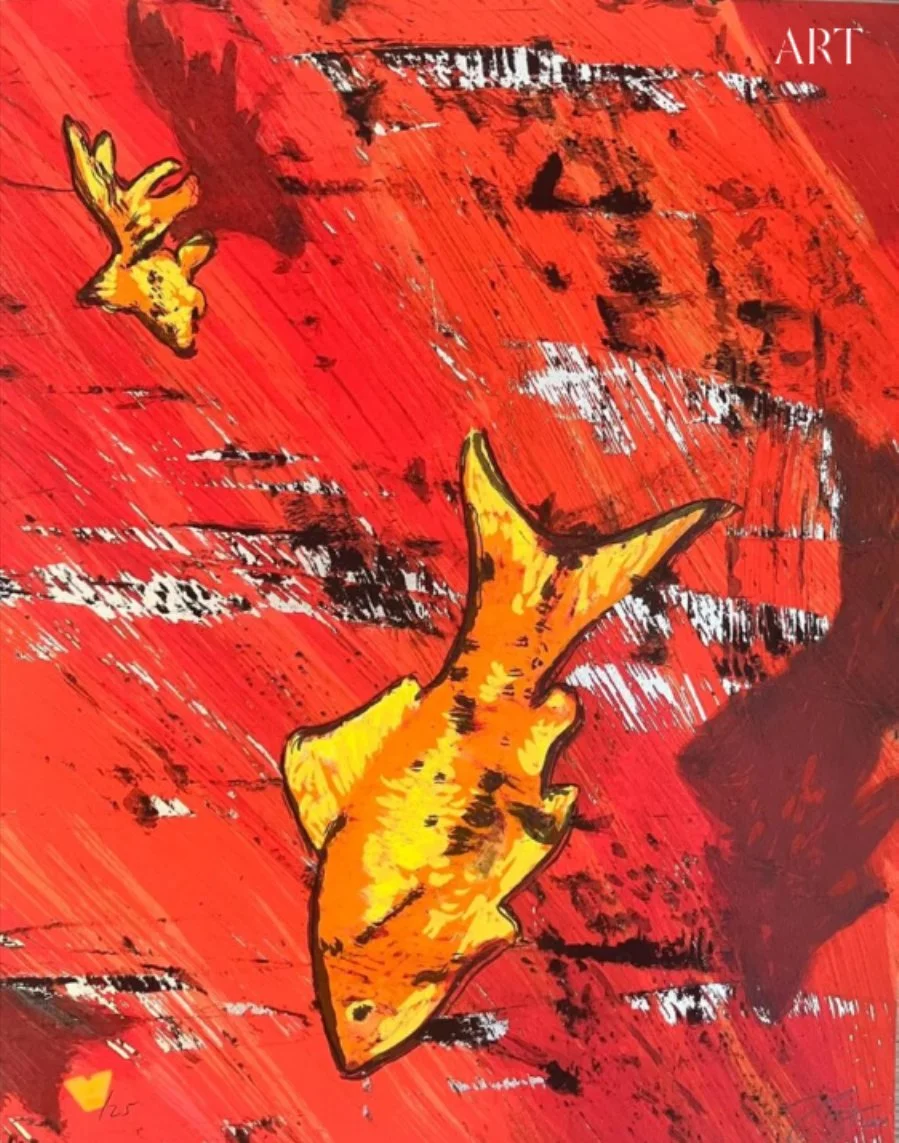
The results look like nothing else in contemporary painting. The closest formal analogy might be the impasto of Anselm Kiefer, but Kiefer's surfaces are built up from the canvas; Otero's surfaces arrive from elsewhere. They carry the memory of their previous resting place — the glass surface, the horizontal orientation during drying — into their new vertical existence on the canvas. The paintings are records of a process that you cannot see and that you can feel.
Otero was born in Santurce, Puerto Rico, in 1987. He has lived and worked in New York for most of his adult life, but Puerto Rico — the specific colours, the specific light, the specific cultural and political situation of the island — is present in the work. Not literally, not as imagery, but in the palette: the saturated oranges and pinks, the specific way warm and cool interact in his layered surfaces. This is not a claim that he makes ostentatiously. It is visible in the work to anyone who has spent time in the Caribbean and then spent time in the paintings.
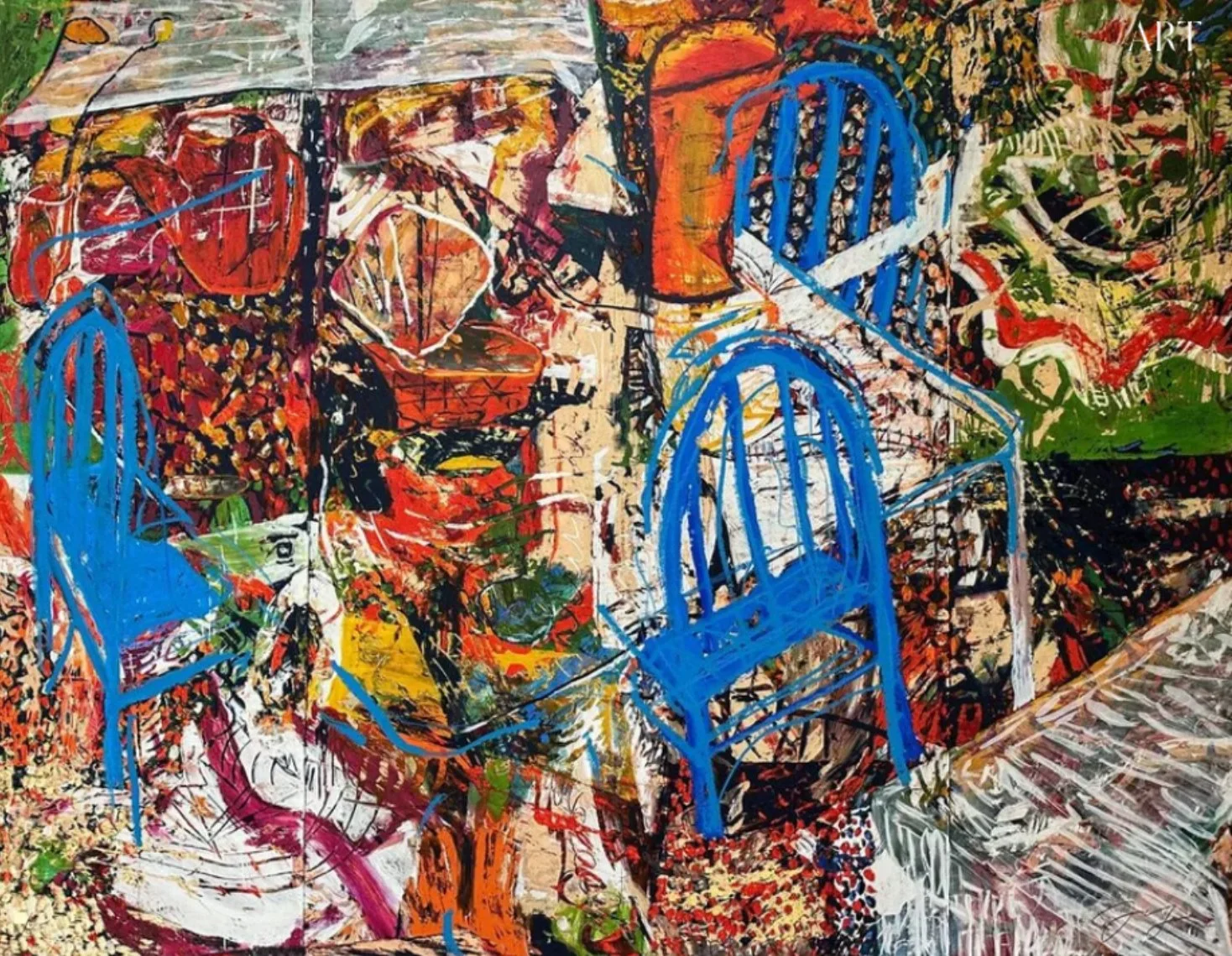
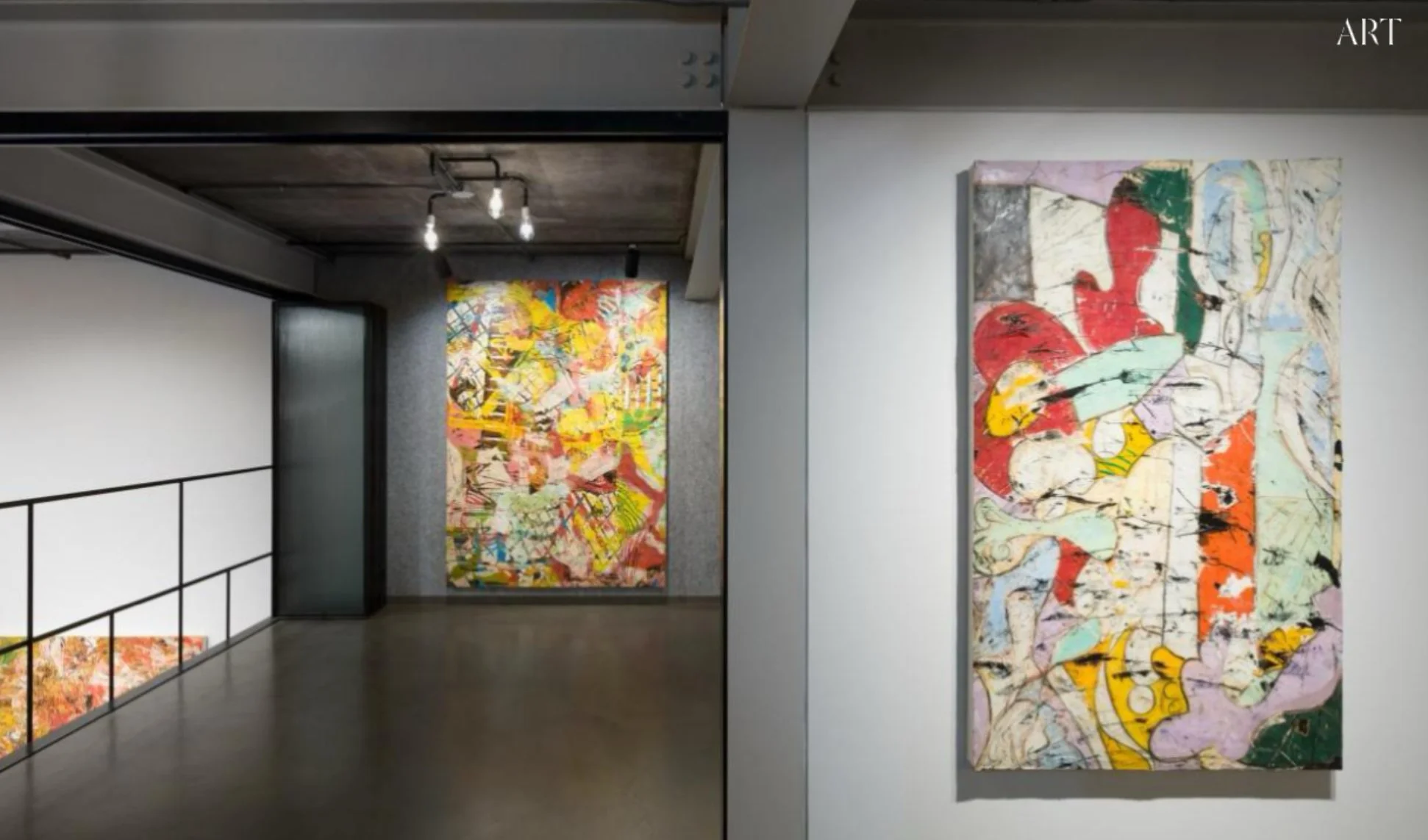
His exhibition Agua Salada (Saltwater) at Hauser and Wirth Somerset runs through October 18, 2026. The Somerset space — the converted farmyard in Bruton — is one of the few commercial gallery spaces in Britain large enough and light enough to show paintings at the scale Otero is now working at, and the show takes advantage of this: the largest works are several metres across, and the quality of the Somerset light, which is different from urban gallery light in ways that are important for work this dependent on surface reflection, is working with the paintings rather than against them.
He is represented globally by Hauser and Wirth, which is the most commercially powerful gallery operation in contemporary art. This means his work is accessible — in the sense that Hauser and Wirth has galleries on several continents and a staff dedicated to collector relationships — and expensive, in the sense that Hauser and Wirth sets prices that reflect the gallery's position and the artist's trajectory.
For the collector approaching his work: the Somerset exhibition is one of the best available opportunities to see the large-scale work in a context where the scale is appropriate. Smaller works — which carry the same process and the same quality of surface — are available at lower price points and at greater secondary market accessibility.
The work that will be most studied in twenty years is probably not the largest. It is the mid-size work — the pieces between 120 and 180 centimetres — where the composition is resolved enough to sustain sustained looking and the surface is dense enough to reward it.
BY OONA CHANEL
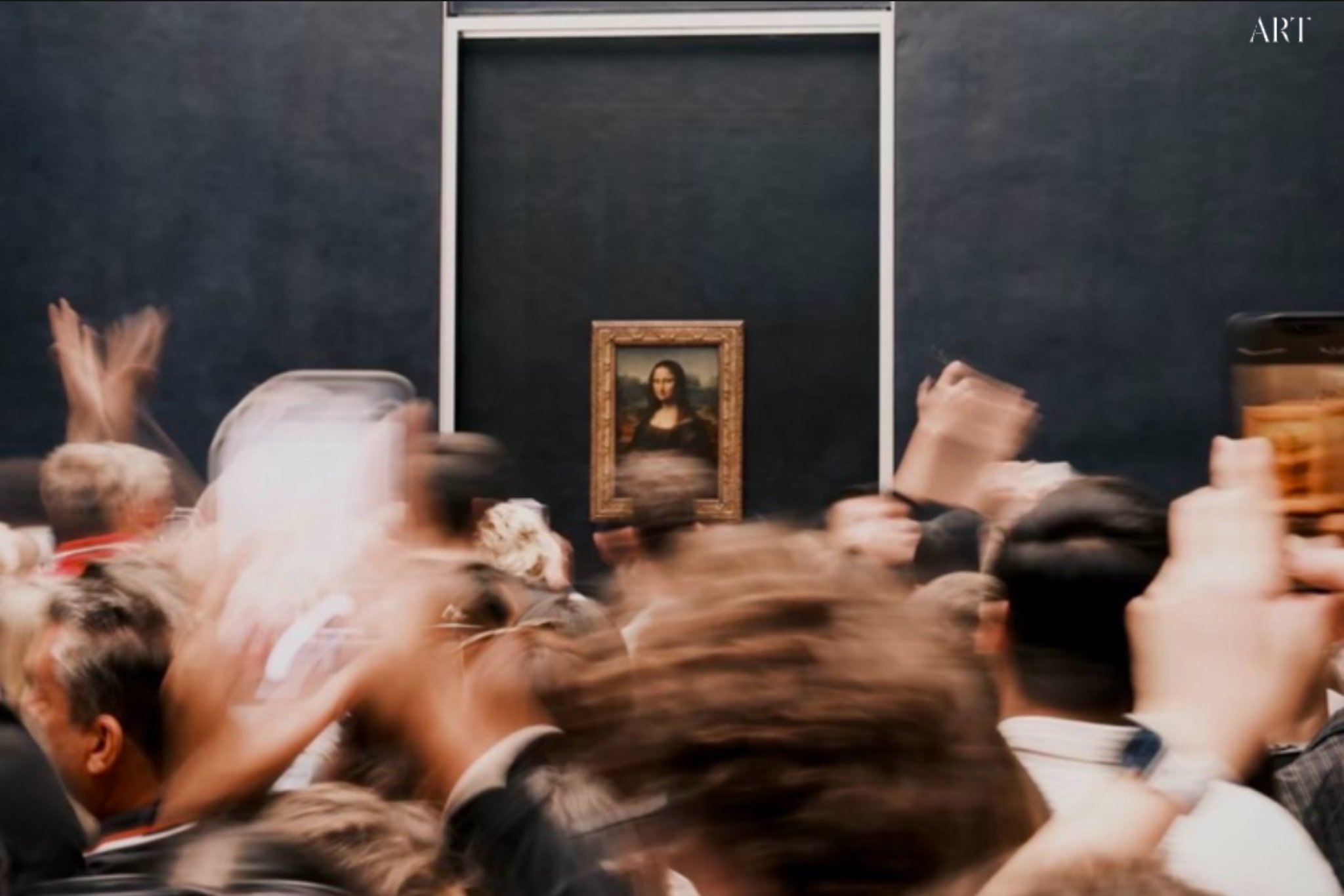
How to Buy Art When You Are Beginning: A Practical Intelligence for the New Collector
The advice given to new collectors is either commercial or intimidatingly academic. Here is the framework that experienced collectors wish someone had given them — and the specific things they look for now that they didn't know to look for then.
“The piece you regret not buying is always more expensive than the piece you regret buying. This is not an argument for recklessness. It is an argument for trusting the quality of your attention when it is genuinely arrested by something.”
The most useful thing an experienced collector once told me about buying art was this: the piece you regret not buying is always more expensive than the piece you regret buying. This is not an argument for recklessness. It is an argument for trusting the quality of your attention when it is genuinely arrested by something — when you stop in front of a work and find, ten minutes later, that you are still there.
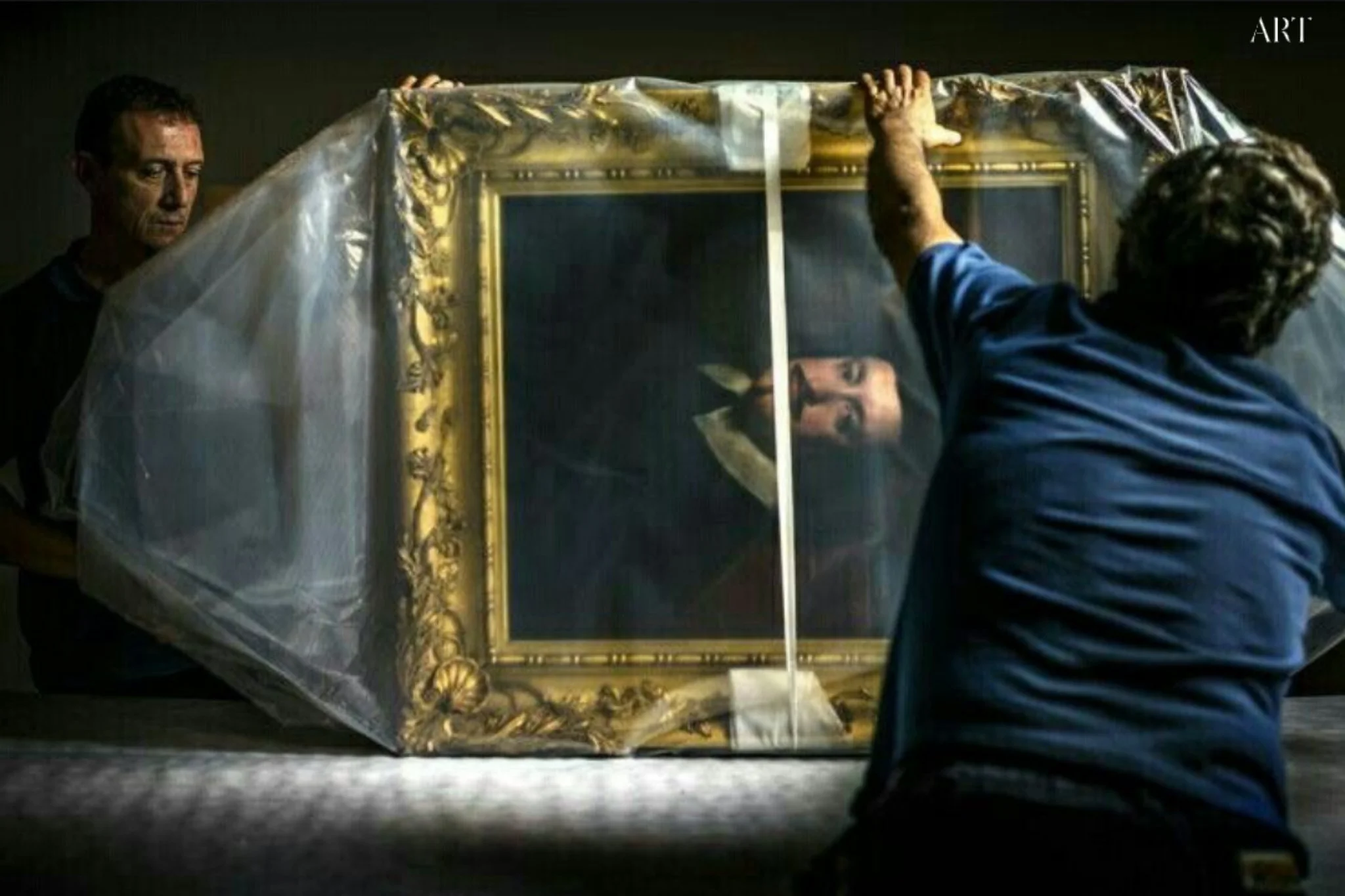
The framework for building a collection intelligently begins not with budget but with looking. Looking seriously, repeatedly, in as many contexts as possible — galleries, museum permanent collections, auction previews, the degree shows of the art schools where the next generation of significant artists are producing their first serious work. Looking without the intention to buy, initially, develops the vocabulary through which you will eventually be able to say specifically what you are seeing rather than generally that you like something.
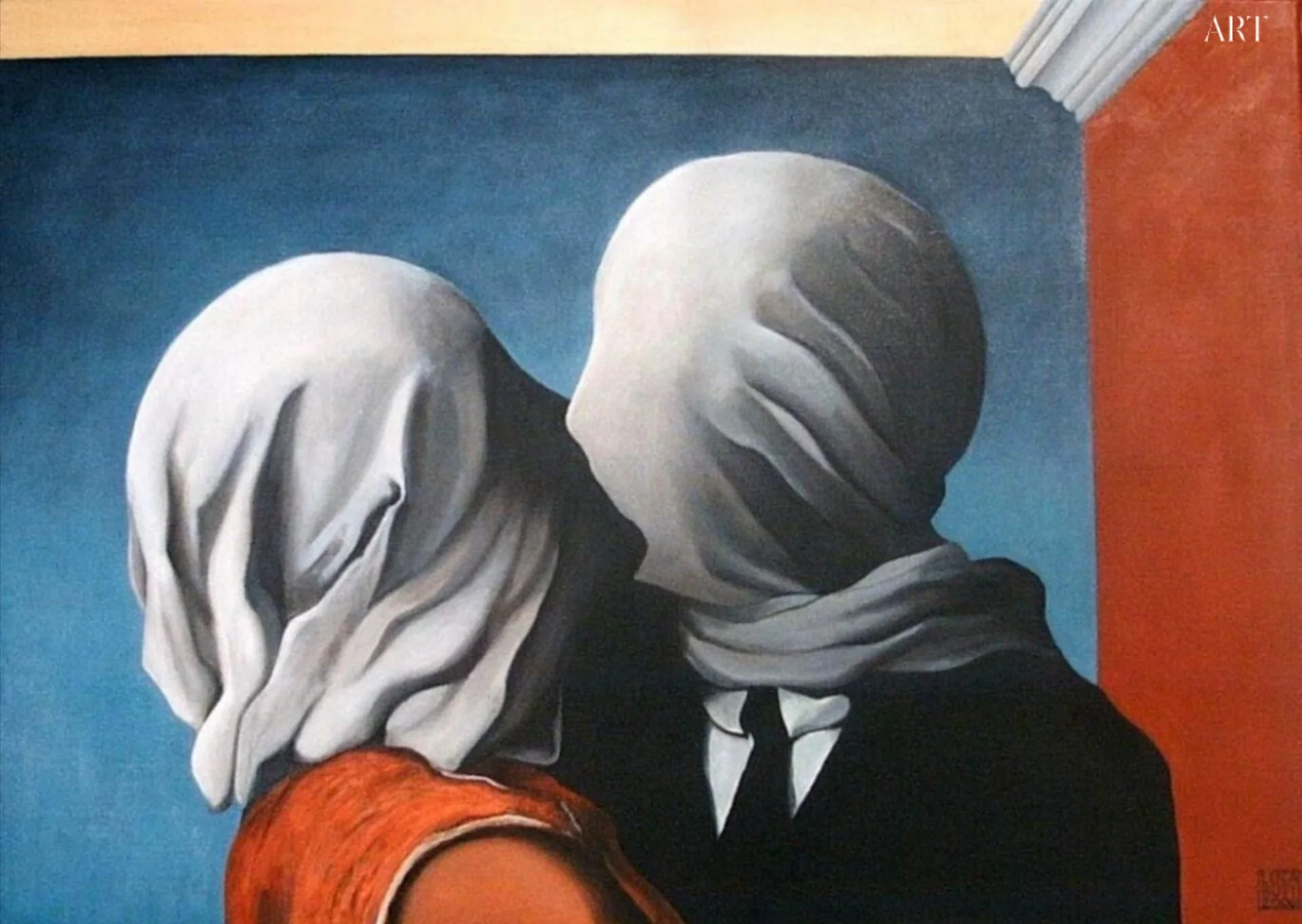
The distinction matters because the collecting conversation — with galleries, with advisors, with other collectors — operates in a specific language, and fluency in that language is what allows you to articulate why a particular work interests you rather than simply that it does. Why is a question with answers that reveal your specific sensibility, which is the thing that makes a collection coherent over time rather than a group of unrelated acquisitions.
On budget: the most significant quality jumps in the art market occur at lower price points than most new collectors assume. Work at two thousand to ten thousand pounds from artists with institutional exhibition history, critical engagement, and gallery representation in a city with a serious art ecosystem is often work of genuine quality whose market has not yet reflected the critical consensus about its significance.
The specific signals worth looking for in a young artist: gallery representation with a gallery that has a curatorial rather than purely commercial orientation; inclusion in museum and public institution exhibitions; a critical literature that engages with the work on its own terms; and — most importantly — a quality of formal and intellectual development visible across the work over time. The artist who is making more interesting work each year is a different prospect from the artist who has found a saleable formula.
On the practical relationship with galleries: the gallerist is your most important resource and also has a commercial interest in your decisions. A good gallerist will tell you things that are not commercially convenient — which works in their programme are stronger, which artists are developing more interestingly — because the long-term relationship with a serious collector is worth more than any individual transaction. Find these gallerists. Return to them. Ask the questions that require honesty to answer.
On living with work before you buy it: most good galleries will lend you a work for two weeks. This practice is rarer in the current market than it was but it still exists, particularly for collectors with whom the gallery has an established relationship. Two weeks living with a work tells you more about whether you want to own it than two hours looking at it ever can.
The collection you build over twenty years will reflect your looking rather than your buying. The looking is the investment. The buying is the record of it.
BY OONA CHANEL
The Painters Who Are Making Figuration Feel Necessary Again
After two decades in which the most discussed painting was largely abstract or conceptually driven, a generation of figurative painters is producing work that argues, with considerable force, that the human body in paint is the most complex subject available.
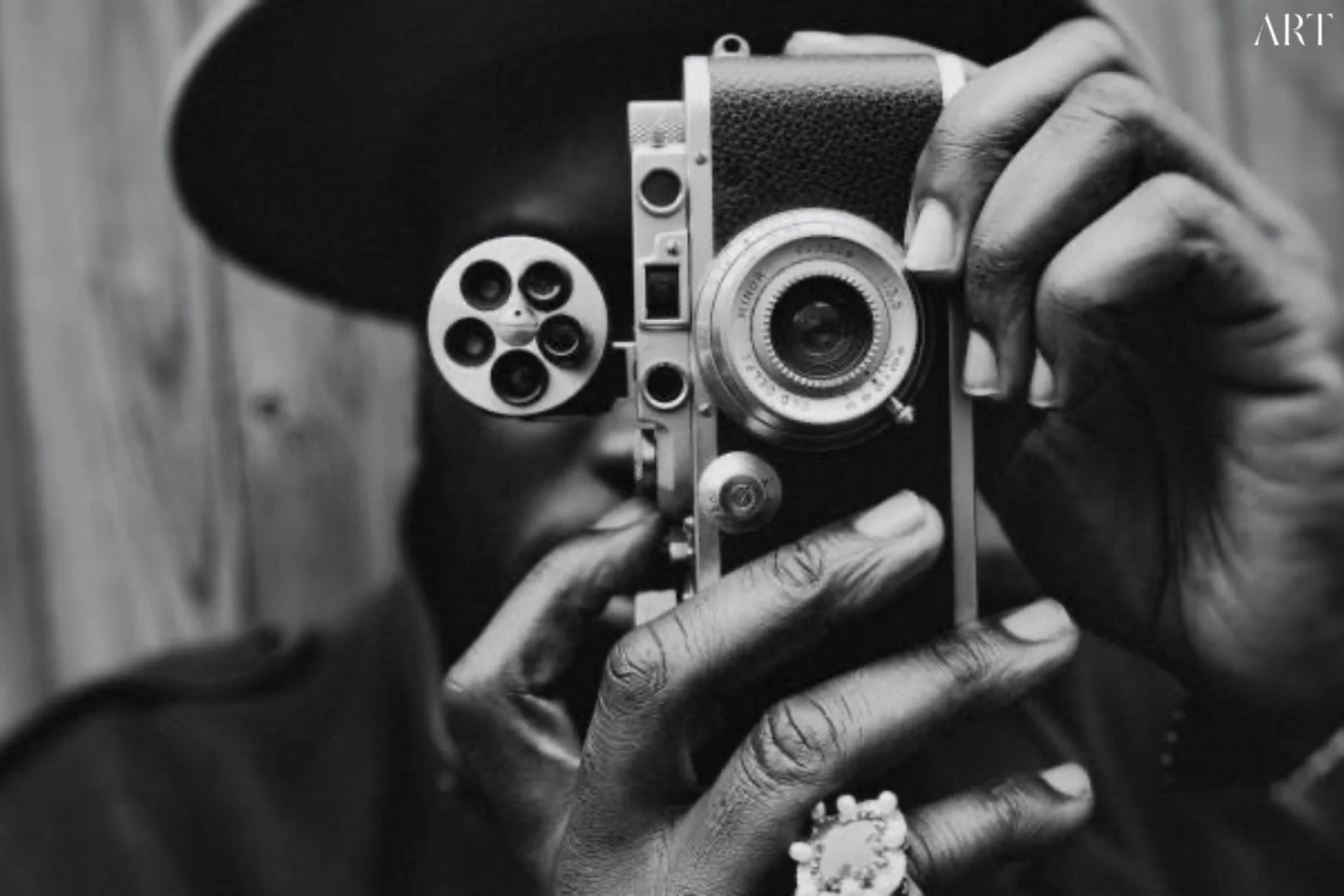
“The painted figure is not a subject. It is a position. And the position carried by a specific body in a specific painting — made in full consciousness of every decision being an argument — is different from any position any other kind of image can hold.”
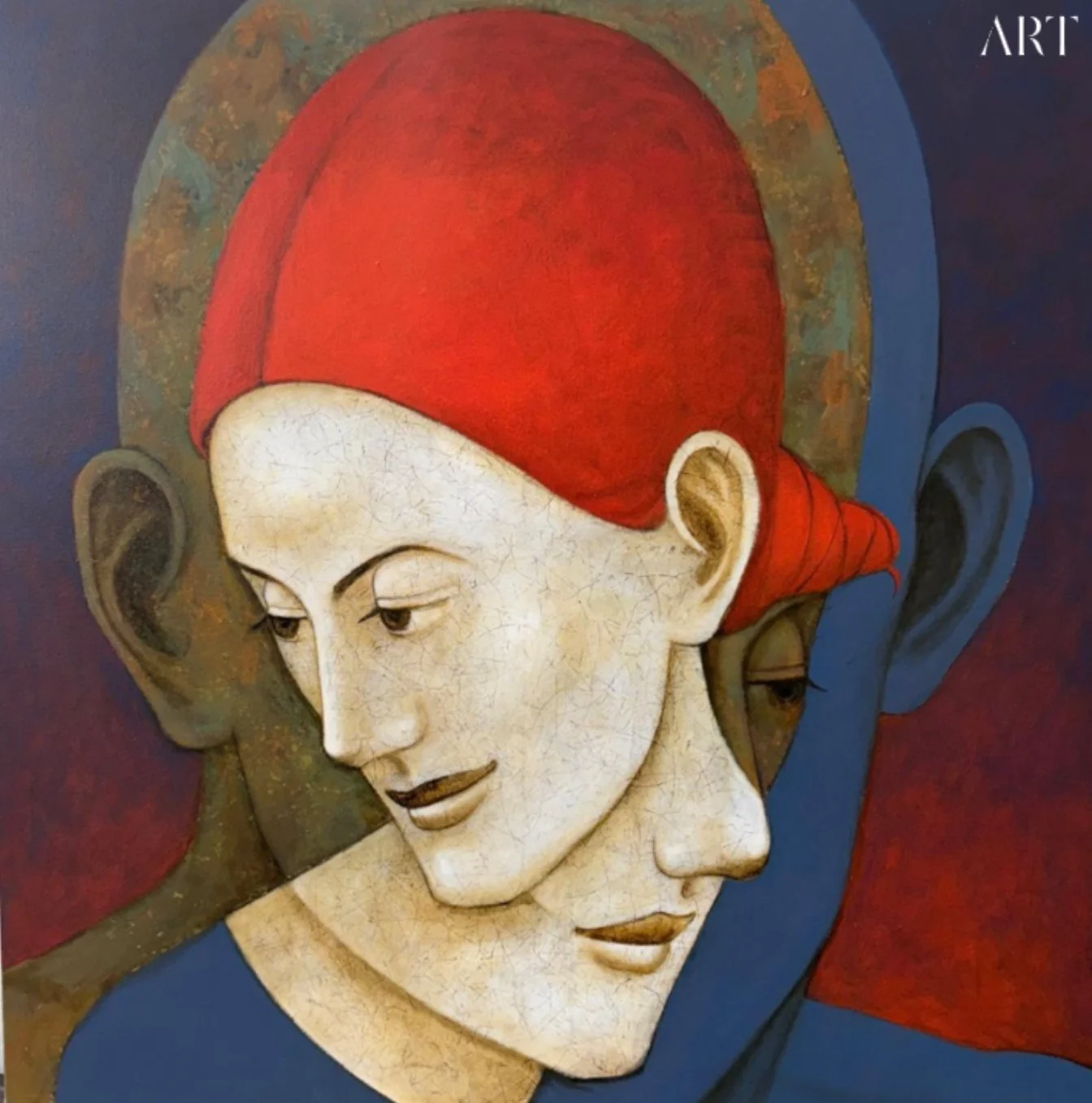
Something has shifted in contemporary painting, and the shift is visible enough that even critics who resist the narrative of generational turns are acknowledging it. The figuration that was, for much of the early 2000s, associated with illustration or commercial sensibility — with a certain accessible pleasantness the serious art world found suspect — is now being practiced, at the highest level of technical and intellectual ambition, by painters whose work is among the most significant being made.
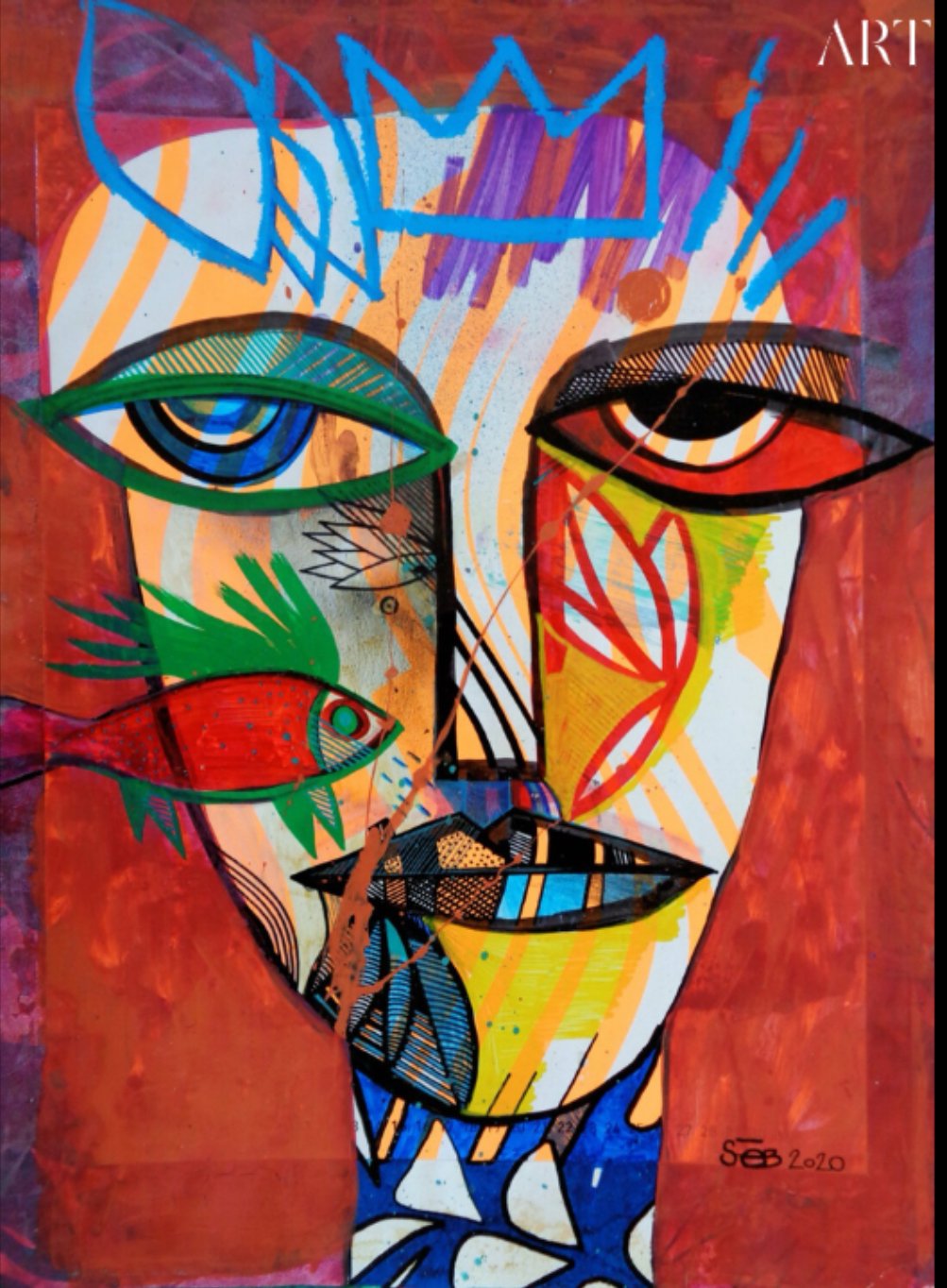
The names have accumulated into a loose movement that is not really a movement: Lynette Yiadom-Boakye, whose Venice Biennale British Pavilion commission this year represents the most important institutional endorsement of figurative painting in a generation; Cecily Brown, whose decades of insisting on the body as the site of painting's most urgent questions now look like prophecy; Jordan Casteel, whose Harlem portraits carry the specific weight of being made in the place they depict about the people who live there; Tschabalala Self, whose constructed figures propose a new anatomy; Salman Toor, whose intimate domestic scenes produce the specific quality of images that are private made public.
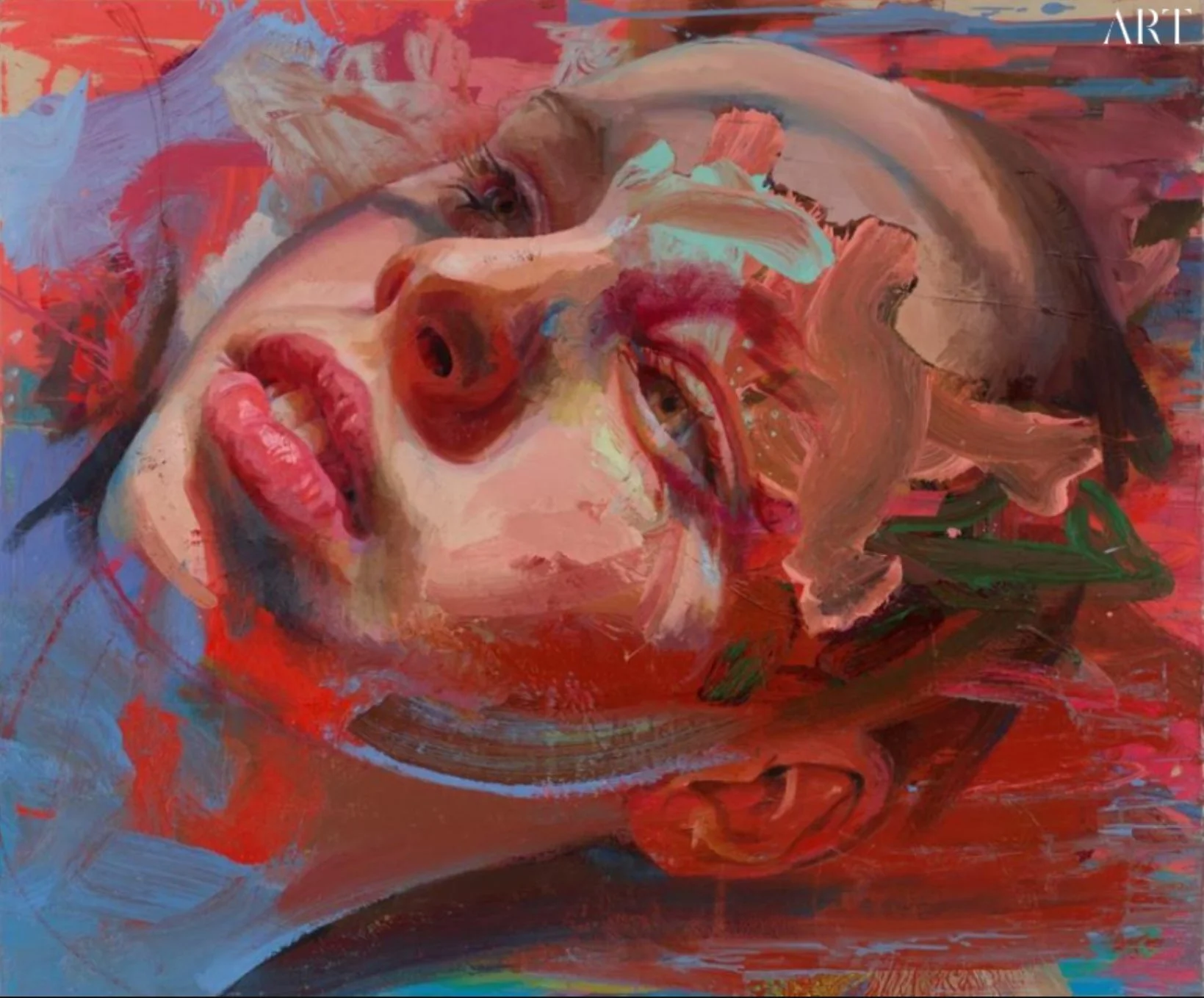
What these painters share is not a style — the range from Yiadom-Boakye's gestural economy to Self's layered construction to Toor's Vermeer-influenced interior light is wide. What they share is a conviction: that the painted figure is not simply a subject but a position, and that the position carried by a specific body in a specific painting is different from the position carried by any other kind of image.
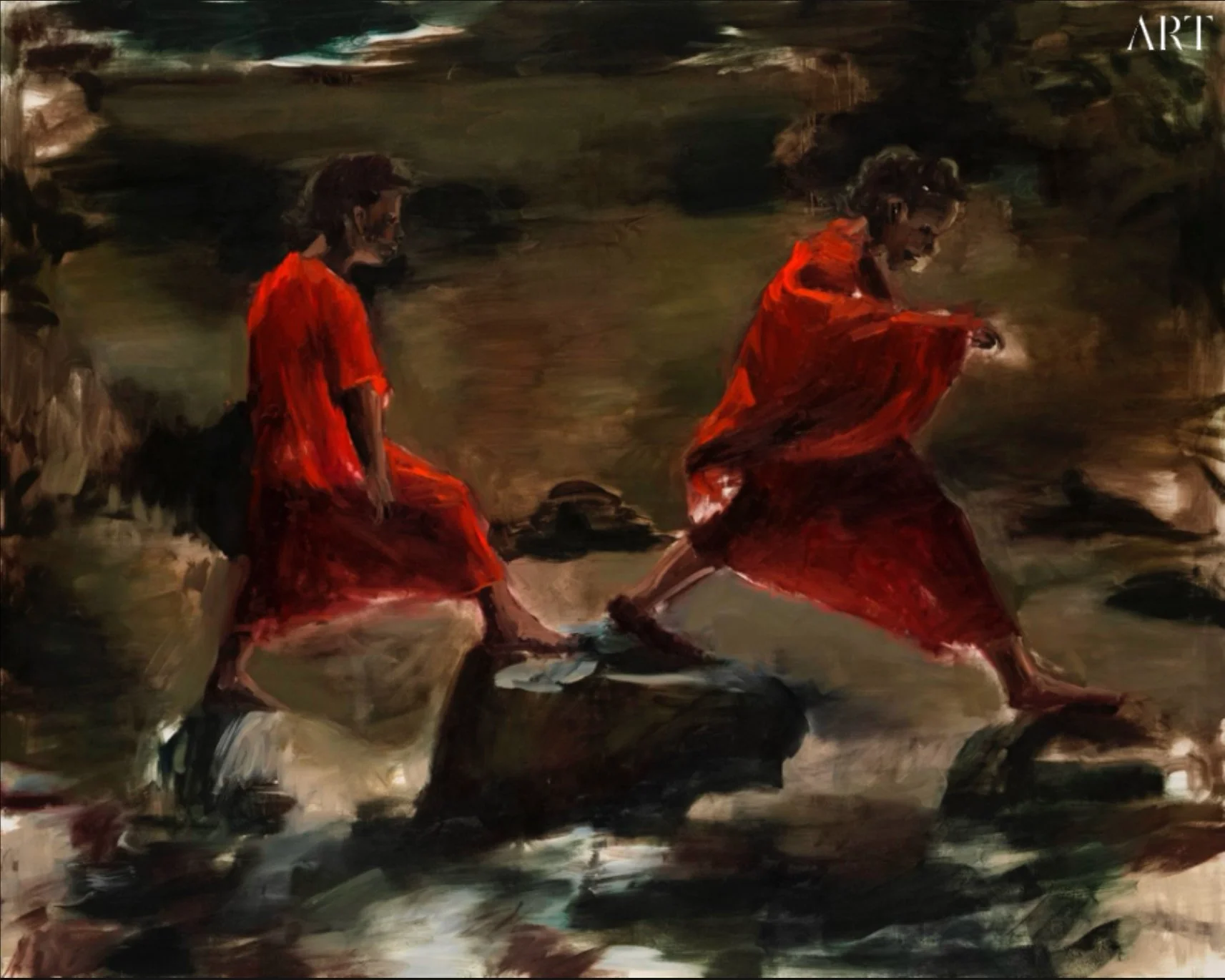
The distinction from photography is worth making explicit. A photograph of a body documents. A painting of a body decides — decides which gestures, which light, which psychological interior to construct from the accumulated decisions of the painter. Yiadom-Boakye's figures are not photographs of people who were present. They are syntheses: every formal decision made in full consciousness that the decision is making an argument about who this person is, how they occupy space, what their interiority contains.
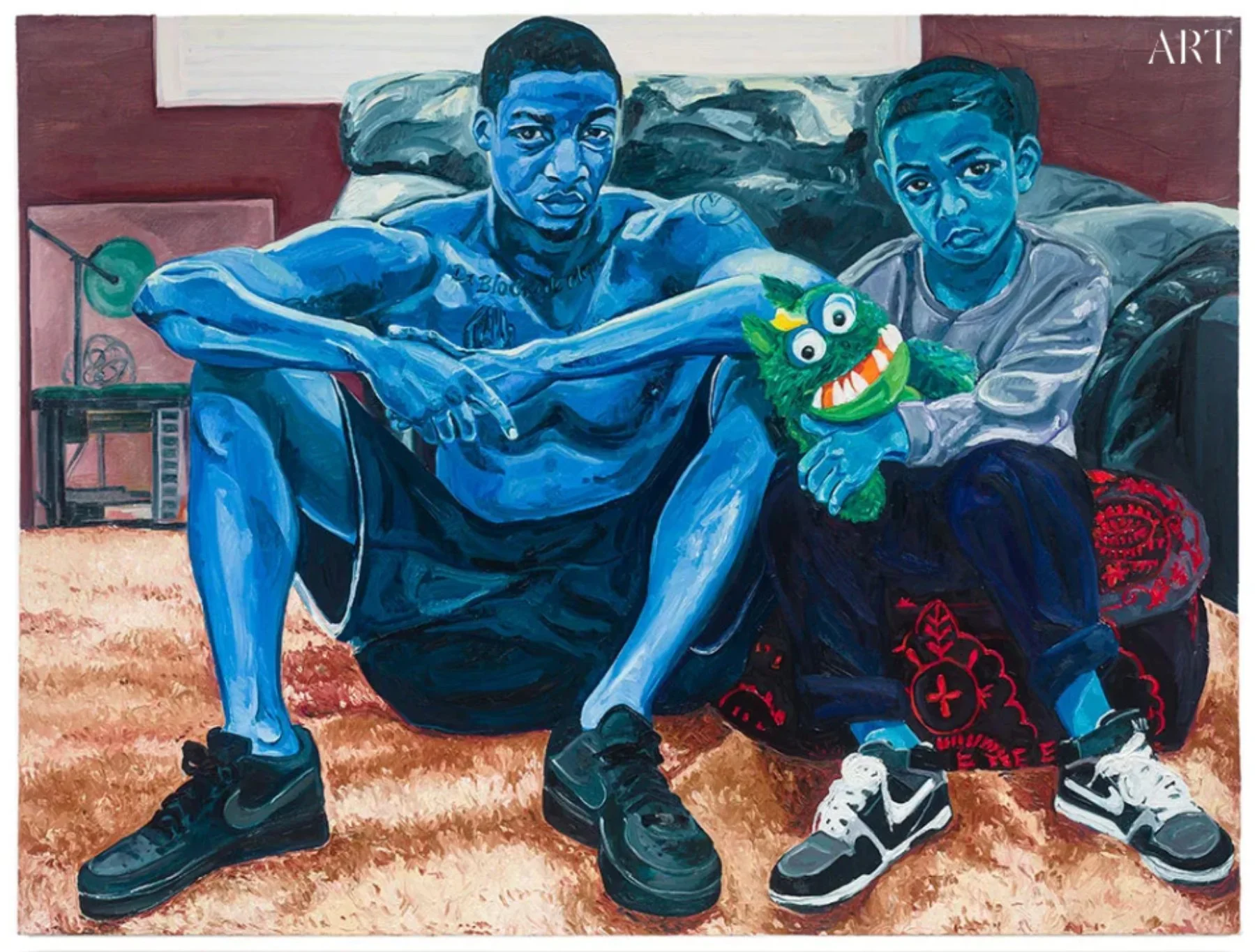
The market has followed the critical conversation, with some of the most significant auction results of the past three years going to figurative works by painters in this generation. Yiadom-Boakye has broken her auction record twice in one season. Cecily Brown's prices are at levels that would have been considered extraordinary a decade ago.
For the collector who is paying attention: the figurative turn is producing, right now, work at price points that will not be available in five years. The institutional endorsements — Yiadom-Boakye at Venice, Casteel at the Whitney, the major museum acquisitions happening across the group — are the leading indicators. The market typically follows institutional validation by eighteen to twenty-four months. The institutional validation is happening now.
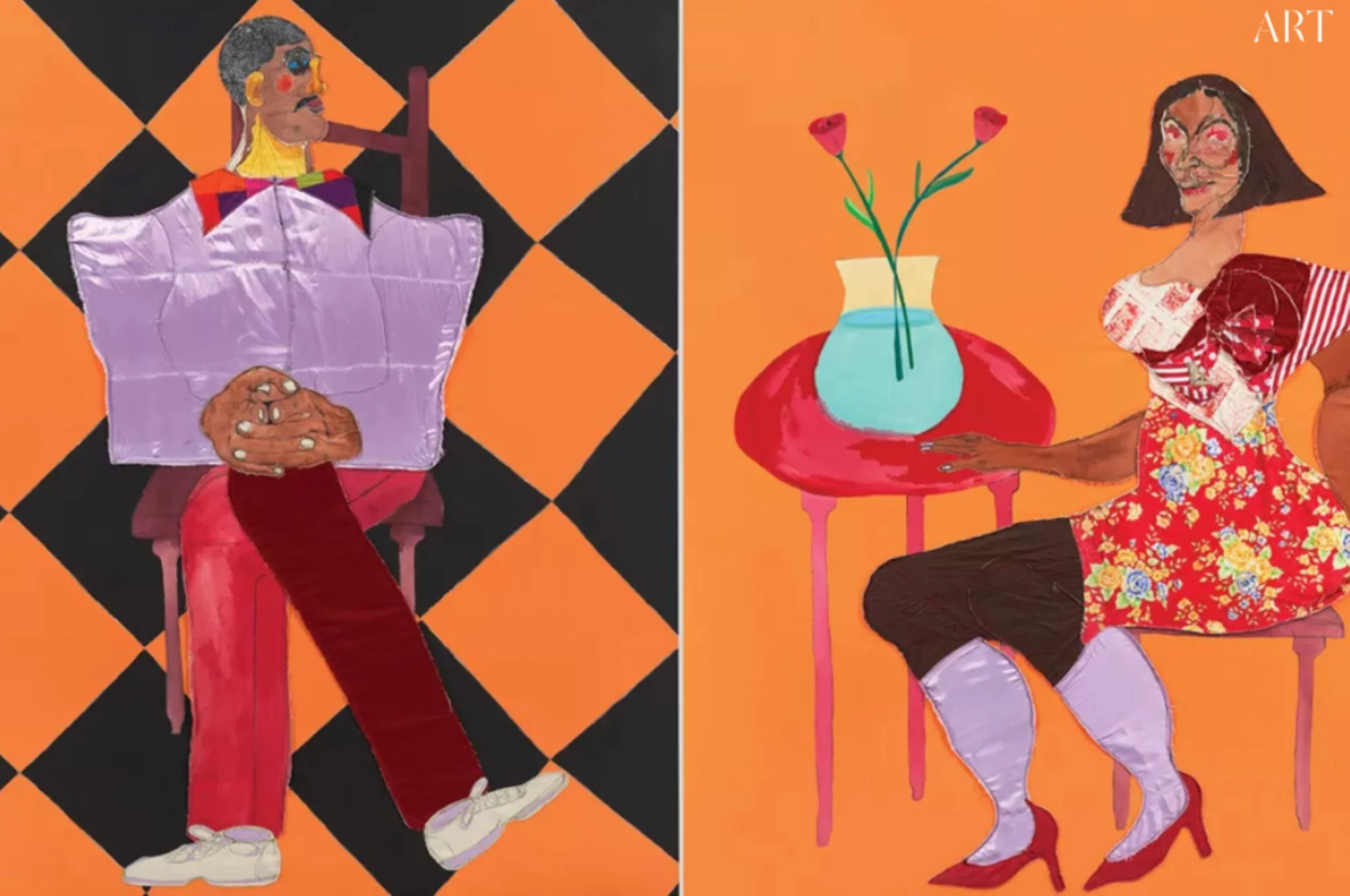
More importantly than the market: the work is extraordinary. These are not painters benefiting from a trend. They are painters who have been making serious work for years and for whom the cultural moment has arrived at the quality of attention their work has always deserved.
The painted figure is not a nostalgic gesture. It is, right now, the most urgent argument available in a room.
BY OONA CHANEL
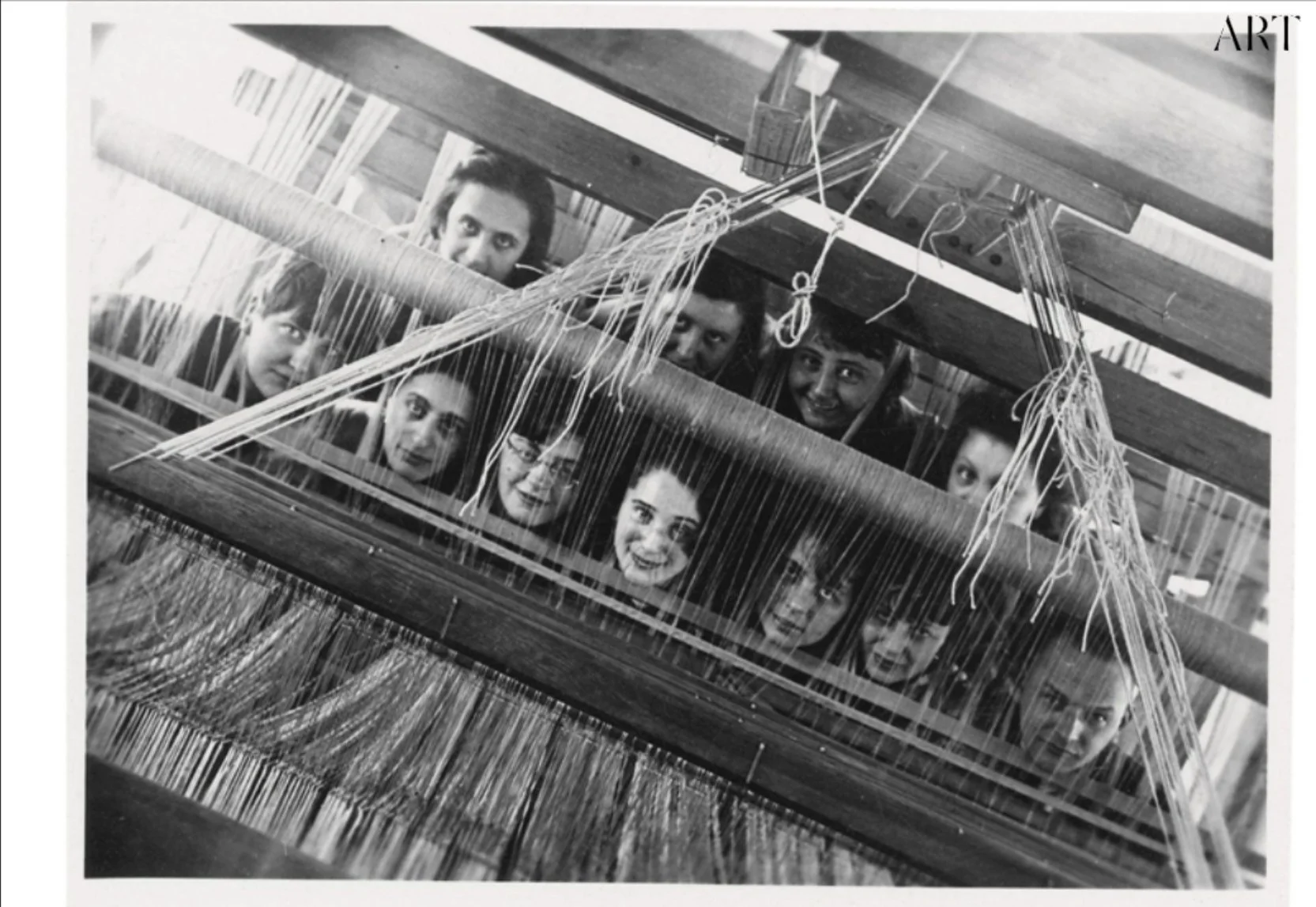
The Women of the Bauhaus: A Century of Forgetting, and the Reassessment That Is Finally Happening
The Bauhaus is remembered for its masters. The masters were, almost entirely, male. The story of what was actually made there has been waiting a hundred years to be told properly.
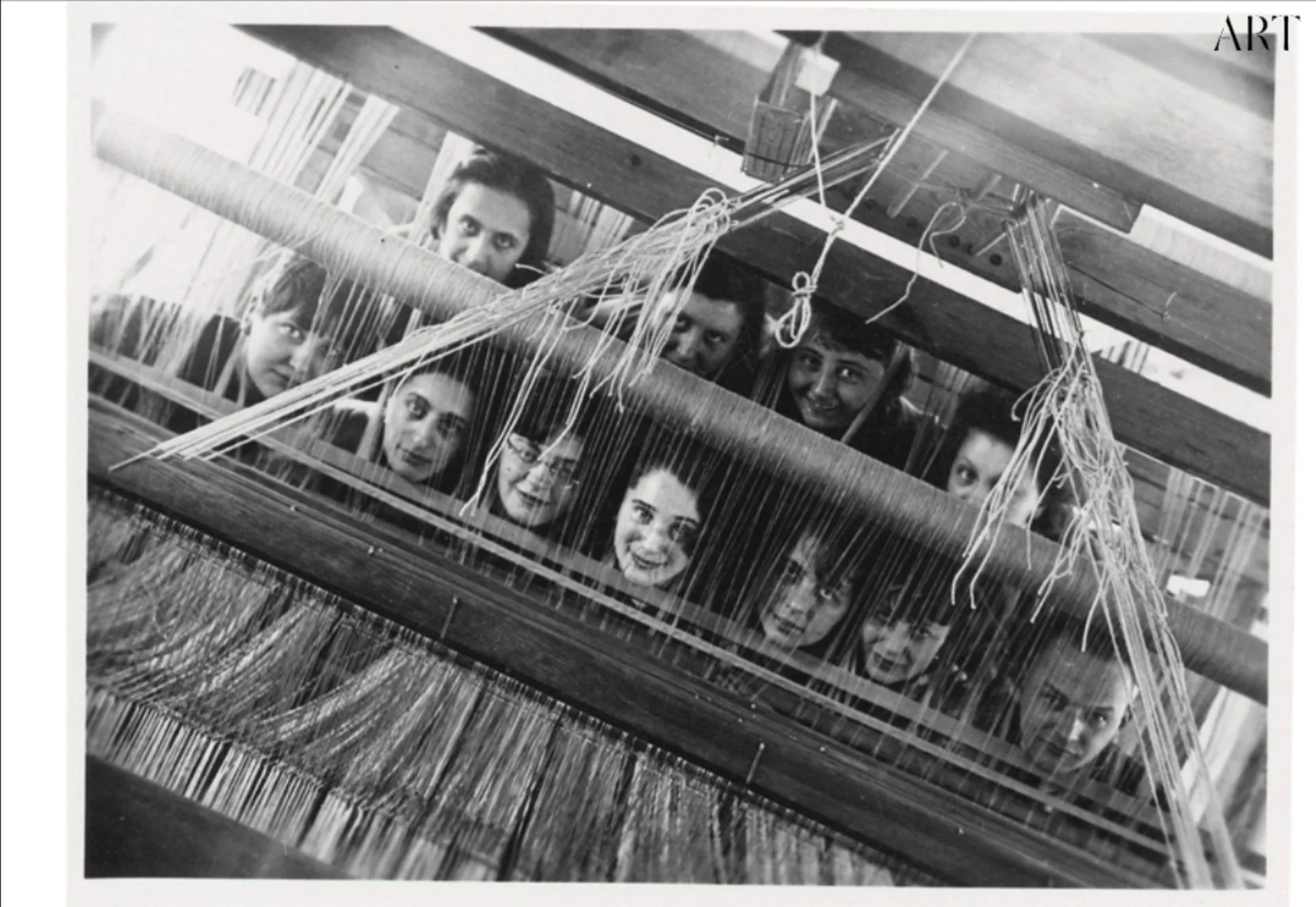
The constraint produced a concentration of talent and energy that resulted in work of extraordinary originality. The weaving workshop became one of the most innovative textile design programs in the history of European art.”
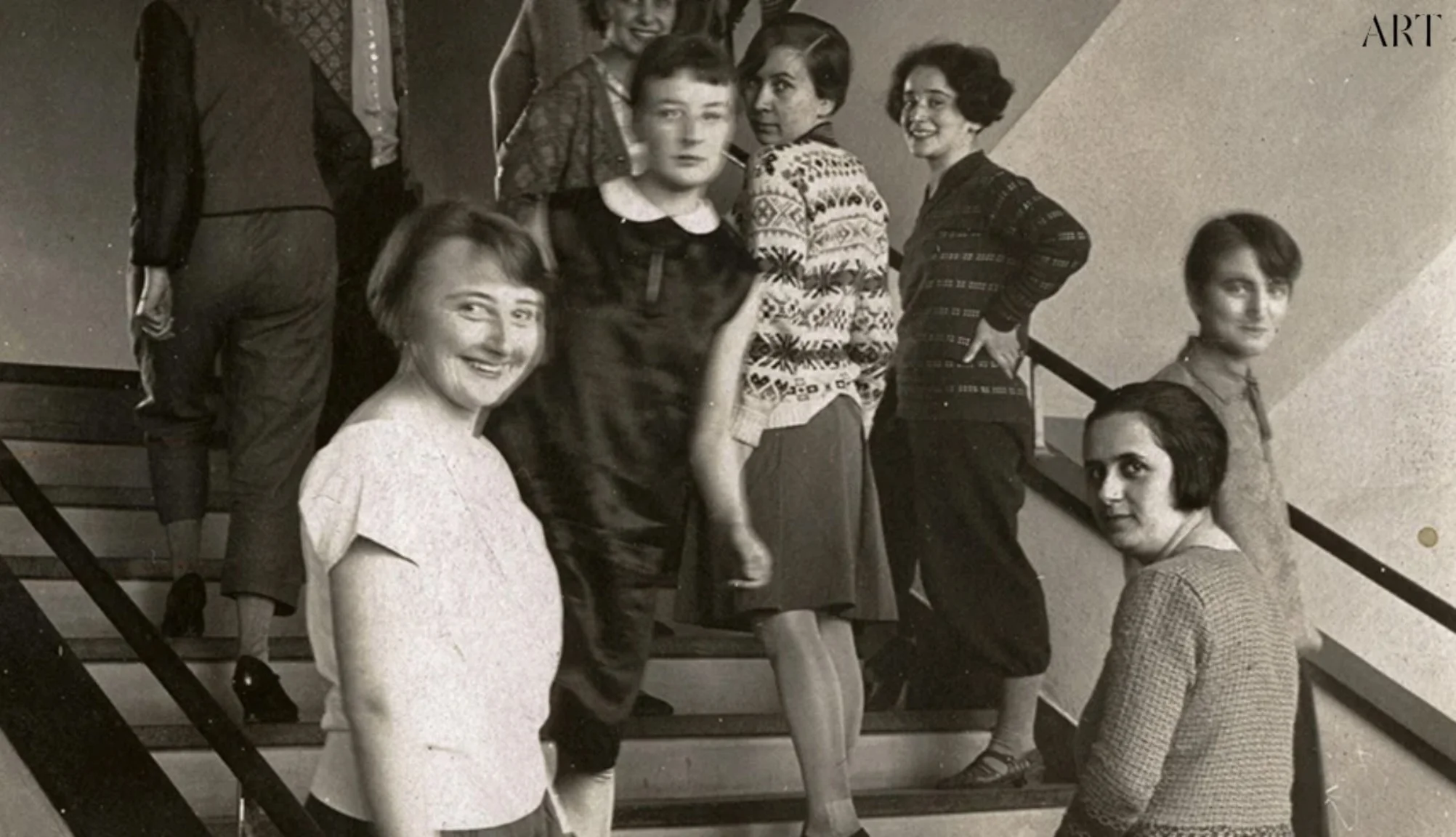
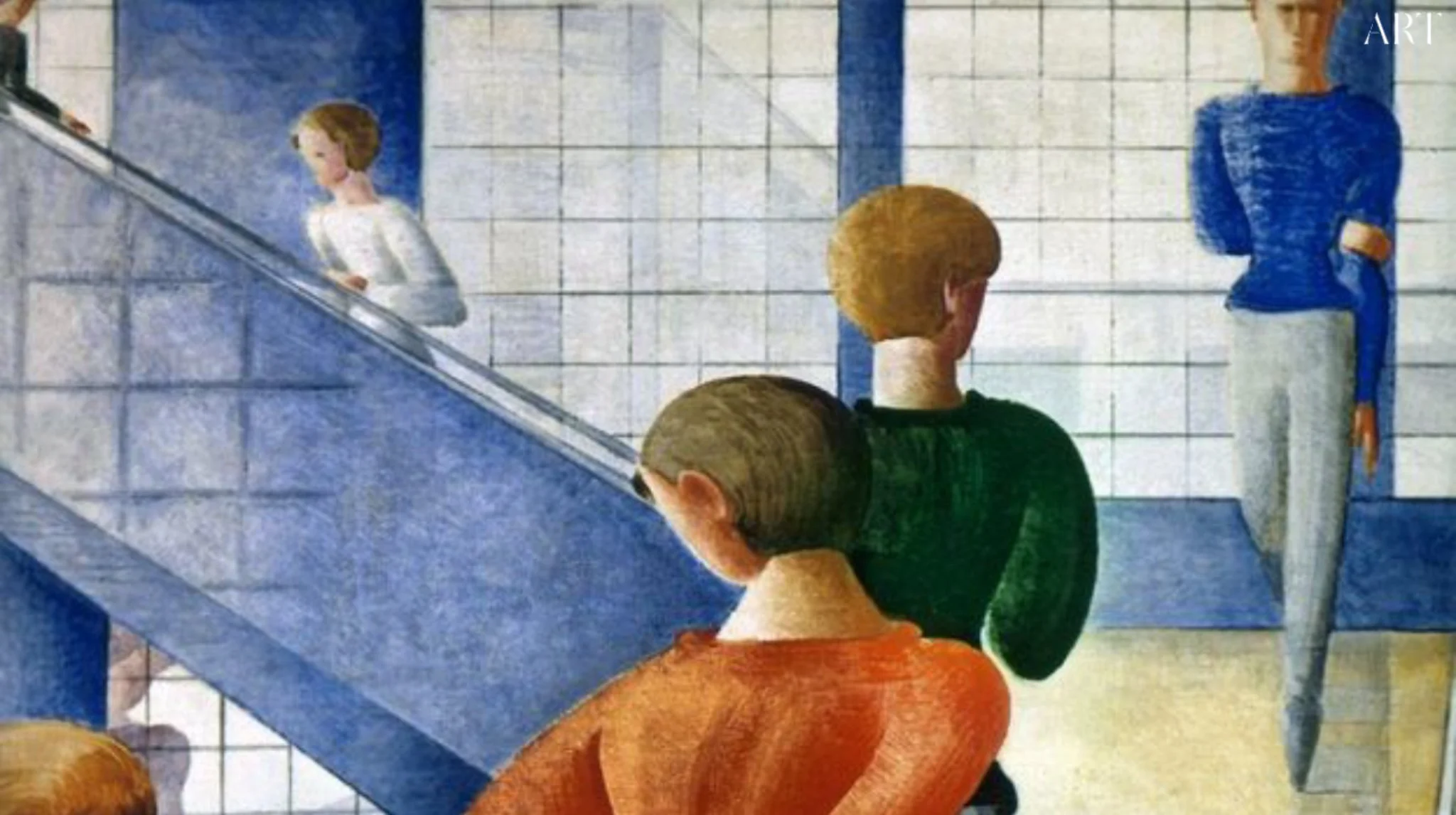
The Bauhaus existed for fourteen years, from 1919 to 1933, and produced an aesthetic revolution that reshaped the visual language of the twentieth century. This is established fact, widely taught, and broadly understood. What is less widely understood — and what a generation of scholars has spent the past twenty years working to correct — is which people at the Bauhaus made which things, and why the canonical account has systematically misattributed, undercredited, and in some cases simply erased the contributions of the women who were there.
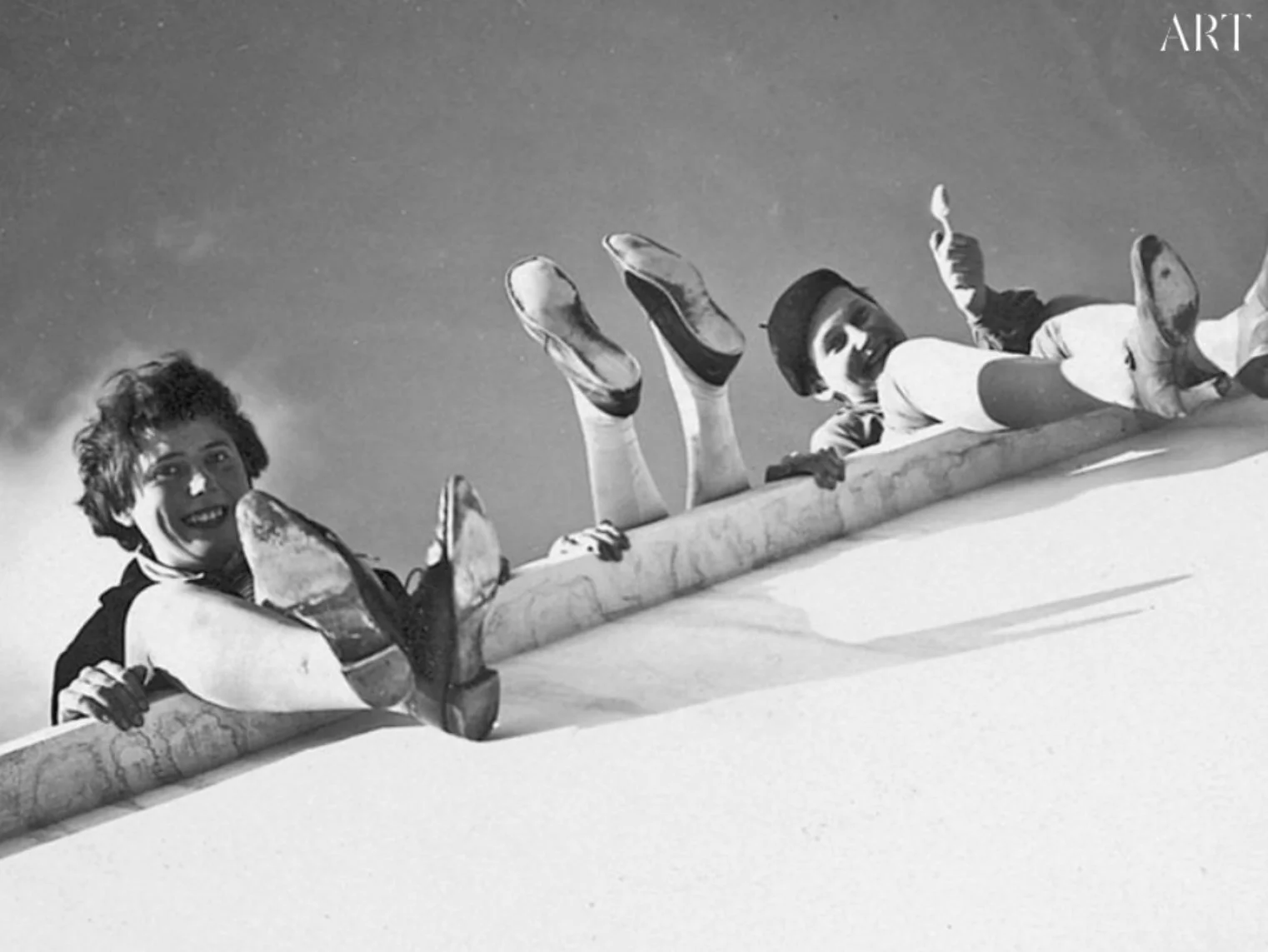
There were a significant number of them. When Walter Gropius opened the school in Weimar in 1919, he invited women to apply on an equal basis — a radical gesture in the context of German art education, where women had historically been excluded from the major academies. The response was overwhelming. In the first year, women made up approximately half of the enrolled students. This created, very quickly, a problem for Gropius and the male masters, who had not anticipated the degree to which their invitation would be taken up and who, in response, began directing female students away from the workshops in architecture, furniture, and metalwork — the workshops with professional and commercial futures — and toward the weaving workshop, which was considered appropriate for women and which was, by implication, considered less serious.
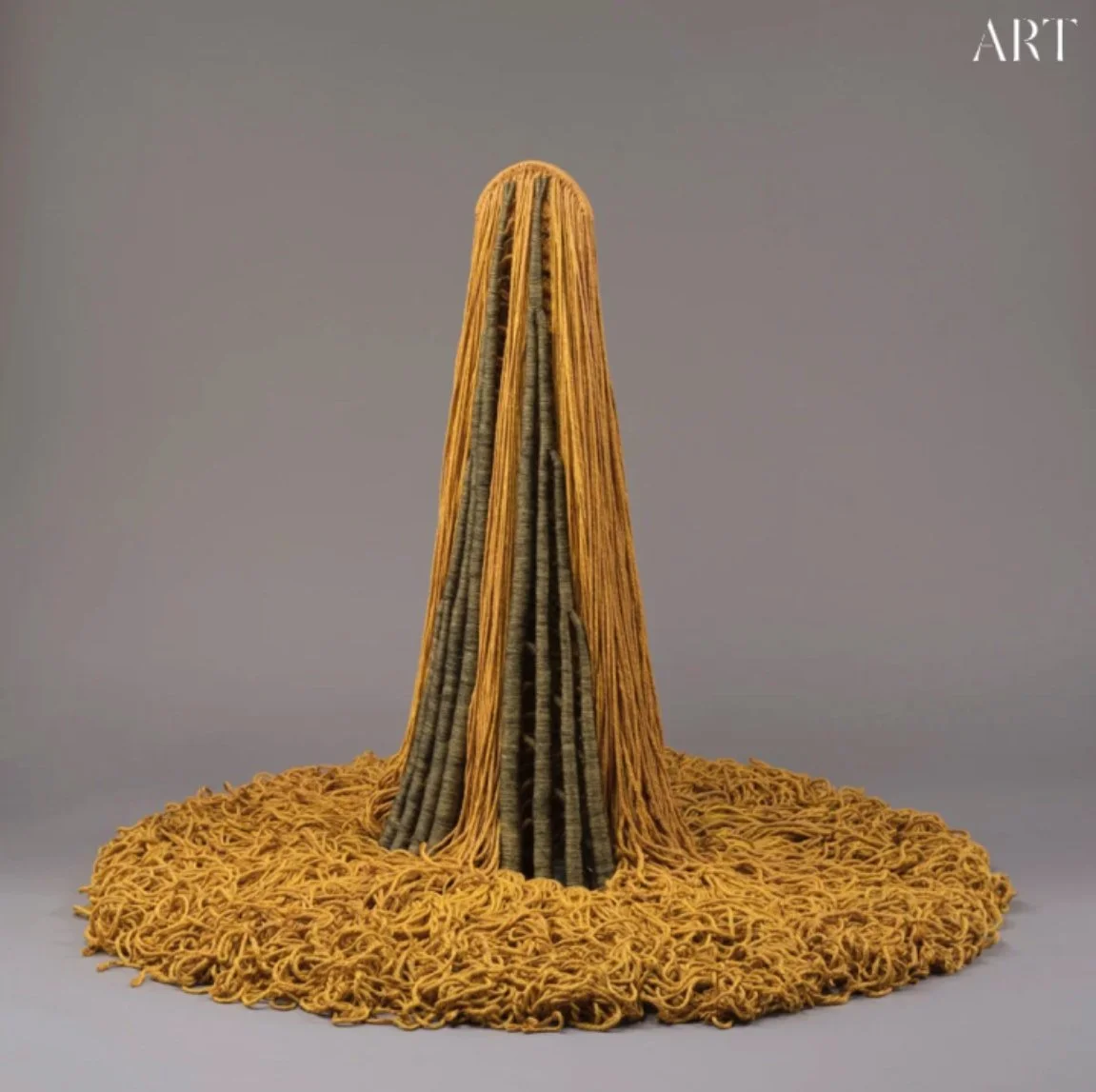
The weaving workshop became, as a direct consequence, one of the most innovative textile design programs in the history of European art. This is the central irony and central tragedy of the Bauhaus gender story: the constraint produced a concentration of talent and energy that resulted in work of extraordinary originality. Anni Albers, Gunta Stölzl, Otti Berger — the names that the reassessment has recovered — were not making decorative work. They were investigating, with the same rigor that the male masters brought to their disciplines, the structural properties of textile, the relationship between material and function, the capacity of woven cloth to embody abstract compositional principles.
Gunta Stölzl, who became the only female master at the Bauhaus and who directed the weaving workshop from 1926 to 1931, produced work that is, in its formal intelligence, comparable to anything made at the school. Her Double Weave (1925-26) is a technical and conceptual achievement that would be recognized immediately as major if it had been made in any medium associated with male practice. It is woven cloth. This has historically been the problem.
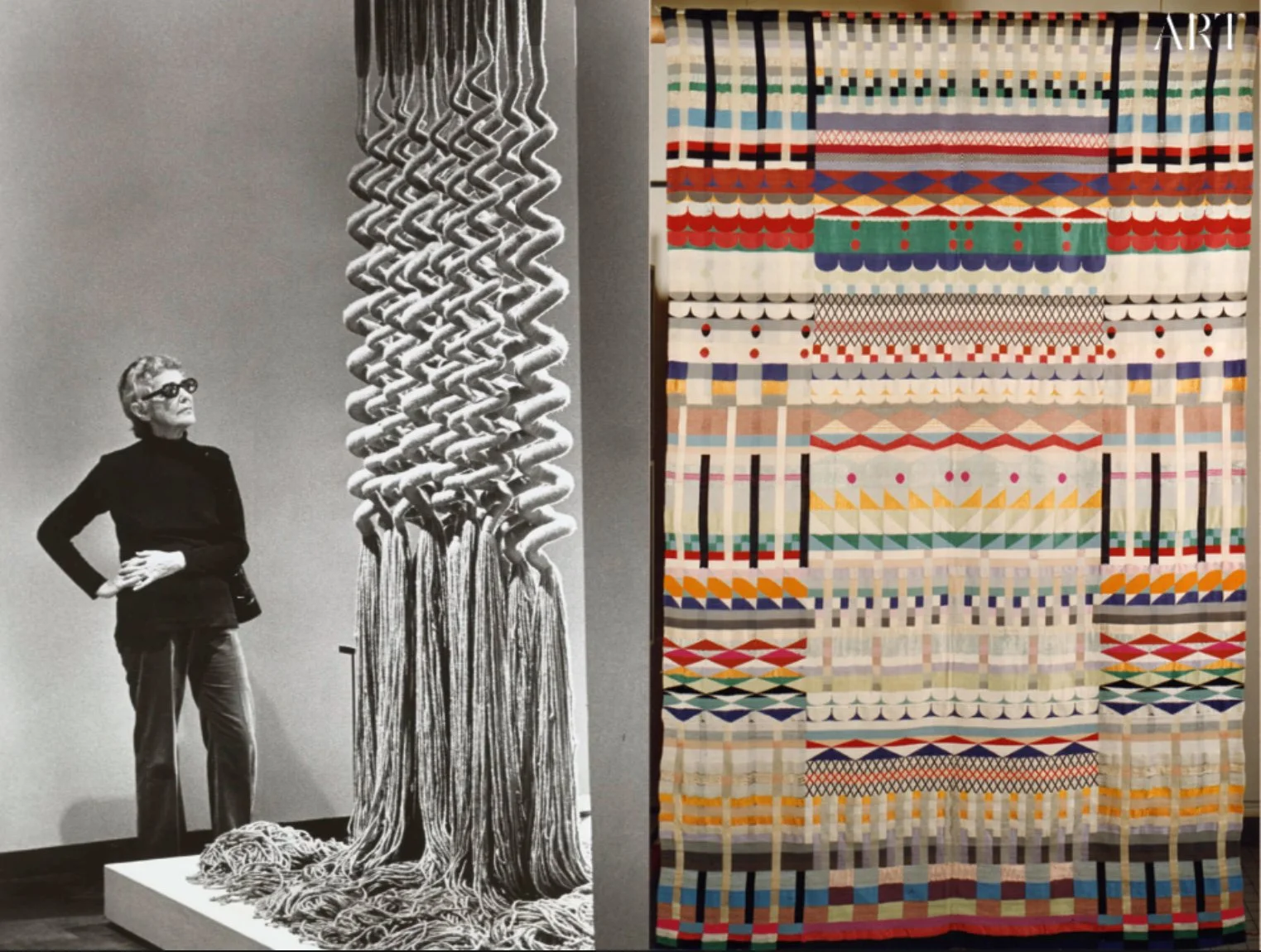
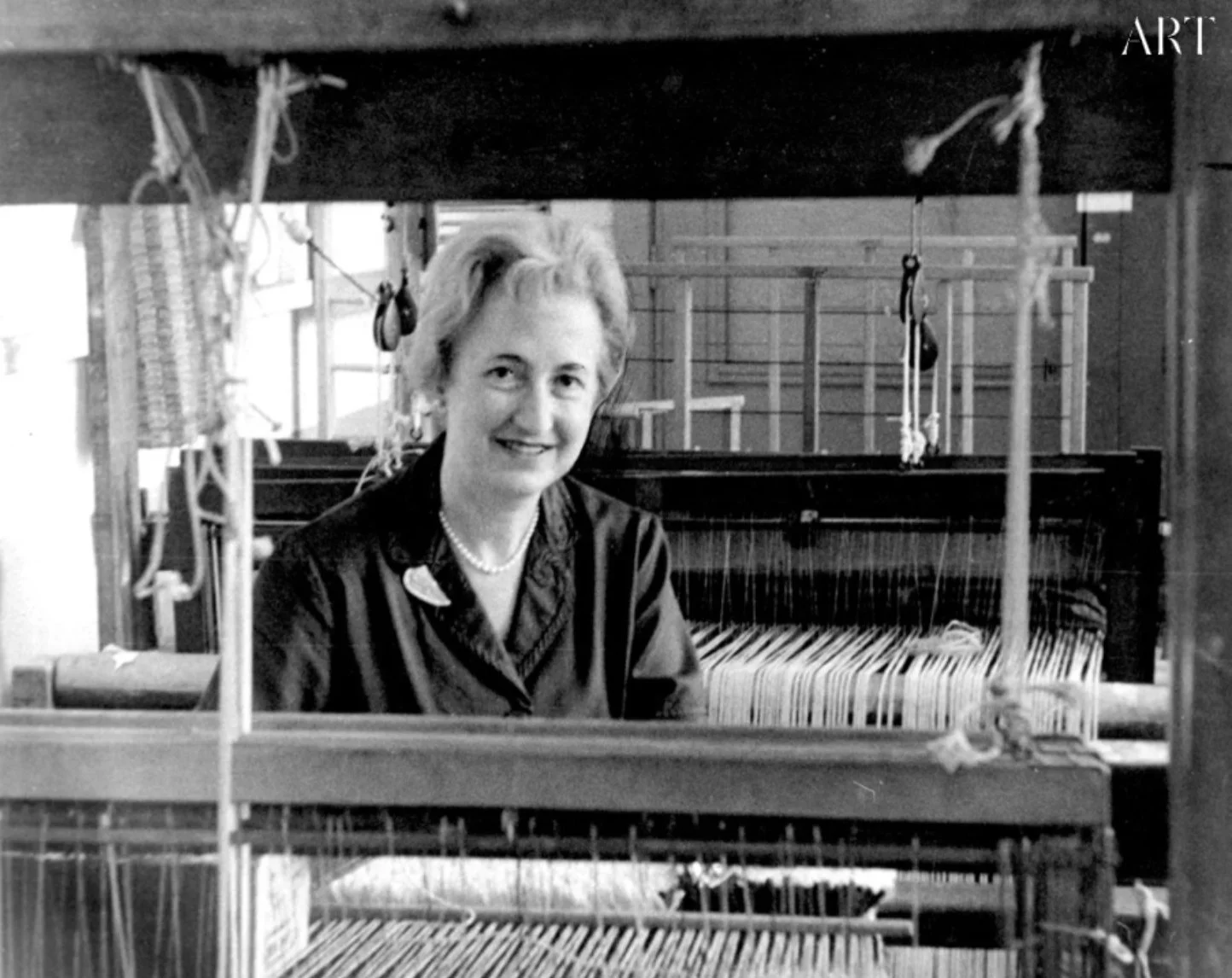
Anni Albers, who left Germany for Black Mountain College in 1933 with her husband Josef and who spent the following decades developing a practice that integrated the investigation of textile structure with a sustained theoretical engagement with the nature of visual art, is the figure whose rehabilitation has been most complete. Her 2018 retrospective at Tate Modern was one of the major art events of the decade and produced a reassessment so thorough that the critical apparatus is still absorbing it.
But Albers is now the exception in a category that contains many: the women of the Bauhaus who did not have the specific combination of talent, survival, emigration, and institutional support that allowed her story to be told. Otti Berger, whose work was arguably more technically innovative than Albers's, died in Auschwitz in 1944. Her archive is substantially lost. The reconstruction of her practice — which is ongoing, led by scholars at the Bauhaus Archive in Berlin — is a work of recovery that involves reading correspondence, tracking down surviving pieces in private collections, and working from descriptions in documents of the work that no longer exists.
This is not ancient history. The systematic undervaluation of work made by women, in textile and other craft-adjacent media, is ongoing and is measurable in auction results, museum acquisitions, and the ratio of male to female artists in permanent collections at major institutions. What the Bauhaus reassessment does — and why it matters beyond the historical record — is provide the evidentiary basis for a conversation about the criteria of value themselves: what makes something count as art, and who decides.
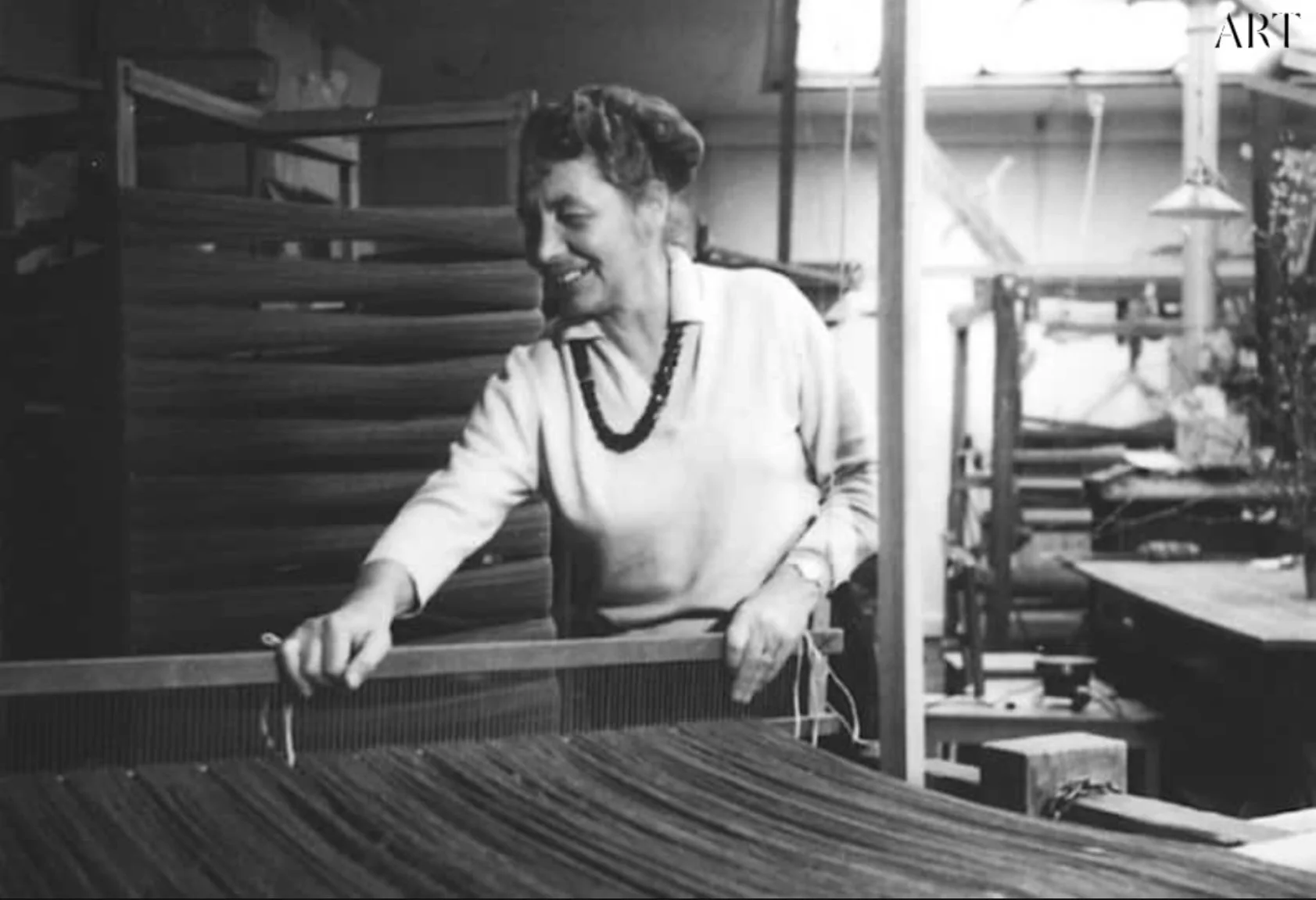
Gunta Stölz
The scholars working on this — T'ai Smith, Elizabeth Otto, Ulrike Müller — are not making a political argument primarily. They are making an evidential one: here is the work, here is its quality, here is the history of why it was not seen, here is what we lose by not seeing it. The argument does not require any revision of aesthetic standards. It requires their consistent application.
Which is, of course, the more radical proposal.
BY OONA CHANEL
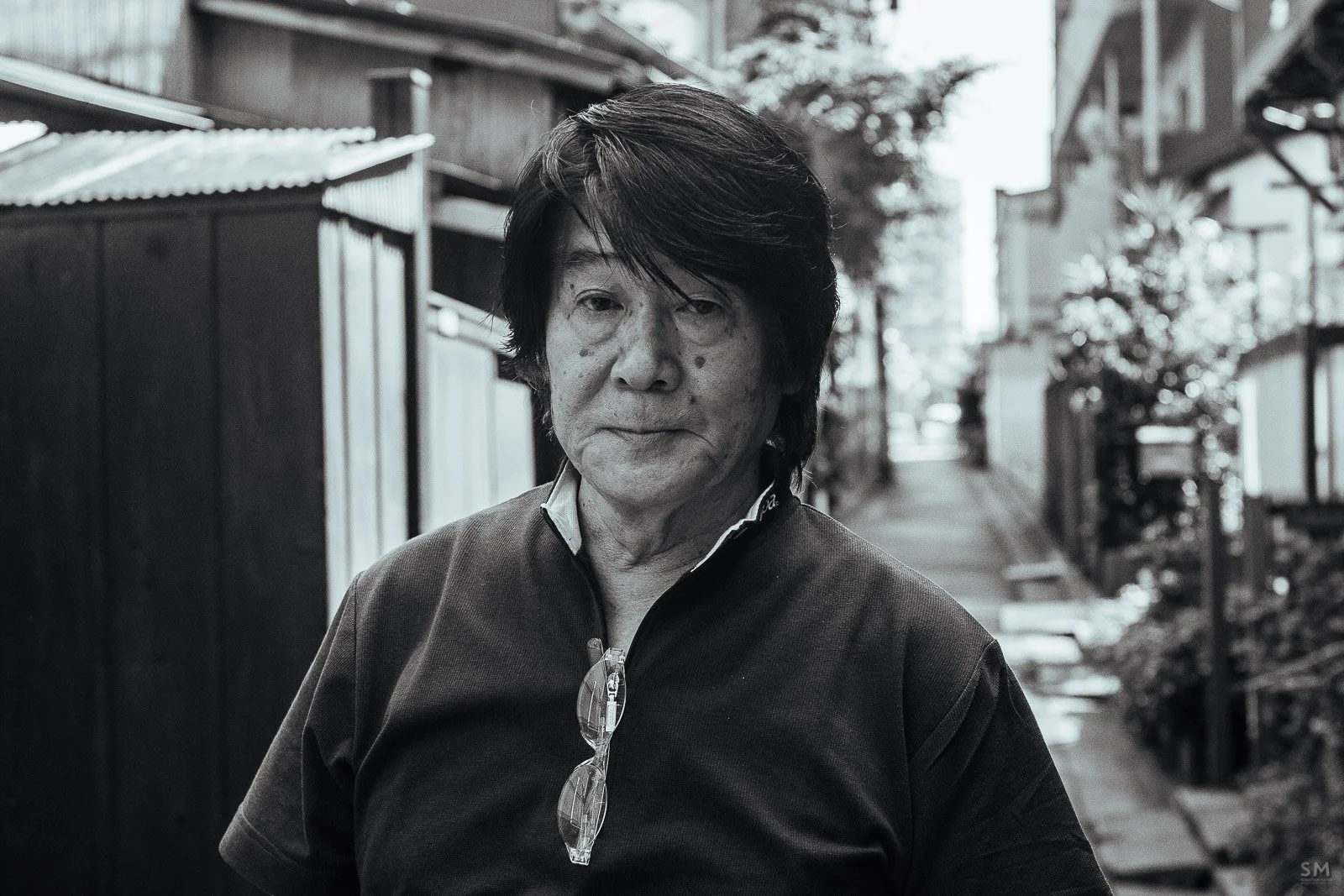
Daido Moriyama: Still Hunting, Still Running, Still Tokyo
He has been photographing the street for sixty years. He has never found what he is looking for. This is, he says, entirely the point.
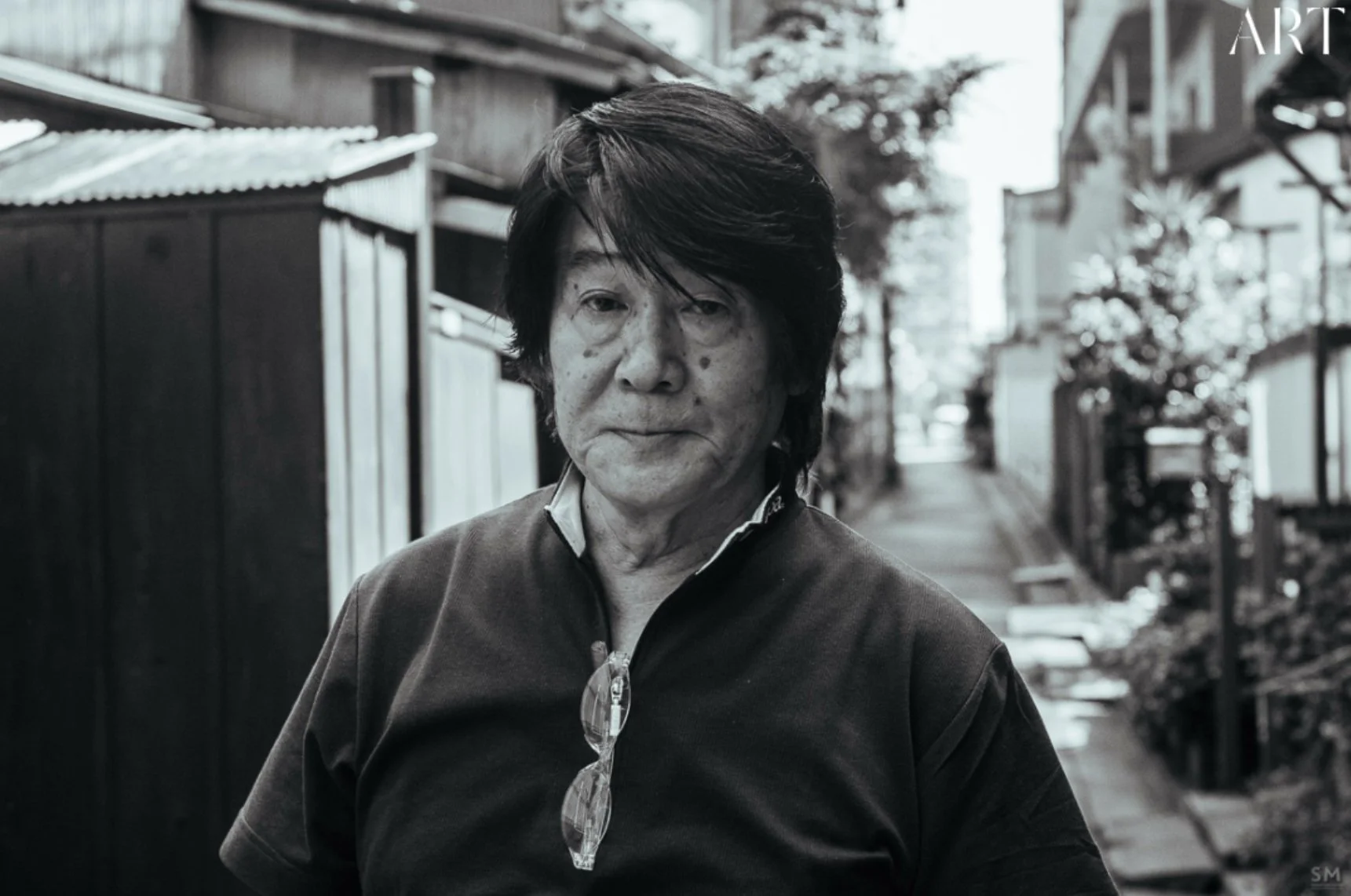
He is still running. This is the thing that everyone who has worked with Daido Moriyama eventually says, with a quality of astonishment that does not diminish with retelling: at eighty-six, one of the greatest photographers in the history of the medium is still moving through Tokyo with a small camera, at speed, making the blurred and grainy and deliberately imperfect images that have, since the late 1960s, changed the way we understand what photography can be.
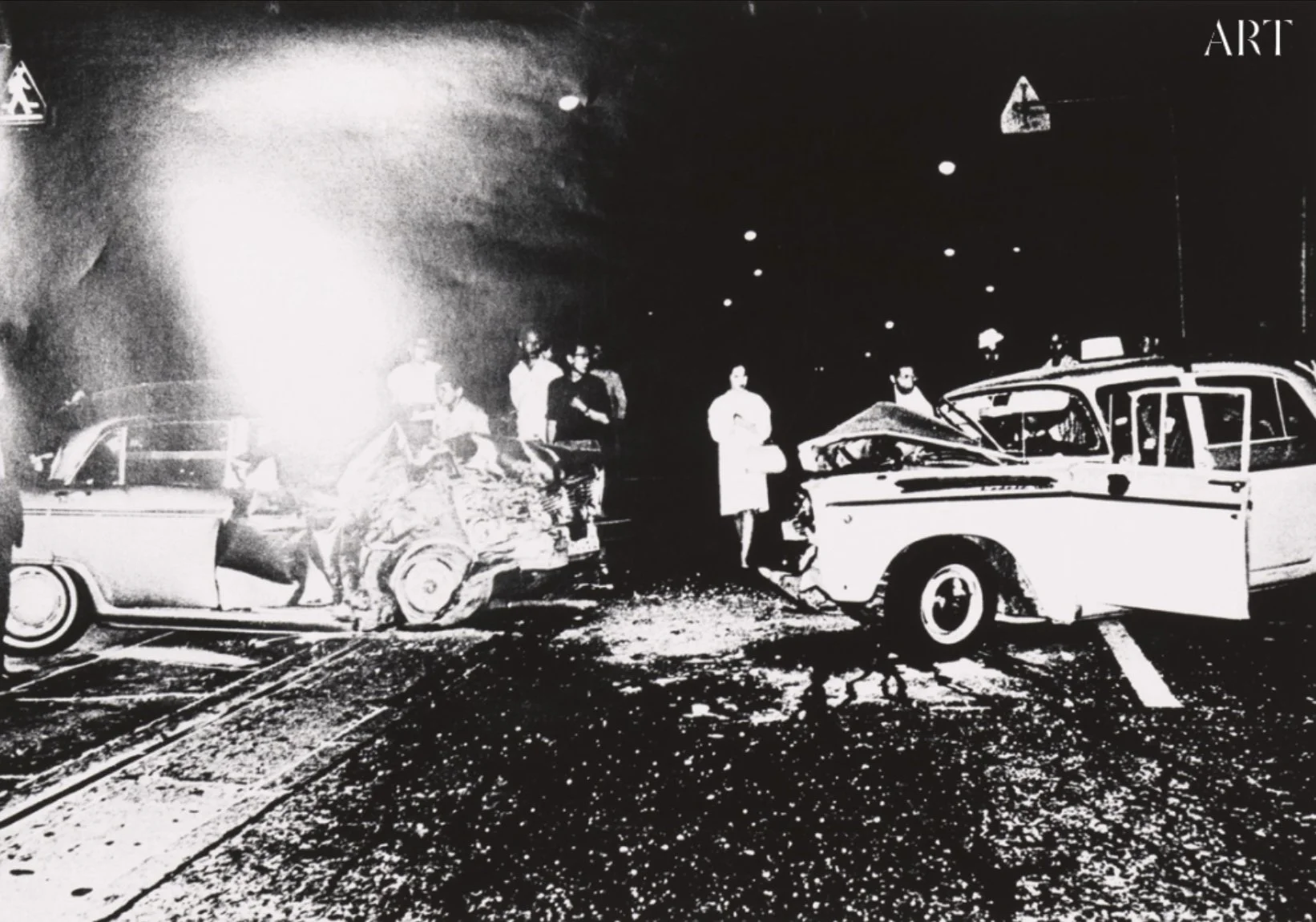
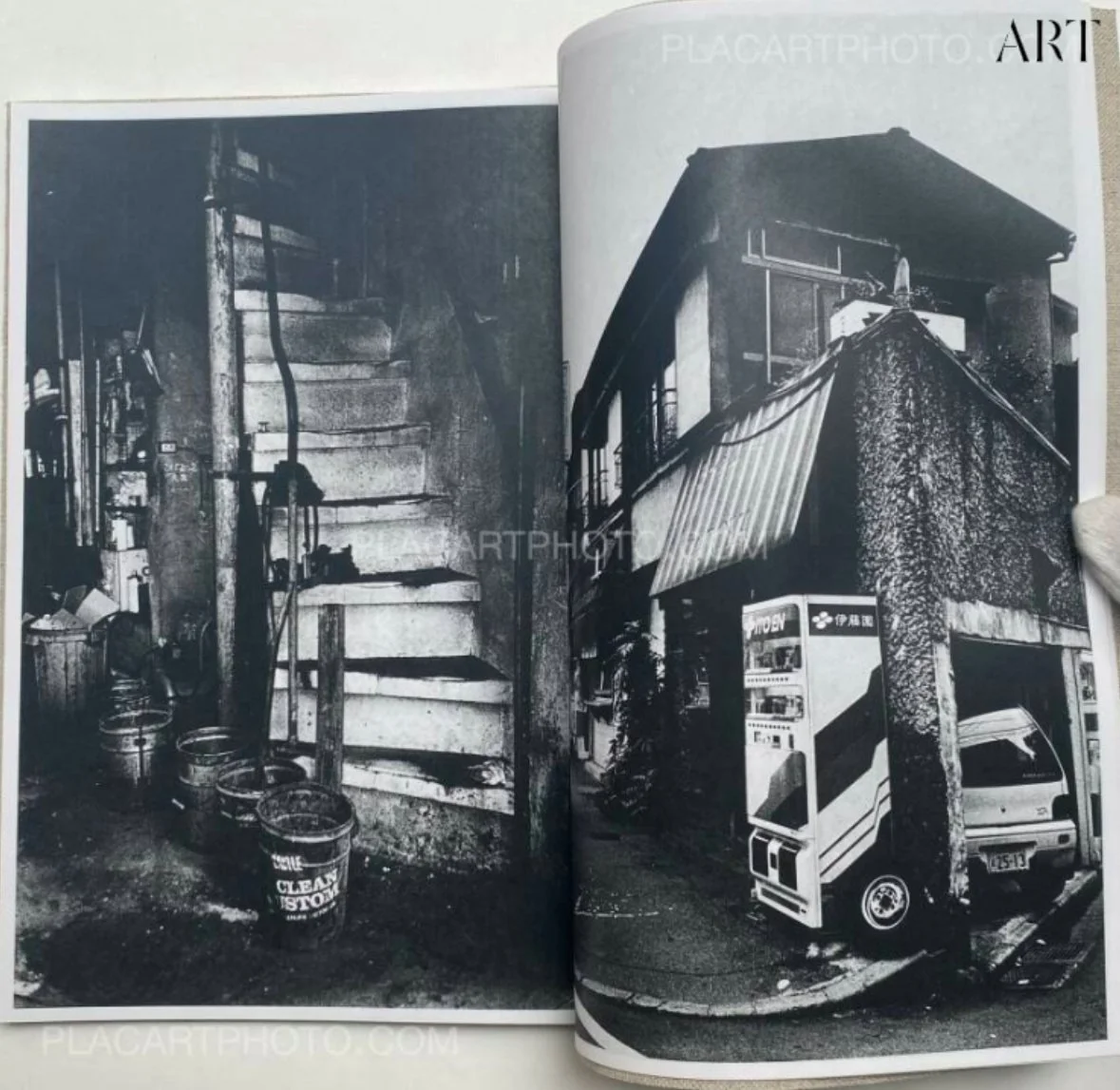
Moriyama's project is, at its simplest, the attempt to photograph what cities feel like rather than what they look like. The distinction sounds academic. The photographs make it concrete: the images are high-contrast, frequently blurred, often shot at extreme angles, indifferent to the conventional hierarchies of photographic subject matter. A dog in an alley. A street lamp reflection on wet pavement. A woman's back. A neon sign in daylight. A hand. A boot. The fragment of a body from a shop window mannequin. These are the images of someone moving through the city at the speed of attention — which is faster than the eye and slower than the thought.
We spent a day with him in Shinjuku — the district he has been photographing since 1968, which he chose for its density and its contradictions, which still provides, he says, more material in a single walk than most cities offer in a lifetime. He is small and moves quickly. He stops without warning. He raises the camera — a compact digital now, after decades with a Ricoh GR — and shoots without apparent deliberation, then moves on before you have registered that a picture has been made.
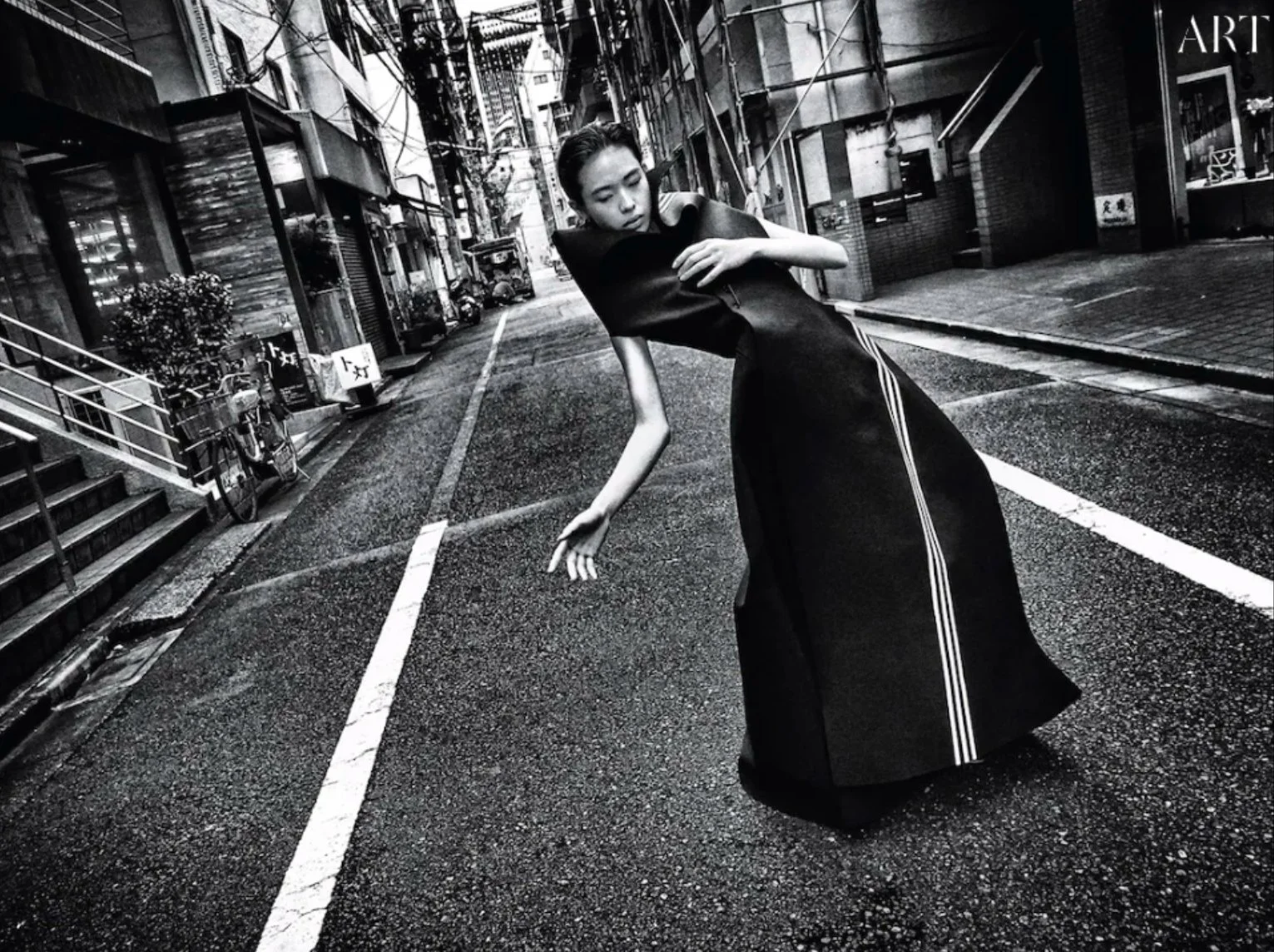
"I do not decide to take a picture," he says, over tea afterward, his back to the wall in a narrow kissaten coffee shop. "The picture happens. My job is to be in the right place, moving at the right speed, with the right attention. The camera is almost incidental. It is the attention that makes the photograph."
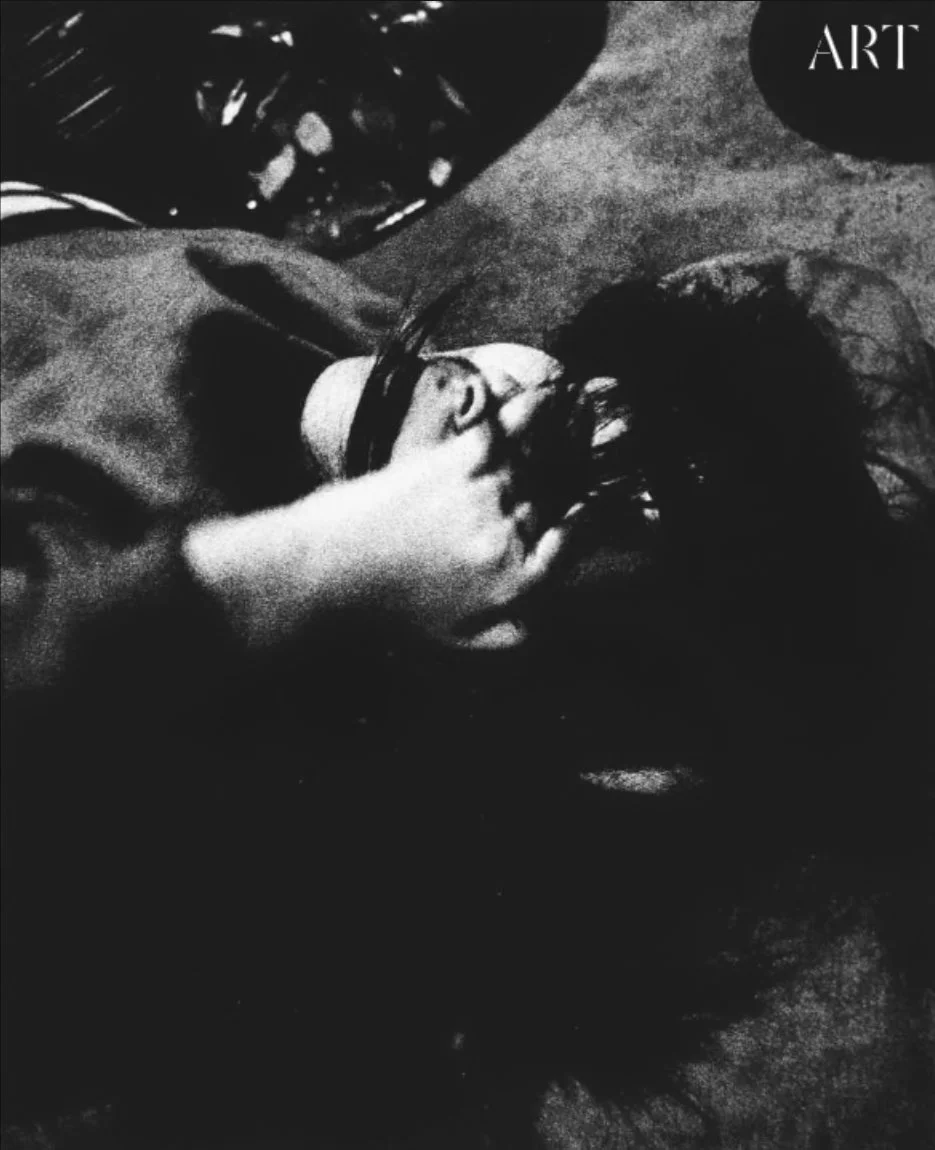
The attention, in Moriyama's case, is calibrated by a philosophy of photography that he developed in the late 1960s in response to — and in explicit opposition to — the humanism of his great predecessor and mentor, Ken Domon, and the documentary tradition of the Japan that emerged from the second world war. Where that tradition was interested in the dignity of the human subject, in the capacity of photography to testify to the value of individual lives, Moriyama was interested in something more fragmentary, more honest about the conditions of modern urban experience: the fact that in a city, you do not see people. You see fragments. You see the evidence of lives passing. You see, if you are attentive, the residue of a civilization moving through itself at a speed that exceeds comprehension.
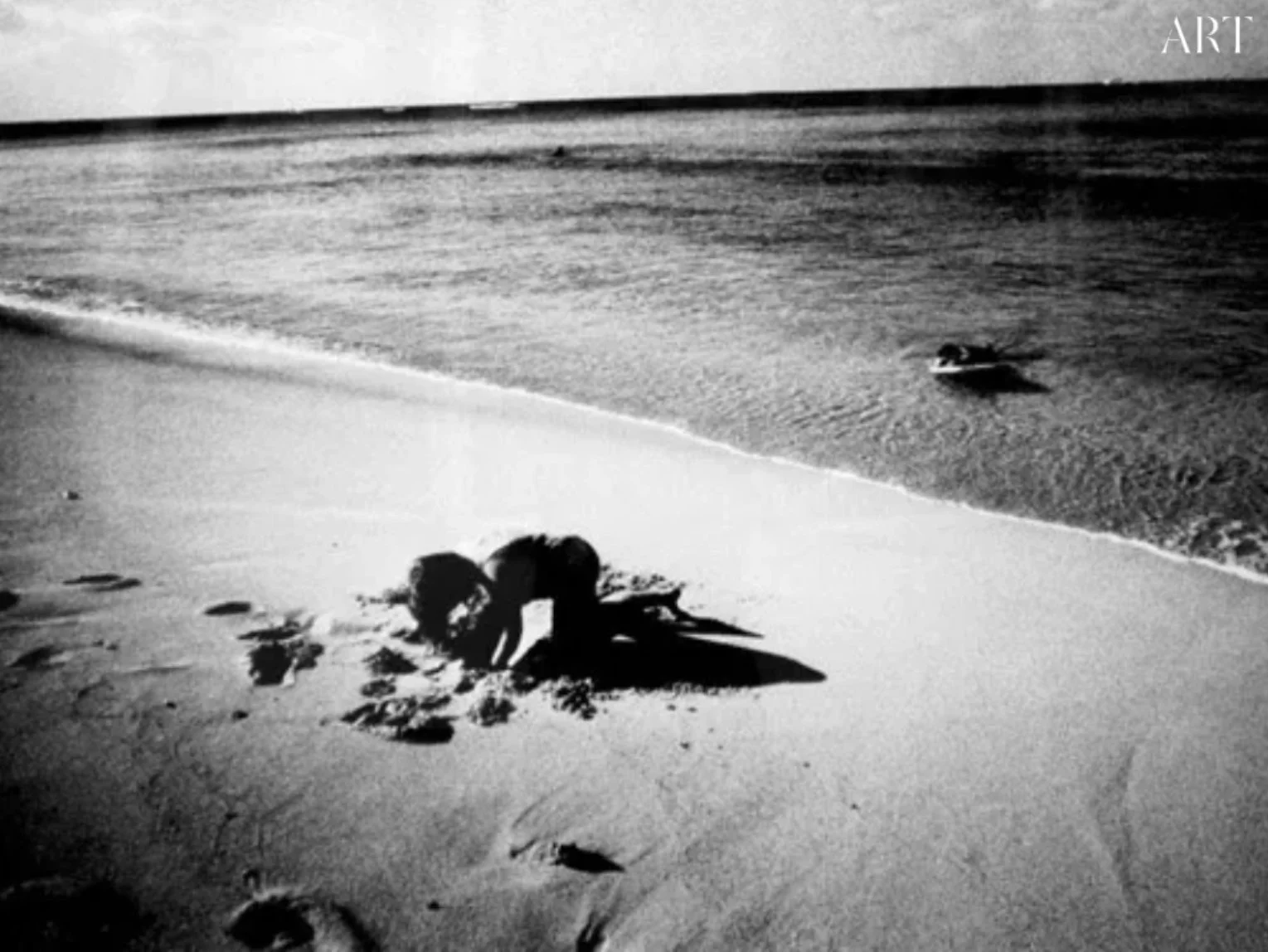
The greatest influence on his development was not a photographer but a novelist: the work of Masuji Ibuse and the postwar Japanese literary tradition that was willing to describe the city as a place of contradiction and violence and beauty and loss, without resolving these things into a narrative of progress or meaning. Moriyama's photographs, at their best, have this quality: they refuse meaning in the literary sense while being saturated with something that functions like meaning, something that the image produces in the body of the viewer before the mind has time to organize a response.
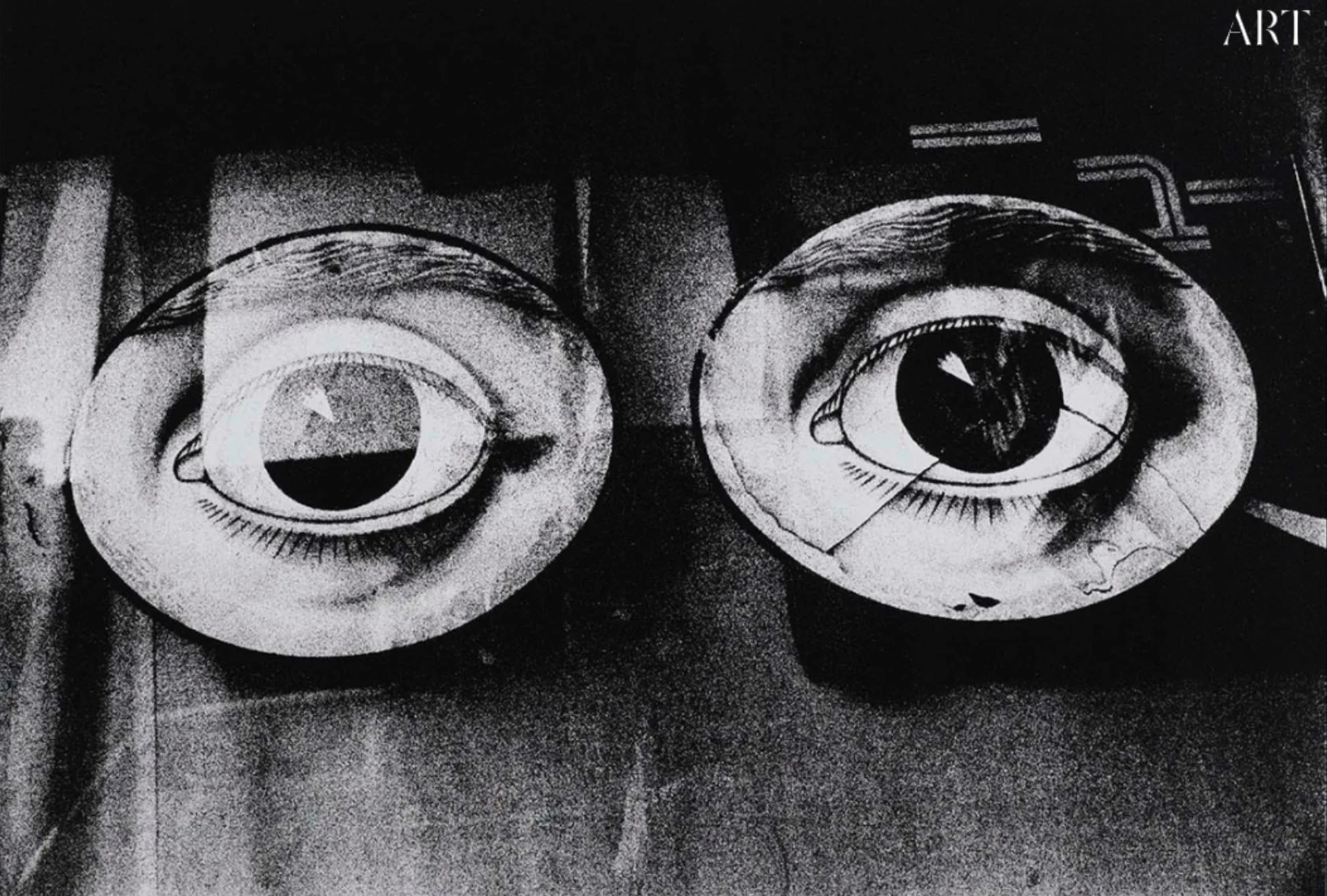
He has been asked, repeatedly, over sixty years, whether the work is political. He resists the framing. "I am not making a statement about Tokyo. I am trying to see Tokyo. These are different things. A statement has a conclusion. Seeing has no conclusion. I have been looking at this city for sixty years and I have found nothing that looks like a conclusion."
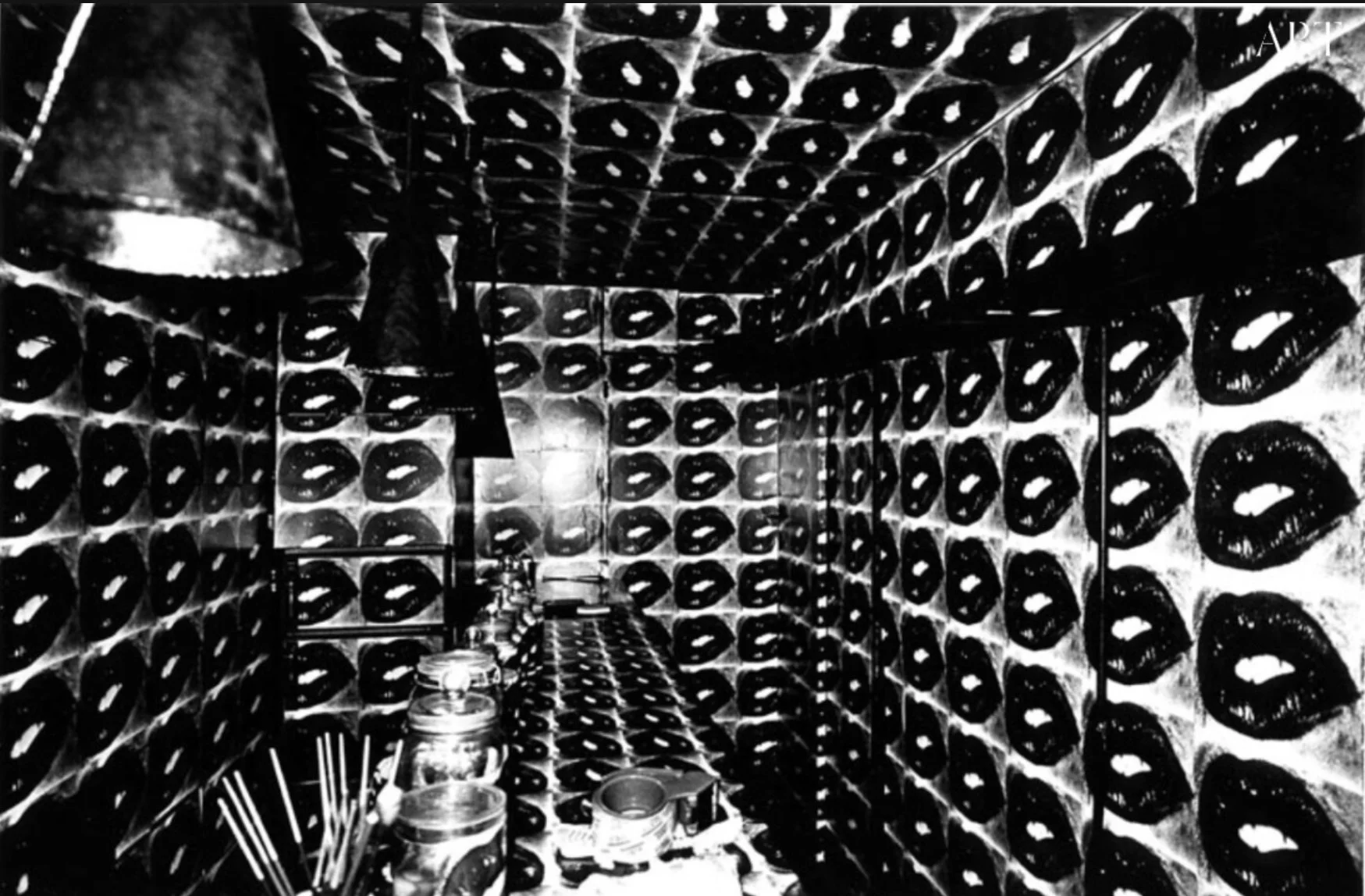
The new work — which he shows us in a small book, printed at his own cost, in an edition of fifty that he distributes to people he considers worth the conversation — continues the project with an urgency that seems, if anything, more acute than in earlier decades. The images are darker. The contrast is higher. The blurs are more extreme. He says: "I am less patient now. I know more clearly what I am looking for. This means I am less willing to stop and wait. I shoot faster. The images get more extreme. This is perhaps not progress. It is perhaps just age."
He drinks his coffee. Looks at the street through the window. The city moves past without noticing him, which is as it should be, and which he has spent sixty years making the most of.
BY OONA CHANEL
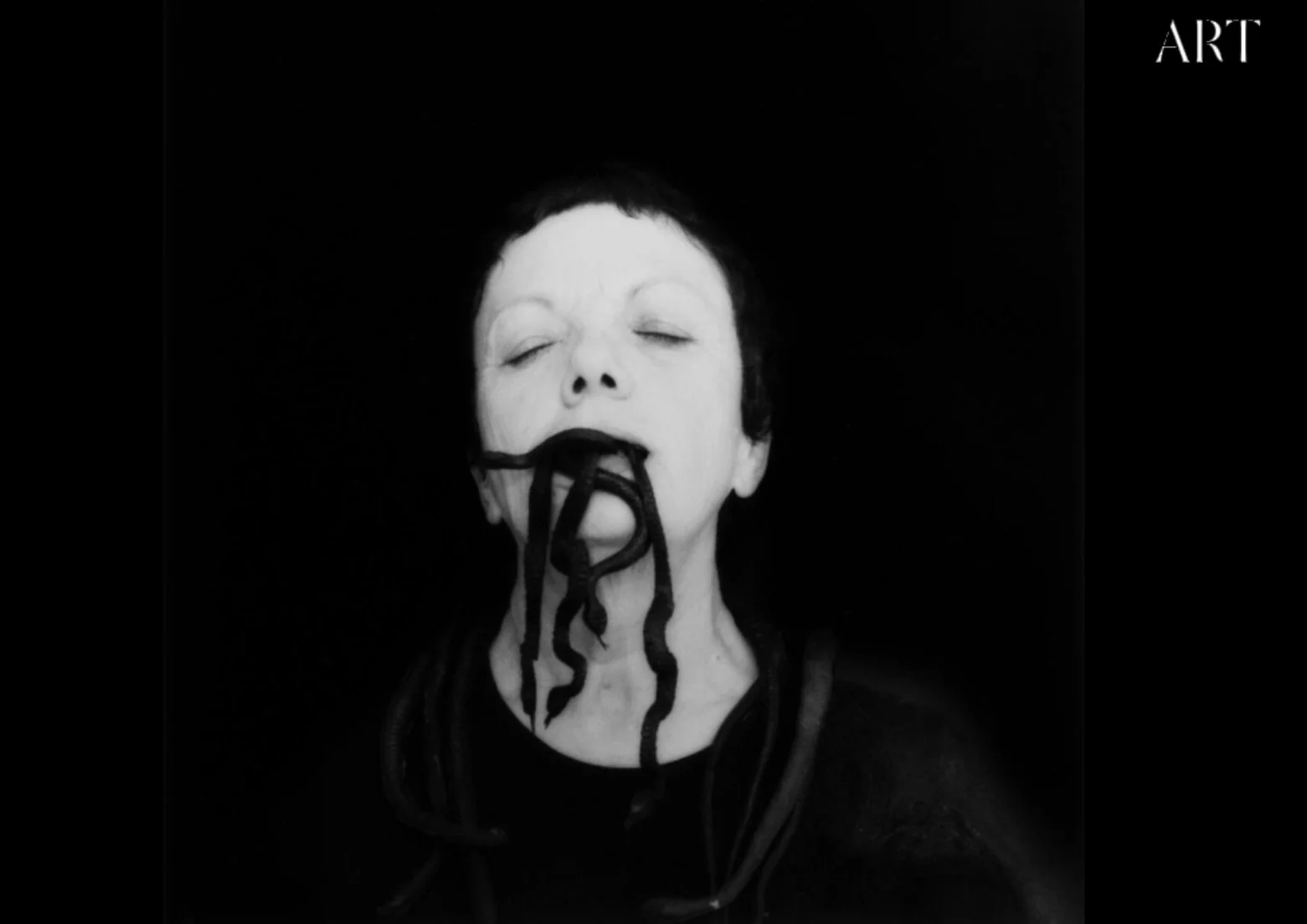
The Photography of Graciela Iturbide: What Mexico Sees When It Looks at Itself
For fifty years, she has walked into communities most photographers drove past and made images that have permanently changed how her country understands itself.
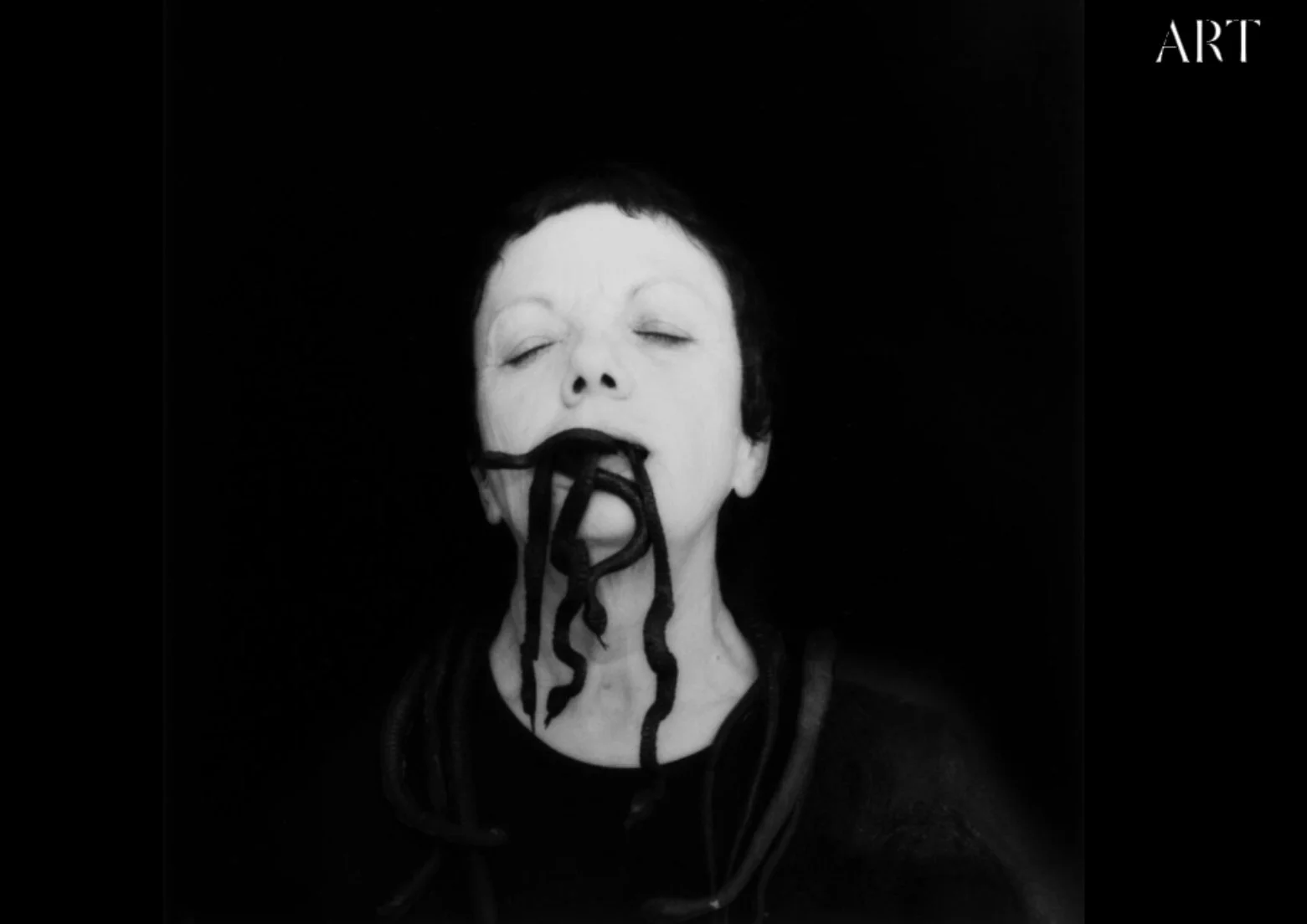
Graciela Iturbide
“I need to understand the interior. What it feels like to be in this place. What the light means here. What the silence means. That understanding is not available quickly.”
The photograph is called Nuestra Señora de las Iguanas. Our Lady of the Iguanas. It was taken in 1979 in Juchitán, Oaxaca, at the market: a Zapotec woman with a crown of live iguanas on her head, looking at the camera with the serenity of someone who finds this unremarkable, because it is. The iguanas are being taken to market. The crown is practical. The look in the woman's eyes is not a pose. It is simply what she looks like.
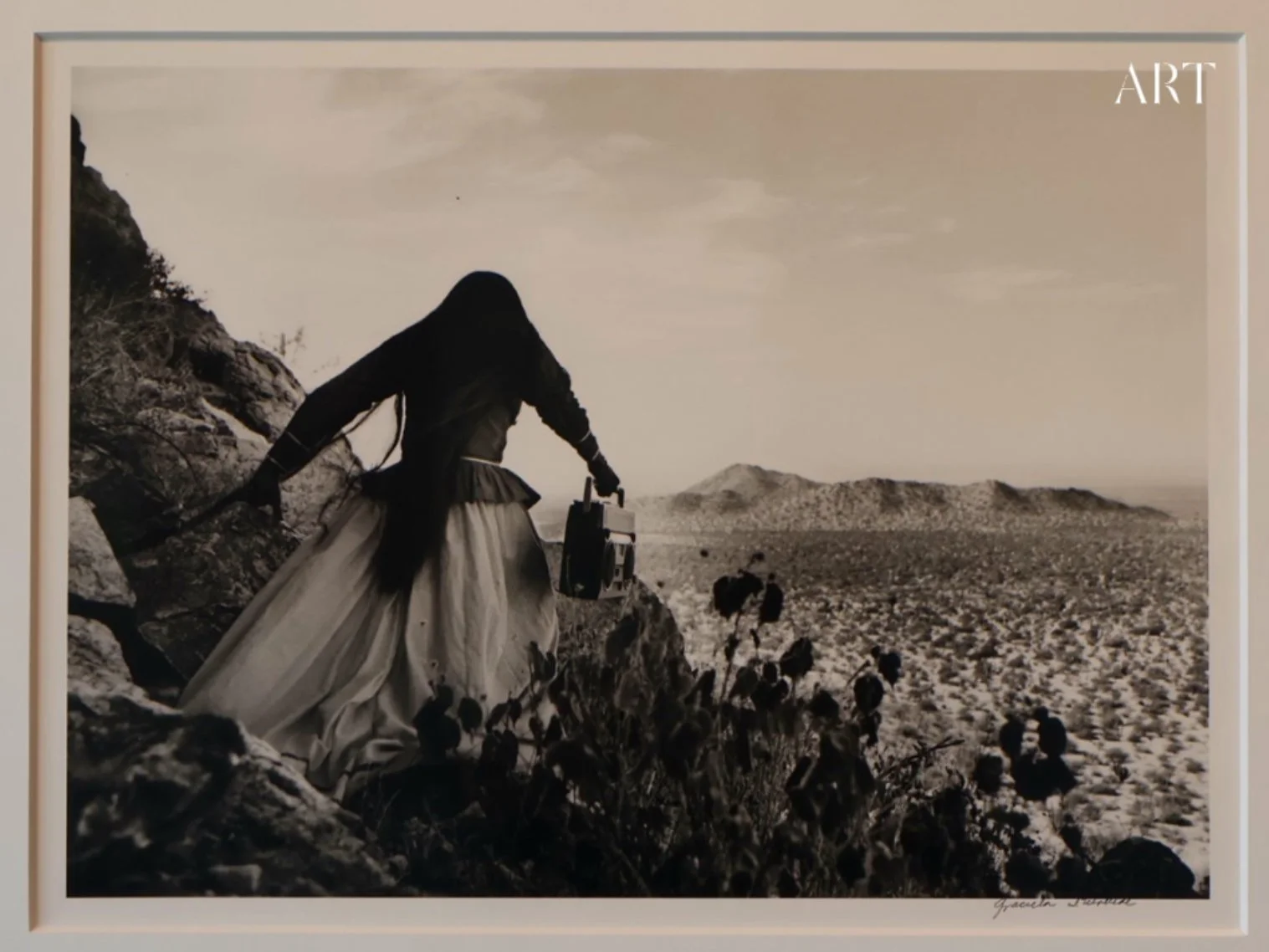
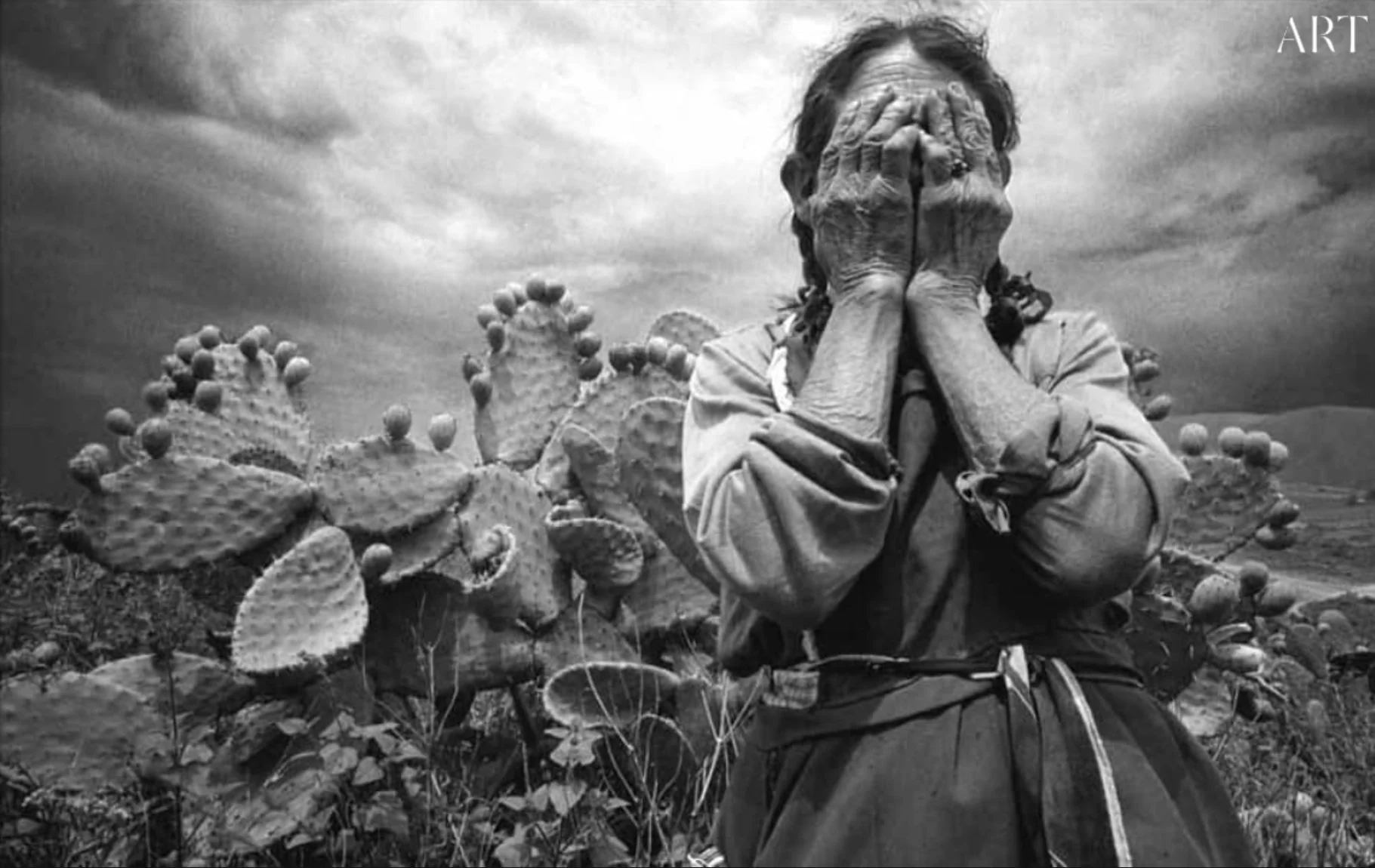
“Mujer Angel [Angel Woman]” Courtesy of Ruiz-Healy Gallery.
The photograph is one of the most reproduced images in the history of Latin American photography. Graciela Iturbide has been asked about it for forty-five years. She speaks about it with the characteristic blend of precision and resistance to interpretation that marks all her discussions of her own work: "I saw her. I saw that she was extraordinary. I made the photograph. What it means is what it has always meant to the people who look at it. I do not own the meaning. I made the image."
This position — that the photographer's relationship to meaning is custodial rather than authoritative — is not false modesty. It is a principled stance that has defined a practice spanning fifty years and encompassing some of the most important documentary and art photography produced anywhere in the world. Iturbide, at eighty, is still making work. She still uses a medium-format film camera. She still takes approximately two years between beginning a project and showing the results. She still walks into the communities she photographs rather than descending with equipment and assistants and a pre-formed aesthetic plan.
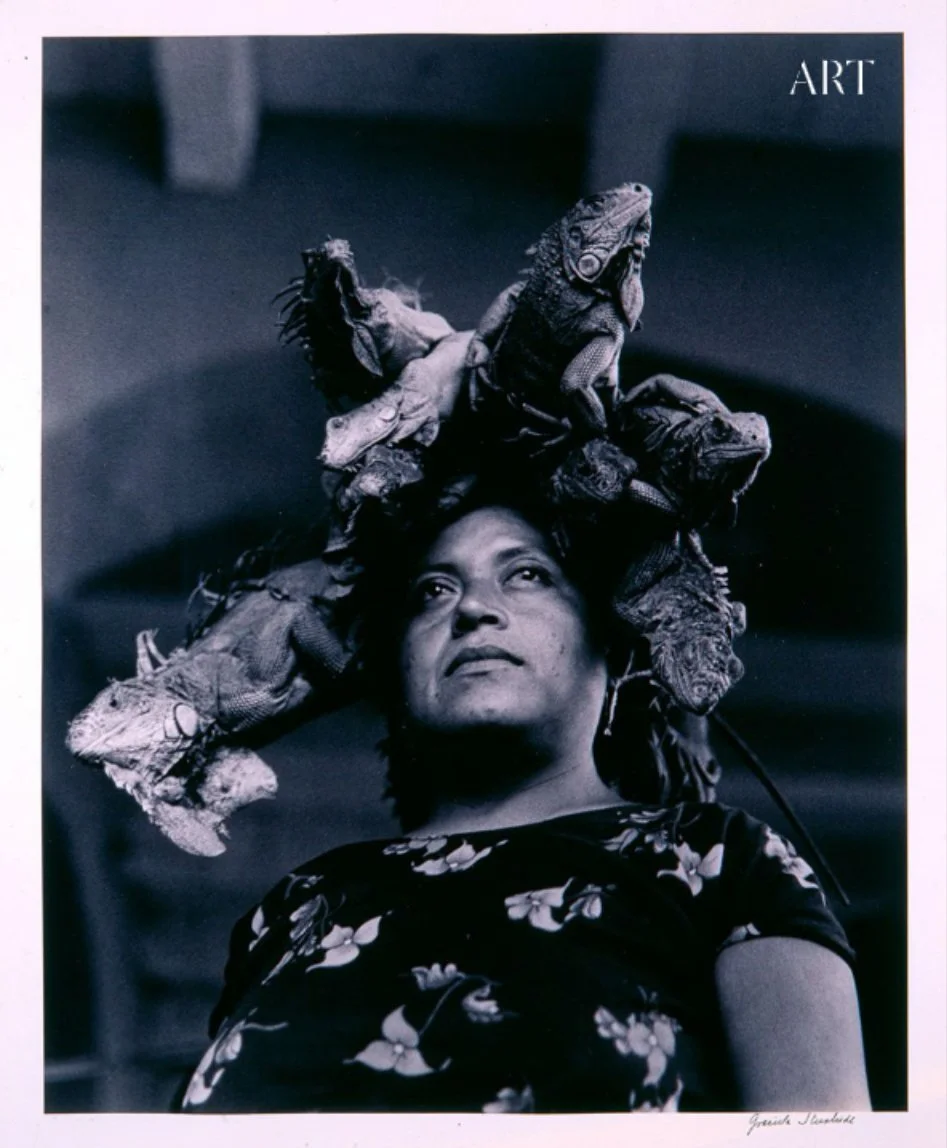
Nuestra Señora de las Iguanas (1979)
We met in her home in Mexico City, which is also her archive and her studio, in a neighborhood that has changed significantly in the thirty years she has lived there and which she discusses with the affectionate ambivalence of someone who has watched a place she loves become something she also mourns. The house is full of photographs — her own and others', pinned and framed and stacked with the organizational system of someone who thinks spatially, visually, in accumulations rather than sequences.
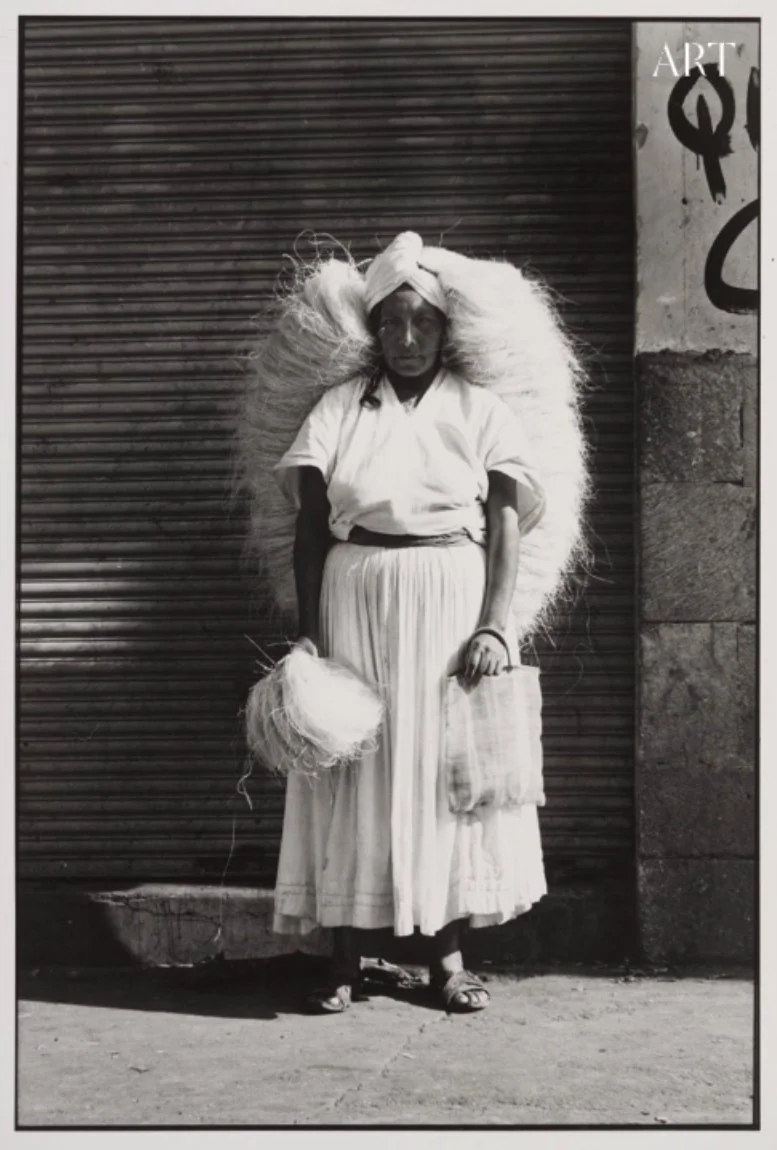
Aware
Her trajectory is improbable even by the improbable standards of great photography careers. She studied under Manuel Álvarez Bravo — who is, by general consensus, the greatest Mexican photographer of the twentieth century — and he sent her to Juchitán in the early 1970s. She went, came back with images that her contemporaries were not sure what to do with, went back again, spent a decade returning. The resulting body of work — eventually published as Juchitán de las Mujeres in 1989 — documented the Zapotec community of Juchitán not as an exotic other but as a civilization with its own internal complexity, its own aesthetic sensibility, its own female authority that was, by every measure she could find, as sophisticated as anything she had encountered in Mexico City.
This was, in 1979 and for some time thereafter, politically and photographically radical. The tradition of documentary photography of indigenous Mexican communities had been, with honorable exceptions, a photography of the observed by the observer — the sophisticated urban camera pointed at the rural, the archaic, the picturesque. Iturbide's work from Juchitán proposed something different: that the community was not the subject of the camera but its co-author, and that the photographer's task was to be worthy of that collaboration.
The art of seeing Mexico
"I spend a lot of time before I take a photograph," she says. "Sometimes months, in a place, before I take a single image. I need to understand what I'm seeing. Not in the way a journalist understands — quickly, in outline. I need to understand the interior. What it feels like to be in this place, in this community. What the light means here. What the silence means. That understanding is not available quickly."
The work that followed Juchitán extended this method to the cemeteries of Oaxaca, the Seri people of Sonora, the Mexican-American border, the personal territory of her own body after a cancer diagnosis in the late 1990s. Each project is formally different — the Seri work is harsher, more elemental; the border photographs are darker and more politically explicit; the self-portraits are intimate in a way that the community work is not — but they share a quality of earned access. You feel, in every image, that the photographer had the right to be in this moment.
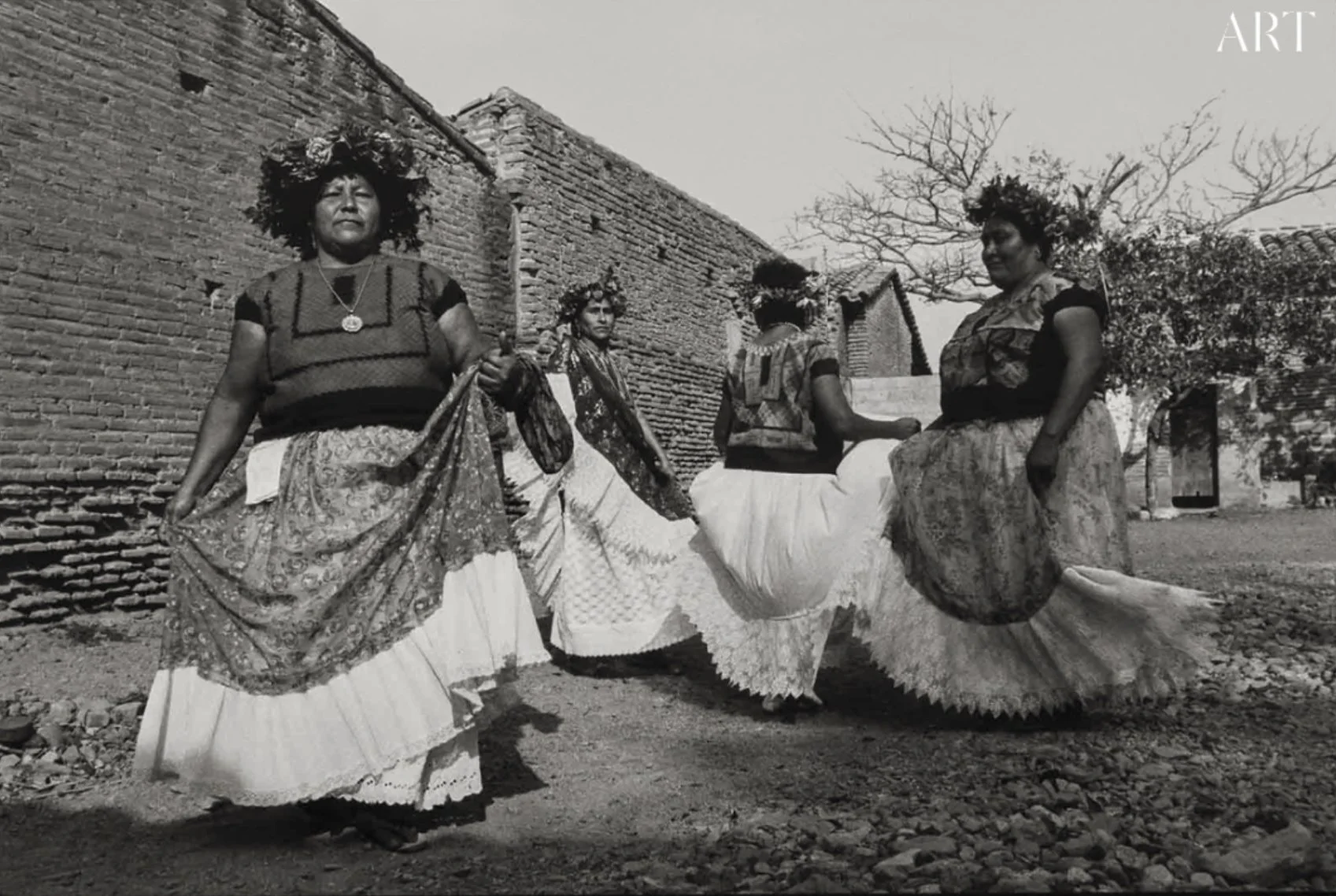
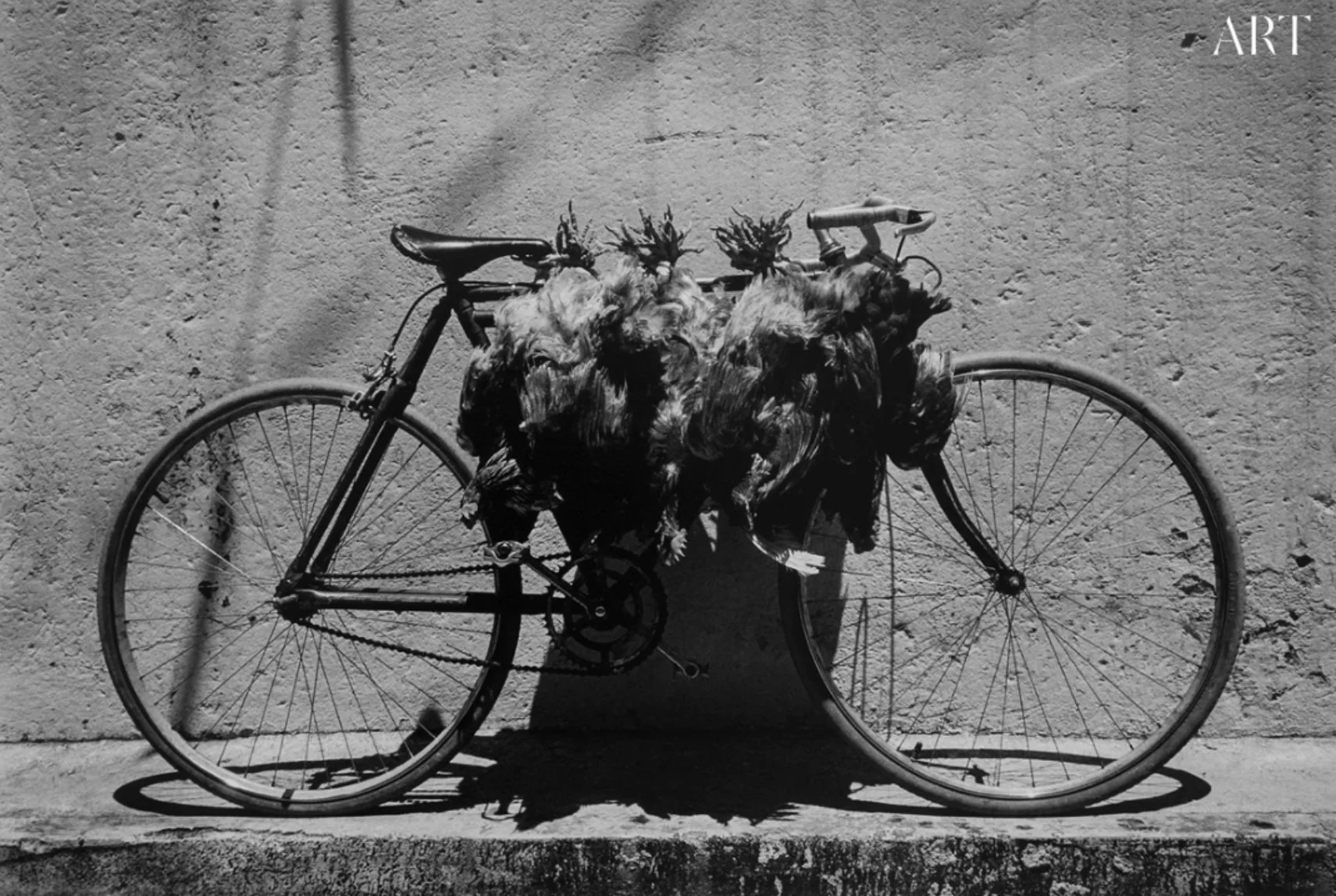
Cultural memory archive
She speaks about photography's relationship to time with a thoughtfulness that has developed, clearly, over decades of making images that are still being discovered: "A photograph is always a lie about time. It says: this is a moment. But the moment is part of a flow that the photograph interrupts. What I try to do is find the photograph that carries the flow within it — that shows the moment but also shows the history that produced it and the future that will follow from it. This is not always possible. But it is always what I am looking for."
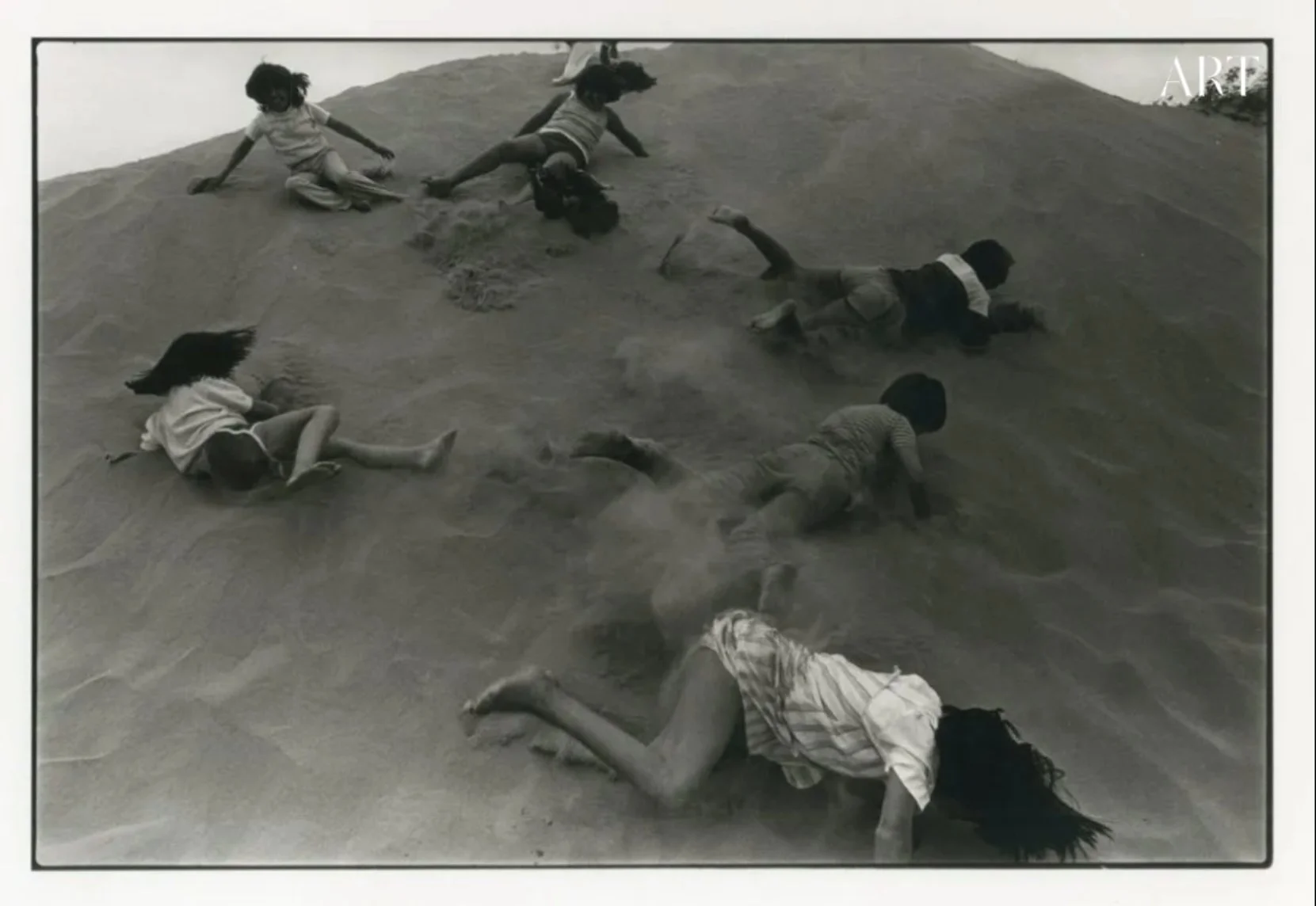
Graciela Iturbide, El Primer Día del Verano (1982)
The new work, which she describes only in outline, continues the project that has defined her practice from the beginning: the investigation of what Mexico is — not the Mexico of nationalism or of tourism or of the global imagination, but the Mexico that continues to exist beneath all of these, carrying five thousand years of complicated and extraordinary human life.
She is, she says, nowhere near finished.
BY OONA CHANEL
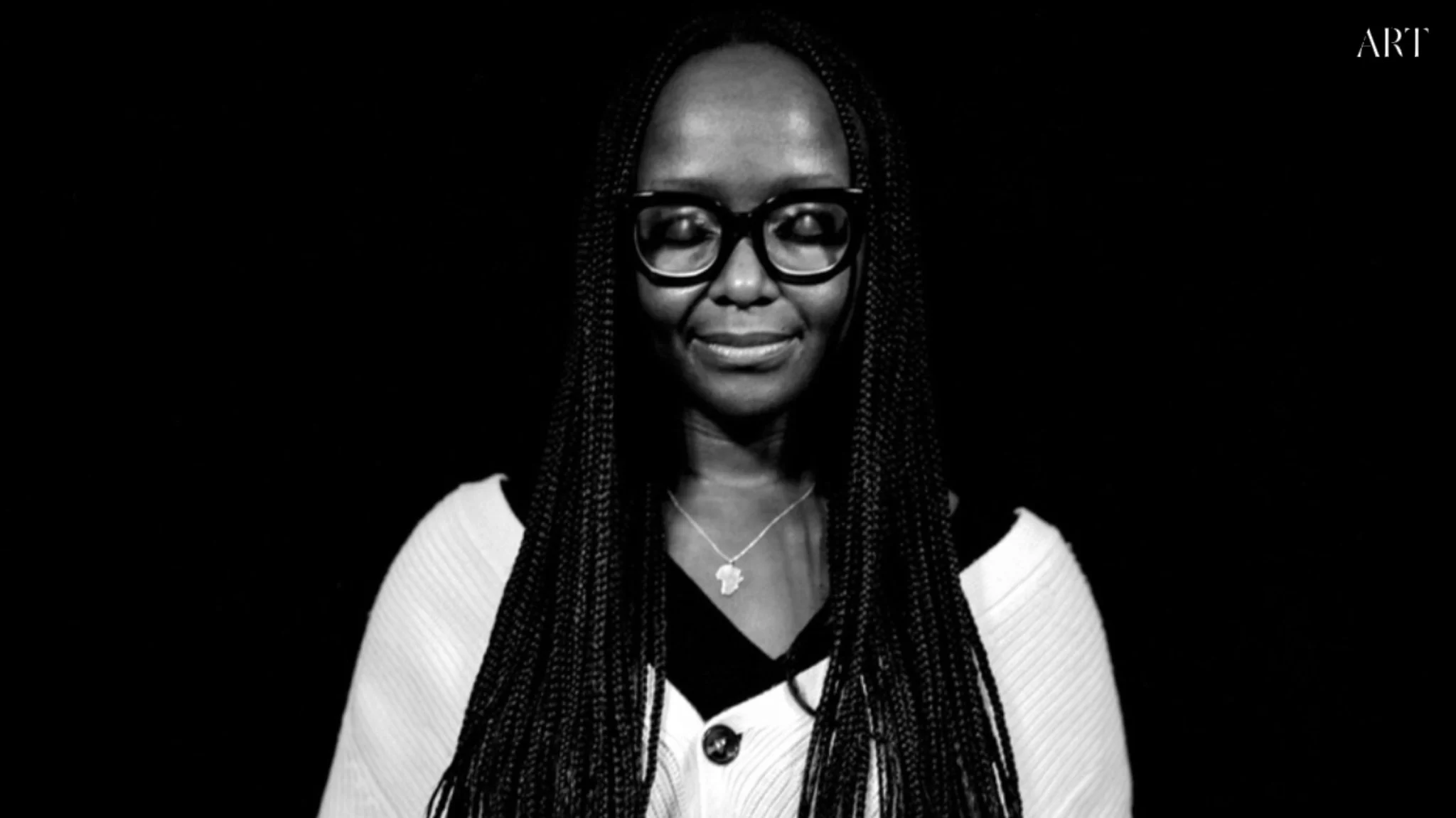
Lynette Yiadom-Boakye: Portraits of People Who Do Not Exist — and the Truth They Tell
She paints invented figures with the authority of someone who has known them for years. The results are among the most psychologically acute portraits in contemporary art.
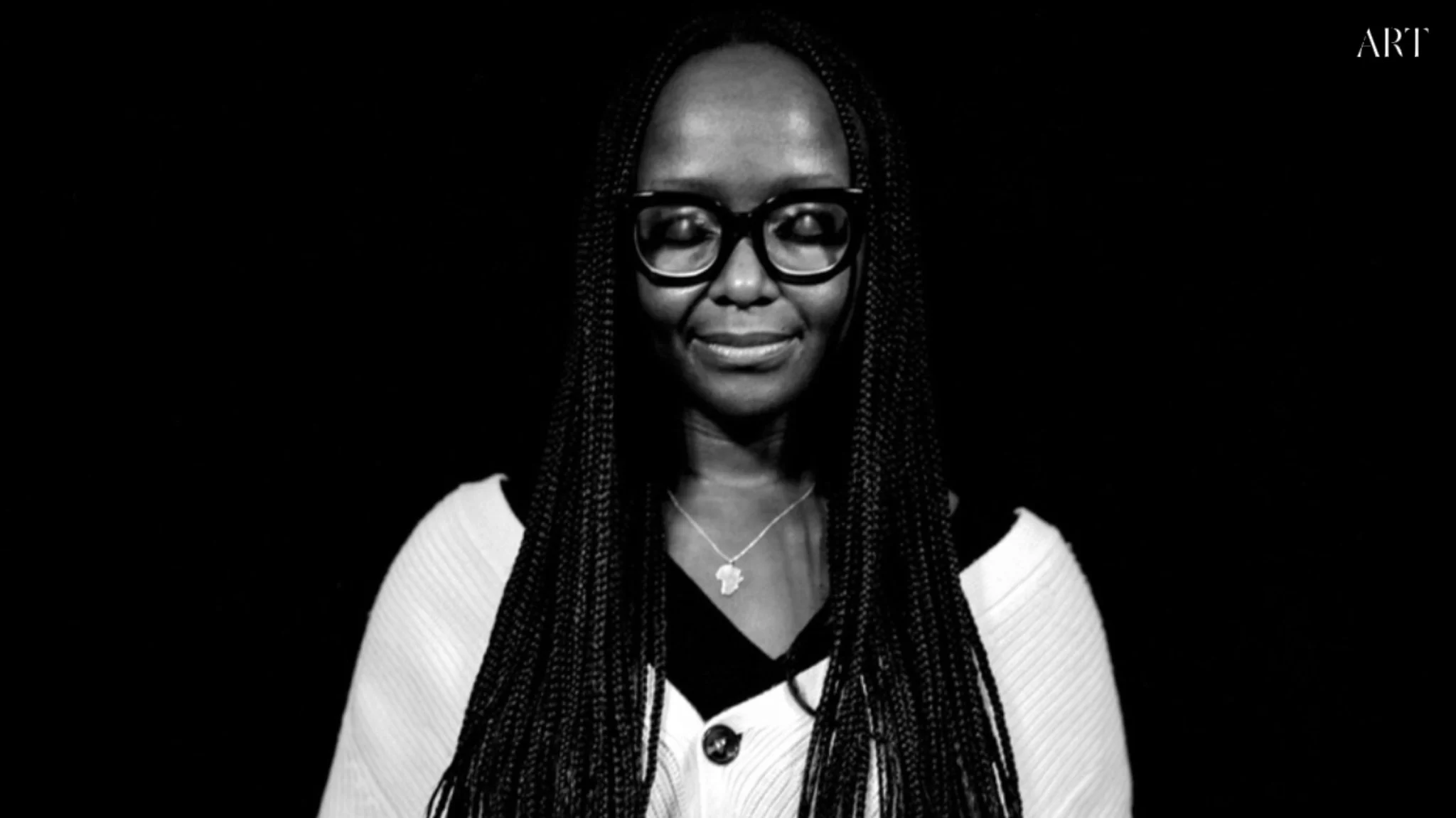
Lynette Yiadom-Boakye
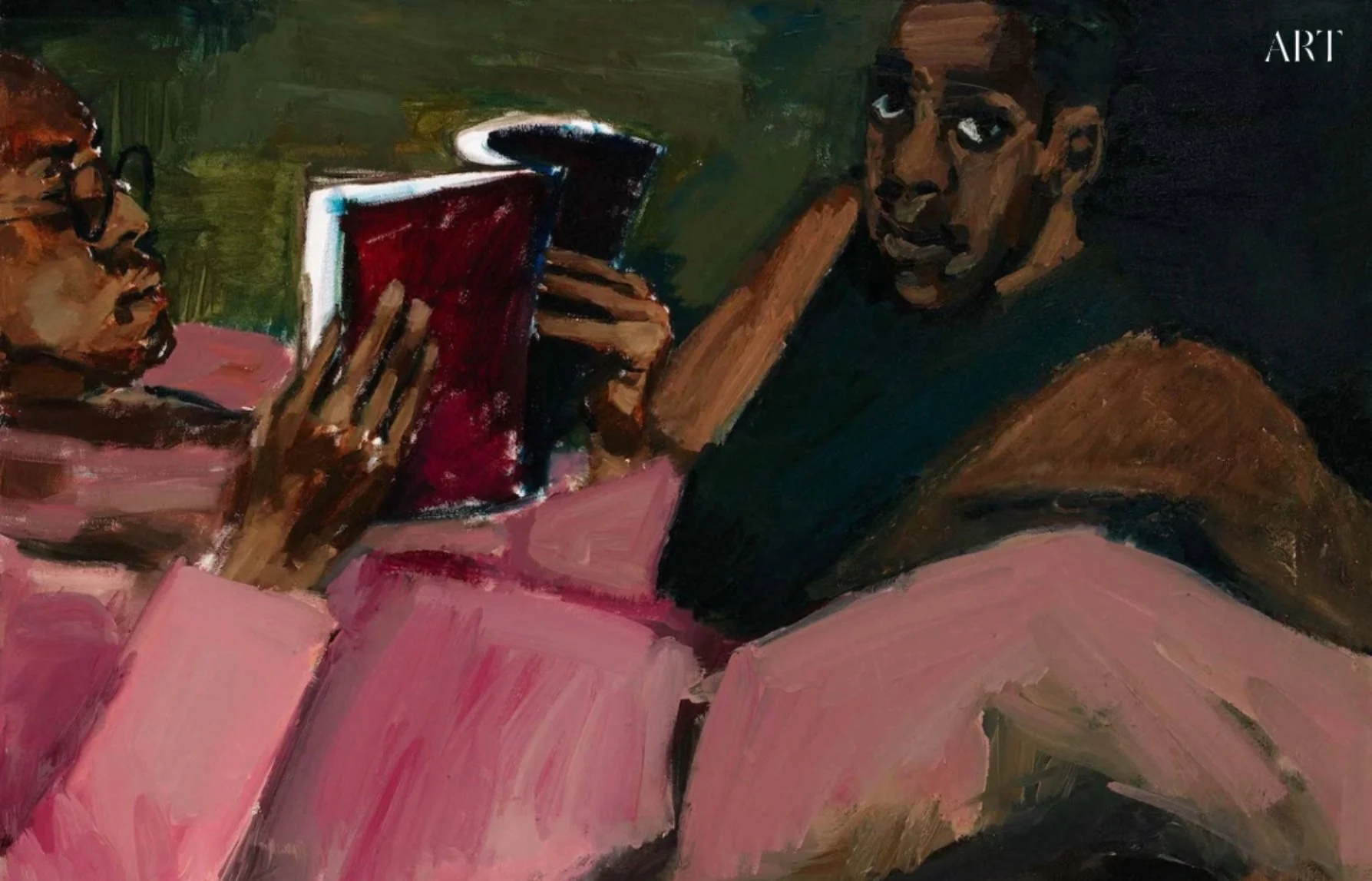
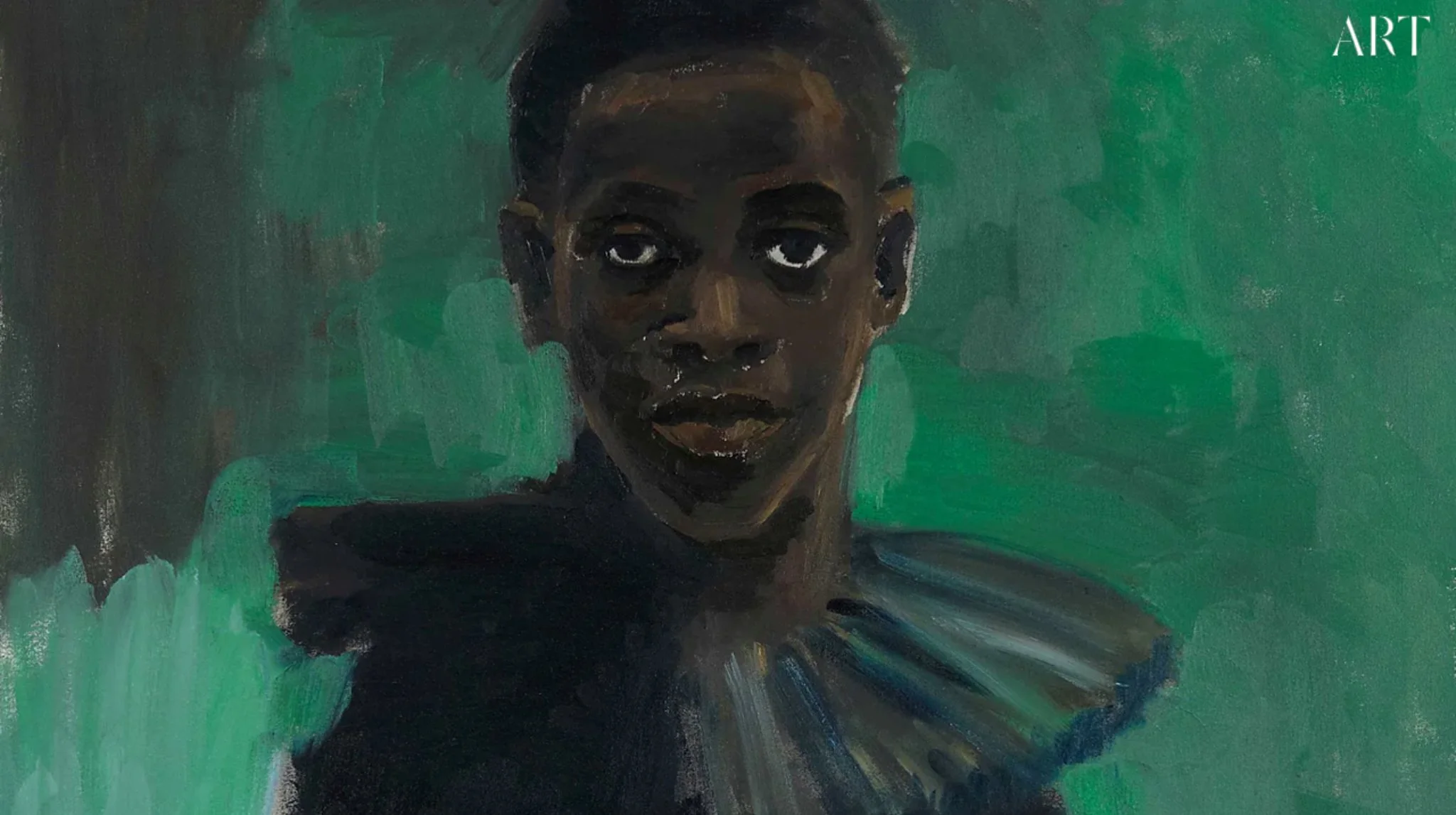
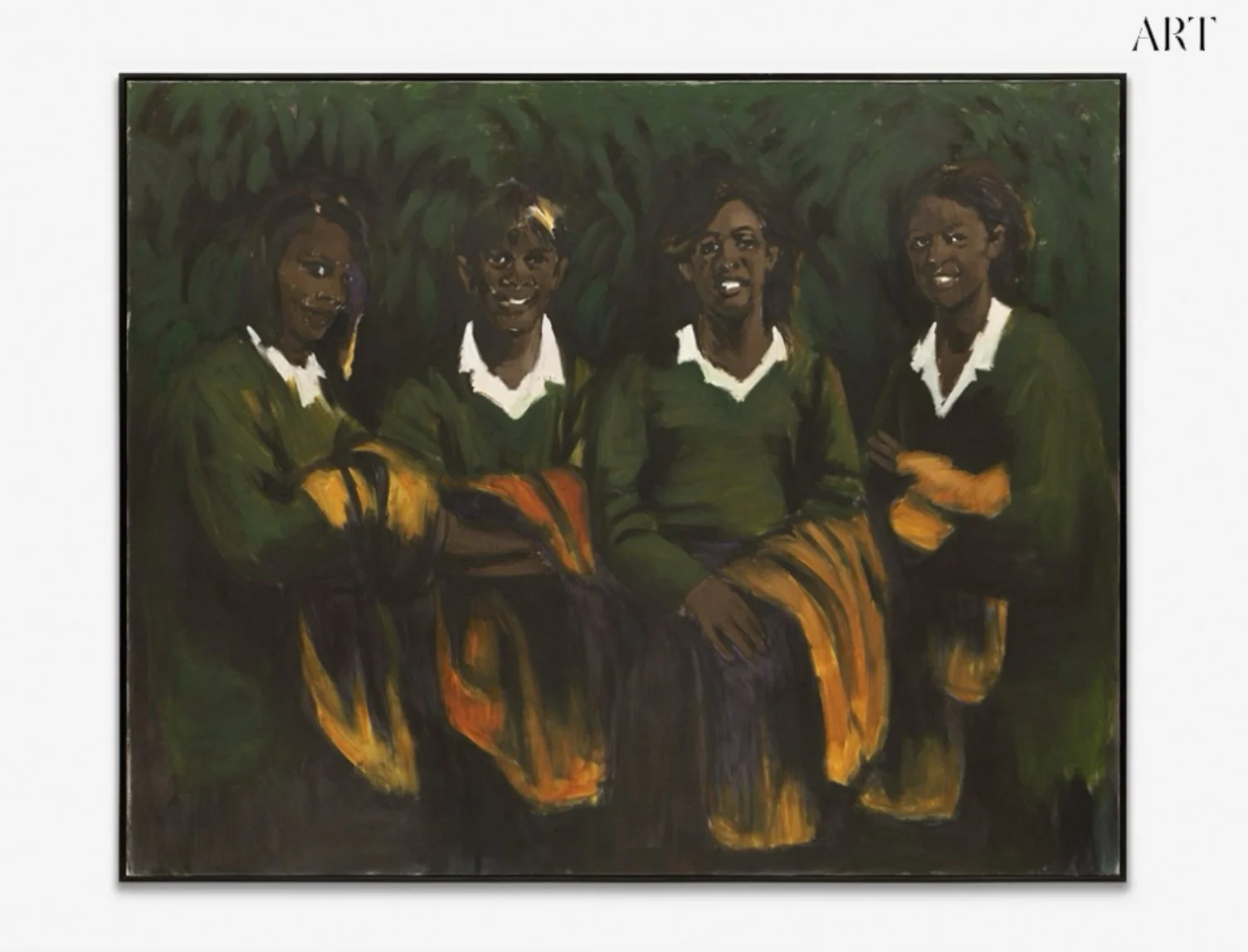
The figures in Lynette Yiadom-Boakye's paintings are not real. She has been asked about this so consistently, across a career of now more than twenty years, that she has developed a considered answer: "They are not portraits of specific people, but they are portraits of real states of being." The distinction matters, and not just philosophically. It explains why paintings of entirely invented subjects can feel, consistently and sometimes overwhelmingly, like you know these people. Like you have met them in a room that you can almost but not quite remember.
She works fast, by the standards of painting — most canvases in a day or two, some in hours — which gives the work a quality of immediacy that very slow painting does not have. The figures emerge from the process rather than from preparatory sketches or photographic reference. She begins with a form, a color, a posture, and discovers the person through the act of painting rather than executing a pre-formed idea. The psychological depth of the work is not the product of extended contemplation. It is the product of a very fast and very deep kind of seeing.
Lynette Yiadom-Boakye‘s Imaginary portrait
We met at her studio in London, in a building she has occupied for eight years and which has, as a result, the accumulation of a painter's practice inscribed everywhere: paint on the floor, canvases in various states of completion on every surface, books stacked with the slightly chaotic organization of someone who reads in order to think, not in order to organize what they know.
No Twilight Too Mighty
She is unhurried in conversation in a way that is unusual in the London art world, where speed and currency of reference are the social currency. She thinks before she speaks. She changes her mind in the middle of sentences. She is, in person, extraordinarily kind — which is not something you would necessarily predict from the work, which is serious and demanding and occasionally, in its stillness, faintly ominous.
A Passion Like No Other (2012)
"The question I am always asked," she says, "is what the figures are feeling. People look at a painting and immediately want to know: is this person sad? Is this person waiting for something? Is this person in love? And the question reveals something important about how we relate to images of people — we want to resolve them into a state that we can name. I am not interested in giving people that resolution. I am interested in the moment before it. The state of being that has not yet become a feeling with a name."
Brutality by Any Other Name
This is, in contemporary painting, an unusual position. Most figurative work — and there is a great deal of figurative work being produced right now — either tells you what the subject is feeling (which is sentimental) or refuses to engage with feeling at all (which is cold). Yiadom-Boakye does something more difficult: she presents people in states of emotional specificity that resist verbal articulation, which is, in the most precise sense, what painting can do that language cannot.
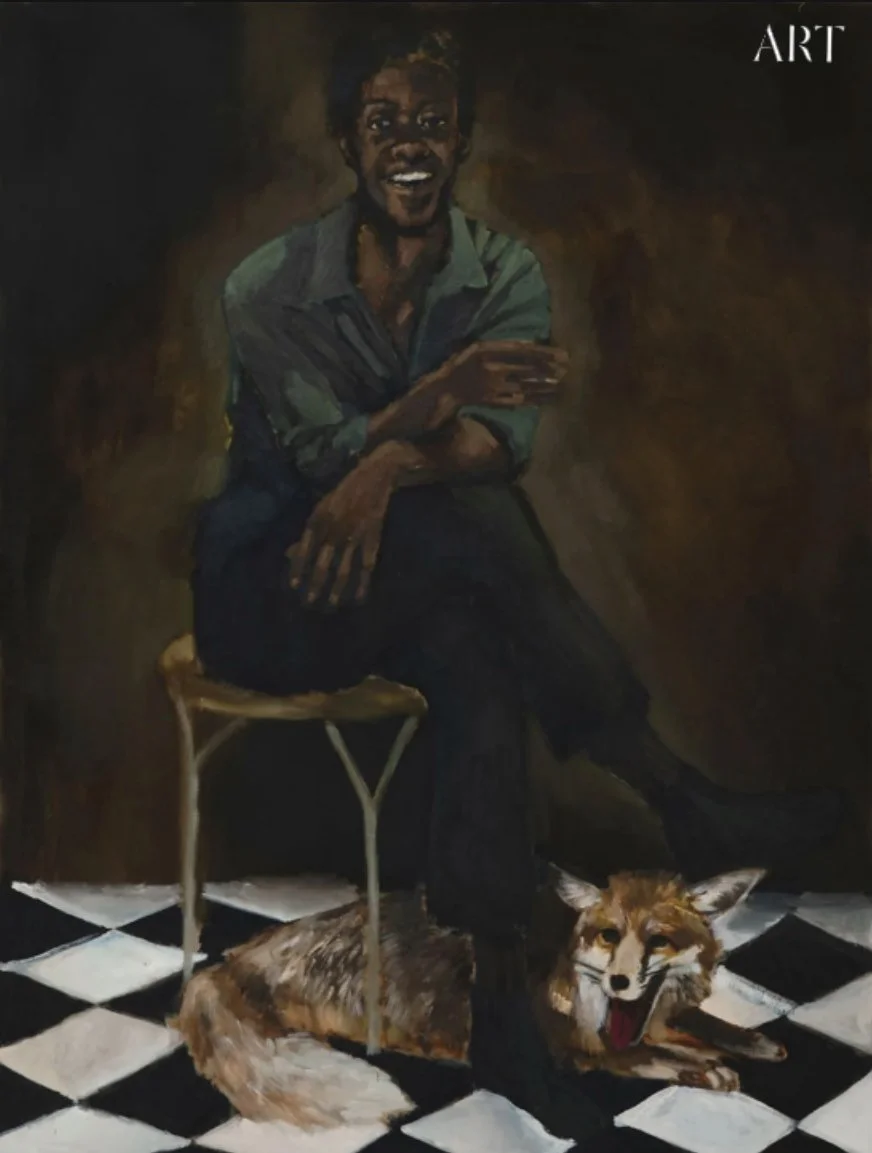
Black Allegiance to the Cunning (2018)
The figures are almost always Black, which has generated a discussion about representation that she engages with directly and carefully. "The absence of Black figures in Western portraiture is not just a historical fact," she says. "It has a continuing effect on how we imagine the interior life of Black people. When you see a white person sitting quietly in a painting, you think: they are contemplating something. When you see a Black person sitting quietly, that contemplation has, historically, not been assumed. My paintings are, in part, an insistence on that interior. On the right to be complex."
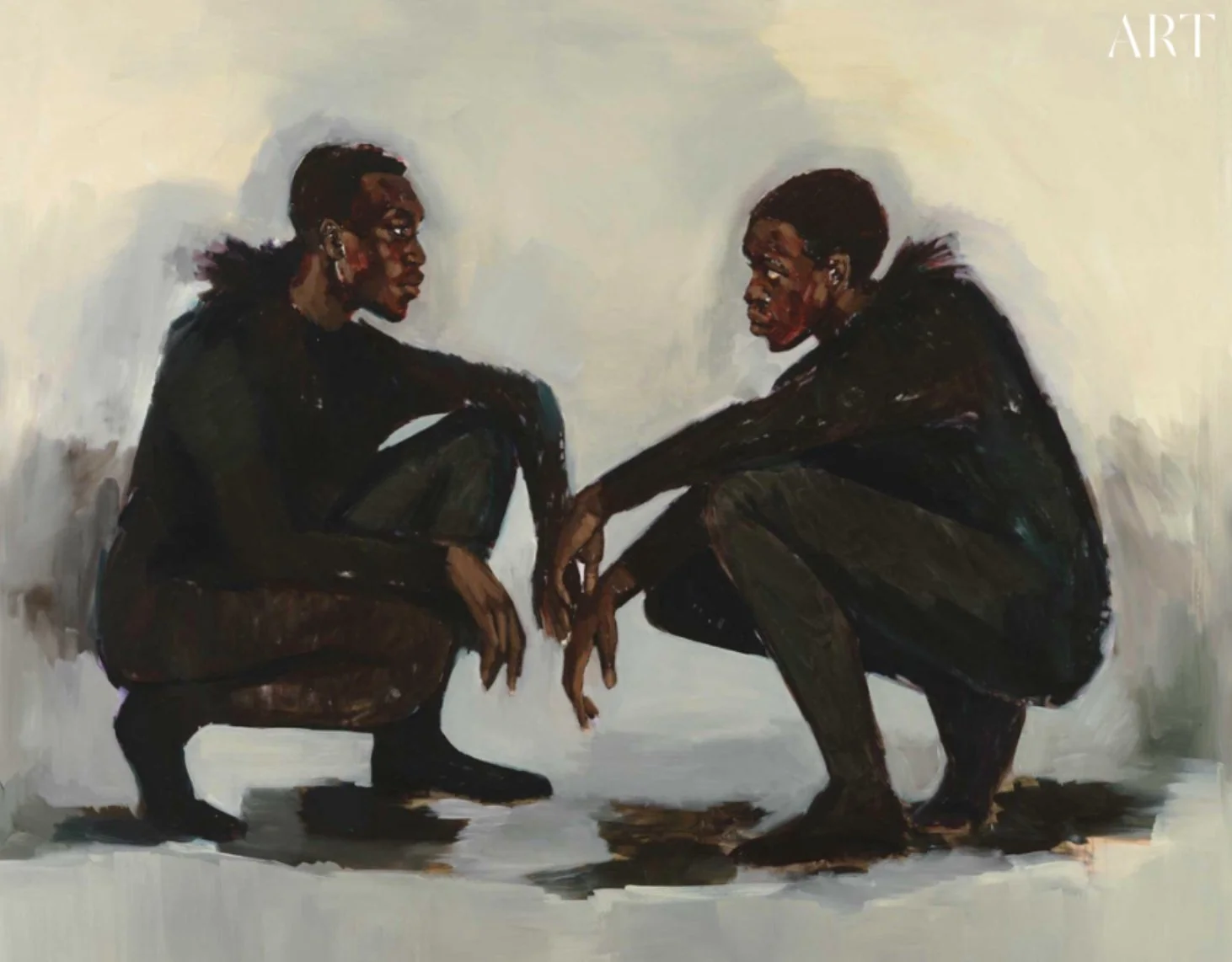
No Need of Speech, 2018. Carnegie Museum of Art.
Her 2023 retrospective at Tate Britain — 'Time Only Swells the Song' — was one of the most significant exhibitions of British art in recent memory: not because of its scale, though it was large, but because of the sustained argument it made about what figurative painting can do when the painter has something to say.
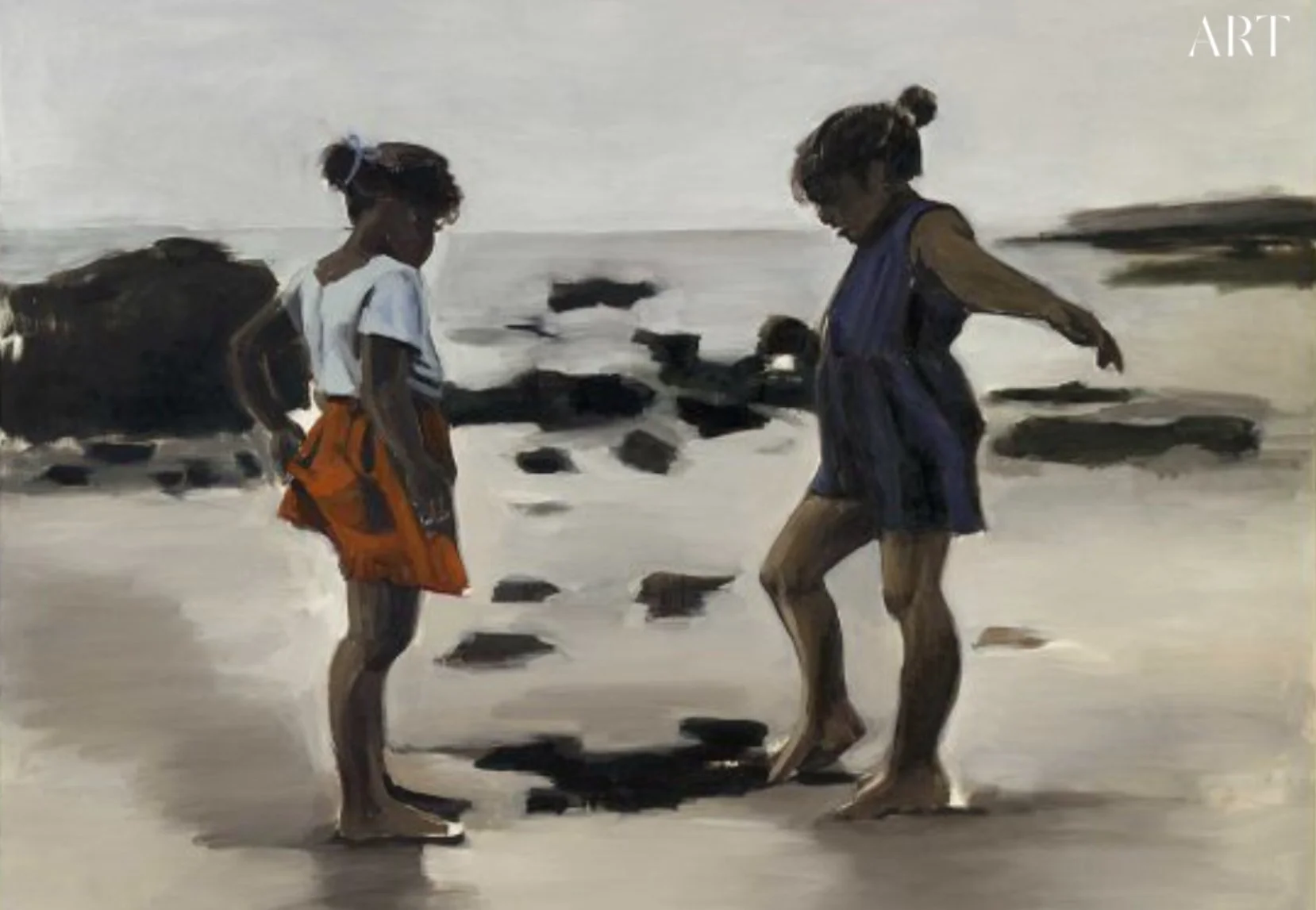
LIFE OUTSIDE THE MANET PARADISE RESORT
The current work, which we were shown in progress, is darker in palette and more psychologically compressed than her earlier pieces. The figures are more interior, less outward-facing. She says she has been thinking about solitude — "not loneliness, which is a complaint, but solitude, which is a practice" — and about the specific quality of presence that a person has when they believe themselves to be unobserved.
This, too, is a Yiadom-Boakye subject: the moment before the performance of self begins. The person as they are before the world asks them to be something.
By Oona chanel
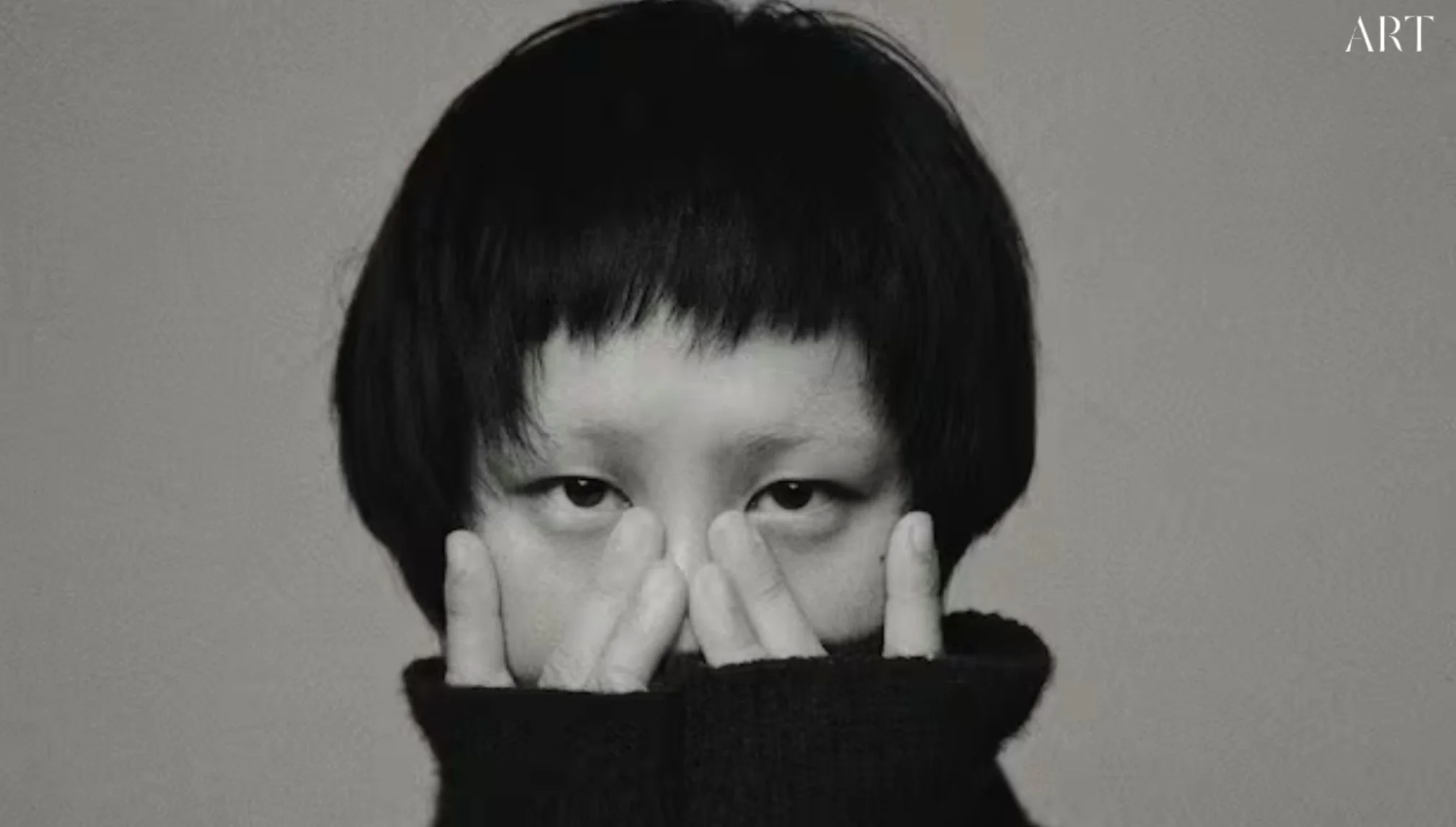
One Frame, Every Day
Photographer Zhong Lin spent 365 consecutive days making one image within a strict 24-hour window. What she discovered was not merely a body of work — but the architecture of her own creative mind.
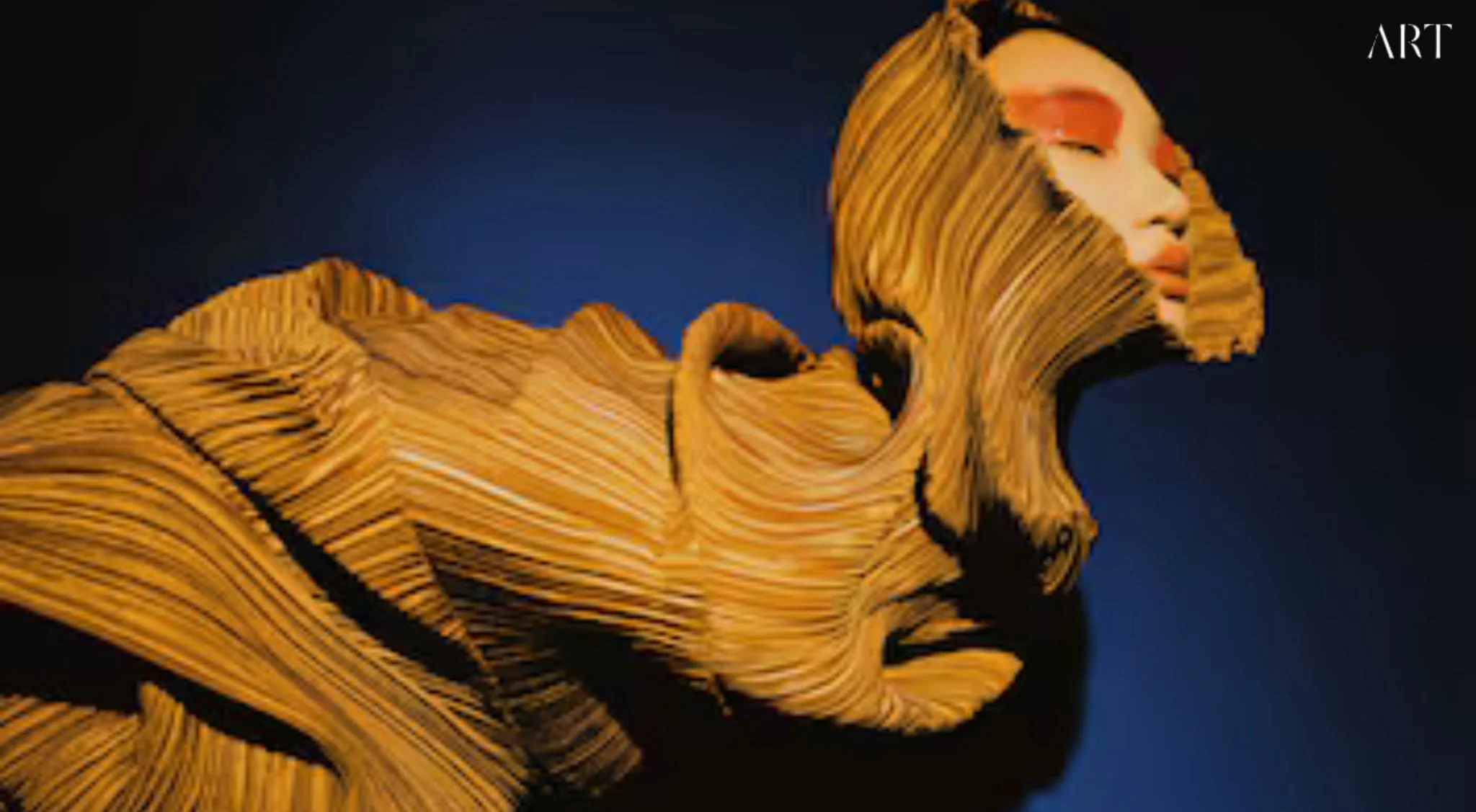
Photography by Zhong Lin
What begins as constraint becomes structure.
What becomes structure becomes language.
And what becomes language — if you commit to speaking it every day for a year — becomes yours.
The most disciplined thing a photographer can do is also the most ordinary: pick up the camera. Not when conditions are ideal. Not when the concept is fully formed or the light is obedient or the day has decided to cooperate. But now. Today. Before the hour runs out.
This is the quiet radicalism at the centre of Zhong Lin’s Project 365 — a year-long undertaking that asked not for greatness on command, but for presence, daily and without negotiation. One image. Twenty-four hours. Three hundred and sixty-five times. The parameters read like a constraint. What they became was something closer to a confession: this is who I am when no one is watching, when the work cannot be deferred and the excuses have nowhere to land.
I have spent years inside the world of photography — studying it, writing about it, building a magazine around the belief that image-making is one of the most complete forms of human expression available to us. In that time, I have encountered many projects that announce themselves as important. Fewer reveal themselves as necessary. Project 365 belongs to the second category. It is the record of a photographer learning, in real time and under genuine pressure, who she is.
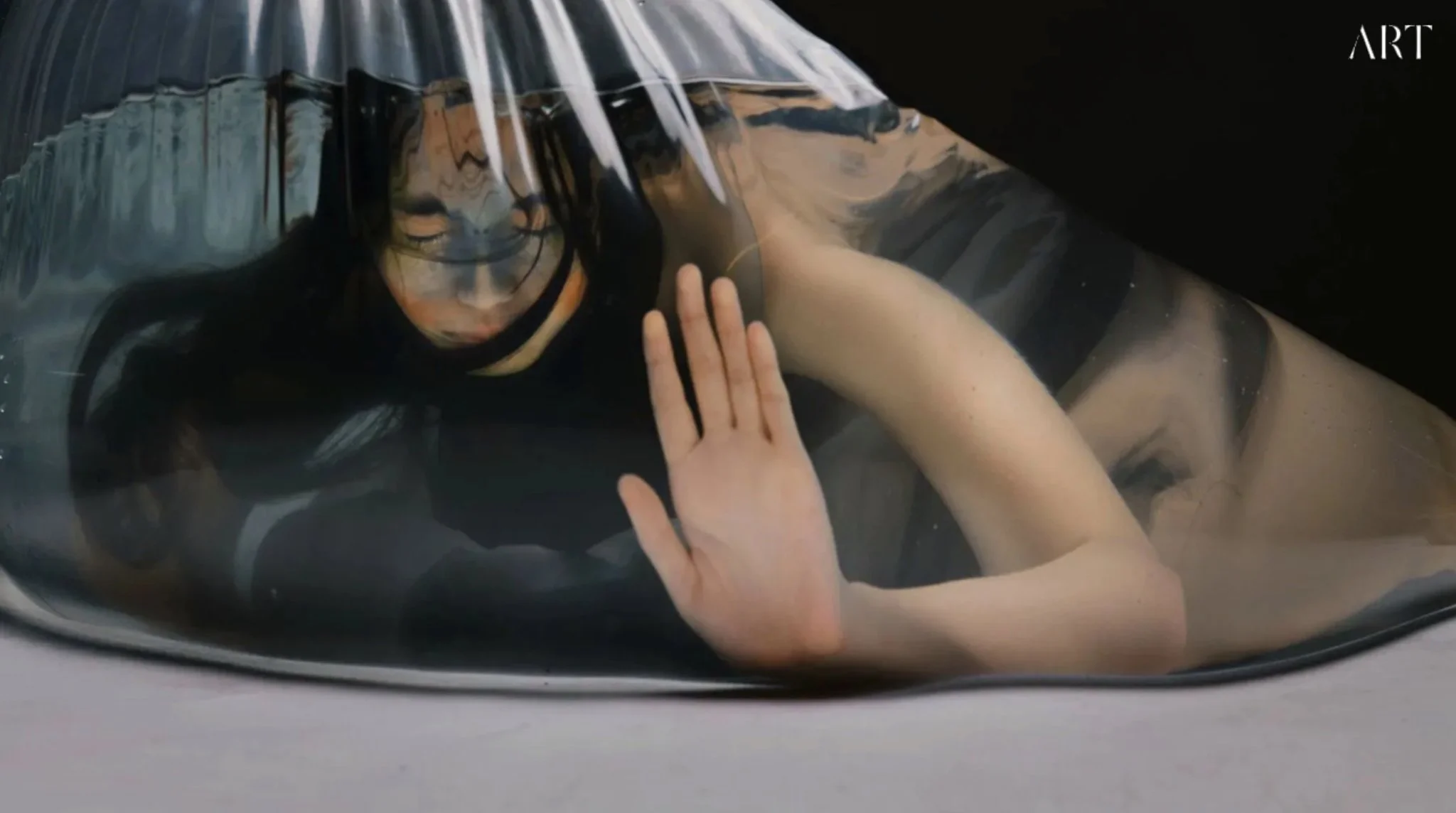
Photography by Zhong Lin
THE CLOCK STARTS NOW
Zhong Lin is a Malaysian Chinese photographer whose work moves fluidly between conceptual fashion, portraiture, and still life — a range that speaks less to restlessness than to a particular quality of attention. She looks at things slowly. She waits. Her images do not announce themselves; they accumulate, gathering meaning in the spaces between elements rather than in the elements themselves. Hers is a practice built on subtraction — on the radical act of asking, again and again, what the image can do without.
Project 365 began in April 2020. The world was in the early weeks of a stillness it had not chosen, and Zhong Lin found herself in Taiwan, far from the studios and teams and productions that had structured her professional life. The editorials she had been commissioned for were postponed or cancelled. The collaborative machinery of fashion photography — with its stylists and models and art directors and carefully scouted locations — had gone silent. What remained was the photographer alone with what photography had always, at its origin, been: a single person, a single frame, a decision about what matters.
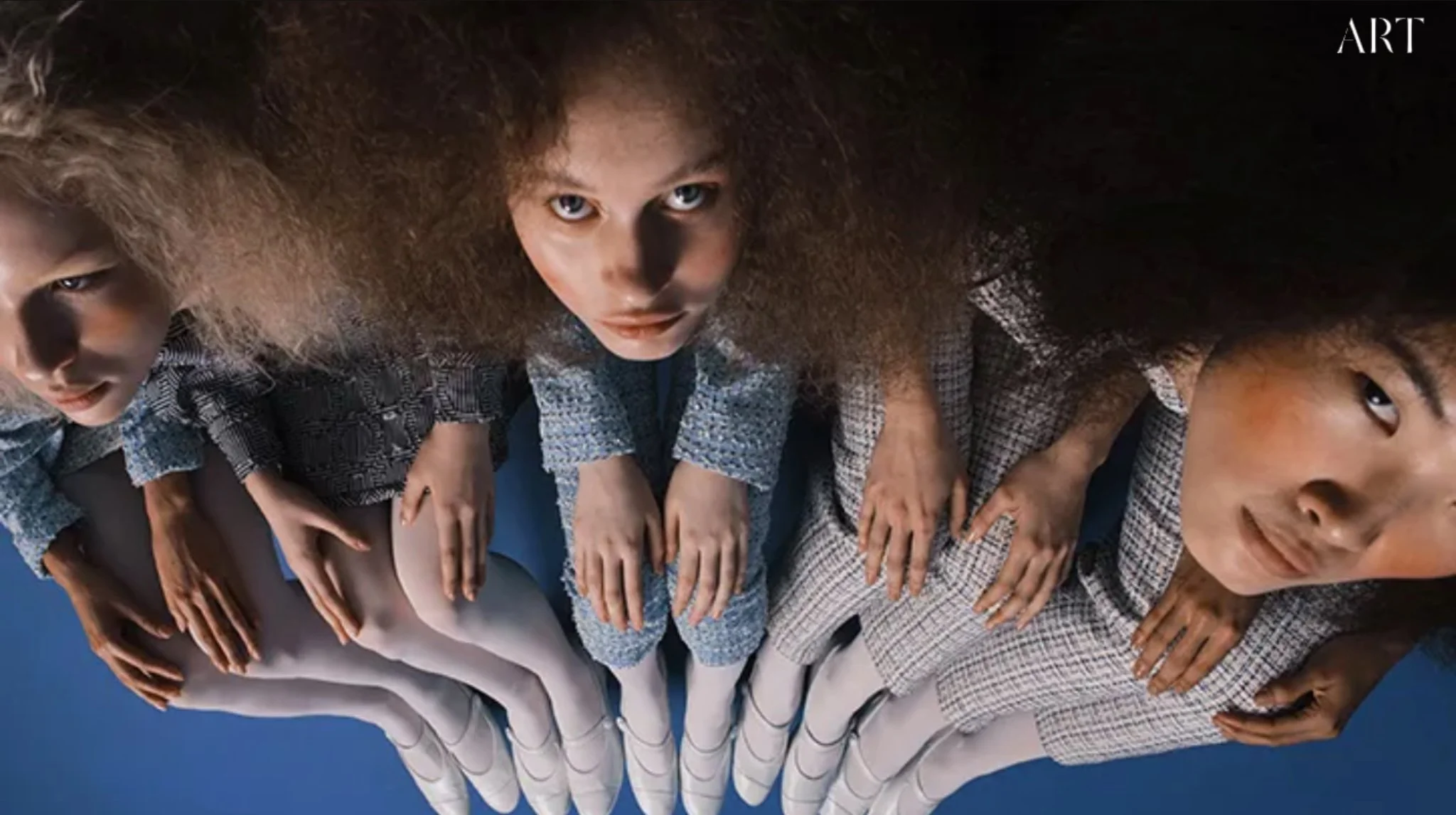
Photography by Zhong Lin
She set the rule herself, which matters. The 24-hour limit was not imposed from outside but chosen from within — an act of self-governance that carries its own significance. To choose a constraint is to refuse the paralysis of infinite possibility. It is to say: I will work within this, and what emerges from within this will be mine in a way that nothing assembled under more comfortable conditions could be.
“To choose a constraint is to refuse the paralysis of infinite possibility. What emerges from within it will be yours in a way nothing assembled under more comfortable conditions could ever be.”
— Oona Chanel
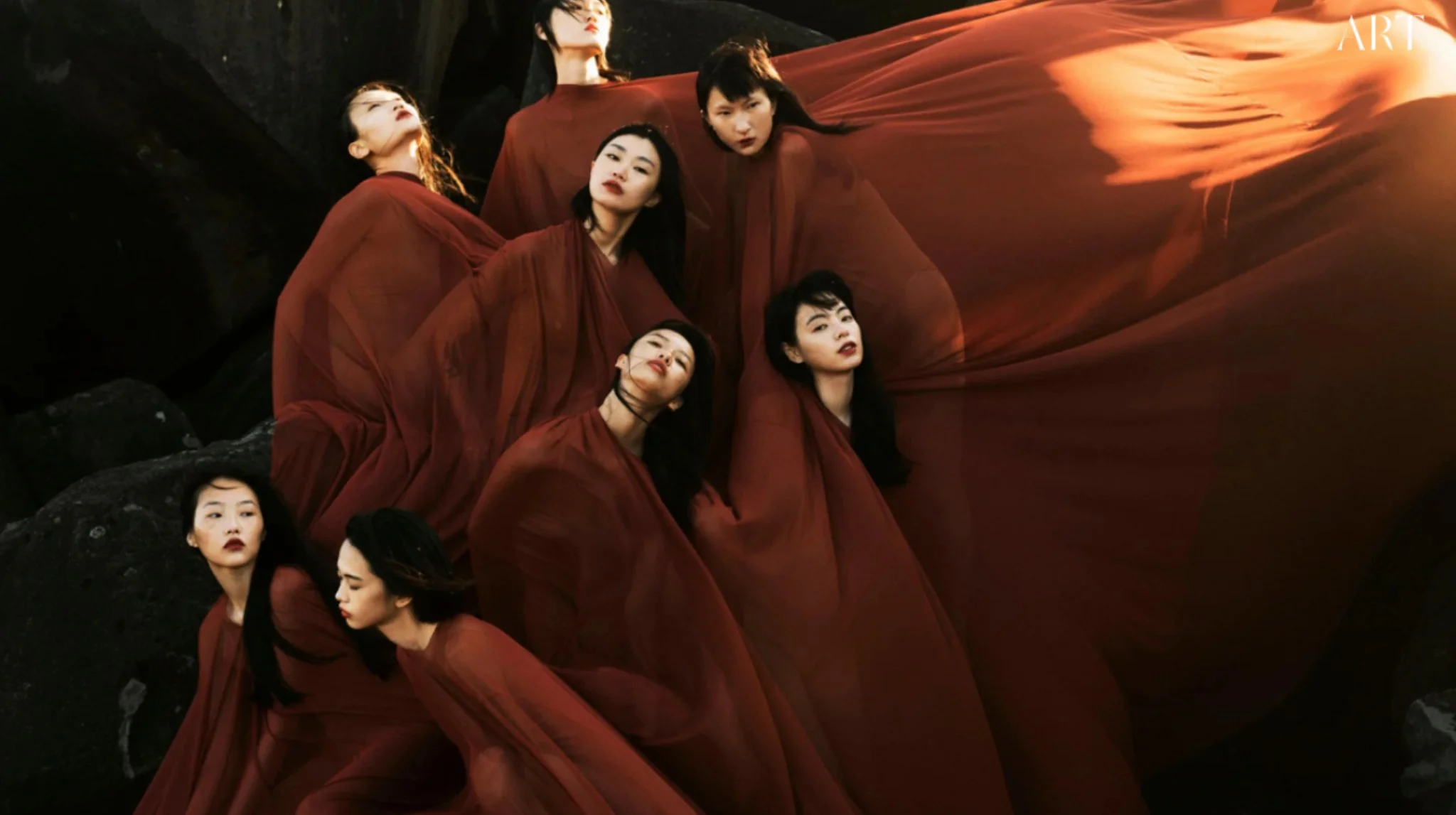
Photography by Zhong Lin
THE GRAMMAR OF CONSTRAINT
There is a particular kind of creative freedom that does not announce itself. It arrives quietly, after the ego has exhausted its objections, after the internal critic has run out of things to say. Somewhere around the fortieth day of Project 365 — by Zhong Lin’s own reckoning — something shifted. The daily question of what to make stopped feeling like a demand and began feeling like an invitation. The constraint had become, against all expectation, a kind of home.
This is not an unusual arc for artists who commit to sustained practice. What is unusual is the precision with which Project 365 documents it. Because the work was made daily and in sequence, the evolution is visible in a way that a conventional portfolio — curated, edited, arranged for effect — could never be. You can watch the eye calibrate. You can see the instincts form. You can trace the exact moment when Zhong Lin stopped making images and started speaking in them.
What the 24-hour rule dismantled, above all else, was the comfortable fiction that the best work requires the best conditions. It does not. The best work requires the most honest conditions — conditions in which there is no time to perform, no room to substitute intention for execution, no possibility of waiting until the idea is good enough to be worth the effort. Every day was the only day. Every image had to justify its existence in the present tense.
Across a year of working predominantly within the quiet geometries of Taiwanese domestic interiors and the stripped-back stillness of its landscapes, Zhong Lin built what I would describe as a visual grammar: a set of recurring decisions — about light, about distance, about the relationship between figure and ground — that accumulated into something unmistakably hers. Shadows that pool with intent. Skin rendered as a surface for illumination rather than a subject for display. Objects divorced from their utility until they become pure presence. None of this was planned. All of it was found.
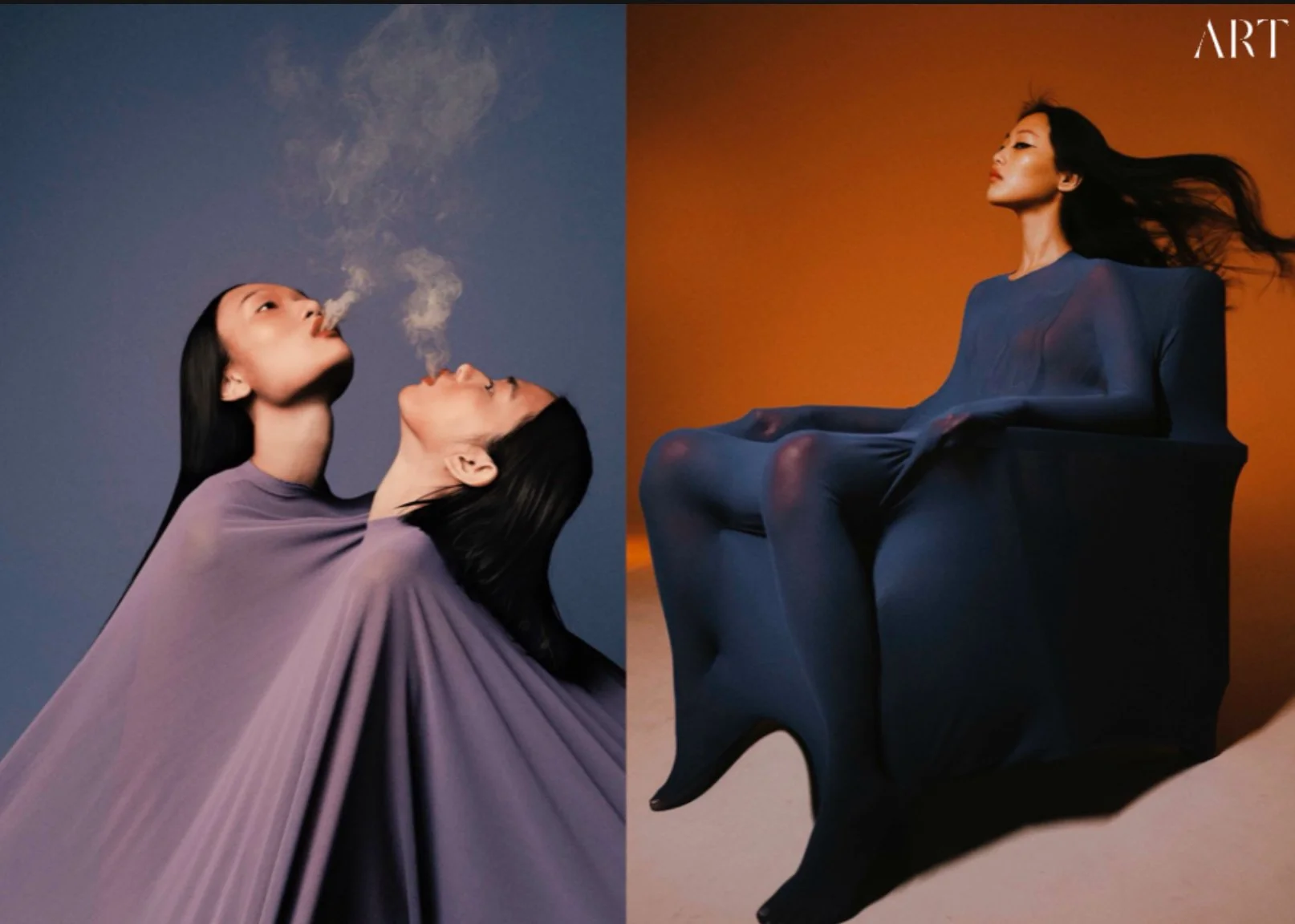
Photography by Zhong Lin
PORTRAIT OF THE PHOTOGRAPHER AT WORK
To speak of Zhong Lin’s practice is to speak of patience as a form of precision. She does not force a frame. She waits for the moment when the image becomes inevitable — when the elements in front of her have arranged themselves into the only composition that makes sense. This is rarer than it sounds. Most photographers, under pressure, reach. She holds.
Her portraiture is, in this regard, revelatory. Where other photographers construct mood through accumulation — more light, more texture, more deliberate artifice — she arrives at it through removal. A session with Zhong Lin is, by most accounts, a quietly intense experience: minimal direction, long silences, and then a sudden, almost imperceptible shift in her posture that signals she has found what she came for. The subject rarely knows the decisive moment has passed. The image always does.
Her still life work operates on similar principles, though the negotiation is different. Objects cannot be directed; they can only be placed and then waited upon. Zhong Lin’s still lifes are remarkable for what they withhold. A vessel. A length of fabric. A piece of fruit at the exact moment before it tips from ripe to past. These are not beautiful arrangements. They are philosophical propositions — quiet arguments about time, about impermanence, about the way ordinary things become extraordinary the moment we decide to really look.
It is this quality of looking — sustained, deliberate, unafraid of silence — that Project 365 both tested and deepened. Three hundred and sixty-five consecutive days forced her to look when she did not feel like looking, to find when she was not sure there was anything to find. That she succeeded, day after day, is not a testament to talent alone. It is a testament to a kind of creative character: the willingness to show up without guarantee.
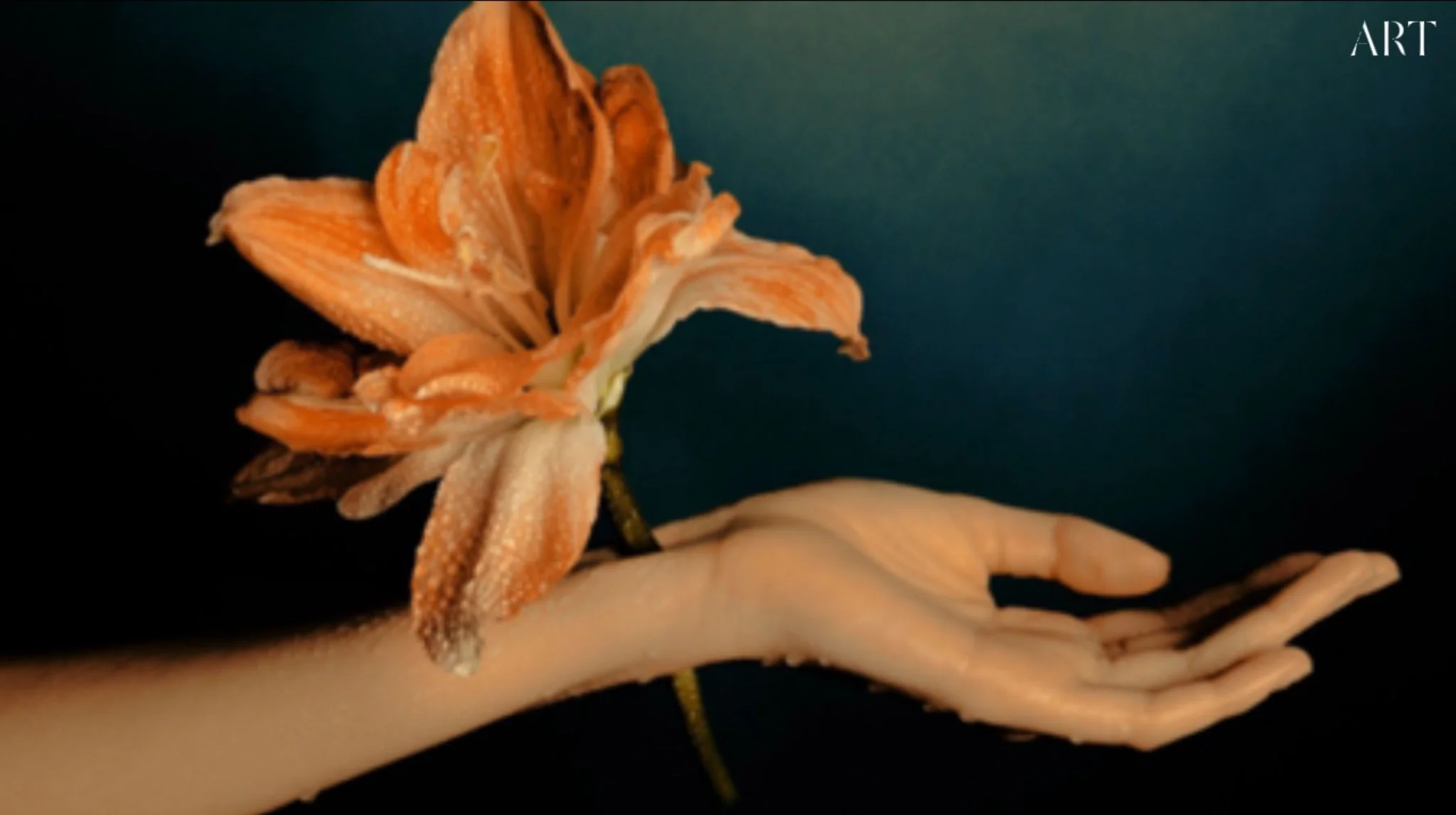
Photography by Zhong Lin
“She does not force a frame. She waits for the moment when the image becomes inevitable — when the elements have arranged themselves into the only composition that makes sense.”
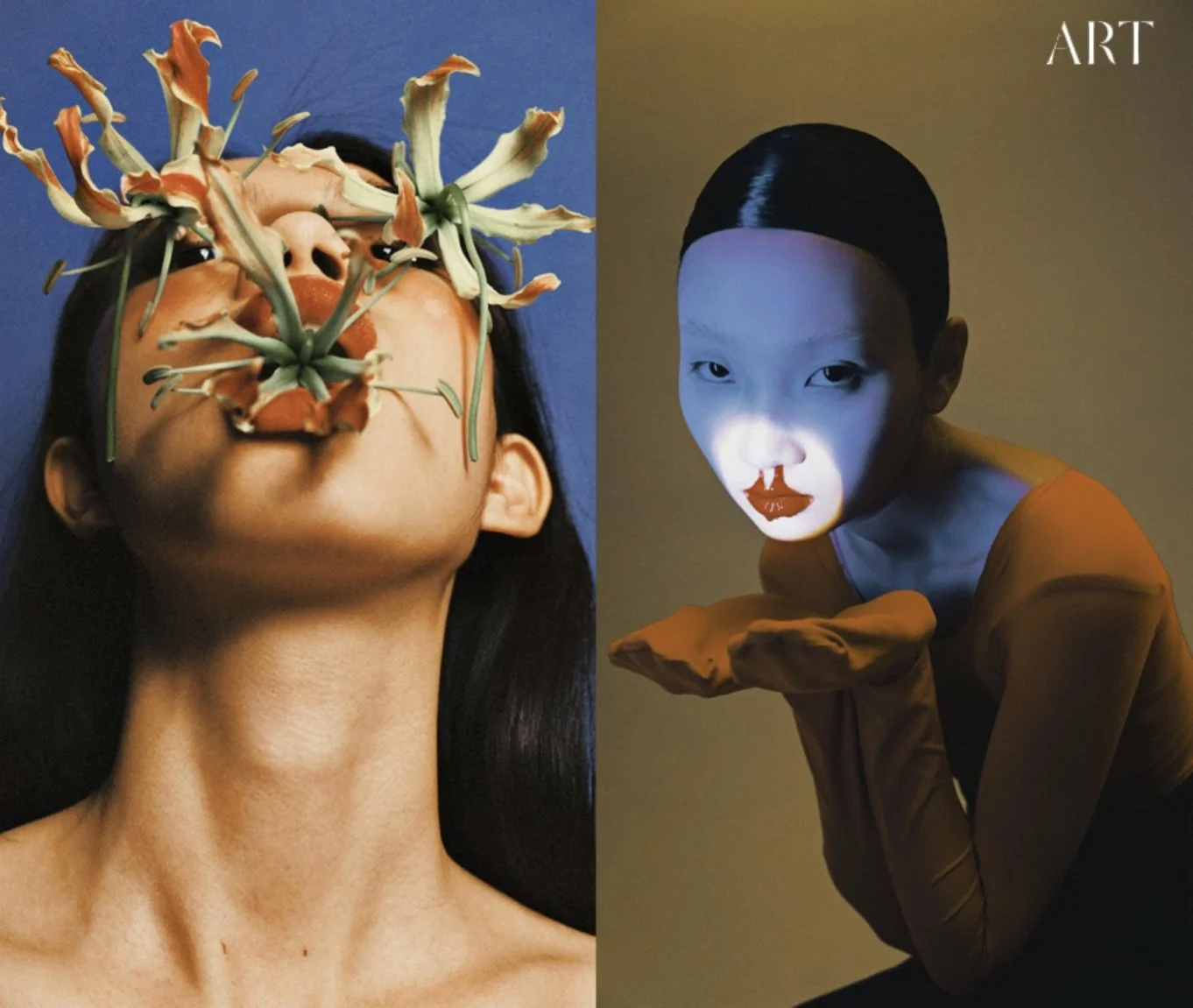
Photography by Zhong Lin
INSIDE THE TWENTY-FOUR HOURS
I want to be specific about what a 24-hour creative cycle actually demands, because the romance of the constraint tends to obscure its difficulty. It is not a soft deadline. It is an absolute one — and the distinction is everything. A soft deadline can be renegotiated. It can be extended by one day, then another, until the urgency that was supposed to generate the work has dissipated entirely and the work, somehow, still has not been made. An absolute deadline cannot be renegotiated. It simply arrives, and then it passes, and either the image exists or it does not.
For Zhong Lin, the daily cycle began with a question that could not be postponed: what is today’s image? On certain days the answer was immediate — a quality of light she had noticed on waking, a composition she had been turning over in her mind since the previous evening, an instinct so clear it felt less like an idea than a discovery already made. On other days — the ones that make this project worth studying — there was nothing. The afternoon arrived heavy and indistinct. The setups failed. The compositions dissolved before they coalesced. The light went wrong, or right, and it did not matter either way.
And then, in the hours before the deadline, something gave. Not always something large. Not always something that announced itself as significant. But something: a shadow that fell differently than it had an hour before, a gesture caught without being directed, a framing that asked a question the photographer had not thought to ask. The day’s image existed. The constraint had done what extended freedom so rarely does: it had forced a decision, and in forcing the decision, it had forced the work.
It is worth noting — because it surprises people, and it should not — that many of the most compelling images in the series emerged from precisely these resistant days. Not the days when everything aligned, but the days when nothing would, until it did. Pressure is not the enemy of art. Unchallenged comfort is.
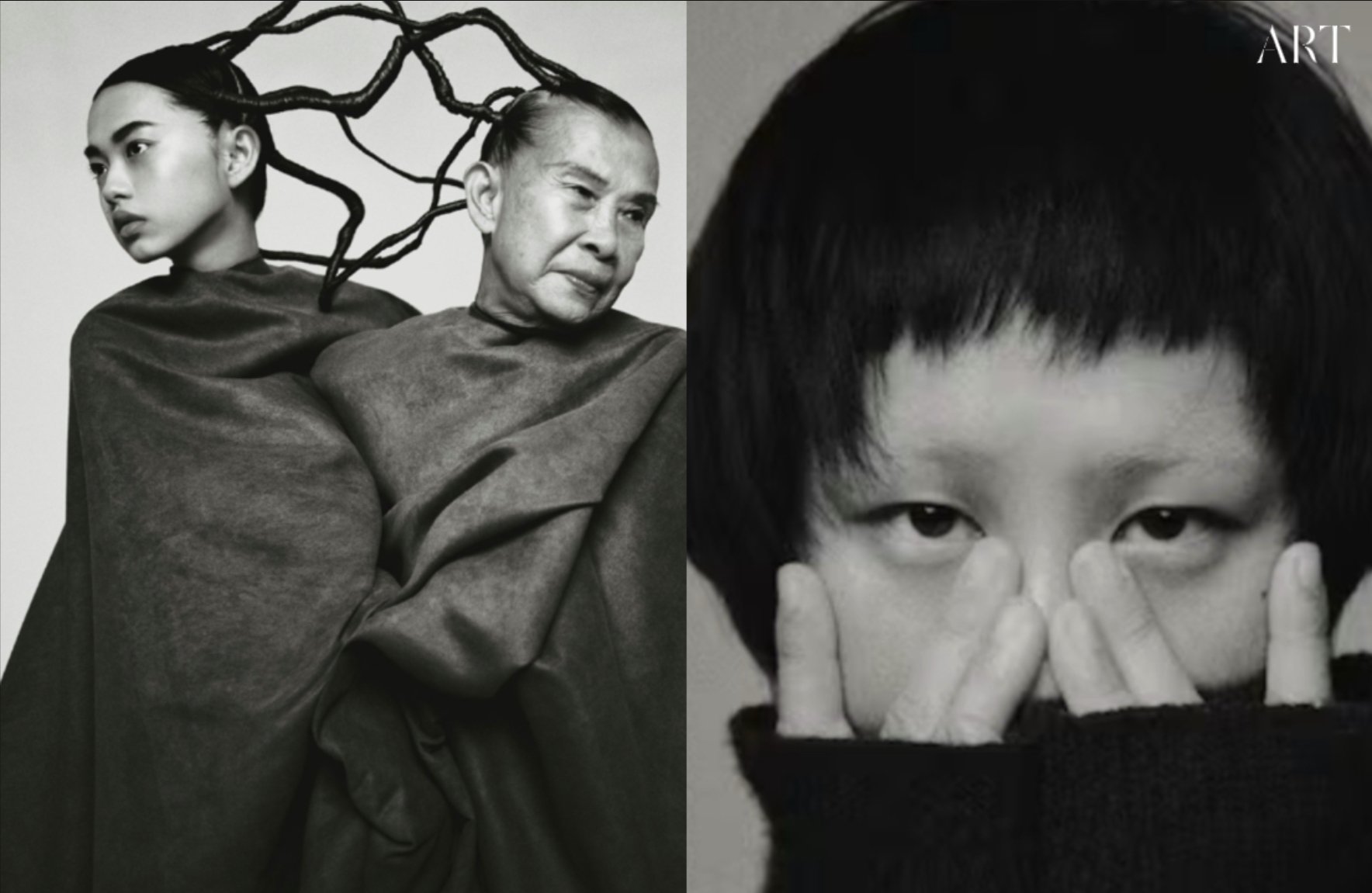
Photography by Zhong Lin
WHAT A YEAR ACTUALLY CHANGES
There is a version of this story that reaches for transformation — the photographer who began Project 365 as one artist and completed it as another, the year that broke everything open and rebuilt it more beautifully. That version is tidier than the truth, and less interesting. What actually changed in Zhong Lin across 365 days of consecutive image-making is more subtle, more structural, and more durable than a dramatic reinvention.
What changed was the relationship between what she intends and what she knows. In the early weeks of any demanding creative practice, intention leads. The artist arrives at a decision consciously: I will make this kind of image, in this kind of light, with this quality of mood. Over time, as the practice deepens and the hand and eye grow calibrated to each other, something more interesting begins to happen. The decision precedes its own articulation. The photographer moves toward certain light before she has named why. The frame resolves itself in a particular way because some deeper part of the visual intelligence has already determined what it wants. Intention has not disappeared — it has simply gone underground, where it does its best work.
By the final months of Project 365, Zhong Lin was not making photographs within a constraint. She was making photographs from within a creative system she had spent a year constructing without knowing she was constructing it. The 24-hour rule had done its quiet work: it had stripped away the elaborate scaffolding of deliberate decision-making and left behind something more valuable — an instinct refined to the point of fluency. A visual language that no longer required translation.
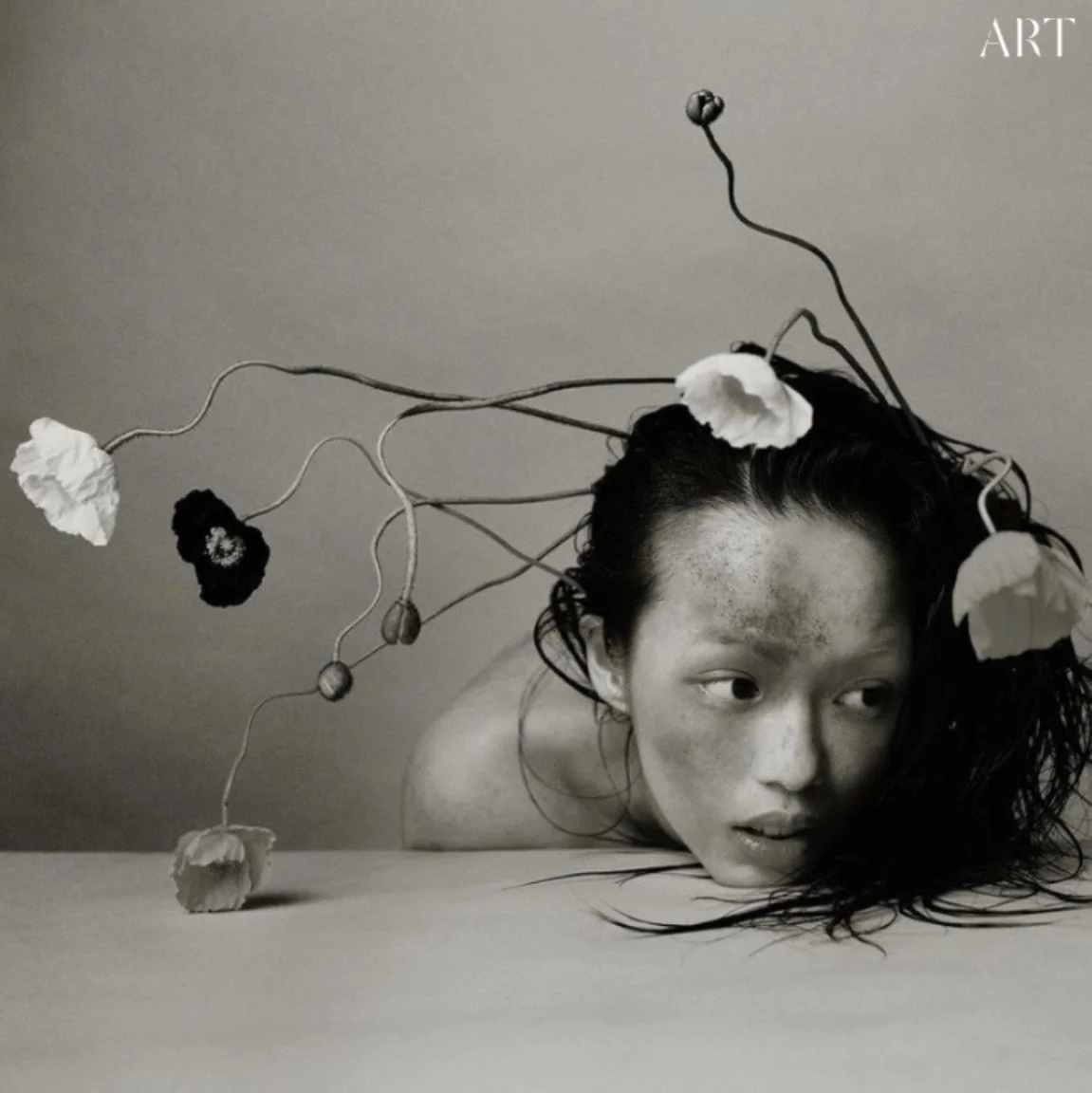
Photography by Zhong Lin
THE ARGUMENT FOR CONSISTENCY
We have constructed, in contemporary creative culture, an elaborate mythology around the singular breakthrough — the image, the series, the project that changes everything. This mythology serves criticism well. It gives us clean narratives, decisive turning points, moments of rupture we can point to and say: here, this is where it shifted. What it does not serve is the actual practice of making, which is not structured around ruptures but around returns. The return to the studio. The return to the camera. The return, each morning, to the fundamental question: what will I make today?
Project 365 is, among other things, a rigorous argument against the mythology of the breakthrough. Its power is cumulative, not explosive. No single image in the series would justify, on its own, the attention the project commands. The series earns that attention through its totality — through the sheer, undeviating fact of 365 images made in 365 days without exception, without postponement, without the relief of a pause. This is not a small thing. It is, in many ways, the largest thing a photographer can do: to show up, daily, and to make.
For those of us who think seriously about photography — who study it, teach it, build institutions around it — Project 365 offers a model that is both practical and philosophical. Practically, it demonstrates that the capacity for sustained creative production is not a gift distributed unevenly at birth but a discipline developed through repeated exercise. Philosophically, it proposes that the most honest self-portrait an artist can make is not a single image but a practice — the accumulated record of every day they chose to make something rather than wait for the conditions to become more favourable.
Zhong Lin chose to make something. Three hundred and sixty-five times, without exception, she chose to make something. The work that resulted is not simply a year of photographs. It is a portrait of what creative discipline looks like from the inside — its resistance and its reward, its difficulty and its strange, hard-won grace.
By Oona Chanel
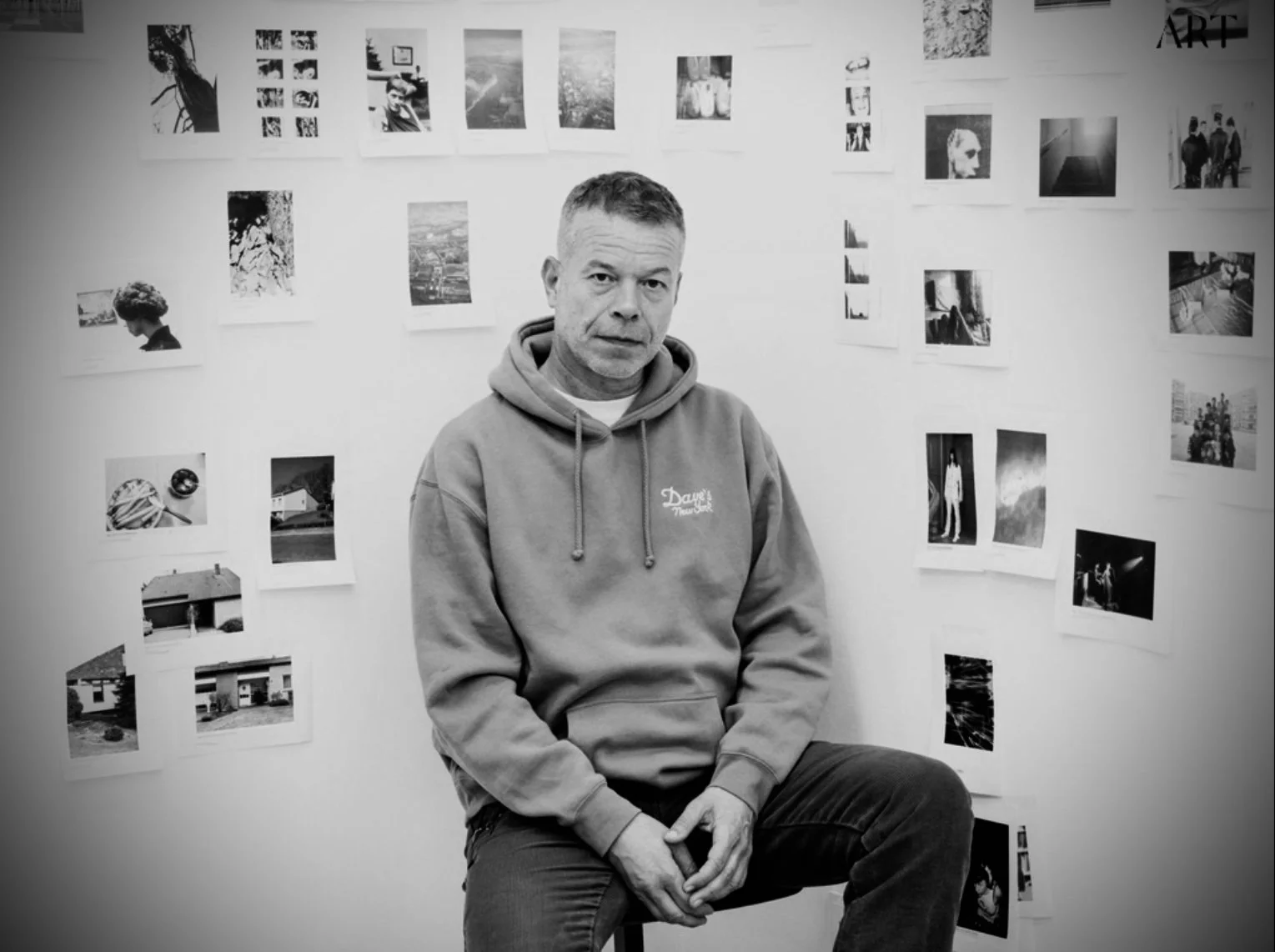
Wolfgang Tillmans: What Photography Looks Like When It Believes in Something
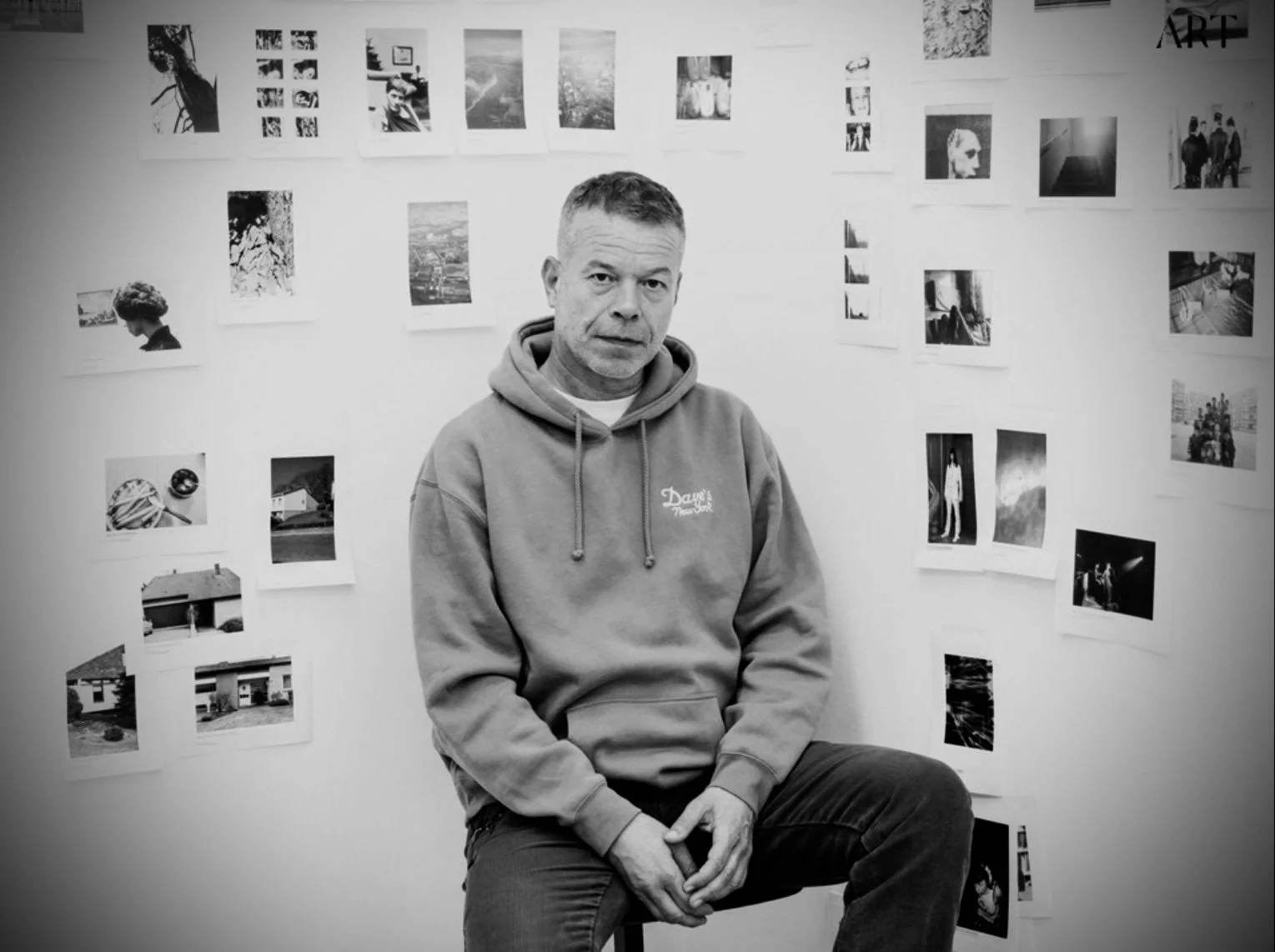
Wolfgang Tillmans
He has photographed everything. Friends. Strangers. Galaxies. Fabric. The specific light of a specific Tuesday. And always with the same underlying conviction: that to look carefully is a political act.
Wolfgang Tillmans does not believe that art should make you feel comfortable. This is not a position he has arrived at recently, or one he wears lightly. It is the fundamental premise of a practice that has, over thirty-five years and an output so voluminous it resists any single characterization, maintained an almost stubborn consistency: the photograph is a statement about what deserves attention, and what deserves attention is everything.
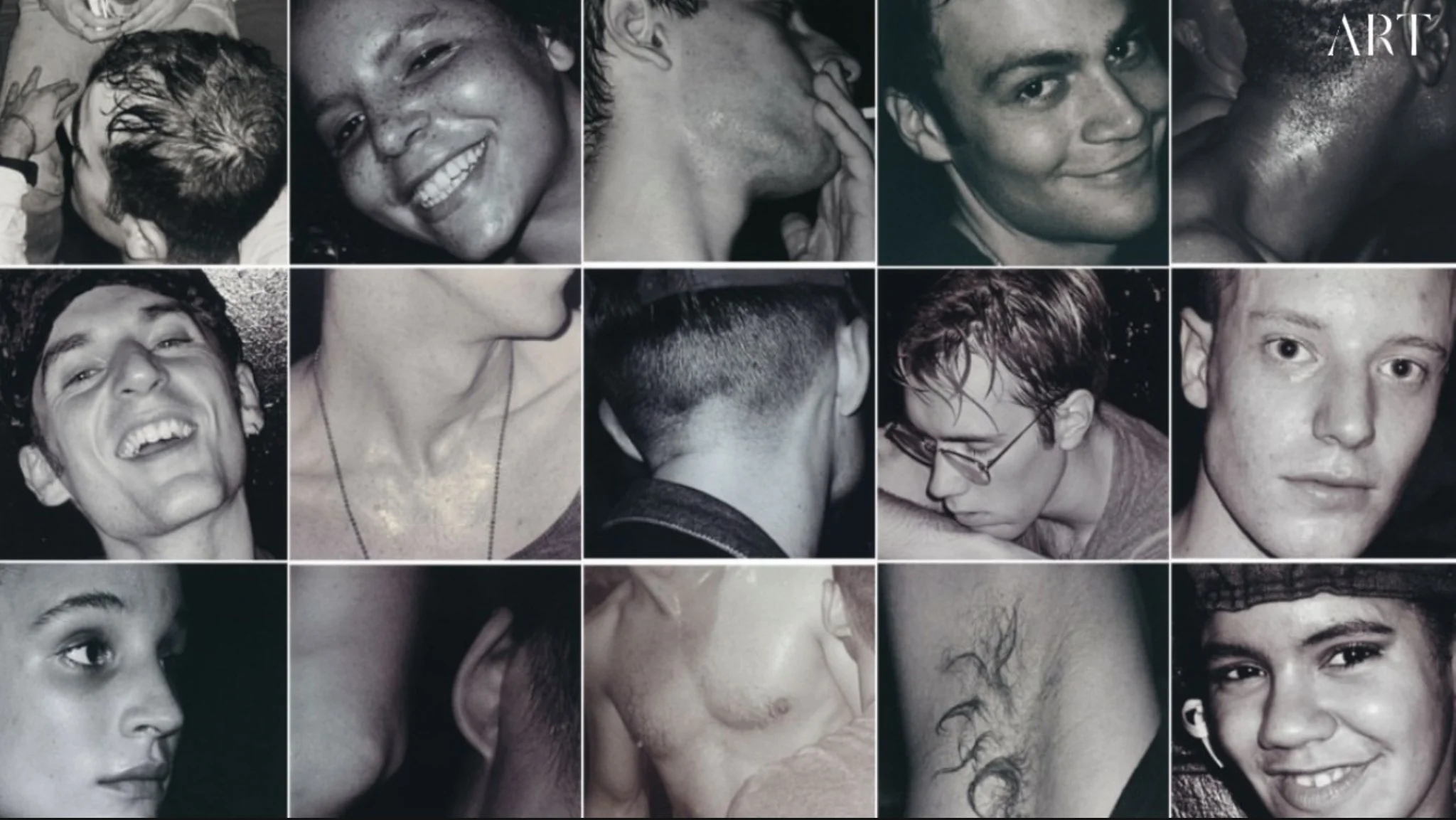
Chemistry square , 1992
We met at his Berlin studio in a week when the world had, again, given him material he would rather not have. He does not separate his practice from politics—never has, in a career that began on the dance floors of 1980s London and has proceeded through queer activism, ecological terror, the rise of authoritarianism in Europe, and the specific intimacy of friends, bodies, and ordinary objects photographed over decades. He says, when I ask him how he sustains the attention the work requires: '“I’m angrier now than I was at thirty. I think that helps.”
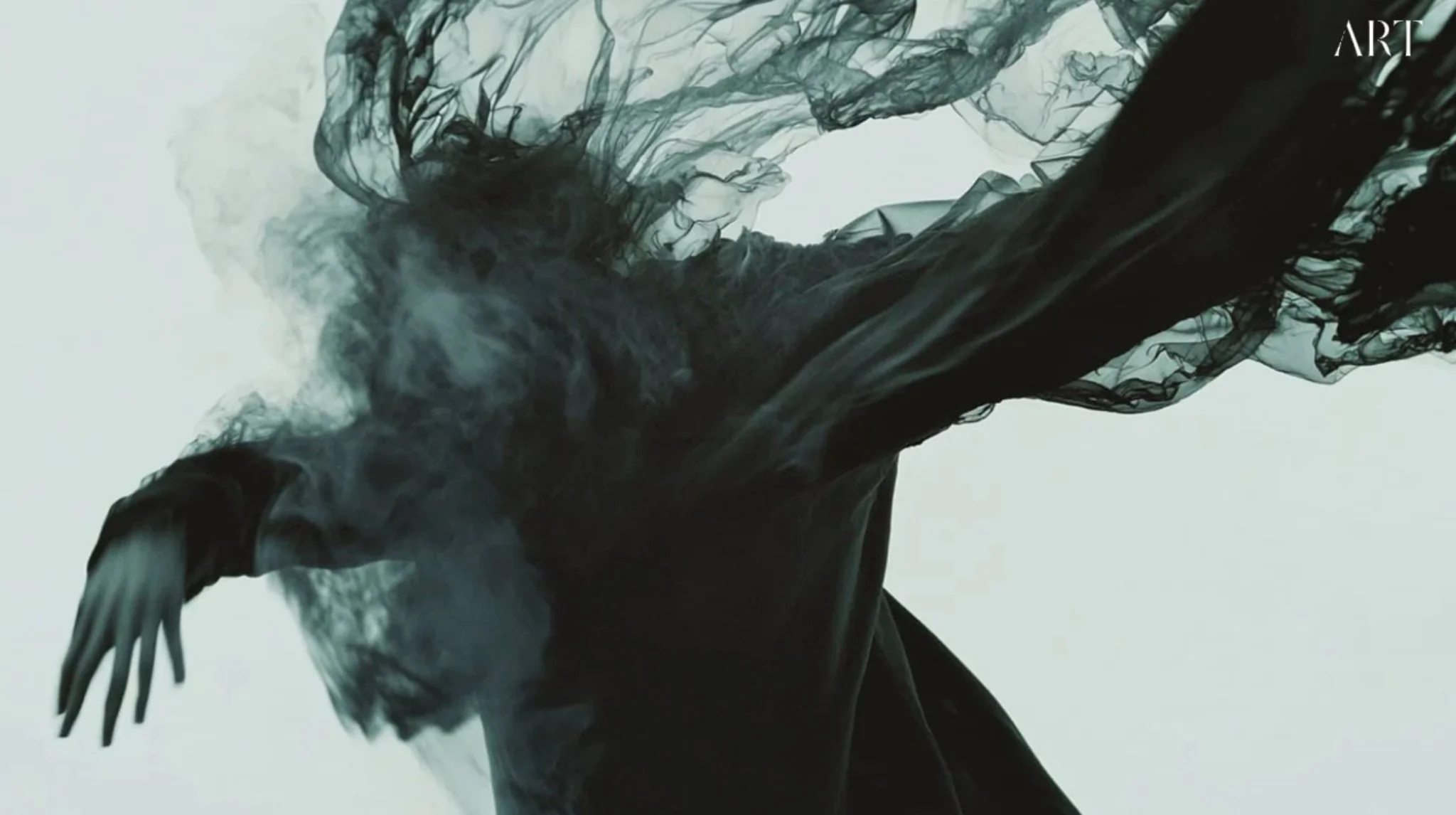
AVANT-GARDE Abstract
The studio is enormous and full of prints in various stages of preparation for shows, books, and the archive that is, at this point, one of the most significant in contemporary photography. The prints are not displayed in the conventional sense—they are arranged, grouped, rehung, rethought. A Tillmans installation is never fixed: the same images appear in different sizes, different positions, different conversations with each other. This is, he says, entirely intentional.
“A photograph doesn’t have a correct size. It has the size that allows you to see what it needs you to see. I’ve printed the same image at ten centimeters and at three meters, and each time it was right for different reasons, in different contexts. The idea that a photograph has a natural scale is a commercial construct. It has nothing to do with the image.”
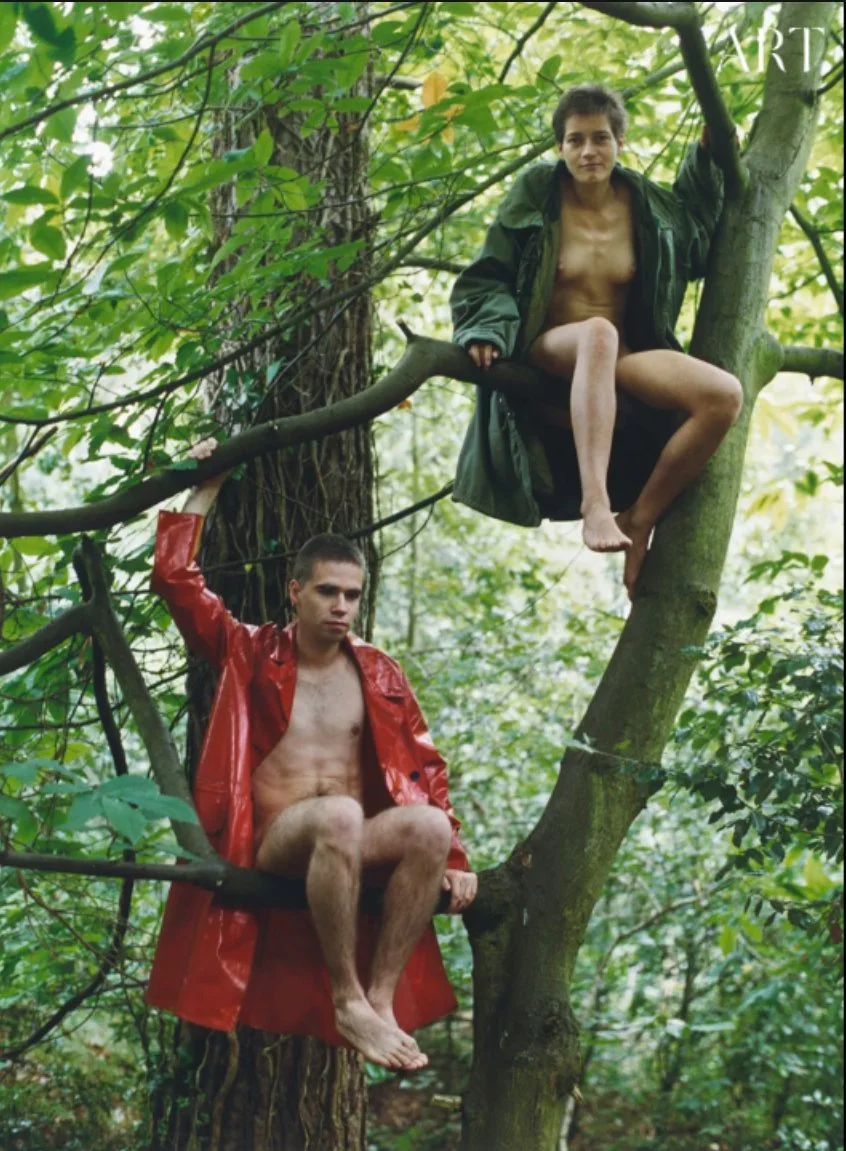
The photographer talks about his first MOMA retrospective and how his prescient art flows from the act of paying
The image, for Tillmans, always comes first—and always comes from looking. His practice is resolutely analog in its origins: he carries a camera, he sees things, he makes photographs. The sophistication of the thinking that surrounds the images—the installation logic, the political consciousness, the art-historical awareness—does not arrive before the picture. It arrives because of it.
His fashion work—the images he made for i-D, for various campaigns, for his own sustained engagement with clothing as a language—operates on the same principle as his documentary work and his abstract investigations: the subject is a pretext for attention. The supermodel and the window sill and the galaxy photographed through a telescope are all, for Tillmans, equivalent instances of the fundamental question: what does this look like, and what does it mean that it looks like this?
This sounds like it might produce cold, conceptual photographs. It produces the opposite: images that feel, consistently and sometimes overwhelmingly, like they were made by someone who wanted you to look the way they were looking. The desire in the photograph—to share an experience of seeing—is palpable in almost every print.
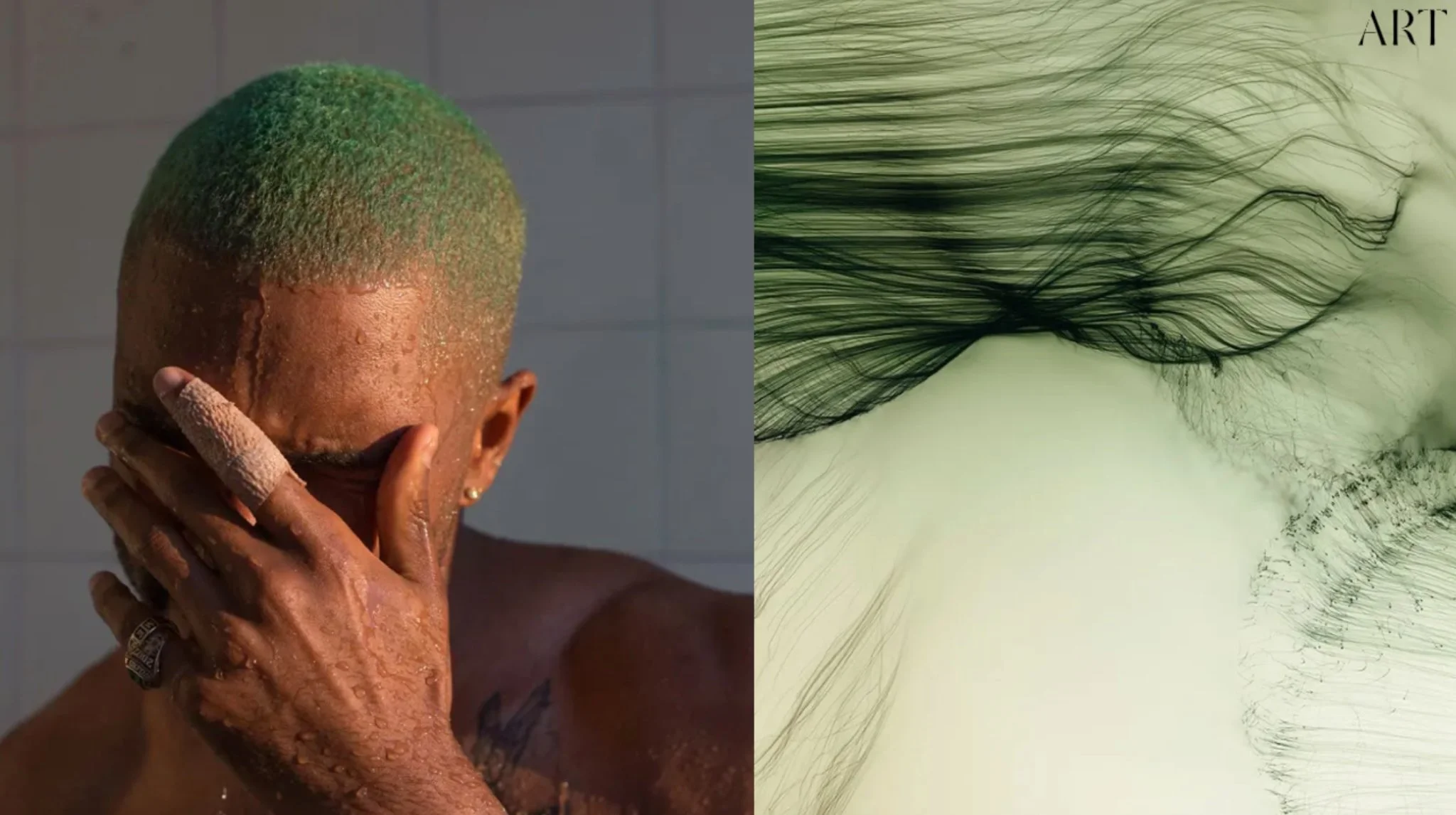
‘Frank Ocean’, Rebuilding the Future, 2018, IMMA.
Freischwimmer 20
The political work has intensified in recent years. His public project Truth Study Center—which he has operated as both an installation and a public intervention—grew from his sense that the relationship between images and truth had entered a crisis that the art world could not simply observe from a safe distance. He has been, unambiguously and at some professional cost, one of the most outspoken critics of Brexit and the normalization of nationalist politics in Europe. He uses his platform—and he has a significant one—without calculation.
“I have never understood the idea that artists should not be political,“he says. “ The word ‘political’ is used to mean ‘inconveniently engaged with the actual conditions of existence.’ I don’t know how to make work that is not engaged with those conditions. I don’t know how to be a person who is not.”
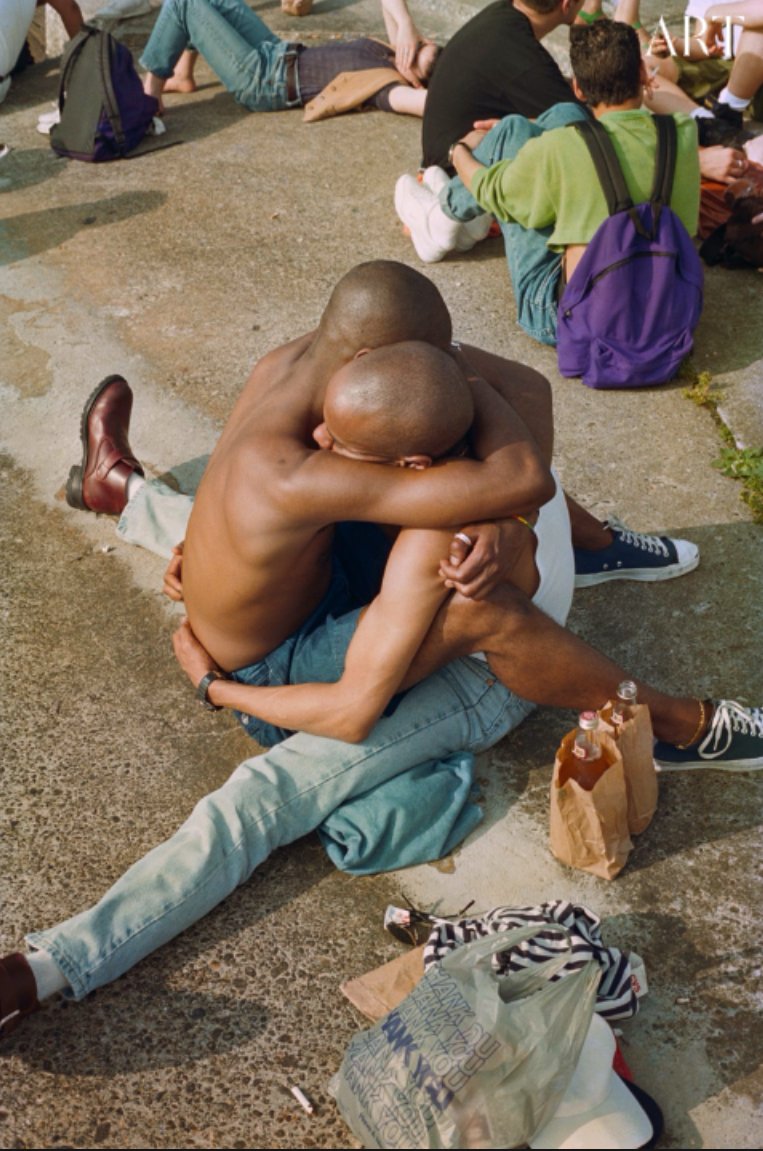
Christopher Street Pier Summer; 1995
We spend time with a new series he is hesitant to describe but shows generously: images of cloud formations photographed over eighteen months, which he prints at very large scale. They are beautiful in a way that is, for Tillmans, unusual—uncomplicated by human presence or social context, pure observation. He watches me look at them for a while.“I needed to spend time with something that was not made by human decision,” he says. “The clouds don’t know about any of it. That was useful.” He pauses. Looks at the prints. Then: “Also, they are formally extraordinary. The lightphysics are insane. I cannot stop."
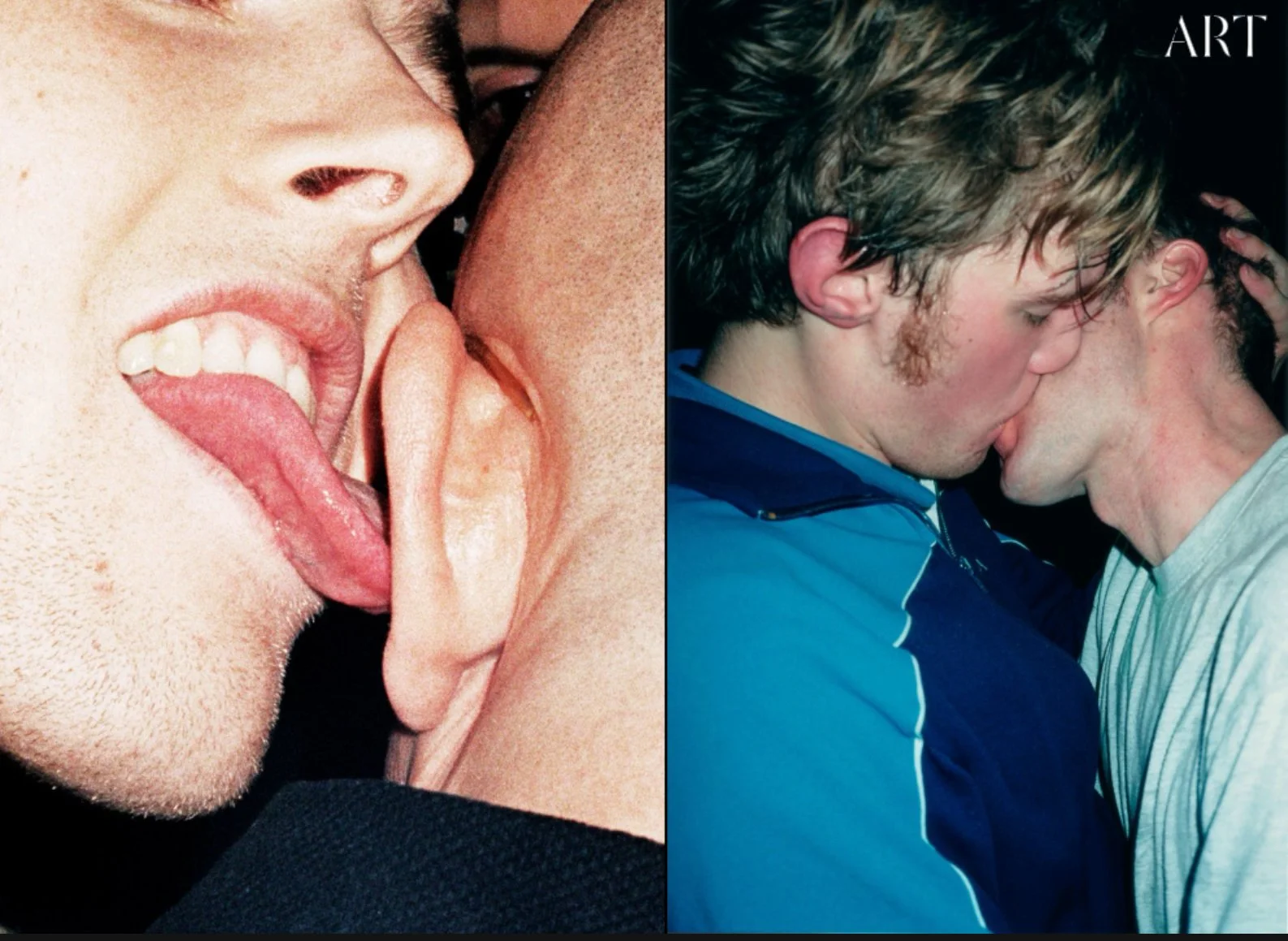
Tongues and ears , 2001
The cock (kiss), 2002
This—the coexistence of the philosophical and the purely sensory, the political conviction and the uncontrollable delight in what the eye finds—is the thing that makes Tillmans irreducible to any category. He is too serious to be merely aesthetic, too aesthetic to be merely serious. He is, simply, someone for whom the act of looking has never once lost itsurgency.
by Oona Chanel
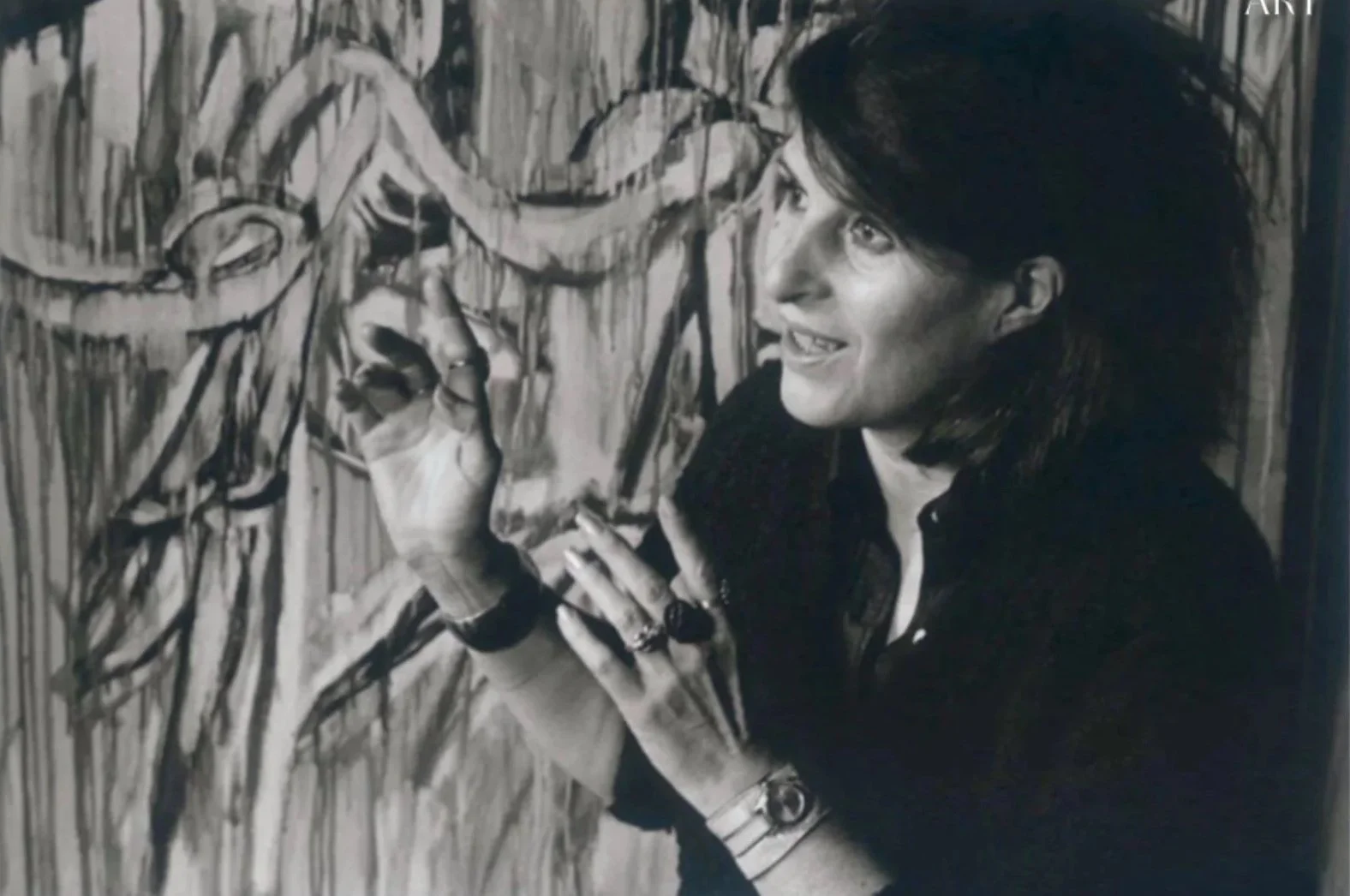
Ida Barbarigo’s Unstable Bodies
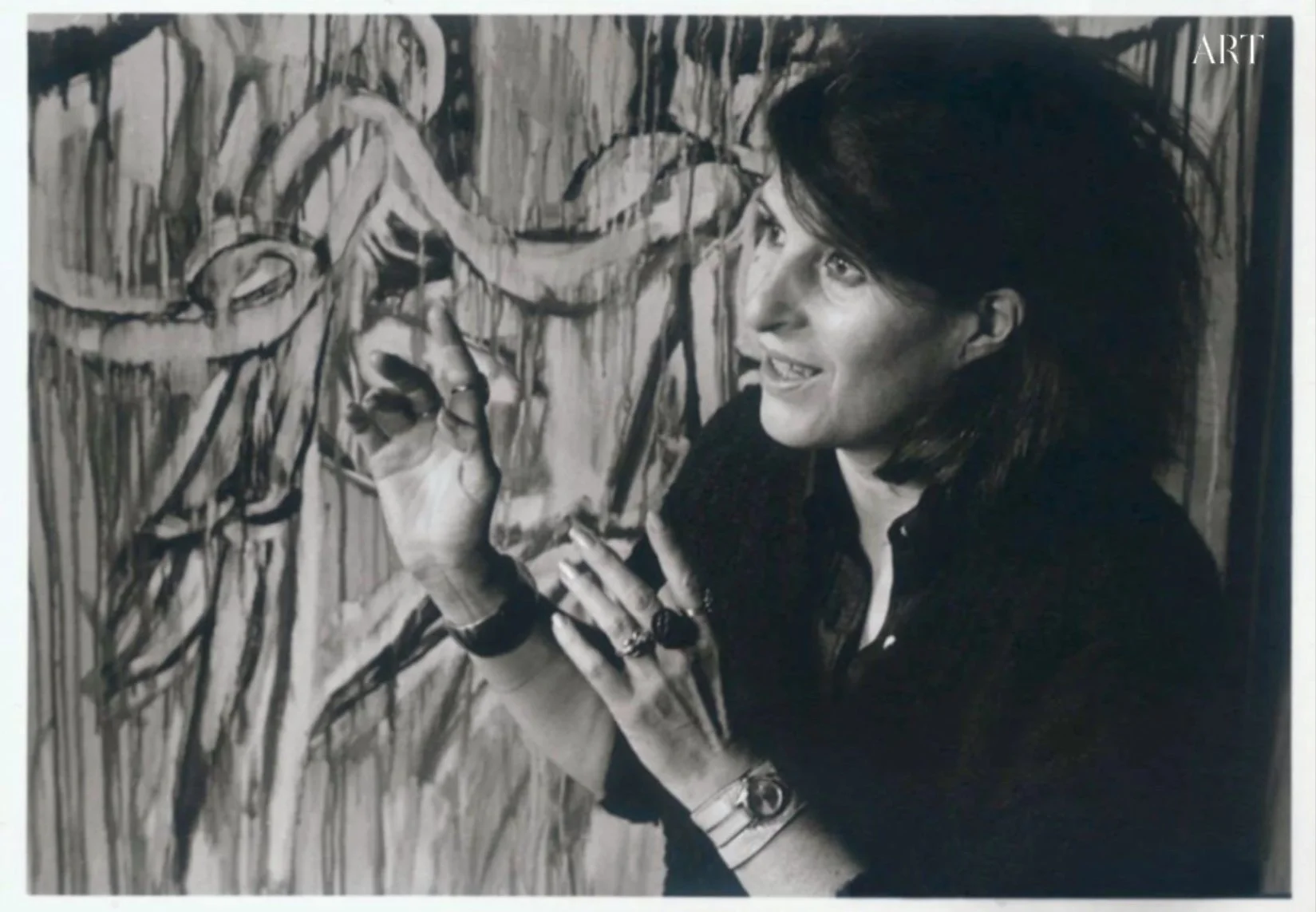
Ida Barbarigo: Beyond the Figure is on view at Richard Saltoun Gallery, Rome, through 17 May 2026.
There is a familiar temptation in writing about neglected twentieth-century painters, particularly women, to overcompensate with reverence. Beyond the Figure at Richard Saltoun Gallery gives Ida Barbarigo better service than that. It allows the work to be judged at full strength, which is precisely where it becomes interesting.
Barbarigo is not important merely because she was overlooked. She is important because, at her best, she understood something exacting about the figure: that it is not a stable form but a disturbance in paint.
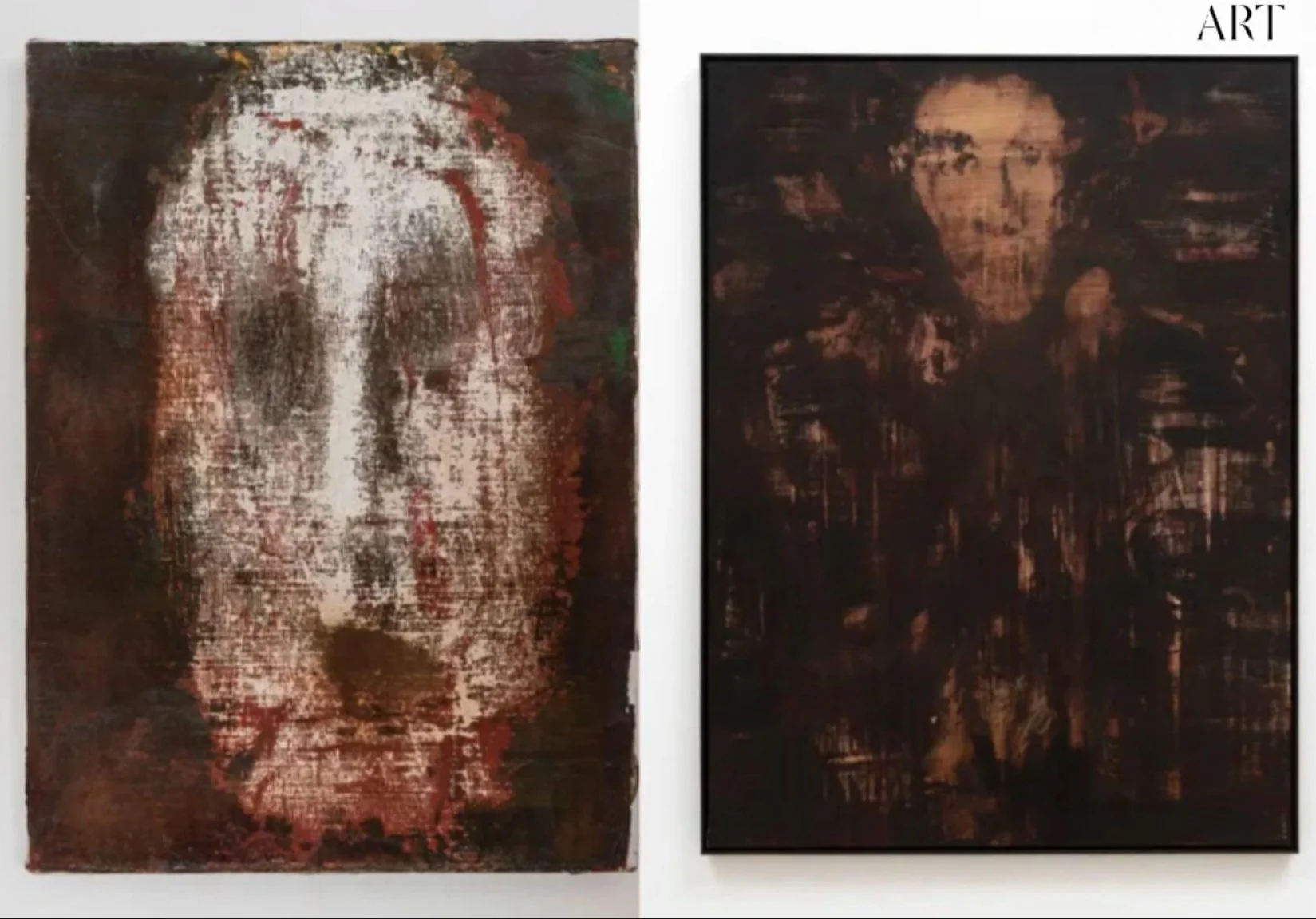
Image above : Senza titolo (Il Volto), [Untitled (The Face)], 1996
Image below: Untitled (Self-portrait), 1993
The exhibition, focused on works from the 1970s through the early 1990s, makes clear that Barbarigo’s return to figuration was never a retreat into recognizability. If anything, the figure in these paintings is subjected to more pressure than before. It is dragged forward, partially assembled, then pushed back again into atmosphere, ground, residue. One does not encounter bodies here as secure images. One encounters them as problems.
That is the show’s central achievement.
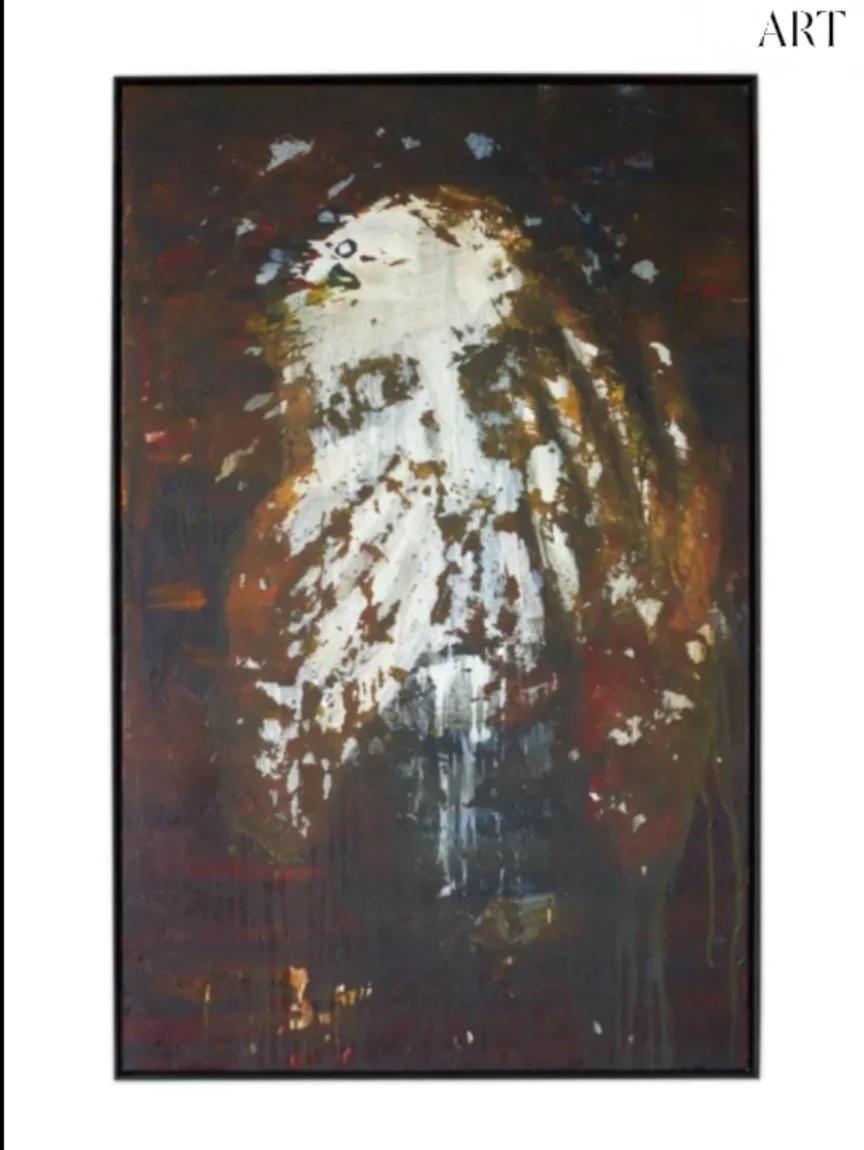
Ida Barbarigo, Senza titolo (Il Volto) [Untitled (The Face)], 1990
Barbarigo does not build form through drawing in any classical sense, though the discipline of Italian painting remains deep in the work. She builds by attrition. White is dragged over brown, grey, black; heads surface through scraped and rubbed pigment; contours threaten to appear, then fail to close. The result is neither fully figurative nor usefully described as expressionist. The word one keeps returning to is provisional. Her figures are provisional presences, held together only as long as the painting can sustain the tension.
This is why the strongest works in the exhibition are so unsettling. They do not depict psychic unrest; they are structurally organized by it.
In the mythological paintings especially, Barbarigo proves herself far more severe than the titles might initially suggest. Sfingi, Demoni, Saturni, Dionisi: these are not symbolic embellishments, nor do they belong to that tired modern habit of borrowing myth to lend ordinary painting an air of gravitas. Barbarigo uses myth as a way of stripping the figure of anecdote. The subject is no longer a person in any social sense, but a body condensed into type, pressure, fear, appetite, enigma. Myth, here, is a solvent. It burns off the incidental.
What remains is often powerful.
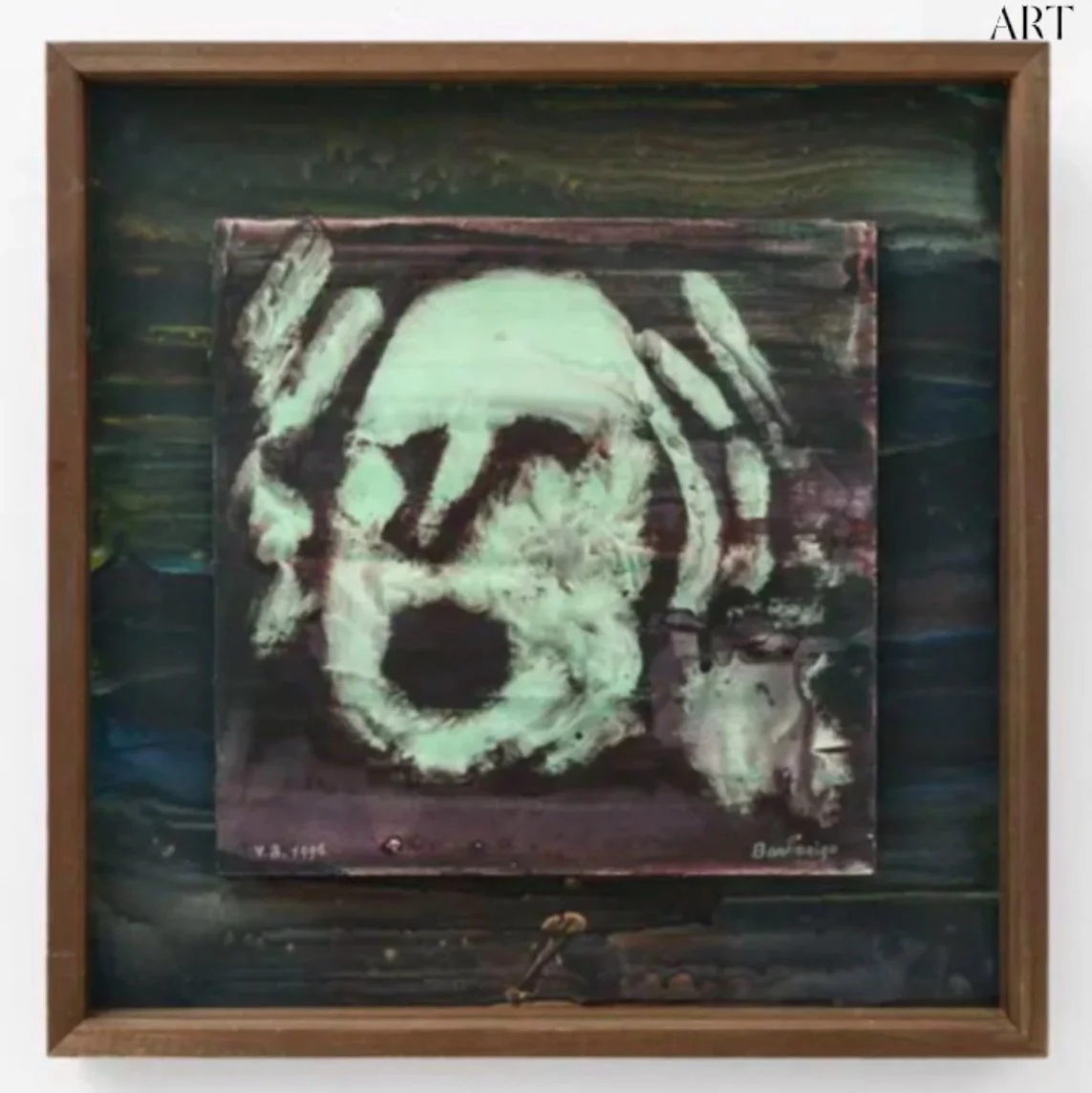
Volto [Face], 1996
The white faces and heads, emerging from dark grounds like deposits or exhalations, are among the most convincing paintings in the exhibition because Barbarigo resists the obvious. She does not sensationalize distortion. She does not sentimentalize fragility. She lets the image hover in a state of incomplete arrival. That incompletion is the content. One feels that the figure has not been represented so much as reluctantly extracted from matter.
And yet the show also clarifies Barbarigo’s limits, which is useful. Not every canvas carries the same intensity. In some works, the atmospheric handling risks becoming merely vaporous; the instability that elsewhere generates pressure can loosen into indistinctness. This is the danger of her method: when the tension between emergence and dissolution slackens, ambiguity ceases to be rigorous and becomes mood. Barbarigo is most compelling when the image feels necessary, when the paint seems to have fought to produce it. She is less compelling when the haze remains just haze.
That unevenness does not diminish the exhibition. It makes it more legible.
What emerges is not a uniformly major painter, but a serious one — and a distinctive one. Barbarigo’s best work occupies an unusual place in postwar painting. It lacks the declarative brutality of Bacon, the ritualized melancholy of Music, the rhetorical bravura of much neo-expressionism. It is quieter, but not gentler. Its drama is one of corrosion. The image is not torn apart before us; it is slowly deprived of certainty.
That is where Barbarigo becomes genuinely compelling: in her refusal to stabilize the human form into either monument or ruin. Her figures are never heroic, but neither are they simply broken. They persist in a state of ontological insecurity. They are there and not there, embodied and disembodied, seen and half-lost. Barbarigo understood that the figure, once stripped of narrative and social description, becomes not more universal but more precarious.
The best paintings in Beyond the Figure grasp that precariousness with real force.
What the exhibition finally offers, then, is not a corrective tribute but a sharper proposition: Barbarigo matters because she found a way to paint the body after confidence had drained from it. Not the modern body as spectacle, nor the classical body as structure, but the body as unstable evidence — of consciousness, of mortality, of perception failing even as it tries to hold.
That is a much rarer achievement than reputational recovery alone.
By Oona Chanel
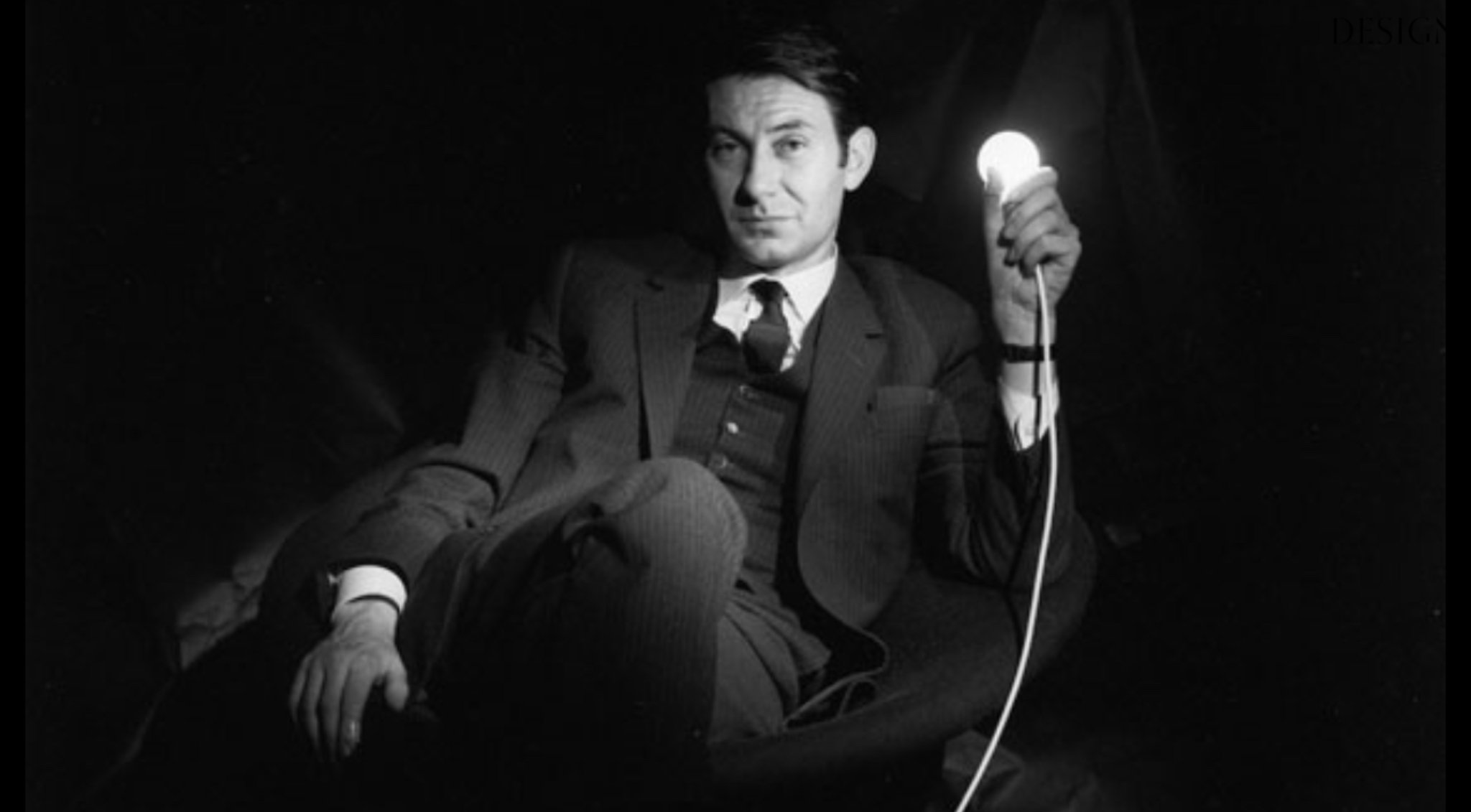
Otto Piene and the Discipline of Light
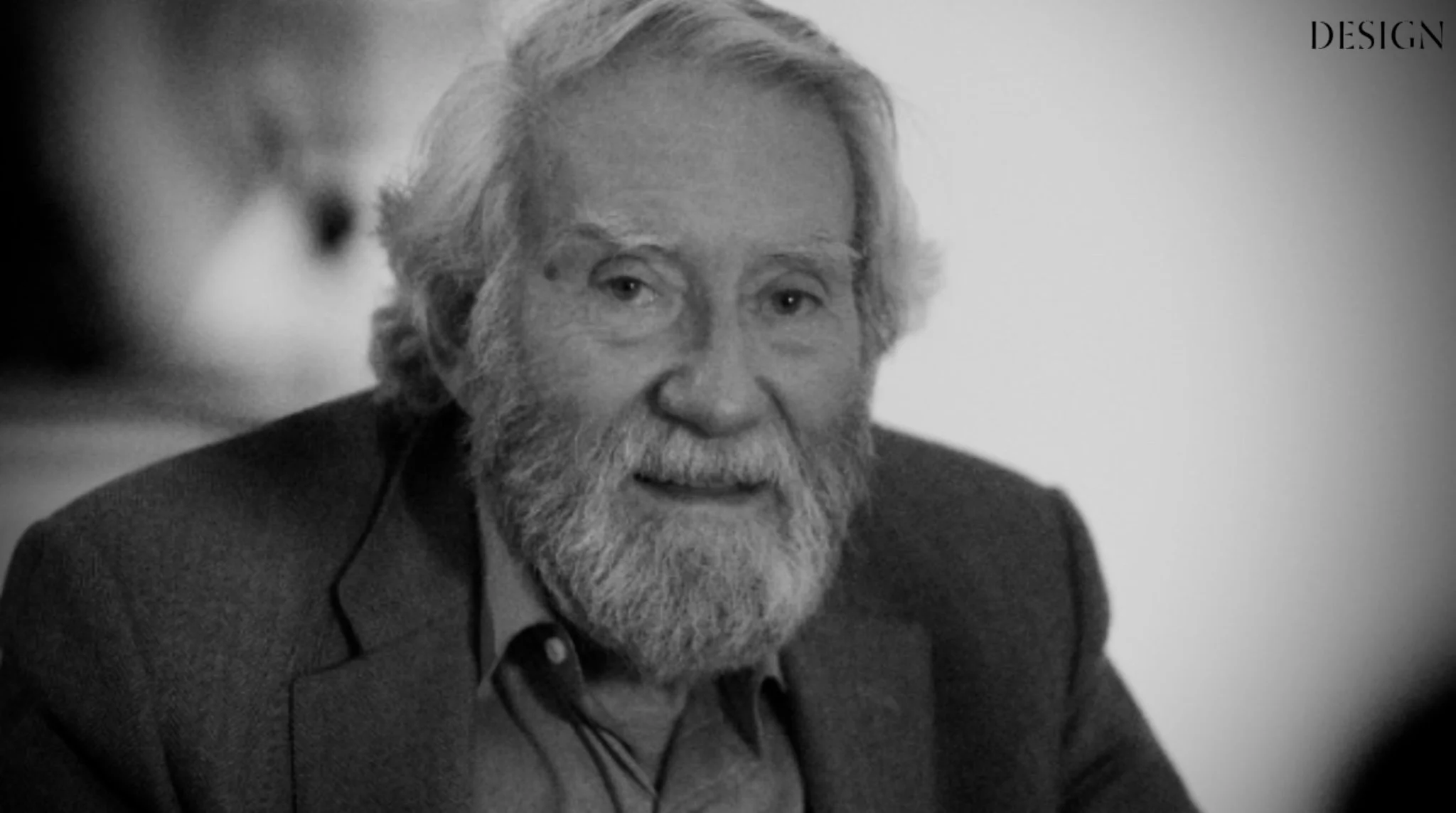
Otte Piene
To describe Otto Piene simply as an artist of light is to understate the rigor of his project.
For Piene, light was never atmosphere alone, nor spectacle, nor the decorative immateriality that contemporary immersive exhibitions have conditioned audiences to expect. It was a structural proposition: a means of rebuilding visual language after rupture.
As co-founder of ZERO in Düsseldorf in 1957 alongside Heinz Mack, Piene belongs to that small generation of postwar European artists who understood that painting, as inherited from the prewar world, could no longer continue unchanged. The canvas was no longer merely a surface to be filled, but a site to be rethought from first principles.
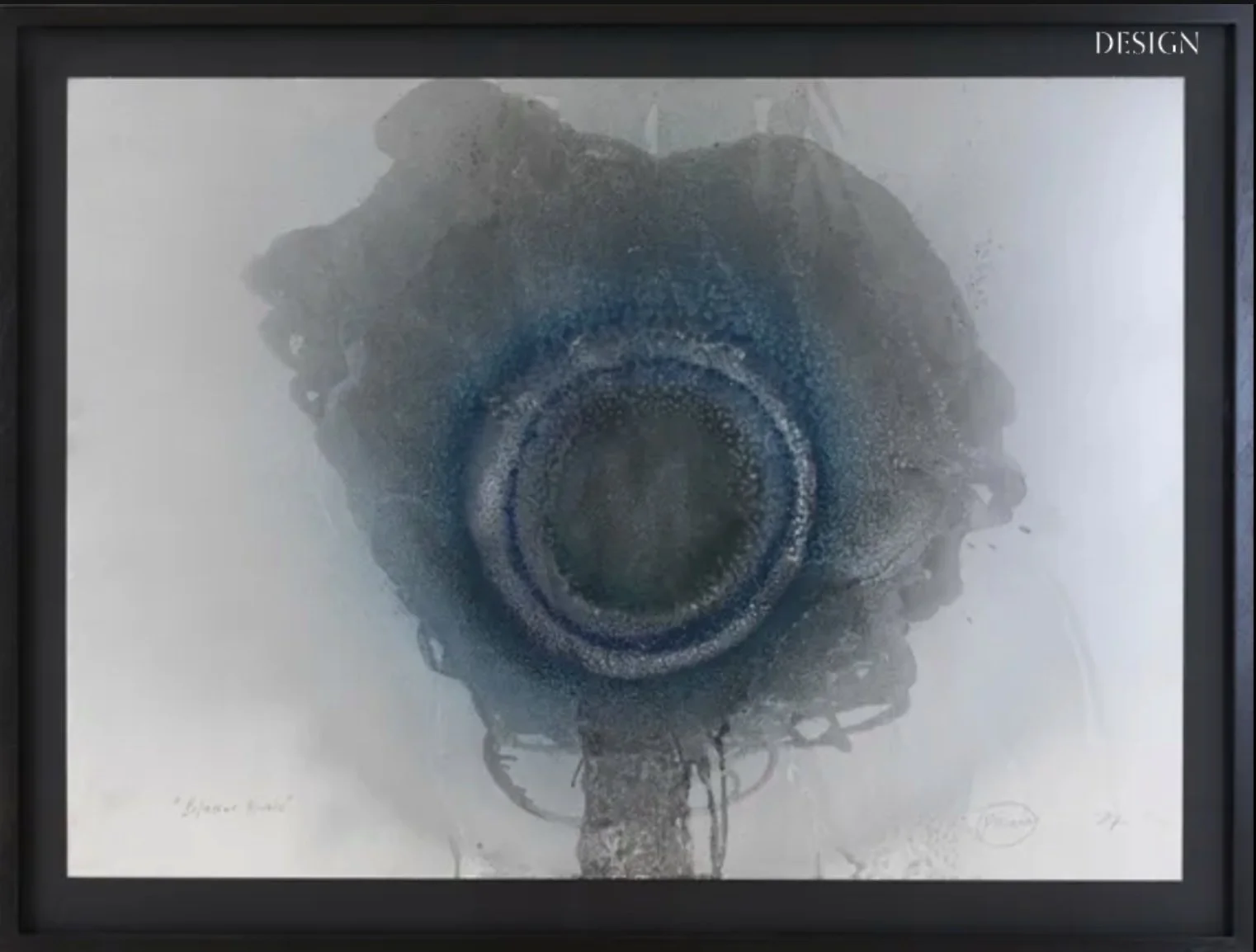
OTTO PIENE, Blauer Kreis, 1987
What distinguishes Piene is the clarity with which he recognized, earlier than many of his contemporaries, that light itself could function as both medium and subject.
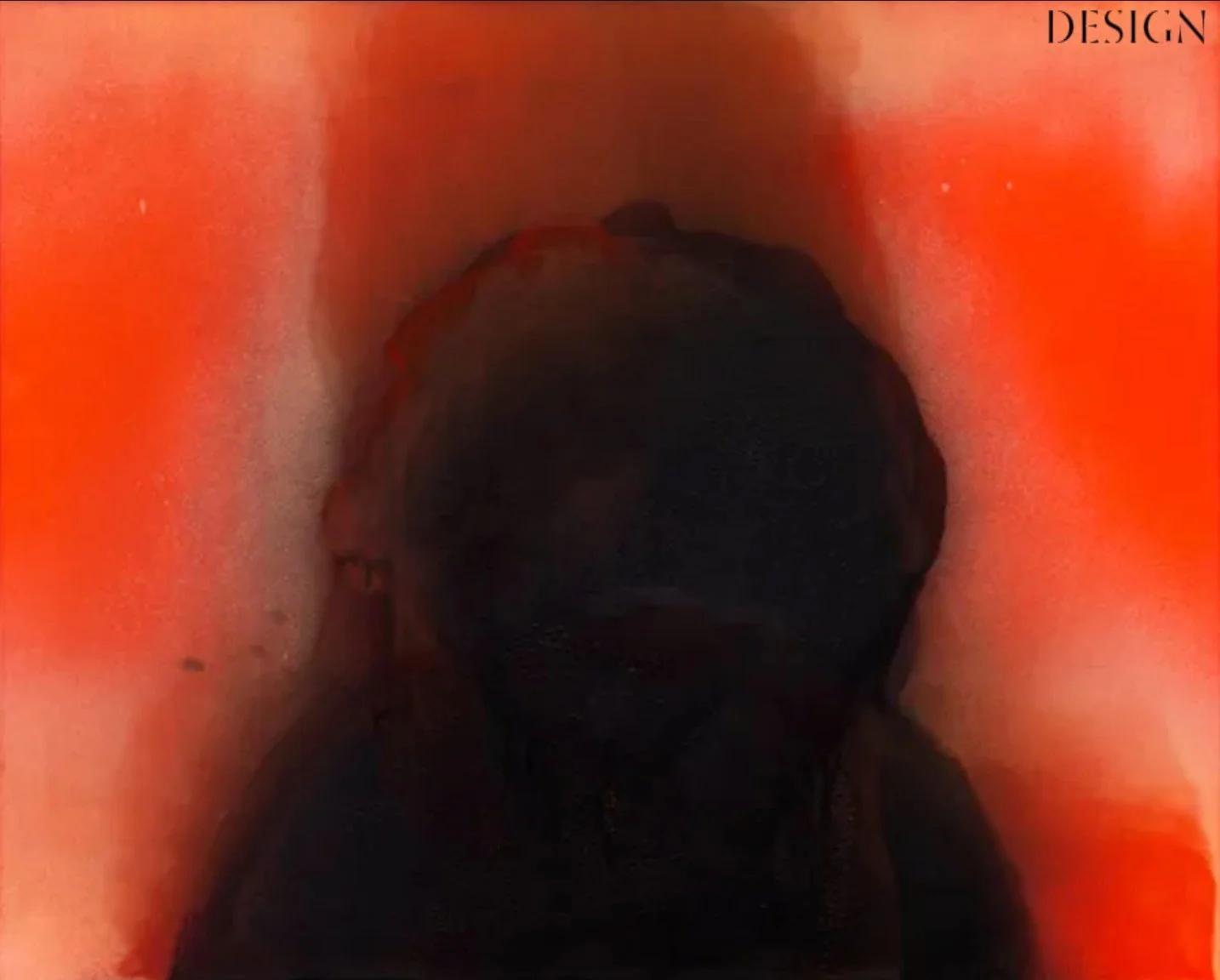
OTTO PIENE Es brennt, 1966
The Lichtballett works remain among the most radical propositions of postwar art precisely because they do not use illumination as effect. Instead, they dismantle the hierarchy between object and image. Perforated spheres, suspended forms, rotating mechanisms, and projected constellations transform the gallery into an active field in which light becomes material, movement becomes composition, and space itself assumes a pictorial function. This is not installation in the contemporary experiential sense. It is a redefinition of painting through kinetics.
Walls cease to operate as static architecture and become moving supports for form. Dots, rings, starbursts, and expanding grids slide across surfaces, destabilizing the fixed relation between artwork and viewer. What one encounters is less an object than an event: a choreography of light unfolding in real time.
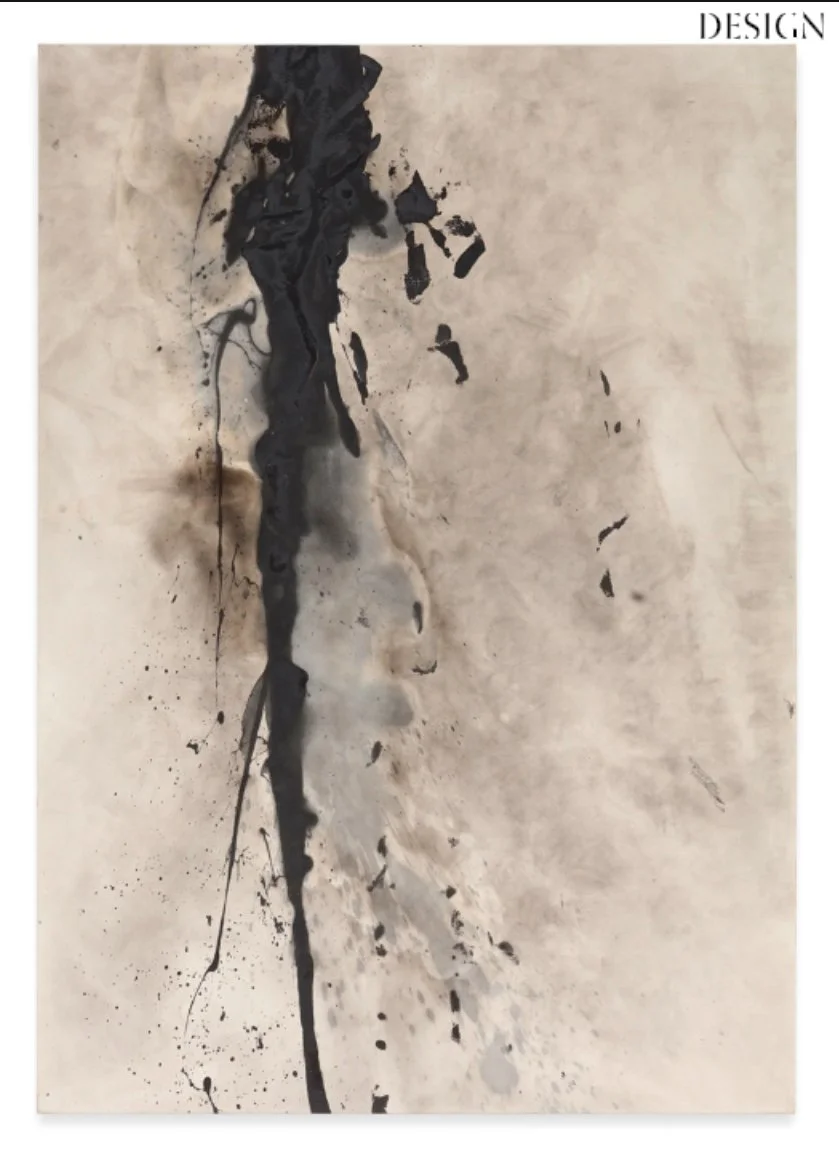
OTTO PIENE, Japanese, 1974-75
It is here that Piene’s intelligence is most acute.Unlike many later artists working with technology, he never mistakes apparatus for meaning. The machinery remains subordinate to a deeper formal logic. Light, in Piene, is disciplined, measured, and conceptually exact. Even the most seemingly celestial works are rigorously structured through repetition, interval, perforation, and rhythm. The grid, recurring throughout his practice from the late 1950s onward, is central to this logic. In Piene, it is never merely geometric in the strict modernist sense. It vibrates. It becomes a conduit through which energy passes. What begins as order is activated into atmosphere.
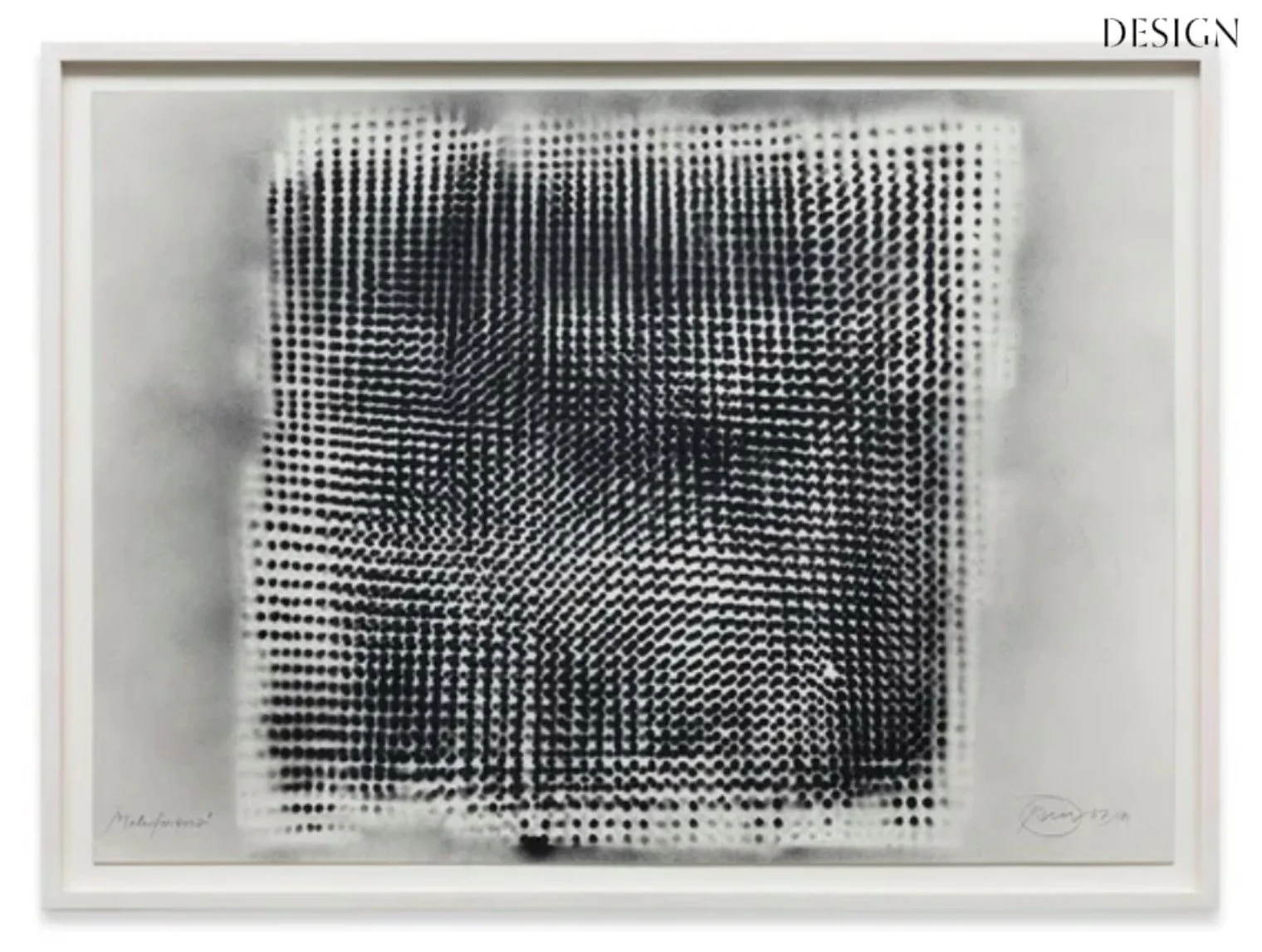
OTTO PIENE, Interferenz, 1957/1991
That movement from structure to vibration lies at the core of his achievement. The fire paintings and smoke works extend this proposition further. Here, combustion itself becomes a mode of mark-making. Flame does not destroy the surface so much as inscribe it. Piene transforms heat into drawing, ash into pigment, and accident into a controlled formal language. These works are too often absorbed into the broader mythology of postwar experimentation, yet they remain among the most materially intelligent works of the period.They understand destruction as a generative force.That is not incidental in a German artist of his generation.
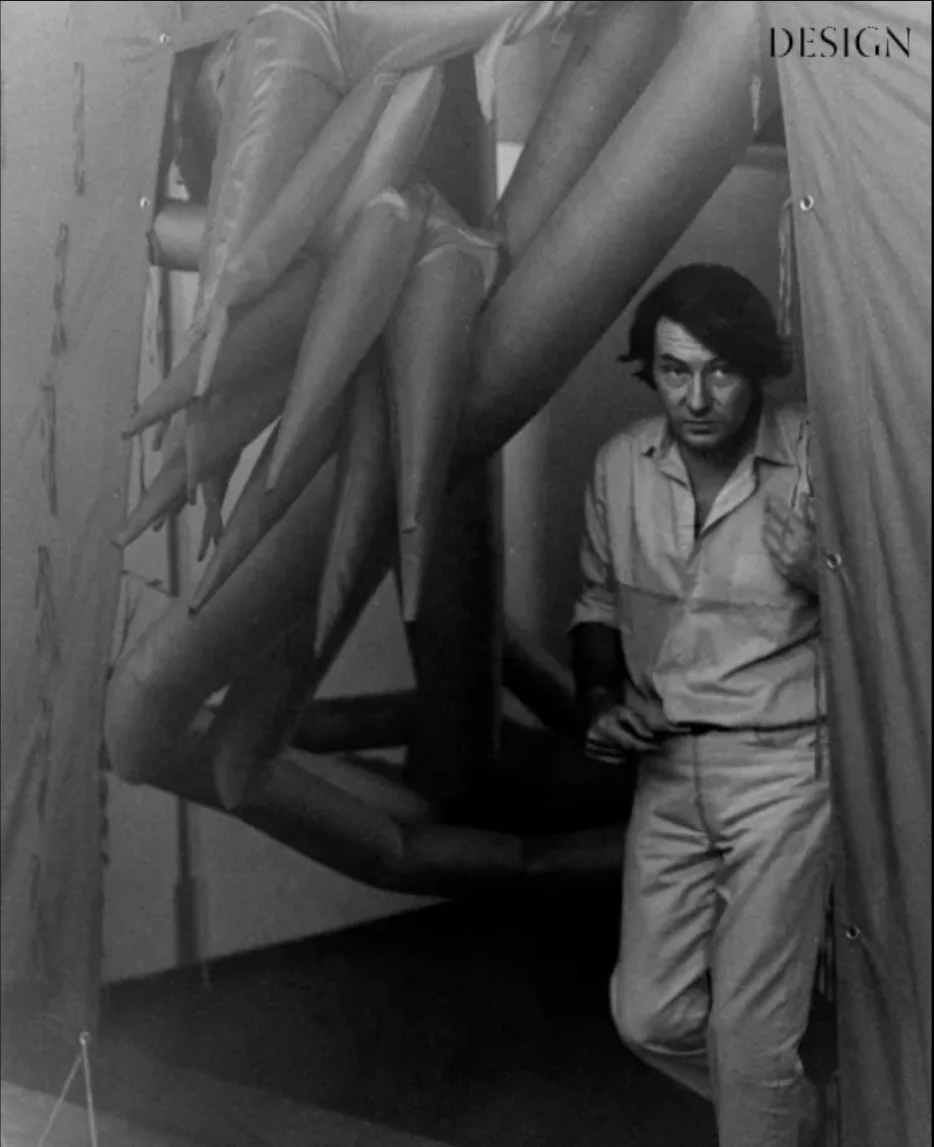
OTTO PIENE, Red Sundew 2, 1970
What gives Piene lasting relevance is that his work resists easy settlement into either minimalism or spectacle. He remains too sensuous for one, too exacting for the other. His most compelling works insist that light is not merely perceived but structured, and that immateriality can carry architectural weight.
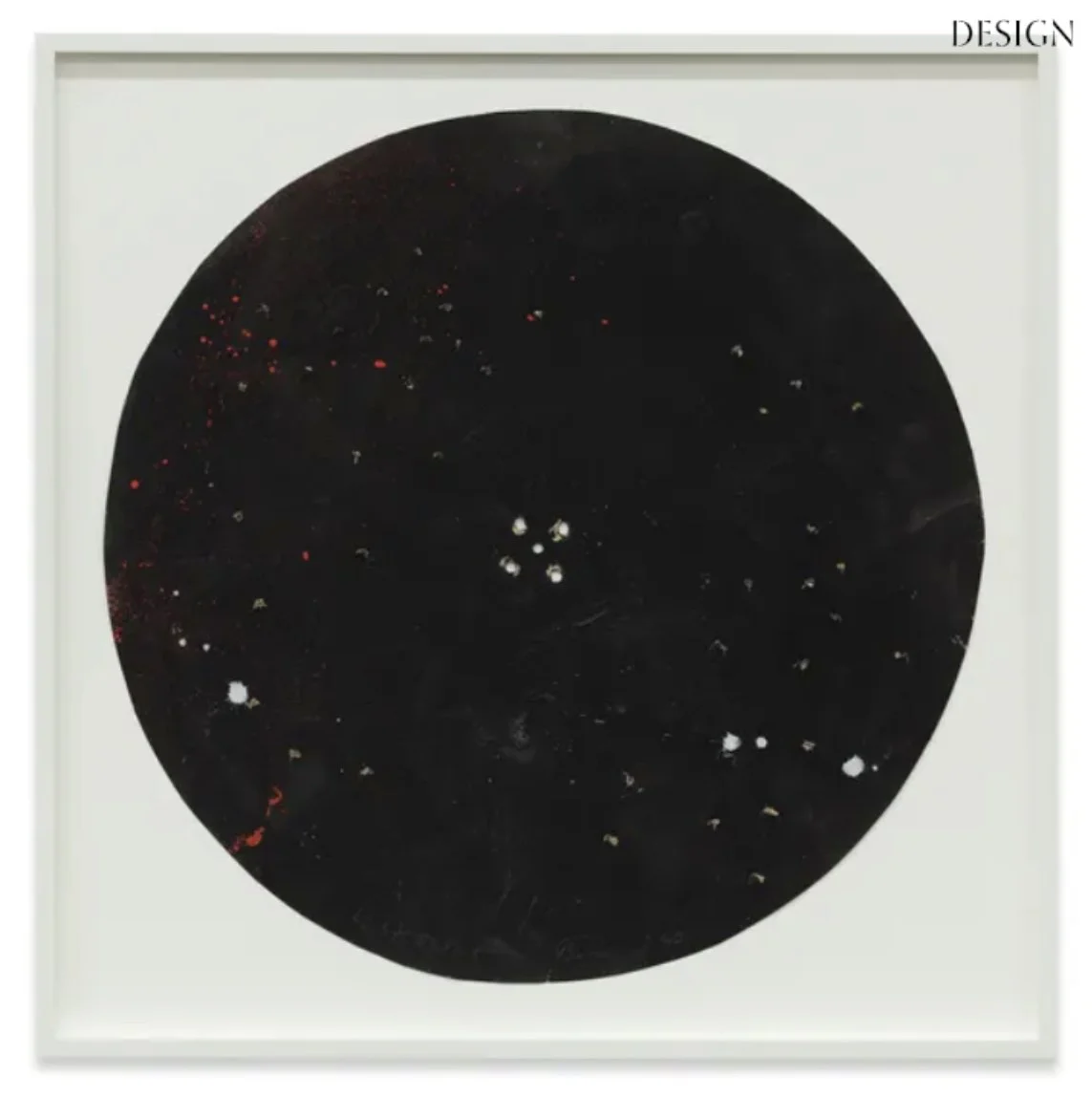
OTTO PIENE, Light Ballet, 1960
Seen today, in an age saturated with projection-based environments and light-driven installations, Piene’s work feels newly clarifying. It reminds us that light, in the hands of a serious artist, is not ambience but argument.
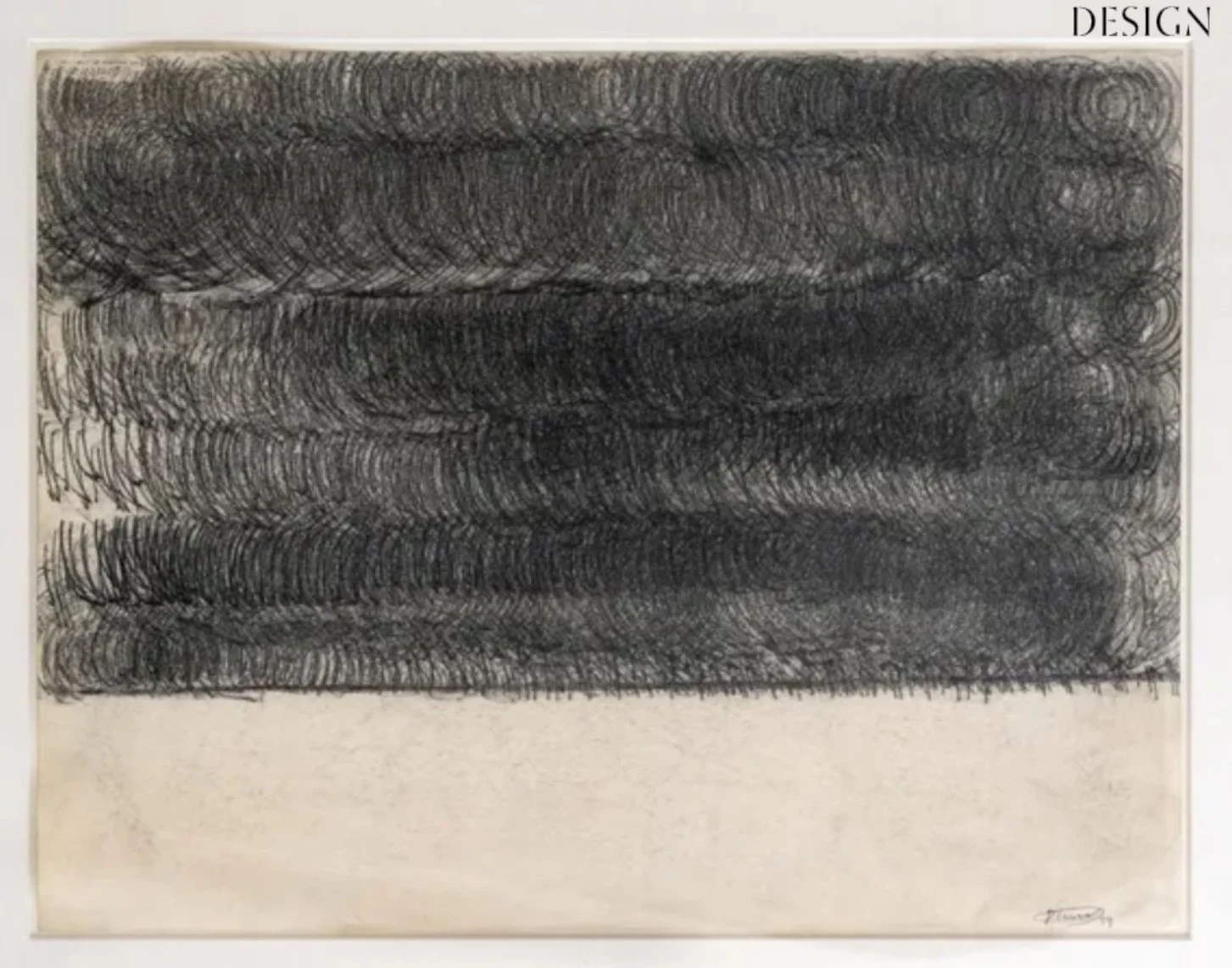
OTTO PIENE, untitled, 1959
Piene’s legacy lies in that rigor: his ability to convert the ephemeral into a precise visual system, and to make space itself think.In doing so, he altered the ontology of the image.
By Oona Chanel