

The Polka Dot Is Back and It Has Never Been More Serious
From Demi Moore on the Cannes jury to the SS26 and AW26 runways, the dot has returned — not as nostalgia but as a formal argument about pattern, scale, and the specific joy of wearing something that knows exactly what it is.

“The dot's ability to shift register entirely based on scale, colour, and material is unique among pattern types. A large dot does not disappear into the fabric. It establishes a relationship with the body's proportions that requires the designer to have made a specific decision.”
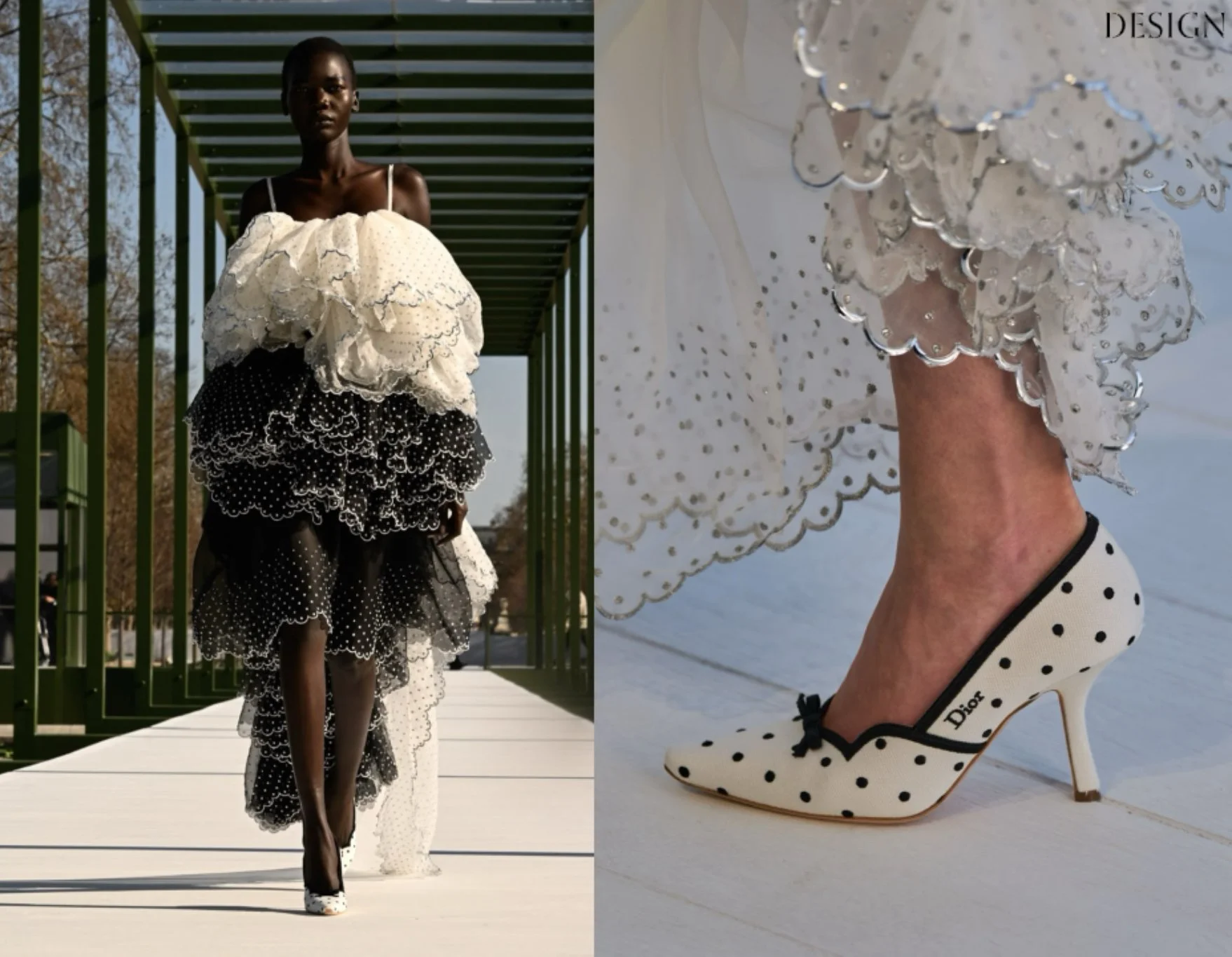
Demi Moore served on the Cannes 2026 jury. She was photographed at multiple screenings in polka-dotted pieces — choosing, in the most photographed context in cinema, a pattern that is simultaneously classic and confrontational, that makes no apologies for its presence and requires none. The dot has been returning across the SS26 and AW26 runways with a consistency that suggests the fashion system has decided something.

Not a trend in the anxious sense — not the scramble to incorporate a visual motif before it passes — but a genuine formal interest in what pattern does to a garment and specifically what the dot does that other patterns cannot. The dot is not directional. It does not impose a vertical or horizontal emphasis. It does not dominate or recede the way stripe or check does. It is, in the language of pattern, the most democratic form: every point is equivalent to every other point, no hierarchy, no narrative direction, complete formal parity.
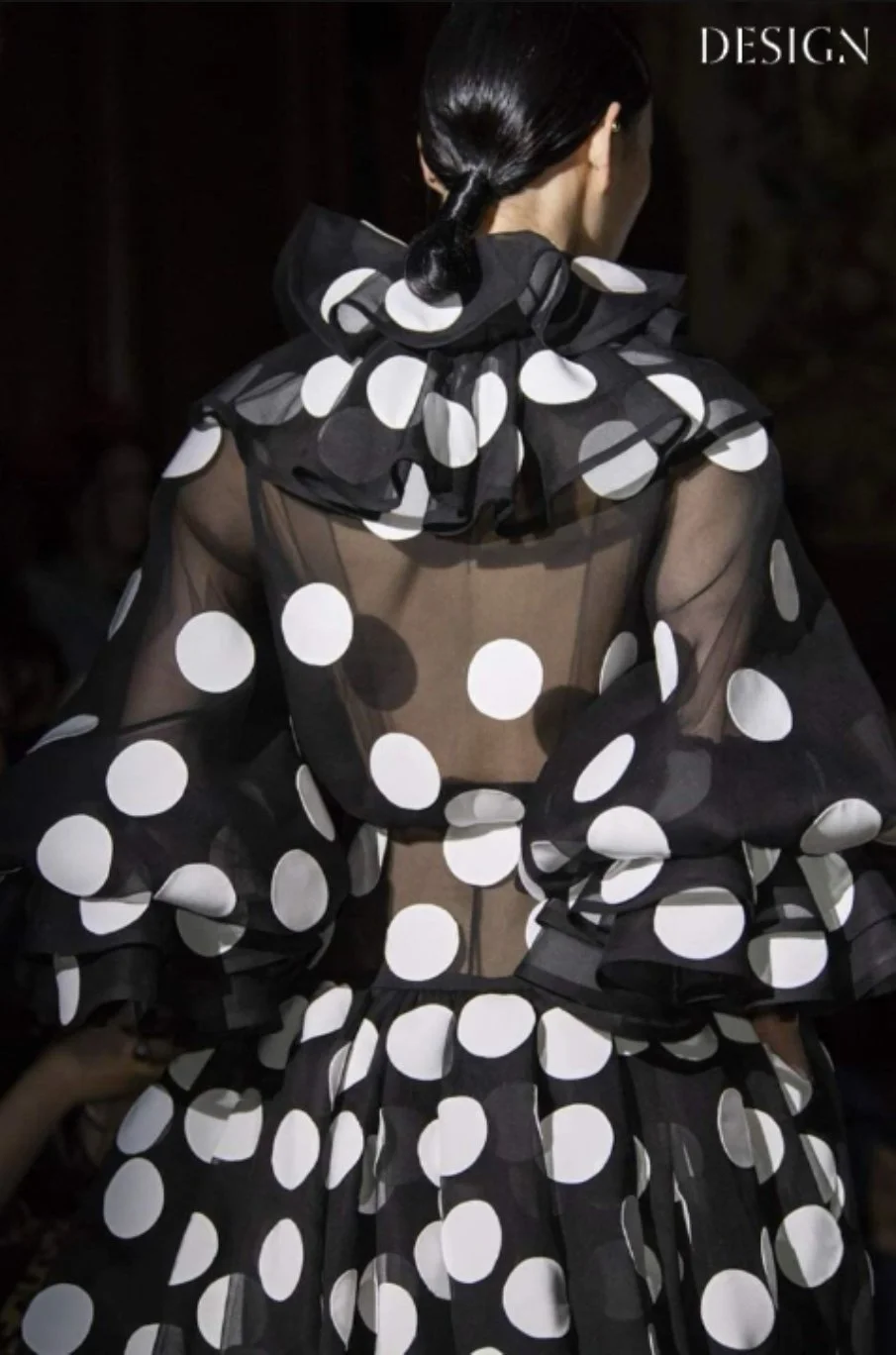
This formal neutrality is what makes the dot available for so many different emotional registers. The small navy dot on white in crisp cotton is conservative authority. The large black dot on white silk charmeuse in the hands of a couture atelier is theatrical elegance. The oversized multicoloured dot on jersey is exuberant and slightly anarchic. The dot's ability to shift register entirely based on scale, colour, and material is unique among pattern types, which is why it is among the most durable.

The specific quality that AW26 and SS26 collections are exploring is scale. The large-scale dot — appearing at Valentino in couture-weight silk, at Erdem in wool crepe, at Simone Rocha in tulle overlays — proposes a different relationship between the body and the pattern than the traditional small-scale iteration. A large dot does not disappear into the fabric. It establishes a relationship with the body's proportions that requires the designer to have made a specific decision about how many dots should be visible in a single glance.
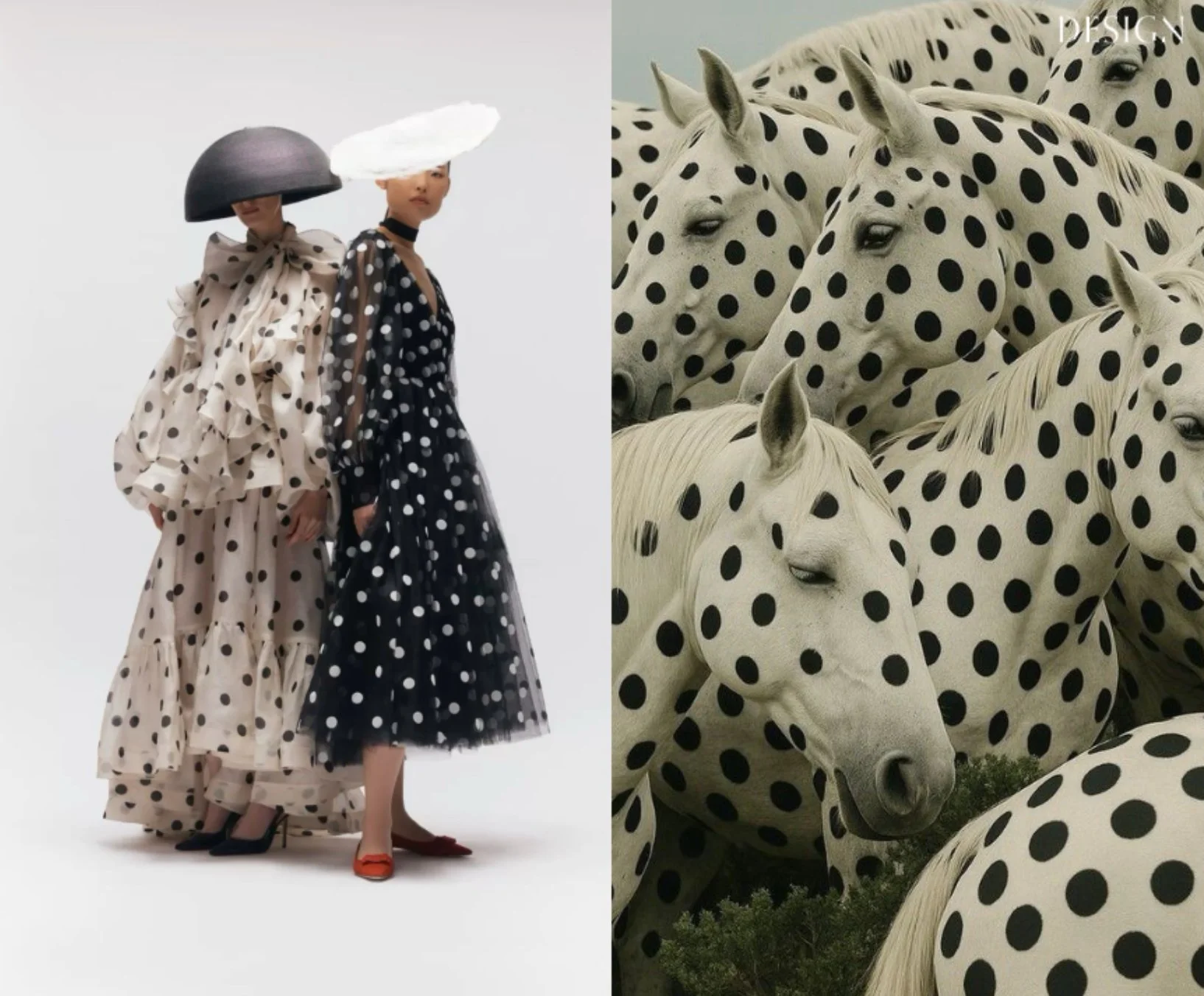
The historical reference that keeps appearing in discussions of the current dot moment is Yayoi Kusama, whose obsessive and cosmologically significant use of the polka dot across six decades of art practice was translated most visibly into the Louis Vuitton collaboration of 2023 that covered storefronts globally in dots. The collaboration reminded a generation of consumers that the dot has an art history, a theoretical dimension, an engagement with infinity and repetition and the boundary between self and pattern that goes considerably deeper than pattern.
For the person assembling a wardrobe: the dot is worth taking seriously this season. Not because it is trending but because the current moment in dot design, at the level of the best houses working with it, is producing garments of formal intelligence that will not date in the way the fashion cycle usually demands.
A well-made large-scale dot dress in good silk is not a 2026 dress. It is a dress that could have been made in 1956 or 2006 and will be worth wearing in any of those years.
This is what pattern does, when it is used with conviction rather than with trend consciousness. It removes the garment from time.
BY OONA CHANEL
