

Solange Azagury-Partridge: The Jeweller Who Made the Cocktail Ring Intellectual
She is the designer who created Theo Fennell’s reputation, built her own label from a Camden Market stall, and is now the most interesting mind in British fine jewellery. Her work quotes Magritte, Dalí, and Tantric philosophy in the same collection without apology.
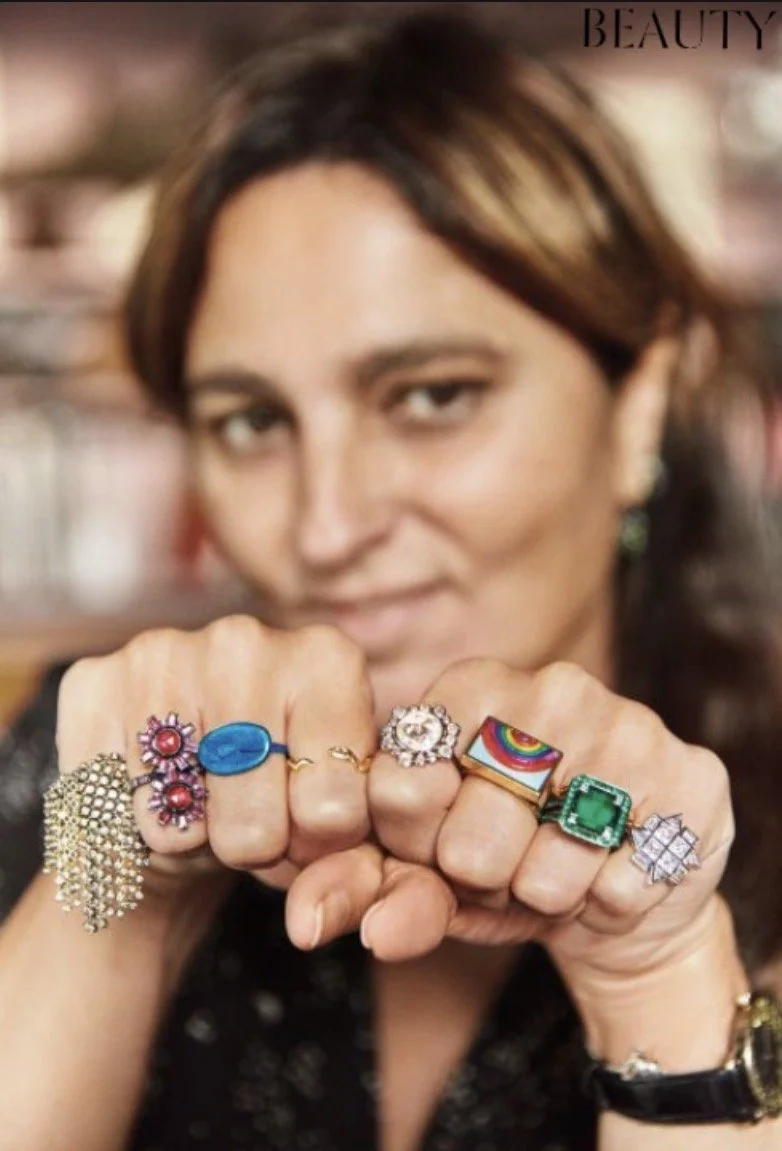
“A ring that contains a Magritte reference is asking its wearer to carry that reference on their hand — a significantly different proposition from asking them to carry an expensive stone in a conventional setting. The proposition has a specific audience. She has been making it for thirty-five years, and the audience keeps growing.”
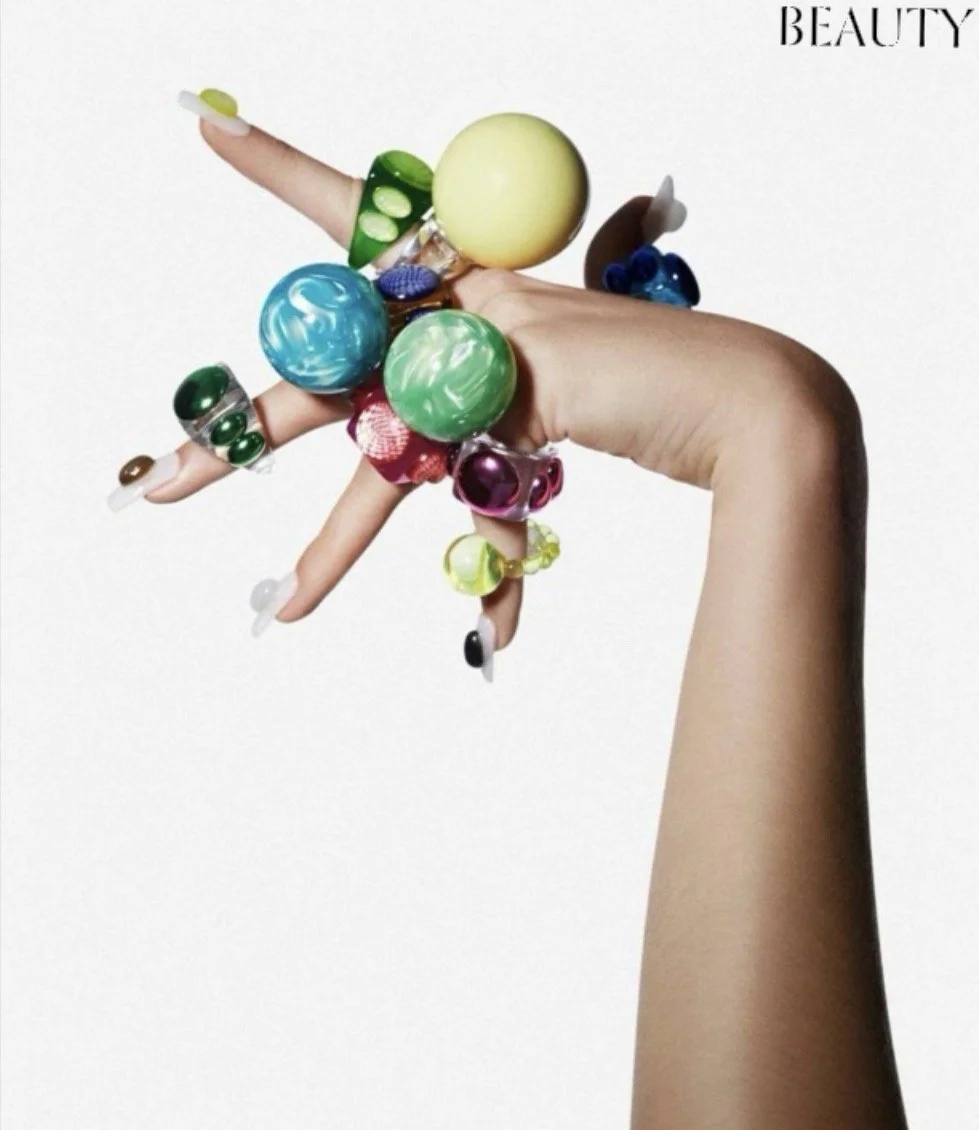
Solange Azagury-Partridge designed her own engagement ring when she was twenty-four because nothing she could find in any jewellery shop was doing what she wanted a ring to do. The ring was a ruby set in eighteen-carat gold in a specific configuration that she had drawn on a piece of paper and taken to a jeweller who told her it was impossible. She found a different jeweller. The ring was made. The episode is biographical and it is also a distillation of her practice: the insistence that a piece of jewellery should say something specific, that the something specific is worth the effort of making it say, and that the impossibility objection is a technical limitation rather than a creative one.
She studied fashion at the London College of Fashion and spent several years styling before beginning to design jewellery in the late 1980s. The early pieces, sold from a stall in Camden Market before a boutique in Westbourne Grove, established a visual vocabulary that has not significantly changed in thirty-five years: the bold colour, the surrealist reference, the use of precious materials in configurations the conventional fine jewellery market had not considered and that the wearer who bought them needed a specific kind of confidence to inhabit.
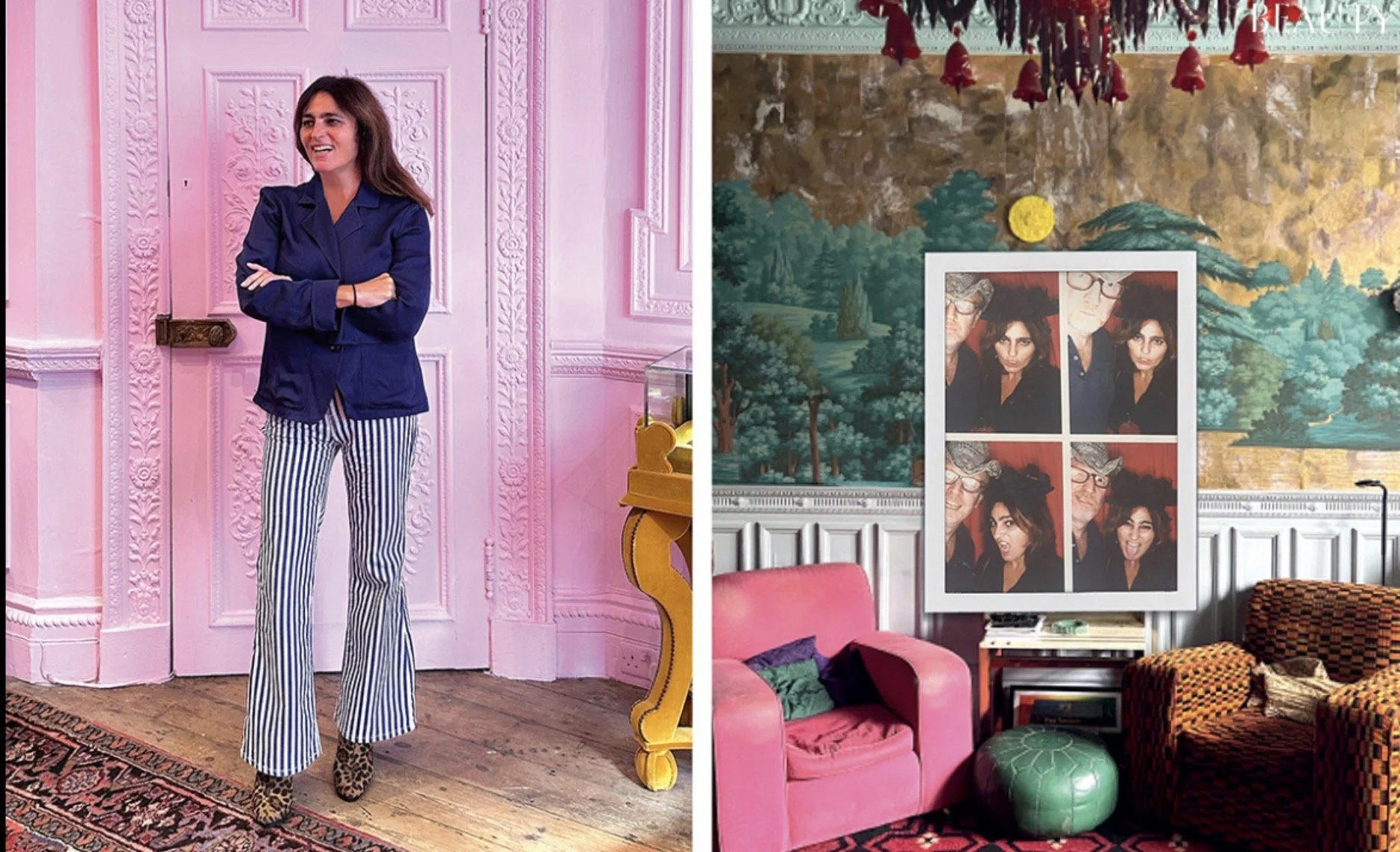
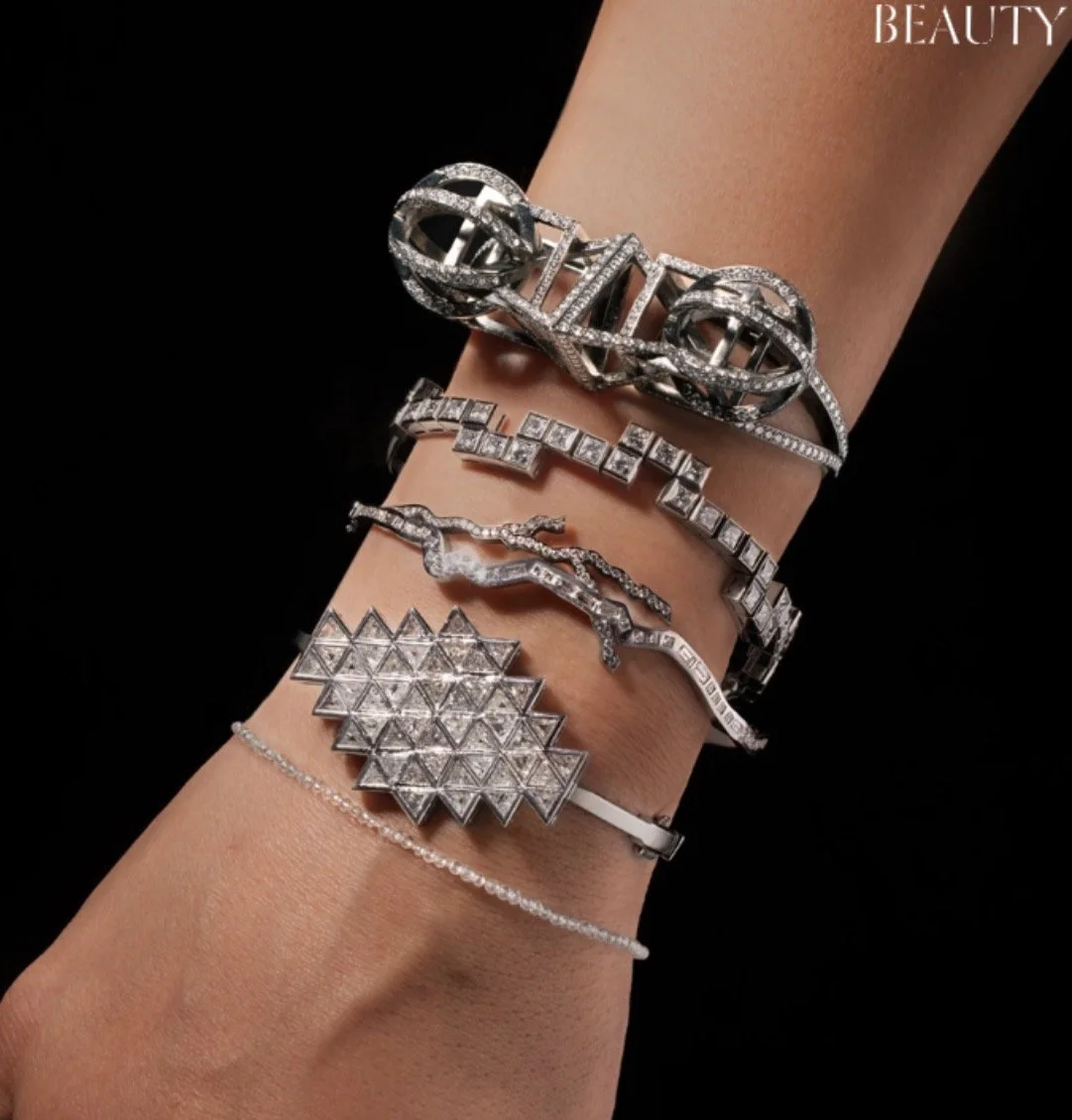
The Theo Fennell period — she designed for the London jeweller’s house in the 1990s, developing the aesthetic that the house’s reputation was subsequently built on — produced work that was commercial in scale and formally consistent with her own practice, which is the rarest quality available in a designer working for a client house. The establishment of her own label at 171 Westbourne Grove has produced, since 1995, a body of work that is among the most formally original in British jewellery.
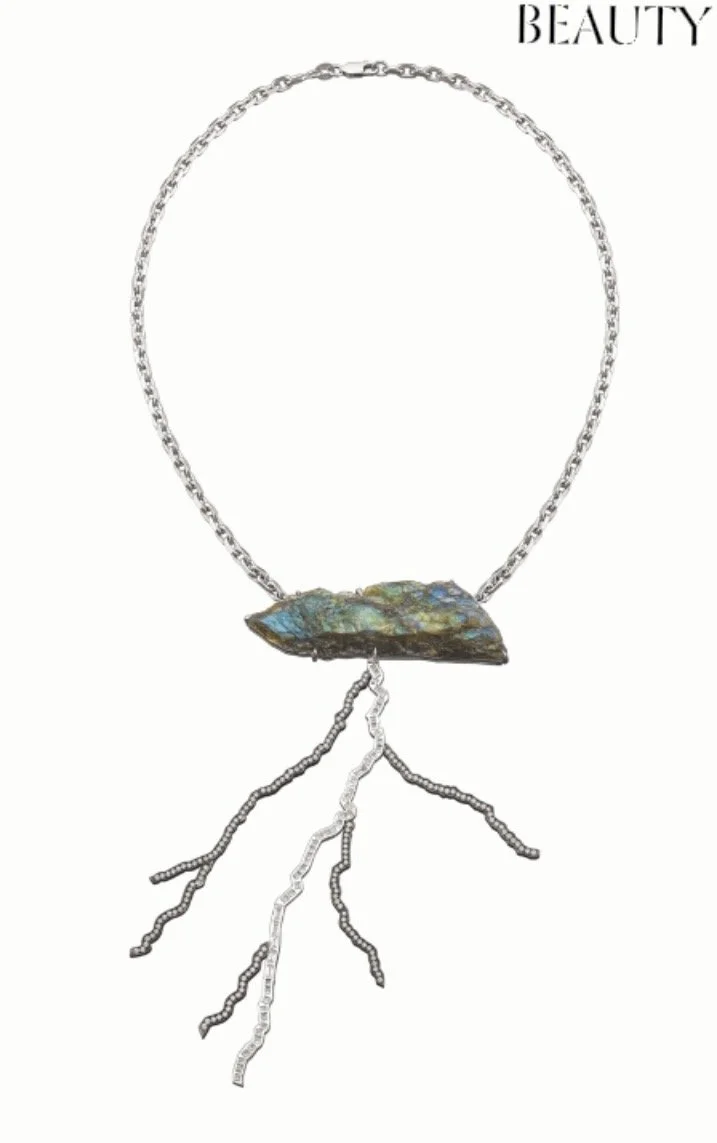
The surrealist and symbolic references in her work are not decoration applied to jewellery. They are the reason for the jewellery. A ring that contains a Magritte reference — the bowler hat, the green apple, the specific visual language of his most reproduced period — is asking its wearer to carry that reference on their hand, which is a significantly different proposition from asking them to carry an expensive stone in a conventional setting. The proposition has a specific audience: the person who reads the reference, understands it, and wants to be associated with it in the specific intimate way that jewellery produces.
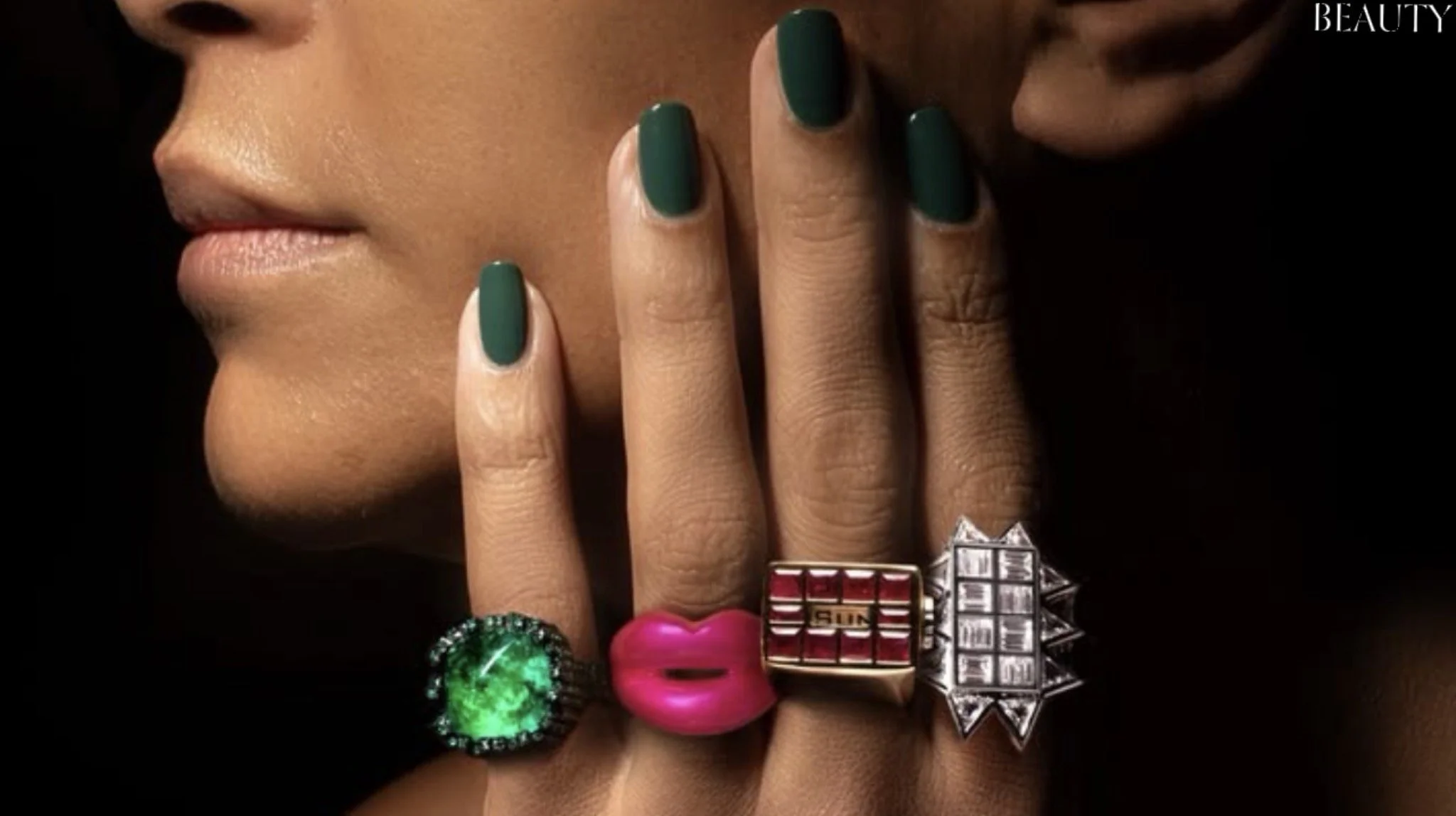
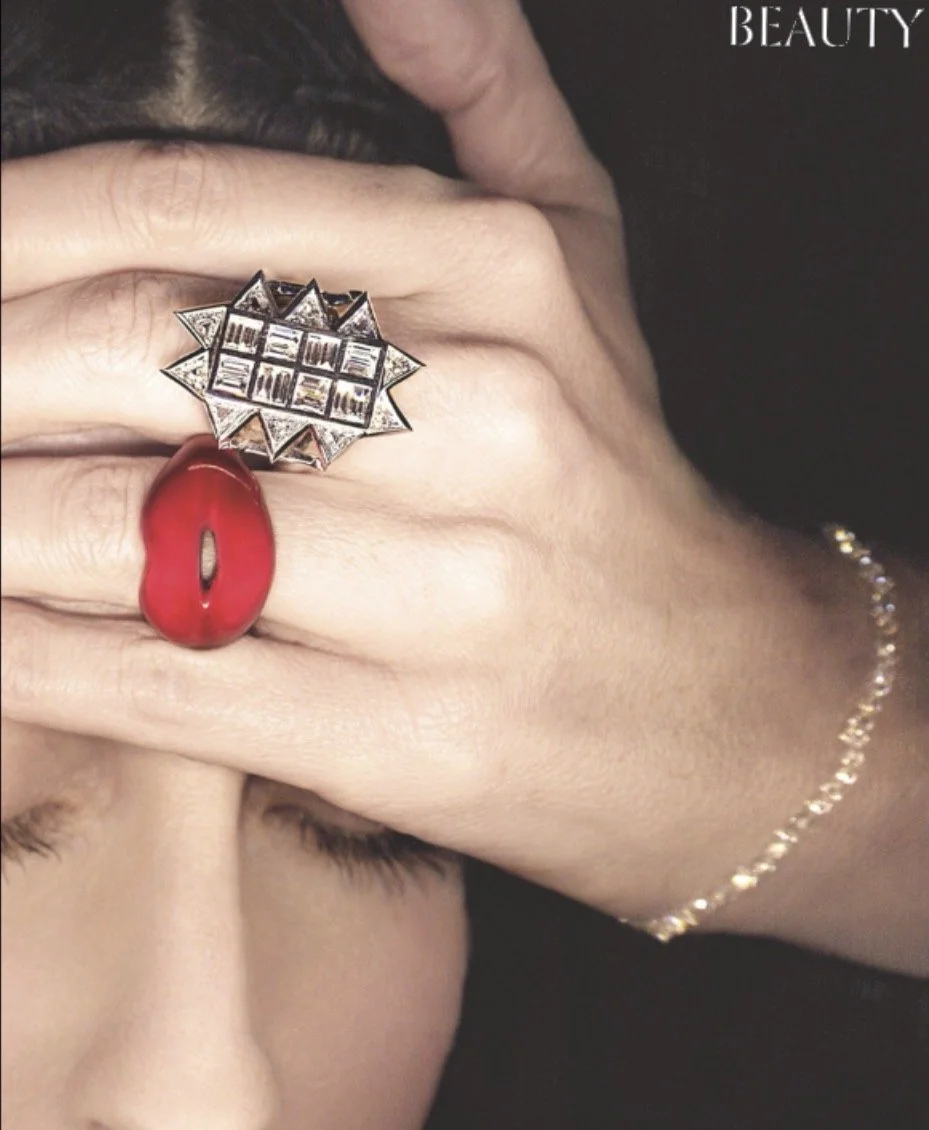
The Hotlips ring series — now in its several iterations over three decades, featuring lips in gold and precious stones from rubies to diamonds to garnets — is her most commercially recognised work and is in the permanent collections of the Victoria and Albert Museum. The series is the work that most directly demonstrates her understanding of jewellery as wearable object rather than as a decorative appendage.
She is available for interview and editorial engagement. The Westbourne Grove boutique — still at the same address, now with a waiting list — is the primary market context. The secondary market is at Christie’s and Sotheby’s, where her pieces appear in the Important Jewellery category rather than the vintage or decorative arts categories.
The practical recommendation: go to the boutique. The pieces on display are not the pieces in the advertisements. The advertisements show the most accessible work.
The boutique shows everything — including the pieces she has made from Tanzanite and tsavorite in combinations that produce colours not available in any natural gemstone used conventionally.
BY OONA CHANEL
