

Last December, Rembrandt's Young Lion Resting stopped in Abu Dhabi on its way to arecord. Thomas Kaplan owned it for twenty years. He explains why he let it go, and what he has yet to decide about everything else.
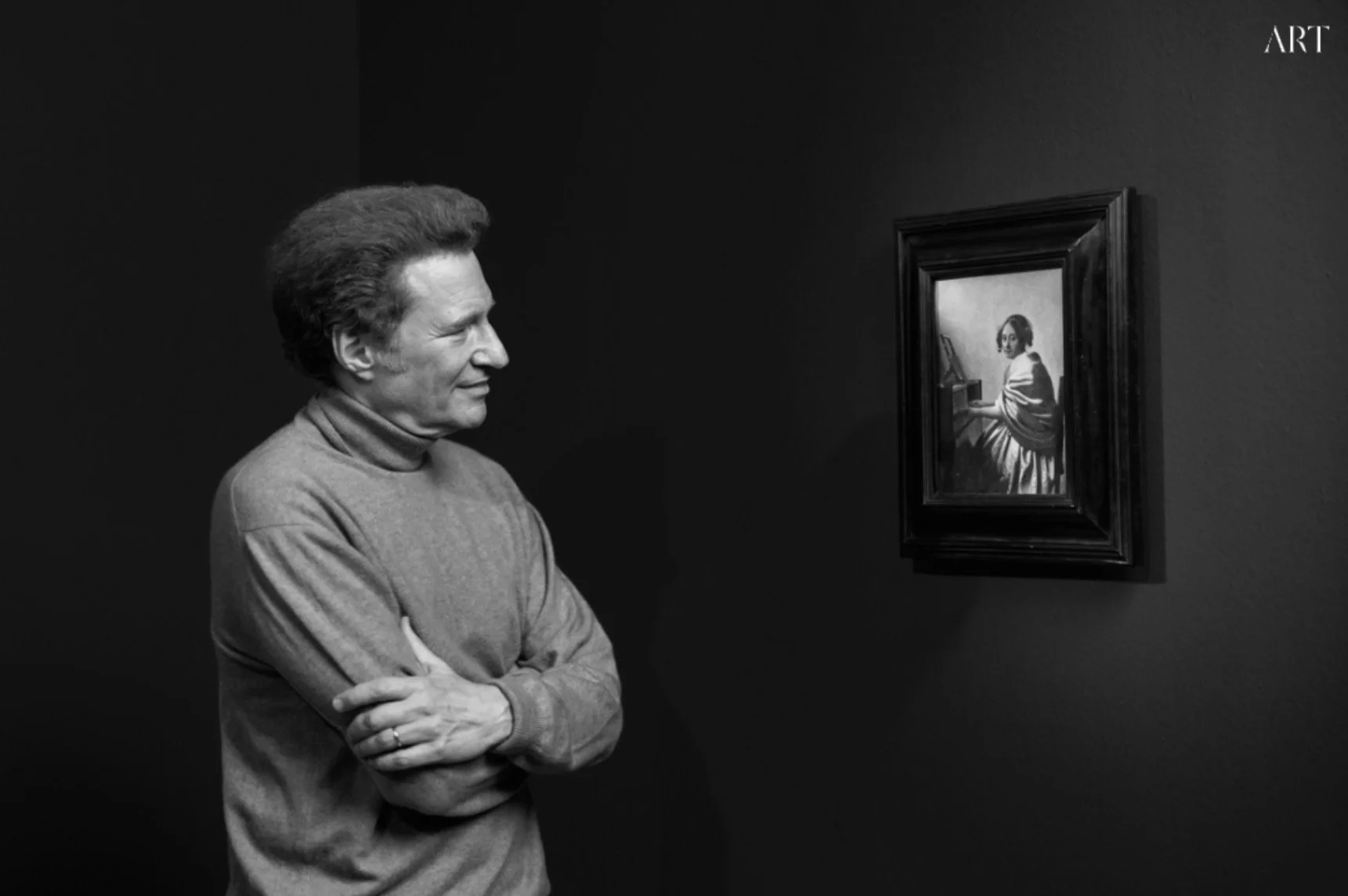
Dr. Thomas Kaplan with Young Woman Seated at a Virginal by Vermeer. Photo by Aad Hoogendoorn. Courtesy of The Leiden Collection
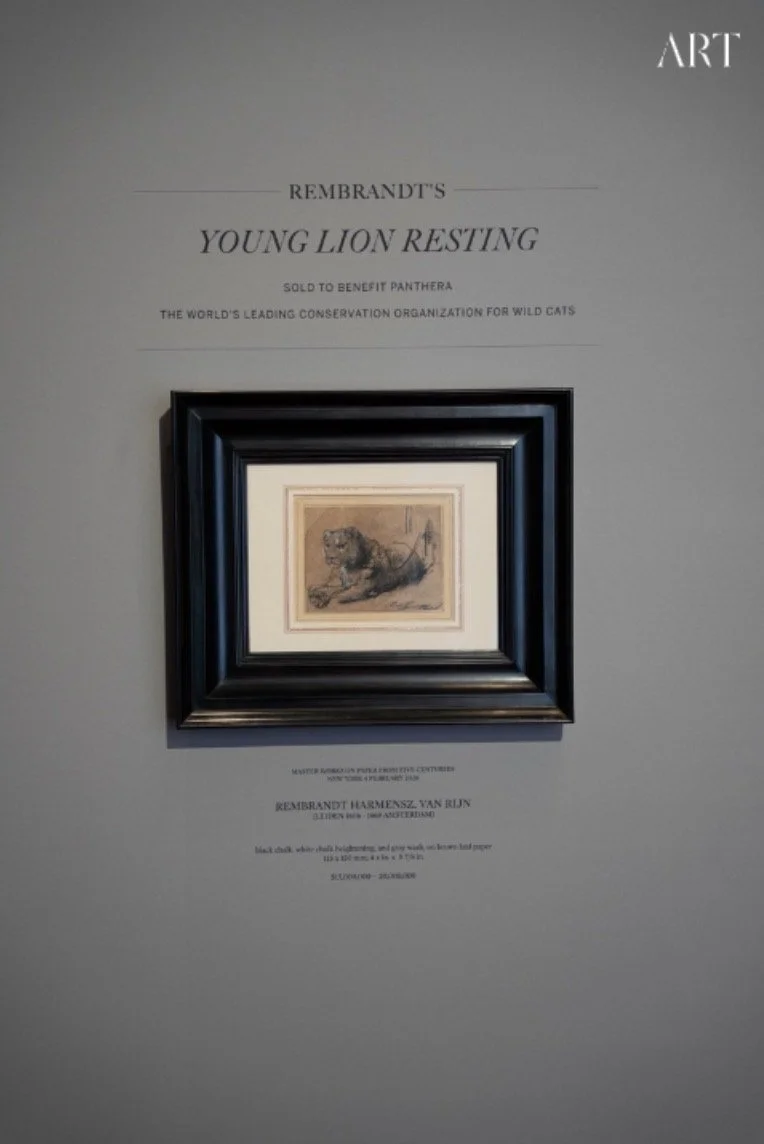
Almost a year ago, on a December afternoon in Abu Dhabi, I stood in front of a drawing the size of a postcard and tried to work out why everyone around it had gone quiet. Sotheby’s had hung it at the St Regis on Saadiyat Island as part of its first Abu Dhabi Collectors’ Week. It was one of the smallest things in the building: black chalk and a wash of grey on brown paper, 11.5 by 15 centimetres, a young lion lying down with its head raised, watching something just outside the frame. Rembrandt made it around 1640, and the way the animal is placed suggests he was looking at a real one, probably a captive lion on show in the Netherlands. Only six lion drawings by him survive. Five are in museums, among them the British Museum, the Louvre and the Rijksmuseum. This was the sixth, the only one a private person could still own. It had been to Paris, New York and London that autumn. After Abu Dhabi it went to
Hong Kong and Diriyah, then back to New York, where it was sold on 4 February 2026 for $17.86 million, including fees. That is nearly five times the previous auction record for a Rembrandt drawing, which was $3.7 million. The buyer has not been named. Every dollar went to Panthera, the wild cat conservation group. The seller was Thomas Kaplan, who bought the drawing in 2005 with his wife, Daphne Recanati Kaplan, and later shared ownership with Panthera’s chair, Jon Ayers. It was the first Rembrandt the Kaplans ever acquired, and it was the start of the Leiden Collection, which now includes eighteen Rembrandt paintings. In the twentyyears the Kaplans owned the lion, it never hung in their home. None of their
Rembrandts has. I spoke to Kaplan in the weeks after the drawing left Abu Dhabi, he in Paris and I in Dubai, expecting a story about reluctance. What I got was a patient argument that selling it was the most natural thing he had done in years. Over a long call he told me about a six-year-old who made his mother take him back to the Metropolitan Museum every week, a promise he made to himself at ten about wild cats, a year in which he swore he would never collect and then bought a painting a week, and a problem he still hasn’t solved, which is what to do with all of it.
Frieze opens its first Abu Dhabi fair this week, on the same island where the lionhung, and the sale has had time to settle. This is that conversation, with whathas happened since.
THE LION’S ROUTE · NOVEMBER 2025 – FEBRUARY 2026
- Paris: 3–4 Nov, Sotheby’s
- New York: 8–17 Nov, Sotheby’s
- London: 28 Nov – 1 Dec, Sotheby’s
- Abu Dhabi: 2–6 Dec, St Regis, Saadiyat
- Hong Kong: 8–10 Dec, Sotheby’s
- Diriyah: 24–26 Jan, Saudi Arabia
- New York: 30 Jan – 4 Feb, Sale, Lot 201
$17.86M
Sotheby’s New York
4 February 2026
Lot 201
Young Lion Resting, c. 1638–42
Black chalk, white chalk heightening and grey wash on brown laid paper · 11.5 × 15 cm · Master Works on Paper from Five Centuries
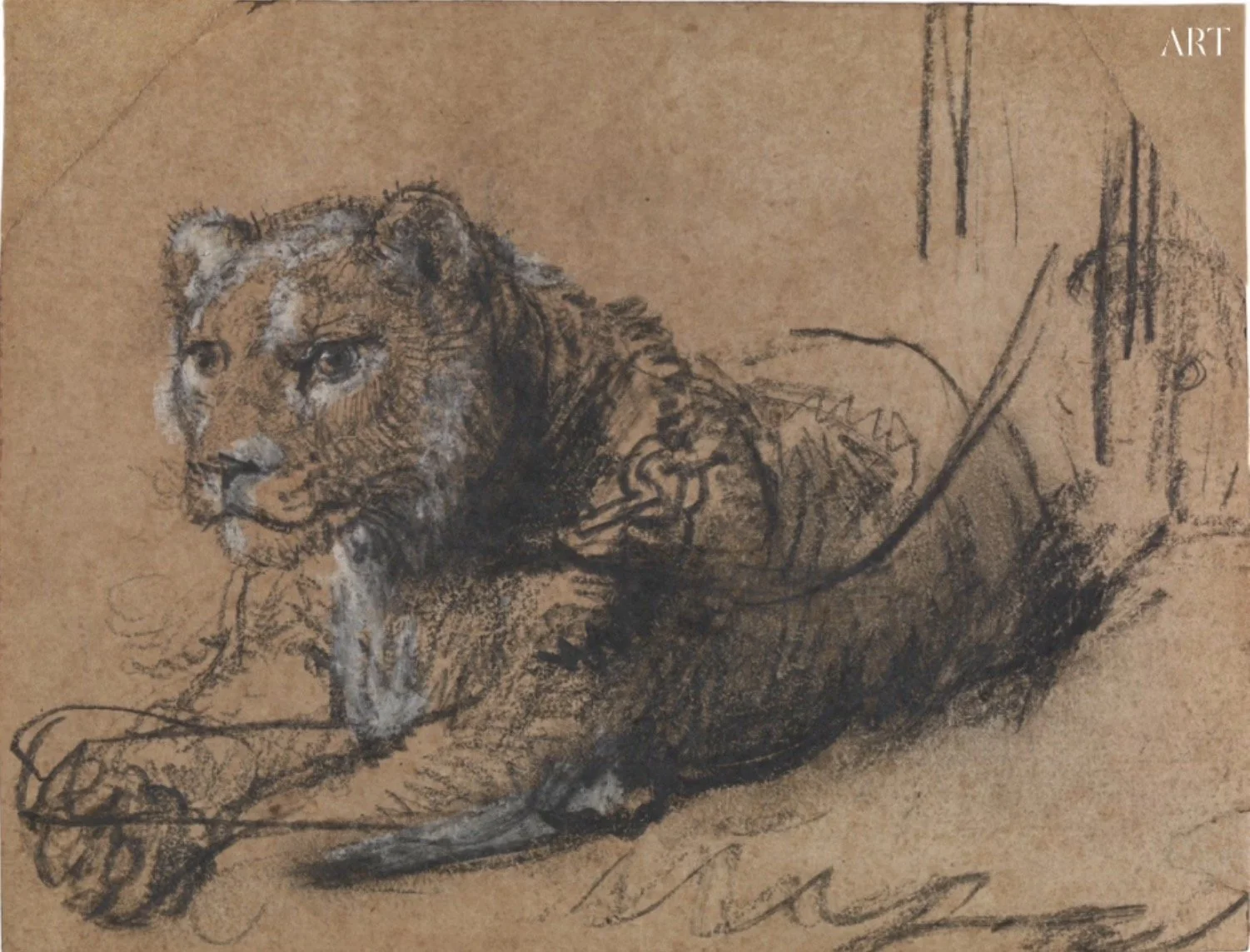
Estimate $15–20 million. Hammer price $15 million, $17.86 million with Sotheby’s fees. The highest price ever paid at auction for a drawing by Rembrandt;
the previous record was $3.7 million. One of six known Rembrandt drawings of lions and the only one outside a public collection. Gregory Rubinstein, Sotheby’s head of Old Master drawings, told ARTnews the result “cements Rembrandt’s place among the kings of drawings.” Buyerundisclosed. All proceeds go to Panthera.Kaplan answered the obvious question before I had finished asking it. “A lot of people are very surprised that I’m able to do it,” he said. “We’re not really very materialistic, which seems contradicted by two hundred and twenty paintings and other things, but we’re not attached to the objects. I’m much more attached to causes.
” He knows how that sounds from the owner of the largest private Rembrandt holding in the world, and he has a distinction ready. He is, he says, very acquisitive, and acquiring is a different thing from materialism. “The act of acquisition and deployment is different from materialism. We’ve never lived with one of our objects, one of our paintings, not one. In twenty-two years.”
The timing came from Panthera, which turned twenty this year. Kaplan co-founded it in 2006 with the late wildlife biologist Alan Rabinowitz and chaired it for fifteen years before Ayers took over. He wanted, he told me, to mark the anniversary with a bang, and the first thing he ever bought seemed to him the obvious way to do it. “Jon and I both said, let’s sell this for the benefit of Panthera, to build an endowment. And I found it’s actually not difficult at all. I always said I wasn’t a materialist. And I was right.” Then he told me about his older son, which is the part of the call I have thought about most since.
“He remembered seeing the lion as a boy. He said, ‘I always loved that.’ I said, ‘What would you do with it if you had it?’ He said, ‘I would keep it and pass it on to my children.’ I said, ‘And what do you think your children would do with it?’ And he said, ‘Oh, I see your point. You should go ahead and sell it for wildlife conservation.’” Thomas Kaplan
It is a neat story, and it is also an accurate summary of the problem Kaplan hasn't been working on in public for more than a year. His three children have grown up around some of the most valuable paintings in private hands and want nothing to do with owning them. The one cause all of them share, he says, is wildlife. “The whole family is united in wildlife conservation. That’s why the subject of the lion resting is so easy. The entire family is with it.” He is proud of how they turned out: not materialistic, not “blingy,” he said, just down to earth, smart and decent.
We’re not attached to the objects. I’m much more attached to causes. I get very attached to people and to causes. — Thomas Kaplan
To understand why a man who owns eighteen Rembrandts can talk like this, you have to go back to the Metropolitan Museum in the mid-1960s. Kaplan was six. His family lived in New York then, before moving to Florida, and his mother took him to the Met one weekend. “It became family lore,” he says, “that from the moment I encountered Rembrandt I was incredibly touched and moved, even at that young age. I can’t imagine that I had any particular insights into the human condition, into love, war, peace and everything else, but whatever it was, it moved me.” He later found a line by André Malraux that put it better than he could, that Rembrandt was the first painter to touch the soul. “It touched me,” Kaplan says. “And every week I would insist that my mother take me back to the Metropolitan to spend time with Rembrandt.”
After a while, she decided he should see something else. She took him to the Museum of Modern Art and showed him a white canvas with a line across it. “It could have been a blue line, I’m six,” he says, “but definitely a line across a blank white canvas.” He crossed his arms, shook his head, and told her to take him back to the Rembrandts. He says “Wembwant,” because he was missing his two front teeth, and that is how it has been told at family dinners ever since. She took him back.
One picture in particular stayed with him: Aristotle with a Bust of Homer, which still hangs at the Met. He doesn’t remember the first Rembrandt he saw, he told me. What he remembers is being reunited with Aristotle, a philosopher in a gold chain resting his hand on the head of a blind poet. “Reunited” is the word he used, and a six-year-old who talks about a painting that way is not visiting it. At ten he was asked where he wanted to go on a family trip to Europe, which was built around seeing his older sister in Madrid. She is ten years older than he is.
His parents offered him the choice of anywhere else on the continent. “I said, well, Amsterdam. I was obviously too young for any of the other diversions and
distractions of Amsterdam. And so when they said, why Amsterdam, I said, because that’s where Rembrandt lived.” He made his first pilgrimage to the Rijksmuseum that summer. He kept up the habit. He went on to study history at Oxford, taking the long way round by sitting the entrance exams in Switzerland, which he now admits would have been easier from England. He eventually earned a doctorate. He lived much of his life outside the United States and, in his words, always routed his flights through Amsterdam so he could stop in at the Rijksmuseum. “Anywhere I found myself
where there were Rembrandts to see, I made a point to see them. I’ve been to 110 countries, so I’ve really seen most of the Rembrandts.” At the start of our call,
before I had asked anything, he told me that applying history has been his greatest advantage since he was young. It was one of the few things he said that I suspect he has said many times, and it is also true of how he collects. The other thing that happened when he was ten gets less attention in the Rembrandtstories. His family had moved to Florida by then, and that is where he had his first sightings of wild cats. He wanted, more than anything, to be a big cat conservationist. Around the same age he worked out that he did not have the aptitude to become a field scientist and was going to be a historian instead. “And that changed everything,” he says, “but I made a promise to myself, that if one day I had the resources, I would come back to that subject and give the resources to people who had the aptitudes and the strengths I didn’t have.
” He told me this twice in the course of the call, in slightly different words, and the second time he added a line I wrote down. “I always keep my promises. Especially to myself.”
Kaplan did not become a collector until he was forty-one, and by his own account he came to it under protest. A year before his first purchase, his mother-in-law,
whom he talks about with evident affection, told him that a historian who loved art would find the extra dimension rewarding. She was not talking about the social side of it, he stresses. The Kaplans stayed anonymous for fourteen years. His answer to her was swift and absolute: he would never become a vulgar materialist. “And then a year later,” he told me, “call it materialism or acquisition or whatever, but whatever it was that I thought I wasn’t about, clearly was not quite on the mark.” Within twelve months he was buying roughly a painting a week.
The lion came first, and it came through his wife. They had not planned to buy works on paper. Daphne saw the drawing and told him: “It’s a Rembrandt. It’s a lion. And it’s beautiful. If it’s not for you, then who is it for?” The first painting came a couple of years later at auction. It was a portrait of an older woman in a white cap, and it is one of the few times he has bid for something himself. He did it by telephone, because he didn’t want to be in the room. “When I acquired her, I never thought I would have another painting by Rembrandt. Never, never, never, never, never.” Then he quoted Oscar Wilde, who said that nothing succeeds like excess.
Cash, passion and taste. I call that the lethal combination. And if people were going to allow me to get away with it, I was going to do it. — Thomas Kaplan, on the Leiden Collection
The excess had a method. Most of his acquisitions went through dealers who became close friends and, in his telling, close allies. They were not only motivated by the fact that he was their best client. “They made sure that every painting I wanted went to me. There were times when they could have sold it to multiple people, but they said, no, Tom’s got the vision and he shows no indication of slowing down.” He says he was the one client they could offer something to in the afternoon after he had bought another in the morning, when they would normally leave a buyer months to recover. He told them to bring everything and promised avery fast yes or no. Daphne, he adds, had a very quick eye herself, and she approved each painting.
The most dramatic episode was the financial crisis. Kaplan had sold his companies, much of his career having been in gold and silver, before the crash, so he was one of the few people with cash when it came. In a single week, several important Rembrandts were available, and no one knew that one buyer was about to take them. He calls it the raid on Rembrandt, a financial term for buying up all the stock before the market catches on. When I pressed him on how many he took in that week, he first said four, then settled on three, “three gorgeous Rembrandts.” One of the three was Minerva in her Study.
He had seen her before in a dealer’s gallery and could not believe that a painting of such importance was in private hands. She belongs to a small series of Rembrandt’s history paintings, the other members of which hang at the Metropolitan, the Hermitage, the Prado and the National Gallery in London. Rembrandt thought history painting, narrative scenes drawn from scripture and classical stories, was the highest thing a painter could do. “It was so beautiful, so unbelievably imposing. And I couldn’t believe it could be owned privately.” She became an ambition, one he did not expect to realise.
The raid took him, by his own reckoning, close to half of the Rembrandts then in private hands. “I wasn’t going to turn it down,” he says, and then, as though explaining a family tradition, offers the Kaplan motto: you can’t threaten us with a good time.
“You can’t threaten us with a good time.”
From the two paintings that became three and then the raid, the numbers kept climbing, and Kaplan tells that part with some amusement at himself. Today the collection holds eighteen Rembrandt paintings. Counting everything, he says it adds up to around two hundred and twenty works, and the Leiden Collection’s own scholarship now treats Rembrandt as one voice among a crowd of masters from his city and his time: Gerard Dou, Jan Lievens, Frans van Mieris, Gabriel Metsu, Judith Leyster and others. The Vermeer, a woman at a virginal, is one of fewer than forty paintings generally accepted as his, and it is among the very few left in private hands.
- 18 Rembrandt paintings in the Leiden Collection
- ~80 Museums the collection has lent to, Kaplan says
- 14 Years the Kaplans stayed anonymous
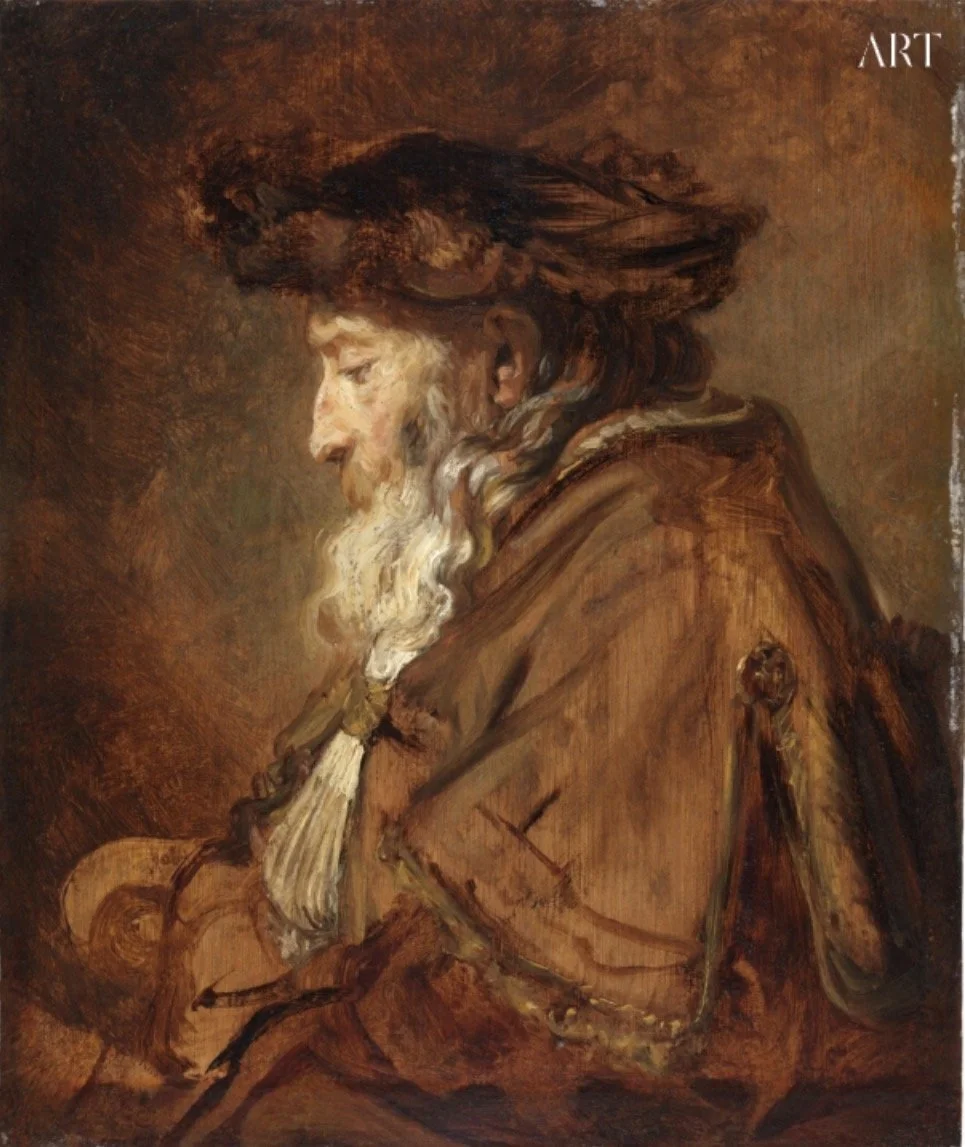
The painting he says he would never sell, if he were forced to name one he couldnot part with, is the smallest. It is a head of an old man in a few square inches of oil on panel, done in 1633, when Rembrandt was twenty-six. Andrew Mellon, the American Treasury Secretary who helped found the National Gallery of Art in Washington and gave away nearly everything he collected, kept this one. According to the story as Kaplan tells it, Mellon carried it with him in a small leather case wherever he travelled until he died. It is a luminous face that looks uncannily like God.
Kaplan wanted it for fifteen years. He kept asking Sotheby’s, which had last sold it, whether the owner might ever part with it, and the answer was always no. Then a former Sotheby’s specialist said he knew the owner and could ask. The owner agreed, at a price that Christie’s, in Kaplan’s account, later calculated to be the most expensive painting per square inch ever sold, more even than Salvator Mundi. That figure is his to stand behind, not mine, and I have found no independent calculation of it. What matters to him is the story of the yes. “If I don’t say yes,” he told me, “I’ll kick myself forever.”
There is a moral buried in that story, and he is not shy about it. Mellon, a financier who put the pieces of his collection into a national museum, held back one small treasure. Kaplan, a financier who put the pieces of his collection into a lending library, may be doing something close to the reverse. He holds most things lightly and is quite clear about which of them he does not.
You don’t really own art. You borrow it. In our case, we have been borrowing a great deal of it, and we have a responsibility to do things right. —Thomas Kaplan
The lending library came out of that attitude. When the Kaplans started, he and Daphne decided at once that nothing they bought would go into a private room. The paintings would travel, and the collection, which Daphne named after Rembrandt’s birthplace, would remain faceless. “We began lending,” he says, “and we have relationships with, I think, eighty museums around the world.” It was only when scholars persuaded them that a catalogue had to be published, and that it should go online, that they stepped out of anonymity. They opened in Paris, at the Louvre. After that the collection went to the National Museum of China in Beijing, to the Pushkin in Moscow and the Hermitage in St Petersburg, to the Louvre Abu Dhabi, to Amsterdam, and more recently to Palm Beach.
He describes the point of all that travel as a mission, which is a word he uses for almost everything. He wants to show how much of contemporary art still runs on Rembrandt. He calls it the genetic transmission of Rembrandt, a line of descent that begins in the painter’s own habit of breaking rules and runs through thartists who came after him down to the present. “All painting is contemporary when it is made,” he told me. “Rembrandt was a contemporary artist. They all were.”Owning a Rembrandt self-portrait in the seventeenth century, he suggests, meantwhat owning a Monet water lily or a Gerhard Richter means now: that you had money and taste.
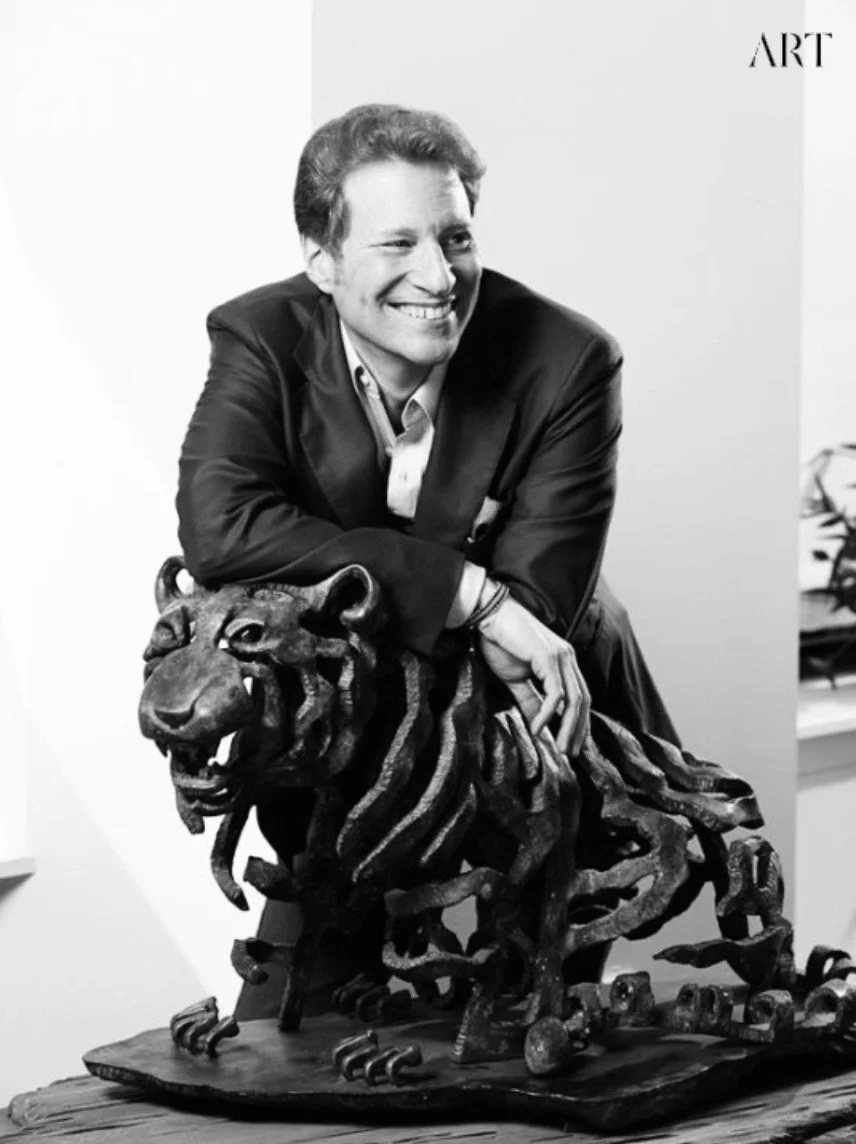
It is a good argument, and it explains why he cares about how the paintings are shown and not just where. Asked whether he enjoyed seeing his lion on the wall in Abu Dhabi among other works, he said yes, then added that the Kaplans have never llived with the paintings, which have been “more of a mission.” What they have lived with is the furniture Daphne started collecting early, European design of the 1940s and 1950s, before it became fashionable. For a time they kept a gallery above his office in New York. Paintings would arrive there before going out to museums, and the room, as he describes it, mixed Carlo Mollino and Jean Prouvé with Brazilian hardwood floors and white walls and Old Masters. “And it sang. It was absolutely gorgeous.” It made the case that you don’t need Louis Quinze furniture to hang with an Old Master.
It is easy to take Kaplan’s detachment for a pose, since it is the kind of thing a very rich man would say. What persuaded me otherwise was the way he talks about the objects themselves. He does not describe prices or provenance first. He describes a woman at a virginal, the single note hanging in the room as she turns toward whoever has just come in.
“If you look at her hands,” he said of the Vermeer, “what you see and hear is that
one note hanging in the air. She has a very pleased look on her face. You just hear that one solitary note.” Rembrandt, he says, is a splash, all thick paint and broad brushwork and colour, particularly as he got older. Vermeer is a different kind of magic, the solemnity of one moment in time. It was the first thing he named when I asked him which painting in the collection taught him what it means to be still.
That sense of stillness runs against the public image of Kaplan, which is of a man in a hurry. He has built companies, sold them at the right moment, raised a conservation organisation from nothing and put together one of the most concentrated art collections of the century in about two decades. When I asked how he thinks about all of it, he went back to the discipline he studied. Applying history, he said, has been his greatest advantage since he was young. He reads a market, a painting or a country as a sequence of causes, and asks what came before and what is likely to follow. It is the habit of a man who went to Oxford to study the past and has been using it ever since to decide what to do next.
It also explains something about the way he collects. He does not buy by category or by trend. He buys by argument, and each painting has to make a case for itself inside the larger story he is telling about Rembrandt and the people around him. The portrait of a woman in a white cap, the history paintings, the small bearded head, the Vermeer that hangs in the air: seen together they say that a seventeenth-century city produced a way of looking at people that artists have been borrowing ever since. That is the thesis behind the collection, and it is why he talks about teaching as much as owning.Dealers, curators and scholars have all weighed in on whether so much of the Rembrandt market should have ended up in one set of hands. Kaplan’s own answer, the one he gave me, is that the paintings were not leaving the public eye but entering it. Before the Leiden Collection came out of anonymity, many of them could be seen only by the handful of people who knew who held them. Now they are catalogued, studied and lent to museums on four continents. Whether that settles the argument is for others to say. What is clear is that the collection works as he said it would: it travels, and he stays behind.
The other promise, the one he made at ten in Florida, took longer to keep. Kaplan could not become a field biologist, so he waited until he could pay for them instead. He and Daphne spent years visiting reserves in search of tigers and leopards, and he describes what followed as a natural next step. “The organisation I felt was needed just didn’t exist, and I had no choice.” Panthera began in 2006 as a start-up backed by the two of them, and he says it is now the leading big cat conservation organisation in the world, working in about fifty countries. When people think of cat conservation, he told me, they know it’s Panthera.
The argument behind it is simpler than the machinery. Big cats need space, prey and protection from people, so protecting them protects the landscapes they live in. “Save the cat,” he says, “and you save the land.” The numbers for lions are blunt. Panthera puts the wild population at roughly twenty-four thousand, down from an estimated two hundred thousand within living memory. Other conservation groups count differently, but the direction is not in dispute.
I want people to understand that by saving cats, you preserve vast, critical landscapes. Cats need land to roam, food, and protection from human persecution. — Thomas Kaplan
When he wanted to show me how far the work has travelled, he pointed out an Arabian leopard behind him, in the room where we were speaking. The animal is breeding, he said, and the cubs will be reintroduced into AlUla in Saudi Arabia, where Panthera advises the government on captive breeding and release. “When you see the Arabian leopard in Saudi Arabia,” he said, “that’s us doing the work.” It is a regional story, and the lion’s tour touched it twice, in Abu Dhabi and at Diriyah in January. That is the part that makes the Abu Dhabi stop worth dwelling on. Kaplan is Emirati. He says so plainly and with evident pride, and he told me he was, as he understood it, among the first Jews to be granted citizenship in the Emirates, years before the Abraham Accords. I have not been able to confirm that detail independently, and I give it here as he gave it to me. What I can say is that hisrelationship with the country is long and practical. He talks about it the way a historian talks about a government he has watched for a long time.
“I think Abu Dhabi, and its leadership, is one of the most enlightened in the world,” he said.
The two best-managed countries in the developing world, he argues, are the Emirates and Singapore, and the reason the first has done so well is that Sheikh Zayed’s vision, carried forward after him, taught the country how to avoid the resource curse that brought down others that had oil or minerals and wasted them. He named Nigeria, Venezuela, Gabon and Indonesia. The Abrahamic Family House on Saadiyat, he said, is “a holy place.” These are the opinions of a man who lives with a certain amount of gratitude toward the place, and they should be read that way. He is not a neutral observer. He is one of its citizens. He also told me about a phone call. After the Leiden Collection opened its exhibition at the Louvre Abu Dhabi, Mohamed Al Mubarak, who chairs the Department of Culture and Tourism, rang him to say that it was the first show there in which more people had come to see the exhibition than the building. “That is a milestone for us,
” Al Mubarak told him. “And I’m proud that we contributed to that,” Kaplan
said, though he is quick to hand the credit to the museum and its curators. That show was in 2019. Six years later, the lion came back to the same emirate, on the other side of the capital, for one last look before it was sold. I asked him how it felt to see a Rembrandt on a wall in Abu Dhabi among so many other works, and the question made him smile. He said he enjoyed it. “We haven’t lived with the paintings. They’ve been more of a mission.” Then, almost in passing, he named the thing that seems to me to explain the rest: it is not the paintings he came to the Gulf for, or for that matter the cats. It is the chance to show what a person can do with a collection, which is not the same as having one.
The week the lion hung at the St Regis, Abu Dhabi was less than a year from hosting Frieze for the first time. For much of the art world the Gulf used to be a stop on the way to somewhere else, and it has become a place people travel to on purpose. A Rembrandt the size of a postcard turned up in the middle of that, and nobody seemed to find it odd. It helps to remember what kind of object Kaplan was selling. Rembrandt drew constantly. Hundreds of his sheets survive, and they are the most direct evidence we have of how he thought, because he drew people in the street, beggars, his wife, his son, and animals, quickly and without the finish he gave a painting. A drawing of a lion is rarer than most, because lions were rare in the Netherlands. A creature that size would have arrived as a spectacle, in a cage, and an artist who wanted to see one had to go and look. The sheet that Kaplan owned shows a young animal lying down with its head lifted, and the confident economy of the chalk is exactly what the Dutch art market of the time valued in a draughtsman.
You can make out the weight of the body, the settled paws and the alertness of the face in a few passes of the hand.Four centuries on, the animal in the drawing is no longer a curiosity for Dutch crowds. It is an animal whose range has collapsed across most of the continent it once ruled. That was the thought Kaplan kept returning to when we spoke about the sale: that a picture made to satisfy curiosity about a faraway creature has ended up paying for its survival. He does not claim the coincidence as proof of anything. But he is a historian, and historians are trained to notice when a long chain of events happens to close.
There is also a practical lesson in how he got there. He did not decide to sell the lion because the market was strong, though it was. He decided because Panthera was turning twenty and he had spent two decades learning that the best way to honour an institution is to give it the means to outlive him. A conservation group is only as good as its funding is stable. An endowment turns one extraordinary evening into a permanent income. In the language he uses about collecting, it is the difference between acquisition and deployment, a word he returns to often, and the lion is the largest single deployment he has made.
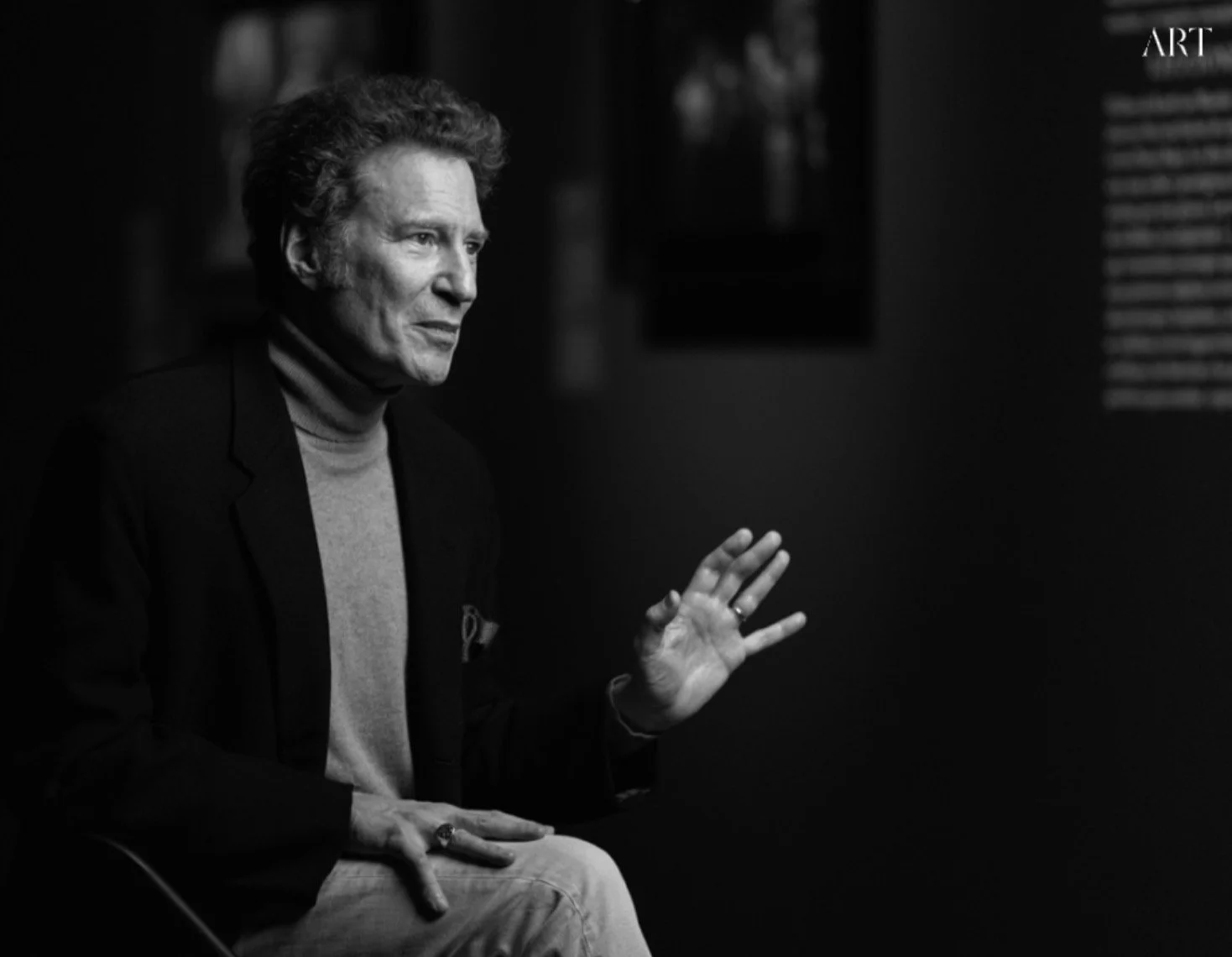
Dr. Thomas Kaplan, Co-Founder of The Leiden Collection. Photo by JeanCarlos Ramirez. Courtesy of The Leiden Collection
I asked Kaplan, near the end of our conversation, whether he wanted to leave a legacy. He was quiet, in the way people are when they have actually thought about something instead of preparing to appear to. Then he said no. “I don’t think of legacy. I consider every day a good day if I’ve managed to advance at least one of my missions. And when those days are up, that’s how I’ll be judged, and forgotten in due course. That’s perfectly fine by me.”
He read Marcus Aurelius at fifteen, he told me, and took one passage to heart: that each of us is a grain of sand on a vast beach, on a speck in a vast universe. “I looked at that even at that age and said: if I have an ego, I’m a fool.” He would rather ask what a person did, and what they left for others to be able to do with the fruits of their work. After ten years, he says, people forget. After fifty, certainly. “But the work doesn’t forget itself.”
That sounds modest, but it comes with a stubborn core. “I have to impress myself,” he told me. “I don’t care about impressing other people. And that means moving the needle on the things that I care about,” by which he means the lion, the cats, Rembrandt and the protection of cultural heritage. He puts down his intensity to nature and not to nurture. “If I’m in, I’m all in, and wildly passionate.” He is aware that this has an effect on people. When someone asked him why the press has been so kind to him over the years, he decided it was because he comes across as passionate, and that anyone meeting him has to make a quick decision. “He’s either incredibly sincere or he’s a sociopath,” he told me with a grin. “And thus far, nobody has concluded that I’m a sociopath.” Self-knowledge, he added, is not his strong suit. He assumed until his fifties that everybody was as passionate as he was.
I have to impress myself. I don’t care about impressing other people. That means moving the needle on the things that I care about. — Thomas Kaplan
It is worth setting that beside what actually happened on the evening of 4 February. Sotheby’s New York put the lion up as Lot 201 in its Master Works on Paper from Five Centuries sale, with an estimate of $15 to $20 million. The hammer came down at $15 million, which with fees made $17.86 million. That is the highest price ever paid at auction for a Rembrandt drawing, roughly five times the old record. It carried the evening’s total to $19.8 million. The buyer has stayed anonymous. Gregory Rubinstein, the house’s head of Old Master drawings, said it
“cements Rembrandt’s place among the kings of drawings.”
Kaplan did not react the way I expected a man to react who had just sold the first thing he ever bought. He called it a deeply moving moment of symmetry, and I took him to mean the circle of it: a young lion drawn by a young painter, first in a collection that began with it, then sold for the animals it portrays, on the twentieth anniversary of the organisation that exists to protect them. Whether that is mere symmetry or something Kaplan arranged is a question I think he enjoys leaving open. The money has a defined job. All of it goes to Panthera to build an endowment, and Kaplan describes the endowment as the point of the exercise, since a conservationgroup that depends on year-to-year giving has to keep asking, and one with an endowment can plan across decades, which is the time scale on which a lion population recovers. Sotheby’s also paired the sale with a companion work, Young Lion Vanished, which makes the point plainly: the animal Rembrandt drew is the one that is disappearing.
$19.8M
Evening total
Sotheby’s New York
4 February 2026
Best Old Master drawings evening in the house’s history The lion accounted for $17.86 million of the total. Sotheby’s recorded the previous Rembrandt drawing auction record at $3.7 million, which makes the result nearly five times the old figure.Nine months on, the sale reads differently from how it did that winter, because the questions it raised have kept going. What does a family do with a collection of eighteen Rembrandts and an oldest son who, asked what he would do with the lion, worked out the answer for himself? Kaplan has said for some time that he is thinking about that. In September 2025 he announced Project Minerva, a plan to let a wider group of people share in owning part of the collection, on the idea that a work that cannot be cut into pieces can still belong to more than one person. I could not confirm where that stands as this issue goes to print. What he told me was that his children care about the cause and not about being the owners. It is in that light that I would read the day the lion left the room. Kaplan is not giving up on Rembrandt. He is working out how Rembrandt gets to the next generation without being stuck in a vault or a family argument, and he has found one answer in a drawing the size of a hand. The lion is the cleanest case because there was no argument to have. Everyone in his family wanted the same outcome.
I said something like that to him at the end, that the objects come and go while the people and the stories stay. He agreed, and went further: “It’s not a particular artwork. It’s that we ended up creating and building this collection at all.” It taught him a good deal about himself, he said, and confirmed what he already knew, that at the end of the day it is not a materialistic love for the objects. “It’s what they represent and how I can use them to advance a cause.”
The lion, meanwhile, is somewhere I have not been told. Wherever it hangs, it is looking at the same thing it has been looking at for nearly four centuries, just outside the frame. On a December afternoon in Abu Dhabi, it was easy to believe it was watching the room. Kaplan, for his part, was already on to the next thing. Not the next painting. The next cause, he told me, that would be worth everything he has.
BY OONA CHANEL
