

Jet-lagged and just in from Africa, Alex Van Gelder ordered a cocktail in Montparnasse and found himself talking to Louise Bourgeois. It was the start of a friendship, and, decades later, of the portraits that defined her final years.
INTRODUCTION BY OONA CHANEL
Some stories stay with you. Alex Van Gelder told me this one years ago, and I have never forgotten it.
Before he was a photographer, Alex was a collector, travelling through West Africa in search of sculpture. Louise Bourgeois, born in Paris in 1911, had lived in New York since 1938, and by the time they met she was on her way to becoming one of the defining artists of the century. A chance meeting at a café table in Paris led to a friendship between them and, in time, to the portraits he made in her New York home between 2008 and 2010: her face, her hands, her working days, gathered in the book Mumbling Beauty(Thames & Hudson, 2015). The images on these pages are published here for the first time, courtesy of Alex.
What strikes me, every time he tells it, is how little of the story is about fame. It is about two people who recognised each other: a collector with a crate of unknown sculpture, and an artist who had spent her life looking hard at objects. This is how it began, in his words.
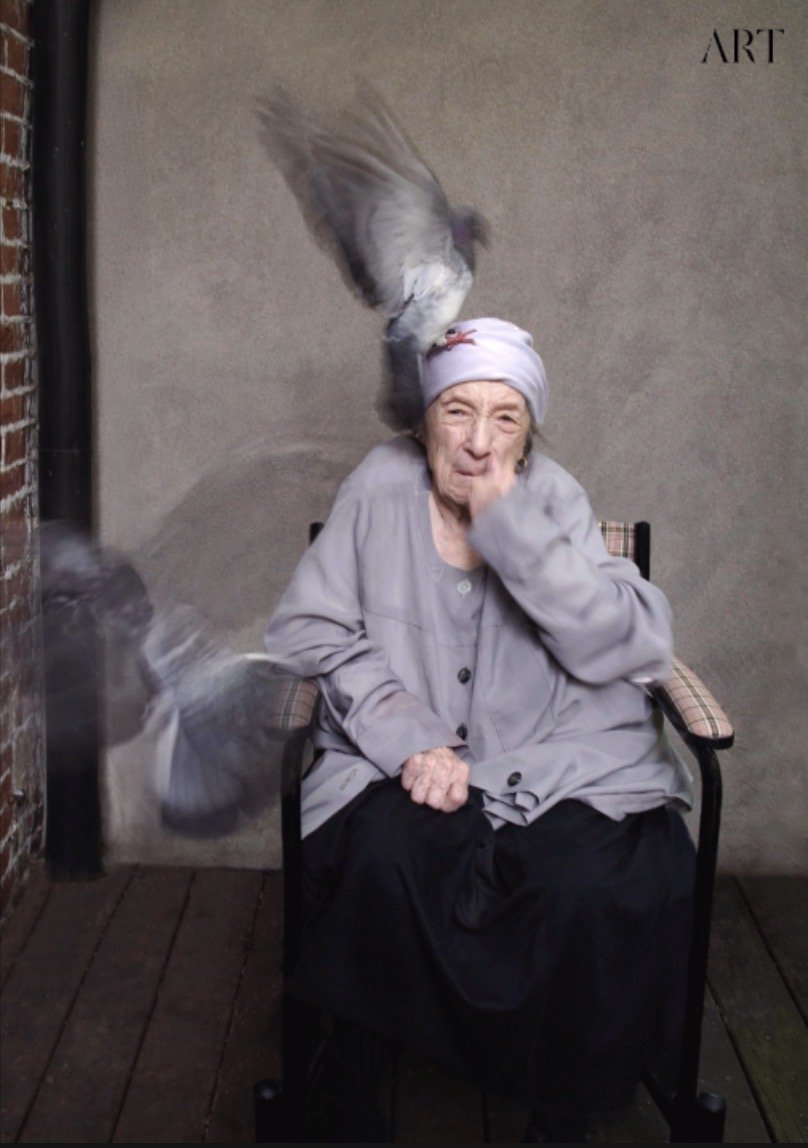
Louise Bourgeois photographed by Alex Van Gelder, New York
"The first time I met Louise was in Paris. She had flown over from New York for the unveiling of a sculpture, the first time, as I remember it, that the French had bought her work.
"That same day I had flown in from Africa, where I had been collecting. Instead of going to bed with jet lag, I decided to have a drink at my favourite café, Le Select in Montparnasse. I ordered a cocktail. I was sitting next to an old lady. We started talking, and she turned out to be Louise Bourgeois, the artist.
"We talked about contemporary art, about Andy Warhol and the other people in New York. Then we got onto the African art I was collecting, and she told me about the sculpture she was showing. I invited her to visit my collection.
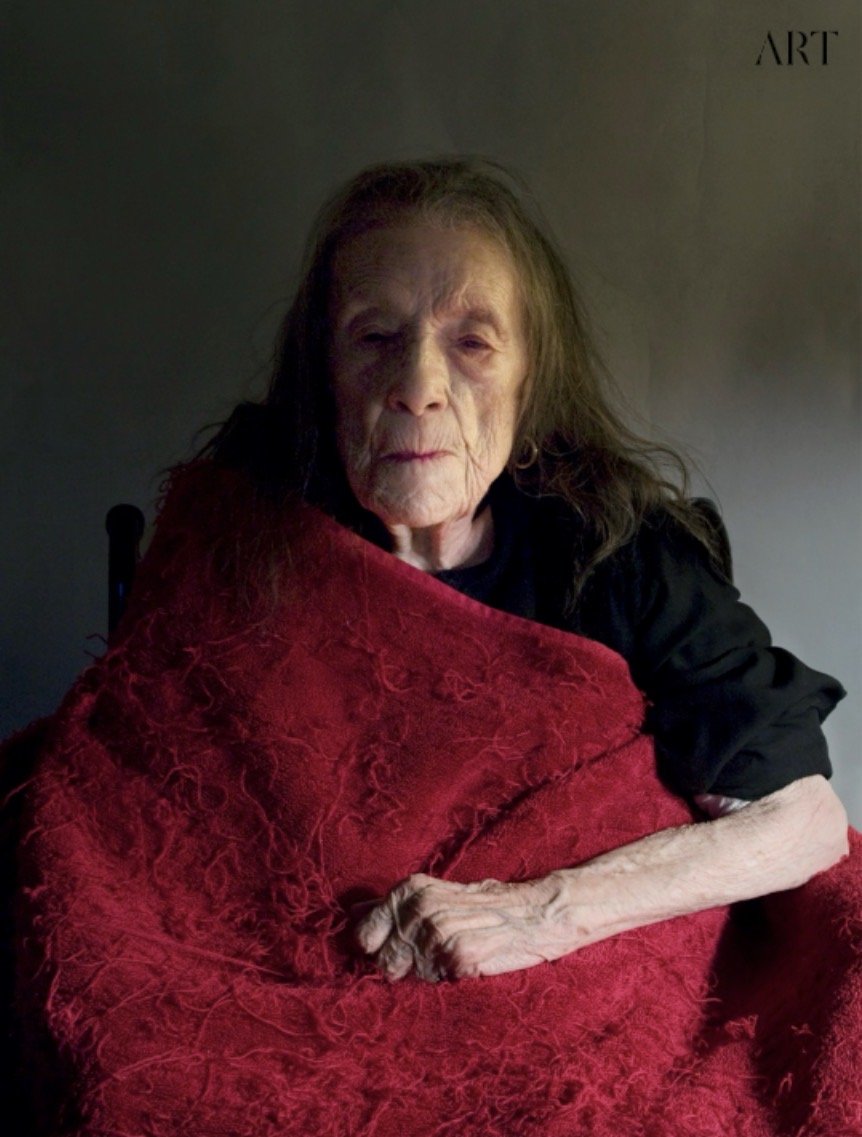
Louise Bourgeois photographed by Alex Van Gelder, New York
"Louise knew a great deal about African art. Her husband, Robert Goldwater, had been the founding director of the Museum of Primitive Art in New York, whose collection later went to the Metropolitan Museum. Straight away she was very excited by the quality of the choice. Most of the pieces came from a people whose sculpture, until then, was unknown.
"In the end we spent most of her time in Paris together. Before she left, she asked me to come back to New York with her. She would introduce me to the artistic underground. But I decided to go back to Africa. Now and then I would visit her in New York.
"In the meantime, I became a photographer. I would show my work in Paris, and almost always they said the same thing: 'C'est pas mal.' Not too bad. So I asked Louise if she would have a look at my work. She studied the photographs intensely, and then she said: 'I like the photos very much.'
"From then on, we decided to work together. She turned out to be the most interesting model, whatever her age. I tried to show her as alive as possible."
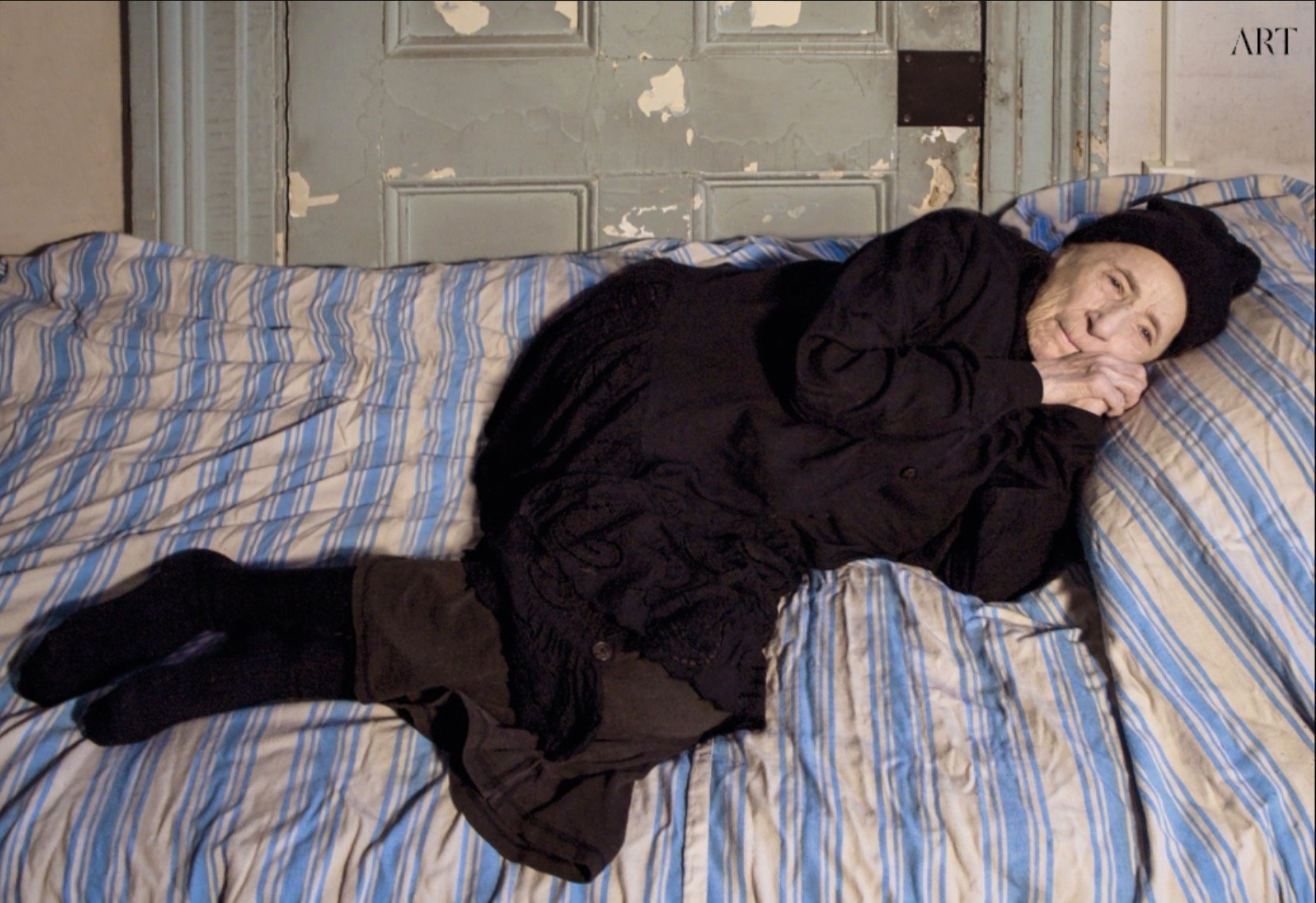
Louise Bourgeois photographed by Alex Van Gelder, New York
Louise Bourgeois became one of the most important artists of her time. She died in New York in 2010, at 98. She is buried beside her husband in Cutchogue Cemetery on Long Island. There are no words on the grave, Alex says, and no name.
Perhaps that is fitting for an artist who put everything into the work. There is no mistaking her in these pictures. She is exactly as Alex wanted to show her: alive.
Alex Van Gelder is a photographer and a collector of twentieth-century West African photography. Born in Antwerp, he lived in London and West Africa before settling in Paris, where he lives and works. His years in Africa shaped a practice that returns to death, disintegration and transformation; his photographs are visceral and contemplative, attentive to the body and to how little of it lasts. His series include Meat Portraits, made in an open-air slaughterhouse in Benin and shown at Hauser & Wirth London in 2014, and Line of Inquiry, shown at Cheim & Read in New York in 2012. He is best known for his collaboration with Louise Bourgeois: a portfolio of eighteen photographs of her hands, exhibited as Armed Forces at Hauser & Wirth Zürich in 2011, and the book Mumbling Beauty: Louise Bourgeois, with an introduction by Hans Ulrich Obrist, a portrait of the artist in the final years of her life. His collection of West African photography was the subject of Life and Death in Benin at Fotomuseum Winterthur in 2005, published by Phaidon as Life and Afterlife in Benin. His interest in the deathbed portraits of Benin runs directly through his own work, giving it its depth and coherence.
BY OONA CHANEL
