

As Abu Dhabi Art becomes Frieze Abu Dhabi, its director Dyala Nusseibeh talks to Author about what must not be lost, who regional names are made for, and the artists who built a scene before there was one.
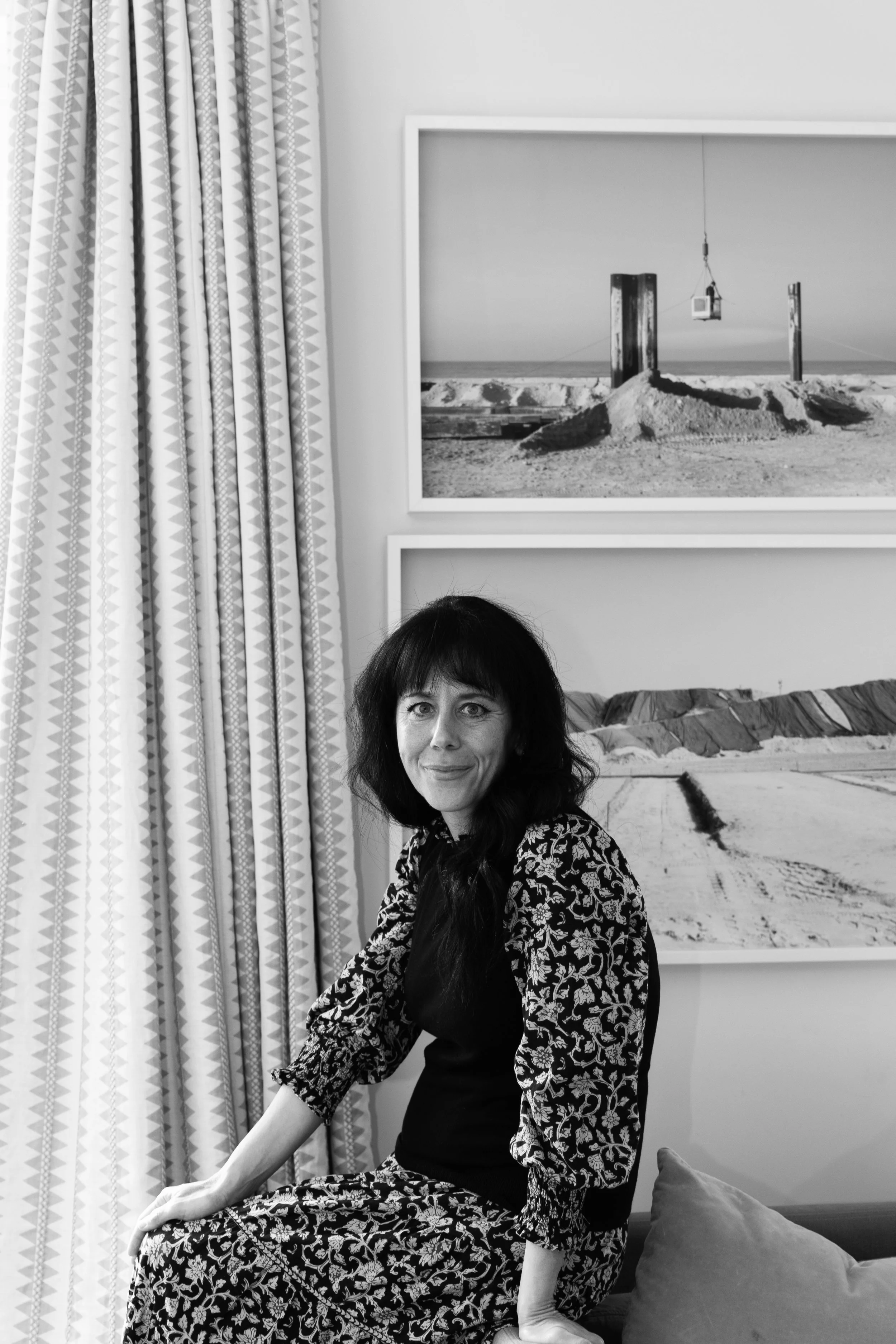
Picture by Dyala Nusseibeh
For seventeen years, Abu Dhabi Art did something unusual for an art fair: it built a public before it built a market. People came back year after year to look, listen and meet. Teenagers who first wandered in with their families returned as collectors. Young curators found artists in its aisles and carried them into museums and biennials. This week at Manarat Al Saadiyat it becomes Frieze Abu Dhabi, with more than 80 galleries from 37 countries and regions, a Frieze Masters section framed by the Indian Ocean, and a regional vocabulary that is still settling.
At its centre is Qubbat Duris, a new commission by the Beirut- and London-based artist Dala Nasser, the first winner of the Frieze Abu Dhabi Artist Award. It takes its name from a 13th-century monument near Baalbek in Lebanon's Bekaa Valley, where fragments of Roman sarcophagi rest on granite columns from earlier centuries: a single structure built from several pasts. In the atrium, Nasser drapes a timber frame evoking the site with paintings on textile made from charcoal rubbings of the ruins, ash, raw clay and terracotta. It is a work about how materials carry memory, and about landscapes at risk of disappearing: a fitting emblem for a fair that hopes to carry its own memory into a new life. Around it, In Dialogue pairs Mohammed Kazem with the younger Emirati artist Alia Zaal in At Another Meeting Point, and Frieze Sculpture takes works by Mohamed Ahmed Ibrahim, Zeinab Alhashemi and others out to Mamsha Beach until 16 December.
Dyala Nusseibeh, who has directed the fair since 2016, is the person charged with that handover. It carries obvious risks, and she does not pretend otherwise. What she would least like to lose, she says, is "the freedom to encounter art without feeling that one needs to buy it." But she refuses the easy opposition between public and market. In a young ecosystem, she argues, galleries have done much of the work of introducing artists and sustaining careers, and the two have to grow together.
Our questions pressed on the fault lines: who a name like WANASA is really for, how a fair can stage centuries of Indian Ocean trade without turning history into décor, and what an institution owes to the generation of Hassan Sharif and Mohammed Kazem, who made their own studios, audiences and terms when there was no infrastructure at all. She answers as someone who has spent a decade inside the machinery and still believes in its public purpose.
Oona Chanel: Abu Dhabi Art spent seventeen years building a public before it had a market. Frieze arrives with the market already attached. In handing one to the other, what kind of looking are you most afraid of losing: the slow, unhurried attention of people who came with no intention of buying?
Dyala Nusseibeh: Abu Dhabi Art was shaped over seventeen years by an engaged and committed public, many of whom developed a relationship with the fair long before they developed an interest in collecting. People returned year after year to discover artists, attend talks, meet galleries, reconnect with friends, or simply spend time with art. Some first came as teenagers with their families and later became collectors. Others arrived as emerging curators and went on to introduce artists they encountered here into museum exhibitions and biennials. These are the kinds of relationships that take years to build and are among Abu Dhabi Art's most important legacies.
What I would be most concerned about losing is that sense of openness: the freedom to encounter art without feeling that one needs to buy it. Some of the most consequential encounters with art happen outside a commercial transaction, and we want to preserve the conditions that make such connections possible. Fortunately, the global family of Frieze fairs embodies that ethos, notably the flagship fair in London, so we are not radically changing through this evolution into Frieze Abu Dhabi.
At the same time, I don't see the development of a public and the development of a market as opposing forces. In a relatively young art ecosystem, galleries have been instrumental in introducing artists, building knowledge and sustaining artistic practices. The two can, and should, grow together. Frieze Abu Dhabi brings an opportunity to connect an already established local and regional ecosystem with a wider international network. Alongside the anticipated opening of Guggenheim Abu Dhabi, it marks an important moment in the city's cultural development. The challenge, and the opportunity, is to ensure that the fair's curatorial programme, exhibitions and conversations remain as integral to its identity as its commercial ambitions. A successful fair should value sustained engagement from the community that supports it, as much as market growth and global integration for that market.
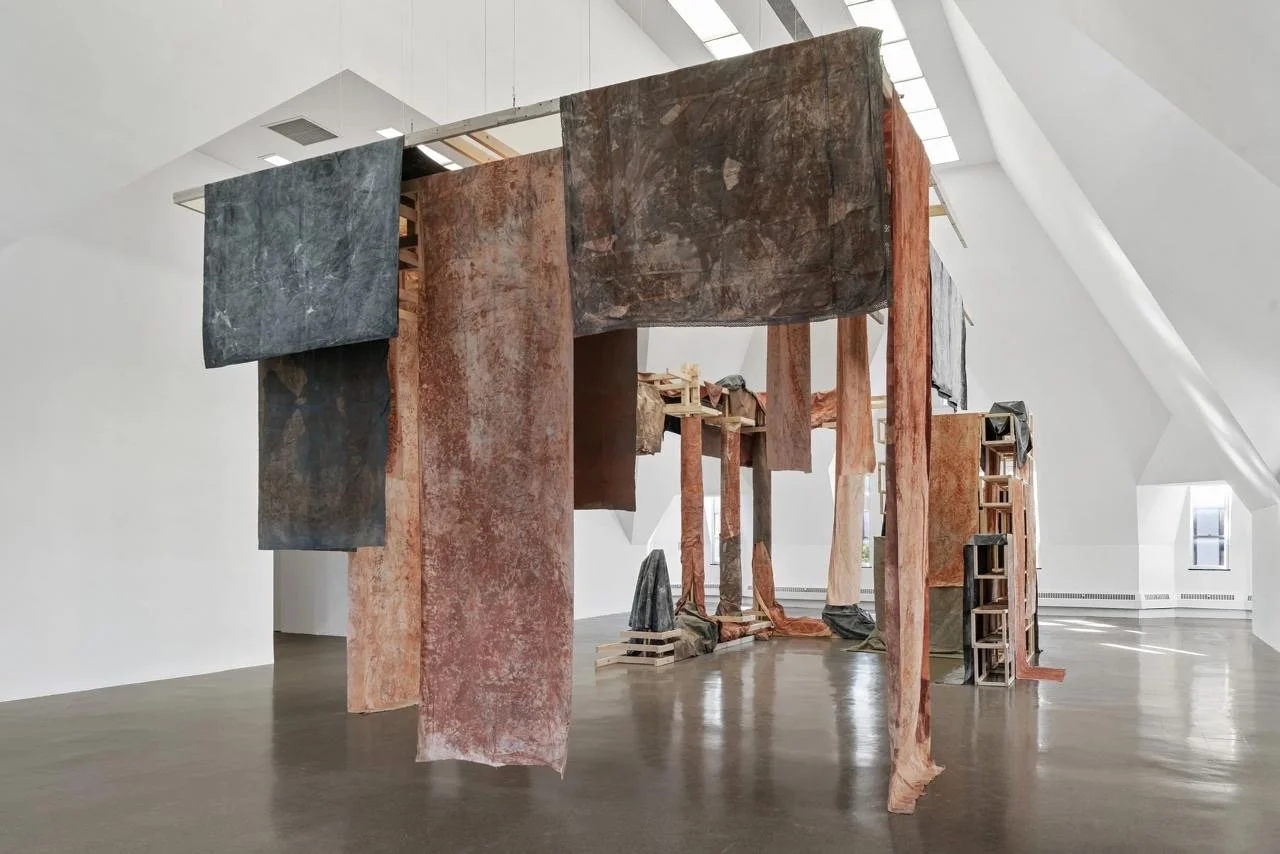
Installation view, Dala Nasser: Adonis Rive r, 2023, Renaissance Society, Chicago. Courtesy of the artist, Renaissance Society and Commonwealth and Council. Photo:Bob
O.C. Frieze has given the region a new name. WANASA folds West Asia, North Africa and South Asia into a single acronym. Names like this are usually made by those who need to organise a territory, not those who live inside it. Who was this one made for, and what does it let us see that "the Middle East" kept out of view?
D.N. I think the question of how a region is categorised, mapped and ordered, and from whose perspective, is an important one. The term "Middle East" emerged from a particular European geopolitical worldview, one that defined the region in relation to somewhere else. As the UAE historian Frauke Heard-Bey once observed, there is little reason for us to continue locating ourselves through the geographical perspective of Western Europe.
WANASA is not a term invented by Frieze, but one gaining currency as a way of thinking about West Asia, North Africa and South Asia in relation to one another. Its value is not in suggesting that these vast and diverse geographies share a single identity. Rather, it allows us to recognise histories of artistic, intellectual and cultural exchange that have often been separated by conventional art-historical categories.
Abu Dhabi offers a particularly compelling vantage point for this. The UAE's relationships with India, East Africa and the wider Indian Ocean world long predate the contemporary art market. Trade, migration and the circulation of people, objects and ideas have shaped this society for centuries. Looking at artistic practices through those connections allows us to see the region not as a periphery of other cultural centres, but as a place with its own histories of exchange, influence and innovation.
The value of WANASA as a term lies less in establishing a new geographical category than in opening up new lines of enquiry. What happens when we examine artists and movements through the relationships that connected them, rather than the boundaries that separated them? What affinities emerge, and where do meaningful differences remain?
Of course, any regional designation risks becoming reductive if it is treated as a fixed identity. WANASA should be a starting point for research and dialogue, not a label imposed on artists or a substitute for how they understand their own histories. What matters is not changing names on maps or in dominant discourse, but rather allowing for a plurality of perspectives to shape the art histories we tell.
O.C. Frieze Masters Abu Dhabi takes the Indian Ocean as its frame: centuries of trade, migration and labour that long predate oil. How do you stage that history inside a fair, a form built on transaction, without it becoming décor?
D.N. I think the Indian Ocean is a fascinating starting point because it allows us to consider Abu Dhabi's history within a much wider arc of cultural and economic exchange. The movement of people, objects and ideas between the Arabian Peninsula, East Africa, South Asia and beyond predates the formation of our modern states, and has shaped the region in profound ways.
For Frieze Masters Abu Dhabi, Marika Sardar, whose research has focused on South Asian and Islamic art, is developing this curatorial framework. Her intention is to invite reflection on the contexts in which artefacts, maps, manuscripts, objects and artworks were made, circulated and understood across time. Of course, histories of trade also involve questions of power and maritime dominance, and I think it is important that these complexities remain part of the conversation. I see the Frieze Masters Abu Dhabi section this year primarily as an opportunity to make new research and art historical perspectives accessible to a wider audience.
What I hope visitors will take away is a greater understanding of the extraordinary cultural connections that existed across the Indian Ocean, and perhaps a different way of thinking about Abu Dhabi's place within those histories.
O.C. In Dialogue pairs Mohammed Kazem with an emerging artist. Kazem came out of a moment when Emirati contemporary art had almost no infrastructure, when Hassan Sharif and his circle made their own studios, their own audiences, their own terms. What does a fair of this scale owe to that self-made lineage, and can an institution ever carry forward something that was born in its absence?
D.N. I think the contribution of artists such as Hassan Sharif, Mohammed Kazem, Abdullah Al Saadi and Mohamed Ahmed Ibrahim to the development of contemporary art in the UAE cannot be overstated. They were working at a time when there were relatively few opportunities or institutions supporting experimental artistic practice, and they helped create a community through their own commitment to making art, sharing ideas and mentoring younger artists.
What is particularly interesting is how influential that generation continues to be for artists working in the UAE today, even as younger artists develop their own concerns and approaches.
With In Dialogue, we wanted to create an opportunity to explore these relationships across generations. The inaugural exhibition brings together Mohammed Kazem and Alia Zaal, curated by Dirwaza Curatorial Lab, founded by Munira Al Sayegh. I think it is important that the conversation is shaped by curatorial voices from the UAE who have their own perspectives on this history.
An institution cannot reproduce the circumstances in which these pioneering practices emerged, but it can help ensure that their contributions are researched, understood and brought into dialogue with new artistic developments.
Ultimately, our role is to support artists in continuing to experiment and develop their practices, while introducing their work to new audiences locally and internationally.
O.C. You have worked here long enough to remember when the Guggenheim was a rendering. Between Christie's first sale in the city and the museum's opening, Abu Dhabi's ambitions all become real within six weeks. What is still unfinished? What remains, for now, only a drawing?
D.N. I think it is quite wonderful to see projects that have been in development for close to two decades coming to fruition. The opening of institutions such as Louvre Abu Dhabi, Zayed National Museum and now Guggenheim Abu Dhabi represents an enormous commitment to culture and its role within society, one with both deep roots and a long-term strategy driving it.
But I would say that cultural development is never really a finished project. The museums are an important part of the picture, but equally important are the artists, curators, galleries, educators, researchers and audiences who give these institutions meaning.
While we have already seen significant changes in the opportunities available to younger artists in the UAE, from university programmes and residencies to commissions, exhibitions and international representation, there is still more to be done in supporting sustainable careers, encouraging critical research and developing the wider cultural economy.
What excites me is that a new generation is growing up with access to institutions and opportunities that didn't exist before, while also drawing on the country's own cultural histories and traditions.
For me, the ambition is for Abu Dhabi to continue developing as a place where art is not only exhibited and collected, but also produced, researched, debated and enjoyed by the wider community. Dyala Nusseibeh is the director of Frieze Abu Dhabi. She was appointed director of Abu Dhabi Art in 2016 and led the fair until its transition to Frieze. Frieze Abu Dhabi runs at Manarat Al Saadiyat from 19 to 22 November; Frieze Sculpture Abu Dhabi is at Mamsha Beach, Saadiyat Island, from 16 November to 16 December.
BY OONA CHANEL
