

Sara Al Haddad, who represented the UAE in Venice in 2017, has spent this year stepping back from the art world to find the joy of making again. She talks to Author about trust, freedom, a room full of plants, and the work she is not yet ready to make.
Sara Al Haddad (b. 1988) is an artist born and based in Dubai. She received her BFA from the American University in Dubai in 2011 and, as a Fulbright Scholar, an MFA in Sculpture from the Maryland Institute College of Art in Baltimore in 2016. Working with crochet, yarn and textiles, she was one of five artists in Rock, Paper, Scissors: Positions in Play at the National Pavilion UAE, 57th Venice Biennale, in 2017. Her solo exhibitions include forget (,) to remember at Cuadro Gallery, Dubai (2018).
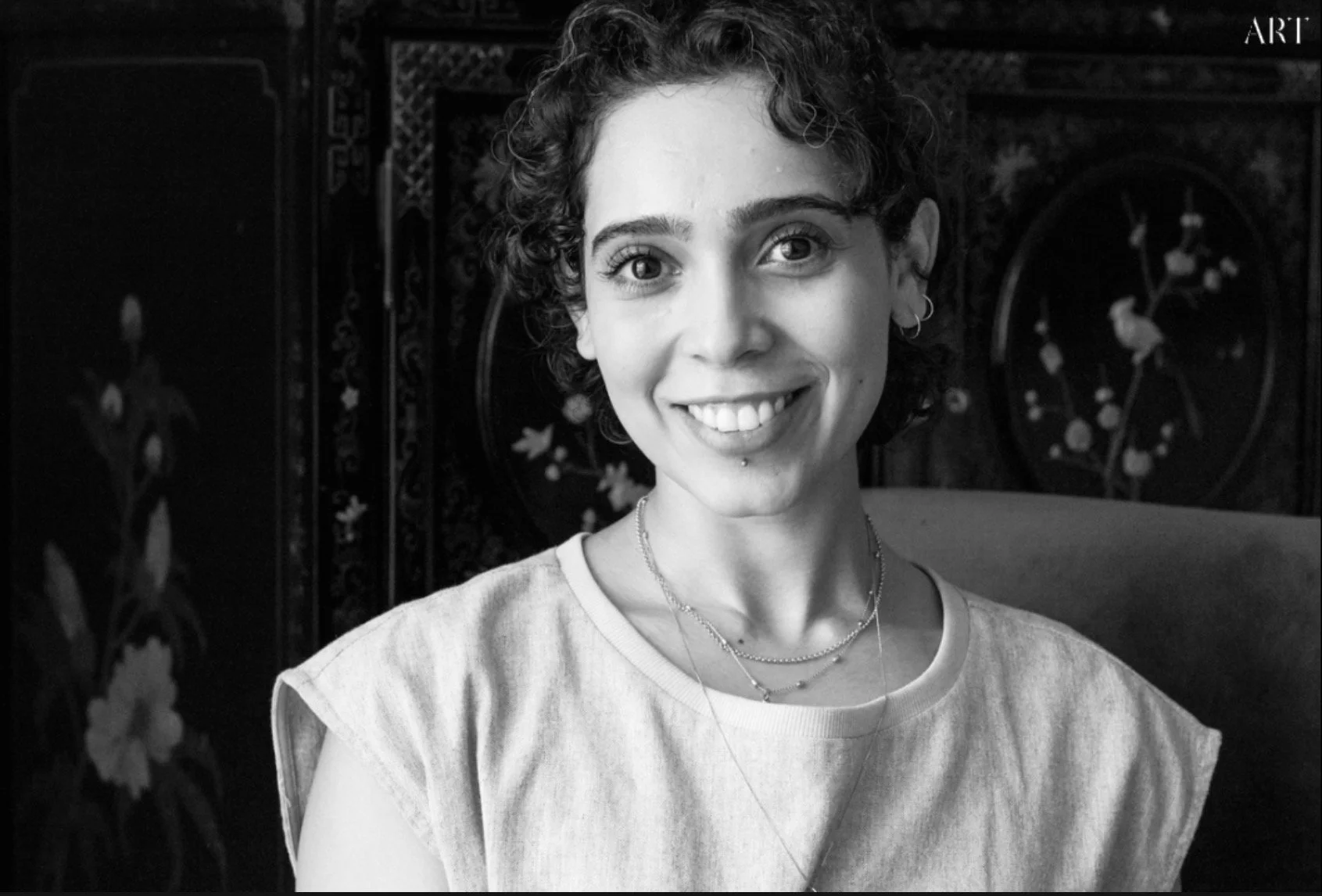
Picture by Sara Al haddad
Sara Al Haddad answered our questions close to midnight, in a series of voice notes recorded in the room where she has made almost everything. It was her first studio, and after a move to a bigger place that didn't suit her, it is her studio again. She took her time with each answer, thinking aloud, circling back, choosing her words with the same care she gives to a line of crochet.
Born in Dubai in 1988, Al Haddad works with crochet, yarn and embroidery thread, techniques long kept in the home, and turns them into installations about vulnerability, doubt and the difficulty of saying what you feel. In 2017 she was one of five artists in Rock, Paper, Scissors: Positions in Play, the National Pavilion UAE at the Venice Biennale, curated by Hammad Nasar, where she sheathed one of the pavilion's black steel pillars in layers of pink crochet. Her titles read like things said quietly to someone who may not be listening: as you try to forget me, don't you ever leave me alone, can't you see how i feel.
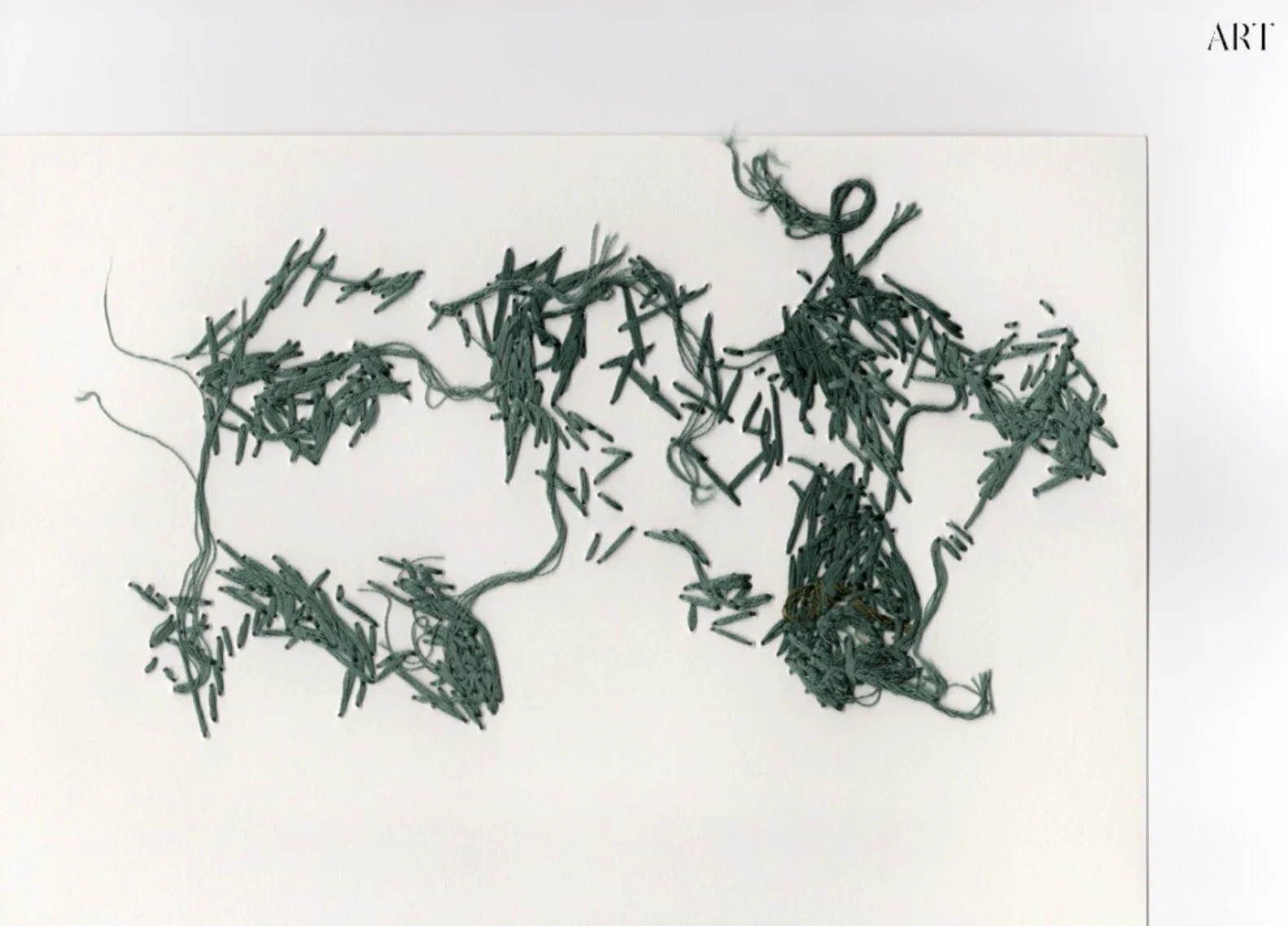
2025 Art Dubai
Asked what she had undone this year, and what she is about to repeat, she began with a distinction. "I'm more comfortable with undoing and repeating in my work than in life itself," she says. In the studio, unpicking a row is part of the process. In life, a pause can leave her feeling stuck, and it takes time to recalibrate.
What she has been trying to recover is something simpler. "Art was so simple before the art scene came into everything," she says. "There was, and still is, a huge level of fun and comfort and freedom in creating, in putting feelings into an object, or creating an object out of feelings." Bringing that back has meant sitting down and making for its own sake. "Sometimes fun really means not thinking anyone will be able to see it."
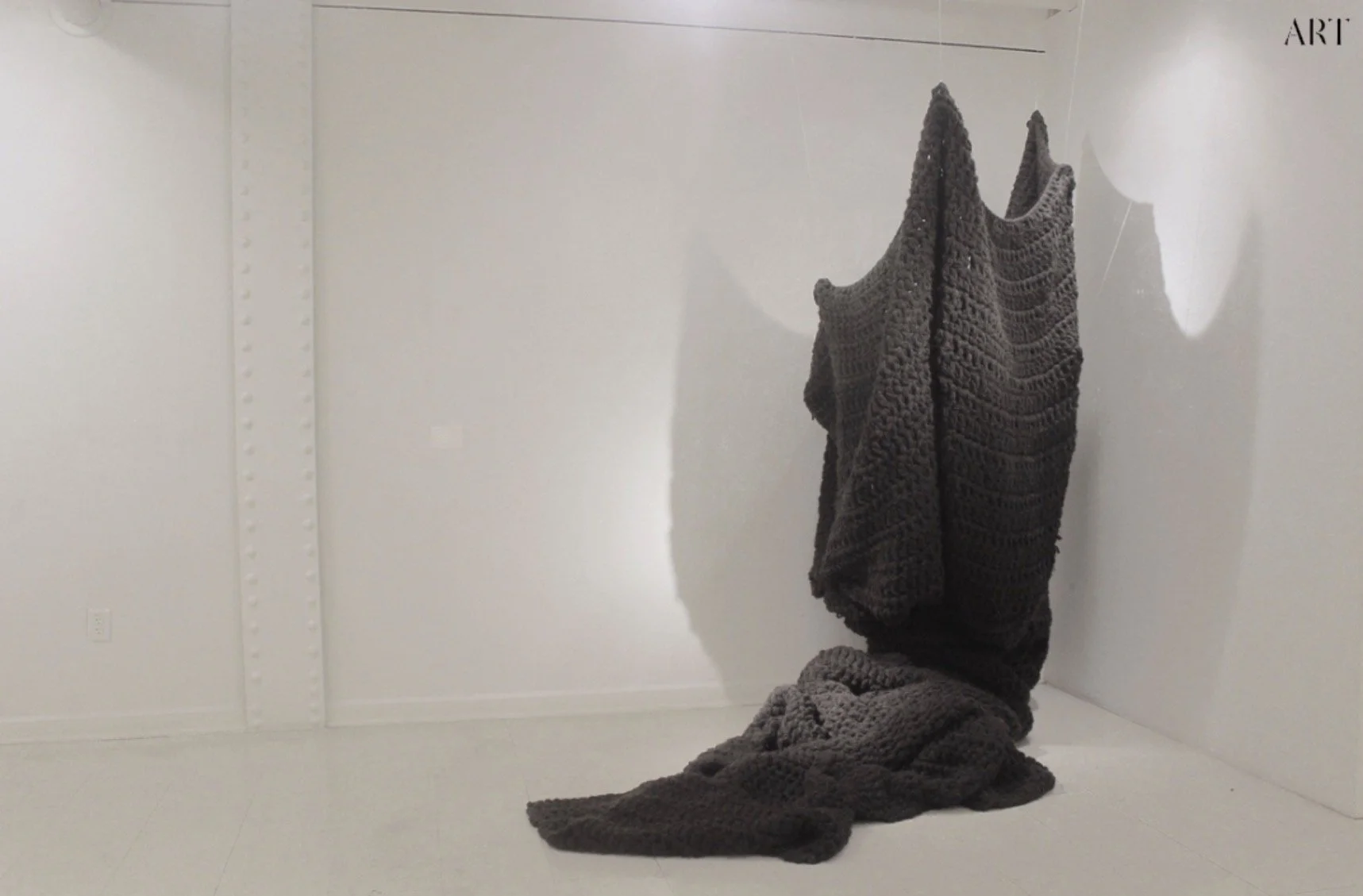
As you try to forget me (2015-2019)
It is a return to where she started. "I started to create because I didn't know how to communicate, or I felt that the way I communicated did not achieve what I thought it could," she says. "Making art was always my way of understanding myself and reconnecting with myself."
So this year she stepped back, to ask a harder question. "Who am I outside of that? How much of my identity is tied to being an artist, or to having that outlet?" The answer surprised her. "I started seeing how there is art in everything I do, everything I see and everything I think of," she says. "There is a lot of artistry and creation in each one of us, whether or not it is recognised by a title or by anyone." What she is determined to repeat, she says, is "living life".
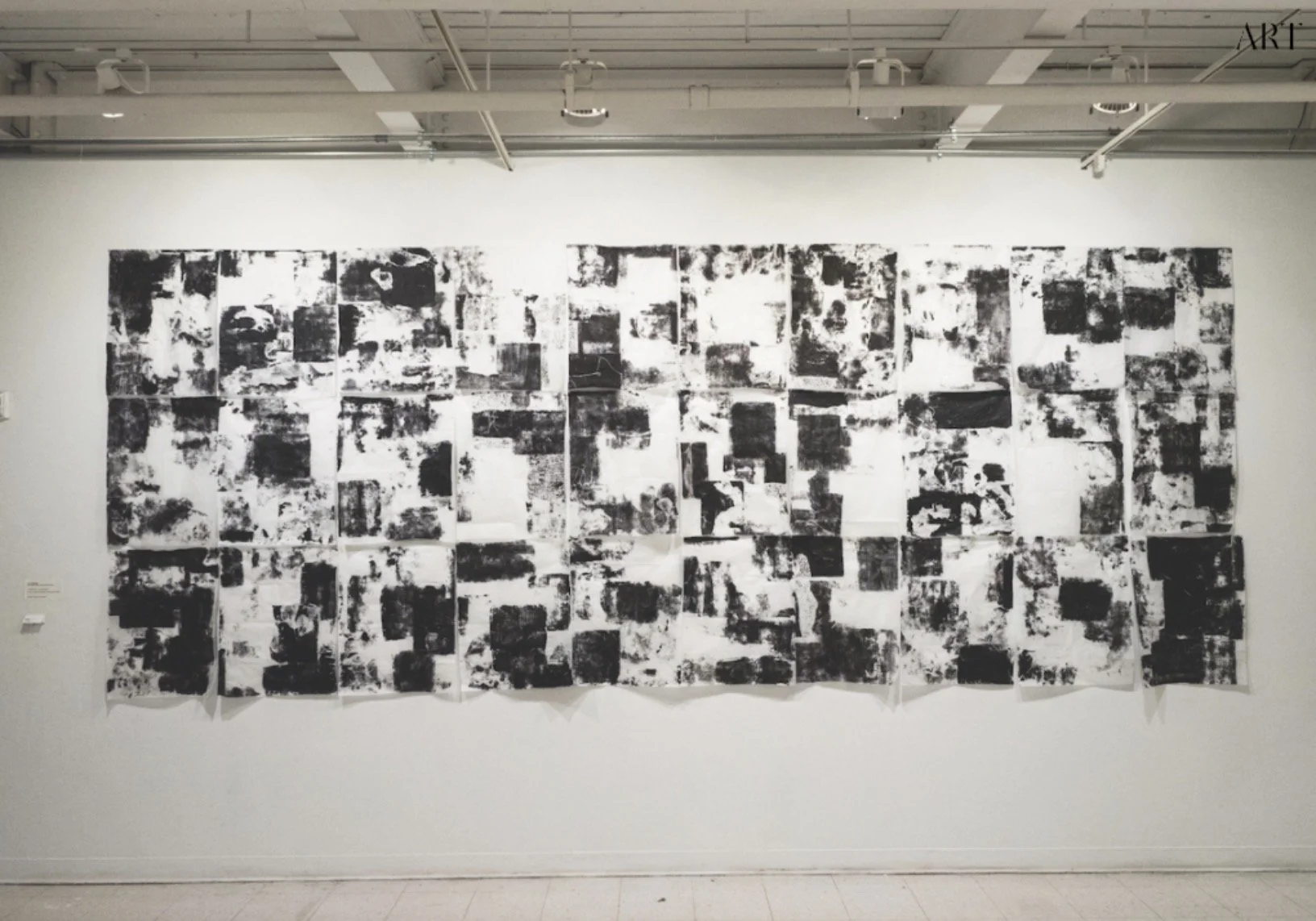
Venice, when it came, was "another one of those dreams that I didn't know I had." Asked whether she carried the UAE there, or it carried her, she does not hesitate. "I would say the UAE carried me more than I carried the UAE." The first time the dream felt real was earlier still, when a self-portrait she made as her undergraduate senior project went on show at LACMA. "I really think seven-year-old Sara would have been proud of how far I've come," she says. "Many times, it still feels like a dream."
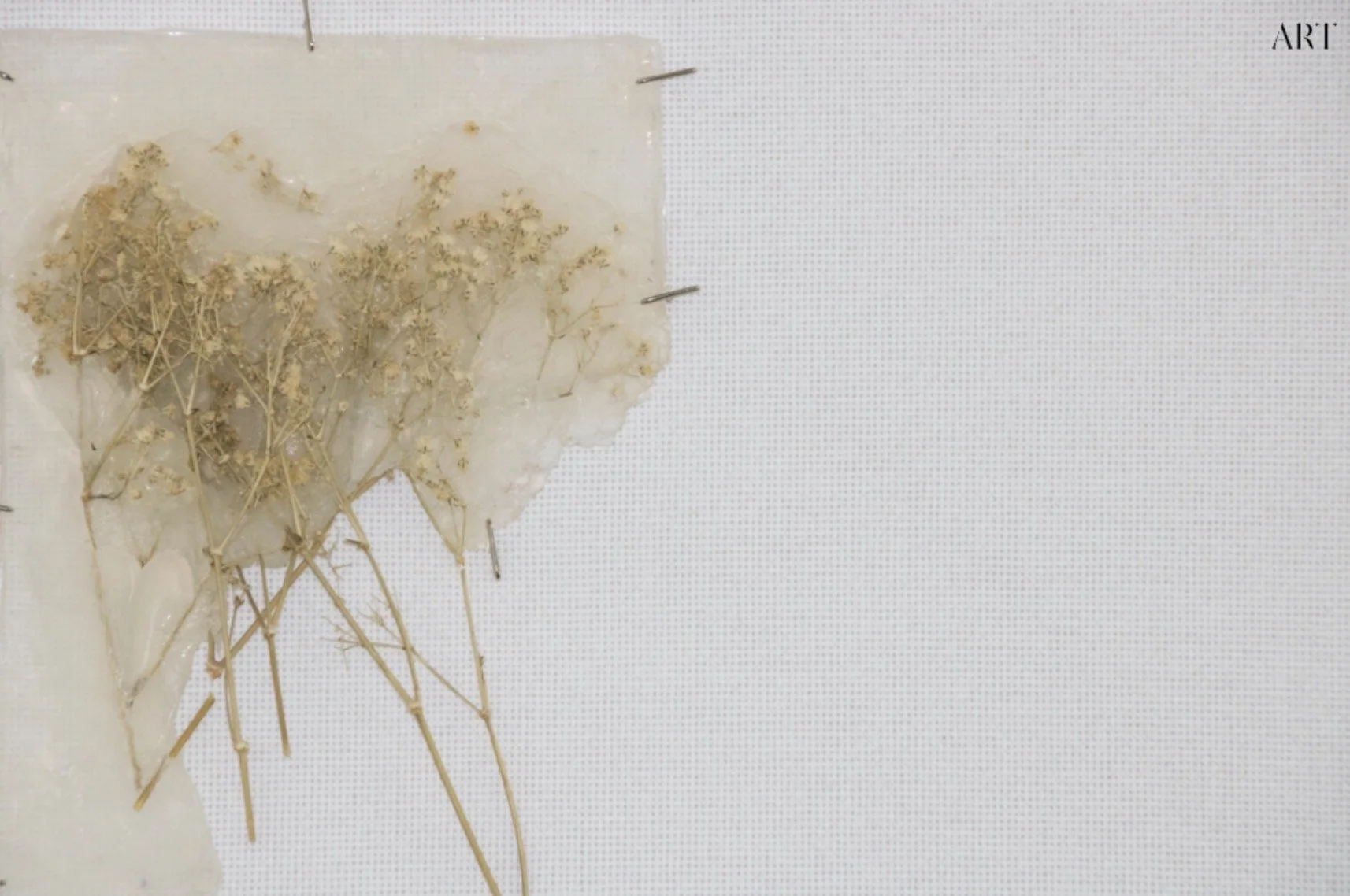
Exhale I,II,III
What nobody tells you is what comes after. "I think I missed my cocoon after that. It's very strange to be out there." Speaking about her work in public has never come easily, because the work comes from such a private place. "I always created with the audience being me," she says. "For me to be able to speak about my work is a huge trust. It's a wall of trust." Over the years she has learned how to manage it without depleting herself, but she still believes the best connection needs no explanation at all. "It's always a beautiful thing when someone connects with the work without you having to say anything, because they get to feel something. I think ultimately art is about feeling."
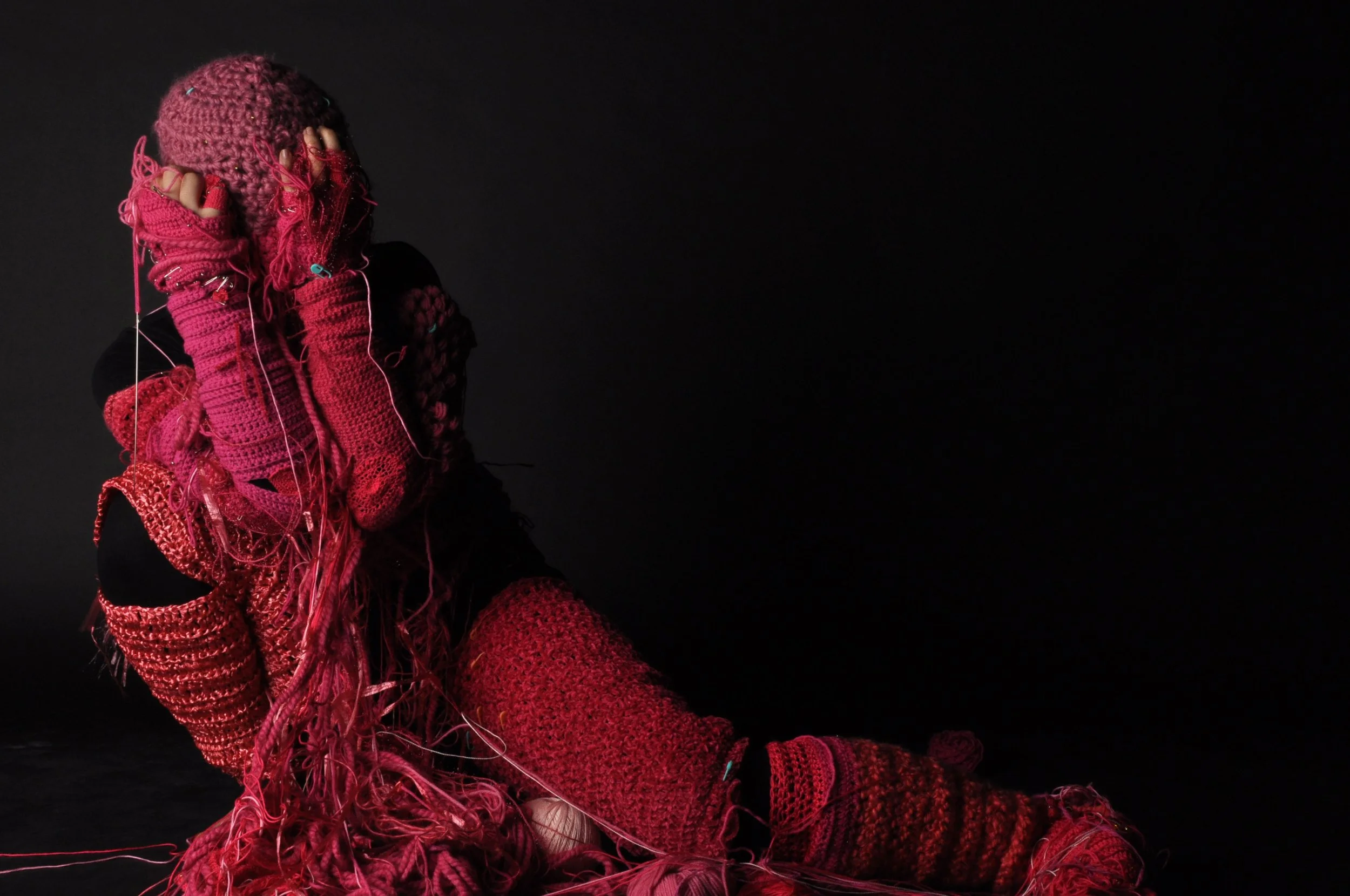
Studio Shot - By Loujina Mounir In 2011
That conviction shapes how she lives. Al Haddad keeps an office job, and she sees it not as a compromise but as a form of protection. "My office job gives me the freedom to create," she says. "I do not create for the sake of creating or maintaining a presence. My work has always been a reflection of my dealings with life. If I'm not living, creating looks different. So by freedom, I mean it gives me the room to continue being honest about why and what I create, and that means a great deal to me. It's everything."
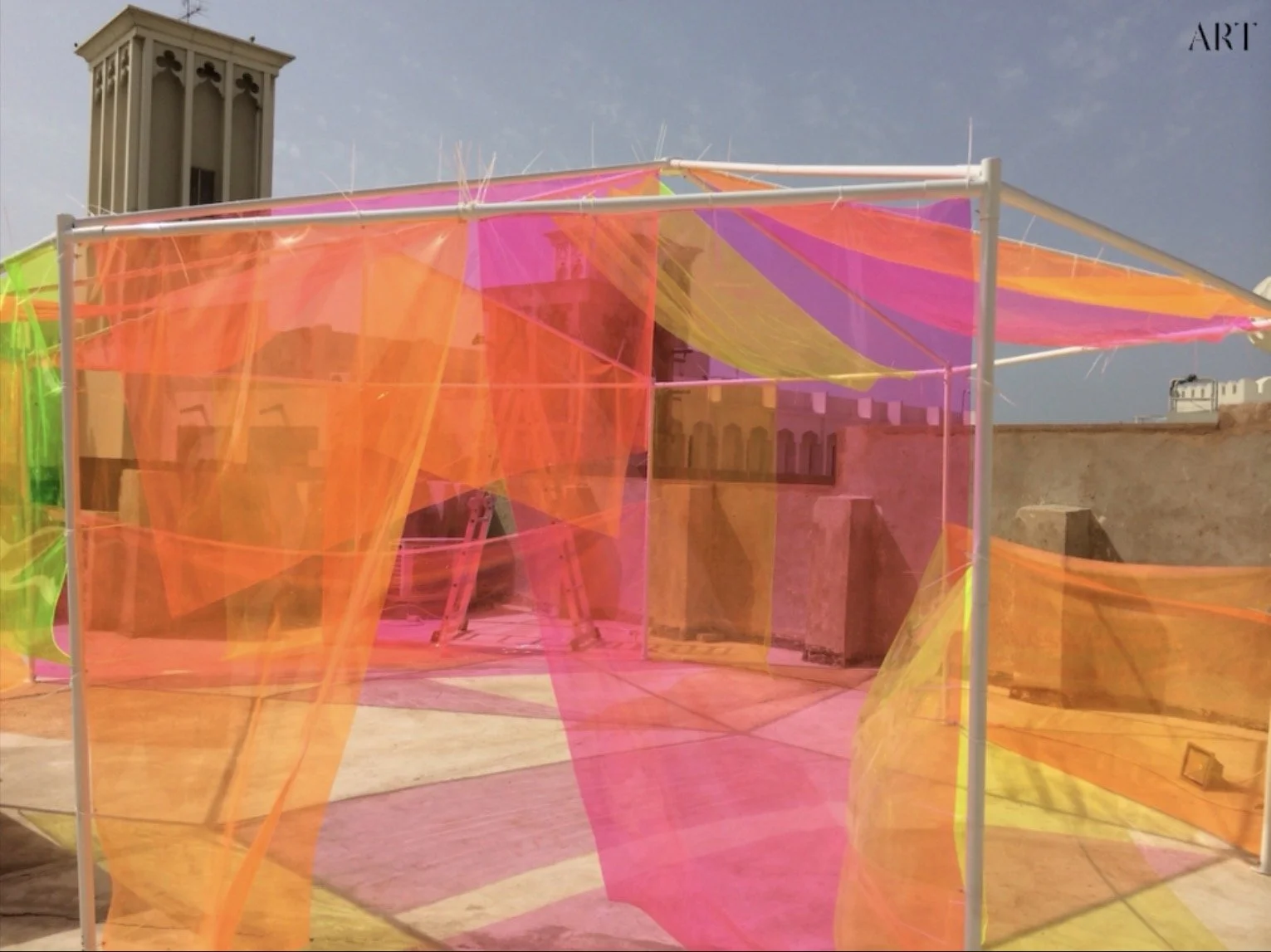
Hence, 2014
The room itself is now shared. "There is something very special about this room," she says. "In some ways, it has been my everything: my sanctuary, my home. It's a room that has seen many versions of me." It now holds a rescued street cat, who sits on her laptop when she works late and is, she says, "teaching me to go back to a routine of some sort," and a growing family of plants. She noticed she kept buying them, she says, out of "a desire to connect with people," and came to see them as a sign. "I think it has been an indicator that it's time to live, time to interact." Each plant, like each person, has its own language and its own needs. "Some plants are like your best friends: they weather the storms with you."
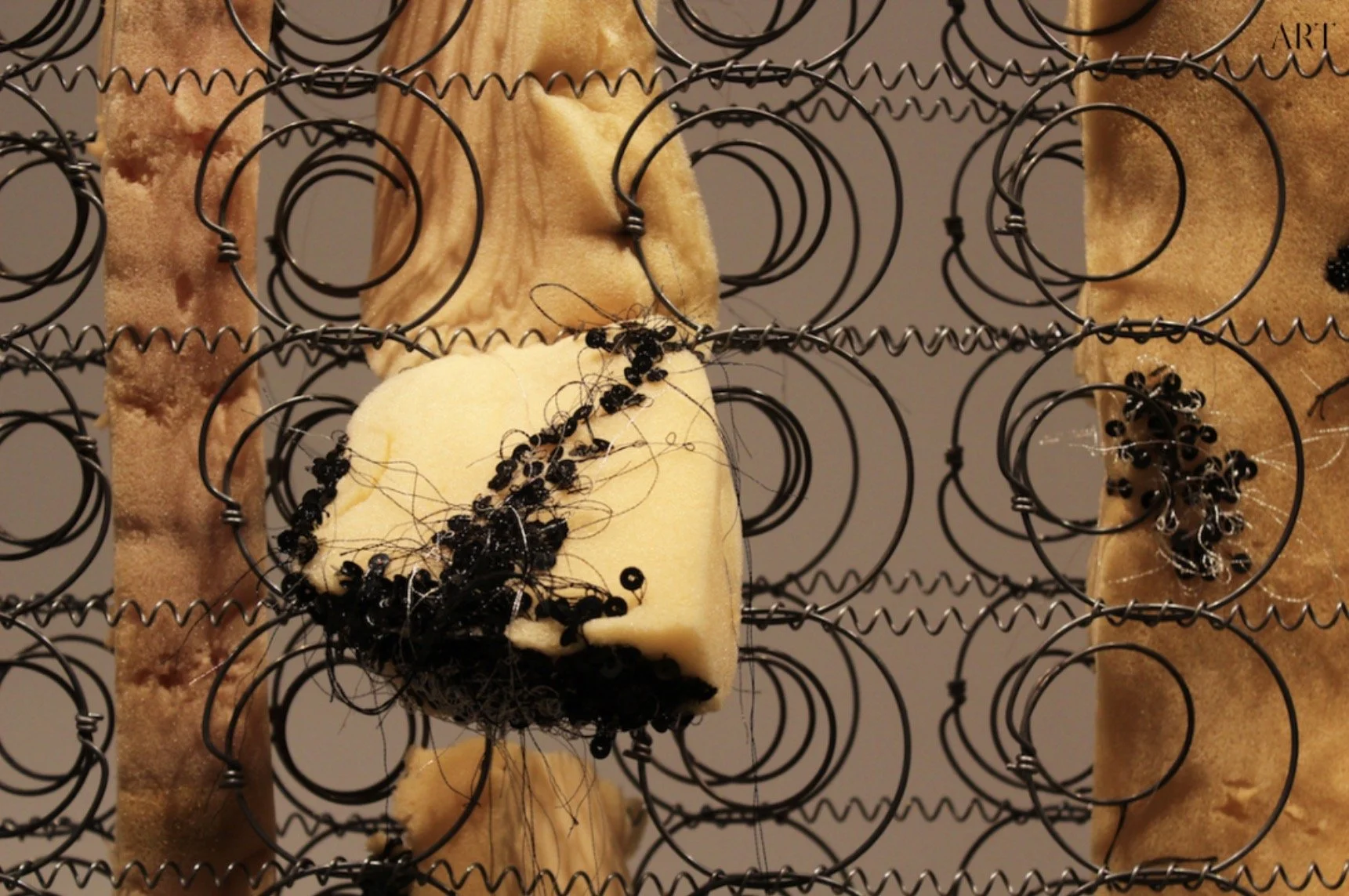
I know, I knew, 2013
Asked whether there is a real-life equivalent of a blinking text cursor, she wrote back rather than spoke. "A blotch of ink at the beginning of a line. And another somewhere random. That's where I am. Bleeding into the fibres of the page. And I'm trying to contain it. There's a lot of resistance, but a desire to give life to words, to what I feel."
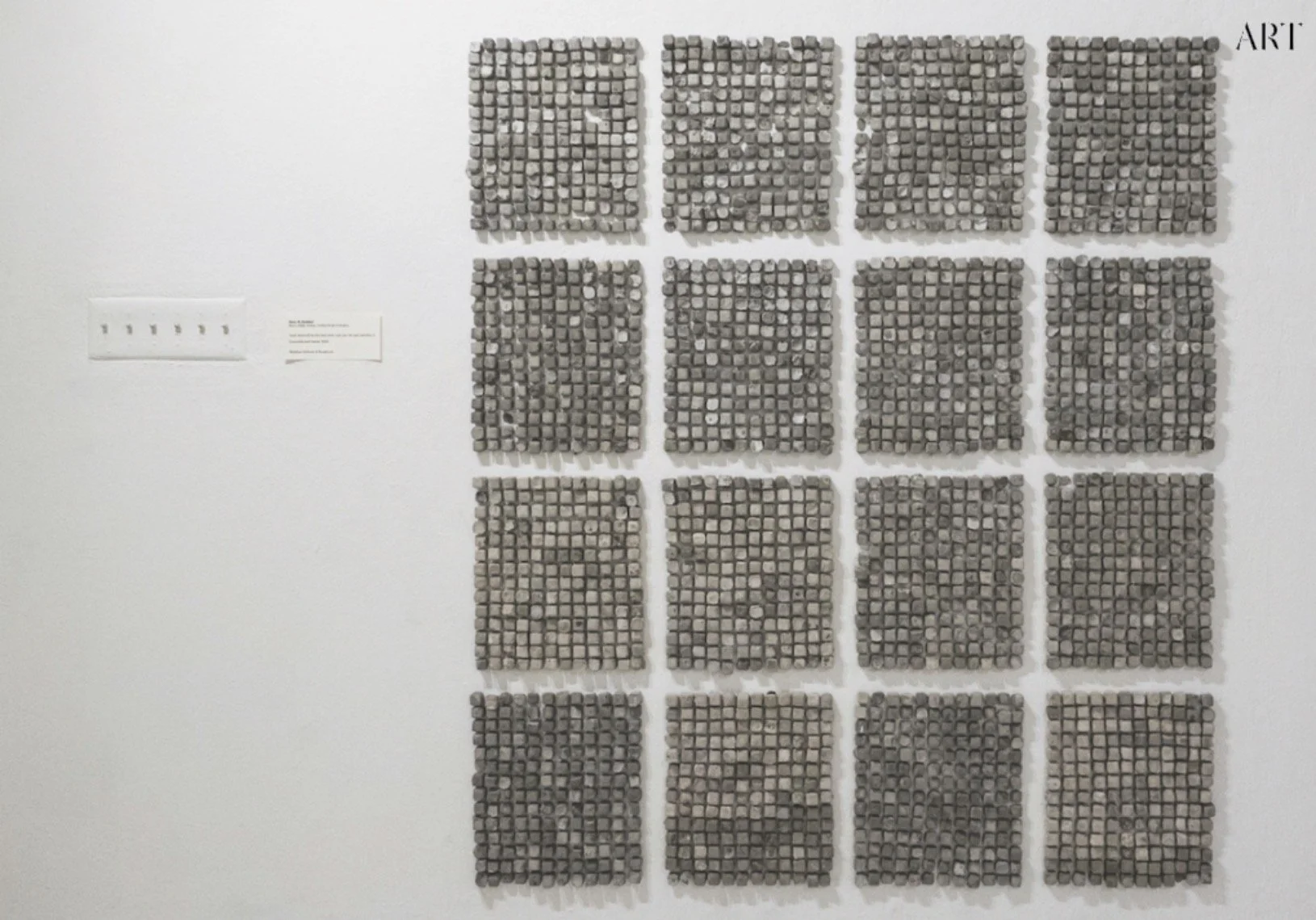
Next time, 2016
And the work she wants to make next, but is not ready for yet? She knows exactly what it is. "I will likely need to stay for a long time in that new room before I am able to create it," she says. "But yes. Another self-portrait."
BY OONA CHANEL
