

Rashid Johnson: The Artist Who Makes Shelves Into Arguments and Chaos IntoPhilosophy
He builds large-scale installations from steel shelves, plants, books, and the material culture of Black intellectual life. He is represented by Hauser and Wirth globally. His current work is the most emotionally complex thing in contemporary art right now. Here is what he is actually making.
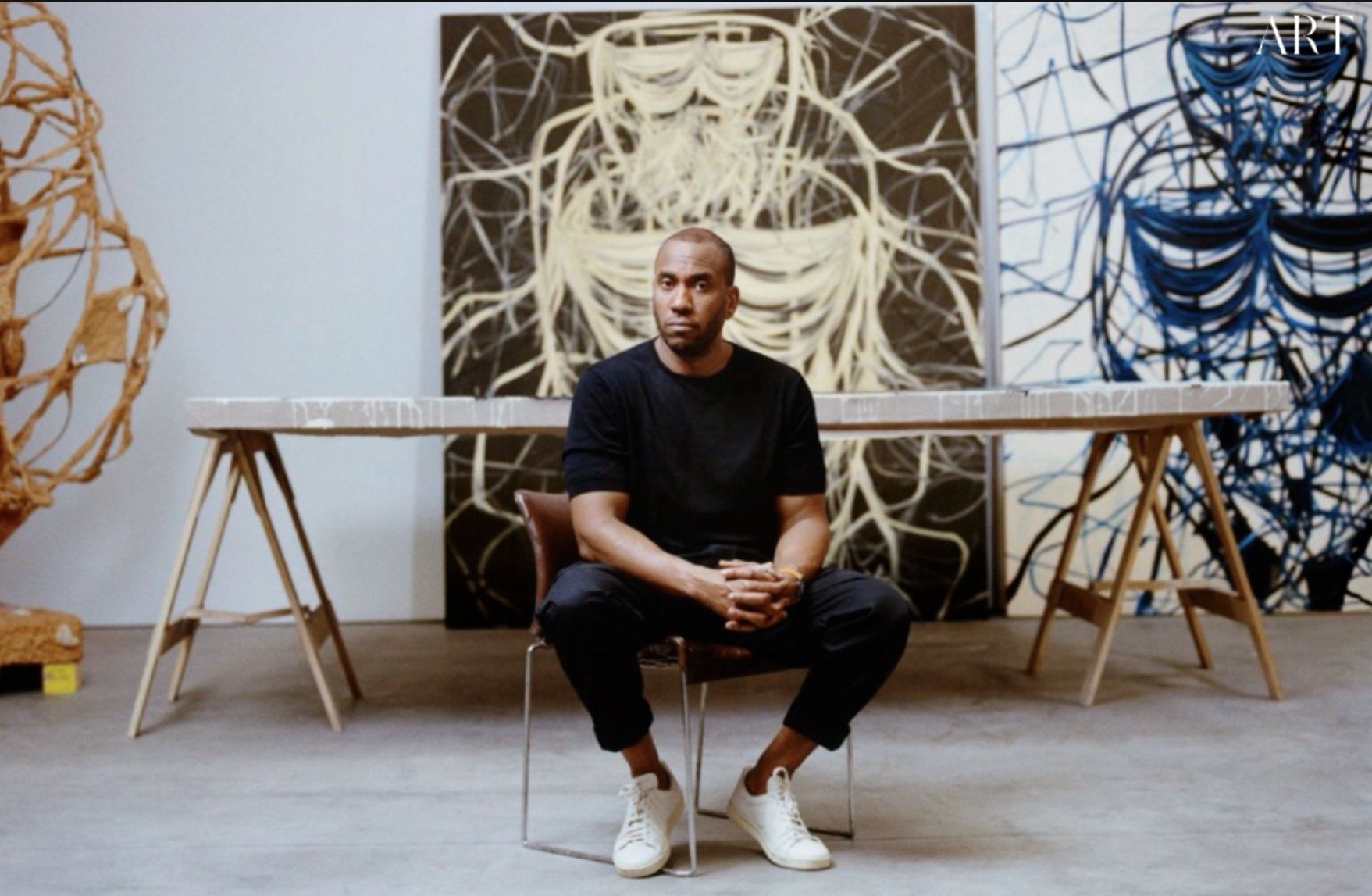
"The shelves are crammed. They overflow. They are the material embodiment of a specific kind of consciousness - the consciousness of a Black intellectual who is attempting to hold multiple traditions, multiple histories, and multiple aesthetic registers simultaneously."
Rashid Johnson was born in Chicago in 1977 and studied at Columbia College and the School of the Art Institute of Chicago. He began making significant work in his mid-twenties and has, across the subsequent two decades, built a practice that operates simultaneously in photography, painting, sculpture, installation, and film - without any of these categories quite containing what he is actually doing.
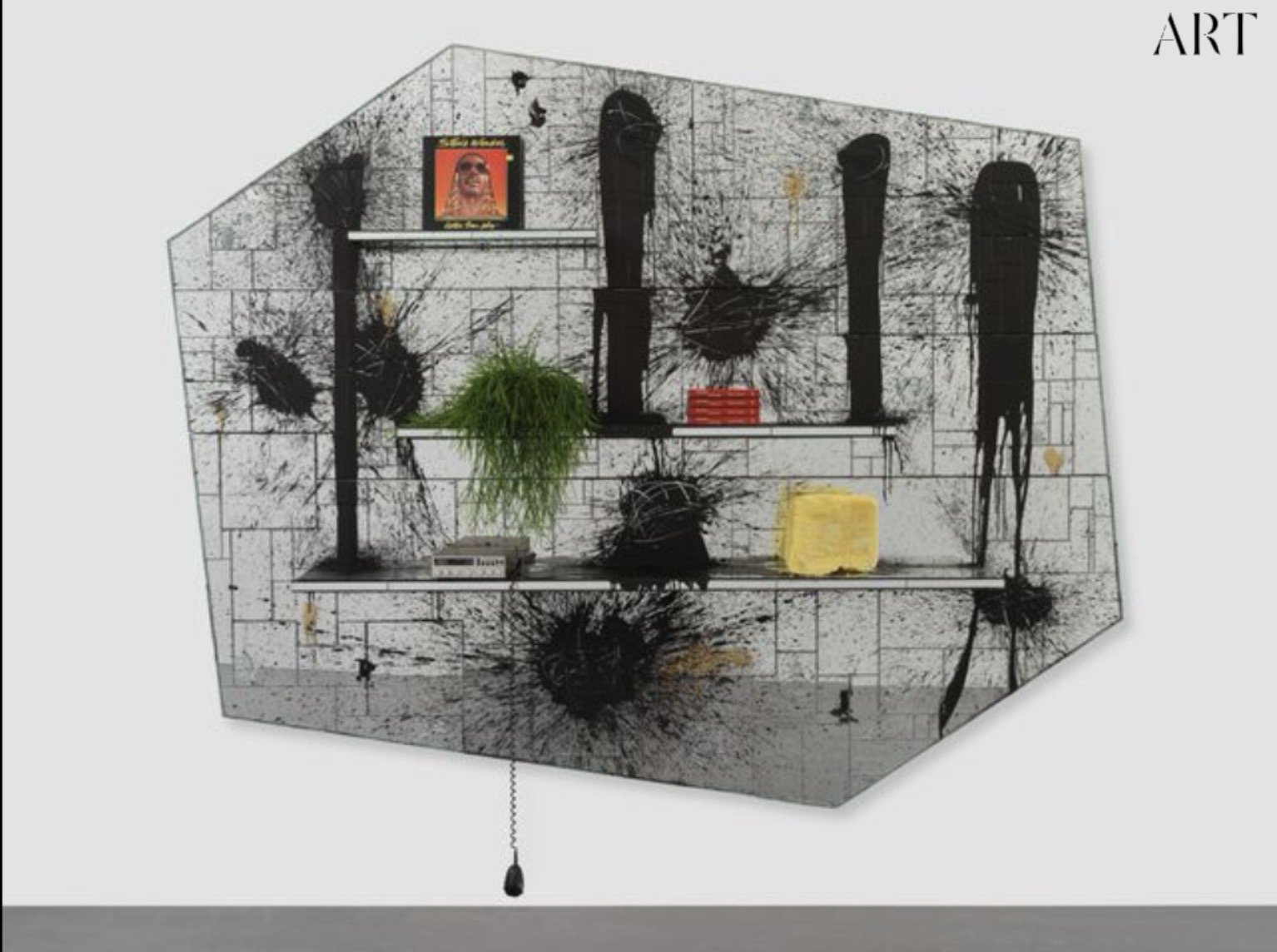
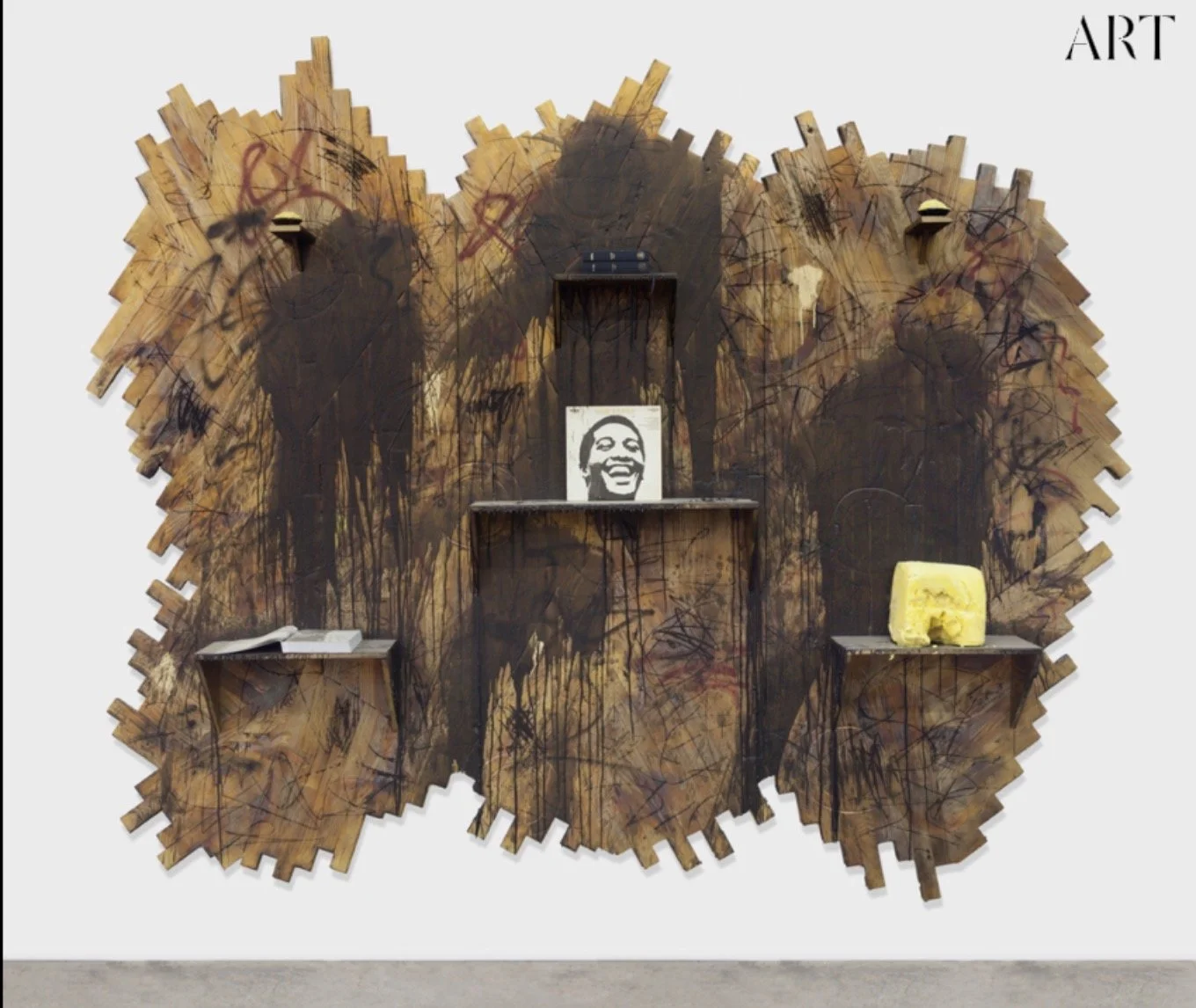
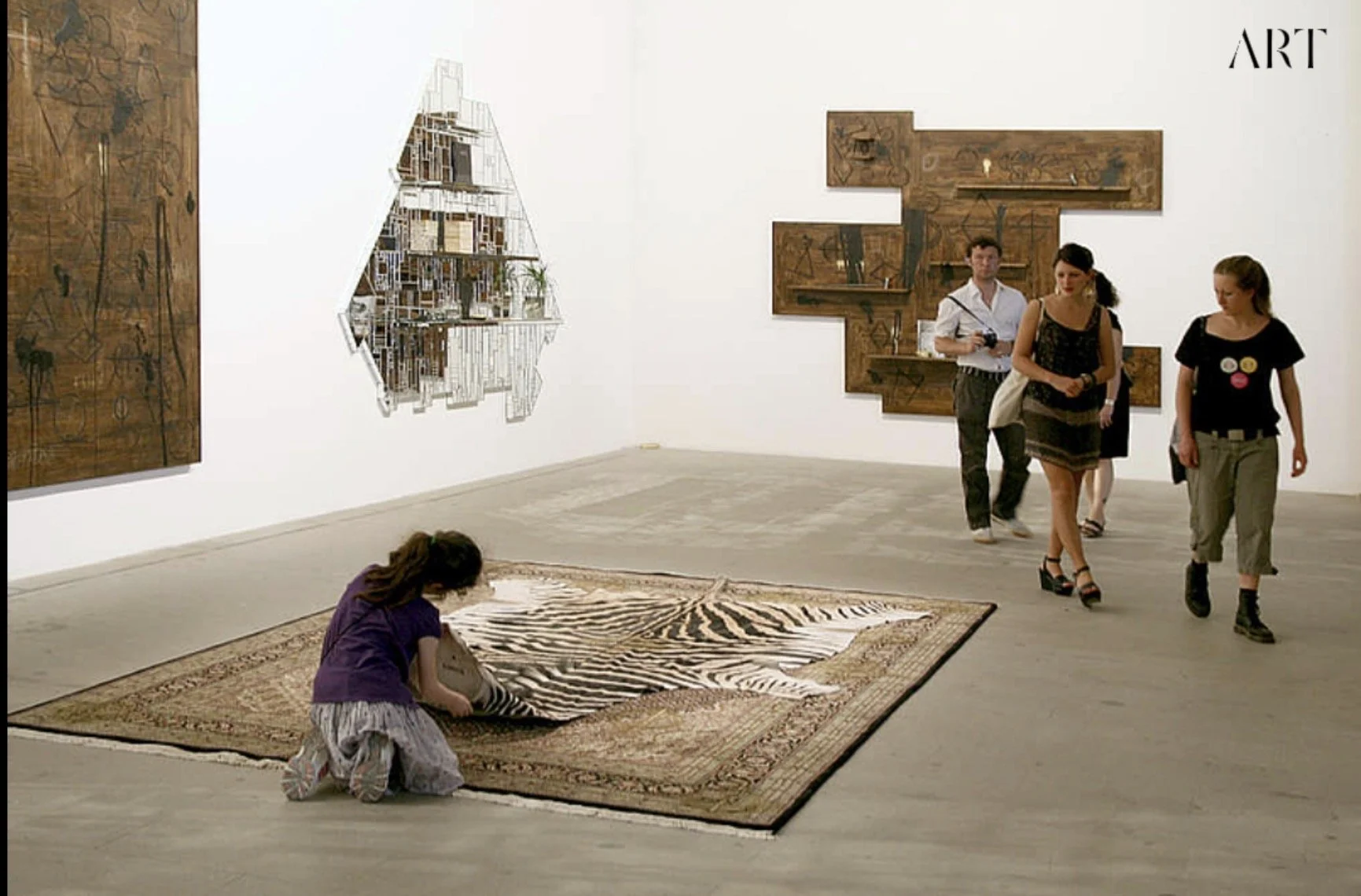
The installations are the work that has produced his largest critical response and his strongest institutional presence. They are built from steel shelving - typically the kind of heavy-gauge industrial shelving associated with warehouses or utility spaces - packed with live plants (usually tropical, usually shea butter plants), books (carefully selected from the African-American intellectual tradition: Du Bois, Fanon, Toni Morrison, bell hooks), abstract paintings in black soap and wax, personal objects, and sometimes monitors playing fragmented video. The shelves are crammed. They overflow. They are the material embodiment of a specific kind of consciousness - the consciousness of a Black intellectual who is attempting to hold multiple traditions, multiple histories, and multiple aesthetic registers simultaneously.
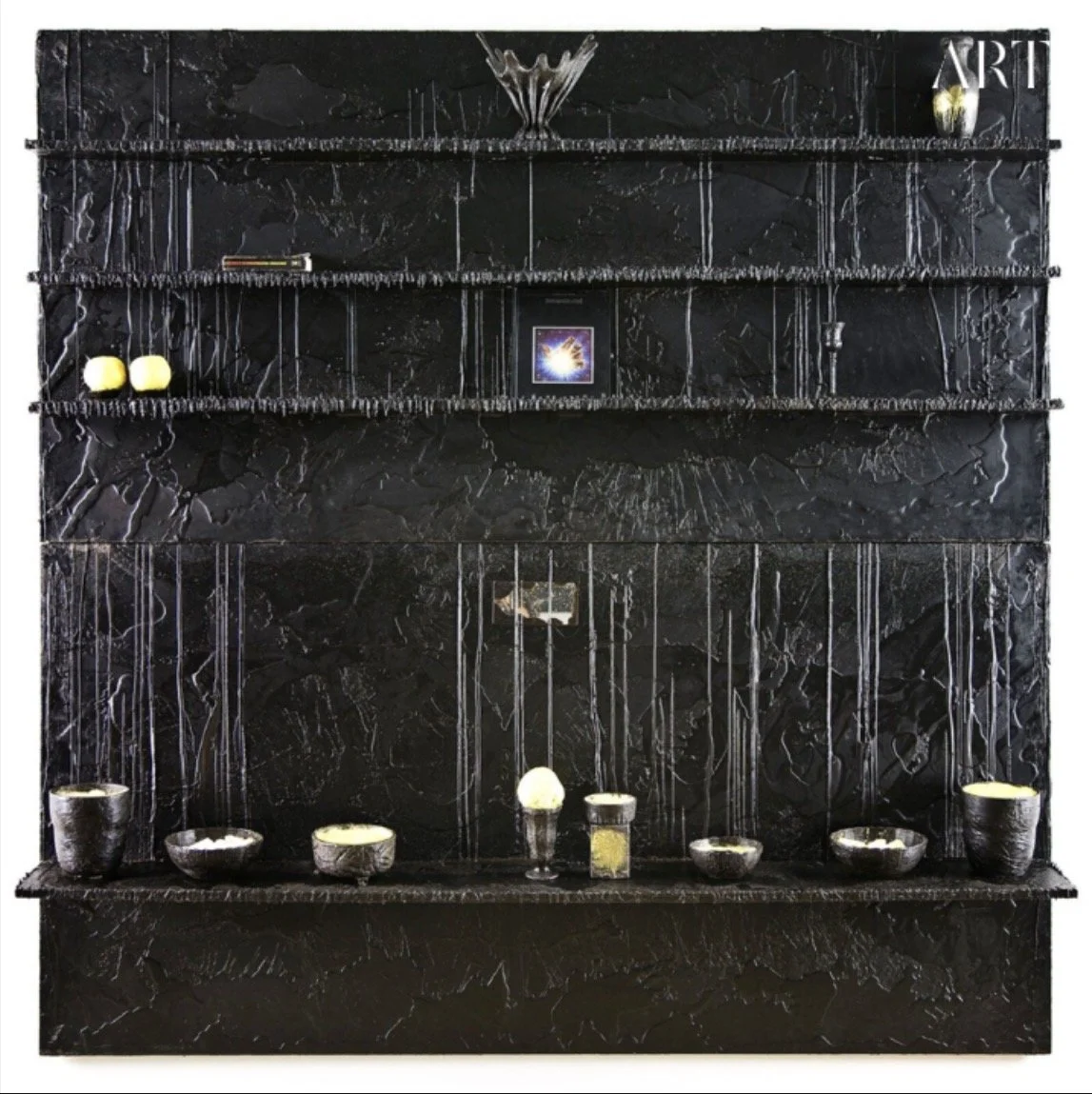
The paintings - executed in black soap, wax, and oil, often on mirrored surfaces - extend the installation logic into a more intimate register. The black soap is specific: a West African product with specific cultural associations and a specific smell that activates a sensory dimension of the work that the reproduction cannot transmit. The wax produces a surface that reads as both primitive and refined, both ancient and contemporary. The mirror introduces the viewer's reflection into the work, making the act of looking a self-implicating act.
His film work has expanded significantly. Native Son (2019), which he directed as an adaptation of Richard Wright's novel for HBO, demonstrated that the formal intelligence of his visual art practice was not a narrow specialisation but a way of thinking about image-making that applied across moving and still media.
He is currently represented by Hauser and Wirth globally. The scale of that representation - galleries in Los Angeles, New York, London, Hong Kong, Somerset, and beyond - means that his work is accessible to the international collector audience in a way that was not possible before the H&W partnership.
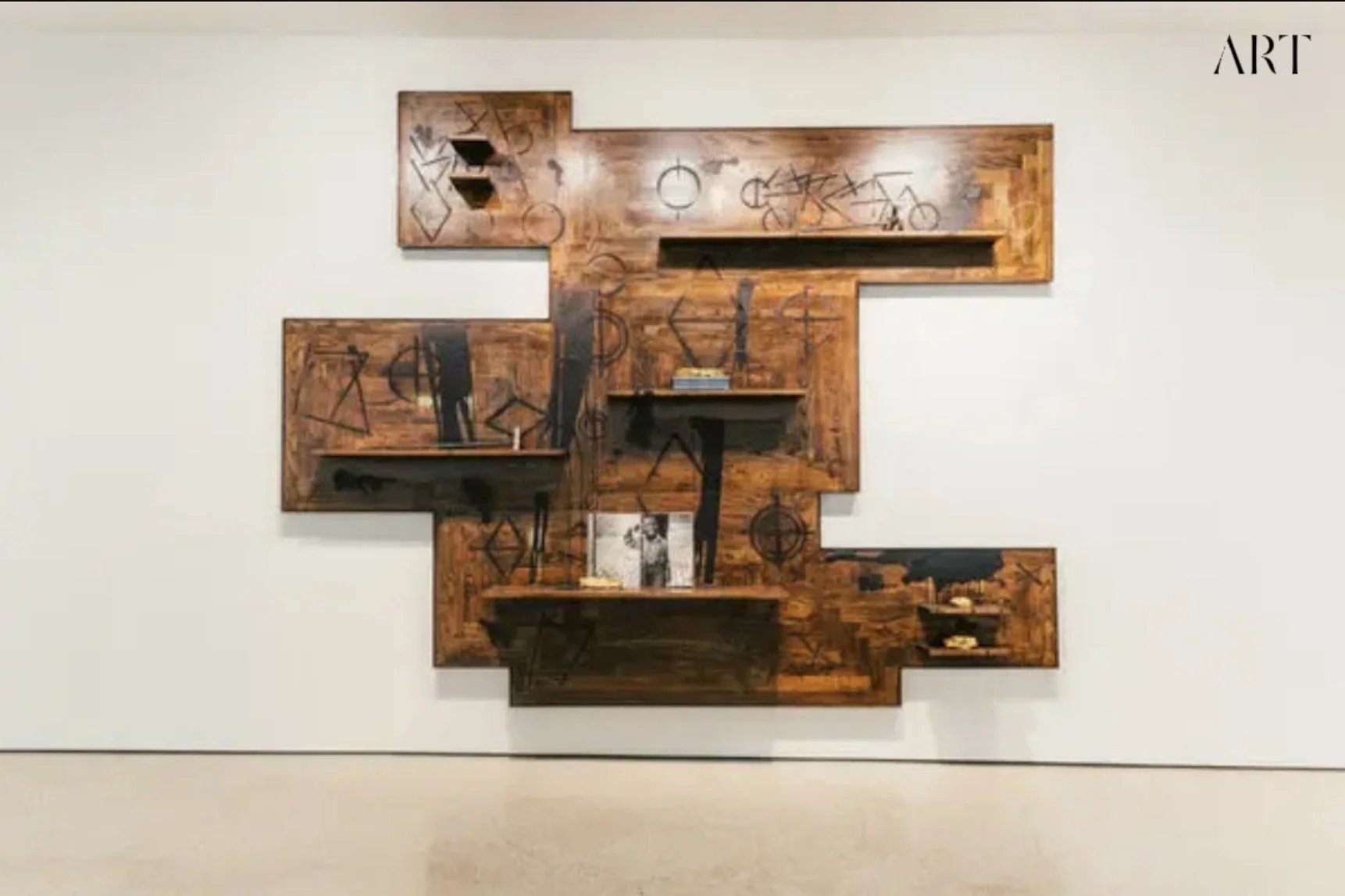
The work that is most consistently discussed in critical contexts is the 'Anxious Men' series - large-scale paintings of fragmented, energetic figures rendered in thick black and coloured soap and wax. The title, which refers to the anxiety of the figure depicted, also names the historical and social condition in which that figure exists. The work is not didactic about this. It is formally complex enough that the historical and social dimension arrives through the painting rather than as a label attached to it.
For the collector: the scale of his current institutional presence - MoMA, the Art Institute of Chicago, the Los Angeles County Museum of Art - is the evidence. The secondary market has been active but not yet at the level that his institutional profile would suggest is approaching.
BY OONA CHANEL
