

The Missing Moments Captured MILES ALDRIDGE
Discovering The Imperfect Beauty At The Heart of Everything
"The crack in the pavement, the tear in the canvas and the smear of the paint... these are all truthful marks that underpin this idea that we are not immaculate God like creatures, we are all flawed"
There are few photographers working today whose body of work is instantly recognisable, but Miles Aldridge has made memorability his signature. His subversive pop art scenes of hypnagogic colour-soakco cinematic perceaon contain an clusic acstete quant that runs through every image like an enigmatic signature, one that nas been busiy deconstructing noons of emaic Ocauty and the male gaze for the past 20 years. Aldridge had a major retrospective in 2013 at Somerset House in London, the hugely popular 'I Only Want You To Love Me', which showcased the heart of his talents.
The exhibition brilliantly exemplified his penchant for creating visual narratives that explore a seemine untouchable artitca of female beauty, a thin veneer of glossy perfection under which lies a simmering, ever brooding and unfathomably tempestuous sea of emotional discourse. It's arguable that the delineation of particular issues surrounding the social construct of temining beauty is a mainstay of Aldridge's oeuvre, so it's interesting that his behind the scenes book, Please Return Polaroid (Steidl), marks a radical departure from carefully staged and executed image-making. A glimpse into an unintentional and instinctual realm of the subconscious, where the genesis of his images actually takes place and the ideas that underpin his final visual constructions are born. Here, AUTHOR exclusively presents previously unpublished Polaroid images from an archive that spans the entirety of a career, and he tells us why a nostalgic love affair with disruption, decay and destruction have revealed to him the beautiful imperfection of his inner life.
AUTHOR: Can you remember the moment in your childhood when you recognised photography and the image you first produced that turned you on to the medium?
MILES - I remember it vividly. I would have been about eight years old and I was with my father in a country house in England. He was working on some psychedelic drawings, and in order to get rid of me for a little, he handed me this beautiful Nikon camera. He gave me my first lesson in photography and told me you must always focus on the eyelashes of a subject. I put the camera to my eye and rotated the lens until his eyelashes became sharp.I still focus on people's eyelashes on every picture I've ever done. I can't remember all the pictures I took that day, but I remember one distinctly that I was very proud of where there was a barred skylight from which I had hung a Victorian doll I had found by its neck.
The light coming down through the skylight over the doll was very cinematic. I can still see it now and I wish I could find that little print because it was really the beginning of everything.
AUTHOR: So your ambition was always tied to constructing a scene and a narrative?
MILES - Yes, there is an attempt at a narrative, and I think 1 also had a fascination with film production and the artifice of film production. It goes back to the doll hanging in the basement and how the camera can frame something so it becomes a convincing moment. Without the camera framing the image, it's just a doll hanging there. When I was a little older, I started photographing my sister, who at the very young age of 10 was starting to feel like she should become a model, so 1 was in my bedroom trying to make my bedside light illuminate her in an attractive way, getting black overcoats to cover the door and make a black background, basically using everything to try and make a successful photograph.
AUTHOR: Talk to us about Polaroid as a medium. It always seems to me to be a medium that has as much control over the final image as the photographer...
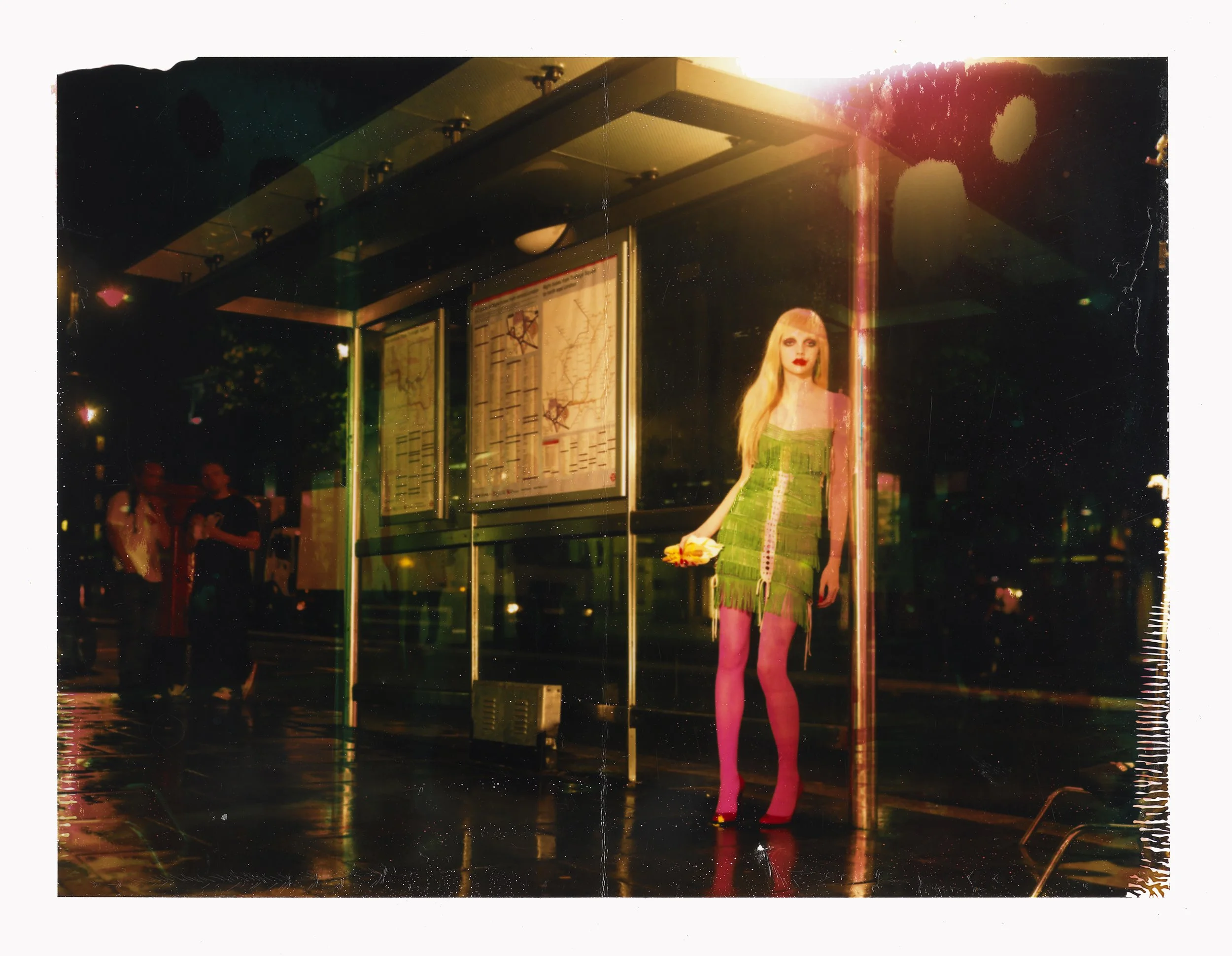
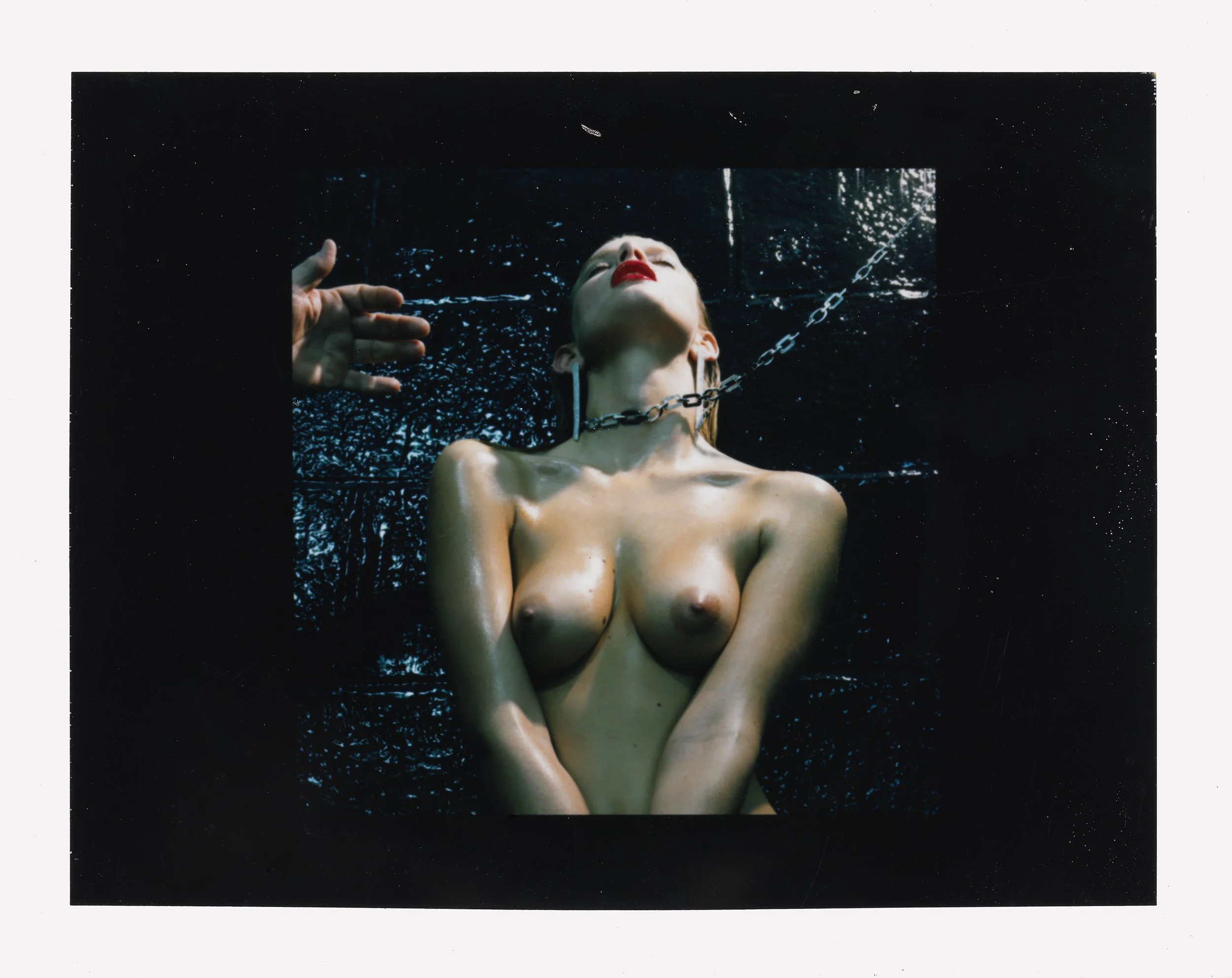
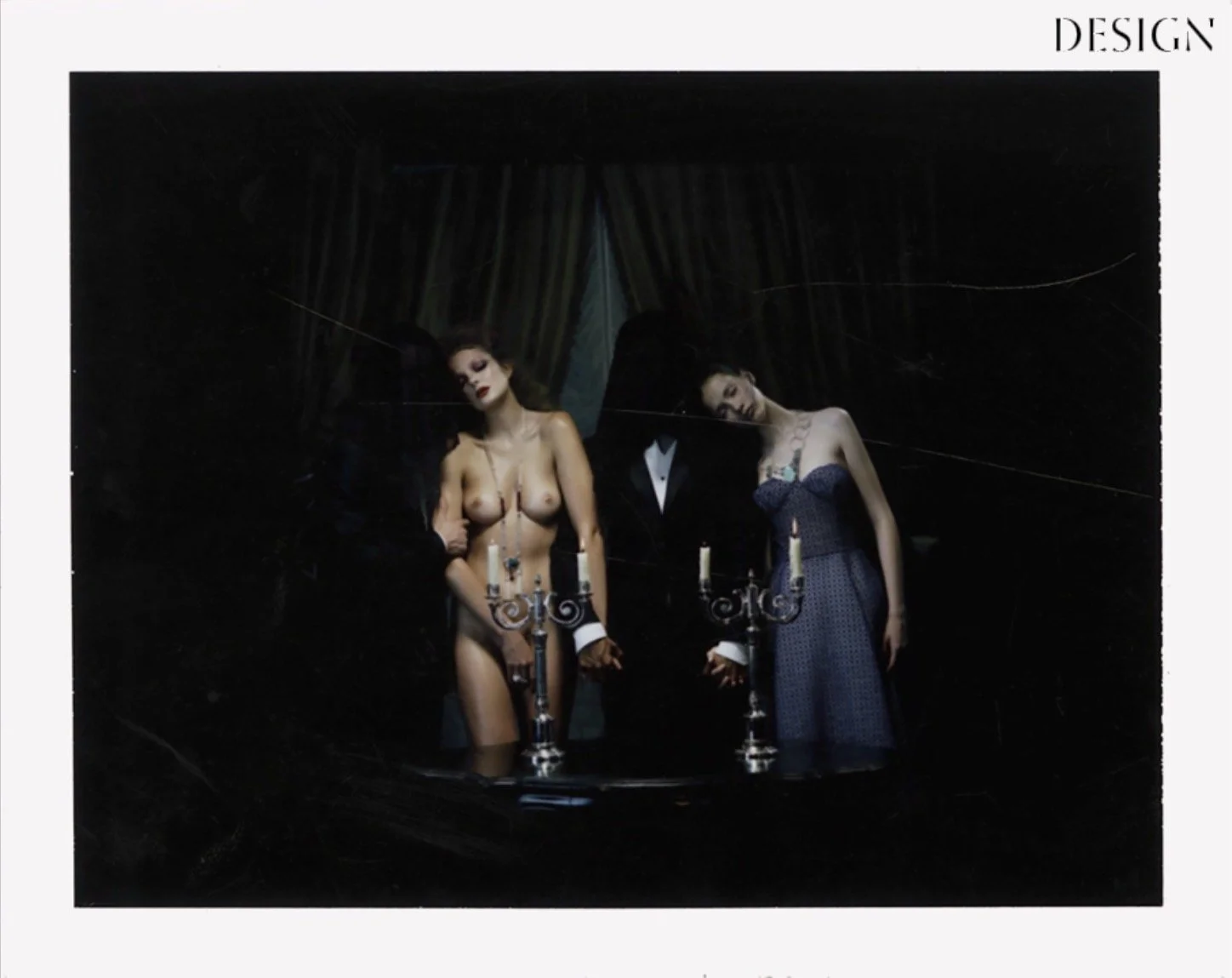
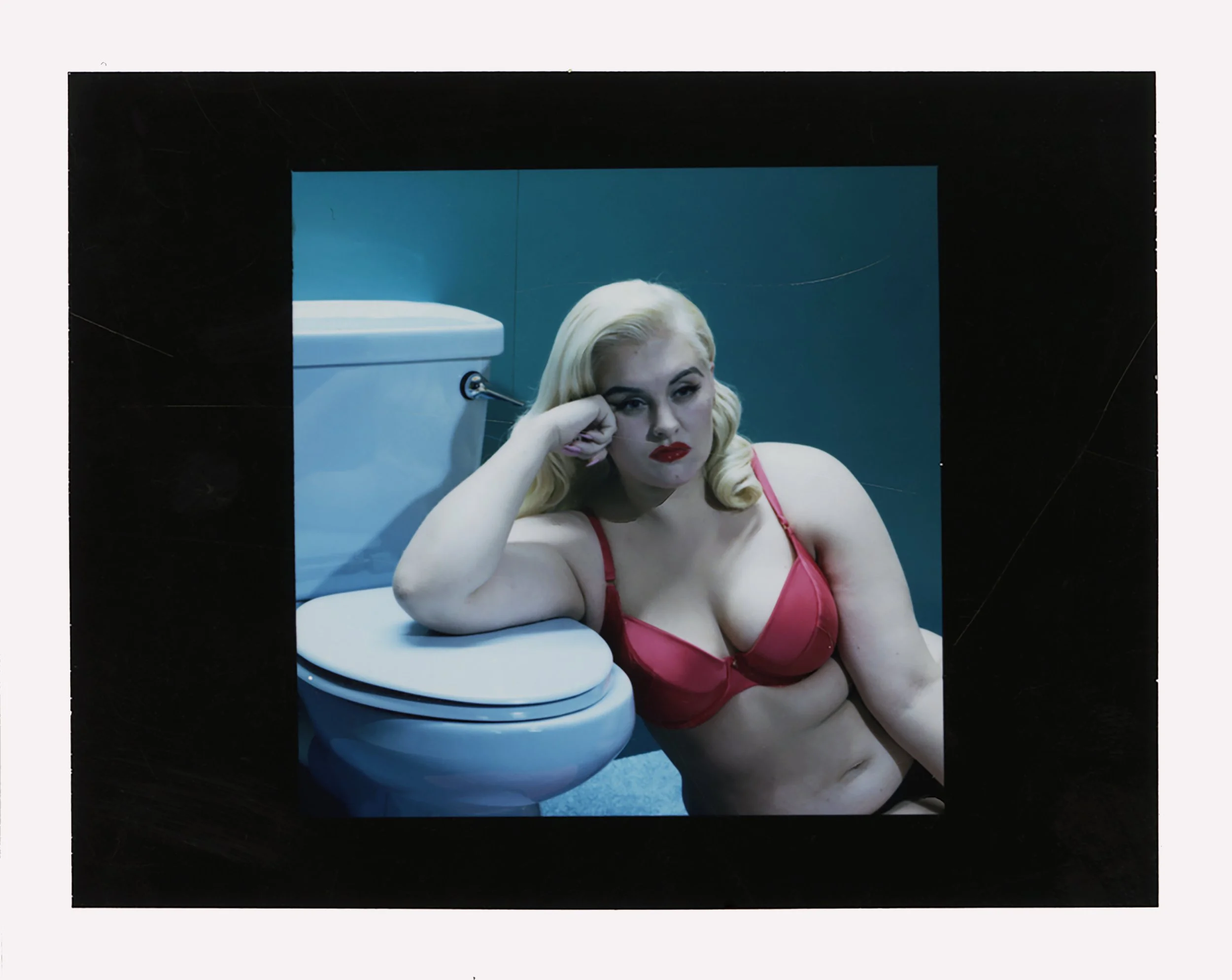
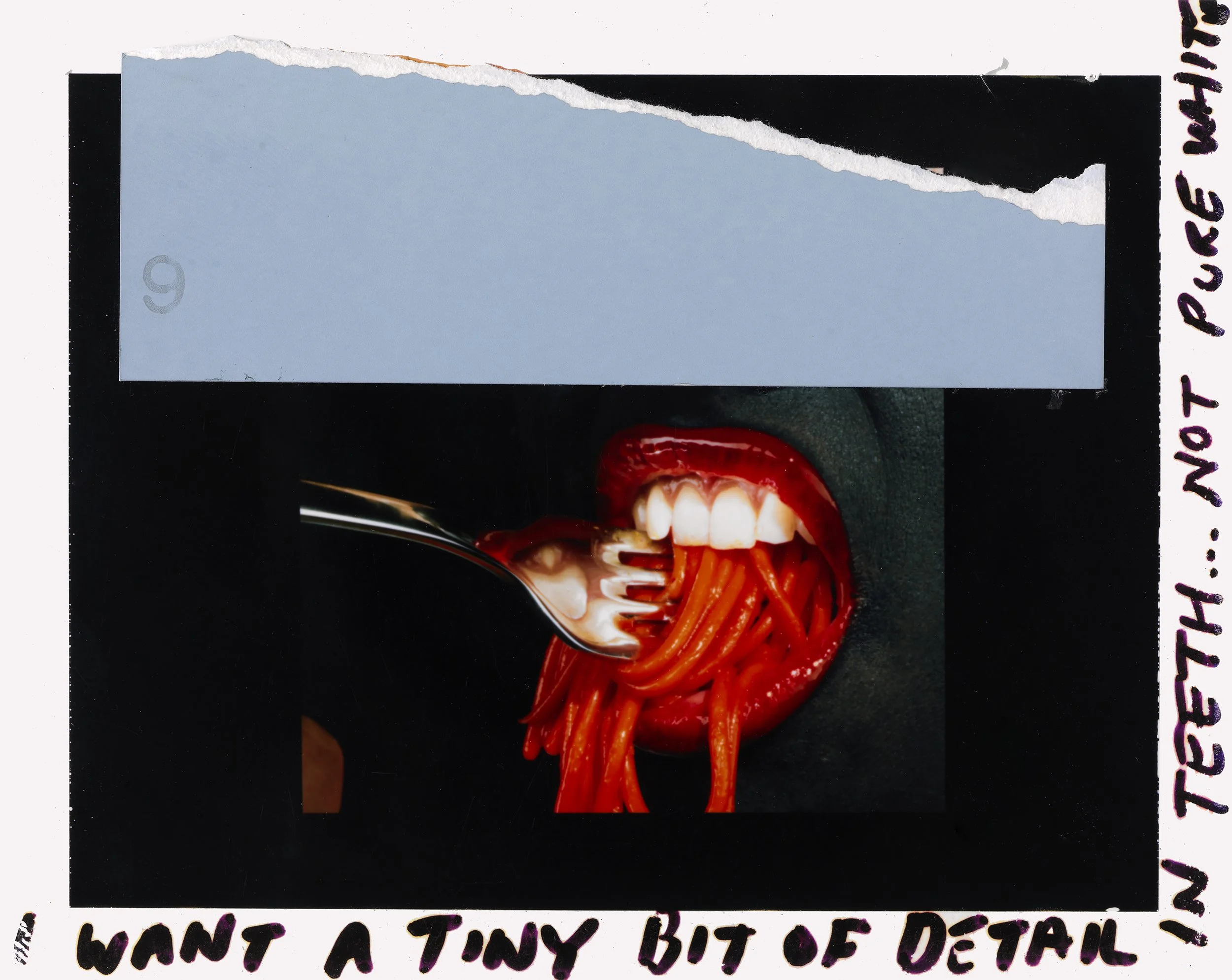
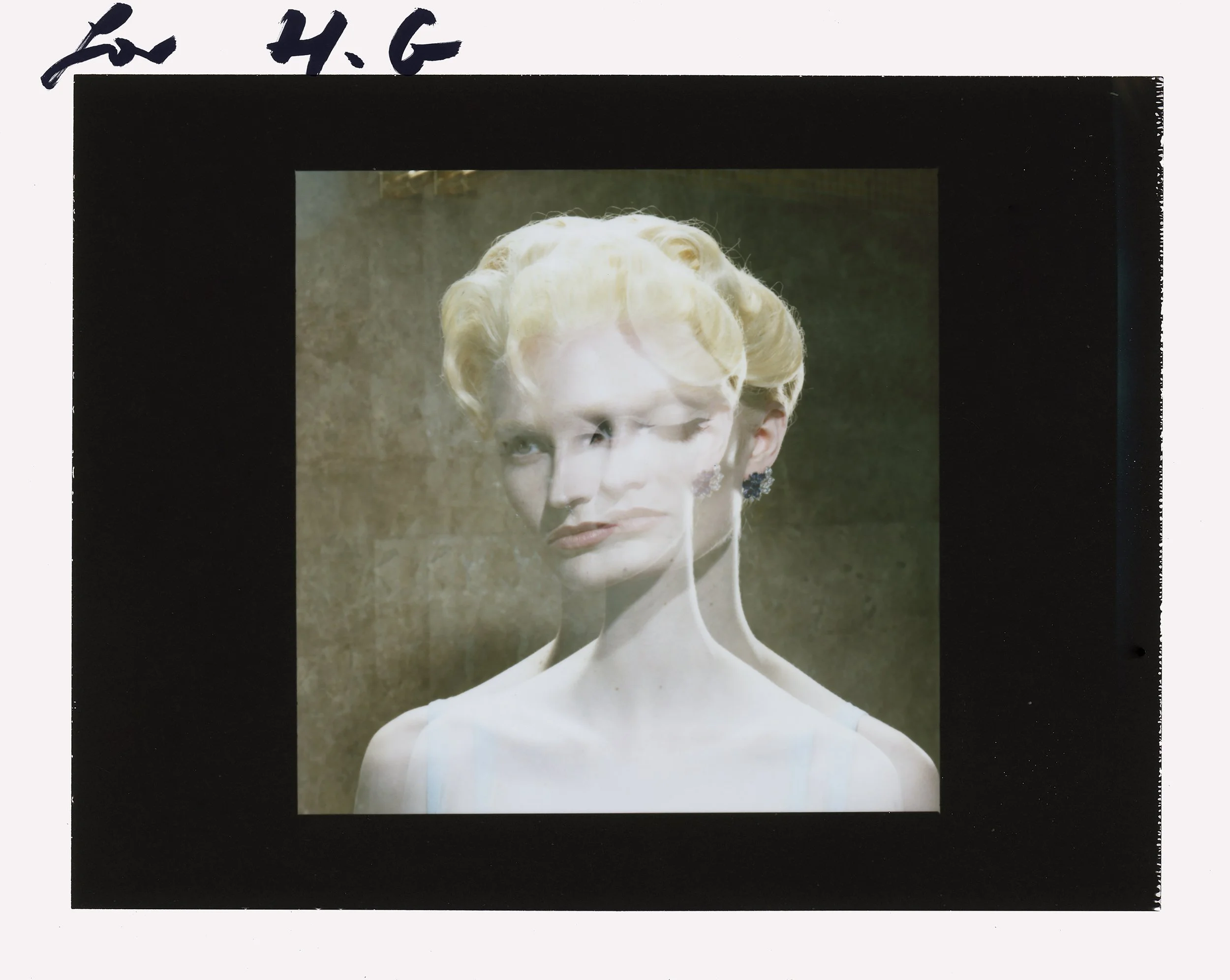
MILES - Well, the images in both my book and New York exhibition Please Return Polaroid seem almost like images I've appropriated, whereas, of course, 1 actually took the images. What I mean by that is that these Polariods were created from a working methodology that I have when 1 am working. I always work off a Polaroid first just to test the image and see what is going on with the light and the colour. I consistently do this and maybe make adjustments with a sharpie to change the lighting, or I might cut up the image to see if I like this bit of this one or that one; to get a little of both elements, so they become kind of like sketches for the final piece. I have religiously kept them all in archival boxes and after completing
I Only Want You To Love Me' with this mission of reporting my mother's unhappiness to the world, I wanted to look back at how I had got to this position in my career. I started going back through the Polaroids and, in a nostalgic way, to document how the images were created.
AUTHOR: You lost your mother as a young man - did that create a deeper psychological sense of reality as artifice?
MILES - I need to think about that. I mean, what I would say about my mother dying is that it obviously felt like the whole word had been torn apart, so undeniably. I would be surprised and disappointed if that hadn't had a profound psychological effect on me as a human being and as an artist, to be sensitised to that sort of premature decay and sudden absence of a very important person in your life. But what was my story was that because I had this kind of incredible father, who was like a magician and would conjure up this incredible colour and these incredible psychedelic images, as I became successful with my own pictures I tended to always give my father the credit of this heritage of where my creative impulse came from. At a certain point, though, I sort of thought, " I wonder if that is true..' I began to think that maybe my mother had played a role in the creation of my images, and, of course, when I start to look at my images closely they are filled with maternal images of women in kitchens, and women with babies, and women with prams.
AUTHOR: That must have been a watershed moment...
MILES - I suddenly realised most of my work had been a kind of working out of this missing character, and my memory of her was unfortunately filled with images that were very sad, a sadness that she had lived such an unfulfilled life. When my parents divorced, she didn't really ever get herself back on her feet. It really knocked her for six. I would say her death and her divorce were intertwined in the sense that the sadness, the melancholy and the depression that had settled on her post divorce were intertwined. She kind of became the archetype for the stories l've gone on to celebrate in my work a lot, which is a woman who is able to wear a mask of beauty, and yet behind that mask are all sorts of dark and troubling thoughts... I can feel the psychedelic colours of my father in my work, but also the melancholia of my mother, which makes sense.
AUTHOR: What did you discover looking at the Polaroids that you felt you had never seen, or realised before?
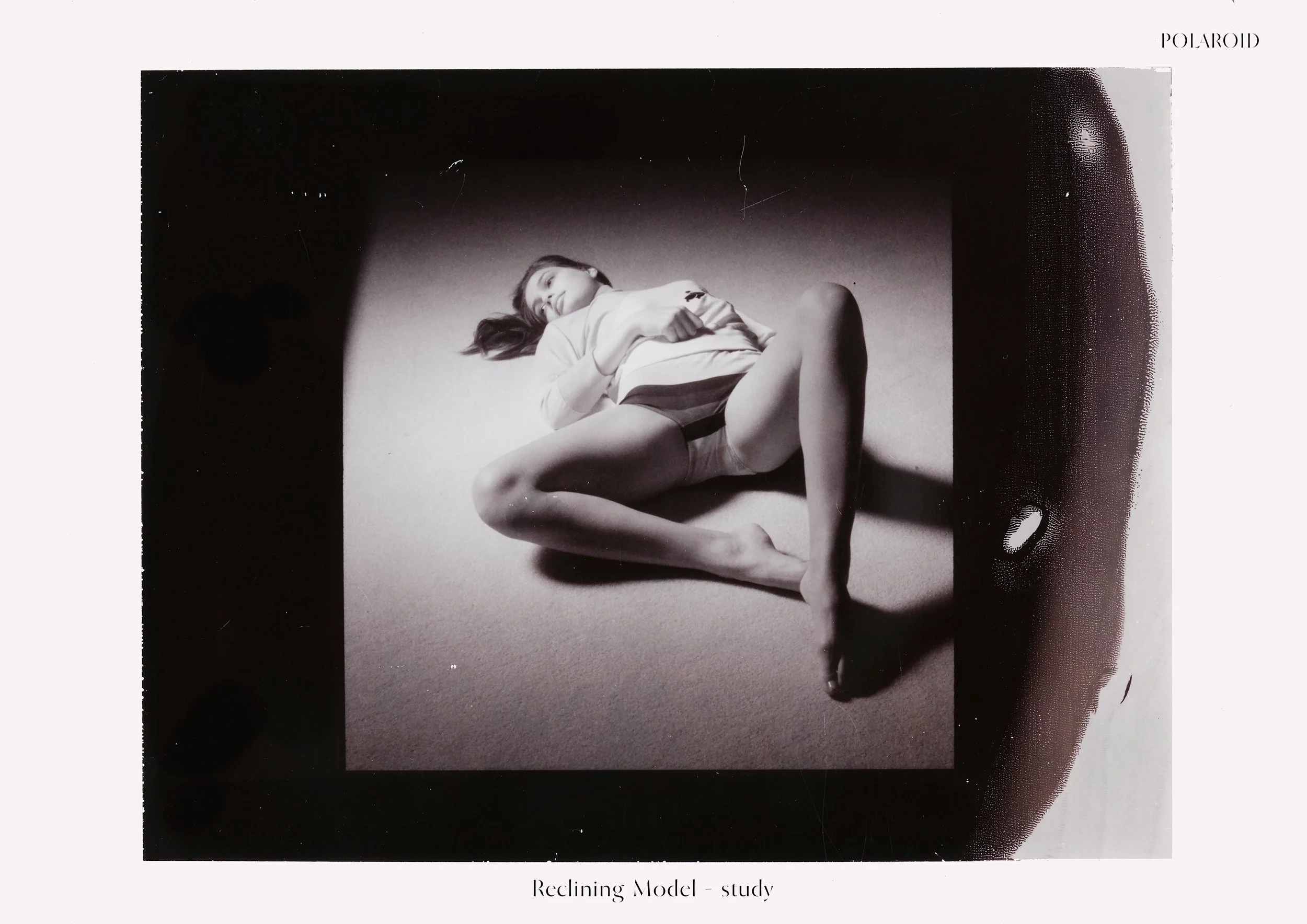
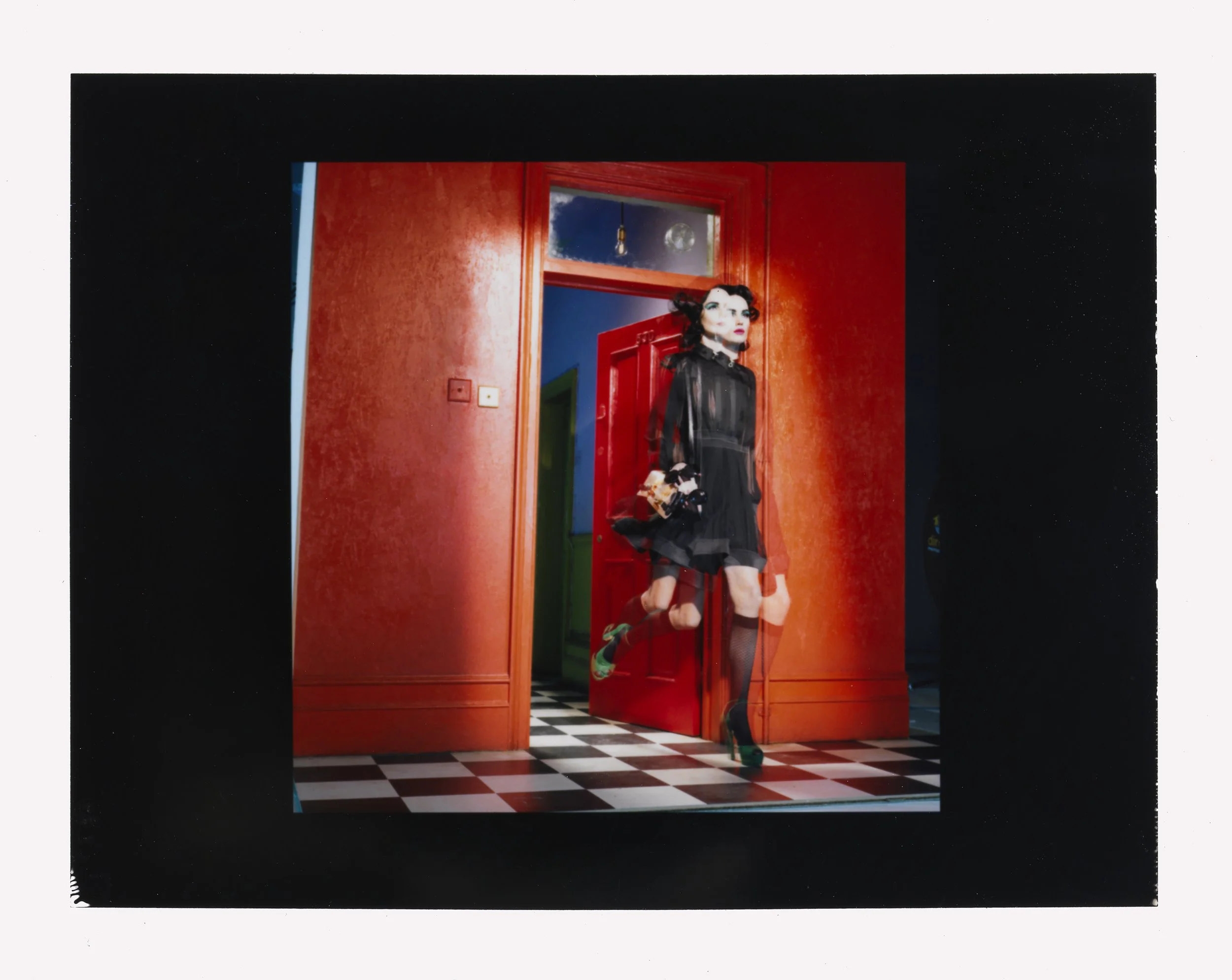
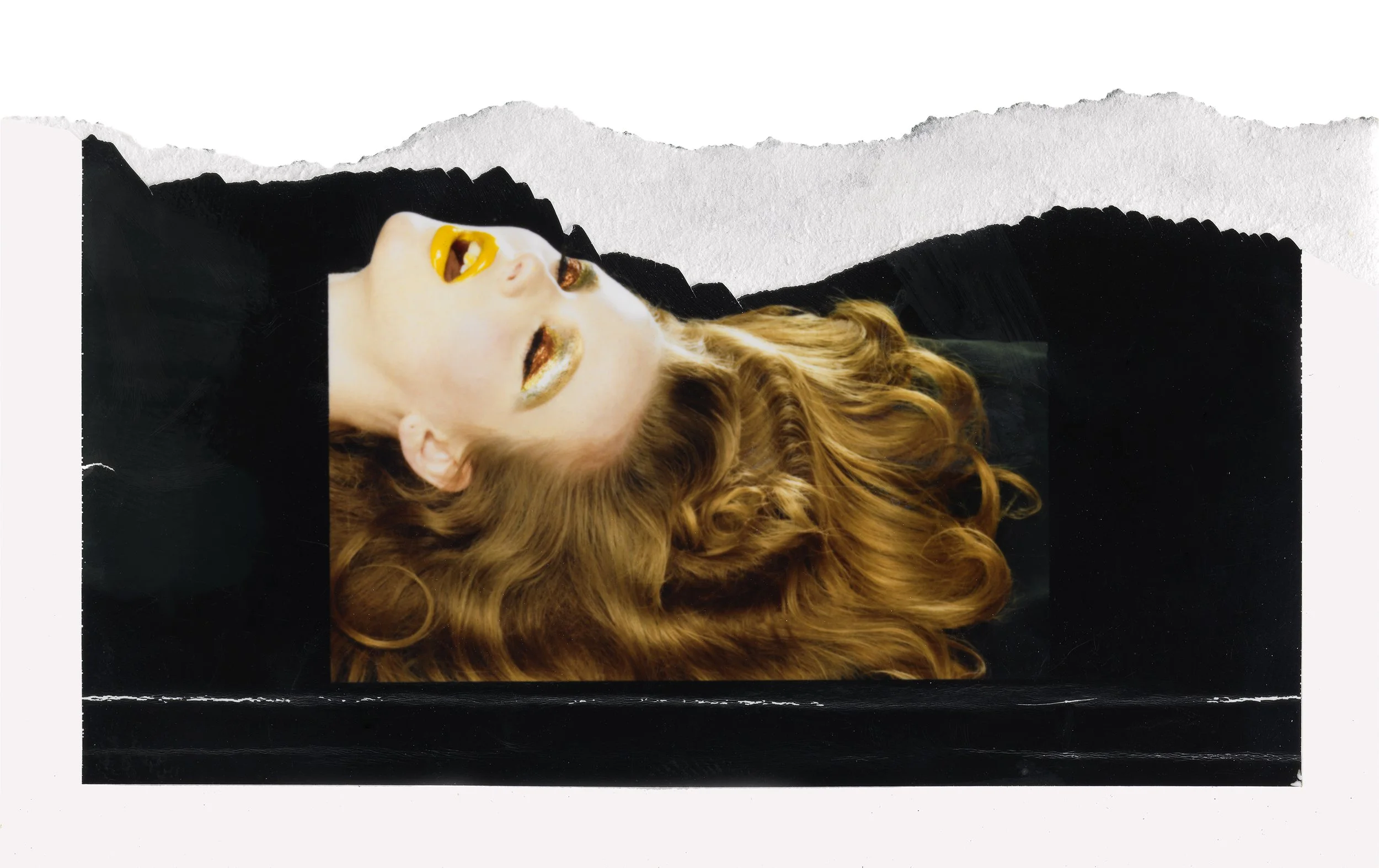
MILES - Well, I went though them, rather like one would go though photographs from the Edwardian period and find interesting and strange pictures that one doesn't quite understand. I started to find pictures that I didn't understand, even though I had taken them. I mean, there were pictures where I had taken a Polaroid of a space before the models were placed in it, just so I could see the light and the strangeness of this empty scene, and it feels almost like a crime scene because of the attention that my camera and my light has created. There are many shots like that, where they are empty of the model and the scene becomes very pregnant and poignant with meaning. That is why, in a way, they feel appropriated, because I took them but I don't remember taking them. I've found these images that are mesmerising and intriguing to me, not because of the image I was trying to take, but because of accidental things, such as the model not being there or some damage to the image, because the Polaroid has been left under studio lights and warped, or had the acid of another Polaroid damage it; some are scratched, some have notes indicated on them, some are very brutally cut with scissors... I became really interested in creating a series of these that come together in a kind of Lynchian dream narrative.
AUTHOR: There is a sense of intense beauty precisely because of their imperfections.
MILES - I think there is always an attraction to things that are cracked or ruined or broken. What that is, I don't know, but I think a concrete floor can be quite beautiful, but if it has a crack in it, then it can be even more beautiful. The crack draws us into thoughts about our own mortality and as much as we want to be fabulous, we are not. The crack in the pavement, the tear in the canvas and the smear of the pain, these are all truthful marks that underpin this idea that we are not immaculate God like creatures, we are all flawed like the deeply human characters Shakespeare depicted in his plays.
AUTHOR: It's the passing of time that is beautiful, the melancholia - to paraphrase Shakepeare's Richard II, let us make dust out paper and with rainy eyes write sorrow upon the bosom of the earth...
MILES - Beautiful. Yes, it's all about the beauty that has passed.
You know, I was so drawn to these flawed scratched and wrecked images because I think, coming after I Only Want You To Love Me, where I had presented a kind of Technicolor universe, this represented the other side of the coin. This was the director's script with all the continuity notes. It's interesting for me how much I've enjoyed seeing these images, and the question for me now is, do I continue with the kind of Technicolour perfectionism, or can some of this accidental damage, disruption and decay become instilled in the final images? I think the answer is yes, it can.
AUTHOR: Are they an antidote to the avalanche of digital imagery?
I mean, our era is like pop art on amphetamine...
MILES - I think we are clearly in a period of post-post-post-post modernism [laughs]. With Instagram, we are constantly being assaulted by images, and revised images, and images that are a pun on old images. The cycle has sped up so much that it's as though one can say, I've created a body of work, and now I've created a subbody of work that is antagonistic to my main body of work, or that 1 am already doing post Miles Aldridge, although I am Miles, if that makes sense? The clash of advertising and celebrity and messages from the media are so incredibly fast and are entwined with the fashion world and the art world, and yes, it's only speeding faster and faster. I mean, 15 years ago an artist like me probably would not be revisiting his work so soon.
AUTHOR: I suppose there is a sense in the Polaroids that they exist outside of this speeding juggernaut...
MILES - One thing I do love about them is that they are completely analogue, because even though I shoot on film, my print goes through the portal of Photoshop so there is always an element of tinkering with the colours. What is wonderful and refreshing about these Polaroids is that they are completely analogue, they are just light sensitive material that has recorded an image with no intervention from digital media whatsoever, and they are very beautiful from being untouched, so that kind of slowing down is definitely part of what I find beautiful about them. The ones that really turned me on were the ones that seemed to make no sense even to myself, and as a photographer who likes for their images to make sense and be read, without being didactic, these Polaroids had a whole other level of mystery about them that was completely surprising and satisfying to me as an artist.
BY JOHN-PAUL PRYOR
PICTURES BY MILES ALDRIDGE
