

The city has its museums, its fair and its auction houses. What it could use now, says curator Sophie Mayuko Arni, is a home. She talks to Author about the artists left out of the story, why criticism is a form of care, and what becomes visible when the Gulf looks east.
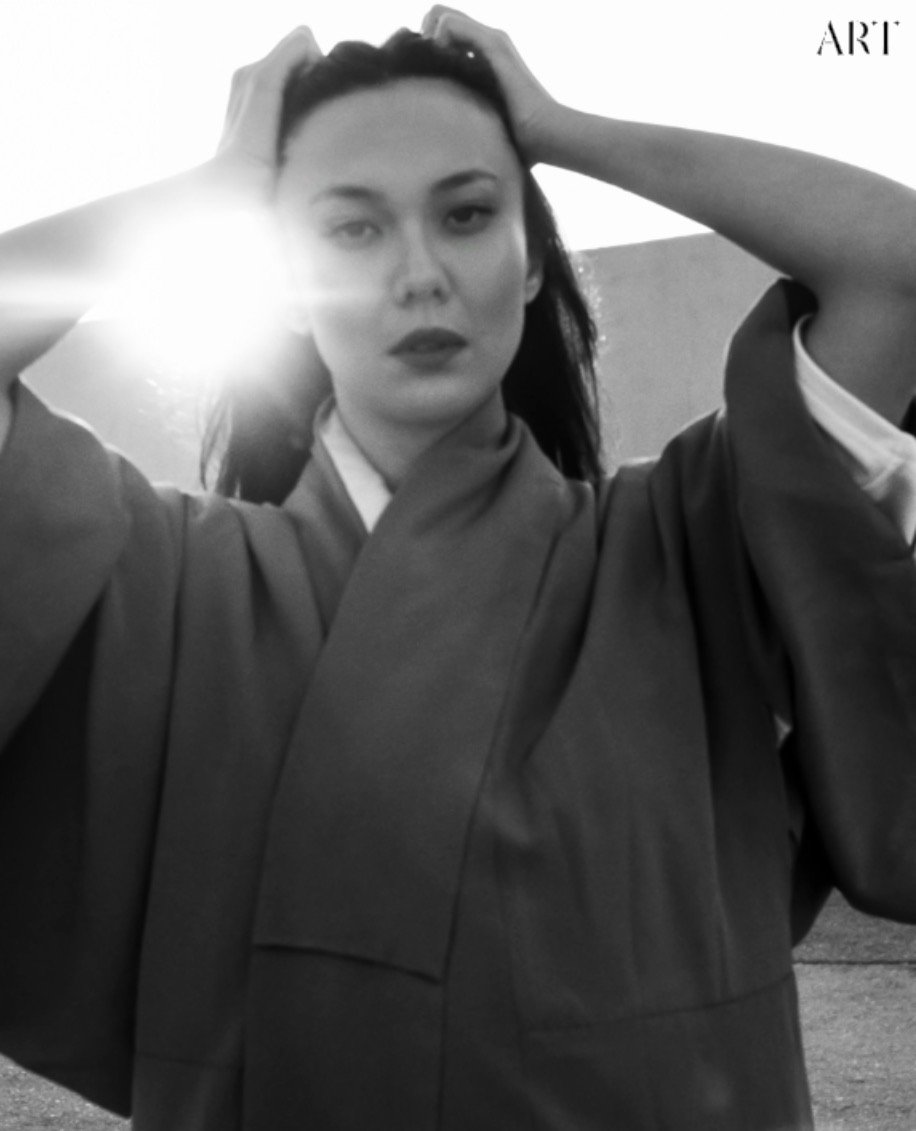
Abu Dhabi has never been short of buildings. This season it has more than ever: a museum district nearing completion, an international fair, two auction houses and a Guggenheim about to open. Sophie Mayuko Arni, a Swiss-Japanese curator and writer who has worked in the Gulf for more than a decade and guest-curated Art Here 2025 at Louvre Abu Dhabi, is more interested in what happens between them. The city, she argues, is superb at building institutions. What it lacks are unofficial places to gather, away from openings and official functions. "But how about a bayt," she asks, "a home?"
It is a characteristically precise diagnosis. Arni's curatorial work reads the Gulf through Japan rather than through Europe, tracing shared sensibilities in domestic space, in thresholds between public and private, and in the codes of hospitality, honour and restraint. Art Here 2025, the Richard Mille Art Prize exhibition under the Louvre's dome, drew more than 400 submissions from artists in the GCC and Japan, and found in shade a concept uniting both. Her attention has since turned to textiles: fabric as privacy, as architecture, as identity.
She is generous and unsparing in equal measure. She would put a critic before a collector, because "criticism, when it comes from a place of genuine engagement, is an important form of care." She believes "a great work of art should never have to represent or stand for something other than itself." And when asked to name three artists she would stake her reputation on, she names three, then adds three more.
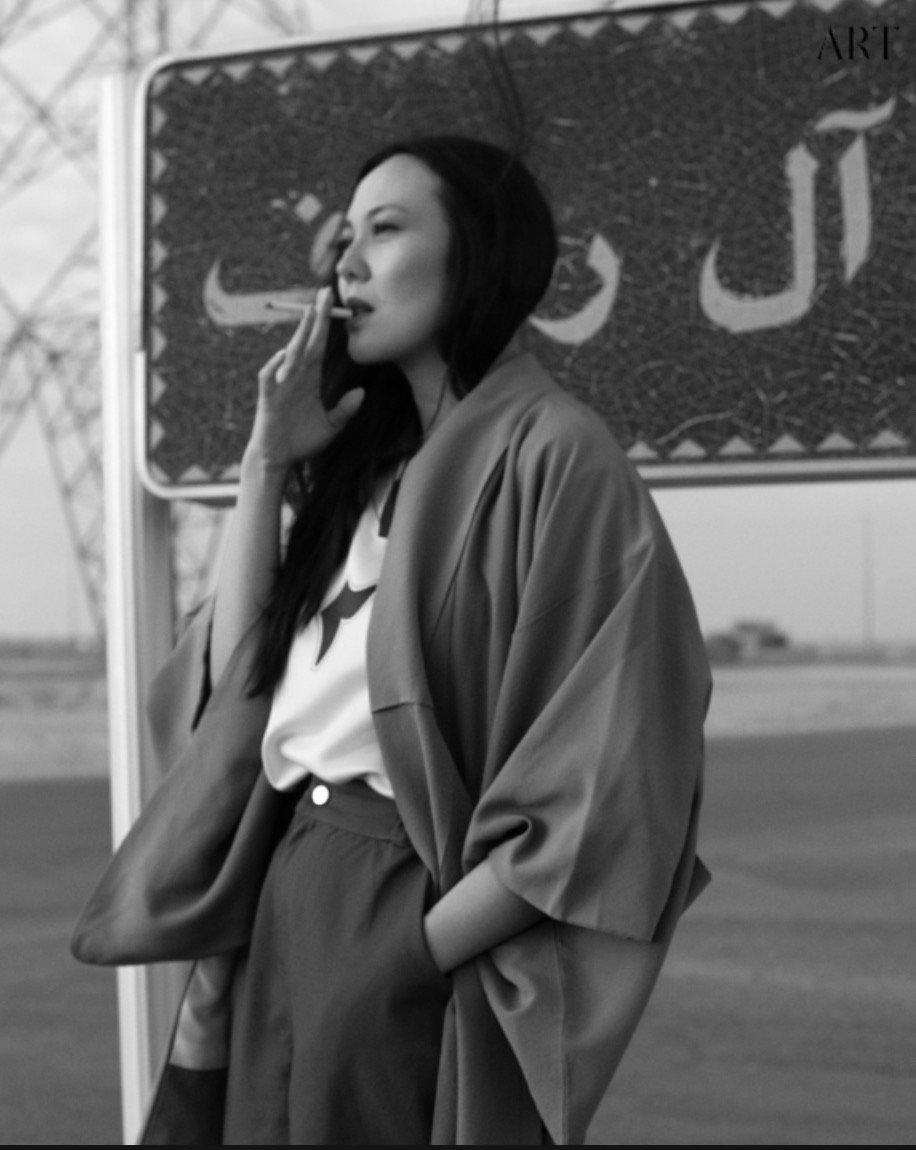
Oona Chanel: Abu Dhabi now has a museum district, an international fair and two auction houses operating in the same season. What is still missing from this ecosystem that none of them can supply?
Sophie Mayuko Arni: Looking back at the last decade, Abu Dhabi was perhaps lacking a coherent, local, united "scene" — or "scenes," so to speak — of resident artists, writers and creative practitioners. I think that has fundamentally changed today. The sheer number of artists, curators, art professionals, collectors, and operators making this industry blossom is growing by the day, and slowly but surely, they are coming together and collaborating. Universities have tremendously contributed to the growth of the public and private sectors of Abu Dhabi's creative economy, and the city's museums must be applauded for fostering an appetite for artistic practices in tomorrow's youth. Saadiyat Cultural District is truly a gift to the world, and will be remembered as one of the most ambitious museum clusters of the early 21st century.
Abu Dhabi is today a cultural and knowledge hub. Some incredible artists, scholars, experts, and thinkers call this city home. But I feel that we are still missing spaces outside of institutions to gather and meet. As the community grows, so does the need to gather away from official functions and institutional settings. The ecosystem needs unofficial physical spaces to convene, discuss, cross-pollinate and collaborate.
Abu Dhabi is particularly strong in its government-led initiatives for arts and culture, with a truly cohesive set of museums, fairs, arts districts, long-term cultural strategies, institutions, programming and biennials, all growing the appetite for contemporary art in the city. The city's strength lies in building institutions and museums. But how about a bayt — a home? Dubai has Bayt Al Mamzar, for example, a villa turned into a studio and exhibition space for artists to convene, which has become incredibly popular. The comforting opulence of lounging, thinking, working and innovating, together from the ground up, is a gift.
We have the internet, where we all share our latest projects and support each other through @ tags, emojis and congratulations. The internet has become our third space, but it cannot replace physical, in-person interaction. I don't think we can have the global without the local first – a local that is multicultural, because that is what Abu Dhabi and Saadiyat Island have cultivated.
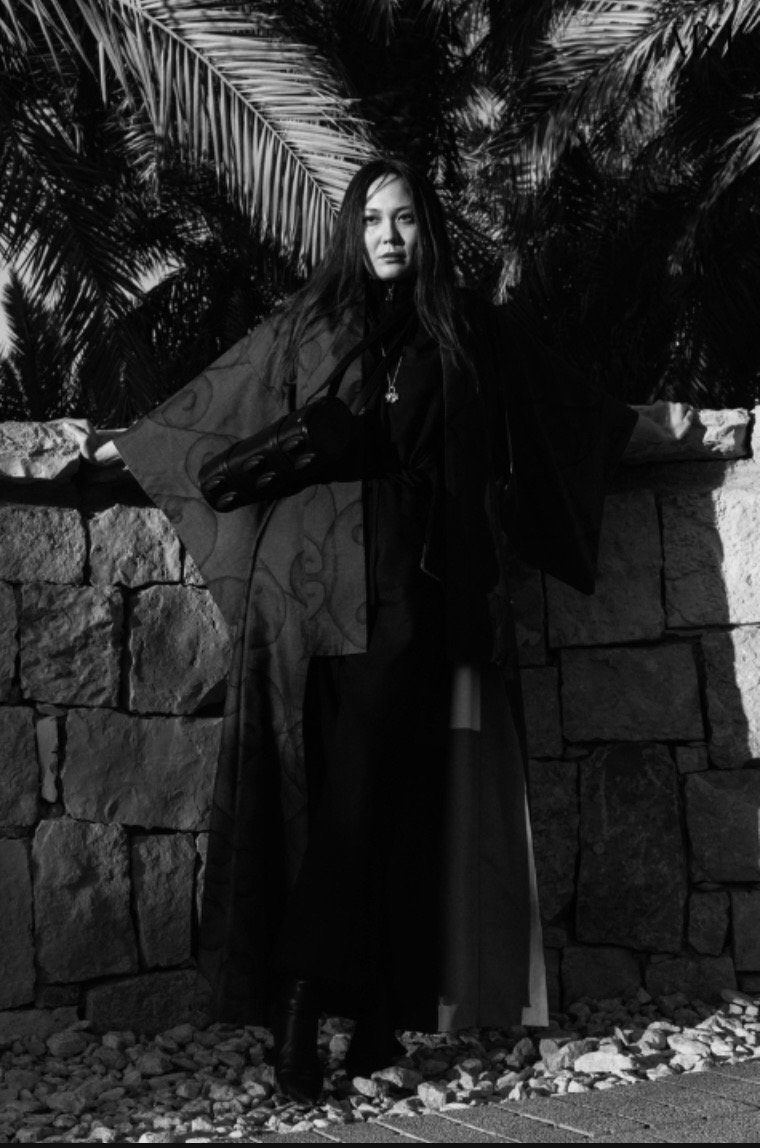
O.C. Frieze brings a global market to Saadiyat Island. What does it risk flattening, and what might it make possible that wasn't possible before?
S.M.A. Abu Dhabi is great at attracting visitors and tourists from around the world. Frieze will now attract a potentially new art crowd who may never have visited Abu Dhabi or the United Arab Emirates prior.
This is needed. Fresh energy and new perspectives on our local art scene are pushing all of us to present new and better exhibitions, artwork commissions, thinking and writing. It challenges artists, curators, gallerists, to play on the global scale, and results in a larger variety of exhibition programmes.
It should not be forgotten that Abu Dhabi is already deeply connected to the world, not only through incredible museums, cultural projects, governmental initiatives, and cultural diplomacy, but also through the people who call this place home, who travel regularly and foster unlikely exchanges across geographies and cultures.
Frieze Abu Dhabi may amplify these exchanges, but they have been happening organically for years.
O.C. As the story of art in the UAE is told to an international audience this week, who is being left out of it?
S.M.A. It may be the UAE-based artist. The one who came from abroad to the Emirates — the land of dreams — to pursue the UAE dream. The artist who has lived here for over a decade, navigating full-time employment alongside an artistic practice, trying to find a balance between rootedness and the need to travel, between belonging and displacement.
UAE-based artists do not always get their flowers. Their stories are not always told because they perhaps don't fit neatly into the narratives which tend to be exported internationally. There are nuances to these local experiences that deserve more attention. The ideas of longing, expatriation, belonging and the notion of home are particularly relevant to a country where so many people have built their lives away from their places of origin.
Looking at the group of artists selected to represent the UAE at the Venice Biennale this year, however, I believe we are already moving in the right direction.
O.C. Emirati artists are increasingly asked to stand for a nation, at Venice, in museum collections, at auction. At what point does representation become a burden on the work itself?
S.M.A. A great work of art should never have to represent or stand for something other than itself. The work of art should do the talking, not the wall text, the press kit, or the headline in a magazine. It should have the capacity to be universal, to travel across all the aforementioned spaces without losing its core identity. Of course, its cultural context and the artist's identity are important, but they should not become the only lens through which we understand it.
Packaging and representation are important in drawing crowds and generating interest in the beginning, particularly for art scenes that are still establishing their place within international narratives. But they should not be the leading point going forward.
Many artists have caught up to this phenomenon, however, and I'm hopeful the next generation of artists practising here will be celebrated on their own merit locally, regionally, and internationally.
O.C. What does an artist working in the UAE need most right now: a collector, a critic, an institution, or time?
S.M.A. All of the above. But if I had to put them in order, I would say: a critic, time, a collector and eventually an institution.
A critic first, to challenge the artist's thinking, offer constructive feedback and become an early supporter of the work. Then time, for the artist to experiment, develop a language and really hone in on the practice. A collector to buy the work so the artist can continue creating, and eventually an institution to acquire the work when it has reached a certain level of maturity.
I think critics and constructive criticism are absolutely key. We have become very good at celebrating artists, but perhaps less comfortable with challenging them. A healthy art ecosystem needs both encouragement and rigorous intellectual exchange.
Criticism, when it comes from a place of genuine engagement, is an important form of care.
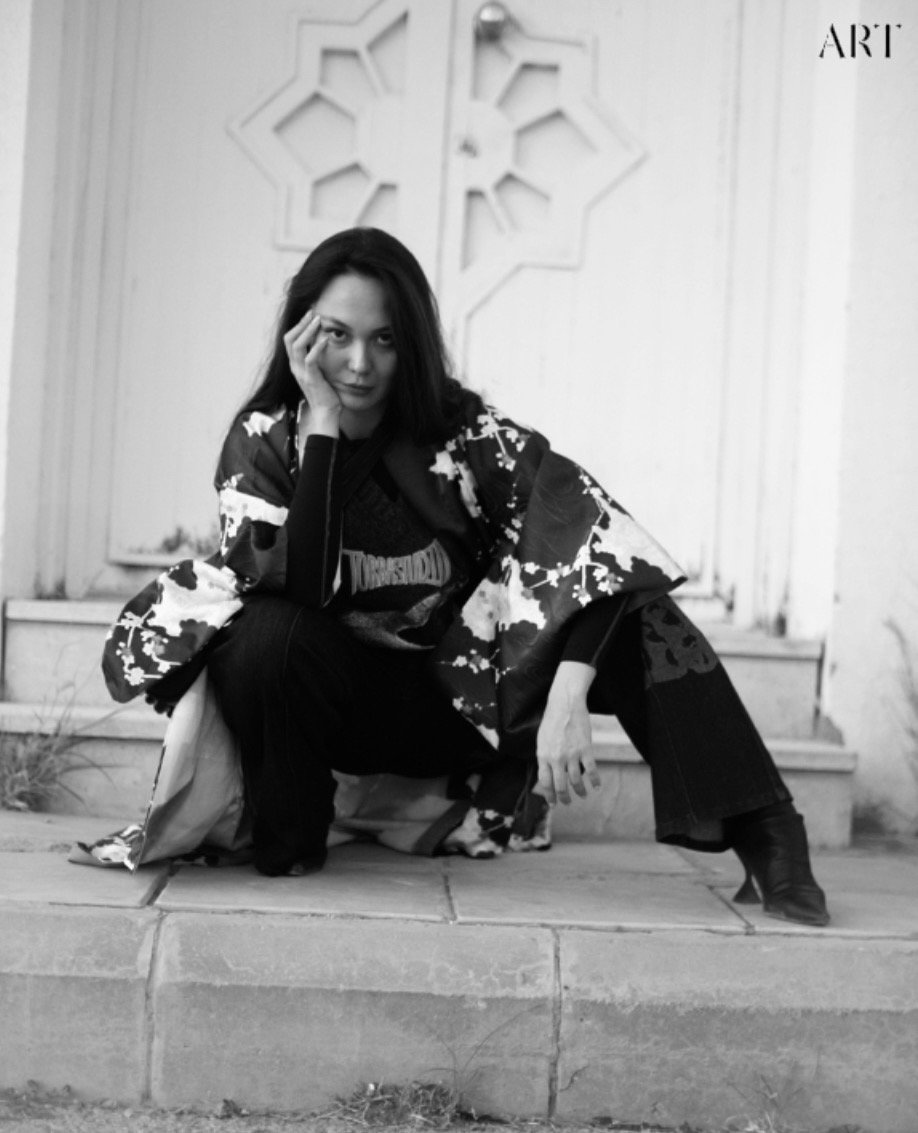
O.C. Your curatorial work reads the Gulf through Japan rather than through Europe. What becomes visible in Emirati art once the point of reference shifts east?
S.M.A. Shifting the point of reference allows us to explore these ideas without automatically filtering them through European art-historical frameworks. It opens up other ways of reading artistic practices, grounded in shared sensibilities but also in very different histories.
I found that incredible things happen when we look East instead of West. New perspectives arise, and we realise we are perhaps much closer to one another than we think, particularly if we consider Asia as a continuous geography spanning West Asia, including the Gulf, all the way to the edges of East Asia and the Japanese archipelago.
There are fascinating parallels between the UAE and Japan in the ways we understand space, domestic architecture, privacy and the relationship between the individual and the collective. The visible and invisible forces that structure everyday life, the thresholds between public and private, the social codes of hospitality, honour and restraint. The adoration for a techno-optimist future, combined with a deep reverence for traditions and the past.
One example is the relationship to light and shadows. Last year, I was invited to curate Art Here, the Richard Mille Art Prize exhibition which takes place annually under the dome of the Louvre Abu Dhabi, which welcomed over 400 artwork submissions from artists based in the GCC and Japan. I found that shade is a concept uniting the Gulf and Japan. Artists from both regions proved that shadows could be containers for meaning and artistic creation, drawing on the artistic vocabularies and traditions of both their localities.
O.C. In your recent exhibition, shadow meant protection in the Gulf and restraint in Japan. Which idea from vernacular life here has contemporary art not yet fully reckoned with?
S.M.A. Many, actually. Shadows was a great entry point when thinking of artworks and artists who deal with light in both geographies.
Currently, I'm more and more interested in exploring textile-based works, the idea of garments as identity-building. There is something incredibly rich in the role of textiles in everyday life in the Gulf, from clothing and domestic interiors to the ways fabrics are used to create privacy, define spaces, communicate identity and negotiate visibility.
Textiles carry histories of trade, migration, craftsmanship and social codes. There is still a lot to unpack in the relationship between textiles, the body and the built environment, particularly in the context of contemporary life in the Emirates.
There are already some incredible works engaging with these ideas, including many works presented in this year's edition of Art Here, titled Confluences, which explores links between the GCC and India. It's an exhibition worth seeing if you are in Abu Dhabi this month.
O.C. Name three artists working in the UAE today whose work you would stake your reputation on, and say why their moment is now.
S.M.A. Hashel Al Lamki: His moment has been now. No need to expand: his CV speaks volumes already. I have been working with Hashel for many years now, and continue to be proud of his accomplishments, especially his recent residencies abroad and the evolution of his portfolio from painting to installations. What I particularly admire is his willingness to experiment and travel, independently of the expectations attached. His practice has developed its own language, and his multilayered trajectory reflects that independence.
Jumairy: One of the only performance artists we have here in the UAE, and an incredibly talented artist I had the chance to work with on the last edition of Art Here at the Louvre Abu Dhabi. His deeply personal and psychologically vulnerable perspective is refreshing in the scene. He speaks of universal topics, from a Jumeirah-centric point of view. Unmissable, and a needed voice for the UAE art ecosystem.
Shaikha Al Mazrou: Her solo exhibition, which has just opened at the Cultural Foundation in Abu Dhabi, shows the depth and breadth of her practice. Work has been put in, in all senses of the word. New horizons were materialised.
Three more artists worth mentioning:
Saif Mhaisen: An incredibly underrated artist based in the UAE in my opinion. Incredible portraiture. He draws and continues to expand his practice with "elephant time" as he calls it.
Amir Hazim: Perhaps one of the most talented fine art photographers living in the UAE, paired with an incredible sense of style and art historical references from his native Baghdad. I hear he is showing two photographs at NOMAD, worth checking out.
Maitha Abdalla: Her paintings, but also her recent bronze sculpture unveiled in Paris, speak volumes about her potential as a multimedia artist. On her own path, delivering on her own time, she reflects our time. A strong point of view.
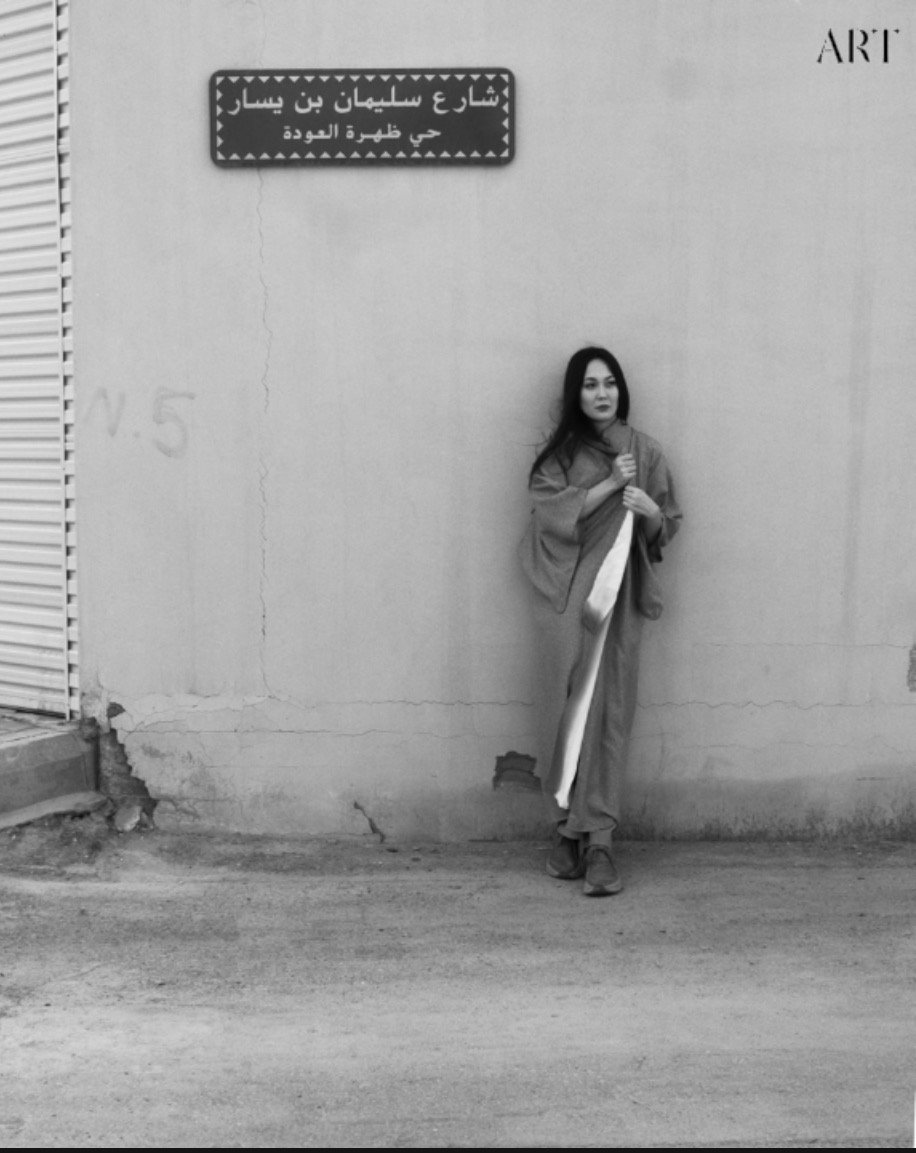
Sophie Mayuko Arni is a curator and writer based in the UAE, and the founder of Global Art Daily. She was Guest Curator of Art Here 2025, the Richard Mille Art Prize exhibition at Louvre Abu Dhabi. Photo: Ron John. Courtesy of Kimono by Global Art Daily.
BY OONA CHANEL
