

Morocco in the Off-Season: What Fès Looks Like When the Medina Belongs to Itself
November is when the light is best, the tanneries are quietest, and the city will, for two hours each morning, let you believe you are the first person who has ever seen it.
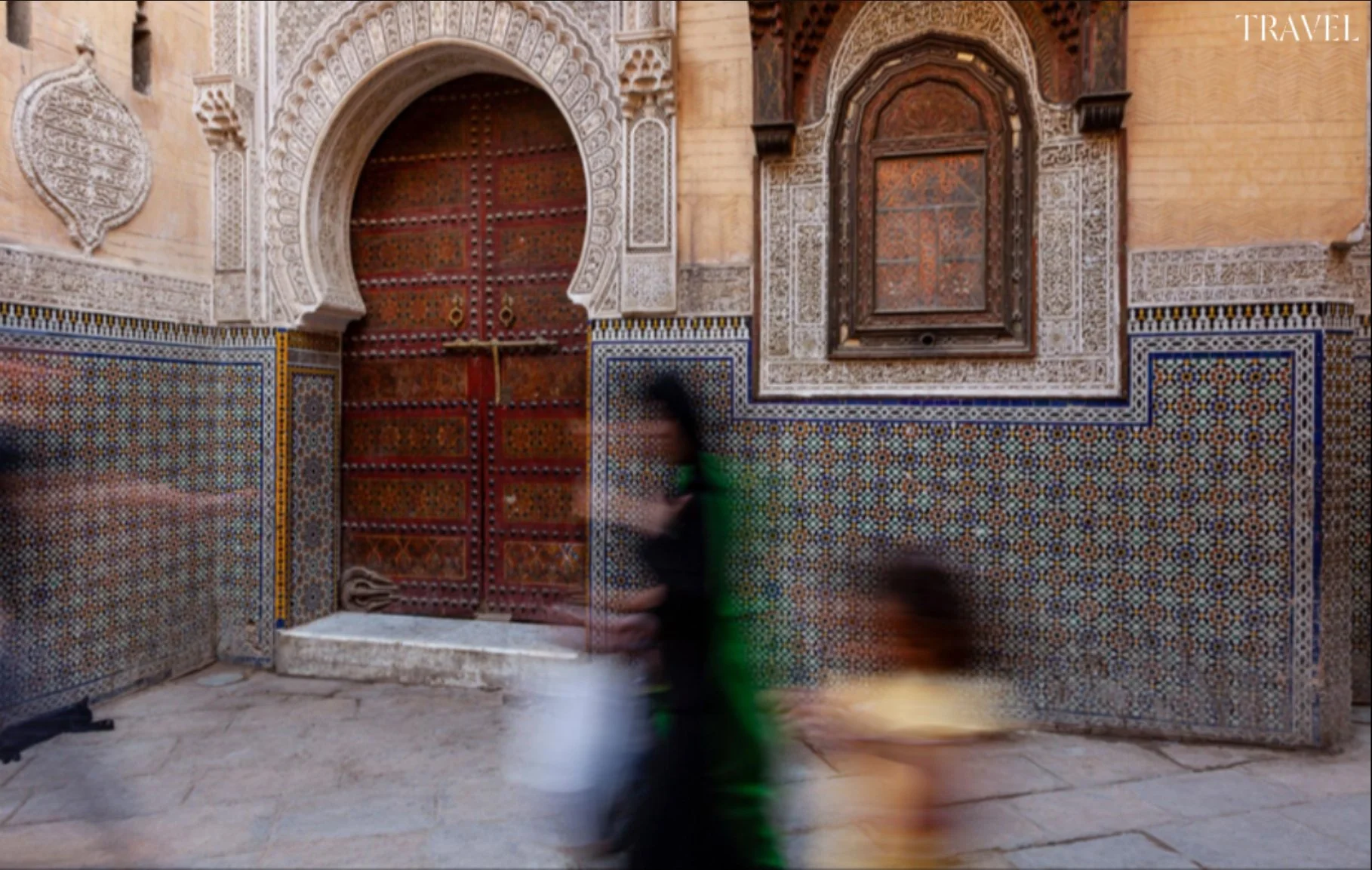
“At the center of this city there is something genuinely not for you. It has been happening for eleven centuries before you arrived. The knowledge of this is one of the most useful correctives available to the contemporary traveler.”
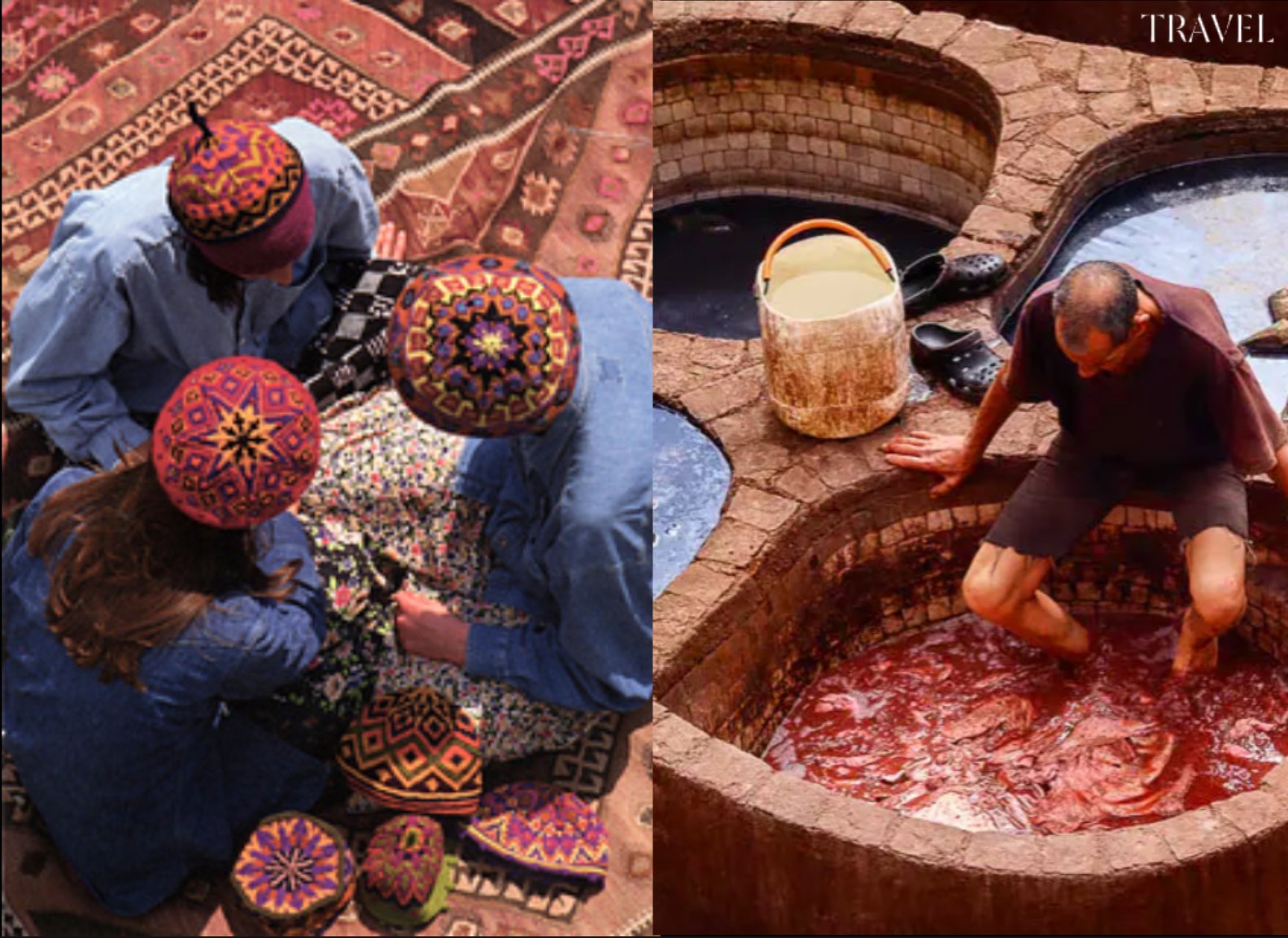
The tanneries of Fès smell of pigeon dung and saffron and the specific compound of ammonia and chrome that has been used to cure leather here since the eleventh century.
This is not mentioned in most travel writing, because travel writing prefers the tanneries as a visual spectacle — the honeycomb of vats, the colors changing seasonally with the dye cycle, the famous view from the terrace of the surrounding leather shops — and tends to present the smell as a minor inconvenience rather than the thing that, more than any other sensory fact, makes you understand where you are.
The smell is the point. It is the smell of a process unchanged in a thousand years, performed by men who learned it from their fathers and who will, in some cases, teach it to their sons. It is the smell of the medina — which is, of all the places in Morocco, the most complete survival of a pre-industrial city, a place that has been continuously inhabited and commercially active since the ninth century and that has been reorganized, at the level of its fundamental spatial logic, not at all.
You should come in November. The high season — April through June, September through October — brings crowds that the medina absorbs with difficulty and that transform the experience of moving through it from something profound into something merely impressive. November is different.
The rains have not yet made the streets impassable. The light — low, golden, coming from the south — does what Moroccan light does best: it reveals rather than bleaches. The shadows are long and informative. The walls, which are the color of the earth from which they were made, seem to be lit from within.
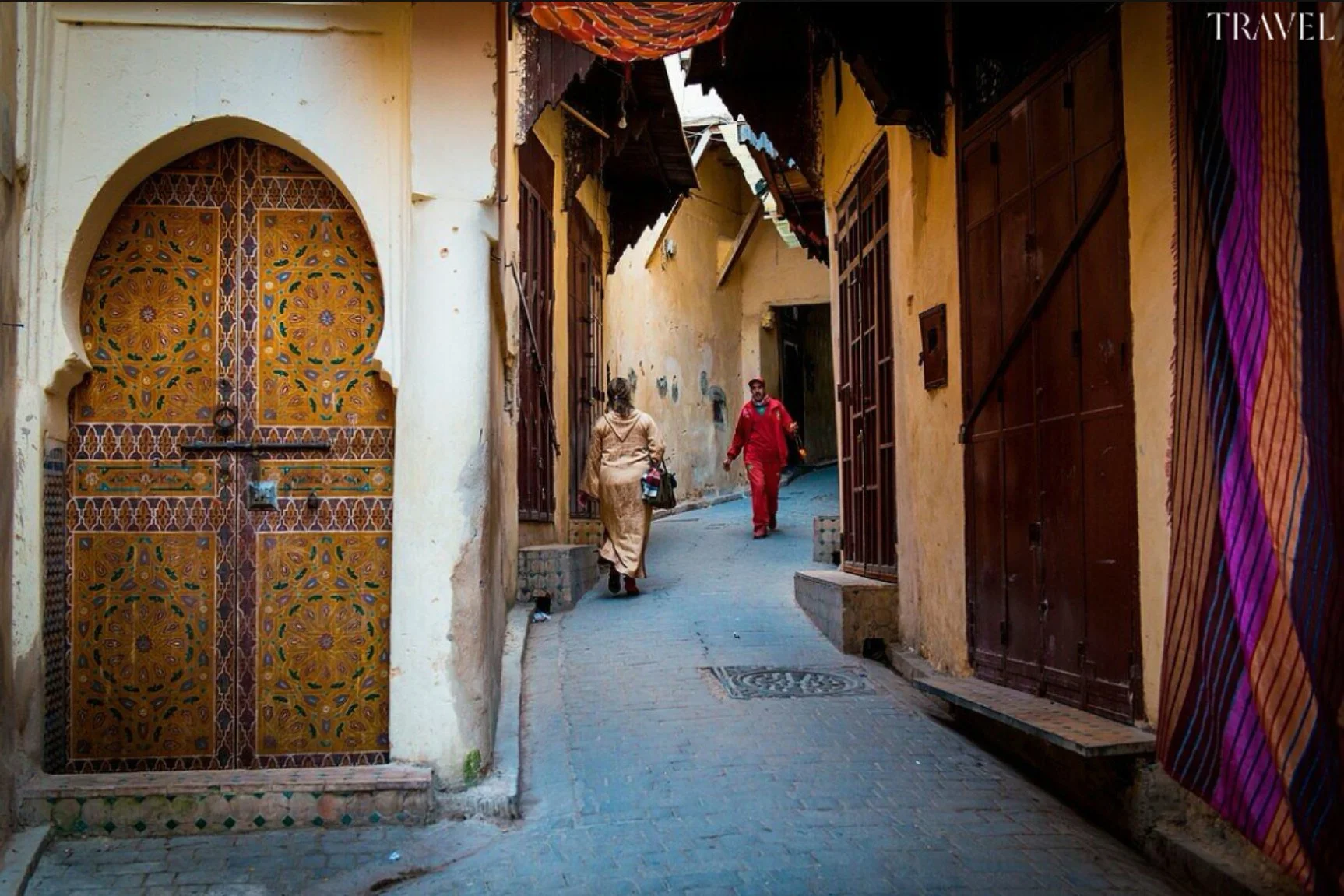
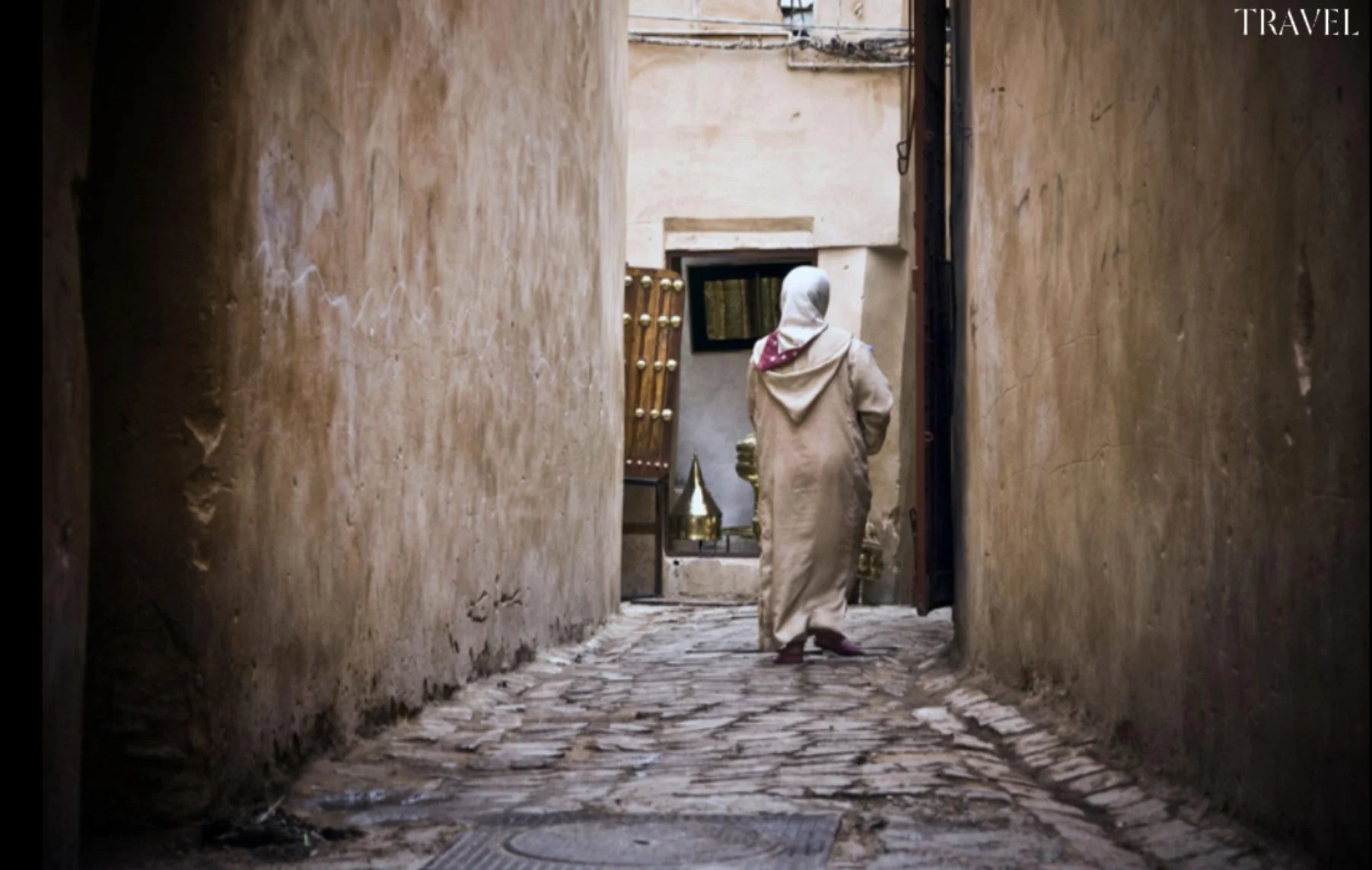
Begin before the azaan. The first call to prayer comes before dawn, and if you are already walking — out of the Bab Bou Jeloud, into the main artery of the Talaa Kbira, toward the heart of the medina — you will hear it first from one minaret, then answered by another, then another, the overlapping calls creating a acoustic architecture that is specific to this city and this hour.
This is not a performance for visitors. It is a practice of a community that has been doing this before the city's walls were built. You are, at this hour, genuinely present in something that does not require your presence.
The Qaraouine mosque and university — founded in 859 CE, making it the oldest continuously operating university in the world — is not open to non-Muslims. This is, in the context of a tourist experience, a fact that most guidebooks present as a frustration and that is, more accurately, a gift:
the knowledge that at the center of this city there is something that is genuinely not for you, that has been happening for eleven centuries before you arrived and will continue after you leave, is one of the most useful correctives available to the contemporary traveler. It produces, if you allow it to, the correct proportion of yourself in relation to the place.
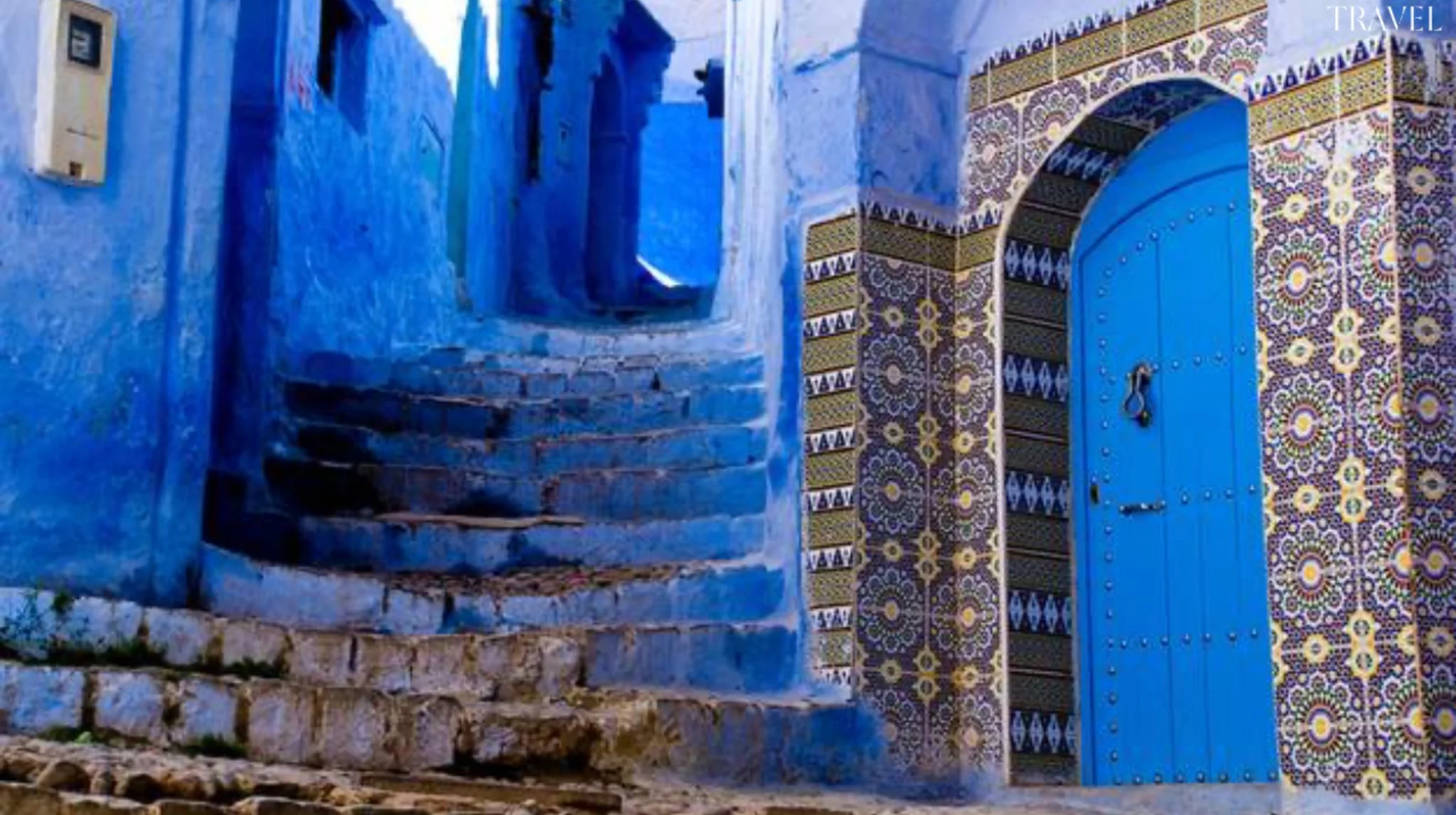
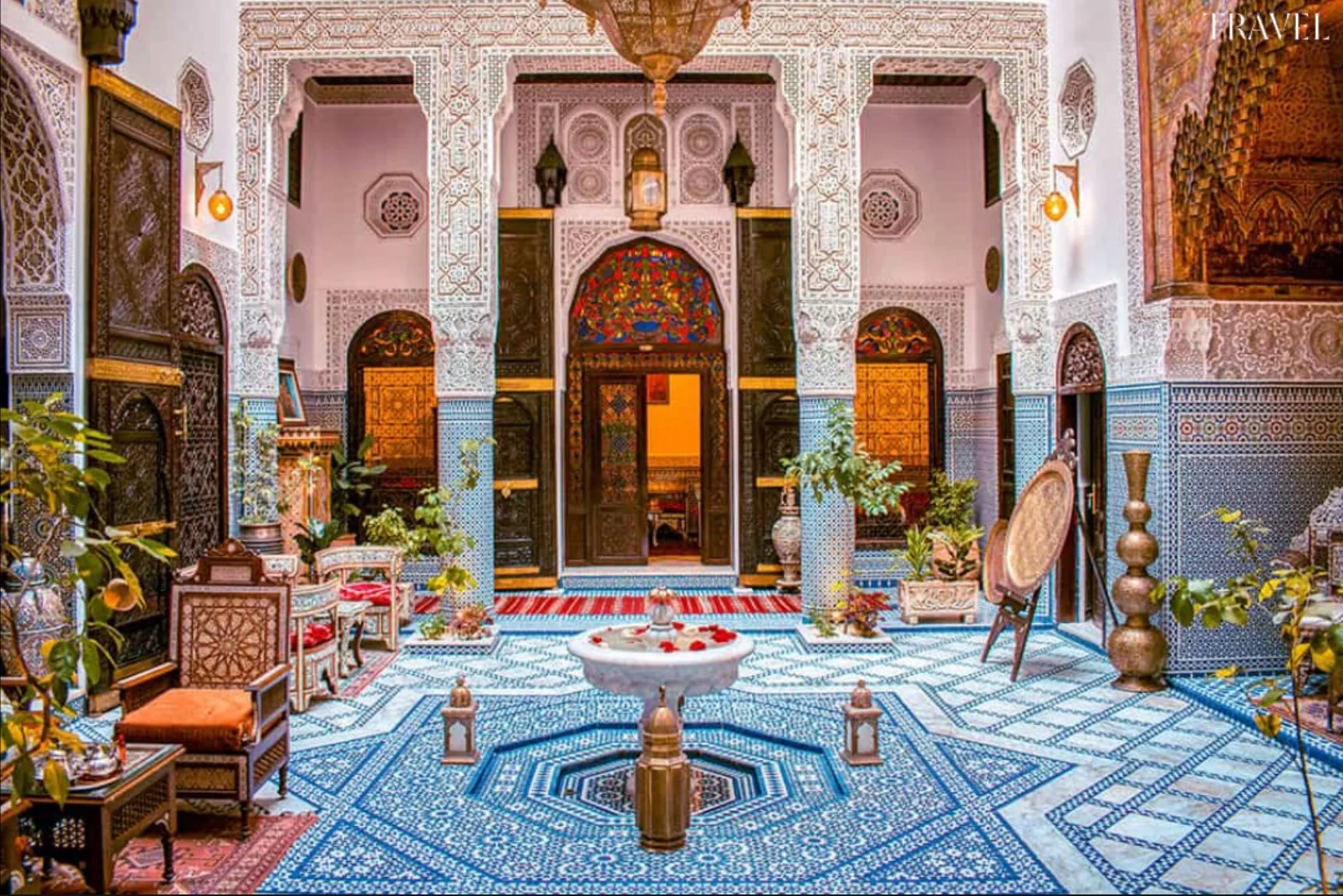
Stay at Riad Fès — the most considered of the high-end riads, occupying an eighteenth-century palace in the heart of the medina — for a minimum of three nights. The riad is the spatial argument of Fès in a single building: the exterior presents a blank, deliberately anonymous wall to the street; the interior opens onto a courtyard of intricate tilework and carved plasterwork and a garden of orange and lemon trees that makes the medina's noise simultaneously present and distant. The room is an argument about the relationship between public and private, between the city and the self.
Eat, on your second evening, at the table of a woman named Karima, who runs a cooking class that is, in practice, a dinner party for seven.
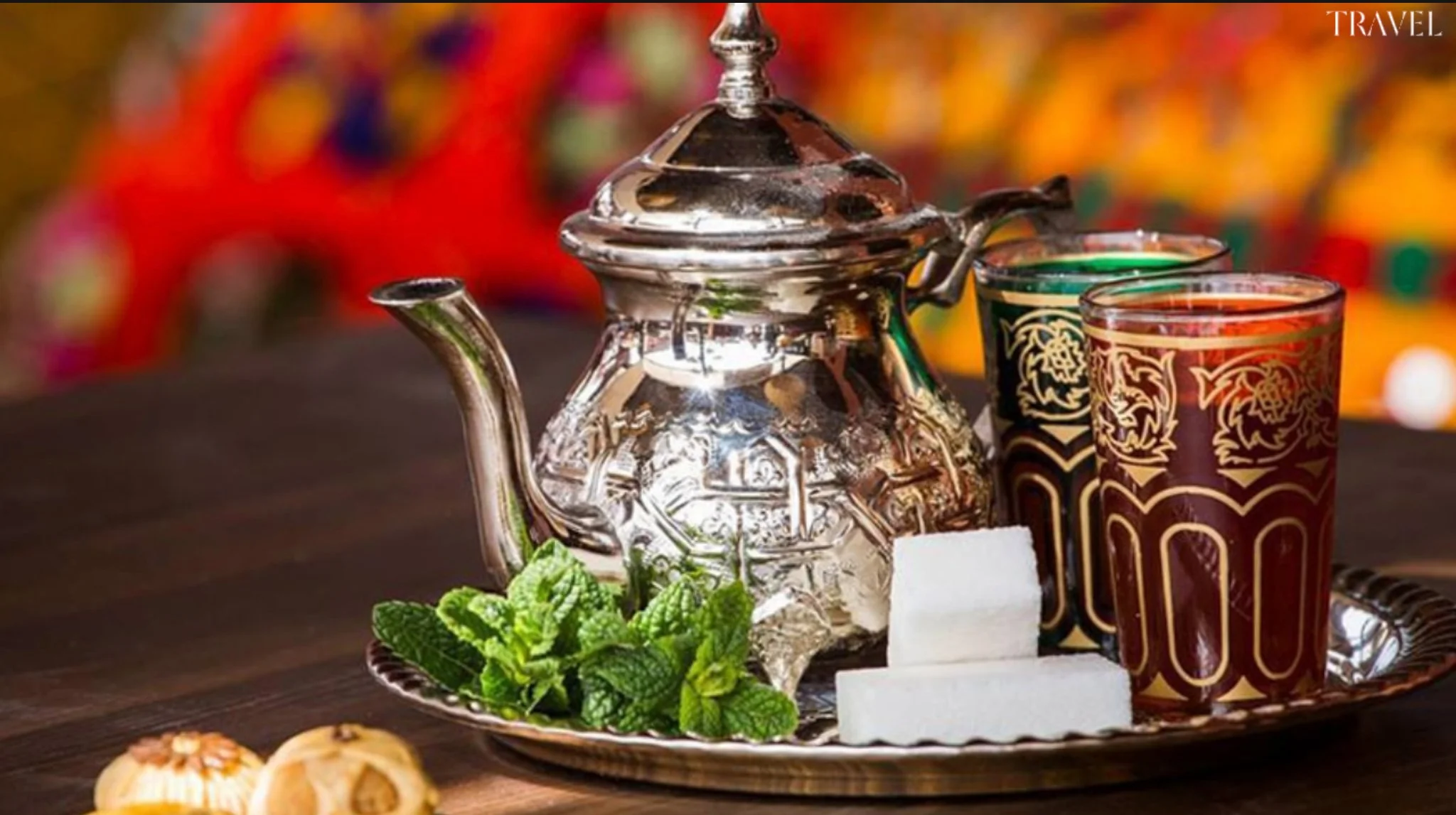
She cooks a chicken bastilla that contains two hours of the morning, a preserved lemon that has been sitting in salt and its own juice since before you arrived, and a quality of attention that the restaurated restaurants of Marrakesh cannot replicate because it is not a technique. It is a relationship to cooking that proceeds from the belief that hospitality is a form of love.
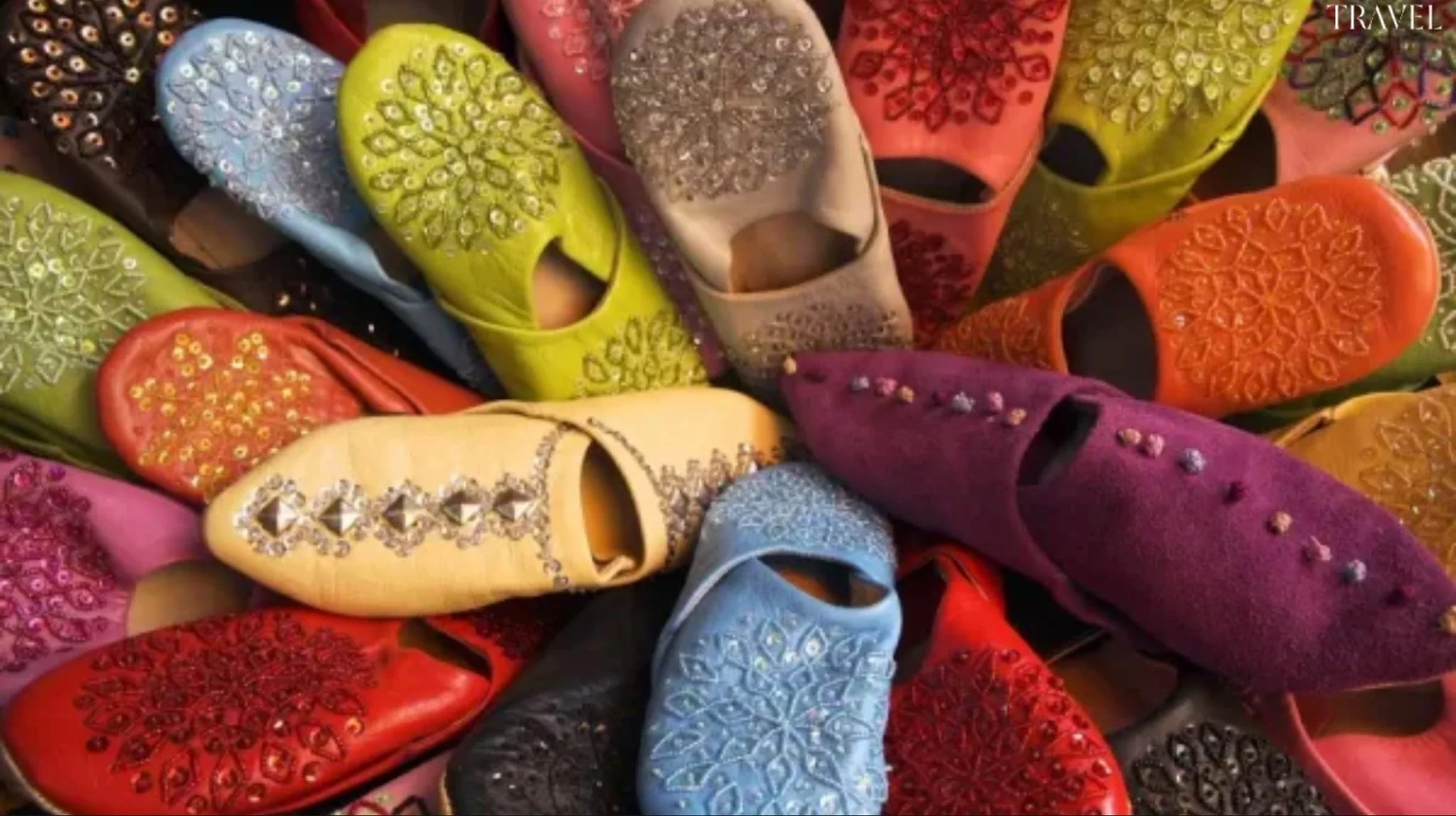
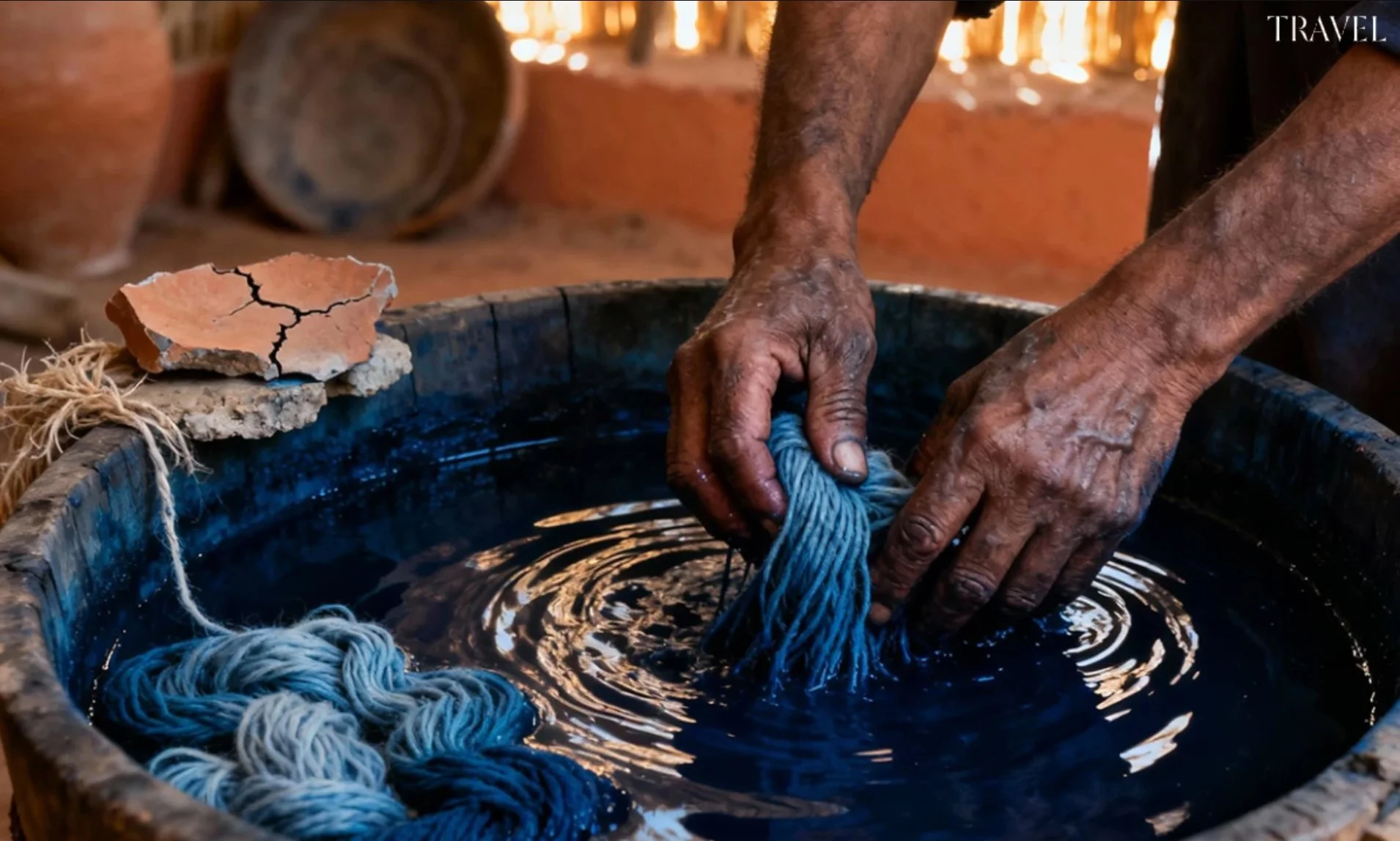
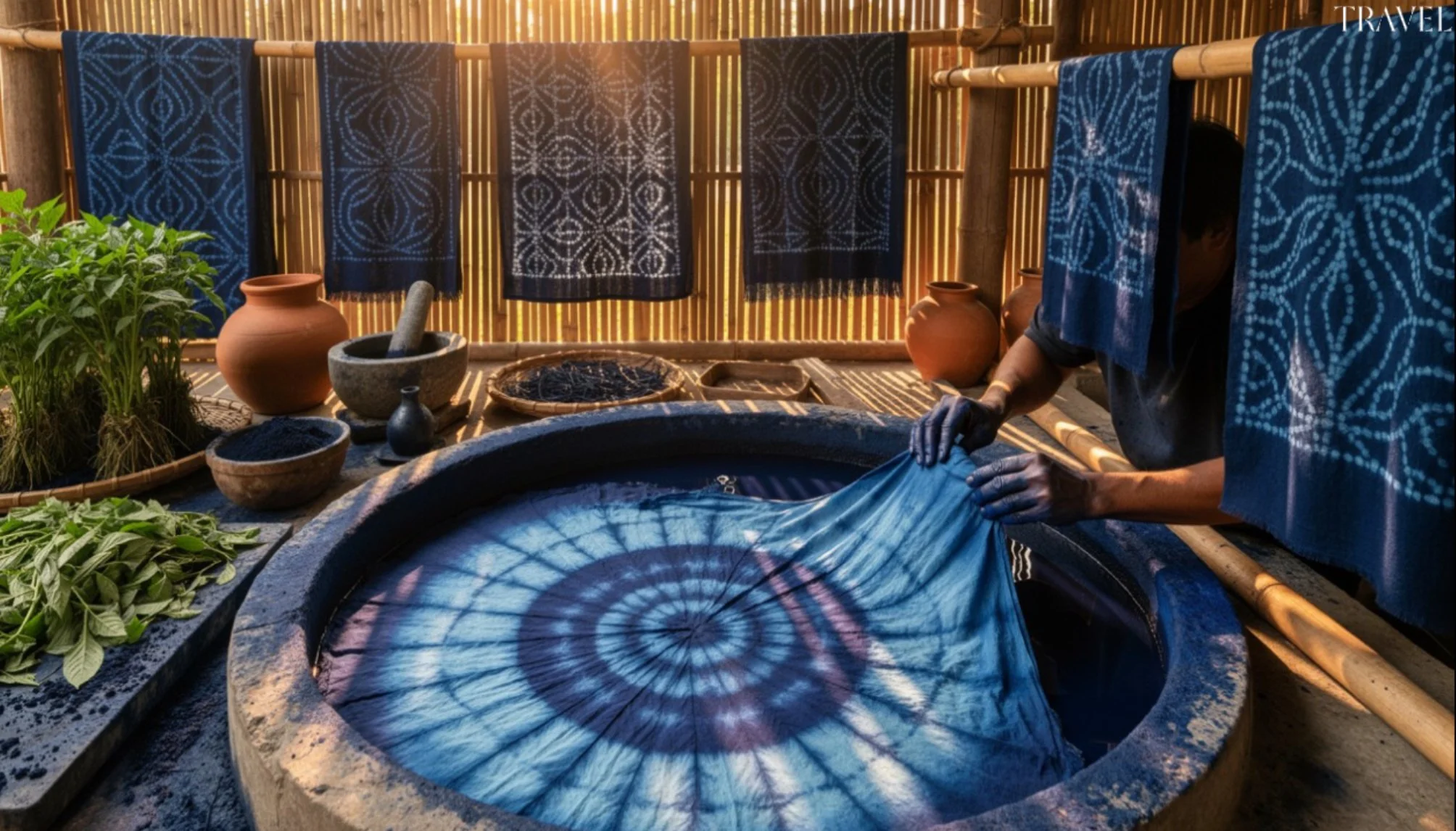
On your last morning, return to the tanneries at 7am, before the shops have opened. Stand above the vats without anyone trying to sell you anything. Watch the workers moving between the circles of color — the clay red of the traditional ochre, the deep blue of the indigo, the brown of the walnut — and understand that you are watching a practice older than the country that surrounds it, older than the religion that frames it, older, in its essentials, than almost anything you have encountered.
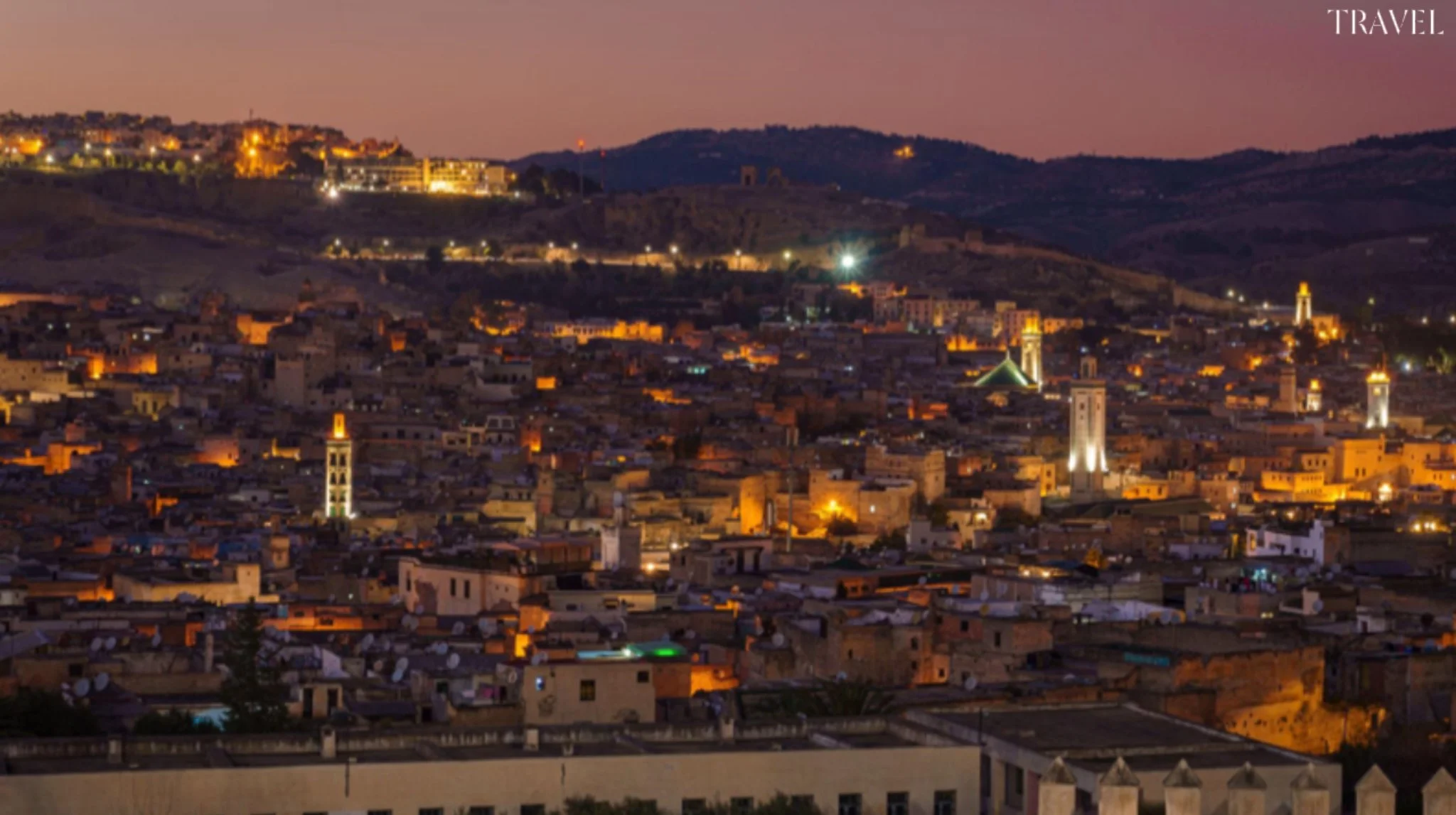
The smell, by this point, you will not notice. This is what happens when a place admits you properly: the things that seemed strange become the things that seem true.
BY OONA CHANEL
