

Isabelle Huppert: The Last Dangerous Woman in Cinema
She has played a murderer, a masochist, a fraud, a ghost, and a piano teacher. She has never played it safe. At 73, she has no intention of starting.
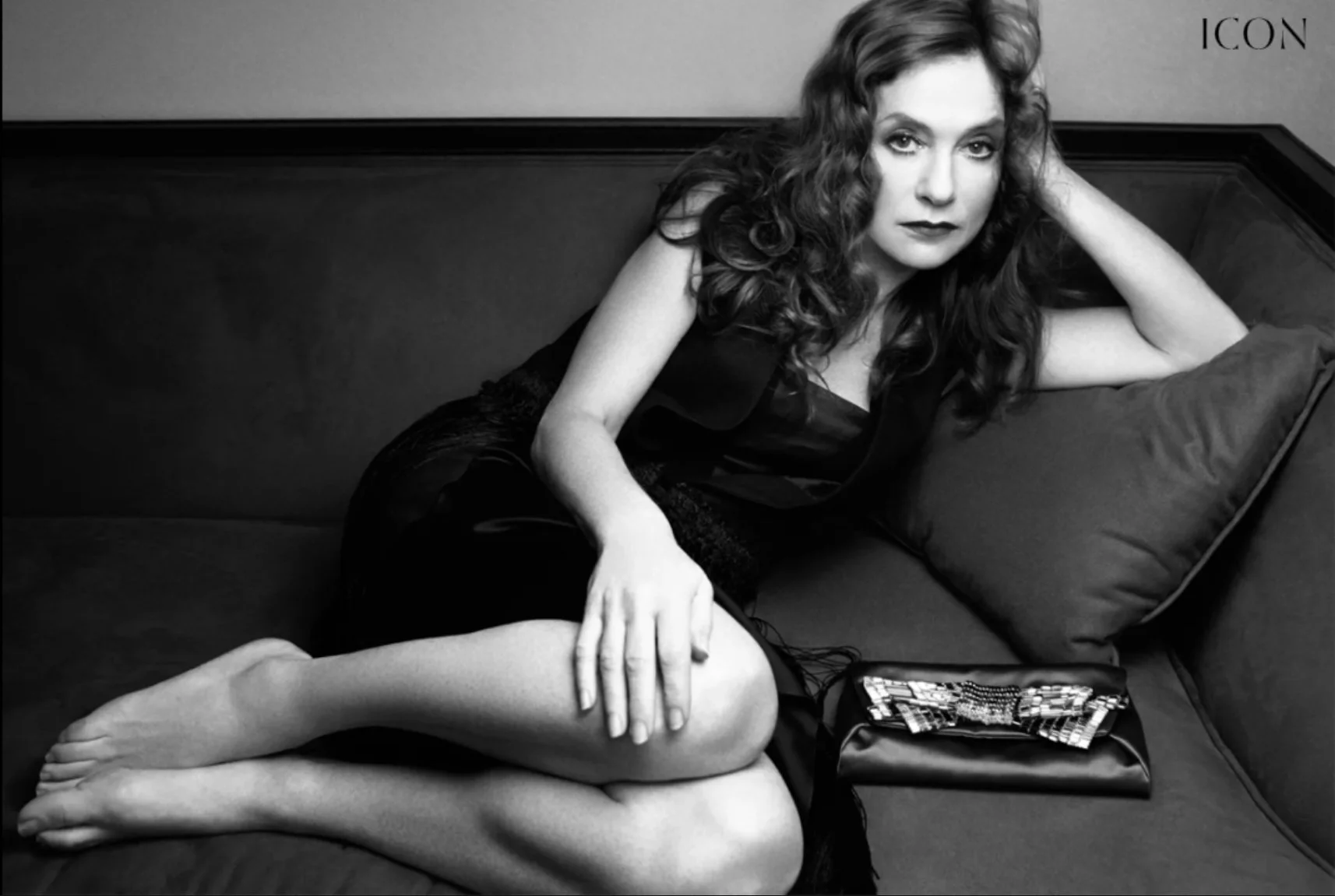
“I don't decide who the character is before I play her. I discover who she is while I'm playing her. This means I am always, to some degree, surprised.”
The first question I ask Isabelle Huppert is not the first question I planned to ask. The one I planned was about the new film — a Pierre Salvadori thriller in which she plays a woman whose life has been built on a set of elaborately sustained lies, and whose face, throughout the film, gives nothing of this away. But walking into the room where she is waiting, in a Paris hotel she chose because it has a garden, I find her already in conversation — with herself, it seems, or with the middle distance — and the first question that arrives is the only honest one: what are you thinking about?
She looks at me with the expression that has, for fifty years, made directors, audiences, and interviewers simultaneously grateful and uncomfortable. It is the expression of someone for whom the interior is never separate from the exterior, but who controls the translation between them with absolute precision.
"I was thinking," she says, "about whether patience is a virtue or a strategy."
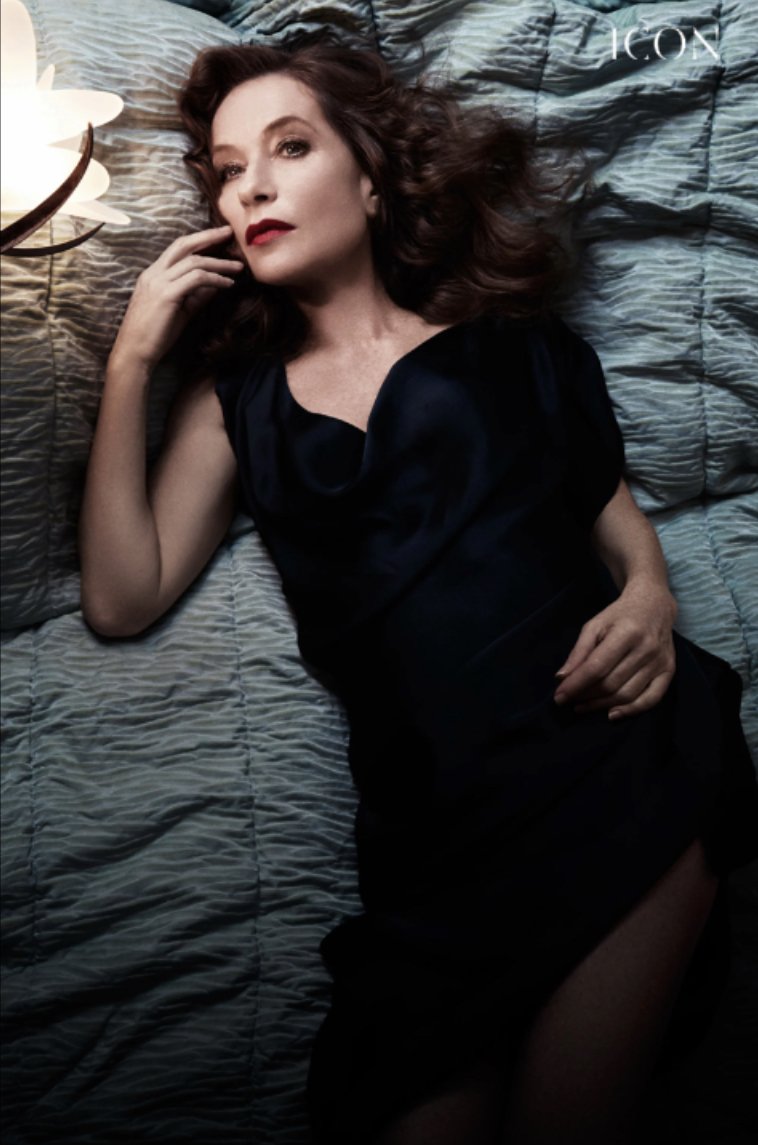
This is vintage Huppert. The statement that is also a question. The apparent disclosure that is also a deflection. The beginning of a conversation that she has already decided will go somewhere the other person did not plan for.
Isabelle Huppert is, by most serious accounts, the greatest living film actress in the world. The arguments in favor of this position are straightforward and extensive: a career spanning more than fifty years, during which she has worked with Chabrol, Haneke, Verhoeven, Mia Hansen-Løve, and every other director worth naming in European cinema; a range that encompasses terror, comedy, predation, victimhood, desire, and the specific quality of a person who contains all of these things simultaneously; two César Awards, two Cannes Best Actress prizes, a Golden Globe, and an Academy Award nomination for Elle that produced, in the Hollywood press, a confusion bordering on panic because the film required them to engage with a character whose motivations did not resolve into the categories they expected.
She has never played a character whose motivations resolve into the categories you expect. This is the point.
"There are actors who interpret their characters," she says. "They read the script, they decide who this person is, they execute that decision. I don't work that way. I don't decide who the character is before I play her. I discover who she is while I'm playing her. This means I am always, to some degree, surprised."
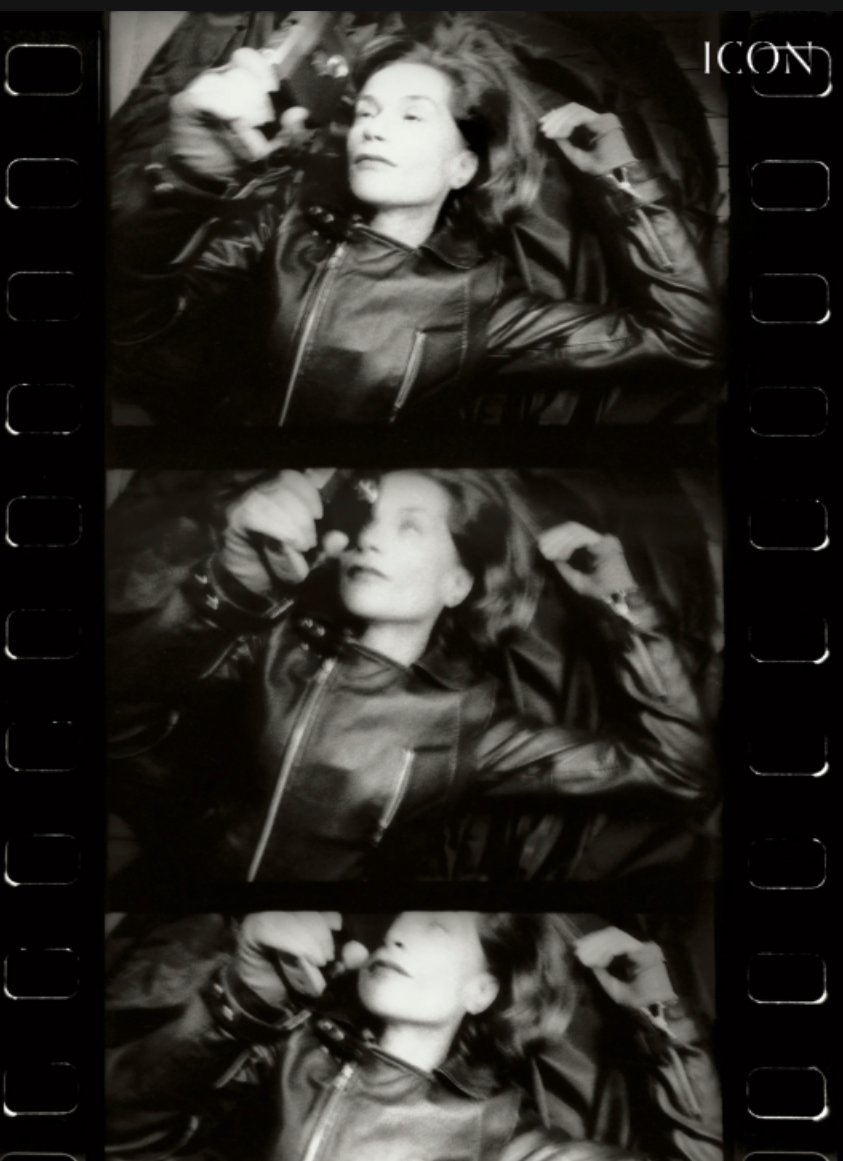
The implication — that the character herself does not know what she will do next — is, for anyone who has watched Huppert work, entirely credible. It is the source of her particular quality of danger: the sense, in every scene, that the situation could still go anywhere. In a medium where most performances are, in retrospect, precisely what they were always going to be, Huppert's work retains, even upon repeated viewing, the quality of contingency.
We spoke about Michael Haneke, with whom she made The Piano Teacher in 2001 — the film that required of her one of the most extreme performances in cinema history, and which she discusses with a cheerful matter-of-factness that is either the product of genuine comfort with extreme material or the most sophisticated form of self-protection available. Possibly both.
"Michael is the person who has trusted me most completely," she says. "He asked me to do things that required absolute trust — not in him, but in myself. The scene in the bathroom. The scene at the concert. The ending. None of those things were manageable with conventional technique. You have to go past technique. You have to find the thing that is true before the craft is applied."
At seventy-three, she is more employed than she has been at any point in her career. The past three years have produced six films. She is in preproduction on two more. She does theater, consistently and without the hierarchy that separates film actors from stage: she has played Phedre, Medea, and the works of Marguerite Duras, in which she has found something she describes as "a kind of permanent autobiography — not my autobiography, but the autobiography of the interior, which is the same for everyone."
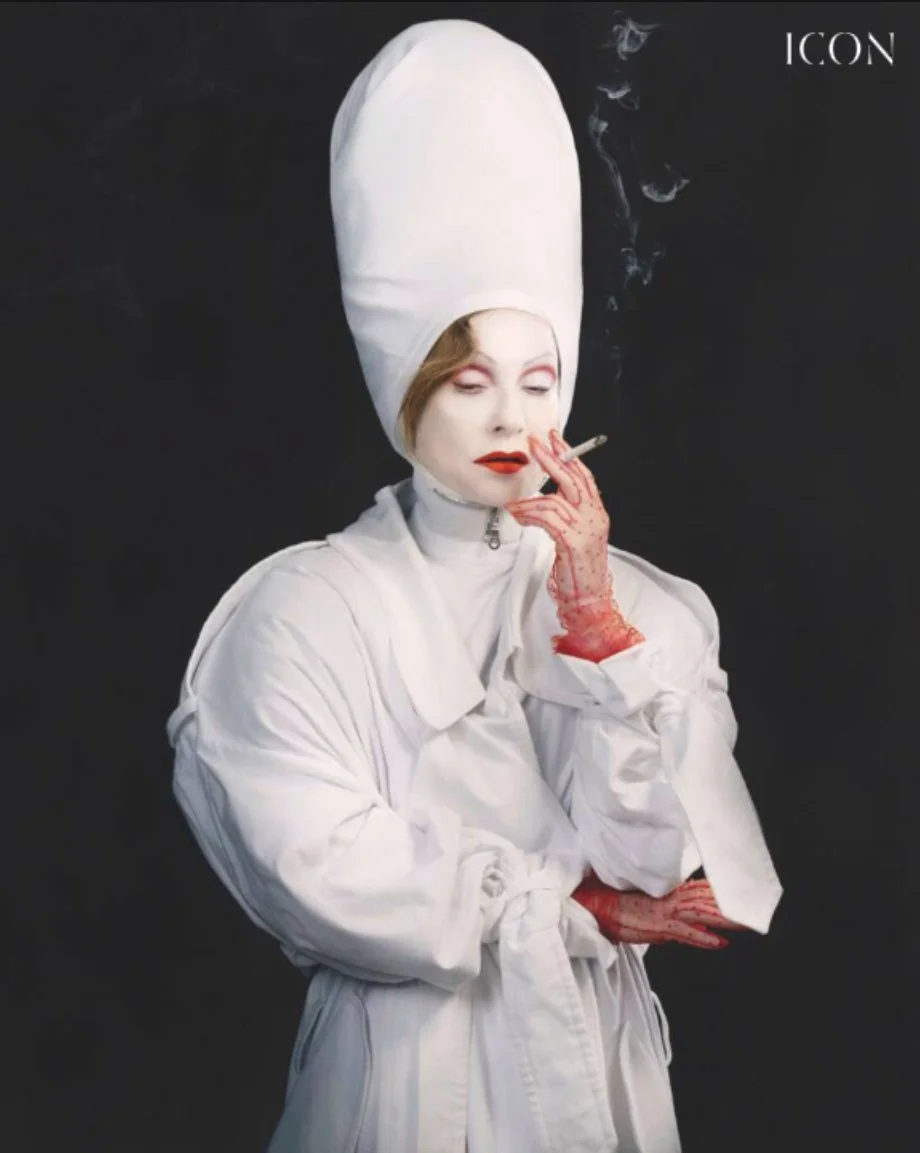
She drinks her tea. Looks at the garden. Returns to the question she answered instead of mine.
"I have decided," she says, "that it is both. Patience is a virtue when you do not know what you are waiting for. It is a strategy when you do."
She stands to leave. The interview is over before I had planned for it to be over. This, too, is vintage Huppert: the exit before the exit was expected, the departure that arrives precisely at the moment the conversation was most interesting.
She pauses at the door. "The film opens in May," she says. "I think you'll find it uncomfortable."
She says this the way she says everything: as a compliment.
by Oona chanel
