

Charlotte Rampling: The Woman Who Refused to Be Decoded
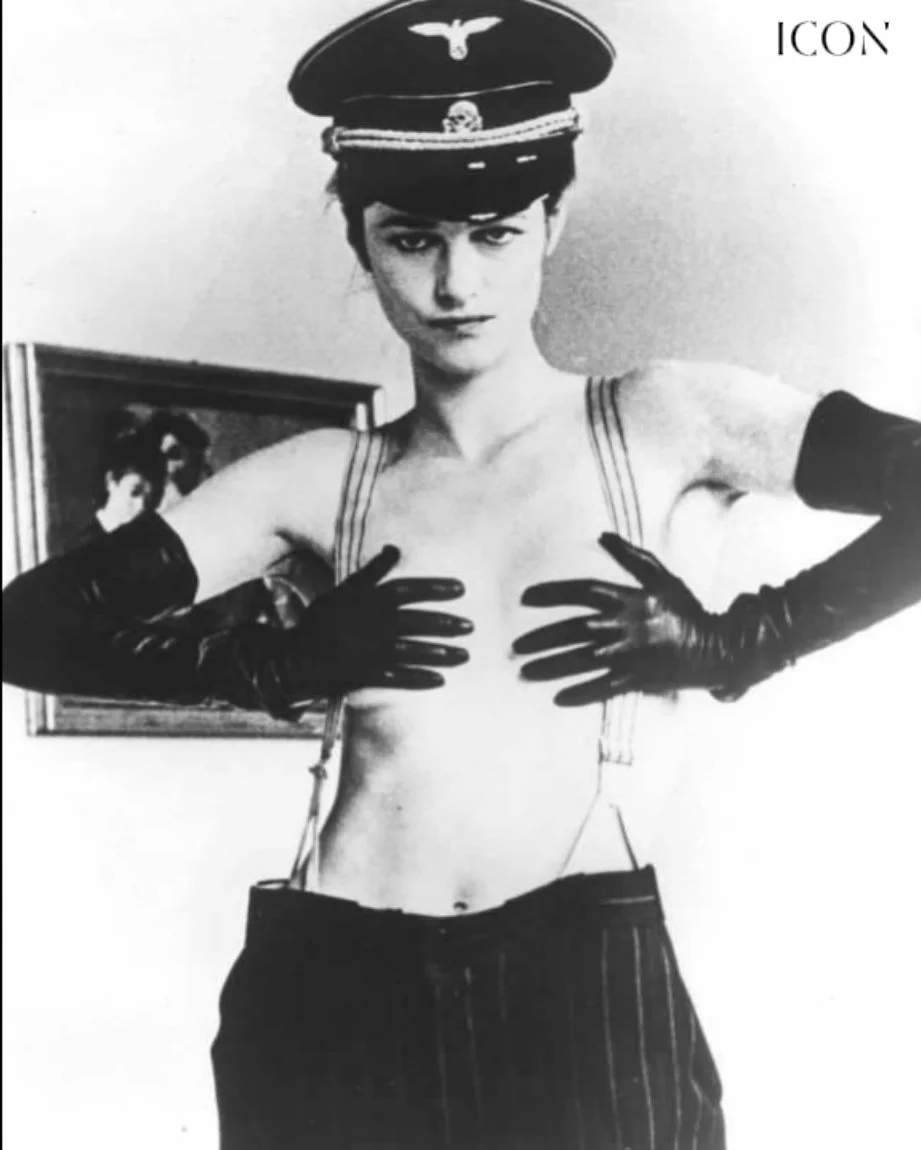
Eighty years alive. Six decades in front of a camera. And still, fundamentally, unknowable.
“Old is not a tragedy. It is a clarification.Everything that was noise falls away. What is left is you. Some people find that terrifying. I find it a great relief.”
There is a particular quality to being in a room with Charlotte Rampling that is difficult to describe without sounding unhinged. It is not intimidation, exactly, though that ispart of it. It is more that she seems to occupy a different relationship to time than the people around her—as if she has already considered this moment, found it interesting, and decided to stay. She is, in person, warmer than her screen presence suggests. She laughs more readily. She listens with the focused attention of someone who finds the world genuinely curious, rather than merely tolerable.
We met in Paris on an afternoon in late March. She had been shooting—she is always shooting, at eighty, because the work arrives now with a velocity that would exhaust most people half her age—and she arrived at the café on the Île Saint-Louis wearing almost nothing decorative: dark trousers, a plain jacket, sunglasses she removed before she sat. Noperformance of arrival. She simply arrived.
The career is, by any measure, one of the strangest in cinema history. It begins in earnest with Luchino Visconti’s The Damned in 1969—a film so dense with moral darkness that it still disturbs, half a century later—and proceeds through a sequence of work so determinedly uncommercial that it functions less like a career than a sustained argument. The Night Porter. Stardust Memories. Under the Sand. Heading South. 45 Years. Each film chosen not for visibility but for the quality of the problem it poses: to her, to the audience, to the idea of what a woman in film is supposed to be.
She never played the game as it was understood. She never gave the interview that reduced her. She never allowed the image—and she has always had one of the most potent images in European culture—to become a cage.
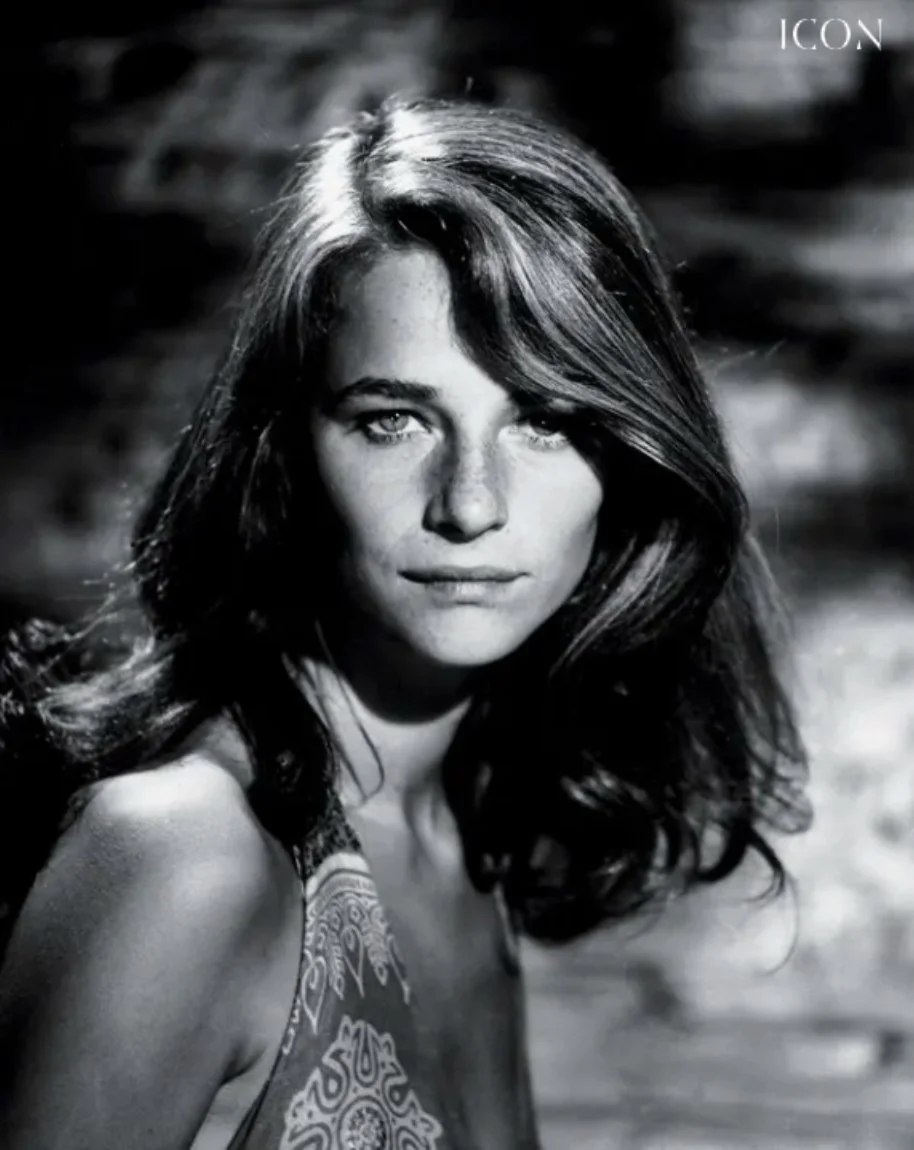
“I have been given so many categories,
she says, when I ask about this..” The enigmatic one. The dangerous one. The cold one. People need a category because without one they don’t know how to feel safe.” She pauses, drinks her tea. “I have always found the categories more interesting than the person they describe. They say so much about the person doing the categorising.”
This is Rampling’ss essential mode: the return of the question. She is not evasive—she answers everything, and answers it directly—but she has a quality of reflection that transforms the question into something more interesting than the answer would be alone.She is, in this sense, a profoundly Socratic presence. The conversation does not proceed toward a conclusion. It proceeds toward a better question.
We spoke for two hours about the nature of erotic power in cinema, about loneliness as a precondition for creativity, about the deaths she has survived—her sister, her husband, her great love Jean-Michel Jarre, from whom she separated in 2012—and about what it means to be old in a culture that has no useful language for it. On that last subject she is characteristically direct.“Old is not a tragedy. It is a clarification. Everything that was noise falls away. What is left is you. Some people find that terrifying. I find it a great relief.”
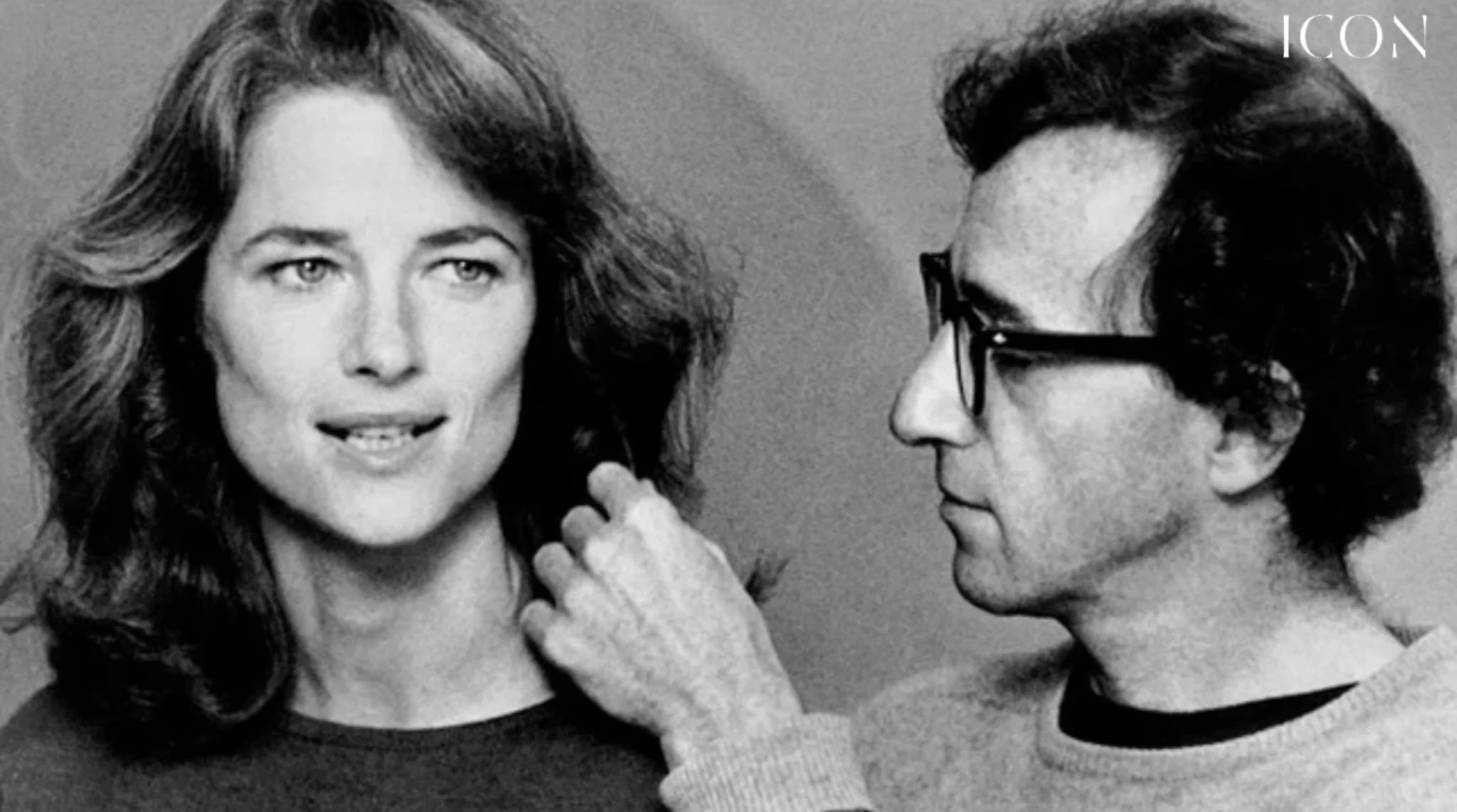
She is currently in production on two films. She will not discuss them. She says: “I never discuss what I’m doing until it is done. Because to discuss it is to begin performing it, and performance is the thing that kills the work while it is still becoming something.” What she will discuss—at length, with something that might be called passion—is thequestion of female aging and cinema. She is one of the few women of her generation who has continued to receive complex, central roles into her seventh and eighth decades, and she is clear about why this is unusual and what it reveals.
“The industry has always been comfortable with older women if they can be explained by their age—the grandmother, the widow, the woman who once was beautiful and now is something else. What they are not comfortable with is the woman who is simply herself, at whatever age she happens to be, without any reduction. “She looks out at the Seine.” I have refused that reduction my whole life. It has cost me certain things. It has given me others.”
She will not name what was lost, and she will not name what was gained. That, too, is the Rampling method: the precise and deliberate withholding, not of truth, but of the easy version of it. She pays for her own coffee. She leaves before I have finished mine. The afternoon light coming off the water, makes the moment briefly cinematic—which she would, almost certainly, find predictable.
By Oona Chanel
