

Ida Barbarigo’s Unstable Bodies
Pierre Yovanovitch
Ida Barbarigo: Beyond the Figure is on view at Richard Saltoun Gallery, Rome, through 17 May 2026.
There is a familiar temptation in writing about neglected twentieth-century painters, particularly women, to overcompensate with reverence. Beyond the Figure at Richard Saltoun Gallery gives Ida Barbarigo better service than that. It allows the work to be judged at full strength, which is precisely where it becomes interesting.
Barbarigo is not important merely because she was overlooked. She is important because, at her best, she understood something exacting about the figure: that it is not a stable form but a disturbance in paint.
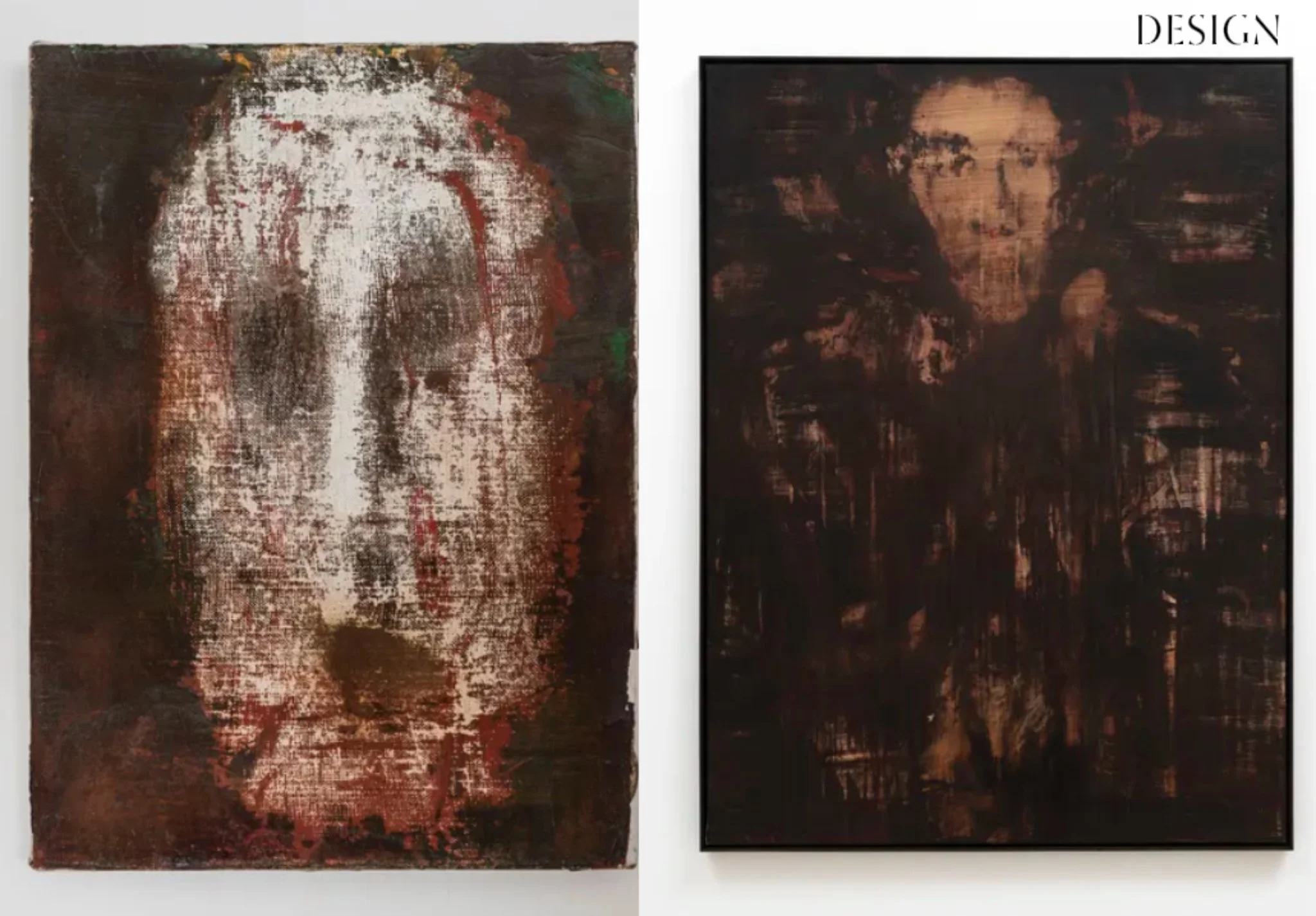
Image above : Senza titolo (Il Volto), [Untitled (The Face)], 1996
Image below: Untitled (Self-portrait), 1993
The exhibition, focused on works from the 1970s through the early 1990s, makes clear that Barbarigo’s return to figuration was never a retreat into recognizability. If anything, the figure in these paintings is subjected to more pressure than before. It is dragged forward, partially assembled, then pushed back again into atmosphere, ground, residue. One does not encounter bodies here as secure images. One encounters them as problems.
That is the show’s central achievement.
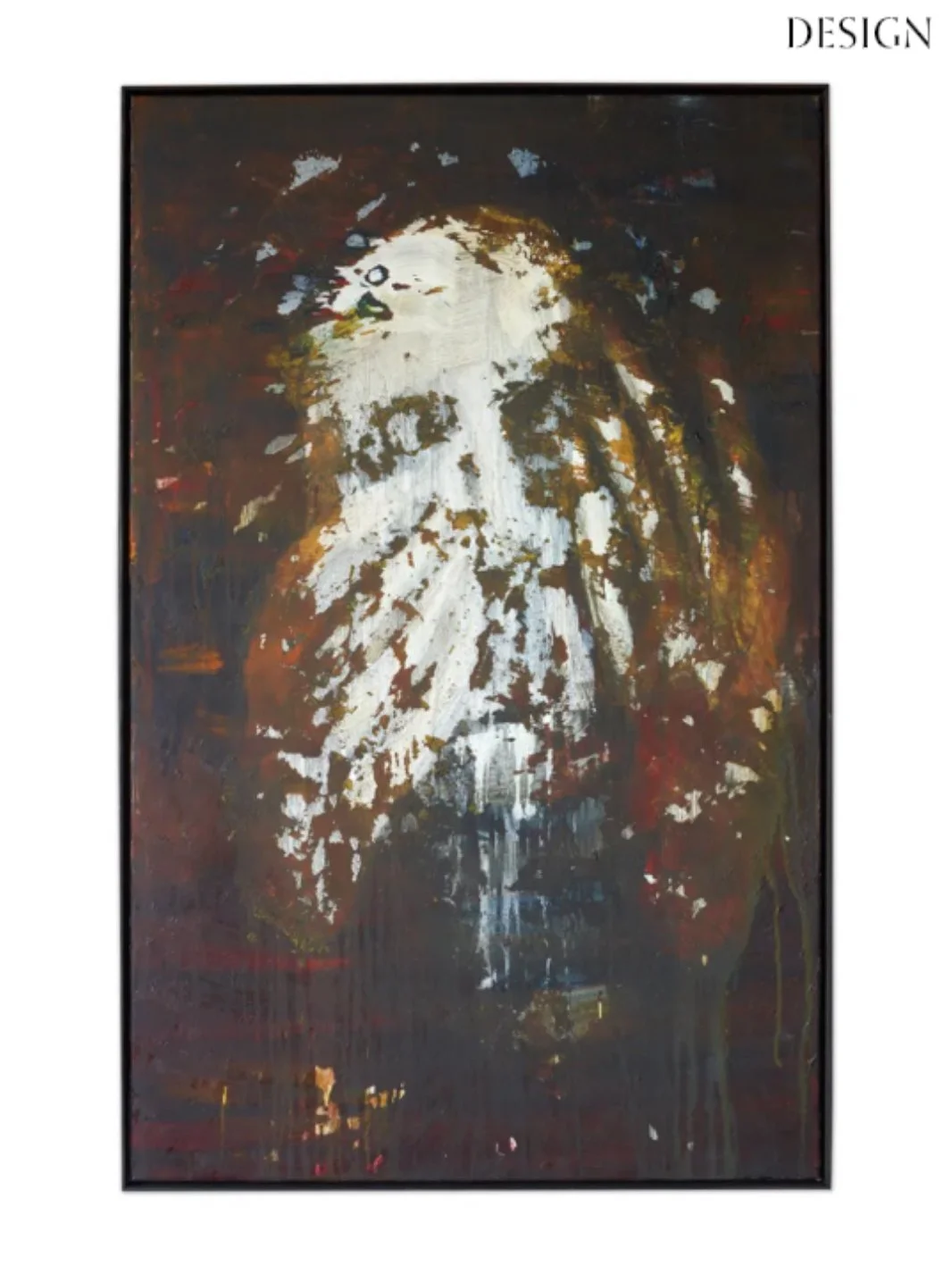
Ida Barbarigo, Senza titolo (Il Volto) [Untitled (The Face)], 1990
Barbarigo does not build form through drawing in any classical sense, though the discipline of Italian painting remains deep in the work. She builds by attrition. White is dragged over brown, grey, black; heads surface through scraped and rubbed pigment; contours threaten to appear, then fail to close. The result is neither fully figurative nor usefully described as expressionist. The word one keeps returning to is provisional. Her figures are provisional presences, held together only as long as the painting can sustain the tension.
This is why the strongest works in the exhibition are so unsettling. They do not depict psychic unrest; they are structurally organized by it.
In the mythological paintings especially, Barbarigo proves herself far more severe than the titles might initially suggest. Sfingi, Demoni, Saturni, Dionisi: these are not symbolic embellishments, nor do they belong to that tired modern habit of borrowing myth to lend ordinary painting an air of gravitas. Barbarigo uses myth as a way of stripping the figure of anecdote. The subject is no longer a person in any social sense, but a body condensed into type, pressure, fear, appetite, enigma. Myth, here, is a solvent. It burns off the incidental.
What remains is often powerful.
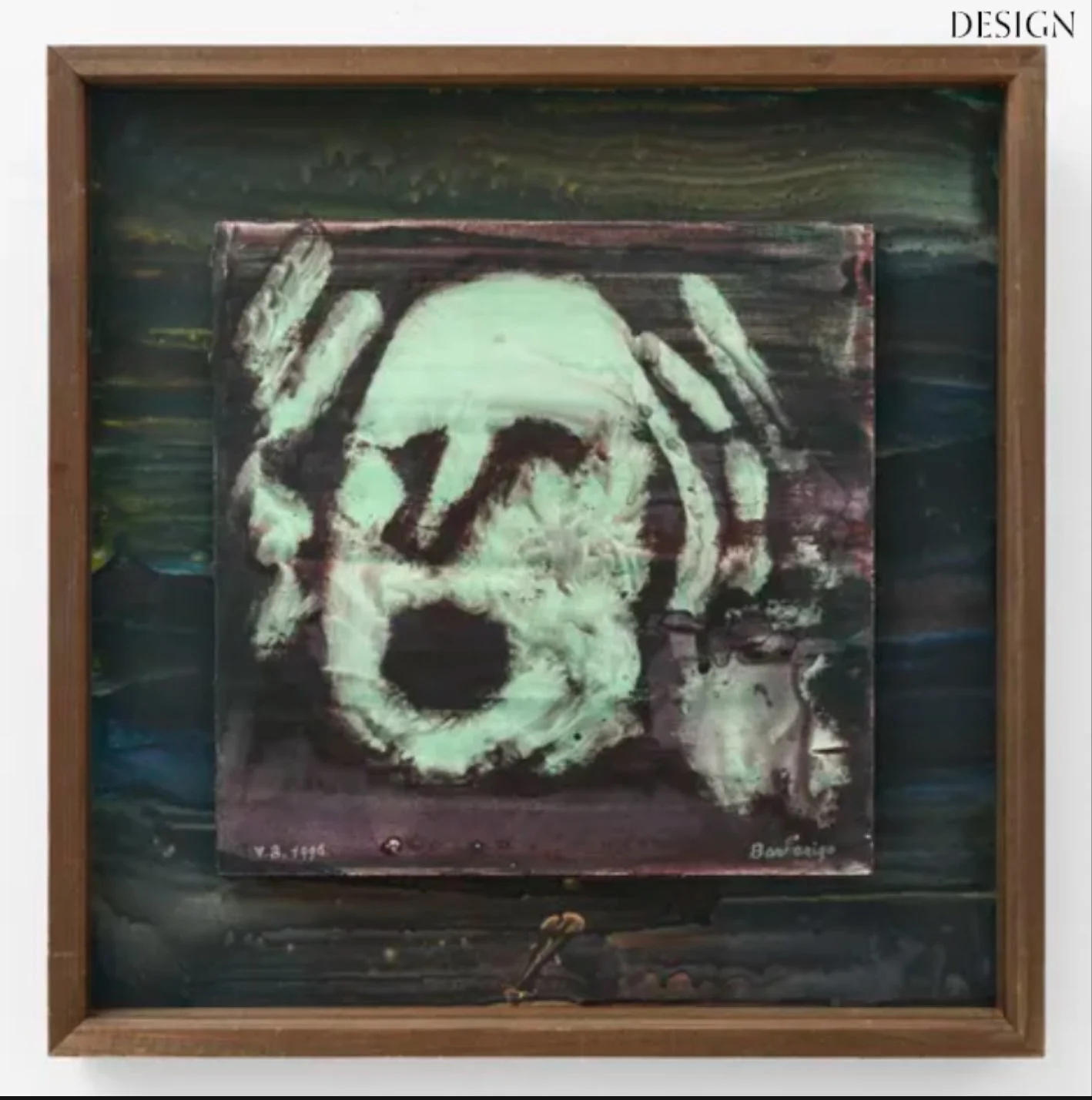
Volto [Face], 1996
The white faces and heads, emerging from dark grounds like deposits or exhalations, are among the most convincing paintings in the exhibition because Barbarigo resists the obvious. She does not sensationalize distortion. She does not sentimentalize fragility. She lets the image hover in a state of incomplete arrival. That incompletion is the content. One feels that the figure has not been represented so much as reluctantly extracted from matter.
And yet the show also clarifies Barbarigo’s limits, which is useful. Not every canvas carries the same intensity. In some works, the atmospheric handling risks becoming merely vaporous; the instability that elsewhere generates pressure can loosen into indistinctness. This is the danger of her method: when the tension between emergence and dissolution slackens, ambiguity ceases to be rigorous and becomes mood. Barbarigo is most compelling when the image feels necessary, when the paint seems to have fought to produce it. She is less compelling when the haze remains just haze.
That unevenness does not diminish the exhibition. It makes it more legible.
What emerges is not a uniformly major painter, but a serious one — and a distinctive one. Barbarigo’s best work occupies an unusual place in postwar painting. It lacks the declarative brutality of Bacon, the ritualized melancholy of Music, the rhetorical bravura of much neo-expressionism. It is quieter, but not gentler. Its drama is one of corrosion. The image is not torn apart before us; it is slowly deprived of certainty.
That is where Barbarigo becomes genuinely compelling: in her refusal to stabilize the human form into either monument or ruin. Her figures are never heroic, but neither are they simply broken. They persist in a state of ontological insecurity. They are there and not there, embodied and disembodied, seen and half-lost. Barbarigo understood that the figure, once stripped of narrative and social description, becomes not more universal but more precarious.
The best paintings in Beyond the Figure grasp that precariousness with real force.
What the exhibition finally offers, then, is not a corrective tribute but a sharper proposition: Barbarigo matters because she found a way to paint the body after confidence had drained from it. Not the modern body as spectacle, nor the classical body as structure, but the body as unstable evidence — of consciousness, of mortality, of perception failing even as it tries to hold.
That is a much rarer achievement than reputational recovery alone.
By Oona Chanel
