

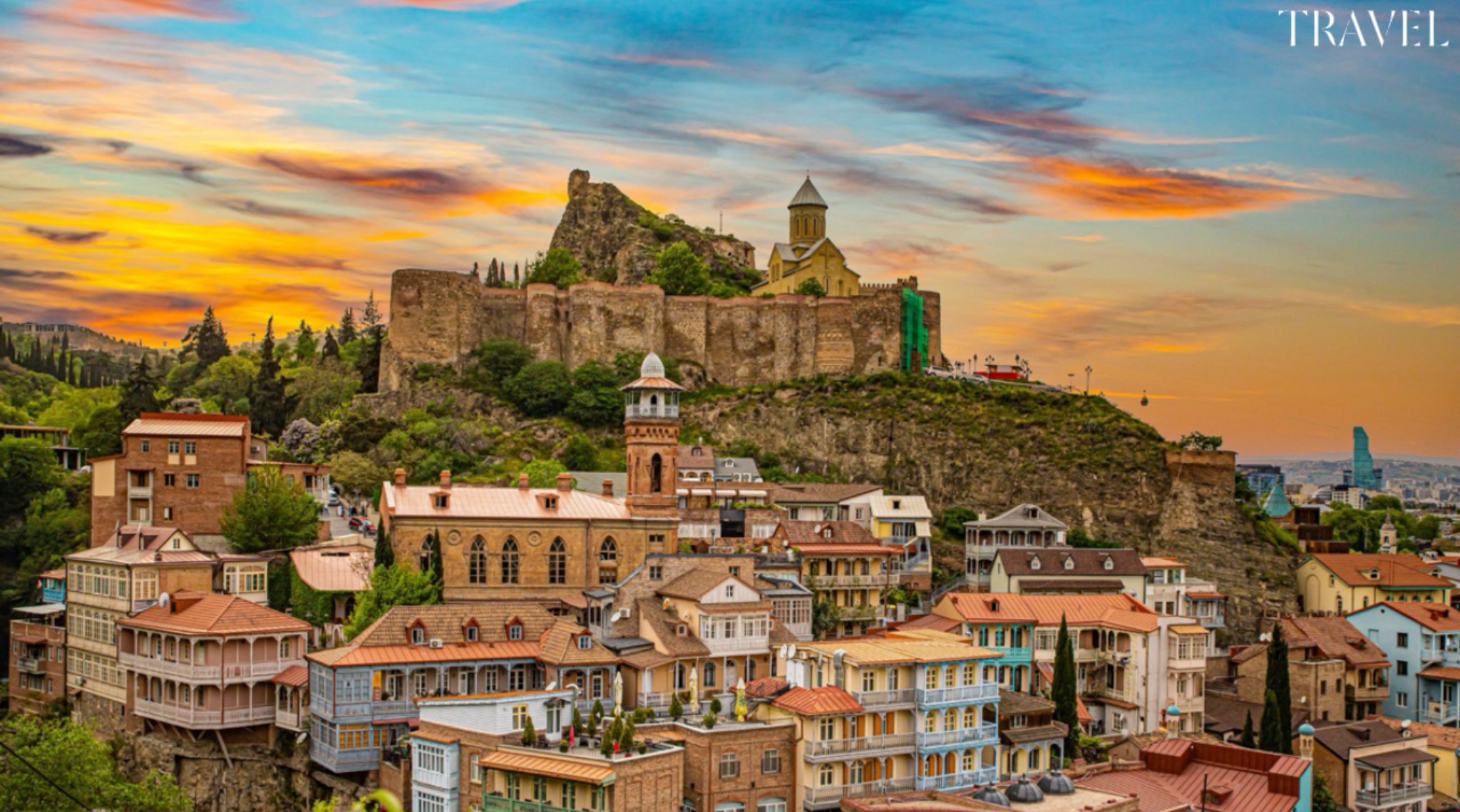
Tblilisi landscape
“Georgia has taken everything that passed through it — Persian, Ottoman, Russian, Soviet — and kept what it found beautiful. It has remained, underneath all of it, unalterably Georgian.”
Georgia’s capital is not a trend. It is a civilizational argument—about beauty,survival, hospitality, and what a city looks like when it refuses to become anything other than itself
The bread arrives before you ask for it. This is the first thing, and it is the correct first thing: a boat-shaped khachapuri, the cheese still moving, delivered to a table in a restaurant on a side street in the old town of Tbilisi where the wall behind you is eighth century and the wine in your glass is orange and the music coming from somewhere down the street is a polyphonic choir performing, without irony or amplification, at ten o’clock on a Tuesday night. You are not a tourist here. You are a guest. The Georgians have a word for this—maspindzloba, the sacred obligation of hospitality—and they meanit with a literalness that would seem theatrical if it were not so plainly sincere.
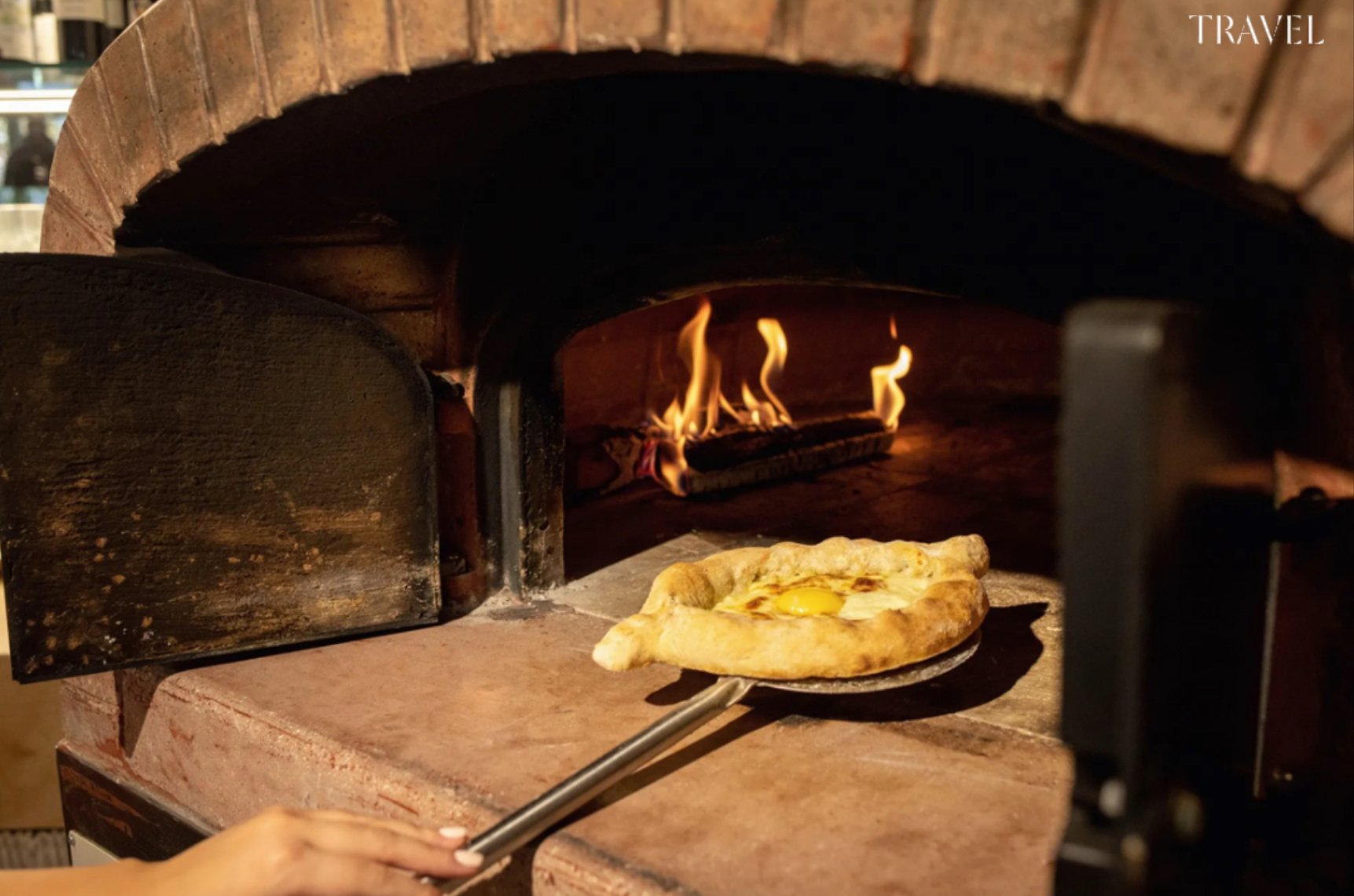
boat-shaped khachapuri
Tbilisi in 2026 is the most interesting city in the world. This is a strong claim, and I make it having spent serious time in the usual contenders—Tokyo, Marrakesh, Lisbon, Mexico City, the golden corridor from Zurich to Basel—and having found Tbilisi doing something none of them is doing: it is resolving a genuinely irresolvable contradiction, and doing it daily, at the table, with a glass of Rkatsiteli in hand.
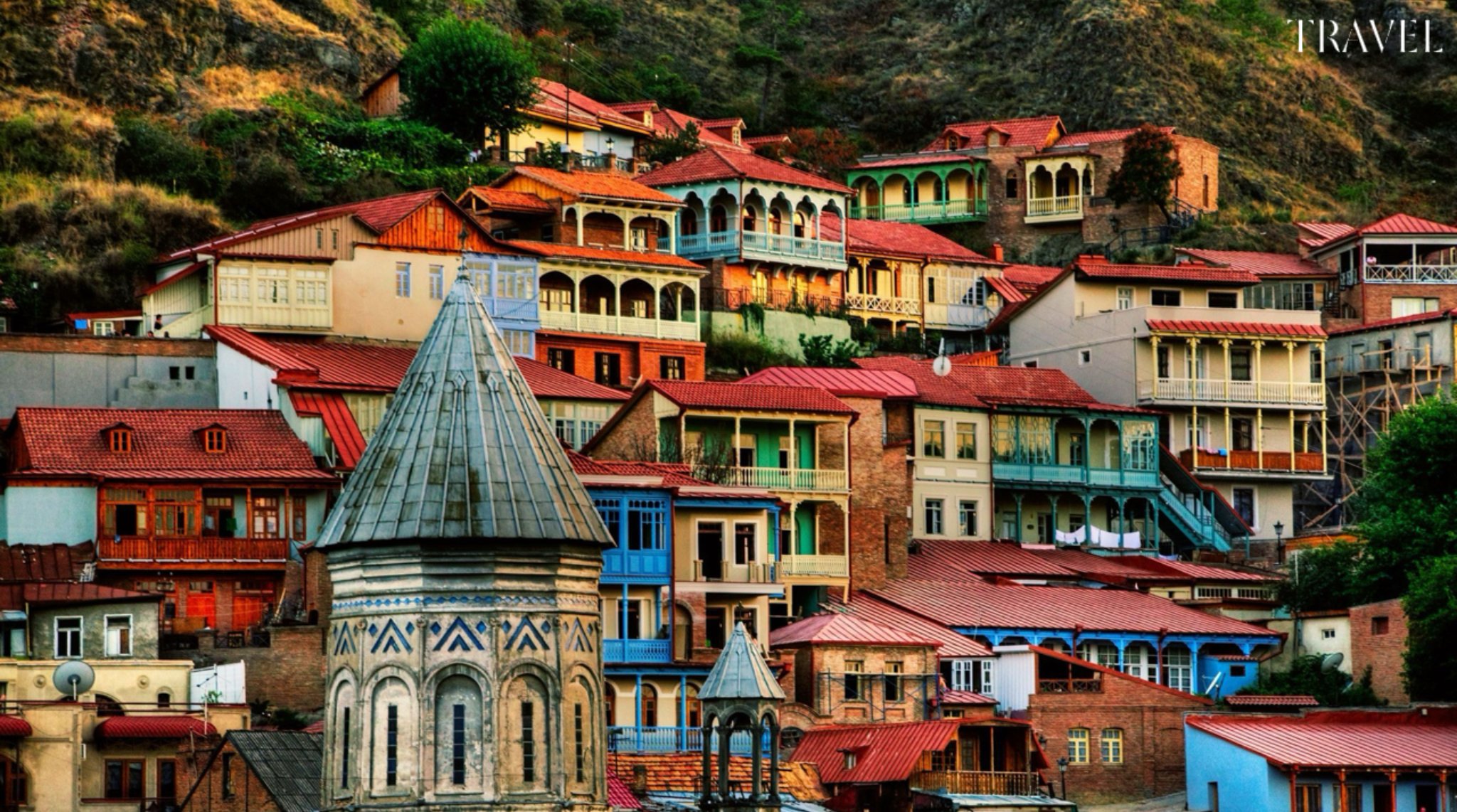
Georgia Inspired landscape
The contradiction is this: Georgia is a country of eight thousand years of continuous civilization—the wine, the polyphony, the alphabet that is older than most of European culture—that has spent much of the past two centuries occupied by various empires, survived Soviet homogenization, and emerged into the twenty-first century with its identity not merely intact but radiantly, almost defiantly, itself. It has done this not through resistance exactly, but through absorption: it has taken everything that has passed through it—Persian, Ottoman, Russian, Soviet—and kept what it found beautiful and discarded the rest, and remained, underneath all of it, unalterably Georgian.
The result, in architectural terms, is the most astonishing streetscape in Europe: carved wooden balconies beside Soviet modernism beside Art Nouveau beside neoclassical beside the utterly utilitarian beside boutique hotels so carefully restored they make you want to cry a little. The city is not curated. It is accumulated—and the accumulation, because it reflects a genuine cultural confidence, does not clash. It composes.
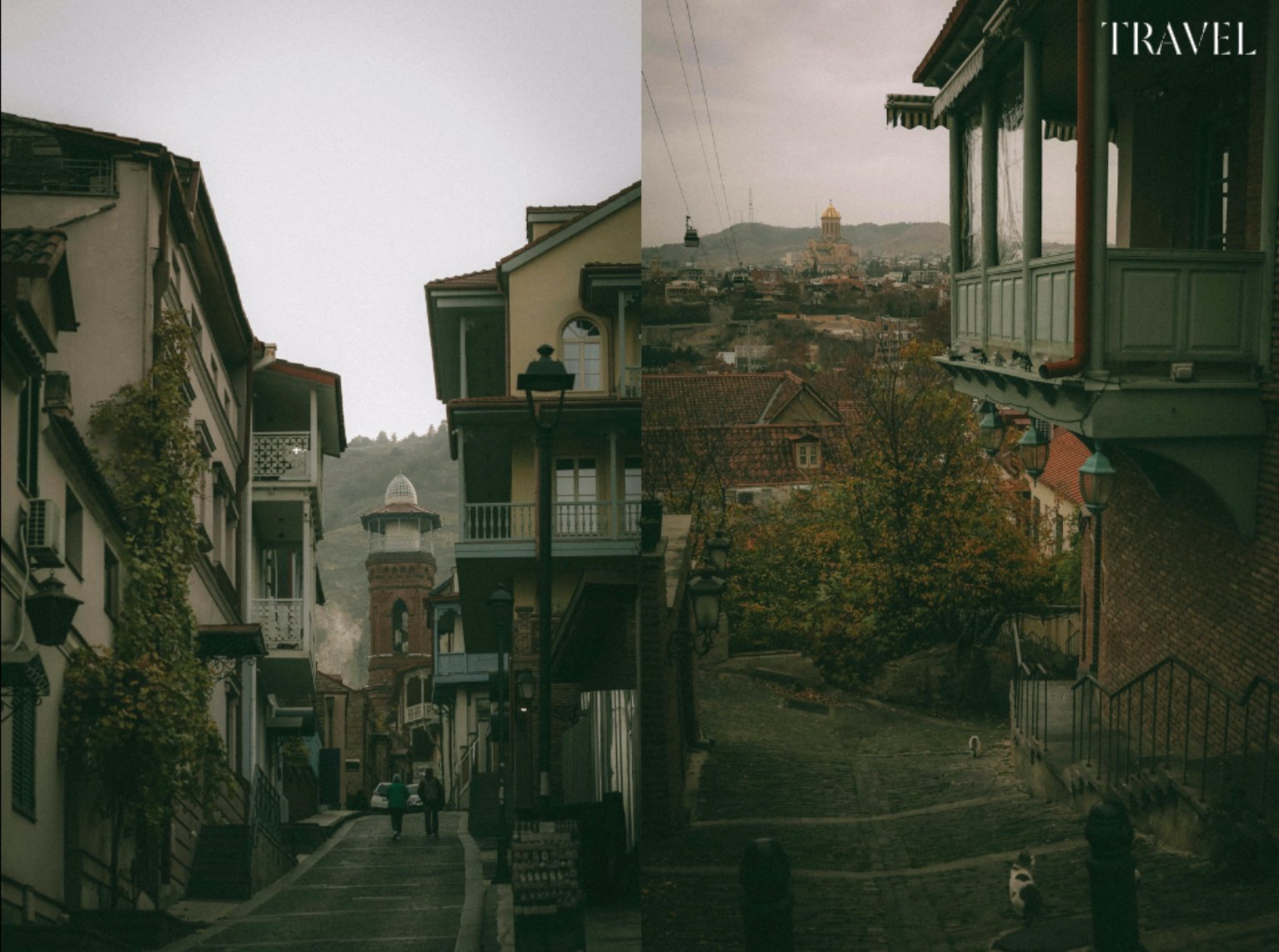
Tbilisi streetscape
Begin, as you must, in the old town. Walk up through Abanotubani—the sulphur bath district, where you can and should spend two hours in a private bath chamber carved from the volcanic rock beneath the city—and up to the Narikala fortress, which has been ruined and rebuilt nine times since the fourth century and wears its damage with the equanimity of something that knows it will still be here. Below you the Mtkvari River runs brown and fast. Across it, the new city shimmers with an optimism that is, in this light, entirely earned.
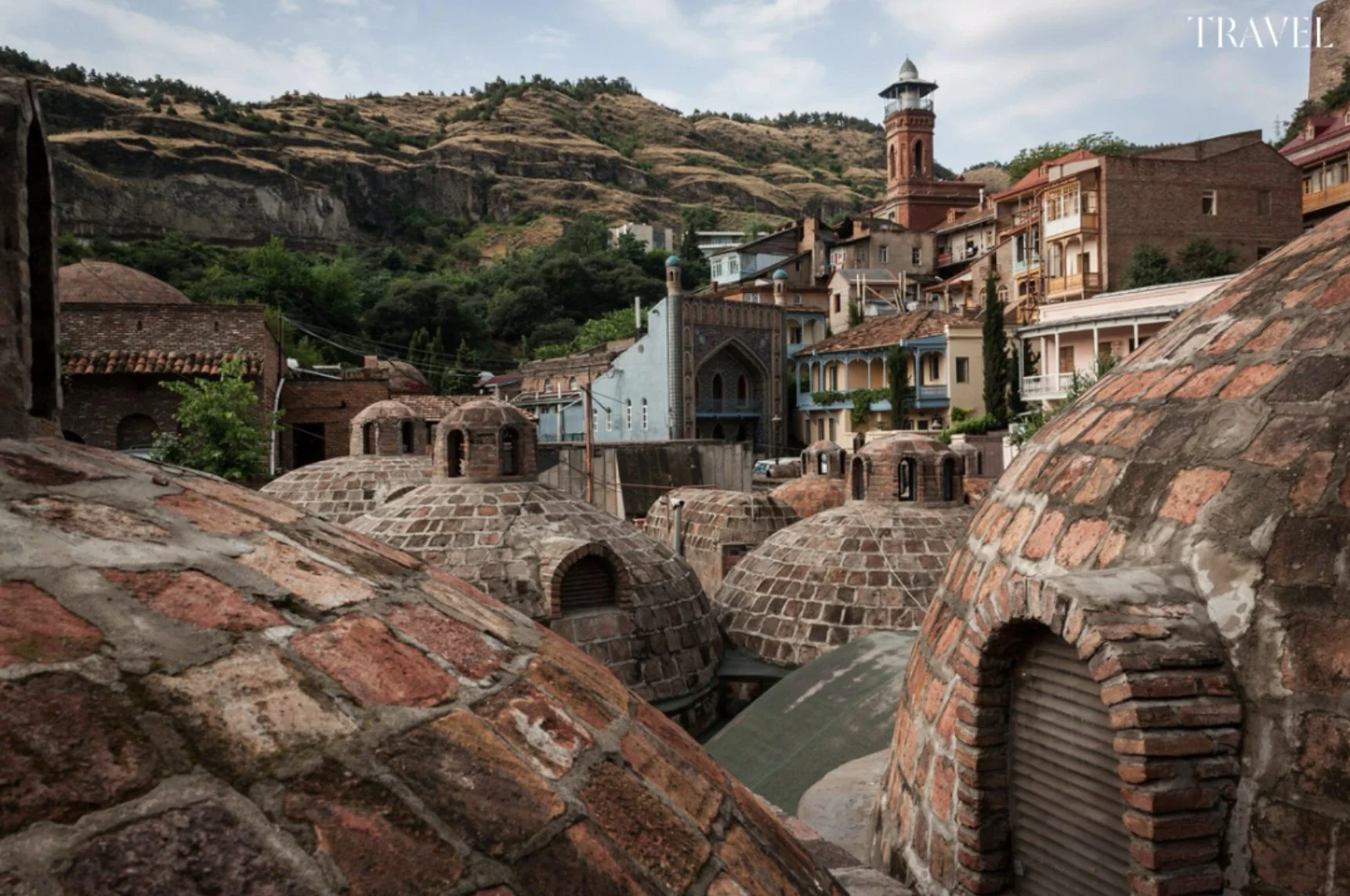
Abanotubani—the sulphur bath district
For lunch: Café Littera, in the garden of the House of Writers. The menu changes daily. The garden was, before the café, a place where Soviet-era Georgian writers gathered, which means it has a quality of literary haunting that you cannot quite explain but that sits in the air alongside the grapevine. The wine list is exclusively Georgian, which is the only reasonable position to hold in a country that has been making wine for eight millennia.
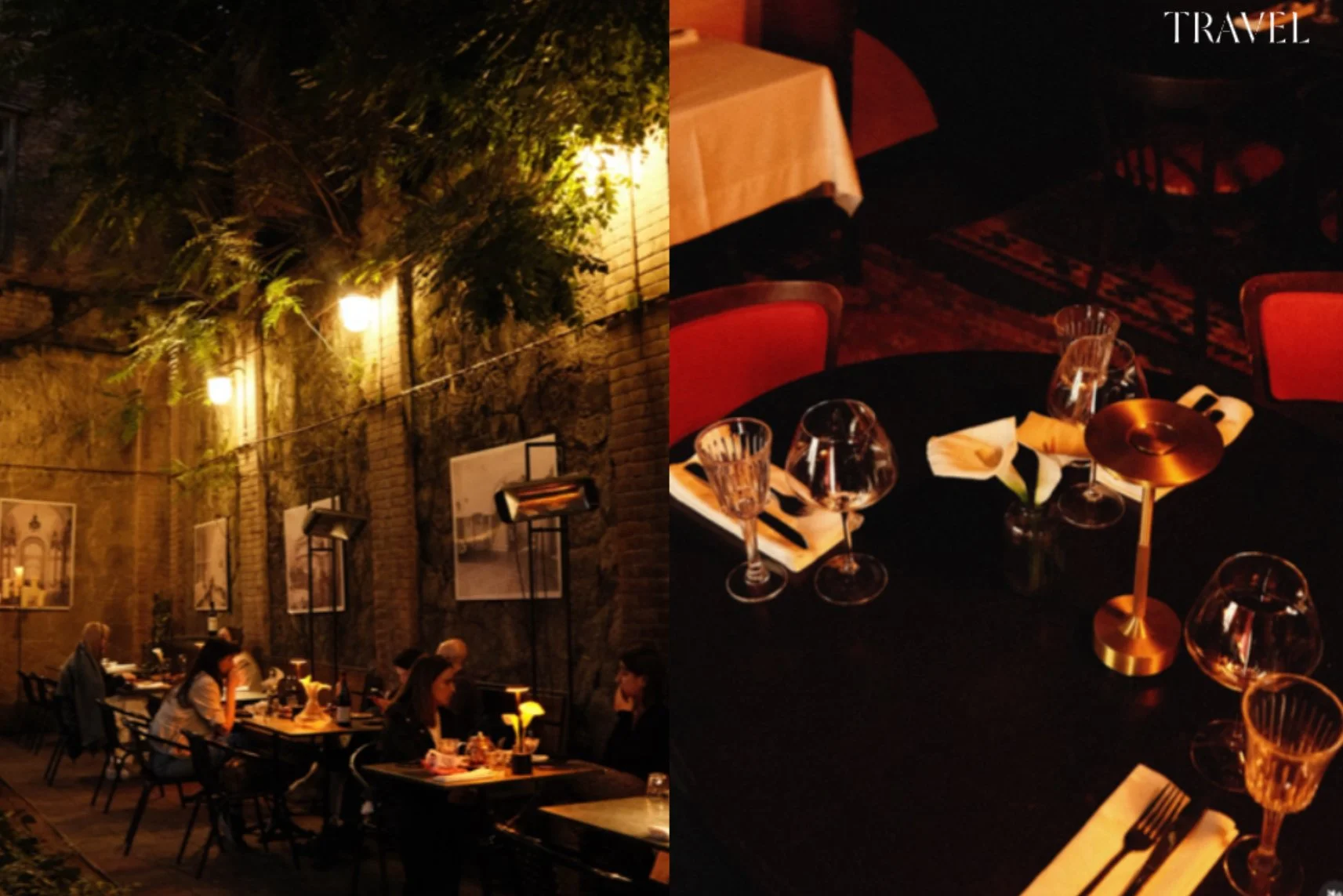
Café Littera, in the garden of the House of Writers.
For the evening: the Philharmonic, where the Georgian National Ballet performs with a physical virtuosity that has no equivalent in European dance—not even the Bolshoi, where the technique is more perfect but the hunger is somehow less. After: a meaty, wine-dark dinner at Azarpesha, which opens at nine and is best after midnight, where the table of strangers next to you will, within an hour, not be strangers.
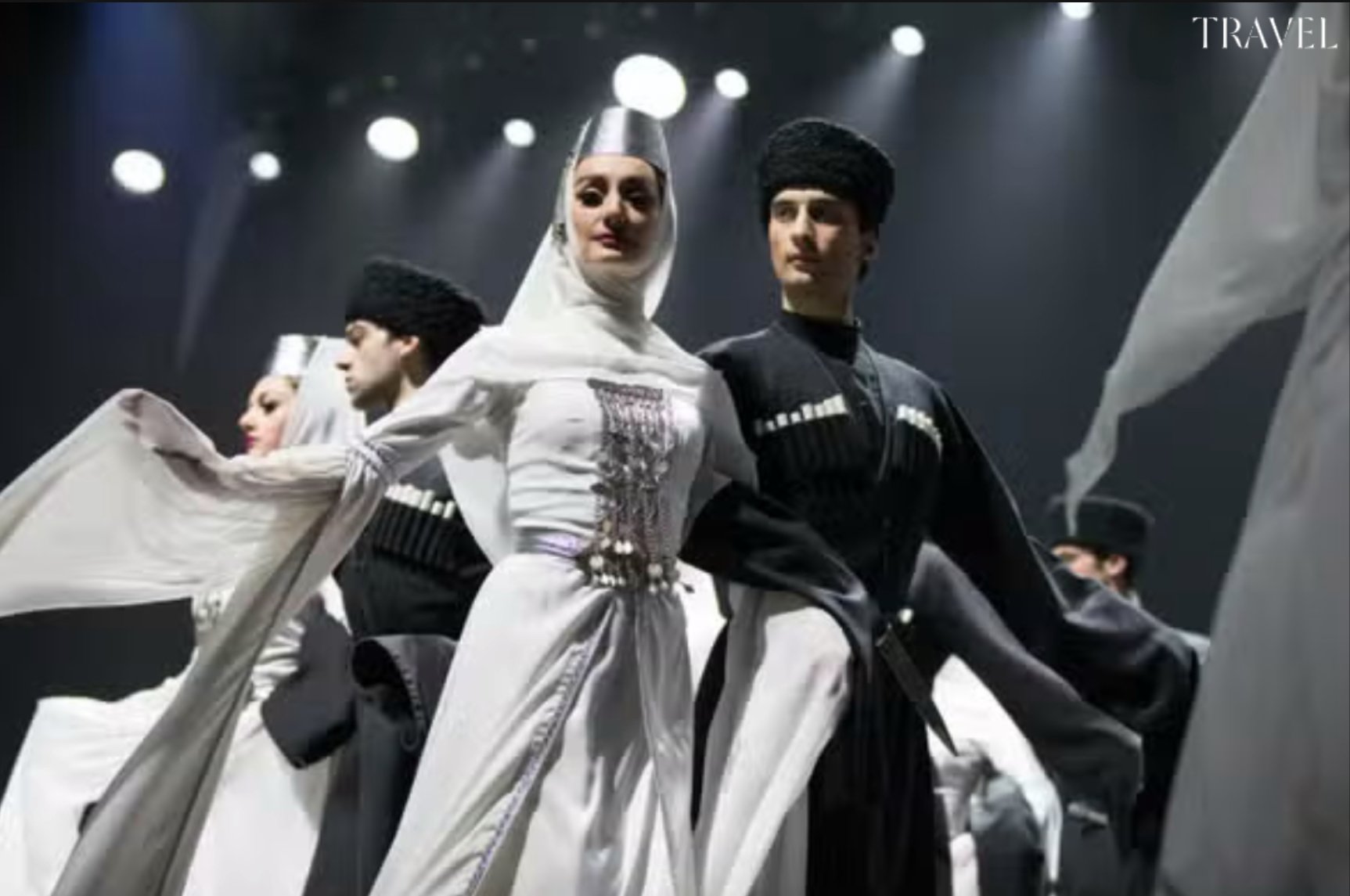
Philharmonic, where the Georgian National Ballet performs
The hotels are, at last, ready. The Stamba—in a converted Soviet publishing house, which sounds like a concept hotel and is instead simply an extraordinarily beautiful building—provides the correct base: high ceilings, the original printing presses preserved as sculpture, a restaurant in the atrium where the food is Caucasian modernist and the cocktails involve tarragon and pomegranate and local spirits that are not comparable to anything you have tasted before.
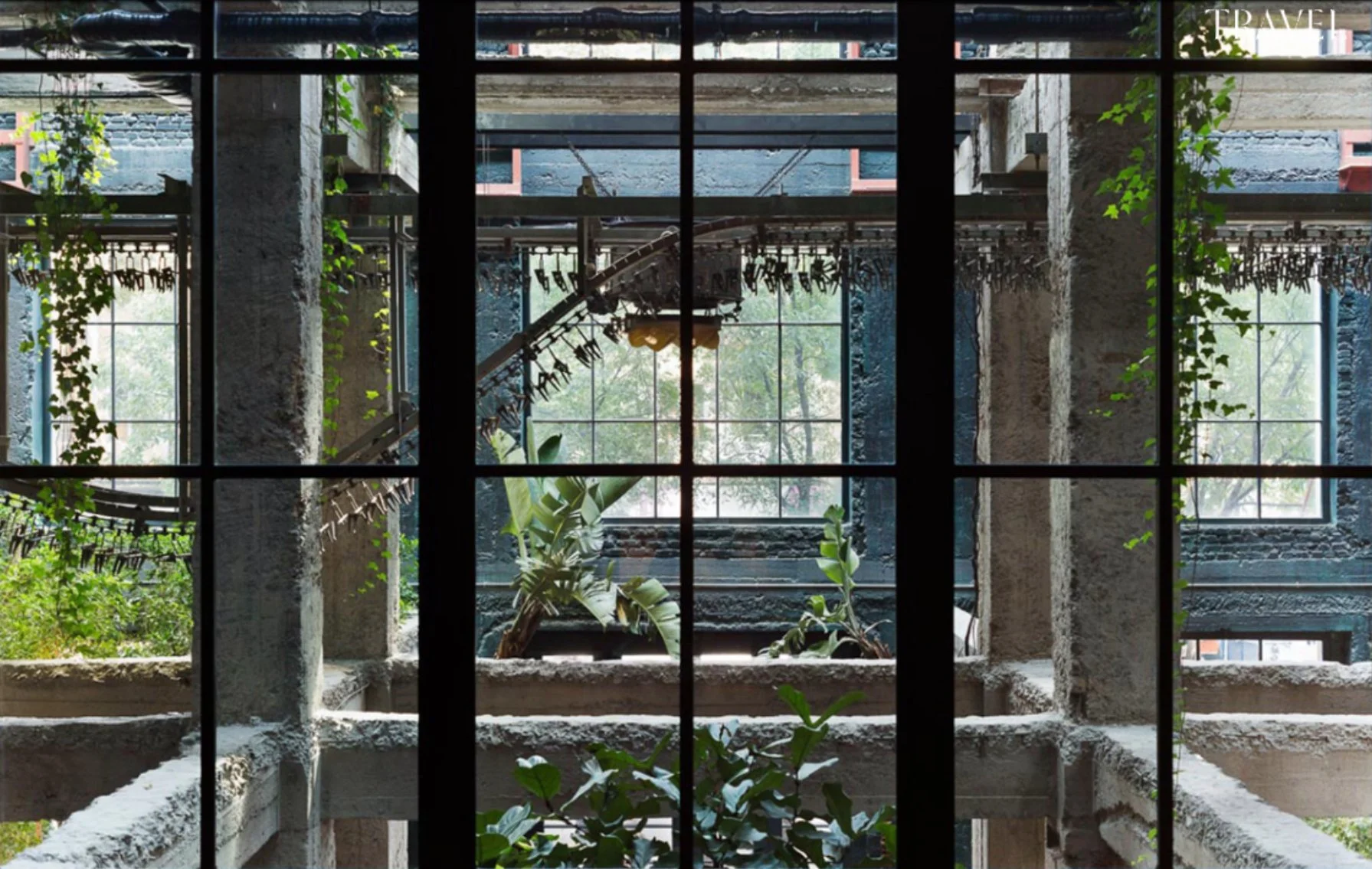
Stamba—in a converted Soviet publishing house,
Tbilisi will not stay like this. The prices are already moving. The property developers have already arrived. The thing that makes it extraordinary now—the coexistence of profound local culture with genuine accessibility, the feeling of being in a place that has not been reorganized around your arrival—is, by definition, temporary. But it is here now. And now, in a city eight thousand years old, is always precisely the right time.
By Oona Chanel
