

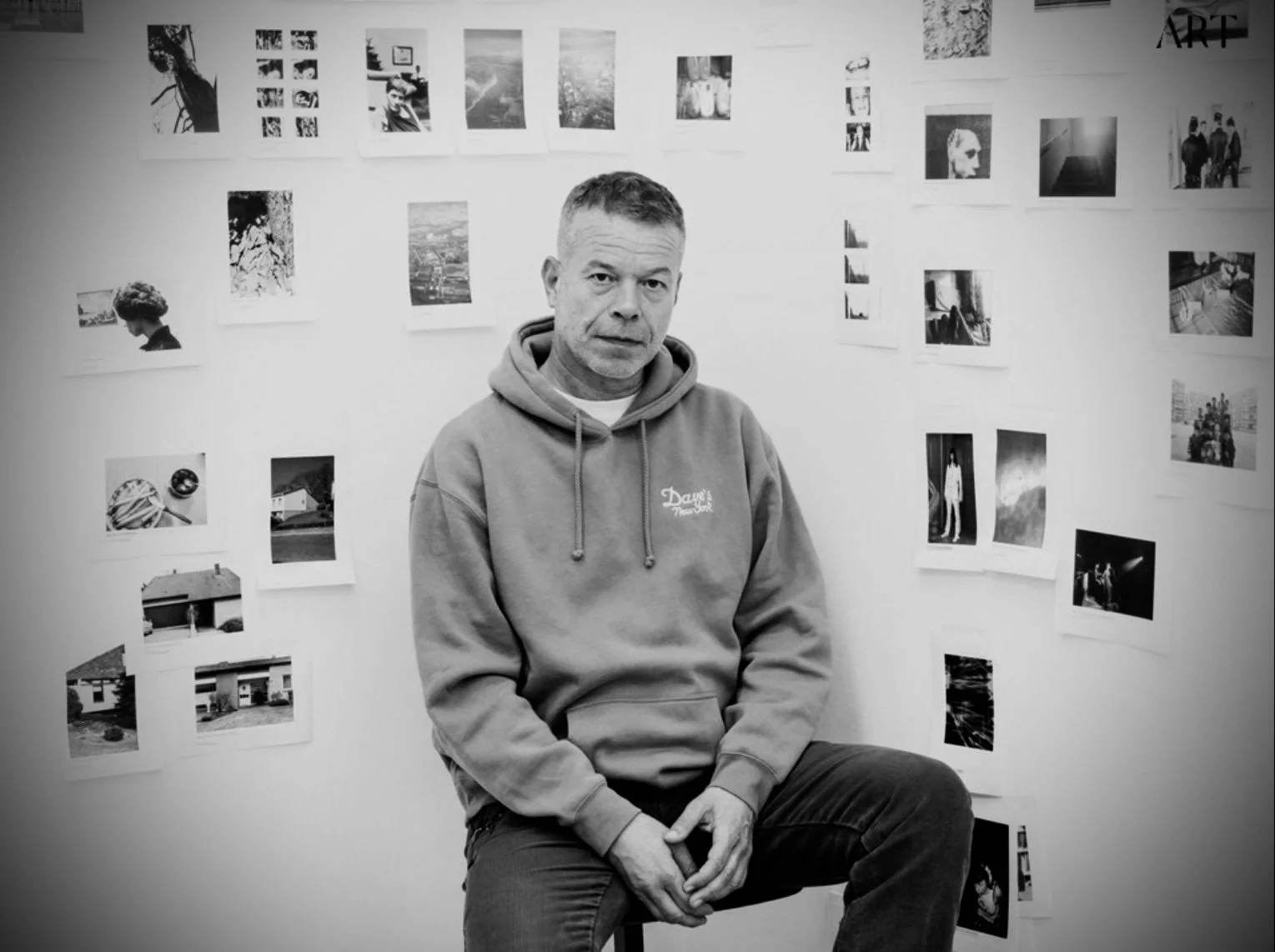
Wolfgang Tillmans
He has photographed everything. Friends. Strangers. Galaxies. Fabric. The specific light of a specific Tuesday. And always with the same underlying conviction: that to look carefully is a political act.
Wolfgang Tillmans does not believe that art should make you feel comfortable. This is not a position he has arrived at recently, or one he wears lightly. It is the fundamental premise of a practice that has, over thirty-five years and an output so voluminous it resists any single characterization, maintained an almost stubborn consistency: the photograph is a statement about what deserves attention, and what deserves attention is everything.
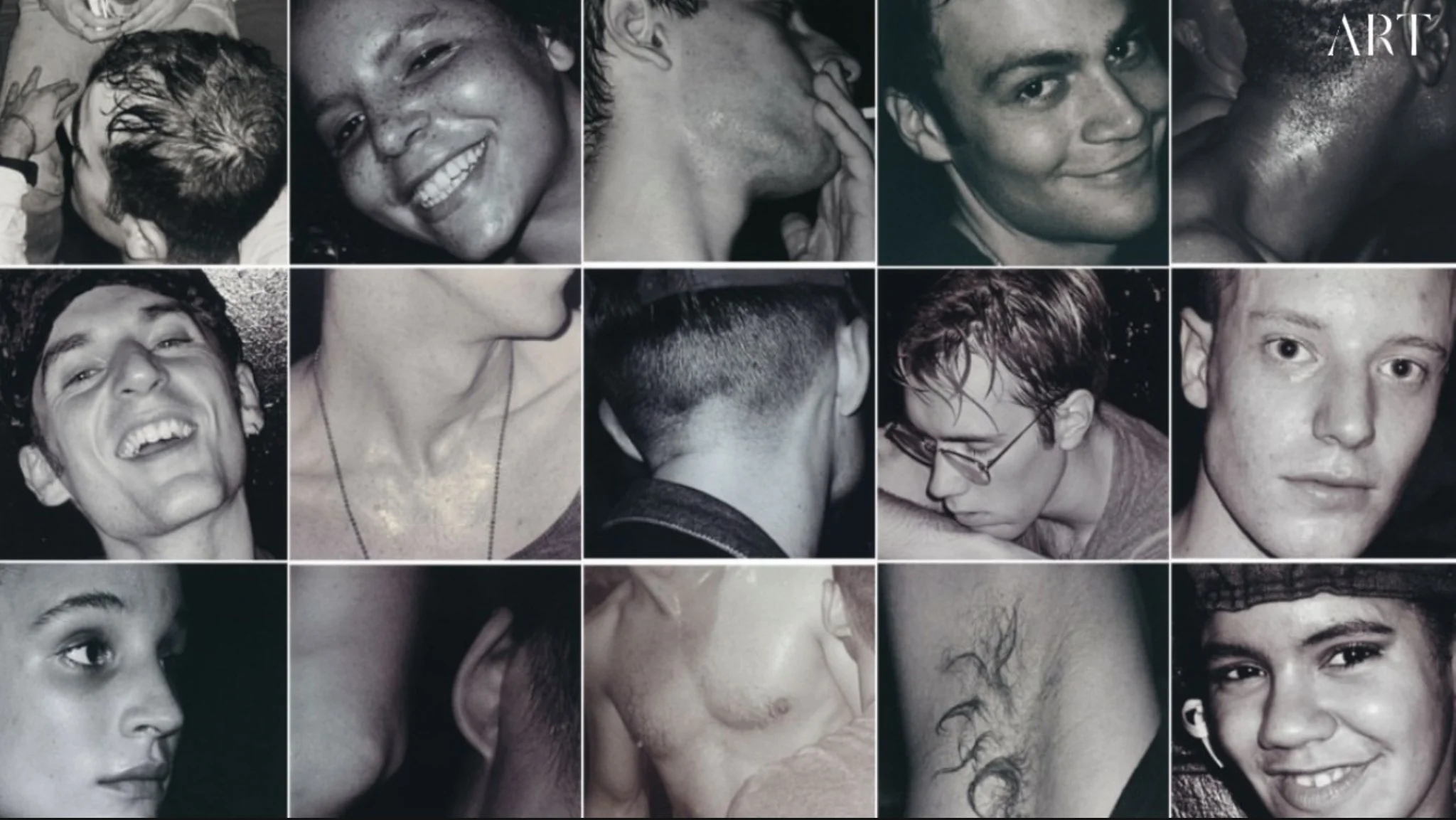
Chemistry square , 1992
We met at his Berlin studio in a week when the world had, again, given him material he would rather not have. He does not separate his practice from politics—never has, in a career that began on the dance floors of 1980s London and has proceeded through queer activism, ecological terror, the rise of authoritarianism in Europe, and the specific intimacy of friends, bodies, and ordinary objects photographed over decades. He says, when I ask him how he sustains the attention the work requires: '“I’m angrier now than I was at thirty. I think that helps.”
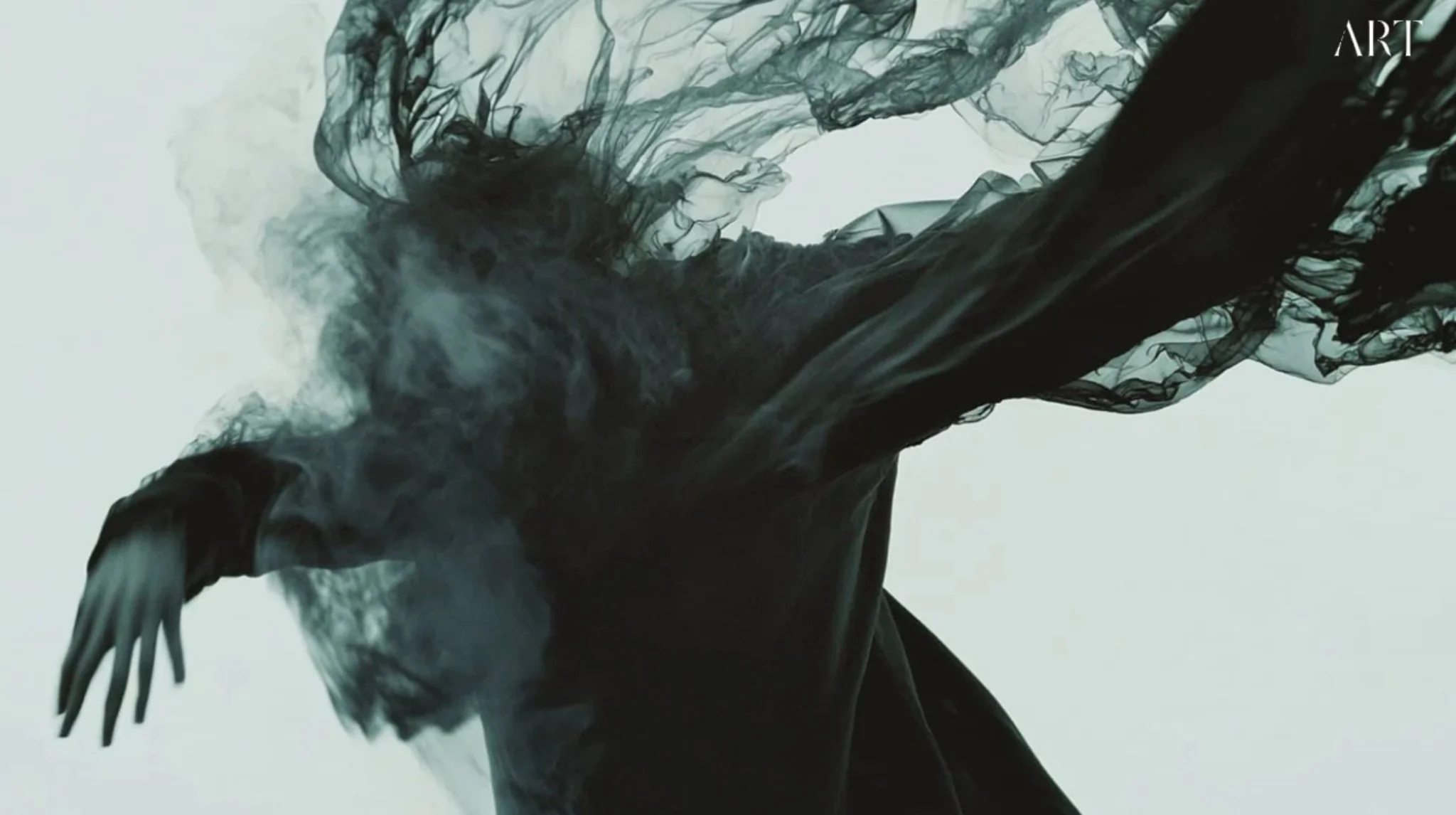
AVANT-GARDE Abstract
The studio is enormous and full of prints in various stages of preparation for shows, books, and the archive that is, at this point, one of the most significant in contemporary photography. The prints are not displayed in the conventional sense—they are arranged, grouped, rehung, rethought. A Tillmans installation is never fixed: the same images appear in different sizes, different positions, different conversations with each other. This is, he says, entirely intentional.
“A photograph doesn’t have a correct size. It has the size that allows you to see what it needs you to see. I’ve printed the same image at ten centimeters and at three meters, and each time it was right for different reasons, in different contexts. The idea that a photograph has a natural scale is a commercial construct. It has nothing to do with the image.”
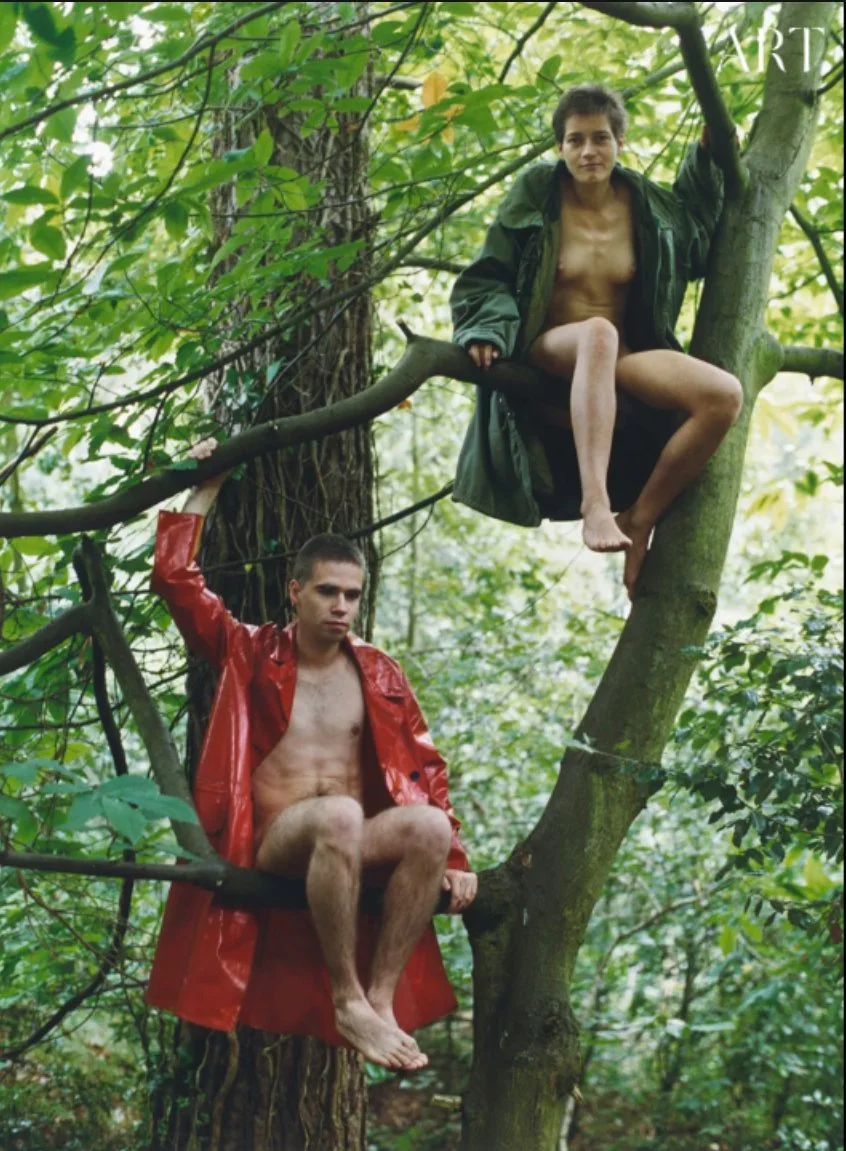
The photographer talks about his first MOMA retrospective and how his prescient art flows from the act of paying
The image, for Tillmans, always comes first—and always comes from looking. His practice is resolutely analog in its origins: he carries a camera, he sees things, he makes photographs. The sophistication of the thinking that surrounds the images—the installation logic, the political consciousness, the art-historical awareness—does not arrive before the picture. It arrives because of it.
His fashion work—the images he made for i-D, for various campaigns, for his own sustained engagement with clothing as a language—operates on the same principle as his documentary work and his abstract investigations: the subject is a pretext for attention. The supermodel and the window sill and the galaxy photographed through a telescope are all, for Tillmans, equivalent instances of the fundamental question: what does this look like, and what does it mean that it looks like this?
This sounds like it might produce cold, conceptual photographs. It produces the opposite: images that feel, consistently and sometimes overwhelmingly, like they were made by someone who wanted you to look the way they were looking. The desire in the photograph—to share an experience of seeing—is palpable in almost every print.
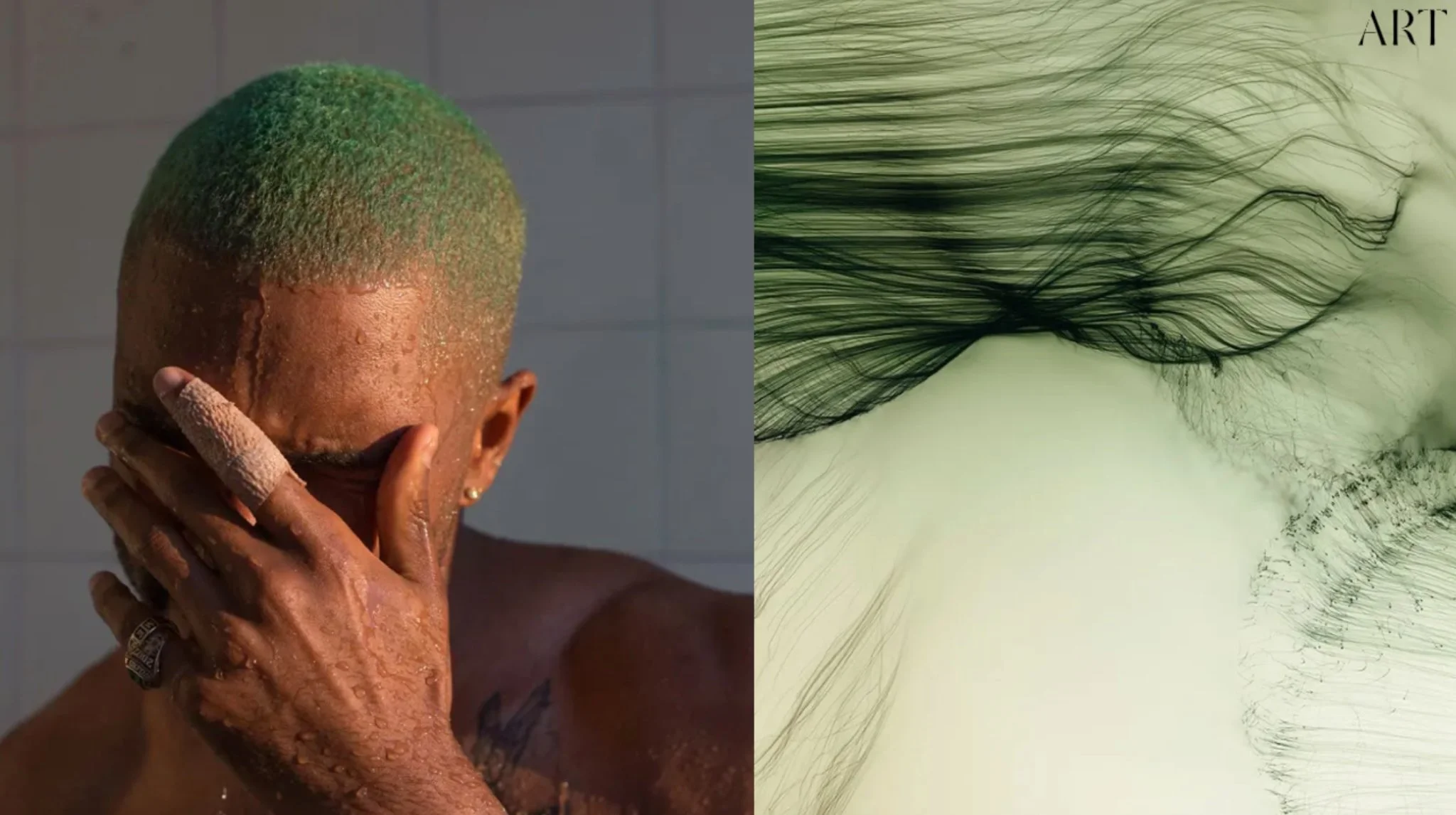
‘Frank Ocean’, Rebuilding the Future, 2018, IMMA.
Freischwimmer 20
The political work has intensified in recent years. His public project Truth Study Center—which he has operated as both an installation and a public intervention—grew from his sense that the relationship between images and truth had entered a crisis that the art world could not simply observe from a safe distance. He has been, unambiguously and at some professional cost, one of the most outspoken critics of Brexit and the normalization of nationalist politics in Europe. He uses his platform—and he has a significant one—without calculation.
“I have never understood the idea that artists should not be political,“he says. “ The word ‘political’ is used to mean ‘inconveniently engaged with the actual conditions of existence.’ I don’t know how to make work that is not engaged with those conditions. I don’t know how to be a person who is not.”
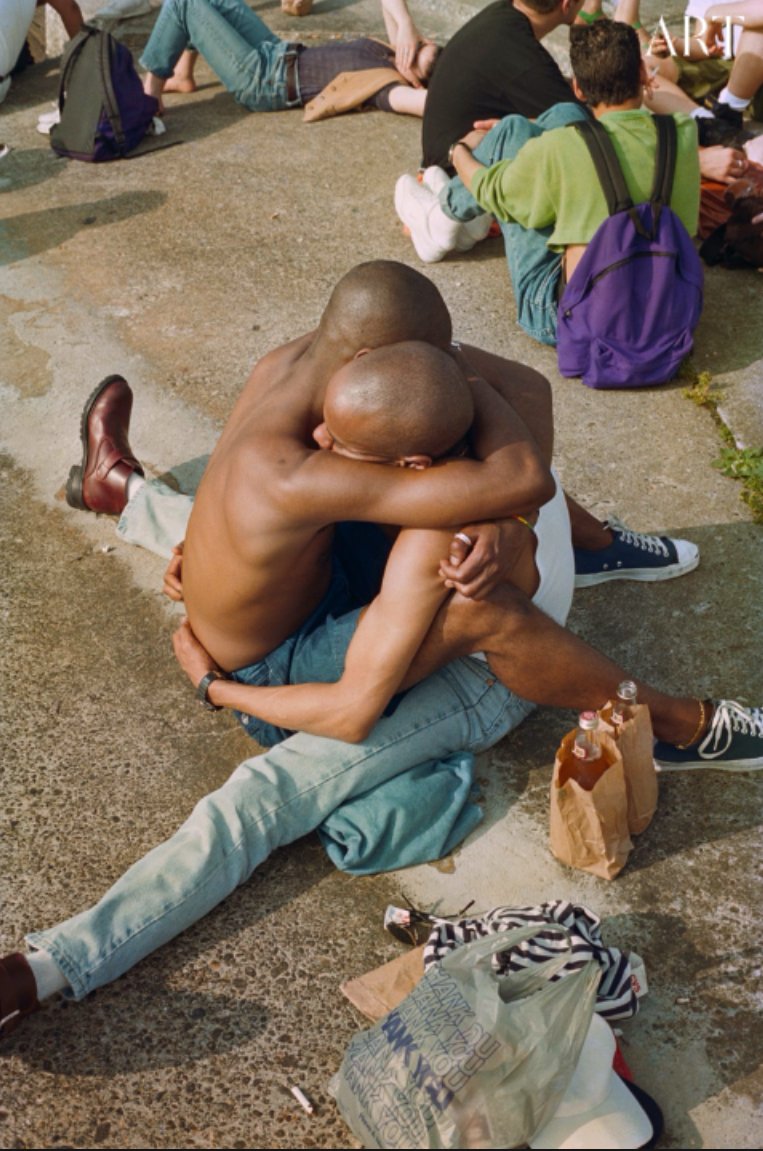
Christopher Street Pier Summer; 1995
We spend time with a new series he is hesitant to describe but shows generously: images of cloud formations photographed over eighteen months, which he prints at very large scale. They are beautiful in a way that is, for Tillmans, unusual—uncomplicated by human presence or social context, pure observation. He watches me look at them for a while.“I needed to spend time with something that was not made by human decision,” he says. “The clouds don’t know about any of it. That was useful.” He pauses. Looks at the prints. Then: “Also, they are formally extraordinary. The lightphysics are insane. I cannot stop."
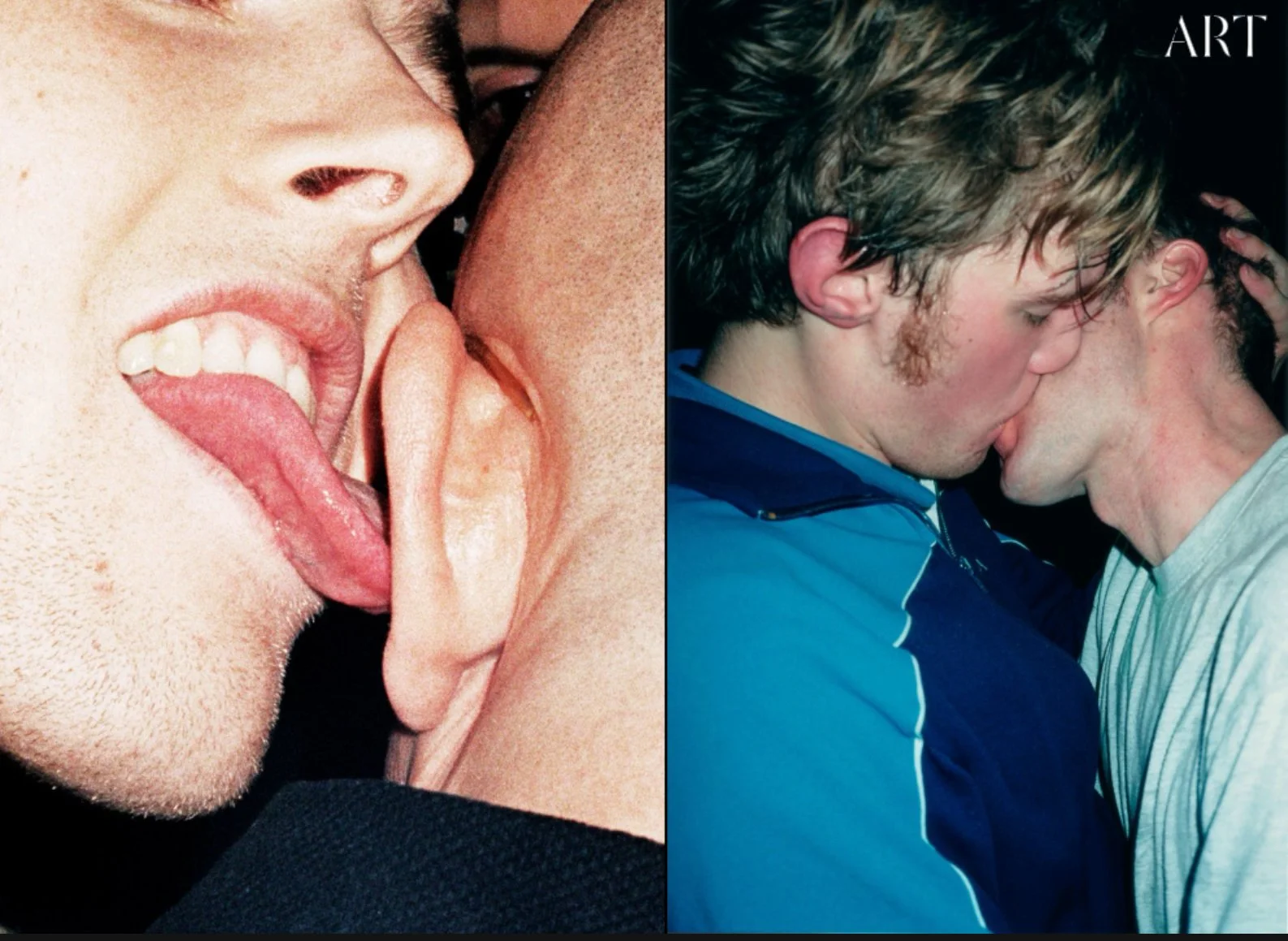
Tongues and ears , 2001
The cock (kiss), 2002
This—the coexistence of the philosophical and the purely sensory, the political conviction and the uncontrollable delight in what the eye finds—is the thing that makes Tillmans irreducible to any category. He is too serious to be merely aesthetic, too aesthetic to be merely serious. He is, simply, someone for whom the act of looking has never once lost itsurgency.
by Oona Chanel
