

The Week the Middle East Became the World’s Gallery
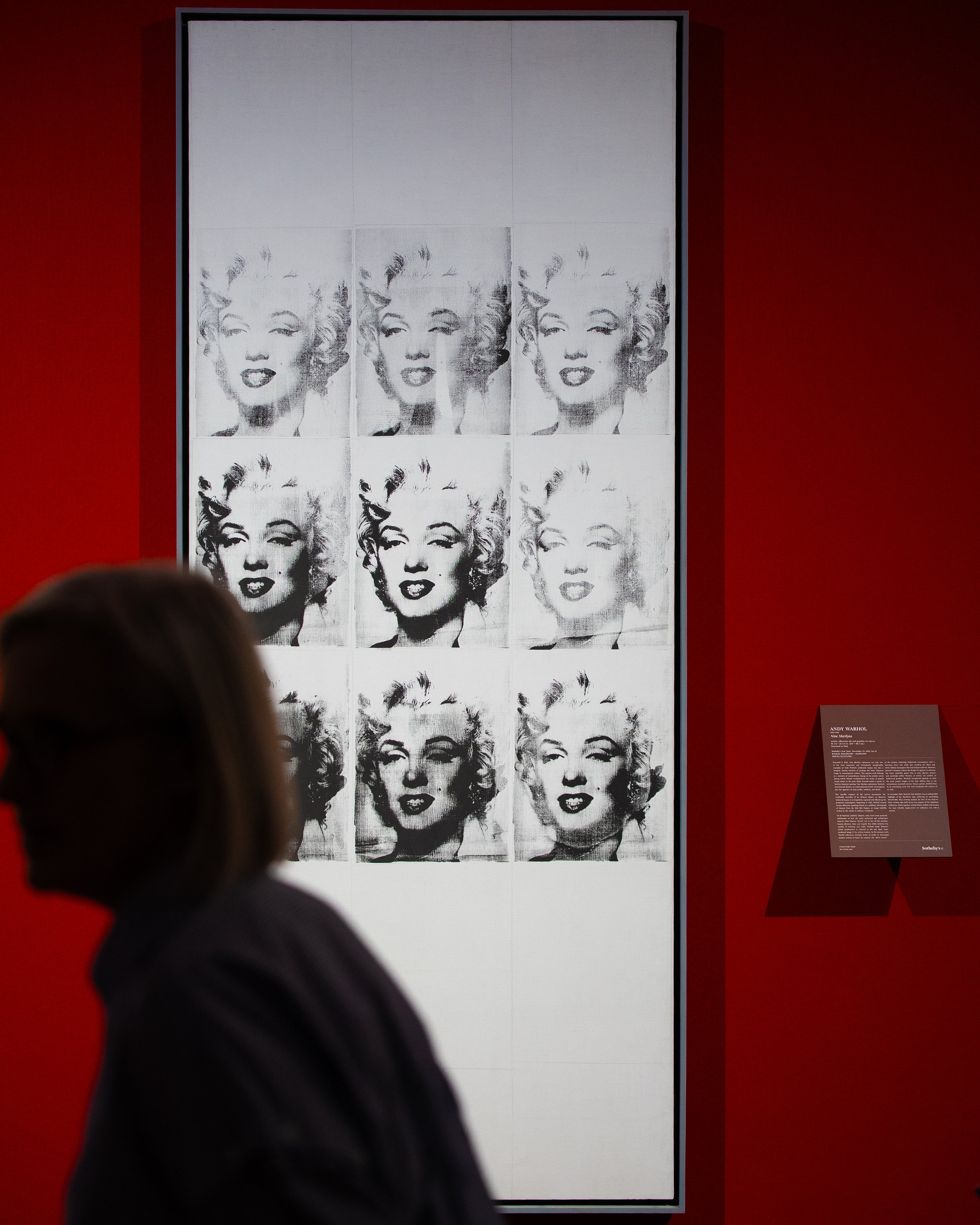
Nine Marilyns by Andy Warhol
Sotheby’s Collectors’ Week Abu Dhabi
From 2–5 December 2025, a new cultural axis is quietly locking into place in the gilded interiors of the St. Regis Saadiyat Island. Sotheby’s—longhand for provenance, prestige, and the theatre of the auction room—has brought over $1 billion USD of art, jewelry, handbags, watches, cars, and even architecture to Abu Dhabi.
It is not simply a showcase.
It is a declaration of where the world now turns its gaze.
“Abu Dhabi isn’t just hosting masterpieces. It’s defining the conditions in which they are seen.” — Oona Chanel
Abu Dhabi as Atmosphere, Not Just Location
Collectors’ Week is born of a particular alignment:
Sotheby’s, the Abu Dhabi Investment Office (ADIO), and the long-range vision of His Highness Sheikh Zayed bin Sultan bin Khalifa Al Nahyan, whose cultural patronage has helped turn the city into a gravitational field for art and luxury.
Unlike the compressed density of London or New York, Abu Dhabi gives the works air. In one suite, Rembrandt’s Young Lion Resting—on loan from the Leiden Collection ahead of its February 2026 sale—anchors the room with Old Master gravity. Across the space, Banksy’s self-shredded Girl Without Balloon hums with postmodern defiance, the now-legendary moment of self-destruction recast as a relic rather than a meme.
Nearby, Gustav Klimt’s Dame mit Fächer (Lady with a Fan)—believed to be his final portrait—glows with late-period sensuality; Piet Mondrian’s Composition No. II compresses modernity into lines and primary fields; and the Guennol Lioness, a three-inch Mesopotamian sculpture that still holds the auction record for an antiquity, sits in its own small field of reverence.
Abu Dhabi doesn’t flatten these works into spectacle. It lets them speak to one another.
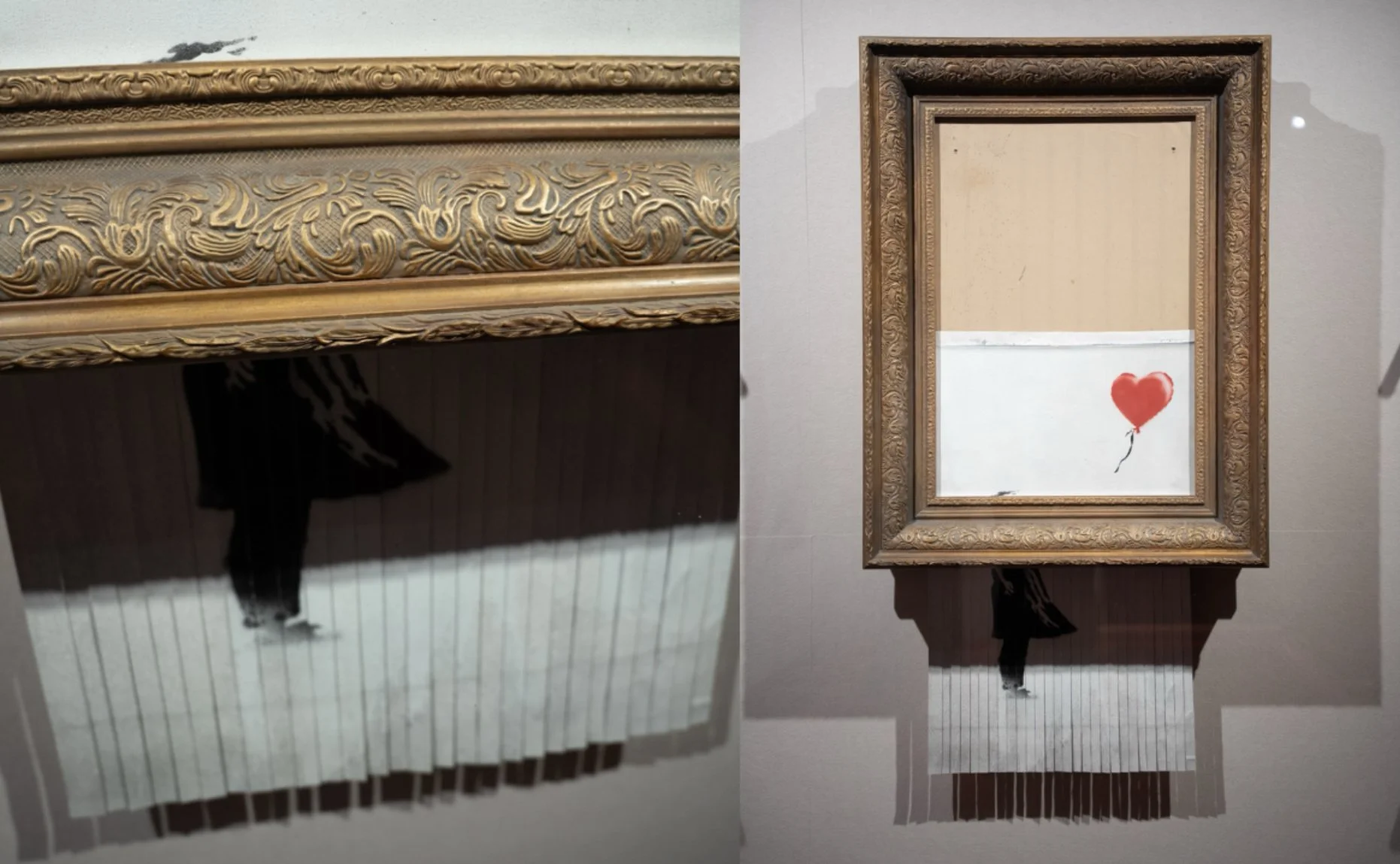
Bansky, Girl With Ballon.
A Constellation, Not a Collection
At the heart of the week lies a series of live auctions on 5 December—five consecutive sales that together form the most valuable auction series ever staged in the Middle East, with around $150 million in luxury offerings.
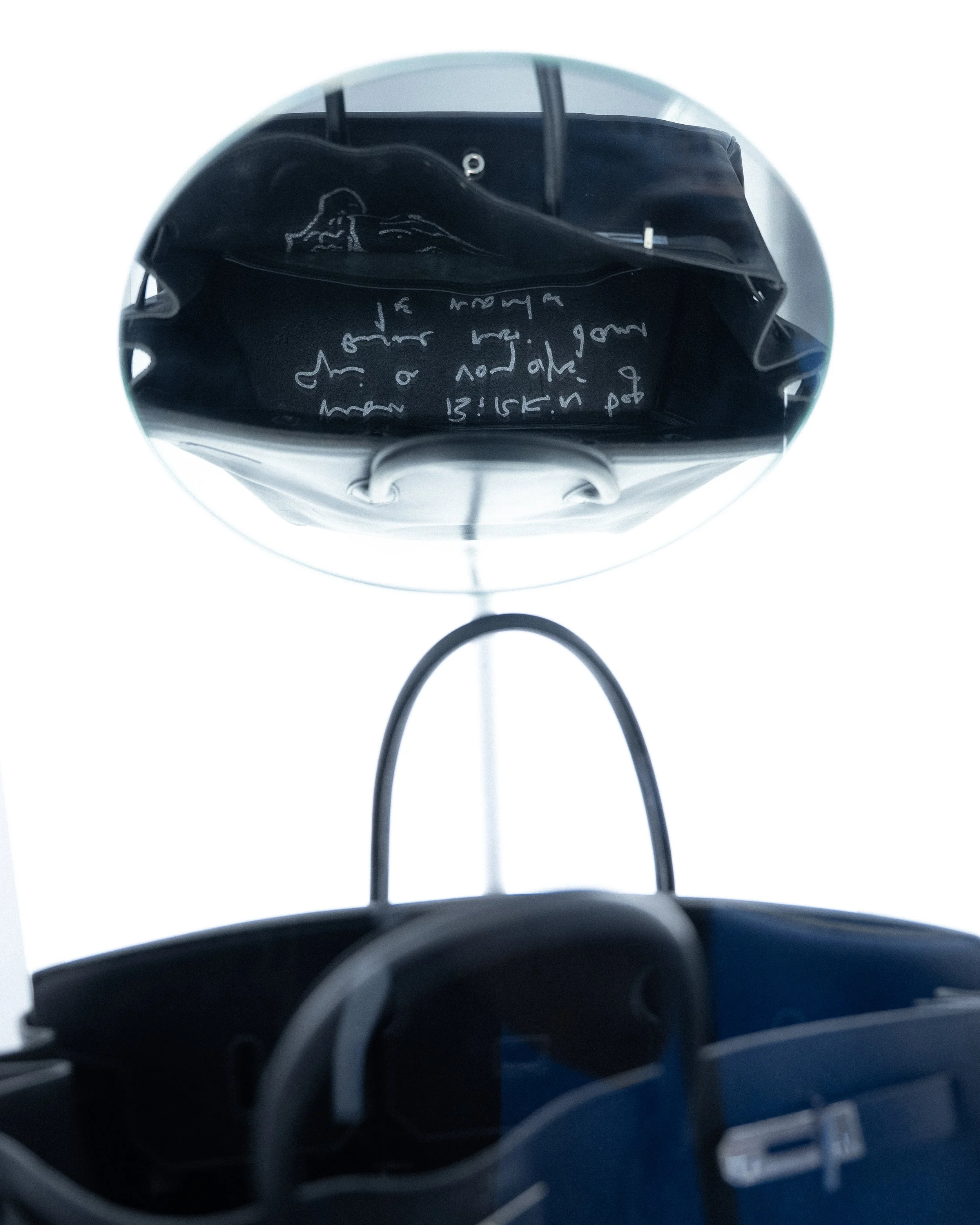
The Brikin Voyageur, owned by Jane Brikin between 2003 and 2007
Among them: Le Voyageur: Jane Birkin’s Handbag
A single-lot evening sale at 5:45 pm GST.
The black Hermès Birkin Le Voyageur—one of only four made for Jane Birkin after the sale of her original prototype—is covered in silver-ink inscriptions in her own hand, including “Mon Birkin bag qui m’a accompagné dans le monde entier.” Estimated at $240,000–440,000, it sits at the intersection of fashion history and intimate relic.
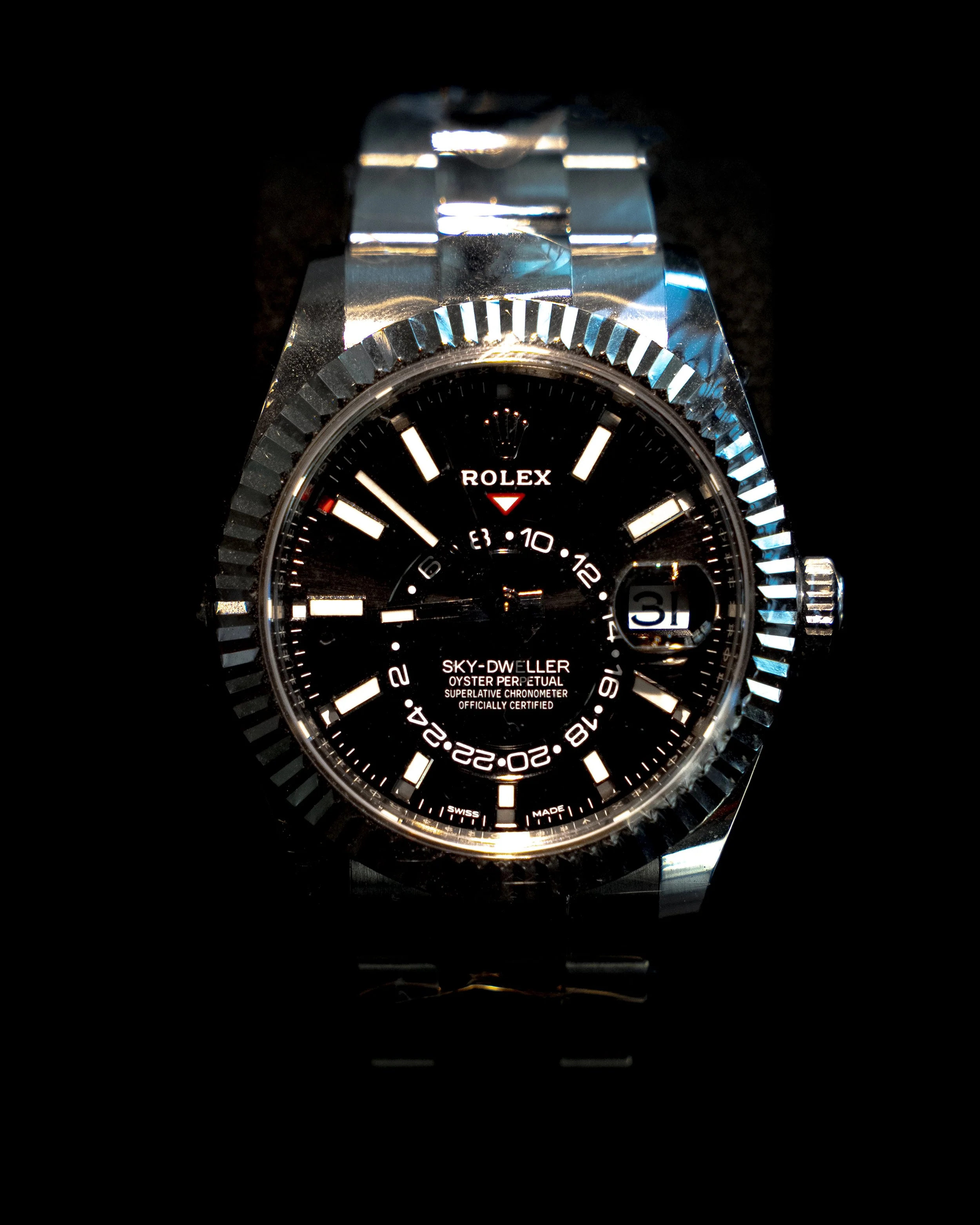
Rolex Sky-Dweller
Precision and Brilliance: Prestigious Jewels & Watches from an Important Private Collection
At 6 pm GST, one of the most significant single-owner collections in decades comes under the hammer: rare diamonds, Kashmir sapphires, Colombian emeralds, signed Art Deco masterpieces, and the watch market’s own unicorns.
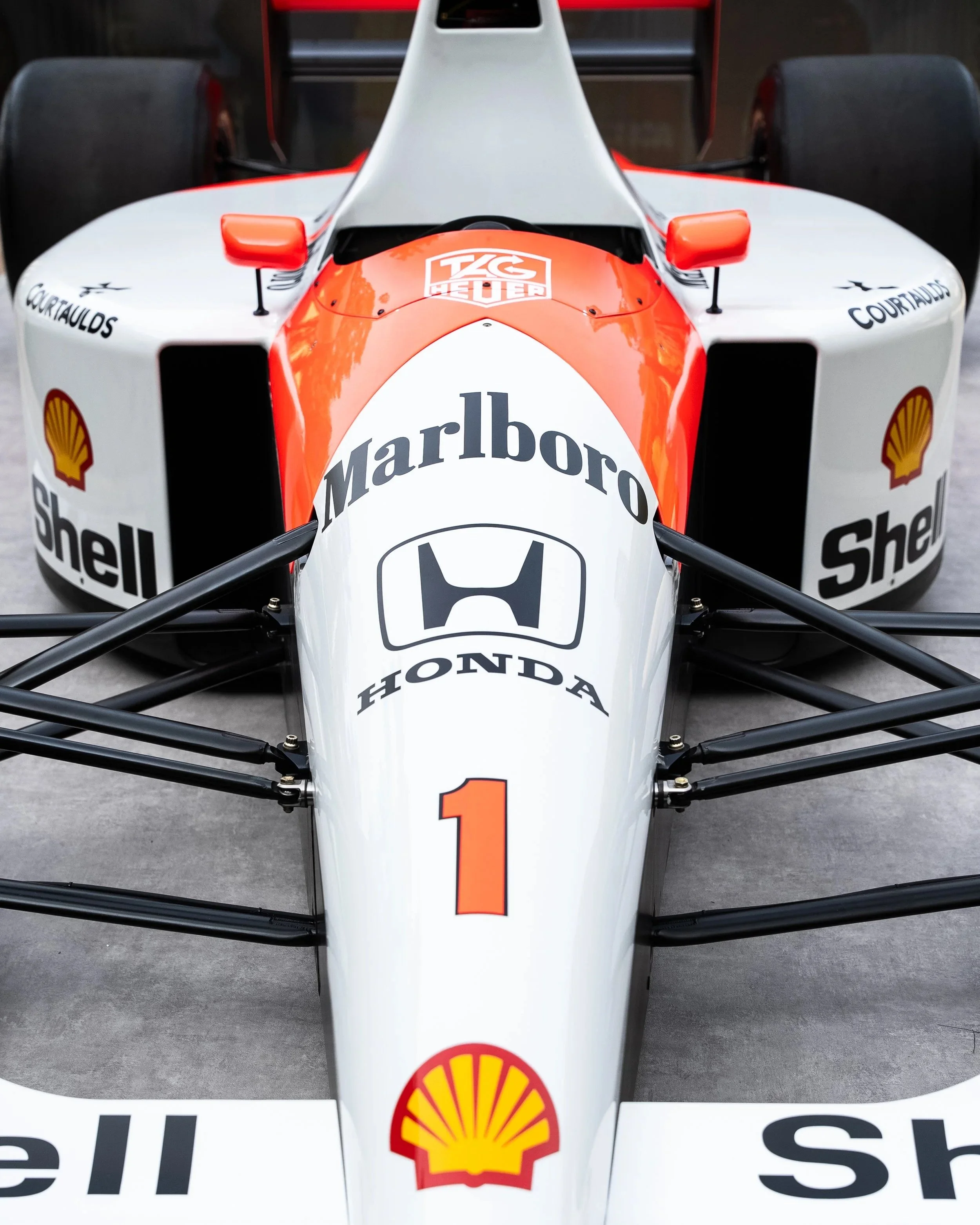
1991 Mclaren MP4/6
RM Sotheby’s Abu Dhabi
At 8 pm GST, a fleet of 32 exceptional automobiles—including a visionary “Triple Crown” of future McLaren race cars—brings the language of collecting into the realm of speed and engineering.
Beyond the auctions, over $100 million in diamonds, colored stones, high jewelry, handbags, and watches is being offered for private sale: from the largest flawless diamond in the world to a deep green diamond of staggering rarity, and covetable Birkin and Kelly bags displayed like small, controlled miracles.
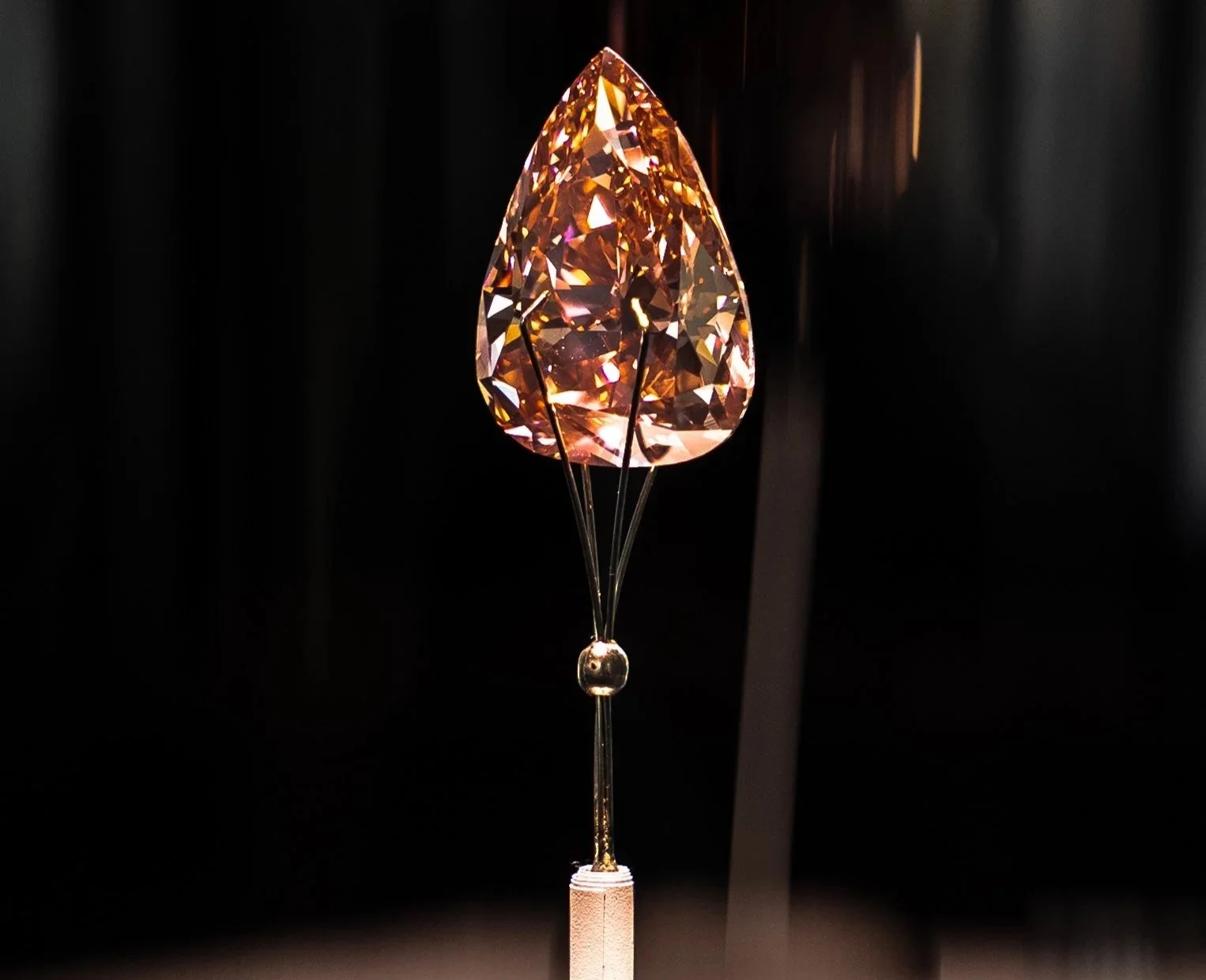
The Desert Rose - Vivid Orangy Pink diamond.
The Desert Rose: When a Stone Becomes a Story
At the centre of the jewelry room, beneath controlled, almost ceremonial lighting, lies The Desert Rose: a 31.86-carat Fancy Vivid Orangy Pink diamond, the largest of its kind ever certified by the GIA.
“A stone like this doesn’t sit in the market. It defines it.”
— Andres White Correal, Chairman of Jewellery, Europe & Middle East, Sotheby’s
White Correal explains that The Desert Rose and the surrounding jewels and watches all come from a single international collector—a rarity in itself.
“We wanted to bring the best of the best in every bracket,” he says. “You have The Desert Rose at an estimated $5–7 million, but you also have a €1,000 pearl pendant. A textbook Kashmir sapphire, a Muzo emerald, a Boucheron ring, a Harry Winston ruby set. It’s a full spectrum. We wanted everyone who walks in to find something they could imagine taking home.”
His vision for the region is anything but tentative.
“The level here is already wonderful. The attention, the curiosity—it tells us these pieces are understood. And in the UAE, people don’t just lock things away; they live with them. That energy is something we miss in many parts of the world.”
Asked what he would keep for himself, he doesn’t choose the headline diamond.
“I’m more of a jewel person than a stone person,” he smiles. “The Kashmir sapphire or the Colombian emerald—they’re smaller, but they have this old magic. Stones hold warmth. They remember the people who wore them.”
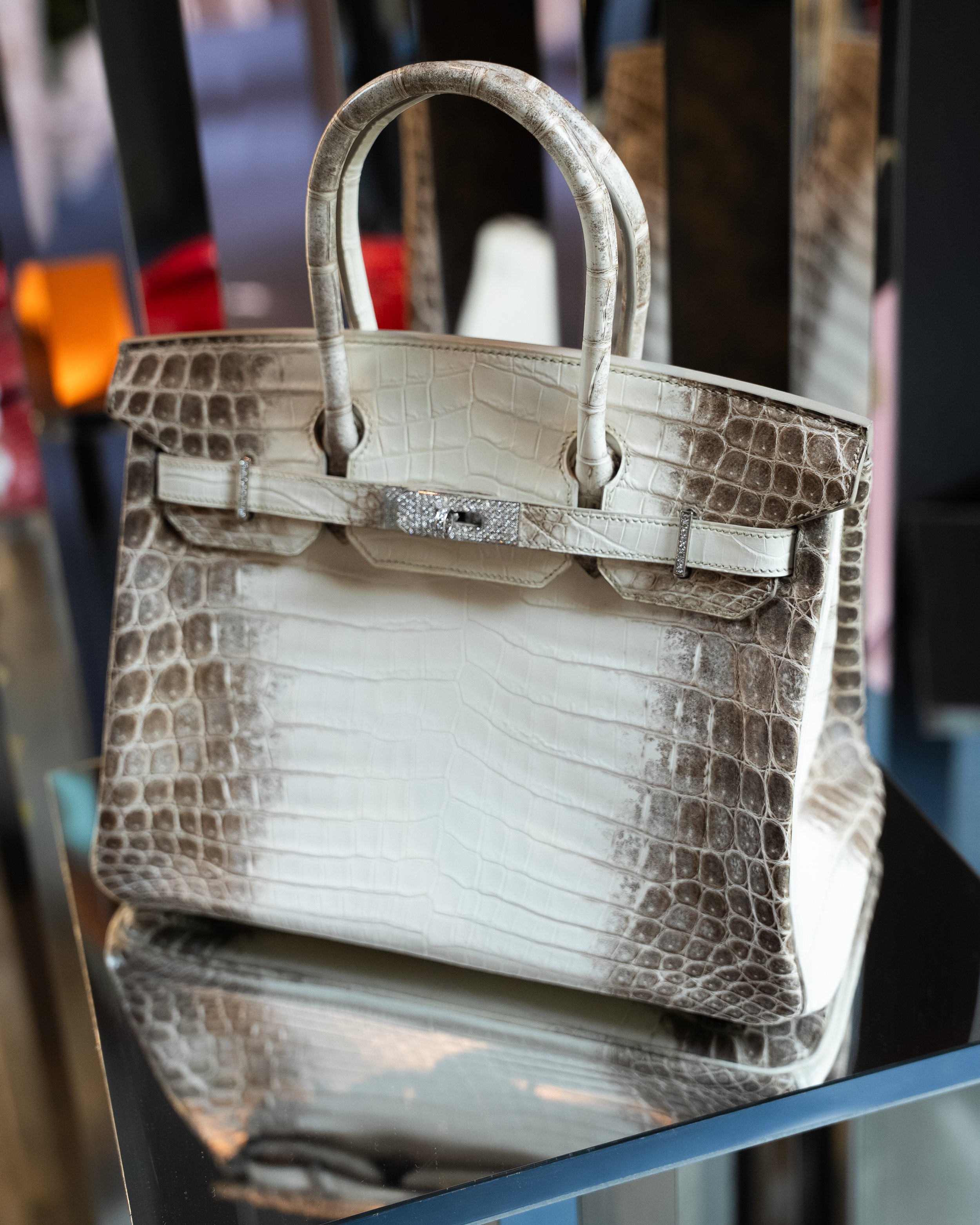
Hermès Birkin Himalaya Bag.
Legacy Wrapped in Leather
If the Desert Rose is the jewel that defines the week, the emotional spine of Collectors’ Week is, improbably, a black leather bag.
Morgane Halimi
Global Head of Handbags & Fashion, Sotheby’s
“When I joined in 2021, there wasn’t a fully formed handbags department,” says Morgane Halimi. “Today, we’re a global division—New York, Hong Kong, Paris, London—and now Abu Dhabi.”
Under her leadership, Sotheby’s has turned handbags from a niche into a serious collecting category, with sales growing by around 60% in four years and a demographic unlike any other: largely women, most under 45, many in their 20s and 30s.
“Our clients are emotionally literate,” Halimi notes. “They don’t just want the logo. They want longevity, craftsmanship, a story. They want to carry their investments, not just vault them.”
Last summer in Paris, she presided over the record-breaking sale of Jane Birkin’s original Hermès Birkin, which achieved over $10 million and instantly became a modern myth. That very bag is now in Abu Dhabi as part of the Icons exhibition—no longer just an accessory, but a case study in how an object can move from functional to legendary.
This week, the focus shifts to Le Voyageur, the bag Birkin carried from 2003–2007, its interior lined with her notes in silver ink.
“It’s not just personal,” Halimi says. “It’s a fingerprint. A soulprint. You feel her presence in the wear, the doodles, the phrases. You’re not just buying a bag—you’re entering a life.”
Handbags, in her view, have finally joined the upper ranks of collectible culture.
“They’re heirlooms now,” she adds. “Objects of heritage. And Abu Dhabi understands that instinctively.”
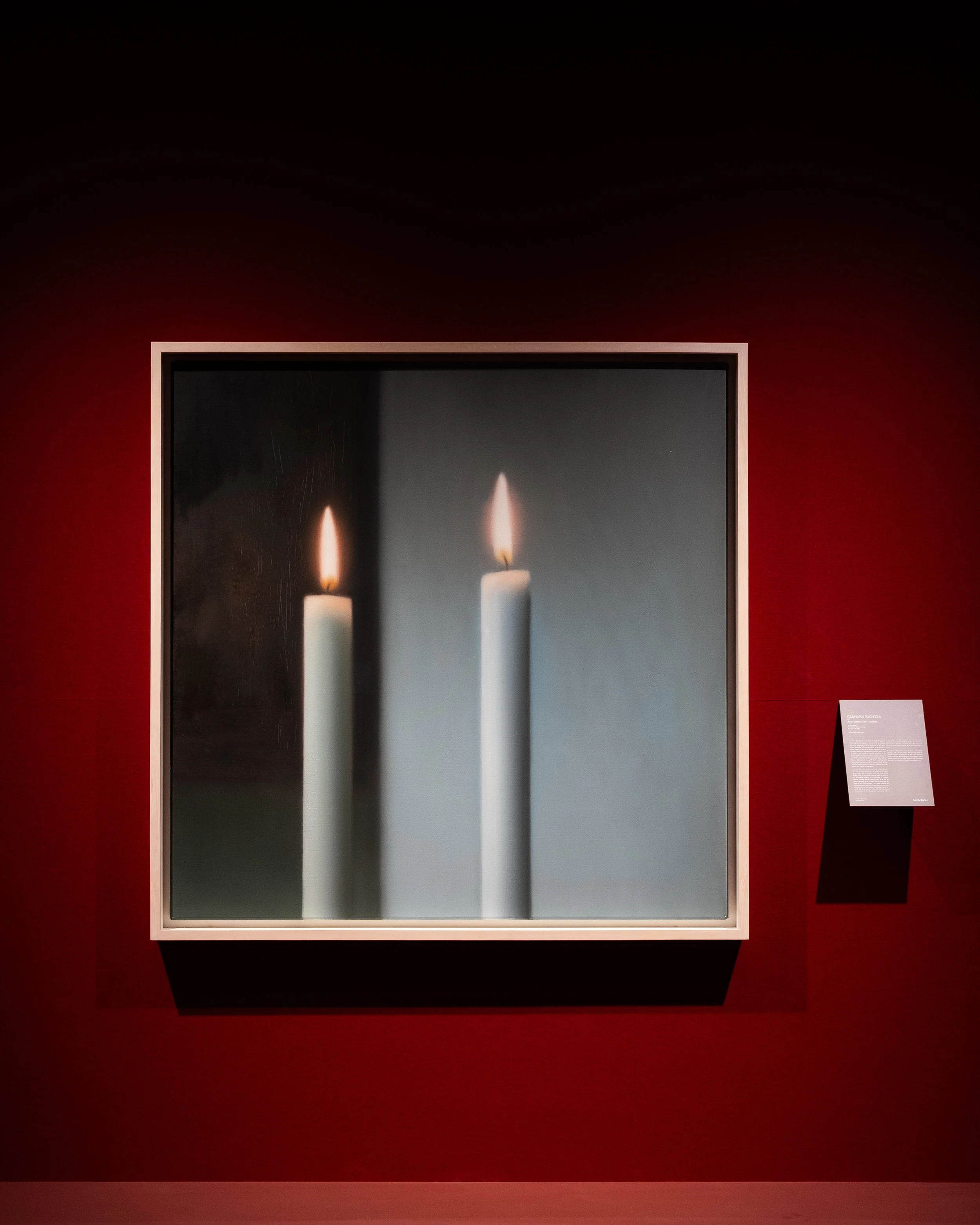
Zwei Kerzen (Two candles) by Gerhard Richter.
The Middle East as Vision, Not Footnote
If Halimi and White Correal map the vertical depth of collecting—stone and leather, jewel and legacy—Vanessa Marcil-Hoffmann, Head of Sotheby’s Middle East, maps the horizontal horizon.
Vanessa Marcil-Hoffmann
Head of Sotheby’s Middle East
“We’re in the middle of a cultural revolution in Abu Dhabi,” Marcil-Hoffmann says. “Museums, foundations, long-term development plans—it’s an ecosystem. We don’t see this as a one-off moment; we see it as a chapter in a much larger story.”
Collectors’ Week, she explains, is as much about education and community as it is about sales. Throughout the week, Sotheby’s is hosting over a dozen talks, panels, and daily masterclasses: conversations with Christian and Yasmin Hemmerle, Diana Picasso, Marisa Meltzer, sessions on gemstone grading, watch movements, handbag provenance, and the alchemy of building a collection.
These sit alongside behind-the-scenes handling sessions, where visitors learn not only how to look—but how to think like collectors.
“We’ve come a long way,” she says. “The level of knowledge, desire, and hunger in the region is extraordinary. But building a sustainable collecting culture means continuing to share expertise, open dialogues, and invite people into the process—not just the results.”
Her favourite works in the exhibition? She doesn’t hesitate.
“For art, the Klimt. It feels like it holds his last breath. For jewelry, The Desert Rose. It’s like wearing a sunset. No woman would say no to that.”
Looking ahead, her vision is expansive but measured.
“The sky is the limit, but we move one rooted step at a time. More auctions. Eventually, art auctions in Abu Dhabi when the timing is right. More collaborations with local institutions. We’re not here as visitors. We’re here as partners.”
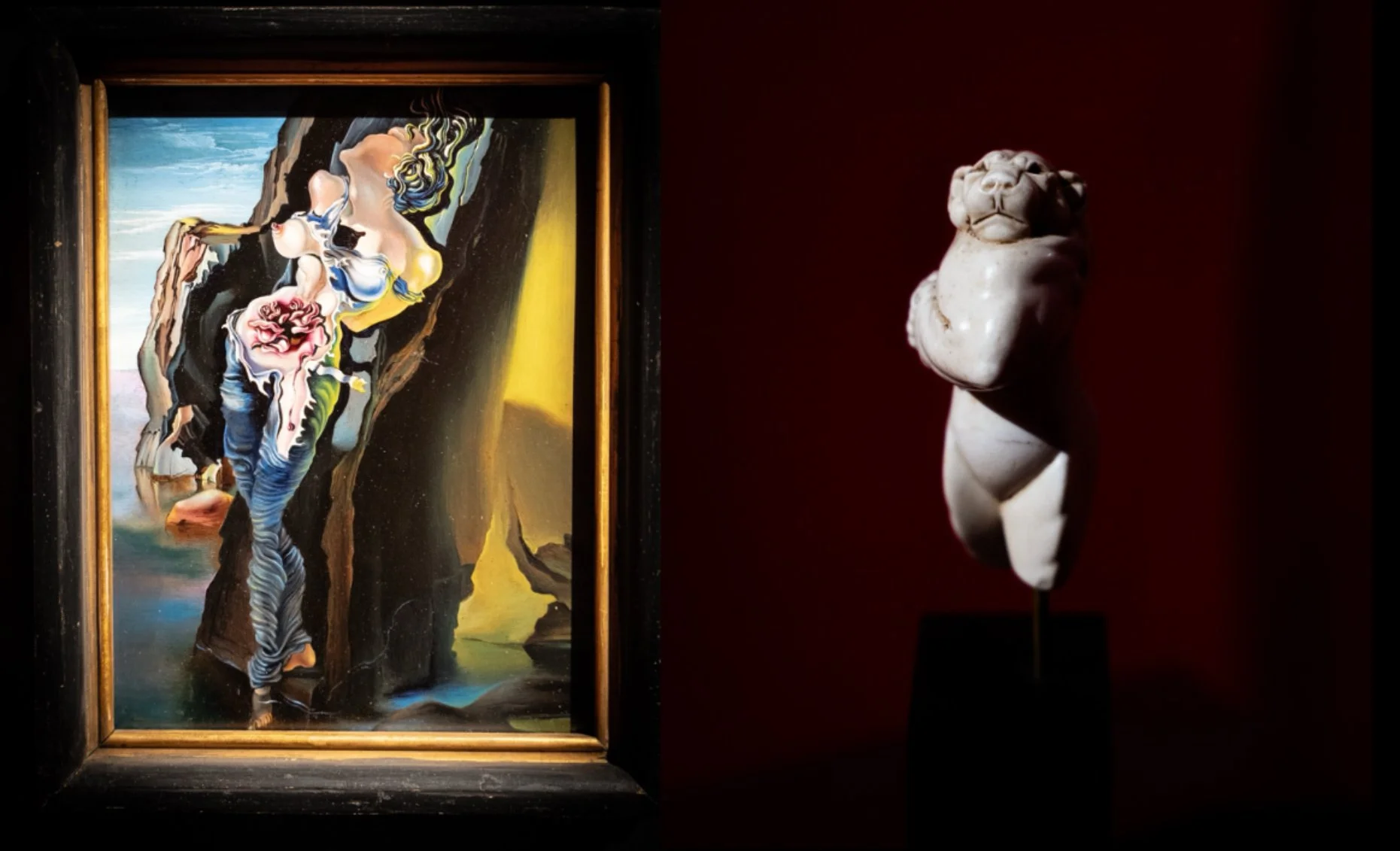
Gradiva by Salvador Dali. Guennol Lioness
A New Cartography of Taste
Behind the glamour, there is also infrastructure. In October 2024, Abu Dhabi’s investment and holding company ADQ took a minority stake in Sotheby’s—the largest investment in the global art industry since the auction house’s 2019 acquisition by Patrick Drahi. Sotheby’s has now formally incorporated in Abu Dhabi, adding a regional presence to its global network.
Collectors’ Week follows on the heels of an April presentation of over $100 million in rare colored gems in Abu Dhabi and a historic October fine art show at the Bassam Freiha Art Foundation, featuring van Gogh, Gauguin, Frida Kahlo, Munch, Magritte, and Pissarro.
In other words: this week is not a beginning. It’s an escalation.
“Abu Dhabi represents a powerful convergence of visionary ambitions, limitless opportunities, and cultural vibrancy,” notes Jean-Luc Berrebi, a Sotheby’s board member focused on the UAE. “The region is redefining global demand for art and luxury.”
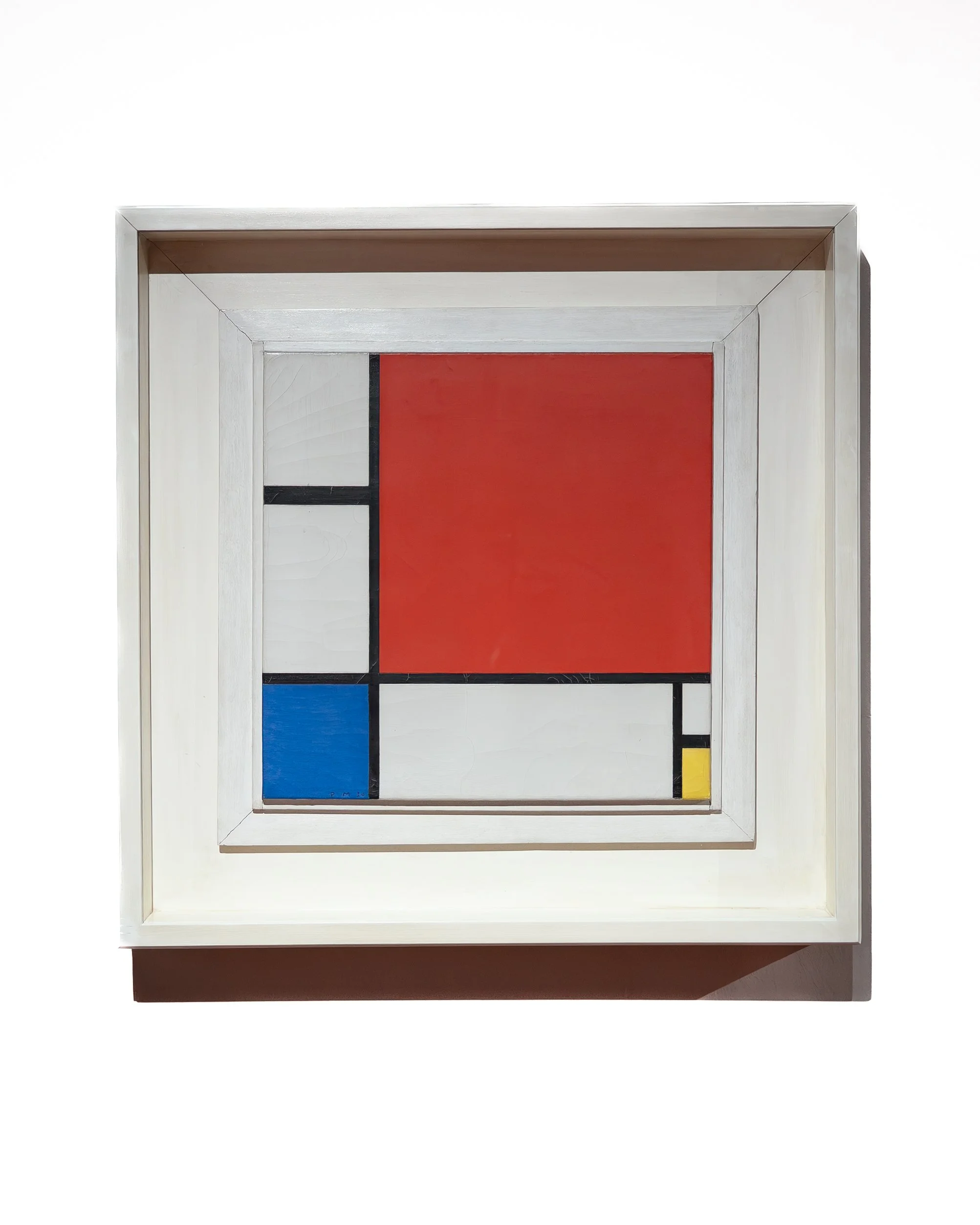
Piet Mondrian, Composition No II.
Exhibition Highlights
Rather than a trophy list, the highlights read like chapters in a larger narrative: The Desert Rose—a 31.86-carat Fancy Vivid Orangy Pink diamond, the largest of its kind, glowing like a sunset held in the hand; Jane Birkin’s original Hermès Birkin—sold for over $10 million in Paris; the Le Voyageur Birkin—covered in her handwritten notes; Gustav Klimt’s Dame mit Fächer; Banksy’s Girl Without Balloon (self-shredded); Rembrandt’s Young Lion Resting; the Guennol Lioness; the Patek Philippe Star Caliber 2000; and McLaren’s “Triple Crown Project” cars.
Taken together, they form not just a cross-section of value—but a map of what humanity chooses to remember.
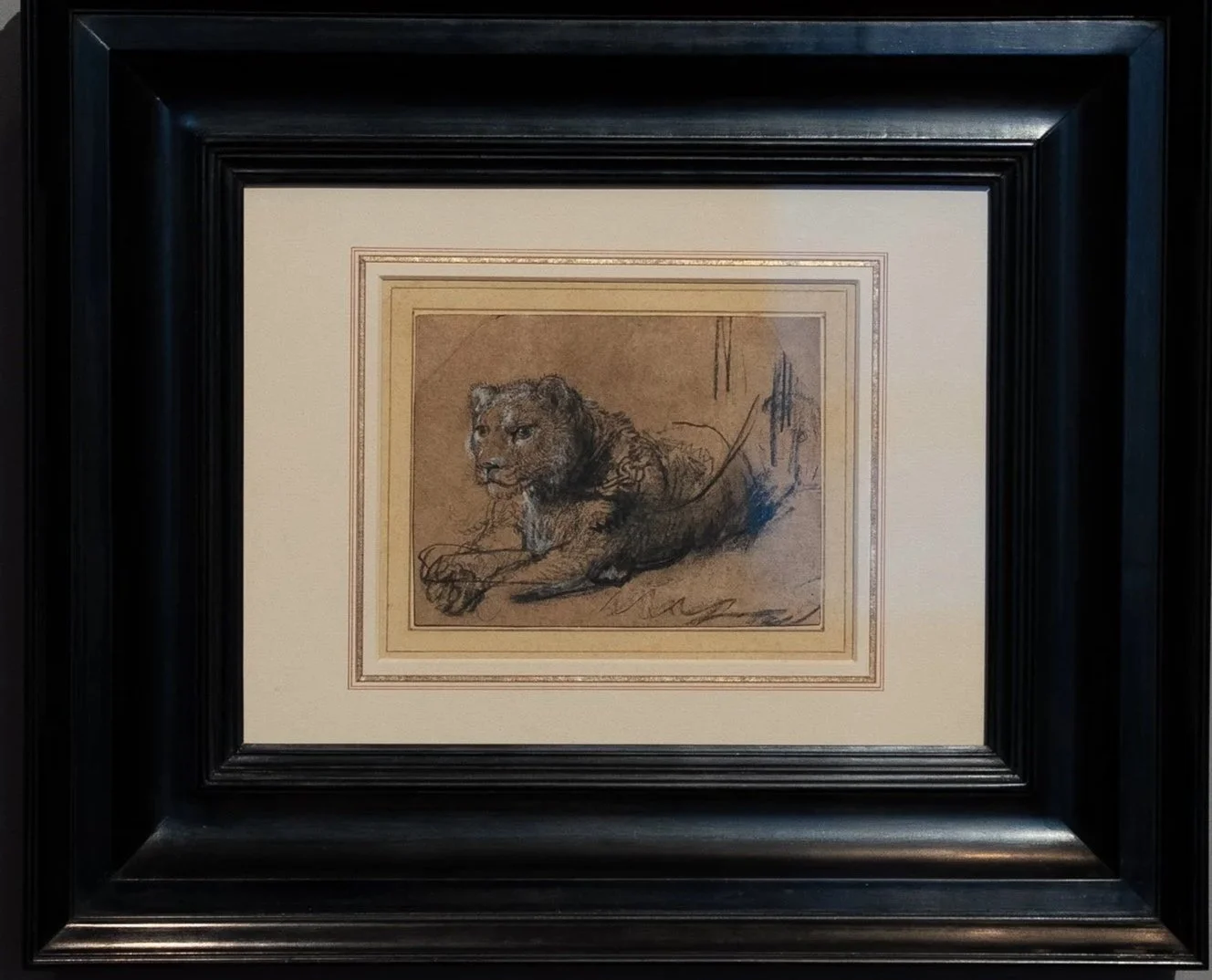
Rembrandt Harmensz young Lion Resting.
The Collector, Rewritten
What emerges most clearly from this week is not the scale of wealth, but the shape of the new collector: young, often female; cross-disciplinary—moving fluidly between watches, wine, handbags, cars, diamonds, and fine art; less interested in secrecy, more interested in story; comfortable with the idea that a handbag can sit beside a Rembrandt drawing in the same room, and the dialogue makes sense.
The Middle East, and the UAE in particular, embodies this evolution. It is no longer a “new market” to be educated. It is a producer of taste, a co-author of provenance, and increasingly, a place where the most important pieces in the world come not just to be sold—but to be seen.
“This week is not about one sale,” as one advisor quietly shared with Author Magazine. “It’s about who gets to decide what matters.
Words by Oona Chanel for Author Magazine
Pictures by Ron John
